
Choosing a Commercial Work Van: Roof Height, Cargo Access and Towing
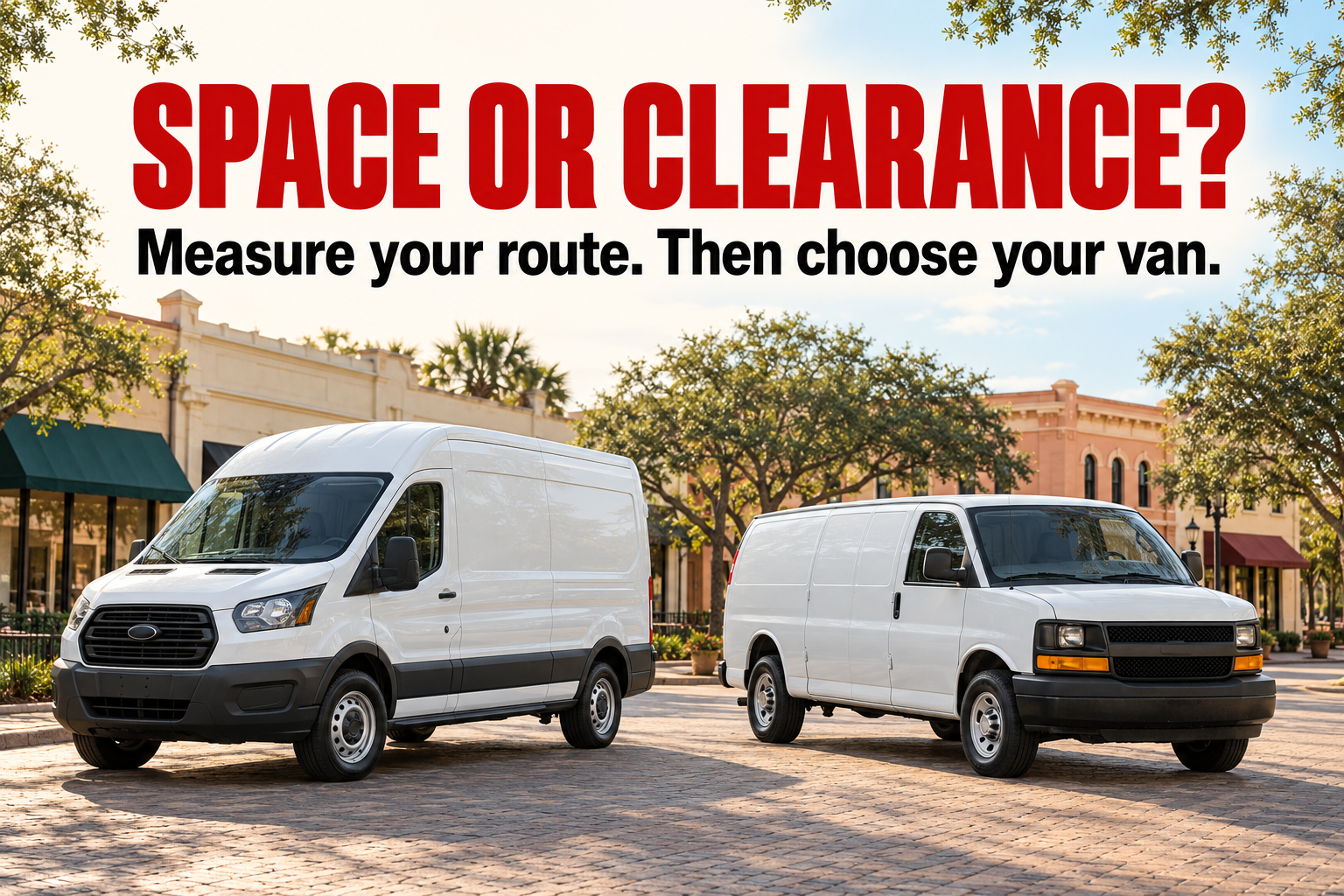
Choose a commercial work van by checking three things together: whether your equipment fits through the doors, whether the completed van can carry the working load, and whether its exterior dimensions suit your route. Cargo volume alone cannot answer those questions. A taller or longer van can solve one problem while creating another at a parking entrance, loading area or crowded service stop.
This guide compares the physical decisions behind a purchase. If you are ready to see available vehicles, start with SRQ Auto’s current cargo-van inventory. Use the measurements below to narrow the choices, then check the condition and history of each candidate before deciding.
Begin with the item that is hardest to load
Measure the largest rigid item you carry, including its handles, wheels, protective case and transport cart. Record its length, width, height and loaded weight. Then identify the door you normally use. An item can fit inside a cargo bay but fail to pass through a door or turn around installed shelving.
Bring a tape measure and a sketch of the loading sequence. For example, a plumbing service might need to load a drain machine after stocking fittings. That is a hypothetical work brief, not a customer story. The relevant test is whether the machine can enter, turn and be secured without unloading the van’s other supplies.
Roof height changes both working space and access
A taller roof may help when technicians frequently enter the cargo area or use upper shelves. It does not establish that every worker can stand comfortably after flooring, ceiling material and equipment are installed. Measure finished interior height where the person actually stands, including any obstruction from shelving or a partition.
Check exterior clearance separately, including roof racks and anything carried on them. Do not assume a standard-roof van fits every garage or that the published body height includes an aftermarket rack. A Sarasota route with covered parking can require a different decision from a Lakewood Ranch service route where the van stays outdoors.
| Your limiting factor | Measurement to request | Practical test |
|---|---|---|
| Tall equipment | Clear door height and finished interior height | Move the item through its actual loading path |
| Long material | Usable floor length with partition fitted | Check secure placement without blocking exits |
| Wide cases | Door width and narrowest aisle width | Check the turn into the storage position |
| Restricted parking | Total exterior height, length and mirror width | Compare with real entrances and parking spaces |
Compare platforms without borrowing another van’s specifications
Ford Transit, Ram ProMaster, Chevrolet Express and GMC Savana are useful full-size van families to compare when their configurations fit the work. They are not single specifications. Model year, wheelbase, roof, engine, drivetrain, weight rating and installed equipment can change what a particular van offers.
Ford uses Transit series names such as T-150, T-250 and T-350, rather than Transit 1500 or 3500. Ram’s full-size ProMaster is distinct from the smaller ProMaster City. Treat the exact model and year as the starting point for research; do not transfer a compact van’s specifications to a full-size listing.
The 2025 Ford Transit technical specifications illustrate how dimensions and payload vary across configurations. That document is an example of the detail to seek, not a rating sheet for every used Transit. Obtain the correct year’s documentation and inspect the actual vehicle.
Separate usable cargo space from carrying capacity
Cubic feet describe volume. Payload concerns weight. Shelves full of fittings may reach the vehicle’s weight limit before filling its cargo space, while bulky lightweight packages may consume the space first. List your normal load and your heaviest realistic day so you can tell which constraint matters most.
Installed flooring, partitions, shelving, racks and accessories consume carrying capacity. People and supplies count, too. Use the specific vehicle’s labels and appropriate weight information, not an advertised maximum for the model family. Check axle limits as well as total weight when planning a substantial commercial upfit.
Ram’s 2025 ProMaster fleet guide lists different ratings and dimensions by configuration. Its maximum figures do not mean one used van combines the largest cargo space, highest payload and highest towing allowance. Read the relevant configuration and its qualifications together.
Towing requires a complete loaded-vehicle check
If a trailer is part of the job, record its loaded weight and the load it places on the van. Confirm the exact van’s towing and combined-weight ratings, hitch equipment, applicable axle limits and required trailer equipment. A receiver attached to the rear does not prove the van is suitable for your trailer.
Do not choose a model from a universal towing leaderboard. A comparison that mixes different model years, engines and equipment can produce a misleading winner. Ask for the manufacturer’s information for that vehicle and evaluate it with passengers, tools and supplies included. If towing dominates the assignment, compare a suitable commercial truck as well.
Evaluate side doors, rear doors and the daily loading order
Think about which side faces the unloading area. Check that the side door opens fully with the installed interior arrangement, and that the rear doors allow practical access where you park. Test hinges, rollers, handles, locks and door restraints. A generous opening on a specification sheet does not describe a worn or obstructed door.
For a delivery route between St. Petersburg and Tampa, map the actual loading locations and unloading order. For a Bradenton service business, identify the tools accessed at nearly every stop. These are different planning tasks. Arrange frequently used items around safe access instead of filling every available space with shelving.
An actual listing makes the comparison concrete
On October 31, 2026, SRQ listed stock E121, a 2022 Ram ProMaster 2500 with a 159-inch wheelbase and high roof. The listing identified front-wheel drive and two seats. Those details help establish which configuration to evaluate; they do not establish remaining payload after your planned equipment is installed.

Use a listing like this to request door openings, finished cargo dimensions and photographs of the floor and attachment points. Compare it with other currently available vans using the same worksheet. An illustration showing two van types is not evidence that both are in stock or equally suited to your equipment.
Price the van as your business will use it
Use a repeatable walkaround with every candidate. Sit in the driving position, adjust the mirrors, check visibility and step into the cargo area where permitted. Test the doors with the van parked in a realistic space. Record each measurement in the same units and photograph the tape position so later comparisons refer to the same opening.
If shelving will be transferred from another van, give the upfitter the equipment make, model and mounting information. Similar-looking cargo bays do not establish compatibility. Ask about brackets, attachment locations, floor changes and any effect on usable space. Obtain that assessment before valuing a used shelving package as a direct replacement.
Finish with two lists: requirements the vehicle already meets and changes still needed. A van that passes every physical requirement may still need a condition review. A clean, appealing van that fails a fixed clearance limit should leave the shortlist rather than trigger an improvised loading plan.
The cheapest advertised van is not automatically the least expensive completed setup. Compare purchase price, necessary equipment changes, documented condition, upcoming maintenance and any delivery arrangements. Ask what is included in each quote. Keep optional work separate so you can see whether the added capability is worth its cost to your operation.
SRQ Auto LLC’s commercial buying approach starts with the work the vehicle must perform. From its Bradenton dealership, the team helps local and remote buyers compare actual body and equipment details. Read about SRQ Auto and customer reviews as part of that evaluation.
Ask about Tailored Commercial Financing, with approval and terms determined by the lender and application. Review coverage, exclusions and contract terms for the specific eligible vehicle. Neither financing availability nor a protection plan establishes that a particular configuration fits the job.
Send a measurement brief with your enquiry
Choose a stock number from current cargo vans and ask: “Can you confirm the door openings, usable floor length and total height for this van? My largest item measures ___, and my parking clearance is ___.” Include the expected working load and whether you tow.
Use Check Availability on the vehicle page or call (941) 214-2231. Get directions to SRQ Auto in Bradenton and confirm availability before traveling. If the van format fails a key requirement, compare other commercial inventory rather than forcing your equipment into the wrong vehicle.
