
Cab-Over vs Conventional Commercial Chassis: Expert Q&A
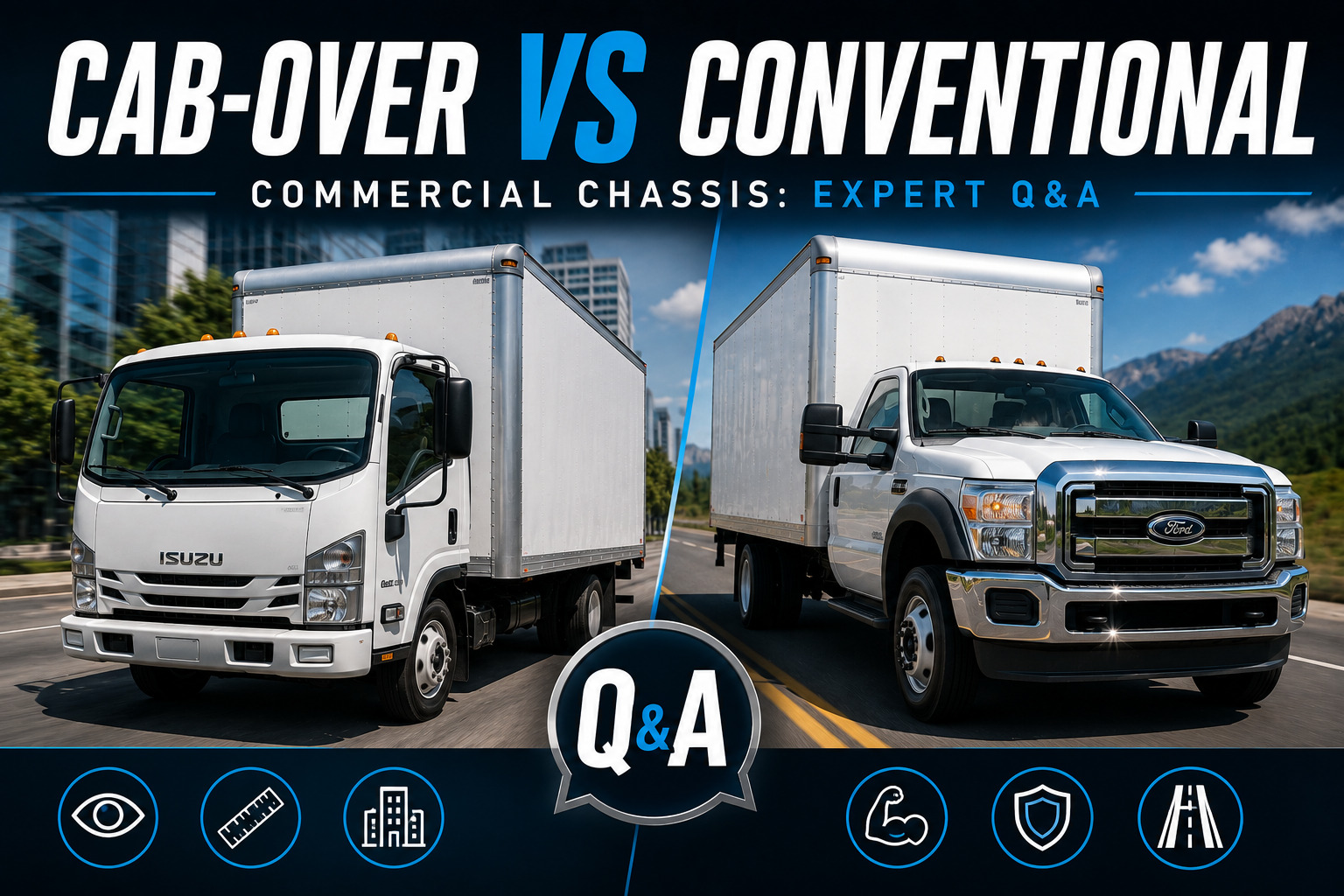
A cab-over chassis is the superior choice for construction and trades fleets operating in tight urban settings where maximum cargo body length and a compact turning radius matter more than long-haul highway cruising. Today, we sit down with Richard Reed, Commercial Sales Representative at SRQ Auto LLC, who brings 2 years of commercial vehicle expertise to help fleet managers choose between cab-over and conventional truck platforms.
Q: When is a cab-over chassis the better choice for construction and trades fleets compared to a conventional truck?
A: A cab-over chassis is the ideal choice when a fleet needs to maximize usable deck or body length while maintaining a short overall vehicle footprint for tight job sites and narrow city streets. By placing the cab directly above the engine, a cab-over design saves up to four feet of bumper-to-back-of-cab space compared to a conventional hood setup. That structural advantage allows electrical contractors, plumbers, and masonry crews working around the coastal terrain of Bradenton to mount a longer service body or dump bed without extending the total length of the truck. If your daily operations involve navigating alleyways, congested staging areas, or tight residential driveways, the superior forward visibility and tight wheel cut of a cab-over yield immediate efficiency gains. For fleets exploring versatile upfit platforms, browsing our used box truck inventory offers a clear look at how compact packaging maximizes usable cargo volume. Fleet buyers are always welcome to drop by our Bradenton showroom address or give our team a call at (941) 214-2231 for direct guidance on chassis matching.
Q: What is the main structural difference between a cab-over and a conventional commercial truck chassis?
A: The primary structural difference lies in the placement of the engine relative to the driver compartment and front axle. In a cab-over chassis, the engine sits directly underneath or slightly behind the cab floor, positioning the driver forward and above the front wheels. In contrast, a conventional chassis features a traditional nose where the engine sits in front of the firewall under an external hood. This distinction alters weight distribution across the front axle, frame rail design, and cab mounting systems. Because cab-over designs position the operator forward, routine engine access requires tilting the entire cab assembly on hydraulic or manual hinges, whereas a conventional chassis allows simple access by unlatching the front hood. When evaluating long-term reliability and purchase value across these two architectures, buyers frequently examine our commercial warranty options to ensure complete coverage for specialized upfit setups. Business owners can also leverage our flexible commercial financing plans when building out their fleet, or review our full lineup of pre-owned commercial inventory to compare both structural designs side by side.
Q: Which commercial chassis design offers better ride comfort and driver ergonomics during long shifts?
A: Conventional chassis designs generally deliver superior ride quality, reduced cabin noise, and lower driver fatigue during extended highway driving. Because the driver seat on a conventional truck is positioned behind the front axle rather than directly over it, road impacts and suspension vibrations are absorbed before reaching the cabin floor. The extended engine bay also creates an effective acoustic barrier between the powertrain and the driver, resulting in a quieter highway cabin. Contract operators who spend several hours per day running highway corridors often prefer conventional platforms for this added isolation. However, modern cab-over chassis have narrowed this gap significantly by incorporating air-suspended driver seats and upgraded cab mounts that mitigate harshness over rough pavement. Looking through our records of recently sold commercial vehicles highlights how both chassis styles serve specific operational roles across different industries. Examining our recent vehicle deliveries reveals a balanced mix of high-comfort conventional work trucks and agile cab-over units delivered to local businesses.
Q: In what operational environments and tight spaces is a cab-over chassis functionally preferable?
A: A cab-over chassis is functionally preferable in crowded urban centers, active residential job sites, and commercial facilities with restricted turning bays. The absence of a long front hood drops the forward blind spot to just a few feet in front of the bumper, giving drivers unmatched sightlines when maneuvering around ground obstacles, active site workers, and parked equipment. Contractors test-driving work trucks for urban routes usually ask about forward visibility over the bumper before they even ask about the cab suspension. That dramatic improvement in sightlines is paired with a sharper wheel-steer angle, enabling a cab-over truck to make U-turns and back into tight loading docks that would require multi-point maneuvers in a conventional truck. Landscapers, utility crews, and final-mile delivery providers working in confined neighborhoods benefit immensely from this agility. For business owners evaluating smaller footprint options, reviewing our used cargo van selection provides another agile fleet alternative, while reading through our verified customer reviews illustrates how local fleet owners select the ideal vehicle configuration for their specific daily routes.
"The decision between a cab-over and a conventional chassis comes down to whether your bottleneck is tight turning on the job site or driver fatigue on sixty-mile highway runs."
Q: Are there specific Florida highway rules and job site conditions in Tampa that affect chassis selection?
A: Chassis selection in regional markets is heavily influenced by state bridge formula weight limits, overall length restrictions, and site accessibility along congested urban corridors. Florida commercial vehicle regulations enforce gross vehicle weight limits based on axle spacing, which means placing proper weight on the steer axle is vital for legal payload compliance. In high-density commercial hubs like Tampa, where job sites along the Hillsborough River corridor feature tight access roads and limited staging room, cab-over trucks offer a distinct advantage by packing maximum body length into a compliant overall footprint. Conversely, fleets running heavy equipment trailers across highway routes might lean toward a conventional Class 4 or Class 5 chassis with an automatic transmission and a high GCWR to maximize towing stability. Tradespeople needing versatile tool storage and hauling capability on these job sites often explore our used service body trucks to find the right balance of payload and organization.
Q: Are cab-over commercial trucks generally more expensive to buy and maintain than conventional models?
A: Upfront acquisition costs for cab-over and conventional trucks are broadly comparable in the pre-owned market, though total cost of ownership depends on your operational duty cycle and upfit choice. Cab-over models carry specialized tilt-cab hardware and compact engine packaging, but their structural efficiency often reduces wear on tires and brakes during low-speed urban maneuvering. Conventional trucks, on the other hand, offer easier under-hood engine access that can simplify routine engine inspections and mechanical work for shop technicians. To assist business owners in structuring competitive acquisition costs, our team offers a straightforward online credit application that streamlines the purchase process. For trades requiring specialized material handling, exploring options like our landscape dump trucks provides a clear picture of equipment value retention over time. Furthermore, qualifying commercial vehicle purchases may allow business owners to take advantage of valuable commercial vehicle tax deductions under current IRS section guidelines, enhancing the overall return on investment.
Q: How do payload capacity and upfit versatility differ between cab-over and conventional chassis?
A: Both chassis styles offer impressive gross vehicle weight ratings ranging from Class 3 up to Class 6 platforms, but they distribute that capacity differently across the frame. A cab-over chassis shifts a larger portion of the vehicle weight toward the front axle, allowing operators to utilize a longer body length—such as a sixteen-foot flatbed or stake body—on a shorter wheelbase chassis rated at 19,500-lb GVWR. A conventional chassis spreads weight over a longer wheelbase, which is particularly beneficial for heavy gooseneck towing, crane applications, or rear-heavy dump bodies where tongue weight and rear axle load ratings are paramount. Upfitters appreciate cab-over designs because the flat cab-to-axle back frame provides a clean canvas for custom bodies without requiring custom frame extensions. To learn more about our commitment to supplying work-ready commercial vehicles to local businesses, buyers can read more about our team and our strict reconditioning standards.
Q: How should local business owners evaluate commercial chassis options?
A: Business owners should evaluate chassis options by analyzing three core factors: daily route constraints, required upfit body dimensions, and driver operational habits. If your trucks spend eighty percent of their time navigating tight urban streets, making frequent stops, and maneuvering into tight job sites, the visibility and turning radius of a cab-over will yield higher daily productivity. If your drivers spend hours on highway routes hauling heavy trailers between regional job sites, the ride isolation and longer wheelbase of a conventional chassis are hard to beat. Choosing the right commercial truck requires evaluating actual work conditions rather than relying on preference alone. Business owners can compare these chassis types firsthand by visiting our sales lot in Bradenton, or start the conversation by calling our commercial team directly. Whether you need a heavy-duty chassis cab, a utility service truck, or specialized transport such as our used shuttle buses, SRQ Auto LLC is dedicated to delivering work-ready commercial solutions that keep your business moving forward.
© 2026 SRQ Auto LLC. All rights reserved.
