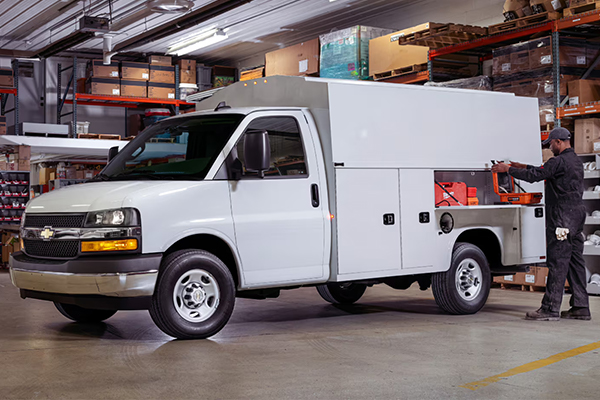
Best Vehicle for a Handyman Business: Cargo Van, KUV or Service Truck?

The best vehicle for a handyman business is the one that carries your normal working load, keeps frequently used tools accessible and fits the places you visit. A cargo van suits enclosed tool storage and mixed repair work. An enclosed utility van, often called a KUV, combines interior cargo space with exterior compartments. An open service body can suit jobs needing compartment storage alongside an open center bed.
Start with your busiest ordinary day, then test the exceptions. Buying around one oversized delivery can leave you maneuvering more vehicle than you need on every small repair call. Buying too little space can mean unloading tools whenever materials arrive. SRQ Auto LLC helps buyers compare the completed commercial vehicle: chassis, working body, installed equipment and condition together.
Which layout fits your handyman work?
Use this comparison to choose a starting point, then measure the actual vehicle. None of these configurations provides the same dimensions or remaining payload across every year and upfit.
| Typical work | Body to compare | Useful advantage | Tradeoff to check |
|---|---|---|---|
| Interior repairs, hardware replacement and assorted small jobs | Cargo van | Enclosed space for cases, shelving and supplies | Shelving can narrow the aisle and restrict bulky cargo |
| Maintenance rounds with many small parts and frequent tool stops | Enclosed utility van / KUV | Exterior compartments plus an enclosed center area | Body width, compartment dimensions and clearance vary |
| Repairs involving larger outdoor equipment or irregular materials | Open service body | Compartment storage beside an open load area | Center-bed cargo needs weather protection and securement |
For a property-maintenance route in Port Charlotte, frequent access to fasteners and repair kits may favor compartments. For interior jobs around Lakewood Ranch, an enclosed cargo area may fit the daily mix better. These are planning examples, not reports of customer purchases or local search demand.
Build a working-load list before choosing a model
List the equipment that stays aboard: tool cases, ladders, vacuum, fastener organizers, extension cords, replacement hardware and commonly carried materials. Record the largest item's length, width and height. Add its weight where known. Separate daily equipment from items collected for an occasional project.
Next, map access. Which tools do you reach for at nearly every stop? Can you retrieve them without moving a saw, climbing over supplies or unloading a ladder? A practical storage layout follows the order of the work. More shelves are useful only when their depth, spacing and mounting suit what you carry.
Bring that list when comparing current cargo vans and service and utility vehicles. Installed equipment differs between listings; photographs and measurements should establish what is included.
When a cargo van makes sense
A cargo van keeps equipment inside a shared enclosed space. That can suit a handyman whose schedule mixes door repairs, fixtures, patching and general maintenance. Compare the side opening, rear opening and clear floor area after shelving. A long cargo floor does not guarantee that a wide cabinet or tall cart will pass through the door.
Check whether the roof lets you use the interior comfortably and whether the completed height fits your parking. A taller van can improve access, but garage entrances, carports and overhead branches may affect the route. Confirm dimensions for the specific van, including racks or other roof equipment.
When an enclosed utility van deserves a closer look
An enclosed utility body adds exterior storage compartments around an enclosed cargo area. Knapheide's KUV is one example; other manufacturers offer their own enclosed utility configurations. Use the listing's actual body identification rather than treating every utility van as the same product.
For maintenance work with many small parts, exterior access can help separate frequently used supplies from larger equipment inside. Open the compartment doors and test your tool cases against the shelves. Check locks, seals, latches and access height. Then inspect the center area: exterior storage occupies space, so its presence alone does not establish usable interior width or standing room.
When an open service body fits better
An open service body combines side compartments with a center load area. It can suit work that regularly involves larger, awkward materials or outdoor equipment. Measure between the compartments and check the rear opening, floor condition and any installed rack. Confirm where long items will be supported and secured.
A crew cab can help when additional employees regularly travel together. Those passengers and their equipment also affect the working load. Choose the cab for the people who actually ride in it, then check the complete truck's ratings and dimensions. Neither a larger badge nor more rear tires establishes usable capacity by itself.
Account for payload after the upfit
The body, shelving, racks and permanent equipment are already weight the vehicle must carry. Occupants, supplies, tools and materials add more. Start with the vehicle's labels and applicable manufacturer information, then establish the completed vehicle's actual weight when needed. Axle, tire and other component limits also matter.
A simple worksheet has separate lines for people, permanent equipment, daily tools and the heaviest normal materials load. Avoid adding an equipment allowance twice if it is already included in a measured vehicle weight. If towing is part of the job, evaluate the loaded combination and hitch limits separately rather than relying on an advertised maximum.
Inspect the working body as carefully as the chassis
On a used handyman vehicle, inspect the floor, doors, roof, partitions, shelving mounts and visible body attachments. Open every compartment. Look for water entry, corrosion, damaged hinges, loose shelves and abandoned wiring. Ask for additional photographs of areas that are difficult to inspect remotely.
SRQ Auto's preparation responds to identified vehicle needs. Work may include mechanical service, tires, glass, upholstery, paint, frame or compartment attention, protective finishes such as Raptor Liner, and installed-equipment checks where appropriate. Ask what was actually completed on the unit you select. Preparation and available history help the decision; they do not guarantee a used vehicle will never need repairs.
Use the same eight-question worksheet on both vehicles
A useful comparison produces answers you can act on. Write each stock number at the top of a separate sheet, then fill in the same details. Leave unknown measurements blank until someone checks them; a photograph can suggest a fit without proving it.
- Largest item: What must pass through the rear or side opening, and what are its actual dimensions?
- Daily tool access: Can the tools for a small repair be reached while the largest item is aboard?
- Material space: Where will boards, replacement doors or supplies ride without blocking required access?
- Crew: How many people normally travel together, and does the actual cab accommodate them?
- Working weight: What remains unknown about vehicle weight, ratings, tools, occupants or materials?
- Parking: Will the completed height, width and turning space work at the properties you visit?
- Condition: Which body, door, shelf, lock or mechanical items need clarification or attention?
- Setup cost: What must be changed before this particular vehicle can do your ordinary day's work?
Imagine a day of small apartment repairs followed by collecting a replacement door. This is a hypothetical planning exercise, not an SRQ customer story. Test whether each vehicle carries the door while leaving the repair kits reachable. The better choice may be the layout with less reshuffling, even when the other vehicle has more advertised space. Repeat the exercise with your own actual equipment.
Compare purchase cost with the setup you still need
A lower-priced vehicle may require shelving, repairs or equipment changes before it fits your work. An upfitted vehicle can save setup effort when its existing layout is useful. Compare purchase price alongside necessary work, registration, insurance and any delivery arrangement. Obtain estimates for changes instead of assuming SRQ performs every type of installation.
Tailored Commercial Financing is subject to lender approval and terms. Review any applicable warranty or service-contract terms for eligibility, coverage, exclusions and deductibles. Use the business vehicle tax resource to prepare questions for your tax professional.
Take two stock numbers and one worksheet to SRQ Auto
Shortlist two vehicles, then compare the same load list, door measurements, storage access and condition questions against each. For a business based in Fort Myers, requesting measurements and available walkaround details before traveling can make the Bradenton visit more useful. Remote documents and nationwide delivery arrangements are available to discuss; cost and timing depend on the vehicle and destination.
Call 941-214-2231 with the stock numbers, largest item, normal load and crew size. Ask: “Which layout carries this equipment while keeping my daily tools accessible?” Learn about SRQ Auto LLC, read customer reviews and get directions to our Bradenton dealership. Confirm current availability before visiting.