
Why Gulf Coast Contractors Prioritize August Fleet Readiness
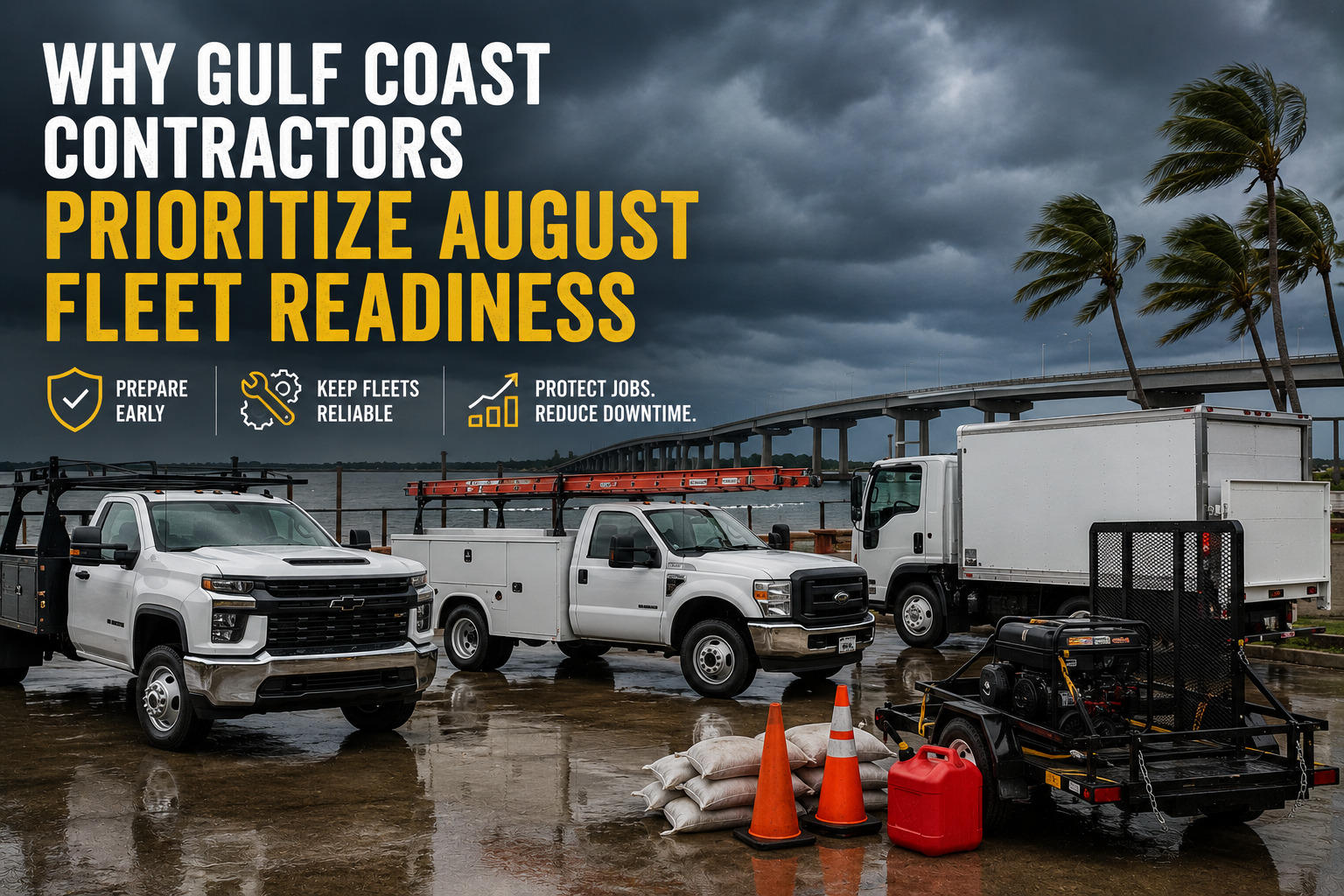
August represents the statistical peak of the Atlantic hurricane season, a period when atmospheric conditions over the Gulf of Mexico rapidly organize into severe weather systems. Florida emergency management agencies urge businesses to establish an updated written hurricane plan, a designated chain of command, and confirmed evacuation routes before August. For commercial contractors, this preparation directly impacts whether a business can deploy its vehicles immediately after a storm or faces weeks of costly downtime.
In Bradenton, where flat coastal terrain sits in immediate proximity to the tidal estuaries of the Manatee River, a single afternoon storm can quickly compromise low-lying jobsites and access roads. Maintaining mechanical reliability across every asset ensures that crews can evacuate safely or move equipment to higher ground without delay. Our certified technicians at our Bradenton service department location focus on preemptive fleet inspections to identify hidden electrical faults, worn steering components, or weak charging systems before severe weather arrives.
A fleet that is mechanically compromised before a storm hits is highly vulnerable to catastrophic failure during emergency operations. Contractors cannot afford to have service vehicles stall in deep water or suffer electrical shorts due to degraded wiring harnesses. If you need to coordinate bulk inspections for your work trucks or utility vans, giving our team a quick call at (941) 214-2231 allows us to schedule priority service windows that minimize your operational downtime.
Table of Contents
- Essential August Commercial Vehicle Storm Readiness Checklist
- Coordinating Fleet and Generator Fuel Supplies Before Landfall
- Securing Onboard Tools and Materials to Prevent Water and Impact Damage
- Mitigating High Wind and Debris Risks for Box Trucks and Vans
- Staging Fleet Assets and Navigating Post-Storm Recovery Timelines
- Telematics Optimization, Insurance Benefits, and Emergency Kit Maintenance
- Answers to Common Commercial Fleet Storm Prep Questions
- Keep Your Commercial Fleet Job-Ready with SRQ Auto
Essential August Commercial Vehicle Storm Readiness Checklist
Heavy rainfall and wind-driven debris demand that commercial vehicles operate at peak mechanical efficiency. A comprehensive August checklist starts with a thorough inspection of the tire assemblies, verifying that tread depth exceeds the standard 4/32-inch threshold required for wet-weather traction. Our service team recommends equipping every work vehicle with heavy-duty puncture repair kits and specialized tire sealant to combat the sharp debris that litters roads immediately following a storm.
Braking systems require equal scrutiny, as water-logged drums and rotors can suffer from severe fade when stopping under heavy payloads. Technicians must measure brake pad thickness, inspect lines for cracking, and verify that the master cylinder fluid is clean and filled to the appropriate level. At the same time, electrical systems must undergo load testing to ensure the 12-volt alternator and battery can handle the increased demands of running high-output wipers, emergency lighting, and onboard communications during heavy downpours.
Fleet managers can offset the operational costs of these vital mechanical upgrades by maximizing used vehicle tax deductions for capital maintenance and safety equipment. Ensuring that every asset is fully protected also involves reviewing your commercial warranty options to guarantee that unexpected mechanical repairs do not interrupt your cash flow. If your business is looking to upgrade its service infrastructure or fund comprehensive fleet reconditioning, exploring our flexible commercial financing structures can provide the necessary capital support.
Coordinating Fleet and Generator Fuel Supplies Before Landfall
Managing fuel logistics during a hurricane warning requires a strict division between vehicle fuel and stationary generator fuel. Commercial fleet operators should maintain a policy of topping off all vehicle fuel tanks as soon as a tropical storm watch is issued, ensuring that assets are fully mobile without relying on local fuel stations that may lose power. Contractors must also secure approved, color-coded fuel cans for generator use, keeping gasoline and diesel strictly separated to prevent accidental engine damage.
Establishing priority delivery agreements with local bulk fuel providers before August is a standard best practice for regional businesses. These agreements ensure that on-site storage tanks are fully replenished prior to landfall, allowing generators to run critical safety systems and fleet dispatch offices without interruption. Proper fuel storage also requires placing bulk tanks on elevated, anchored concrete pads to prevent them from tipping or floating in the event of local flooding.
When preparing your fleet's fuel systems, it is highly beneficial to inspect how successful local operations organize their vehicle setups. You can gain valuable insights by inspecting our recently sold vehicles to see how other contractors configure their fuel-carrying utility bodies and auxiliary tank systems. Our commitment to transparent, high-quality fleet service is reflected in our local reputation, and we invite you to learn more by reading through our customer reviews from active Gulf Coast business owners.
Securing Onboard Tools and Materials to Prevent Water and Impact Damage
Unsecured tools inside a work vehicle pose a dual threat during a high-wind event, acting as heavy projectiles and exposing expensive gear to water damage. Contractors must enforce a strict protocol requiring all hand tools, diagnostic equipment, and power tools to be stored in locked, weather-sealed compartments or heavy-duty bins. Larger items, such as ladders, generators, and concrete saws, must be anchored directly to the vehicle frame using rated ratcheting tie-down straps rather than standard bungee cords.
Water intrusion can ruin specialized electronic equipment and cause rapid rust on precision steel tools. Utilizing heavy-duty plastic dry boxes with integrated rubber gaskets provides an extra layer of defense inside van cargo areas and truck beds. Additionally, taking detailed pre-storm photos of all secured tools and materials within each vehicle provides an auditable record that simplifies the insurance claim process if the vehicle sustains structural damage.
Similar cargo security principles apply to high-capacity passenger transport, where loose items can cause severe injuries if a vehicle encounters sudden wind gusts. For businesses that operate passenger fleets, inspecting the interior cargo configurations of our specialized used shuttle bus inventory can reveal excellent examples of secure, overhead storage netting and floor-anchored luggage barriers. Our service technicians are always available to install heavy-duty cargo tie-downs and partition walls tailored to your specific fleet vehicles.
Mitigating High Wind and Debris Risks for Box Trucks and Vans
High-profile commercial vehicles present a large surface area that acts like a sail during high-wind events. Box trucks and high-roof cargo vans are particularly susceptible to tipping when subjected to sustained lateral winds exceeding 50 mph. To mitigate this risk, fleet managers should park these vehicles close together in tight configurations, using heavier assets like loaded dump trucks or heavy-duty pickups on the outer edges to act as a protective windbreak.
In the expansive commercial districts of Lakewood Ranch, where wide-exposure parking lots offer little natural protection from sweeping Gulf winds, staging high-profile vehicles requires careful planning. Drivers should position vehicles parallel to the predicted wind direction to minimize the lateral surface area exposed to the storm. Setting the parking brake firmly and placing heavy wheel chocks behind the rear tires prevents the wind from rolling or shifting the vehicle into nearby structures.
Debris damage can also be minimized by parking vehicles away from light poles, large trees, and temporary construction fencing. For contractors utilizing specialized hauling equipment, our rugged landscape dump trucks feature heavy steel sides that offer excellent resistance to flying debris. If you are managing a logistics or delivery team, ensuring your vehicles have robust door seals and heavy-duty latches is critical; you can inspect these features on our reliable used box truck inventory or browse our versatile used cargo van inventory to see how modern commercial designs handle severe weather sealing.
Staging Fleet Assets and Navigating Post-Storm Recovery Timelines
Staging fleet assets on designated high ground outside of identified flood zones is the single most effective way to prevent catastrophic water damage. Vehicles should never be left in low-lying yards, near retention ponds, or under weak overhead structures that could collapse under heavy wind loads. When parking commercial vehicles closely together to shield each other from high winds, drivers must set all parking brakes and disconnect vehicle batteries to prevent electrical fires if water intrusion does occur.
Once the storm passes, contractors must adhere to strict safety protocols before deploying their vehicles for recovery work. Driving on flooded roads can hydro-lock engines, ruin differential seals, and destroy electronic control modules. Operators must wait until local emergency management authorities officially lift travel bans and nighttime curfews, which helps ensure that roads are clear of downed power lines and structural debris.
Before starting any staged vehicle, a technician or driver must perform a thorough visual inspection. This walk-around involves confirming that there are no downed live power lines resting on or near the vehicle, no active gas leaks in the immediate area, and no structural compromise to nearby buildings that could collapse. For emergency-registered contractors deploying specialized utility rigs, maintaining the integrity of these vehicles is paramount; you can explore our specialized used service truck and van inventory to see how heavy-duty utility bodies are engineered to protect critical tools and recovery gear during demanding post-storm deployments.
Telematics Optimization, Insurance Benefits, and Emergency Kit Maintenance
Integrating telematics devices into your commercial fleet provides critical operational oversight during severe weather events. These smart systems supply real-time speed, hard braking, and GPS location data directly to fleet managers, allowing them to monitor driver safety and route efficiency as a storm approaches. Many major insurance providers recognize the risk-mitigation value of these devices, offering safe operators ongoing premium discounts of up to 20% when telematics data demonstrates consistent defensive driving habits.
Beyond digital tracking, the physical safety of your crew depends heavily on the readiness of on-board emergency kits. Industry standards dictate that these kits must be physically inspected and replenished at least twice a year—specifically in May before the hurricane season begins and again in August during peak storm activity. Our service technicians often find that emergency kits brought in for inspection during late summer contain completely drained batteries and expired water packets, which can leave crews stranded without basic survival tools.
A fully stocked vehicle emergency kit should include several days of drinking water, nonperishable food, fresh flashlights, a NOAA weather radio, and a complete first-aid kit. Keeping these safety items organized in durable, waterproof bins ensures they remain functional when they are needed most. If your business needs to finance comprehensive safety upgrades, telematics installations, or fleet-wide emergency equipment, completing our secure online credit application can help you establish a dedicated commercial line of credit to cover these vital operational expenses.
Answers to Common Commercial Fleet Storm Prep Questions
Q: What is the safest way to store portable generators in fleet vehicles?
Portable generators must be stored completely empty of fuel and securely strapped down inside a sealed compartment or truck bed during transport. Operating a generator is only safe when it is placed outdoors, far from vehicle windows, doors, and engine air intakes, to prevent carbon monoxide poisoning.
Q: How does salt-water tidal flooding affect commercial vehicle undercarriages?
Salt water is highly corrosive and can cause rapid rust on frame rails, brake lines, and electrical connectors. If a vehicle must traverse brackish water, it requires a thorough undercarriage wash with fresh water and a specialized rust-inhibiting spray immediately afterward.
Q: What documentation should a fleet manager complete before a storm?
Fleet managers should record high-resolution video and photos of every vehicle's interior, exterior, and engine bay before a storm makes landfall. This clear documentation establishes the pre-storm condition of your assets, making it much easier to process insurance claims for wind or water damage. To see how we support local businesses with transparent fleet services, you can learn more on our about us page.
Q: How soon after a storm can contractors legally deploy their fleet vehicles for recovery work?
Contractors can legally deploy their vehicles once local emergency management authorities officially lift travel bans and nighttime curfews. Emergency-registered contractors or those with utility priority credentials often receive earlier road clearance to assist with critical infrastructure repairs.
Keep Your Commercial Fleet Job-Ready with SRQ Auto
At SRQ Auto LLC, we specialize exclusively in quality pre-owned commercial vehicles, serving businesses across Florida and shipping nationwide. Every vehicle is thoroughly inspected, serviced, reconditioned, and backed by our Job Ready Promise, so it is ready to go to work from day one. Our certified technicians use the latest tools to keep your vehicle running smoothly and safely, so you can focus on what matters most.
To ensure your business stays moving forward through the peak of the storm season, contact our service department to schedule a comprehensive fleet inspection. You can visit our physical location at 2212 1st St, Bradenton, FL 34208 or call us at (941) 214-2231 to speak with our dedicated commercial service coordinators. Let us help you protect your assets and view our recent deliveries to see how we keep Gulf Coast contractors prepared for any challenge.
© 2026 SRQ Auto LLC. All rights reserved.
