For any enterprise operating commercial trucks, delivery vans, passenger shuttles, or service vehicles, maintaining strict oversight of driver qualifications is not merely an operational recommendation—it is a vital financial and legal defense line. Motor Vehicle Record (MVR) screening forms the bedrock of modern fleet risk management. When business owners ask, "How frequently should business owners run MVR checks on employees?" the standard baseline answer established by regulatory bodies and commercial insurance underwriters is at least once every 12 months for every employee who operates a company-owned or company-leased vehicle.
However, relying solely on an annual check creates a dangerous 364-day blind spot. Under Florida law and Federal Motor Carrier Safety Administration (FMCSA) regulations—specifically 49 CFR Part 391.25 for commercial driver safety performance—an annual review is the absolute statutory minimum. Leading commercial fleet risk strategists urge business owners across Bradenton, Sarasota, and Lakewood Ranch to establish a risk-tiered screening schedule: low-mileage non-CDL drivers checked annually, high-mileage delivery drivers checked semi-annually (every six months), heavy commercial vehicle operators checked quarterly, and drivers with prior traffic infractions enrolled in continuous MVR monitoring.

The legal implications of neglecting MVR frequency are severe. In Florida courtrooms, business owners can be held directly liable under the legal doctrine of negligent entrustment if an employee causes a severe crash while driving a company vehicle with a suspended, revoked, or restricted license. If a simple MVR pull would have revealed that an employee lost their license due to a DUI or severe moving violation three months prior, the business faces catastrophic civil liability and punitive damage claims. Securing pre-inspected, reliable work vehicles from trusted providers like About Us at SRQ Auto LLC goes hand-in-hand with implementing bulletproof driver compliance protocols to safeguard your business assets. Why Annual Background Audits Fall Short: Continuous MVR Monitoring vs. Scheduled Checks
Historically, companies conducted employee motor vehicle audits during annual performance reviews or insurance renewal cycles. While this traditional model satisfies basic corporate checkboxes, it leaves organizations vulnerable to significant liabilities during the 364 days between checks. An employee who receives a speeding ticket, illegal lane change violation, or reckless driving charge in January remains completely unflagged if your next audit occurs in December.
Even more critically, driver license suspensions often occur without the employer's knowledge. In Florida, driver licenses can be automatically suspended for unpaid traffic tickets, failure to maintain personal auto insurance, child support arrears, or point accumulations under Section 322.27 of the Florida Statutes. If an employee continues driving your company's Used Cargo Van Inventory while silently suspended, commercial vehicle insurance coverage may be voided during a crash claim. Modern fleet safety management is rapidly transitioning toward Continuous MVR Monitoring. Rather than pulling static annual or semi-annual reports, continuous monitoring platforms connect directly to state driver licensing agency (SDLA) databases through secure webhooks. Whenever a driver receives a conviction, suspension, citation, or medical certificate status change, the risk management team receives a real-time alert within 24 to 48 hours.
By implementing continuous driver monitoring, business owners eliminate uninsurable risk factors instantly. Commercial fleet operators can quickly reassign or suspend driving privileges before a preventable highway incident occurs along busy Florida corridors like I-75 or US-41. This proactive posture also demonstrates strict due diligence to commercial insurance underwriters, helping lower overall fleet risk ratings.
Commercial Driver Screening Protocols: What Information Do I Need to Run an MVR Check?
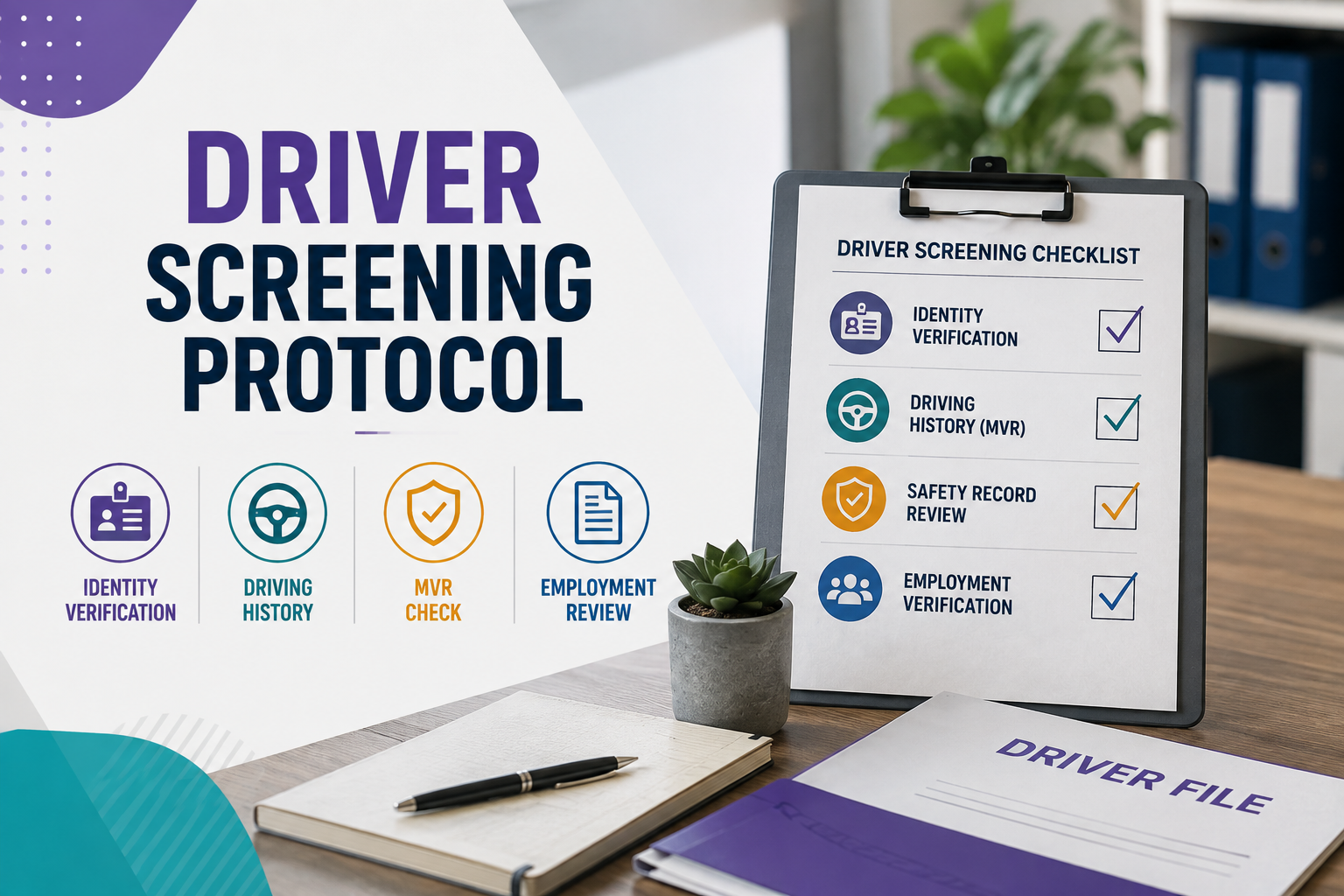
To legally request and audit a Motor Vehicle Record in full compliance with federal and state regulations, business owners must adhere to strict Fair Credit Reporting Act (FCRA) rules and driver privacy mandates. Running background checks without explicit written authorization can subject your company to significant regulatory penalties and class-action statutory lawsuits.
Before pulling an MVR report through the Florida Department of Highway Safety and Motor Vehicles (FLHSMV) or an authorized third-party screening bureau, you must collect and securely store the following required documentation:
• Standalone Written FCRA Disclosure: A written document informing the employee that an MVR background report will be obtained for employment or fleet safety compliance purposes. • Signed Driver Authorization Form: Explicit, written consent signed and dated by the driver permitting ongoing or periodic MVR inquiries. • Full Legal Name: Exactly as printed on state-issued photo identification. • Date of Birth (DOB): Required by state databases to verify driver records accurately. • Driver's License Number & State of Issuance: Valid current driver license details. • Commercial Driver's License (CDL) Medical Examiner’s Certificate: Required for heavy vehicle operators operating trucks over 26,001 lbs GVWR.
When expanding your fleet with work-ready trucks from our Used Commercial Inventory, establishing clear driver onboarding files ensures your business meets both insurance requirements and legal standards from day one. Measuring Fleet Safety: The Business Owner's Commercial Vehicle Risk Calculator
To accurately quantify overall business liability, progressive enterprise risk managers utilize a structured Commercial Vehicle Risk Calculator framework. Rather than assessing driver MVRs in isolation, this risk matrix combines driver record scores with vehicle weight classes, annual route mileage, operational geography, and preventative maintenance completion rates into a single composite fleet risk metric.
By calculating your total fleet risk index quarterly, executive teams can pinpoint dangerous operational trends before they result in costly insurance claims, highway accidents, or negligent entrustment lawsuits. Below is an example of the risk matrix standard used by top commercial operators:
Evaluating risk dynamically empowers business owners to take decisive corrective steps. If your business utilizes specialized haulers like Landscape Dump Trucks or Used Box Truck Inventory, higher gross vehicle weights automatically move those operations into elevated risk tiers, requiring more frequent driver oversight. Data Inputs and Metrics: What Information Do I Need to Use a Commercial Vehicle Risk Calculator?
1. Driver Data Inputs
To feed an effective risk model, business owners must aggregate core driver metrics:
• MVR Point Cumulative Total: Moving violations, speeding, improper turns, or seatbelt infractions over 36 months. • Conviction Severity: Distinguishing minor speed infractions from major charges like reckless driving or DUI. • Commercial Driving Experience: Total years operating specific vehicle configurations.
2. Vehicle Data Inputs
Vehicle engineering parameters dictate potential collision energy:
• Gross Vehicle Weight Rating (GVWR): Class 1 through Class 8 ratings. • Cargo Hazard Level: Hazardous materials, heavy equipment, or passenger transport like Used Shuttle Bus Inventory. • Maintenance Log Completion Rate: Percentage of mandatory pre-trip inspections documented. 3. Operational Exposure
Operational environment amplifies probability of occurrence:
• Annual Mileage Per Vehicle: High-mileage routes generate higher incident probabilities. • Telematics Safety Score: Real-time data on hard braking, rapid acceleration, and cornering speed. • Regional Traffic Density: Driving in heavily congested areas around Bradenton and Sarasota.

Fleet Exposure Audits: How Often Should a Business Recalculate Its Fleet Risk Exposure?
Recalculating overall commercial fleet risk is not a one-time exercise; it must be executed on a structured calendar schedule alongside event-driven audit triggers. At a minimum, business owners should perform a comprehensive fleet risk exposure audit semi-annually (every six months). This aligns with standard commercial auto insurance policy renewal cycles and provides actionable data prior to underwriting negotiations.
In addition to calendar audits, business owners must immediately recalculate fleet risk whenever any of the following operational trigger events occur:
• Acquiring New Commercial Vehicles: Adding specialized units like heavy pickups or Used Service Truck/Van Inventory increases total vehicle weight and exposure. • Entering Peak Delivery Seasons: Rapid expansion of route mileage during peak seasonal construction or delivery surges in Lakewood Ranch. • Post-Incident Safety Audits: Any preventable collision or major traffic citation instantly requires an individual driver and route reassessment. Maintaining updated risk exposure calculations guarantees that management remains fully aware of rising liabilities. When fleet expansions are required, working with experienced commercial vehicle specialists simplifies financing and acquisition.
Business owners looking to expand their fleet can quickly evaluate commercial loan rates and flexible terms by visiting our financing portal to Get Approved Now, ensuring your newly acquired vehicles enter service fully backed and compliant. Insurance Premium Factors: Why Do Some Businesses Pay More for Commercial Auto Insurance?
Commercial auto insurance rates have risen steadily across Florida due to increased litigation costs, heavy traffic volume, and higher repair expenses for modern commercial vehicles. However, two businesses operating similar fleets in Bradenton can experience vastly different insurance premium quotes. Underwriters price commercial risk based on specific actuarial loss determinants.
Key reasons why some businesses pay drastically higher commercial insurance premiums include:
• Unmonitored MVR Violations: Employing drivers with speed infractions, tailgating citations, or recent suspensions greatly inflates overall loss projections. • Infrequent Driver Screening: Insurance carriers penalize fleets that rely only on annual MVR checks without continuous monitoring policies. • Poor Claims Loss Runs: High frequency of minor claims or a single catastrophic crash severely penalizes a company's Loss Ratio and Experience Modification Rating (EMR). • Lack of Written Fleet Safety Guidelines: Operating without formal driver policies, speed restrictions, or pre-trip maintenance logs.
Implementing rigorous MVR screening schedules directly counteracts premium inflation. Insurance carriers frequently offer substantial discount programs (10% to 25%) for businesses that enforce strict driver screening policies and protect their vehicles with comprehensive coverage like our available Commercial Warranty Options. Vehicle Class Impact: Does Vehicle Weight Affect Commercial Vehicle Risk?
Yes, vehicle weight directly impacts commercial vehicle risk calculations. Basic physics dictate that kinetic energy increases exponentially with mass and velocity. When a heavy commercial vehicle is involved in a collision, the resulting impact force creates significantly higher damage severity, elevated bodily injury liability, and intense legal scrutiny. Consequently, screening frequency must scale alongside Gross Vehicle Weight Rating (GVWR).
Light-Duty Vehicles
(<10,000 lbs GVWR)
Includes compact cargo vans, service sedans, and light half-ton pickups. Stopping distances resemble consumer passenger cars. Drivers require standard non-CDL driver licenses. Baseline MVR check frequency: Annual to Semi-Annual.
Medium-Duty Vehicles
(10,001 - 26,000 lbs)
Includes Class 3-6 box trucks, utility vehicles, landscape dump trucks, and passenger shuttles. Subject to DOT safety regulations, driver medical cards, and increased stopping distance requirements. Baseline MVR check frequency: Semi-Annual (Every 6 Months).
Heavy-Duty Commercial
(>26,001 lbs GVWR)
Includes Class 7-8 dump trucks, heavy haulers, and commercial tractor-trailers. Operates under mandatory Commercial Driver's License (CDL) requirements and strict FMCSA oversight. Stopping distances double. Baseline MVR check frequency: Quarterly or Continuous Monitoring.
Maintenance and Compliance: How Do Scheduled Maintenance Logs Lower Commercial Insurance Claims?
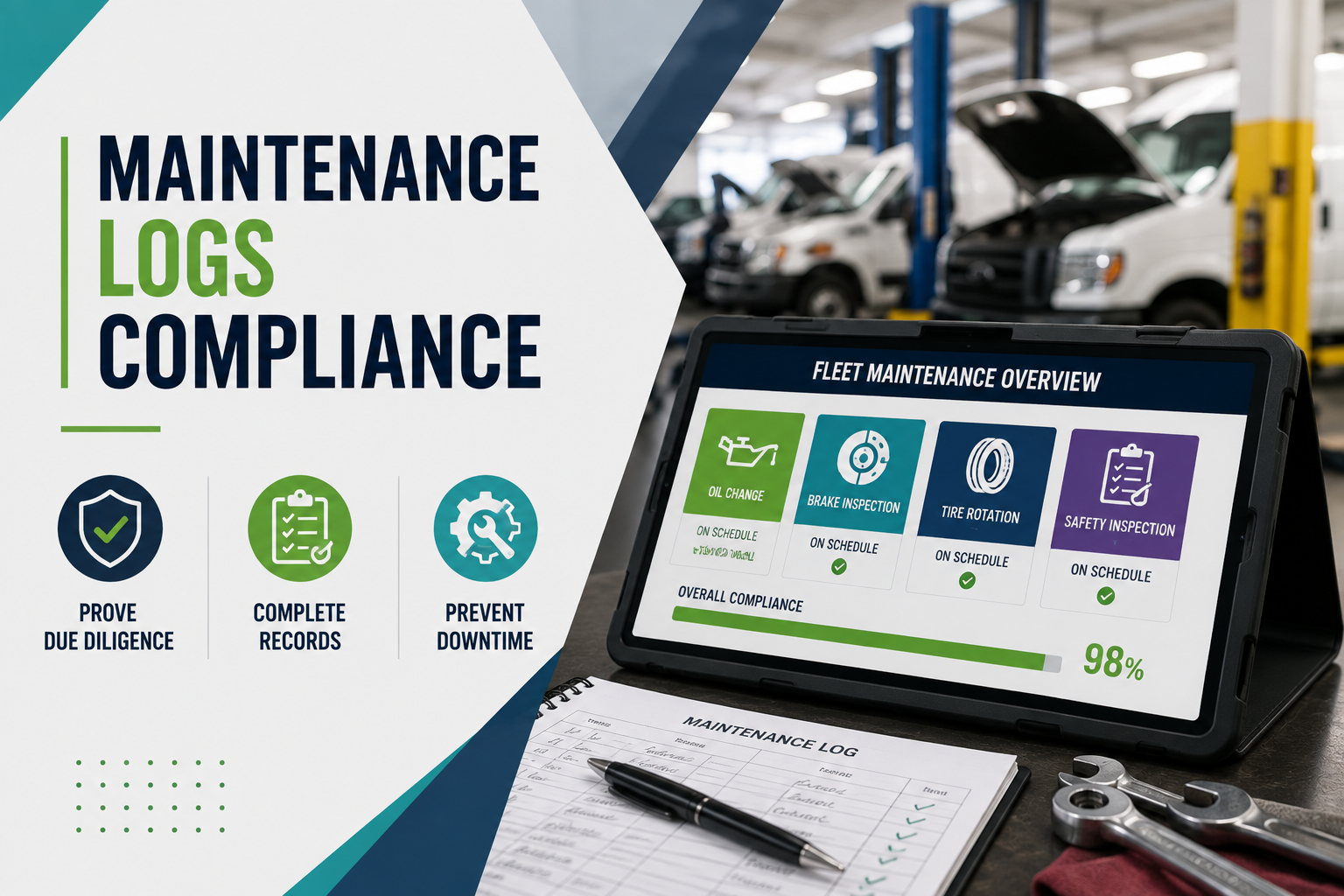
While MVR monitoring verifies driver qualifications, complete vehicle preventative maintenance logs protect your business against mechanical failure liability. In Florida courtrooms, plaintiff attorneys routinely request full service records following commercial vehicle collisions. If a crash was triggered by worn brake pads, tire tread separation, or steering failure, lack of maintenance documentation turns a standard insurance claim into a high-exposure negligence case.
Rigorous, documented scheduled maintenance logs protect commercial enterprise owners by proving legal due diligence. Clean, time-stamped inspection records demonstrate that your fleet vehicles were kept in optimal mechanical operating condition.
At SRQ Auto LLC, every pre-owned commercial vehicle undergoes exhaustive mechanical servicing and reconditioning backed by our Job Ready Promise. Business owners can inspect our fully serviced models or view recent customer satisfaction stories under our Reviews tab. Preventive Maintenance Schedules: How Often Should Commercial Vehicles Undergo Safety Inspections?
To withstand Florida's intense coastal heat, heavy humidity, and stop-and-go Gulf Coast traffic, commercial vehicles require structured safety inspection protocols. Enterprise fleet managers should enforce a three-tiered inspection workflow:
1. Daily Pre-Trip Inspections
Drivers complete daily electronic or paper DVIR (Driver Vehicle Inspection Report) checks prior to dispatch: • Brake response and air pressure gauges • Tire inflation pressure and visible tread damage • Headlights, brake lights, and turn signals • Windshield wipers and fluid levels
2. Monthly Audits
Fleet supervisors inspect high-wear safety elements monthly: • Precision tire depth measurement across all dualies • Brake pad thickness measurement • Battery voltage and corrosion checks • Fluid leakage inspection under operating load
3. Quarterly / Annual Mechanical Audits
Formal mechanical inspection conducted by certified ASE technicians every 3 months or 10,000 miles: • Complete cooling system pressure testing • Suspension alignment and shock absorber checks • Transmission and differential service • DOT FMCSA Annual Inspection certification
Fleet Telematics and Surveillance: Are Dual-Facing Dash Cameras Effective in Reducing Fleet Risk?
Yes, dual-facing dash cameras are exceptionally effective at mitigating commercial fleet risk. While periodic MVR checks disclose past historical driver violations, dual-facing cameras paired with telematics systems monitor real-time behind-the-wheel behavior. Outward-facing lenses capture road conditions, traffic signals, and external collision risks, while inward-facing AI cameras detect distracted driving, cell phone usage, drowsiness, and seatbelt non-compliance.
According to research by the American Transportation Research Institute (ATRI), fleets deploying telematics and dual-facing dash cameras experienced a 60% reduction in crash frequency and a 86% reduction in crash severity. Key benefits include: • Instant Crash Exoneration: High-definition video footage immediately proves non-fault when third-party motorists cause collisions or execute dangerous cut-offs. • Driver Coaching Data: Safety managers receive auto-flagged video clips of hard braking or tailgating, allowing targeted driver coaching before crashes occur. • Lower Insurance Premiums: Top commercial auto carriers provide significant policy discounts for fleets equipped with active telematics camera surveillance.
Combining real-time dash cam intelligence with routine MVR screening gives business owners a comprehensive safety shield, protecting both employees and corporate profitability.
Developing a Fleet Policy: Steps to Implement MVR Monitoring and Driver Guidelines
A well-written Fleet Safety Policy provides clear rules and expectations for every employee who operates a company vehicle. Without a written policy signed by all staff, business owners face extreme difficulty enforcing violation penalties or proving legal due diligence during litigation.
Core steps to draft and execute an enforceable Fleet Safety Policy include:
1. Establish MVR Point Thresholds: Define clear numerical guidelines (e.g., maximum 3 points in 36 months). Explicitly outline zero-tolerance offenses like DUI, reckless driving, or fleeing the scene of an accident. 2. Mandate Self-Reporting Protocols: Require drivers to notify management in writing within 24 hours if their personal or commercial license is cited, suspended, or revoked. 3. Define Corrective Action Workflows: Establish progressive disciplinary tiers, including mandatory remedial defensive driving courses, temporary driving suspension, or employment termination.
4. Set Strict Cell Phone and Technology Policies: Enforce total hands-free operation policies with severe penalties for texting while driving company vehicles. 5. Define Vehicle Maintenance Obligations: Detail driver pre-trip inspection responsibilities and vehicle cleanliness standards. 6. Establish Vehicle Replacement Cycles: Plan structured trade-in and replacement intervals for aging work vehicles based on mileage, maintenance costs, and safety technology upgrades.
Planning vehicle lifecycle replacements keeps your business operate efficiently. Learn about potential tax savings when upgrading fleet units through Used Vehicle Tax Deductions under IRS Section 179 rules. Local Fleet Risk Factors: Managing Driving Standards in Bradenton, Sarasota, and Lakewood Ranch
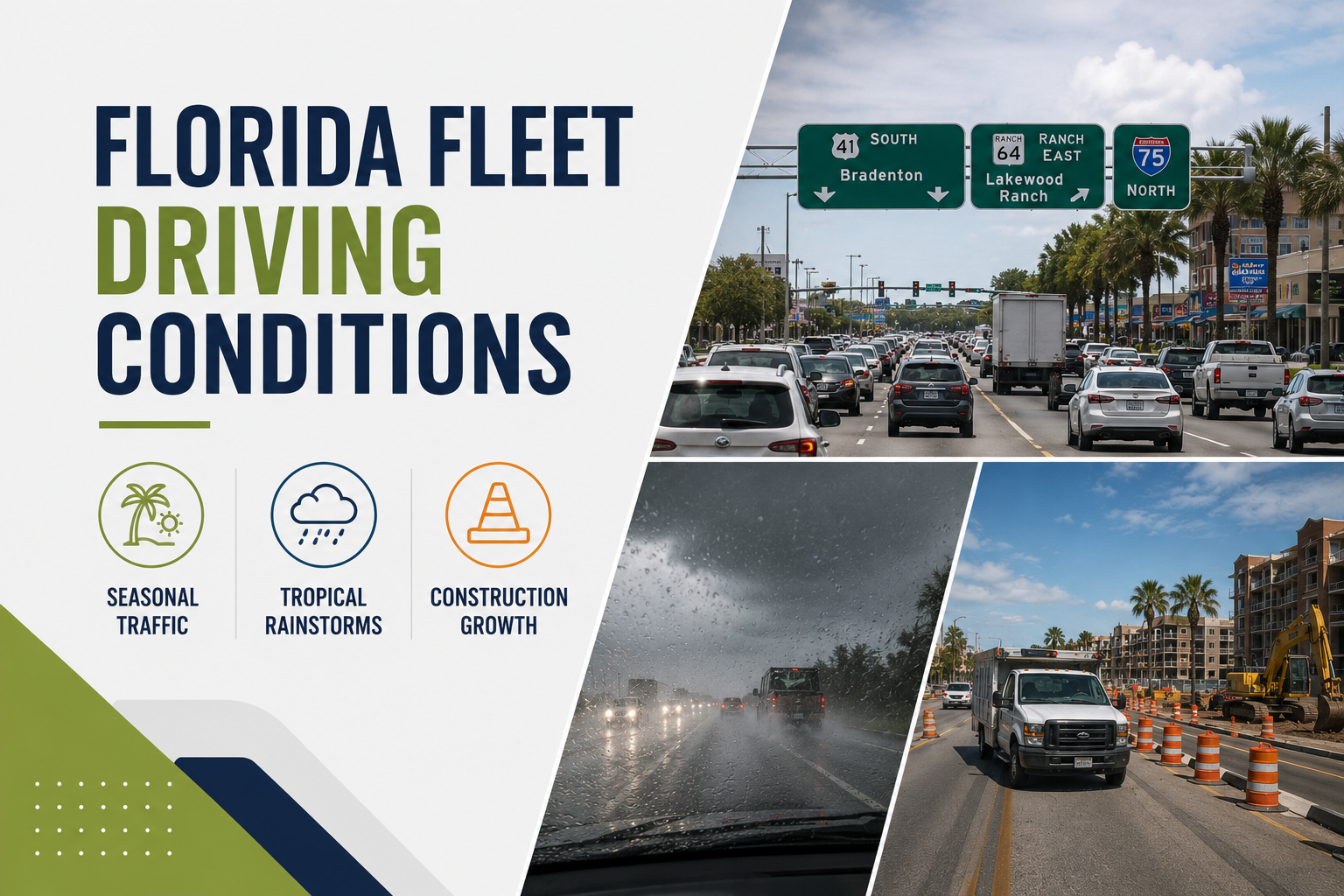
Operating commercial vehicles along the Florida Gulf Coast presents unique localized driving hazards that demand consistent driver oversight and frequent MVR auditing. The business corridor spanning Bradenton, Sarasota, and Lakewood Ranch features heavy traffic density on key arteries like US-41, State Road 64, State Road 70, and I-75.
Unique Southwest Florida driving hazards include:
• Heavy Seasonal Tourist Traffic: High volumes of visiting drivers unfamiliar with local intersections create unpredictable stopping and turn behavior. • Severe Summer Tropical Rainstorms: Torrential afternoon downpours trigger hydroplaning risks and sudden visibility drops, demanding excellent brake pad depth and tire tread. • Rapid Commercial Construction Growth: Rapid residential expansion across Lakewood Ranch means work trucks frequently navigate tight construction zones and heavy congestion.
Because local driving conditions demand heightened situational awareness, running frequent MVR checks ensures that only qualified, defensive drivers represent your company on Florida roadways. Review our Recent Deliveries to see how other Gulf Coast business owners trust SRQ Auto LLC for their commercial fleet expansion. Upgrade Your Fleet and Strengthen Safety Standards at SRQ Auto LLC
Maintaining top-tier safety standards requires pairing vigilant MVR screening practices with reliable, mechanically sound commercial vehicles. At SRQ Auto LLC in Bradenton, FL, we specialize exclusively in commercial work trucks, cargo vans, box trucks, dump beds, and shuttle buses built to perform under demanding job site conditions.
Every commercial vehicle on our lot undergoes rigorous multi-point mechanical inspections, comprehensive reconditioning, and comes backed by our Job Ready Promise. Whether you need a single utility van or are expanding an entire regional fleet across Florida or nationwide, our team delivers competitive commercial financing options and reliable shipping expertise.