
Low Miles or Better Maintenance? What Matters More When Buying a Used Work Truck?
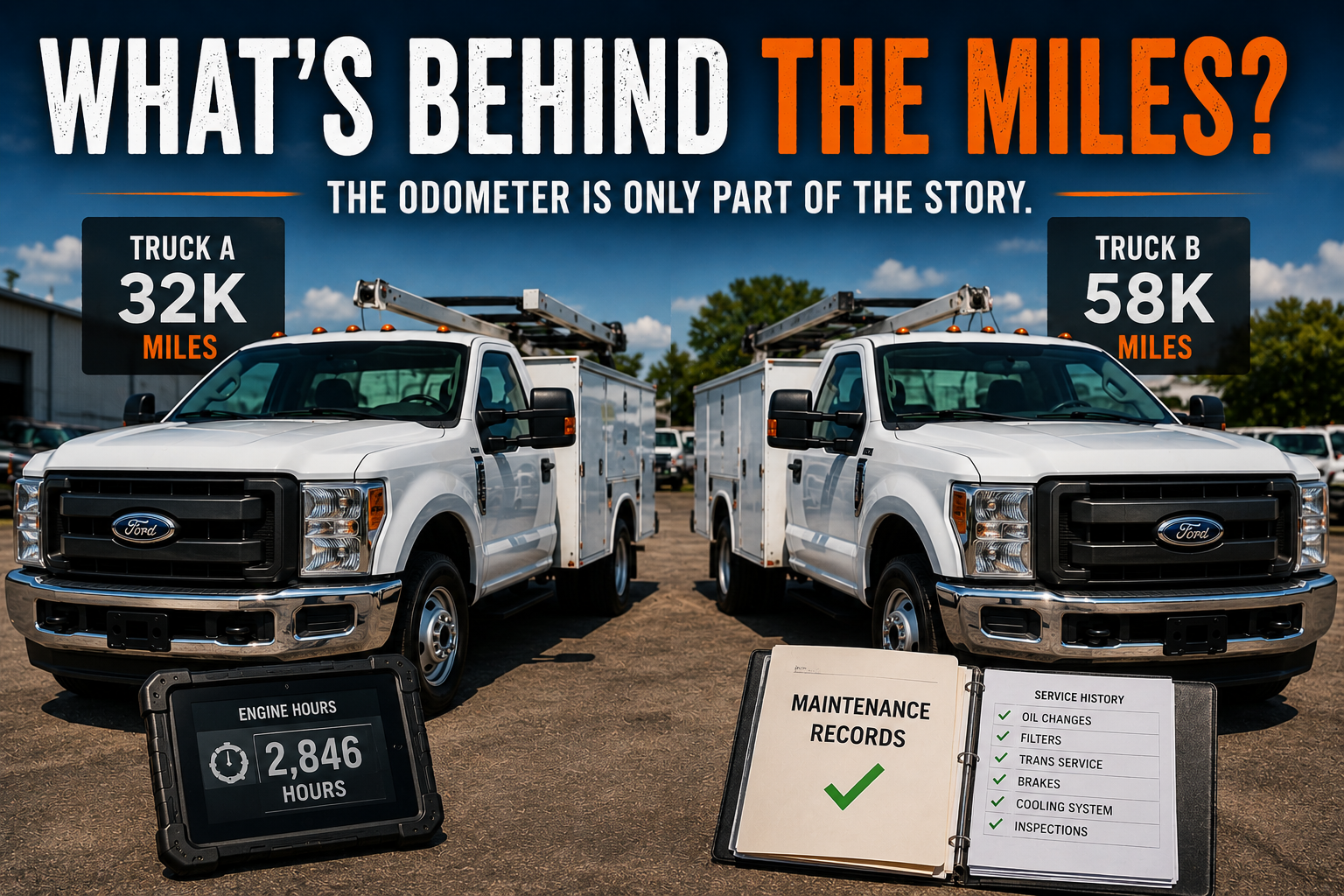
Low mileage is valuable, but mileage without context can be misleading. Maintenance history, engine hours, previous use and overall condition help determine what those miles actually mean. A lower-mile work truck may be the better buy--but only when its service history, duty cycle and mechanical condition support what the odometer suggests.
Commercial fleet managers and experienced buyers know that an odometer reading tells only part of a vehicle's story. Many properly maintained commercial gas and diesel powertrains can provide long service lives, while neglected maintenance can significantly shorten component life regardless of mileage. A pre-owned work truck backed by complete shop invoices and preventive maintenance logs verifies that wear-and-tear items were systematically replaced before mechanical breakdown occurred.
In contrast, an undocumented low-mileage truck introduces immediate financial uncertainty. If a truck sat inactive in a yard for extended periods, internal engine seals can dry out, tires develop flat spots, fuel systems accumulate moisture, and wiring harnesses attract corrosion. When buyers evaluate purchase options on our lot at 2212 1st St, Bradenton, FL 34208, our team highlights documented service records to confirm the vehicle is ready for immediate commercial duty.
Choosing a truck with proven service records protects your business against unexpected job-site downtime and costly mechanical repairs. Before making a final buying decision, you can give our commercial specialists a quick call to walk through full vehicle history reports or apply online for commercial vehicle financing to streamline your purchase.
Table of Contents
- Can a Low-Mileage Used Work Truck Still Have Hidden Wear and Reliability Risks?
- What Factors Most Affect Used Work Truck Pricing Besides Odometer Mileage?
- How Engine Hours, Idle Time, and Commercial Duty Cycles Impact Truck Longevity
- Common Questions About Used Work Truck Mileage and Service Records
- Finding Work-Ready Pre-Owned Trucks with Documented Service Records
Can a Low-Mileage Used Work Truck Still Have Hidden Wear and Reliability Risks?
A low-mileage used work truck can carry substantial hidden wear and mechanical risk if it experienced long idling hours, aggressive short-haul cycles, or prolonged periods of disuse. Odometer numbers measure road distance traveled, but they completely miss stationary engine operating hours and thermal stress from stationary commercial power equipment.
Excessive idling is one of the most common causes of hidden engine wear in low-mileage commercial vehicles. Commercial utility and service trucks frequently idle on job sites to power hydraulic lifts, air compressors, or cabin electronics. An engine idles at low operating temperatures, which burns fuel inefficiently and consumes roughly about 1 gallon of fuel per hour. Over time, extensive idling causes unburnt fuel to dilute engine oil, washes protective lubricant off cylinder walls, and leads to soot buildup inside modern diesel particulate filters (DPF). A truck showing only 30,000 miles on the dash might actually possess the equivalent mechanical engine wear of a truck driven 100,000 highway miles.
Severe short-haul operating cycles create another layer of hidden mechanical degradation. Commercial vehicles used exclusively for short distance trips never reach optimal engine and transmission operating temperatures. Moisture accumulates in the crankcase and exhaust system, accelerating internal corrosion and premature wear on internal bearings.
The coastal climate and flat terrain around Sarasota create unique operational demands, where work trucks frequently spend hours idling at marine work sites or boat ramps under high heat and salt air exposure. Under these conditions, chassis frame rails, suspension leaf springs, and trailer hitches can accumulate surface rust or structural perforation regardless of low odometer figures.
- Key items to inspect on low-mileage commercial trucks include:
- Engine hours vs. odometer ratio: A high engine-hour total paired with low road mileage flags heavy idling history.
- Frame rail and chassis condition: Surface flaking or deep rust around suspension crossmembers compromises structural payload capacity.
- Rubber components and tires: Dry-rotted tire sidewalls and cracked coolant hoses indicate long periods of inactivity.
- Emissions system logs: Soot loading in the diesel exhaust fluid (DEF) system signals short-trip operation.
Reviewing our thoroughly inspected pre-owned commercial truck inventory ensures every vehicle has undergone complete mechanical reconditioning before going on sale.
What Factors Most Affect Used Work Truck Pricing Besides Odometer Mileage?
Beyond odometer mileage, used work truck pricing is primarily determined by documented maintenance history, body upfit equipment, mechanical reconditioning, and chassis condition. Valuation in the commercial truck market focuses heavily on turn-key operational readiness rather than physical age alone.
Documented maintenance records can strengthen a used work truck's value because they reduce uncertainty about how the vehicle was cared for. Service records showing consistent oil changes, transmission service, cooling-system maintenance and replacement of normal wear items give buyers greater confidence in the truck's condition. Missing records do not automatically mean a truck was poorly maintained, but they make its previous care more difficult to verify.
| Valuation Factor | Impact on Market Value | Why It Matters to Commercial Buyers |
|---|---|---|
| Documented Maintenance Logs | Can Support Stronger Resale Value | |
| Proves consistent oil changes, fluid flushes, and scheduled component replacements. | ||
| Specialized Commercial Upfits | High Capital Value Addition | Installed utility bodies, dump beds, or box bodies eliminate aftermarket upfit lead times. |
| --- | --- | --- |
| --- | --- | --- |
| Fresh Tires & Brake Condition | 800 to 1,200 dollars Saved Expenditure | Avoids immediate out-of-pocket wear-item replacement costs after vehicle acquisition. |
| Emissions System Condition | ||
| Reduces Potential Repair Risk | ||
| Properly functioning emissions equipment can help avoid expensive repairs and downtime, particularly on modern diesel work trucks. | ||
Commercial upfits and specialized bodies also represent a massive portion of used truck pricing. Installing a new service body, hydraulic crane, or refrigerated box onto a bare chassis cab can cost tens of thousands of dollars and take months in build lead times. A pre-owned truck equipped with a commercial-grade body offers instant revenue-generating capability for contractors operating across expanding commercial developments in Lakewood Ranch.
Before finalizing a commercial acquisition, smart buyers review total wear-and-tear condition. A truck featuring matching brand tires with deep tread depth, fresh brake pads, and clean diagnostic scan reports holds greater real-world value than a cheaper truck requiring immediate shop work. Buyers looking for ready-to-work haulers can explore our curated selection of pre-owned box trucks to compare fully upfitted vehicles.
How Engine Hours, Idle Time, and Commercial Duty Cycles Impact Truck Longevity
Engine hours and specific commercial duty cycles impact truck longevity far more directly than road mileage because heavy workloads and prolonged idling degrade mechanical components without turning the odometer. Commercial powertrains experience mechanical wear every second the crankshaft rotates, regardless of vehicle speed.
Engine hours provide important context that mileage alone cannot show. A commercial truck may accumulate substantial engine operating time while stationary at job sites, running climate control, hydraulic equipment or other accessories. Extended idling can contribute to engine wear, oil contamination and emissions-system buildup, particularly on modern diesel engines. Comparing engine hours with odometer mileage can therefore provide a more complete picture of how heavily a work truck was actually used.
Commercial duty cycles shape drivetrain longevity in distinct ways:
- Stop-and-Go Local Delivery: Frequent gear changes create severe friction wear on automatic transmission clutch packs, while constant stop-and-start cycles accelerate brake pad and rotor wear.
- Heavy Equipment Towing: Operating near maximum gross combined weight rating (GCWR) elevates fluid temperatures inside differential gearboxes and transmission coolers, requiring accelerated fluid service intervals.
- Highway Freight Hauling: Steady cruising speeds at low RPMs generate minimal brake or transmission wear, allowing high-mileage highway trucks to remain in prime mechanical condition.
Analyzing operating duty cycles helps buyers match used trucks to their specific business workload. When building out your business fleet, taking advantage of flexible commercial financing options lets you acquire heavy-duty trucks built to handle demanding commercial workloads without straining capital reserves.
Common Questions About Used Work Truck Mileage and Service Records
Q: How can I check a used work truck's engine hours against its odometer mileage?
Many modern commercial trucks display total engine hours through the dashboard information center or electronic control module. Comparing engine hours with odometer mileage can help identify how the vehicle was used. A truck with relatively high engine hours but low mileage may have spent significant time idling or operating on short, low-speed routes. Engine hours should be considered alongside service history, previous application and a mechanical inspection rather than used as a stand-alone measure of condition.
Q: What documentation proves a used commercial truck was properly maintained?
Valid service documentation includes detailed, itemized work orders showing vehicle identification numbers (VIN), service dates, exact odometer readings, part numbers replaced, and shop technician sign-offs. Generalized hand-written notes or lump-sum total receipts without part breakdowns do not verify systematic preventive maintenance.
Q: Is a high-mileage highway truck better than a low-mileage stop-and-go truck?
A high-mileage highway truck with complete maintenance records is often mechanically sounder than a low-mileage urban delivery truck. Highway driving maintains constant operating temperatures and steady engine speeds, causing far less friction wear on transmissions, clutches, brakes, and suspension components than short stop-and-go delivery routes.
Q: Why does chassis frame inspection matter so much on pre-owned work trucks?
Chassis frame rails, suspension leaf mounts, and crossmembers support total payload weight. Heavy surface rust flaking or structural rust perforation compromises frame integrity and towing safety. Unlike bolt-on engine parts or brake pads, structural frame damage cannot be economically repaired for heavy commercial work use.
Q: How do commercial upfits and bodies influence total purchase value?
Installed utility upfits, liftgates, and commercial bodies directly add capital value to a pre-owned truck. Acquiring a truck with a pre-installed body saves your business both upfit installation costs and months of build lead time, allowing the vehicle to begin earning revenue immediately upon delivery. You can consult our commercial vehicle specialists to evaluate turn-key upfitted options.
So Which Should You Prioritize: Mileage, Maintenance or Condition?
The best answer is all three. Low mileage remains an important advantage when buying a used work truck, but it should be supported by proper maintenance, reasonable engine hours, appropriate previous use and strong current mechanical condition. A truck with slightly higher mileage may sometimes represent the better value when its history and condition are clearly superior--but mileage should never be ignored altogether.
At SRQ Auto LLC, every pre-owned commercial vehicle in our inventory undergoes rigorous multi-point inspection, thorough servicing, and professional reconditioning backed by our Job Ready Promise. From utility trucks and cargo vans to heavy-duty pickups and box trucks, our inventory is curated specifically for commercial durability. With transparent vehicle histories, flexible commercial financing, nationwide delivery, and hundreds of five-star customer reviews, we help business owners buy with complete confidence.
Visit our Bradenton commercial showroom to inspect our current inventory in person, or reach out to our team at (941) 214-2231 to discuss your fleet requirements and arrange nationwide job-site delivery today.
© 2026 SRQ Auto LLC. All rights reserved.
