
Buying a Non-CDL Work Truck in Florida: Weight, Payload & Trailer Checks
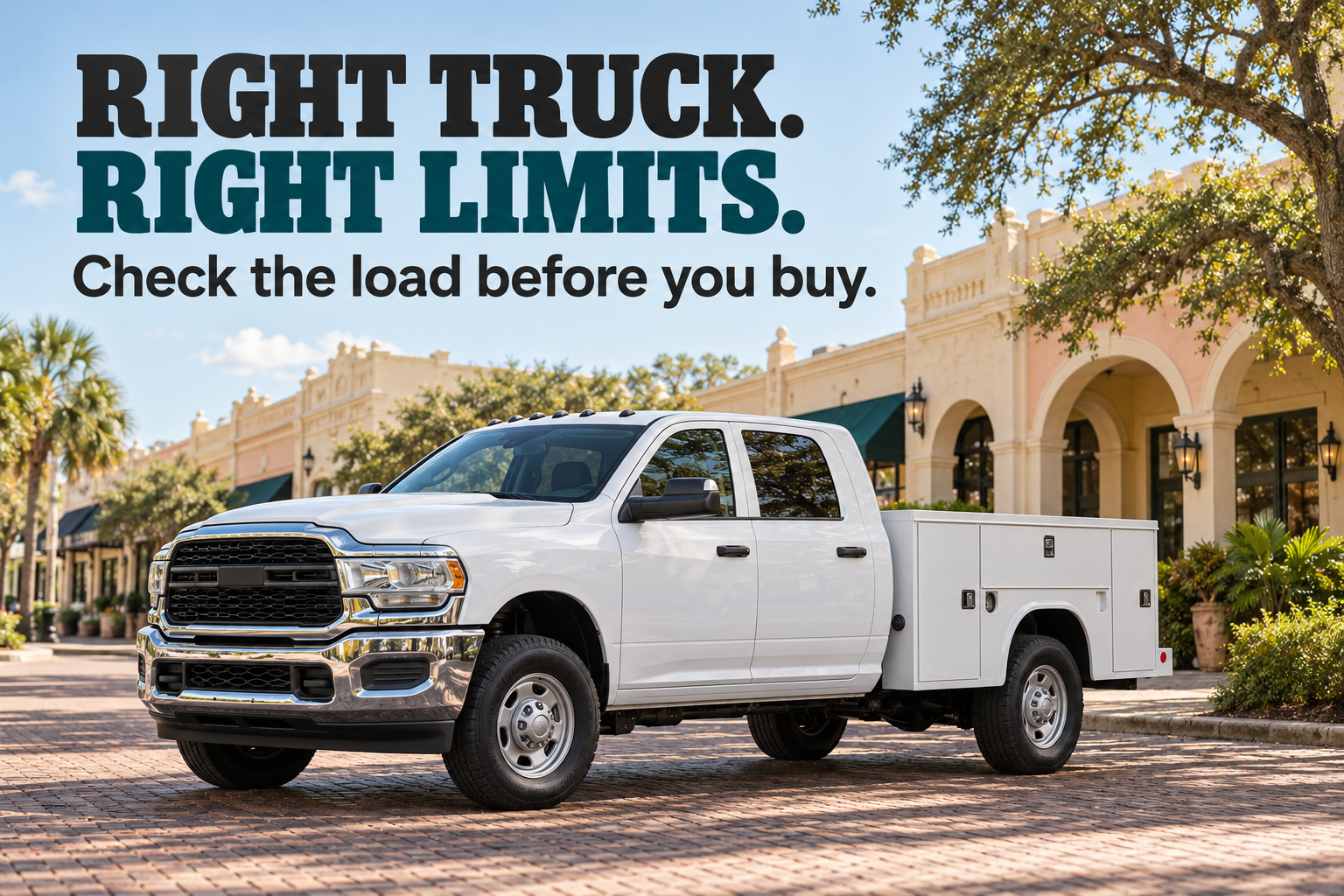
Buying help: Richard Reed, Commercial Sales Representative, SRQ Auto LLC.
A truck can look right in a photograph and still leave too little capacity for your crew, tools and materials. Before buying a used non-CDL work truck, check three things together: the finished vehicle’s weight ratings, its actual working load and any trailer you intend to pull. Choosing by badge, body length or an advertisement’s “non-CDL” description leaves important questions unanswered.
This guide is for commercial buyers comparing service trucks, gas box trucks and other work configurations around Bradenton, Sarasota and Lakewood Ranch. Richard Reed is SRQ Auto’s commercial sales contact for discussing the individual vehicle and your requirements. Licensing decisions should be confirmed against current official rules for your operation.
What is the non-CDL weight limit?
For an ordinary single cargo truck, 26,001 pounds is an important CDL threshold. Federal rules consider the greater of the gross vehicle weight rating or actual gross vehicle weight. A truck rated below that threshold is not automatically suitable for every driver or assignment: towing, passenger design and hazardous cargo can change the answer.
Under FMCSA’s CDL classifications, qualifying heavy straight trucks fall into Class B, while qualifying combinations with a towed unit over 10,000 pounds fall into Class A. Vehicles designed for 16 or more people, including the driver, and certain hazardous-material operations can require Class C even at lower weights. Confirm applicable exemptions and Florida requirements with the licensing authority.
The buying question is therefore more useful when phrased this way: “Does this exact truck, carrying our normal load and towing our trailer, fit our drivers and operation?”
Read the labels before comparing model names
Request clear photographs of the certification labels and the VIN. For a completed commercial truck, ask for any final-stage or body-builder information as well as the chassis label. A service body, liftgate or other fitted equipment belongs in the evaluation.
| Information | What it helps you check |
|---|---|
| GVWR | Maximum rated loaded weight of the individual vehicle. |
| Front and rear GAWR | Rated limits for each axle; total weight alone is insufficient. |
| Actual ready-to-work weight | What the completed truck weighs before your remaining load is added. |
| GCWR and towing information | Combination limits and restrictions for the specific truck and trailer. |
| Tire, wheel and hitch ratings | Component limits that also constrain the intended job. |
Two trucks bearing the same model badge can have different ratings, equipment and remaining capacity. A generic brochure maximum cannot establish the payload of a used truck with a particular body. Ford’s towing and payload guidance also emphasizes configuration and equipment differences. Use the documents for the actual vehicle.
For example, Isuzu’s current gas N-Series specifications list different GVWRs for NPR and NPR-HD models. The manufacturer also separates chassis body-payload figures from completed-vehicle use. Do not read that chassis allowance as the amount of freight a finished box truck can carry. Verify the model year, installed body and vehicle labels instead.
How much can you carry after the upfit?
GVWR is not cargo capacity. The truck itself consumes part of that total, including the fitted body and equipment. Establish a consistent starting weight, then account for anything missing from it: occupants, fuel, tools, stock and accessories. Avoid counting an item twice.
Illustration only: suppose a truck has a 14,500-pound GVWR and weighs 10,200 pounds with its finished body, fitted equipment and full fuel, but without occupants or loose tools. That leaves 4,300 pounds before those additions. Allow 650 pounds for occupants and 750 pounds for tools and stock, and the remaining arithmetic allowance is 2,900 pounds.
Those invented round figures demonstrate the calculation; they are not specifications for an SRQ vehicle. Axle distribution and component limits still apply. A scale ticket showing axle weights can reveal a rear-axle problem that a total-weight calculation misses. Ask how the starting weight was established and whether a loaded weighing is needed.
Will a trailer change the purchase decision?
A landscape or installation business may shop for a service truck today and add an equipment trailer later. Discuss that plan before choosing the truck. The truck’s own GVWR does not settle the combination’s licensing requirements.
Check both units’ labels, actual loaded weights and the applicable combination rating. 49 CFR 383.5 defines how ratings and weights enter the CDL classification. An empty trailer does not necessarily avoid a rating-based requirement. Staying within a license category also does not authorize exceeding towing, axle, tire or hitch limits.
Include trailer tongue weight in the truck’s load assessment. Ask for the receiver or hitch rating and inspect the attachment and wiring. For a contractor working between Tampa and Brandon, a future trailer can matter more to the buying decision than a small difference in advertised purchase price.
Match the body to the load you actually carry
Service and utility trucks: list the compressor, reels, batteries, drawers, ladders and replacement parts that travel every day. Check whether heavy items can be secured in suitable positions. Four-door crew seating is useful only when the remaining capacity supports the people and equipment together. Compare current service-body and utility trucks by their actual configuration.
Gas box trucks: record your heaviest shipment and largest item separately. A load may fit inside the box yet exceed weight limits. Conversely, light bulky goods may use the space first. Check usable interior dimensions, rear-door opening, floor condition and loading method. Start with SRQ’s used box-truck inventory; confirm the individual unit’s fuel type and specifications.
Liftgate-equipped trucks: verify the gate’s own capacity plate, platform dimensions and operation. Its lifting rating is separate from the truck’s payload. Include the gate and any pallet jack in the weight assessment, and confirm that your freight can be handled within the equipment’s limits.
A Sarasota delivery route, a Lakewood Ranch service schedule and a Port Charlotte installation job can demand different access and storage arrangements. Measure the load and loading location before choosing a larger body simply because it offers more space.
Non-CDL does not mean no commercial obligations
Driver licensing is one part of operating a business vehicle. FMCSA’s USDOT guidance identifies interstate cargo operations at 10,001 pounds or more, using the applicable rating or actual weight, among the operations requiring registration. Other rules can address driver qualification, medical certification, inspections and hours of service.
Requirements depend on the operation, route and exceptions; Florida intrastate rules also need checking. A locally driven truck is not automatically exempt from every commercial requirement. Confirm the intended use with the appropriate authority and your commercial insurer before assigning employees to drive it.
Inspect the equipment that creates the working load
Review condition alongside capacity. On a service body, examine compartment floors, shelves, latches, door seals and mounting points. Operate the locks and check whether stored equipment can be secured. On a box body, inspect the floor, roof seams, door tracks and loading equipment. Ask for close photographs where access is limited.
SRQ’s vehicle-specific preparation may include mechanical service, compartment or frame refinishing, paint, Raptor Liner and commercial-equipment checks as needed. Ask what was actually completed on the stock number you are considering. Cosmetic work does not establish a weight rating or replace a condition inspection.
Bring Richard a job description, not just a budget
Before calling, prepare your crew count, estimated daily load, largest item, trailer details and operating area. Ask Richard Reed to help compare the information available for matching vehicles in the current commercial inventory. Confirm availability and request missing specifications before making travel plans.
Use a simple load sheet with four columns: item, quantity, weight and storage position. Include occasional heavy jobs rather than just an unusually light day. If a tool or material weight is unknown, measure it or obtain the supplier’s specification. Bring photographs or dimensions of awkward equipment. For a Fort Myers contractor considering a remote purchase, this worksheet lets the discussion start with what must fit before arranging a visit, inspection or delivery. Keep a copy when comparing trucks so each candidate is evaluated against the same job.
For ownership planning, discuss Tailored Commercial Financing, subject to lender approval and terms. Review warranty and service-contract options for the selected vehicle; written coverage, exclusions and eligibility control. The business vehicle tax-deduction resource can support a separate conversation with your tax professional.
SRQ Auto is an independent Bradenton dealer founded in 2011, serving Florida and nationwide buyers. Meet SRQ Auto, read customer reviews, or plan your visit. Call (941) 214-2231 and ask for Richard with a stock number and your load requirements. That gives the conversation a concrete place to start.
