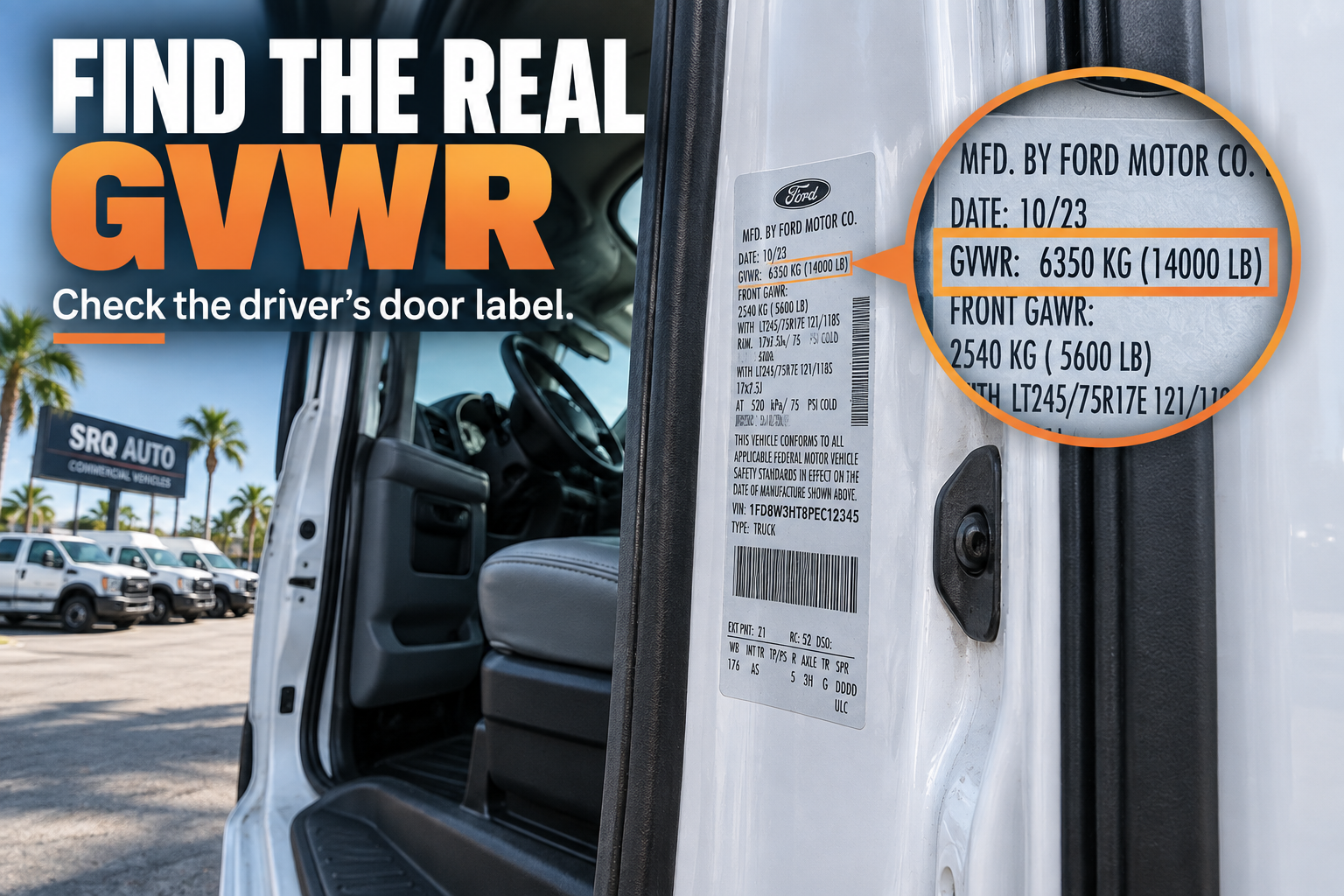
Buy the Work Truck or Pay the Taxes? How Section 179 Can Change the Math in 2026

If your business already needs a commercial vehicle, Section 179 and other depreciation provisions can significantly change the economics of making that purchase before year-end. A qualifying work truck, cargo van, box truck or other commercial vehicle placed in service during 2026 may be eligible for substantial first-year deductions, depending on the vehicle, business use, purchase structure and your company's tax situation.
The important question isn't simply, "Can I write off a work truck?" It's whether buying a vehicle your business genuinely needs makes more financial sense now when the tax benefits are considered alongside purchase price, financing, cash flow and the revenue the vehicle can help produce. This guide explains the 2026 rules business owners should understand before making that decision. Tax treatment varies by taxpayer and vehicle, so always confirm your specific situation with a qualified tax professional. To explore comprehensive tax strategies for pre-owned commercial equipment, check out our detailed guide on Used Vehicle Tax Deductions or consult with your CPA.
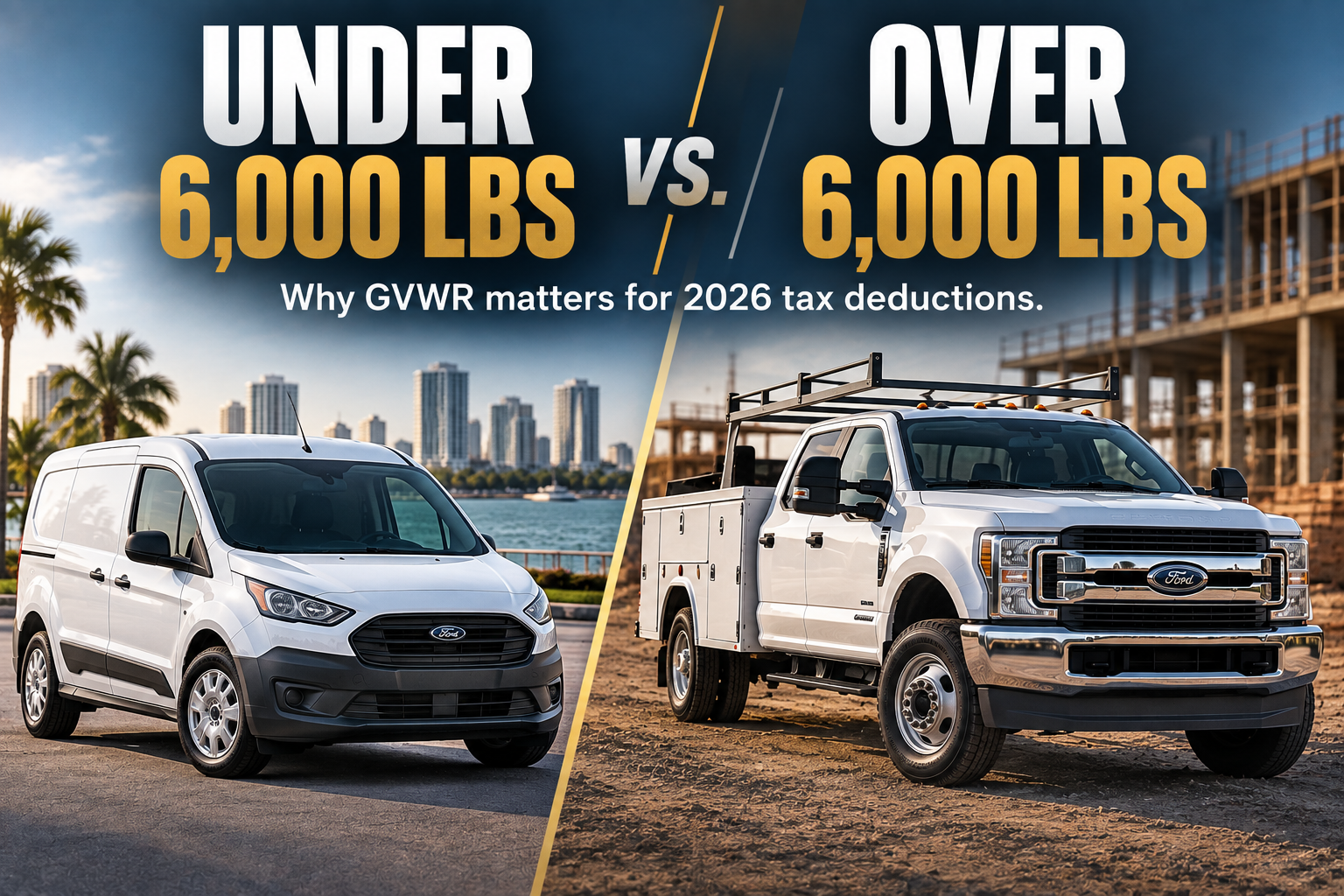
How GVWR Thresholds Change Your Tax Deduction: Under 6,000 lbs vs Over 6,000 lbs
Vehicle Category | GVWR Range | IRS Section 280F Limit | Max 1st-Year Write-Off |
|---|---|---|---|
Light Passenger Cars & Compact Crossovers | Under 6,000 lbs | Subject to 280F Caps | $20,200 (Total Limit) |
Heavy Commercial Pickups & Vans | 6,001 - 14,000 lbs | Exempt from 280F Caps | Up to 100% Purchase Price |
Box Trucks & Medium Duty Work Trucks | Over 14,000 lbs | Exempt from 280F Caps | Up to 100% Purchase Price |
Can a Ford Transit, Ram ProMaster or Chevrolet Express Qualify for Major First-Year Tax Deductions?

Must a Commercial Vehicle Be Paid Off Entirely in Cash Before Year-End to Claim Section 179?
Buy the Work Truck or Pay the Taxes? How Section 179 Changes Business Math
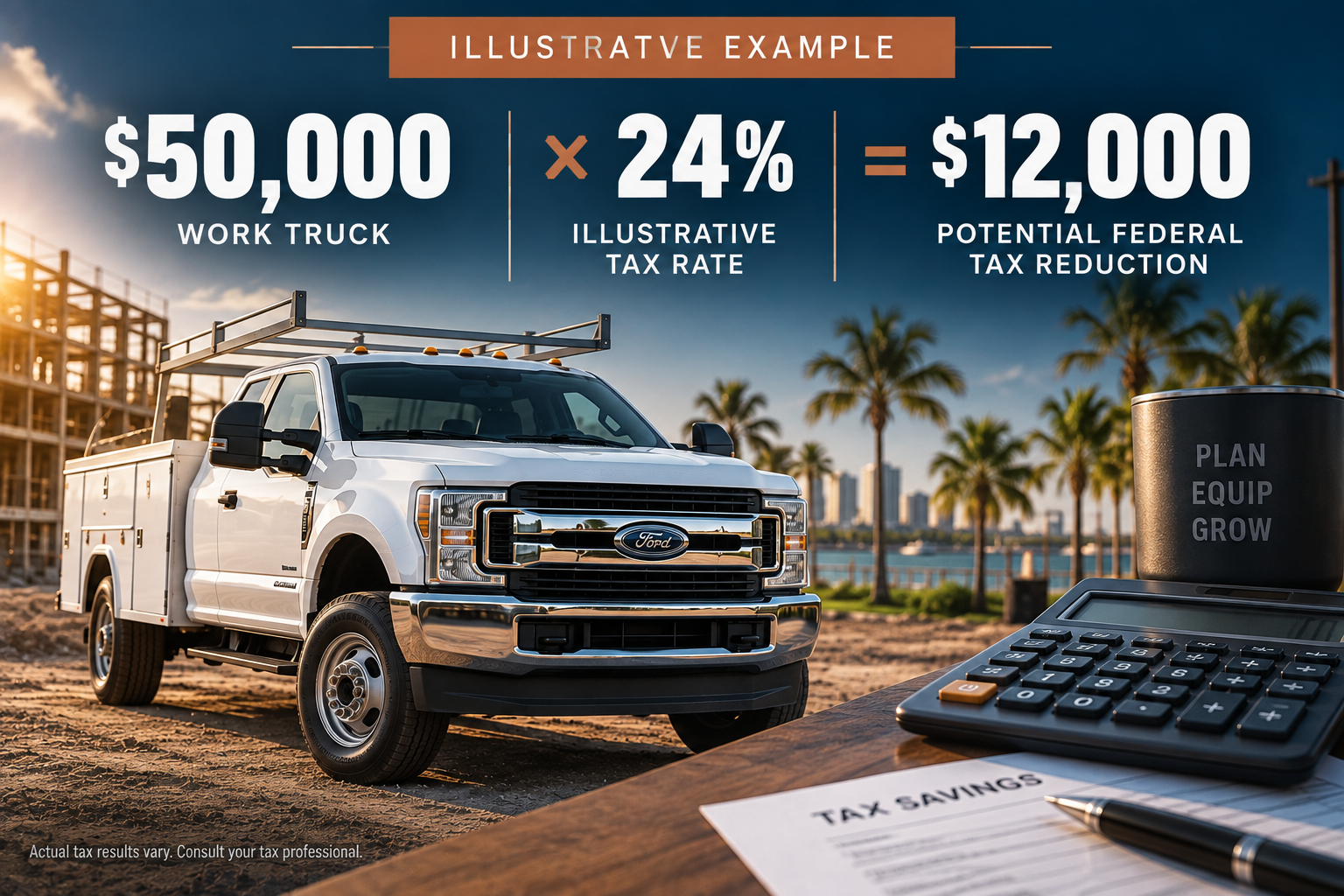
Illustrative Example: What Could a $50,000 Work Truck Deduction Mean?
Consider a business purchasing a $50,000 commercial work truck that qualifies for a full $50,000 first-year deduction under the tax provisions applicable to that business.
If the deduction offsets income that would otherwise be taxed at an effective marginal federal rate of 24%, the potential federal income-tax reduction associated with that deduction would be approximately $12,000.
$50,000 qualifying deduction × 24% illustrative tax rate = $12,000 potential federal tax reduction
This is an illustration--not a promise of tax savings. It does not mean the government pays $12,000 toward the truck or that the truck's purchase price becomes $38,000. Actual tax results depend on entity structure, taxable income, business-use percentage, depreciation method, state taxes and other circumstances.
This is why the best time to involve your CPA is before completing a year-end commercial vehicle purchase rather than after the transaction has already occurred.
Section 179 vs. 100% Bonus Depreciation: What's Different in 2026?

The 50% Business Use Rule and IRS Documentation Requirements for Gulf Coast Businesses
Which Types of Commercial Vehicles May Qualify for First-Year Tax Deductions?
Tax treatment depends on the specific vehicle and business circumstances, but many of the commercial vehicle categories businesses use every day may qualify for Section 179, bonus depreciation or other first-year depreciation treatment.