
How Do You Choose the Right Commercial Work Truck for Your Business?
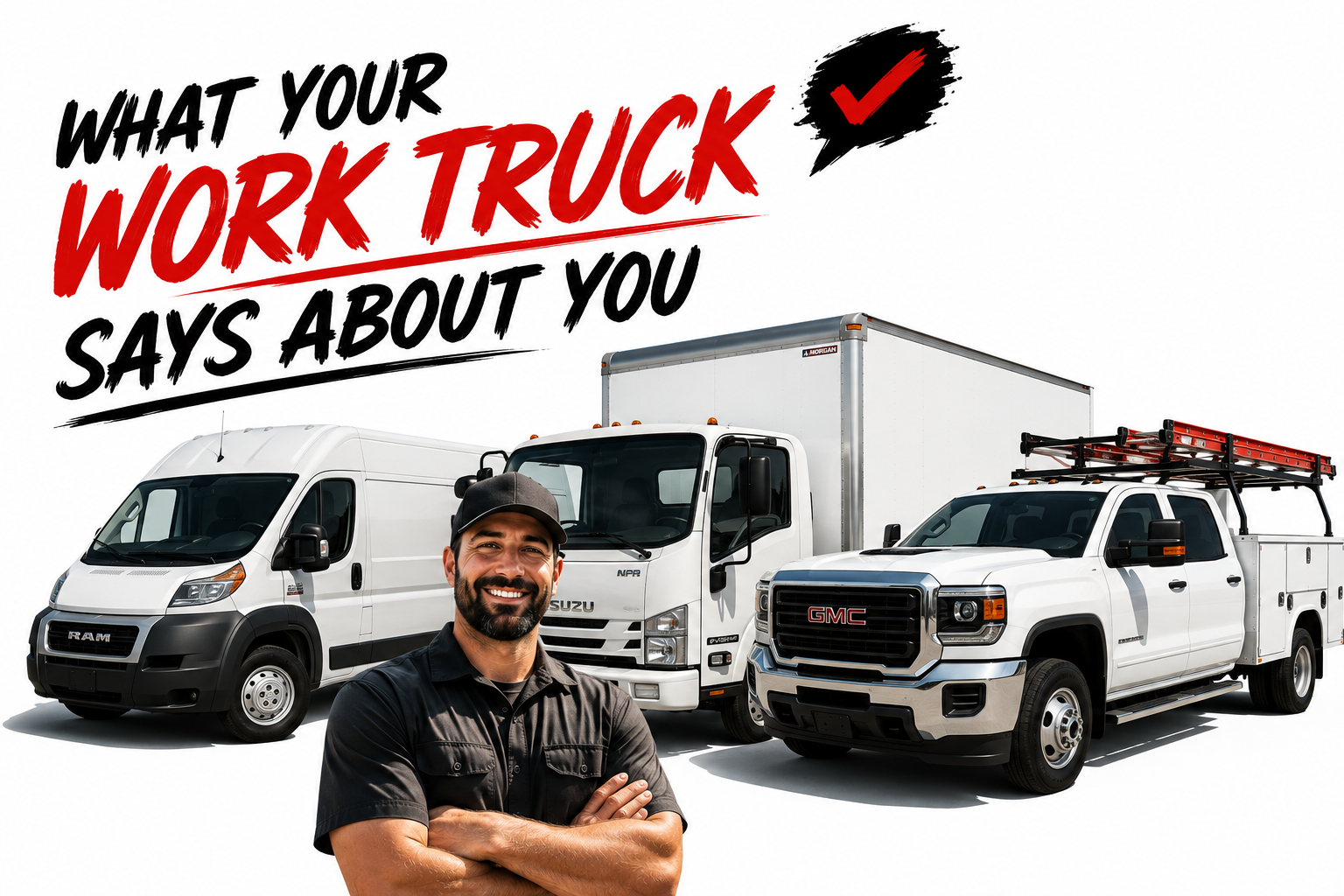
Selecting the right commercial work truck requires matching your daily Gross Vehicle Weight Rating ( GVWR), payload, and towing demands with a vehicle configuration that balances upfront acquisition costs and jobsite functionality. Business owners should calculate peak equipment weights, determine whether an open bed, service body, or enclosed cargo van best secures tools, and choose between half-ton, heavy-duty, or cab-chassis platforms to handle operational demands efficiently.
Pickup trucks account for about 20.9% of all registered vehicles in the United States, with over 60 million pickups on the road, reflecting how integral work trucks are to daily business operations. While industry data shows that approximately 15% of full-size pickup owners use their trucks strictly for commercial tasks, selecting the proper setup prevents component overloading and expensive fleet downtime. Evaluating engine output, bed length, and cab size ensures your vehicle performs reliably without straining chassis components.
At SRQ Auto LLC, our team helps trade professionals and business owners navigate specs, axle ratios, and body styles to find work-ready solutions. You can visit our Bradenton showroom to view our current commercial vehicles in person, or give us a quick call at (941) 214-2231 to speak with a commercial specialist about your fleet requirements.

Table of Contents
- What Does Your Work Truck Say About Your Professional Image and Brand?
- What Specs and Capabilities Should a Professional Work Truck Have?
- What Makes a Service or Utility Truck Bed a Professional-Grade Work Solution?
- How Does a Dedicated Service Van Compare to a Pickup Truck for Trade Contractors?
- Can Paying More for a Higher-Spec Work Truck Save Money in the Long Run?
- How Do Business Owners Select Work Trucks with Local Dealer Support?
- Common Questions About Choosing a Commercial Work Truck
- Take the Next Step Toward Upgrading Your Commercial Fleet
What Does Your Work Truck Say About Your Professional Image and Brand?
A clean, properly configured work truck signals operational reliability, financial stability, and high standards of workmanship to prospective clients before a project even begins. Driving a well-maintained vehicle demonstrates that a business invests in professional tools and respects client property, whereas visible body damage, severe rust, or an overloaded suspension can project disorganization and raise doubts about service quality.
Buyer demographics show that full-size pickup owners average roughly $82,000 to $83,000 in annual household income, and clients frequently view fleet appearance as a direct reflection of business health. Heavy-duty trucks like a Ford Super Duty or Ram 2500 project heavy capability and specialized trade expertise, while well-organized box trucks display efficiency for delivery and logistics operations. Choosing a vehicle that fits your trade scope reinforces customer confidence on every service call.
Matching your vehicle style to your business model also creates a moving billboard that builds brand recognition. Exploring our pre-owned box truck lineup or browsing our broader pre-owned commercial inventory allows you to select clean, high-grade trucks that elevate your company's professional profile across every job site.
What Specs and Capabilities Should a Professional Work Truck Have?
A professional work truck must feature frame strength, engine torque, and suspension specs capable of handling maximum payloads and trailer weights without compromising road safety. Critical technical specifications include matching GVWR to cargo demands, selecting appropriate axle ratios for heavy towing, and equipping active driver-assist technology such as automatic emergency braking and blind-spot monitoring.
For light-duty commercial tasks, a max-payload regular-cab configuration with an 8-foot bed can deliver payload ratings between 2,400 to 3,300 lb, offering practical hauling for residential contractors working throughout expanding communities like Lakewood Ranch. For heavy construction or masonry, heavy-duty trucks provide reinforced frame rails and commercial axles designed for high thermal stress. Furthermore, updated Federal Motor Vehicle Safety Standards under FMVSS 127 extend automatic emergency braking requirements to light trucks at or below 10,000 lb GVWR, making safety tech a standard baseline for modern commercial fleets.
Selecting a vehicle with adequate torque and cooling capacity keeps engine and transmission temperatures stable during heavy towing. To secure a vehicle built for these operational demands, you can apply for commercial financing online to review flexible payment options tailored to your business budget.
What Makes a Service or Utility Truck Bed a Professional-Grade Work Solution?
A service or utility truck bed turns a standard chassis into an organized mobile workstation by replacing basic bedsides with lockable, weather-sealed exterior compartments and an unobstructed center cargo aisle. This layout allows trade professionals to store specialty tools, fittings, and testing equipment securely on side shelving without sacrificing floor space for bulk materials or 4x8 foot building sheets.
Service beds are engineered based on chassis Cab-to-Axle (CA) measurements, such as a 56-inch CA for an 8-foot bed or a 60-inch CA for a 9-foot bed. External compartments feature weather-sealed rubber gaskets, adjustable galvanized shelves, and heavy-duty rotary locks to protect valuable tools from rain, humidity, and jobsite theft. Contractors evaluating service beds on our lot usually measure center aisle width and test external door latches with toolboxes in hand before committing to a chassis setup.
For plumbers, electricians, and HVAC technicians, organized exterior storage eliminates time spent digging through a cluttered bed. You can explore our pre-owned service body vehicles to find job-ready utility trucks equipped to improve field efficiency from day one.
How Does a Dedicated Service Van Compare to a Pickup Truck for Trade Contractors?
Enclosed service vans provide secure, weather-protected interior workspace and standing headroom for trade tools, whereas pickup trucks deliver higher towing capacities, off-road traction, and isolated bed space for heavy payloads. Choosing between them depends on whether your daily trade prioritizes interior inventory organization and weather protection or open-bed hauling and heavy trailer capability.
High-roof cargo vans such as the Ford Transit or Ram ProMaster offer flat interior walls for shelving units and enough interior height for technicians to stand upright, protecting copper fittings and electrical components from rain. Conversely, full-size pickup trucks mounted on commercial frames handle loose materials like gravel or soil and deliver superior trailering capacity for equipment multi-packs.
| Feature Category | Enclosed Cargo Van | Commercial Pickup Truck |
|---|---|---|
| Weather Protection | Full interior enclosure | Open bed (requires cover/cap) |
| Tool Security | Enclosed lockable cabin | Lockable bed boxes / tool caps |
| Max Towing Capacity | Moderate (typically 5,000–6,900 lb) | High (up to 12,000–20,000+ lb) |
| Interior Standing Height | Up to 76+ inches (High Roof) | Standard cab seating height |
Evaluating these trade-offs ensures your fleet investment aligns with your daily job logistics. To see fully enclosed options, take a look at our pre-owned cargo van inventory to find the ideal setup for your crew.
Can Paying More for a Higher-Spec Work Truck Save Money in the Long Run?
Investing in a higher-spec commercial truck saves money over time by preventing structural overloading, reducing drivetrain wear, and minimizing jobsite downtime. Upgrading to a heavier payload package, a high-output turbo-diesel engine, or a factory towing package keeps core components operating well within engineered tolerances, extending vehicle service life and preserving resale value.
Data indicates that heavy-duty pickup configurations are significantly more likely to be used primarily for business, with roughly 25% of heavy-duty owners reporting commercial-first usage compared to 15% for half-ton trucks. Operating a lighter truck continuously at its maximum weight limit accelerates brake pad wear, strains transmission clutches, and fatigue suspension springs. A higher-spec chassis provides larger brake rotors, heavy-duty cooling systems, and commercial axle assemblies built to withstand daily commercial abuse, ultimately lowering repair costs per mile.
How Do Business Owners Select Work Trucks with Local Dealer Support?
Small business owners in Bradenton select work trucks by evaluating immediate inventory availability, transparent vehicle history reports, commercial financing options, and local dealer support that keeps fleet downtime to a minimum. Partnering with a dedicated commercial dealership ensures access to thoroughly inspected, work-ready trucks equipped for Florida's humid coastal operating conditions.
Local business owners benefit from working with sales teams who understand commercial variables like GVWR, payload limits, and Section 179 tax deduction eligibility. Thorough pre-sale inspections, fluid analysis, and chassis chemical power washing protect vehicles against coastal salt-air exposure and heat stress.
At SRQ Auto LLC, we specialize exclusively in pre-owned commercial vehicles, providing transparent histories and commercial financing tailored to local trade requirements. You can visit our Bradenton location at 2212 1st St, Bradenton, FL 34208 to inspect our fleet, or reach out to our team at (941) 214-2231 to discuss your upcoming vehicle acquisition.
Common Questions About Choosing a Commercial Work Truck
Q: Do I need a Commercial Driver's License (CDL) to drive a standard utility truck?
A Commercial Driver's License is only required if the vehicle's Gross Vehicle Weight Rating ( GVWR) or gross combined weight rating is 26,001 pounds or greater. Most Class 2b through Class 5 service trucks, ranging from 8,501 to 19,500 lb GVWR, can be operated legally with a standard Class E Florida driver's license.
Q: What is Cab-to-Axle distance and why is it important when buying a chassis cab?
Cab-to-Axle (CA) is the physical measurement in inches from the back of the vehicle's cab to the center line of the rear axle. Matching this distance to the service body length—such as a 60-inch CA for a 9-foot body—is necessary to ensure proper frame mounting, correct axle weight distribution, and legal rear body overhang.
Q: Can pre-owned commercial trucks qualify for Section 179 tax deductions?
Pre-owned commercial vehicles put into service for business operations at least 50% of the time can qualify for Section 179 tax deductions. Heavy-duty pickup trucks, cargo vans without rear passenger seating, and specialized utility vehicles meeting specific GVWR thresholds allow business owners to write off qualifying acquisition costs upfront.
Q: What documents are typically required when applying for commercial vehicle financing?
Commercial vehicle loan applications generally require business identification, tax identification numbers, recent bank statements, and basic financial documentation showing operational revenue. Commercial lenders evaluate both the business credit profile and the income-generating role of the truck to structure manageable loan terms.
Q: How do coastal humidity and salt air affect pre-owned commercial trucks?
Coastal environments accelerate corrosion on frame rails, electrical wiring, brake lines, and underbody hardware if vehicles are unwashed or unprotected. Thorough structural inspections, underbody chemical power washing, and protective undercoatings prevent environmental rust from compromising chassis strength and vehicle longevity.
Take the Next Step Toward Upgrading Your Commercial Fleet
Choosing the right work truck elevates your business image, protects your tools, and ensures your crew operates with maximum efficiency on every job site. Whether you need an agile light-duty pickup, a heavy-duty hauler, or an organized service body, selecting a vehicle with the right payload ratings and commercial specs is essential for long-term profitability.
At SRQ Auto LLC, every commercial truck in our inventory undergoes mechanical reconditioning, fluid checks, and structural inspections to meet our Job Ready Promise. Our commercial finance specialists are ready to help you structure competitive terms that keep your cash flow active while adding reliable machinery to your business.
To find the right vehicle for your trade, start by browsing our pre-owned commercial inventory online, or visit our Bradenton dealership today to test drive your next work truck.
© 2026 SRQ Auto LLC. All rights reserved.
