
Starting a Cargo Van Business? Check the Work Before Buying
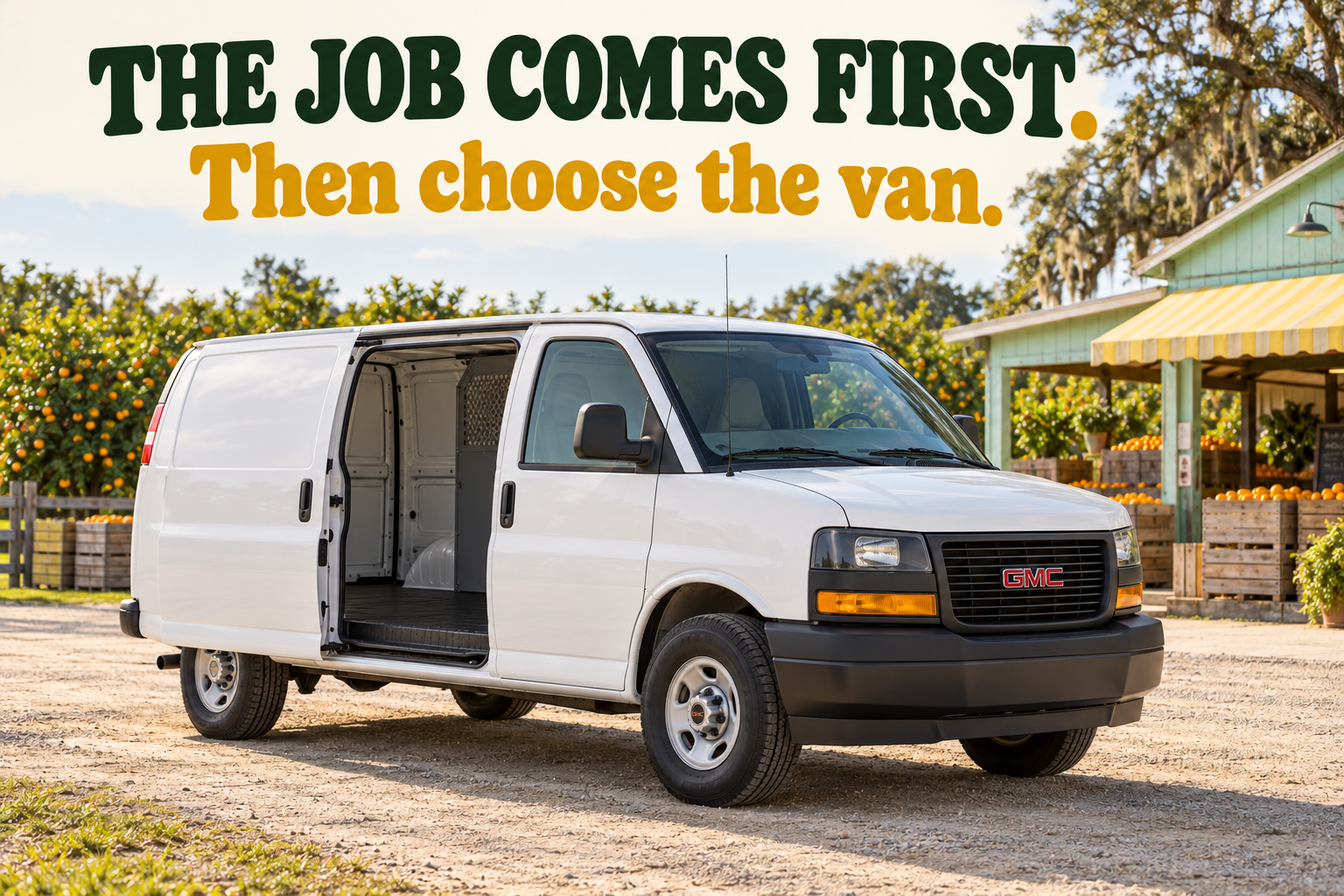
Starting a cargo van business requires more than buying a van and finding a load board. Before choosing a vehicle, confirm what a prospective customer or delivery network will accept, what the work actually involves and whether the payment covers the complete job. A suitable van supports a workable service; owning one does not create a contract or guarantee profit.
This guide focuses on that pre-purchase decision. Chris Hilgeman, owner of SRQ Auto in Bradenton, brings the dealership’s commercial buying and reconditioning perspective. Use the questions below to turn a possible delivery opportunity into a vehicle brief, then compare current used cargo vans against it.
Get the work requirements before the vehicle payment
What do you need to start a cargo van business? Start with a defined service and a credible path to paid work. Ask prospective customers what moves, who loads it, where it goes, when it must arrive and how the carrier is paid. Record the answers before treating a particular van as an investment.
A local parts route, bulky retail delivery and time-sensitive courier assignment can require very different vehicles and operating arrangements. A listing for available work is not a signed agreement. Clarify the application, screening and onboarding process, along with any conditions that must be satisfied before assignments become available.
Ask whether the proposed work is guaranteed, offered when available or subject to a bidding process. Obtain the relevant written terms. Build a plan for a quiet week instead of assuming every advertised opportunity will become a paid delivery.
Confirm that the exact van qualifies
Send the prospective customer or network the year, make, model, VIN and photographs of the actual configuration. Ask about vehicle-age limits, cargo-body requirements, condition standards, equipment and documentation. Requirements belong to that opportunity; another operator’s acceptance does not prove your vehicle qualifies.
For one published example, GoShare distinguishes full-size cargo vans from passenger vehicles and compact cargo vehicles when classifying projects. That illustrates why a vehicle’s classification matters. Confirm current rules and service availability directly; this is not a recommendation, a partnership or assurance of assignments.
| Before buying | Useful evidence |
|---|---|
| Vehicle acceptance | Written criteria and confirmation for the specific configuration. |
| Cargo fit | Packed dimensions, maximum working weight and loading method. |
| Payment | Rates, fees, waiting terms, cancellations and payment timing. |
| Operating permission | Applicable registrations, insurance and customer requirements confirmed. |
Measure the item that decides whether you can accept the job
Get the largest routinely carried item’s packaged dimensions, including its pallet, handles or protective wrapping. Compare those dimensions with the actual rear and side openings, floor space and narrowest usable passage. Total cargo volume does not establish whether one awkward item will fit.
Request a loading demonstration or a continuous video showing the doorway and intended cargo position. Identify the cart, dolly or other handling equipment required. Confirm who supplies unloading help and whether the delivery stops at the curb, receiving area or inside the building. Each changes the job you are accepting.
Do not assume a van advertised for pallet delivery includes a safe way to load or restrain every pallet. Loading access, cargo weight, suitable restraint and receiver equipment must work together. Have uncertain loading arrangements assessed by someone qualified before quoting the service.
Check working weight after equipment is aboard
Include the driver, helper, handling equipment, supplies and installed accessories when checking carrying capacity. Empty floor space is not proof of available payload. Obtain the specific van’s labels and appropriate manufacturer guidance, and use scale weights where needed with the loading condition clearly recorded.
Ford’s load-limit guidance explains how additional equipment affects available payload. Follow the instructions for your actual vehicle and check axle limits too. Equipment already included in a measured vehicle weight should not be subtracted a second time. Avoid choosing a van from a model-wide maximum rating.
Walk through a complete delivery stop
Picture parking at a Sarasota receiving area: can the required door open, can the cart clear the entrance and can the driver retrieve the right item without unloading everything? At a Lakewood Ranch residential stop, consider legal parking, walking distance and the agreed unloading location. These are planning examples, not customer stories.
For work involving Tampa or Brandon, include travel to the first pickup and the return after the final drop. Check overhead clearance and turning access against the specific vehicle. A higher roof may help some tasks while restricting access elsewhere. Test the proposed route at representative times before promising a schedule.
Ask what the delivery rate leaves after the work
Is a cargo van business profitable? It can be, but an hourly advertisement or gross delivery payment is not take-home income. Include total driving, loading, waiting, paperwork and unpaid repositioning time. Account for fuel, insurance, vehicle costs, maintenance, platform or dispatch fees, supplies and compensation for your labor.
Ask how failed deliveries, returns, damage claims and cancellations are handled. Check whether payment timing leaves you covering expenses before money arrives. The SBA’s break-even resource can help organize a cost analysis; enter figures grounded in your own terms and quotes. No universal earnings range establishes that your proposed route works.
Resolve insurance and operating requirements for the service
Explain your proposed operation to a commercial insurance professional: what belongs to you, what belongs to customers, the routes, drivers and work performed during unloading. Ask which coverages, limits and exclusions apply. A network’s insurance description does not establish that all your activities are covered.
Driver licensing, business registration, operating authority and insurance answer different questions. FMCSA’s operating-authority guidance distinguishes operations and exceptions. Verify requirements for your actual cargo and service with the relevant authorities, including Florida and local requirements. Do not treat a small van or a familiar driver’s license as a blanket exemption from business obligations.
Understand what counts as a completed delivery
Ask how pickup condition, item counts and delivery completion must be recorded. Some work may require scanning, an approved app, photographs or a recipient signature. Establish the process before deciding which phone mount, charging arrangement or paperwork storage belongs in the cab. Keep the equipment useful and secure rather than adding accessories without a defined task.
Clarify what happens when the shipment differs from the booking: an extra item, damaged packaging, a heavier load or a receiver requesting another destination. Know whom to contact and when to pause for instructions. A van that can physically hold an unexpected item does not establish permission, suitable handling or payment for the changed job.
Then rehearse one ordinary assignment from receiving dispatch through submitting the completion record. Count the time at each stage. That exercise can reveal a need for side access, separate returned-goods space or a different loading sequence that a simple cargo-volume comparison misses.
Inspect how the previous work affects the next assignment
Frequent delivery stops put doors, locks, floor surfaces and cargo-area fittings into repeated use. Ask to operate each door and inspect visible seals, hinges and latches. Look for water entry, damaged flooring and unsecured equipment. Decide whether the proposed cargo needs a different interior before treating existing equipment as a benefit.
During this guide’s October 26, 2026 check, SRQ listed 2021 Ford Transit 250 stock E202 with a Low Roof, steel shelving and an Adrian Steel bulkhead. Those features may suit organized parts delivery, but installed storage can interfere with bulky freight. Verify measurements and availability; these details describe that listing, not every Transit.
E202’s dealer-update panel lists fresh oil and filter, a new cabin air filter and new wiper blades alongside cleaning and reconditioning. Request the completed-work details and assess mechanical condition separately from cargo suitability. SRQ’s vehicle-specific preparation may also address tires, glass, upholstery or cargo-area needs when identified; it cannot guarantee future repairs will disappear.
Before collection or delivery, agree which preparation and equipment changes are included, who performs them and when they will be ready. Align the purchase timeline with customer acceptance and insurance requirements. Buying early does not necessarily bring paid work forward, especially while onboarding conditions remain unresolved.
Turn the opportunity into a purchase brief
Bring the customer’s written requirements, largest load dimensions, working weight, route restrictions and unresolved approval conditions to Chris and the SRQ team. Ask which available configurations fit and what still needs measuring. Review warranty and service-contract information for actual eligibility, terms, exclusions and deductibles. Explore Tailored Commercial Financing, subject to lender approval and terms.
SRQ Auto is an independent Bradenton commercial dealer founded in 2011, serving Sarasota, Lakewood Ranch, Florida and nationwide buyers. Browse cargo inventory, read customer reviews, learn about SRQ or get directions. Call (941) 214-2231 with the work requirements before choosing the van.
