Best Truck for a Welding Rig: How to Build the Right Mobile Welding Truck

A mobile welding rig is only as useful as the truck carrying it. The welder, bottles, leads, tools, compressor, fuel, parts and commercial body all add weight and take up space, so choosing the truck first without thinking through the complete setup can create problems later.
At SRQ Auto, we buy, recondition and sell service trucks, utility trucks, crane trucks and other commercial vehicles used by trades throughout Florida and nationwide. Welding setups vary, but the same principle applies: build the truck around the work.
A good welding rig needs enough capacity for the completed setup, safe and practical equipment placement, accessible storage and a chassis that fits where the welder actually works.
Browse SRQ Auto's Current Service & Utility Trucks
What Is a Welding Rig Truck?
A welding rig truck is a commercial vehicle configured to carry welding equipment and the tools and supplies needed for mobile work. Depending on the trade, that can include an engine-driven welder, leads, gas cylinders, hand tools, consumables, generator capability, compressor equipment, parts and material storage.
The truck may use a pickup bed, flatbed or service/utility body. The best configuration depends on the equipment being carried and the work being performed.
What Is the Best Truck for a Welding Rig?
There is no single best welding-rig truck for every welder. The right platform depends on the completed weight, equipment layout, towing requirements, terrain, crew size and type of welding work.
A lighter setup may fit an appropriately rated pickup or service truck. A heavier field setup with substantial equipment, tools and materials may require a higher-capacity chassis.
Start with the finished rig—not the badge on the grille.
Calculate the Weight Before Choosing the Truck
Payload is one of the most important considerations when building a mobile welding truck.
Account for the commercial body plus the welder, cylinders, leads, tools, compressor, fuel, occupants, parts and anything else that normally rides in the truck.
GVWR is the maximum rated weight of the complete loaded vehicle. Usable payload depends on the actual weight of the completed truck, so a heavy service body or other equipment reduces the capacity remaining for tools and cargo.
Use the specific vehicle's certification labels and manufacturer ratings when planning the build.
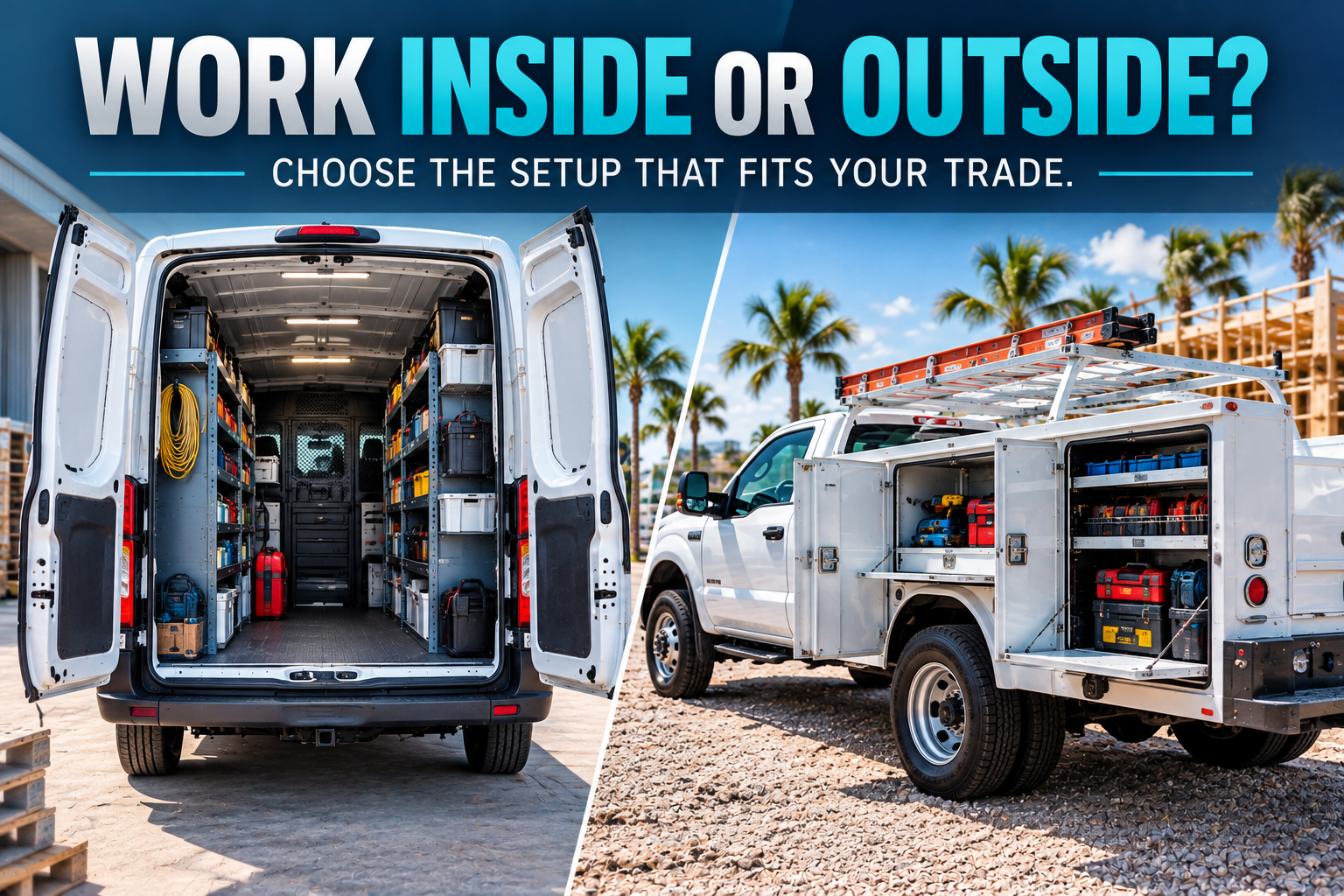
Service Body vs. Flatbed for a Welding Rig
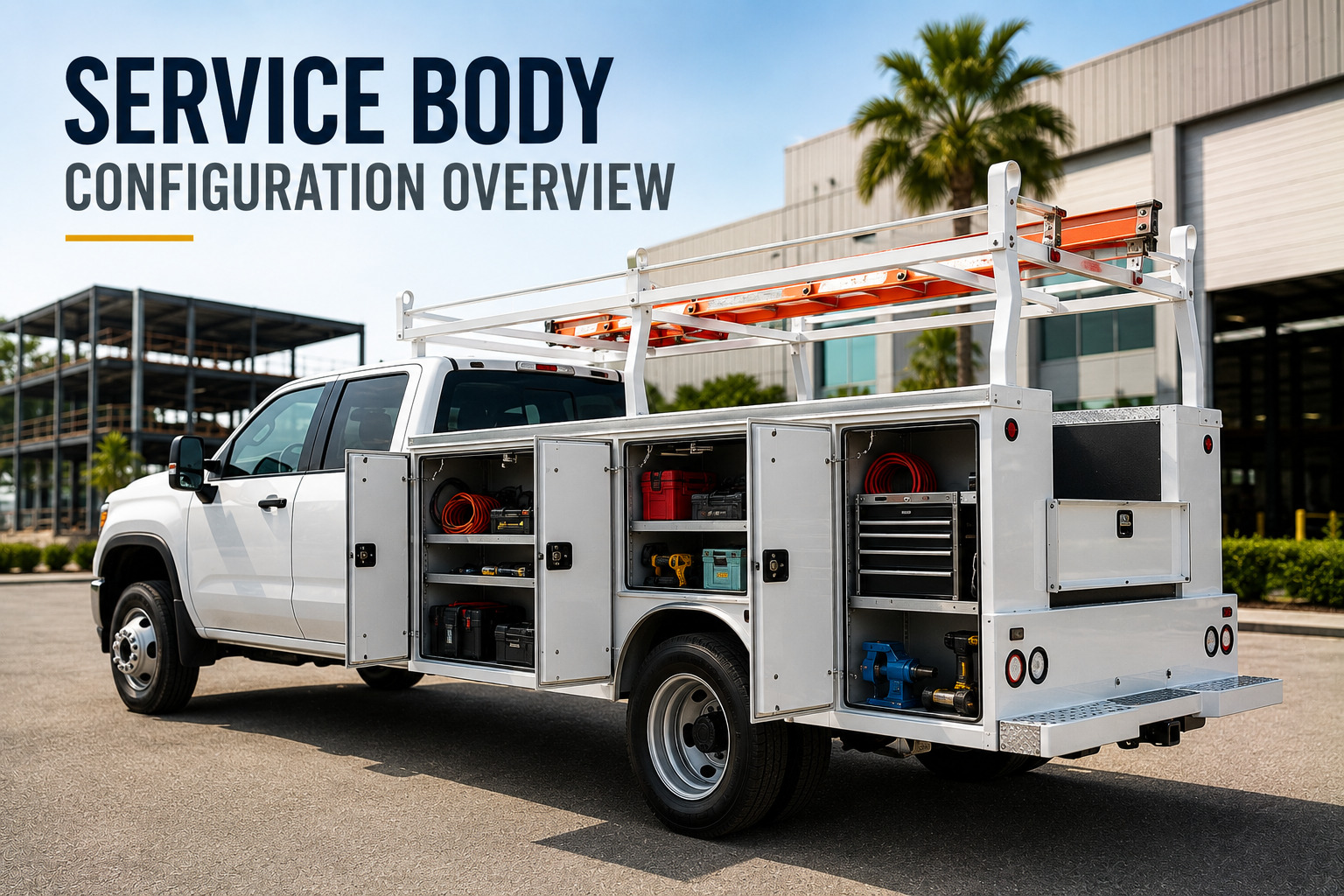
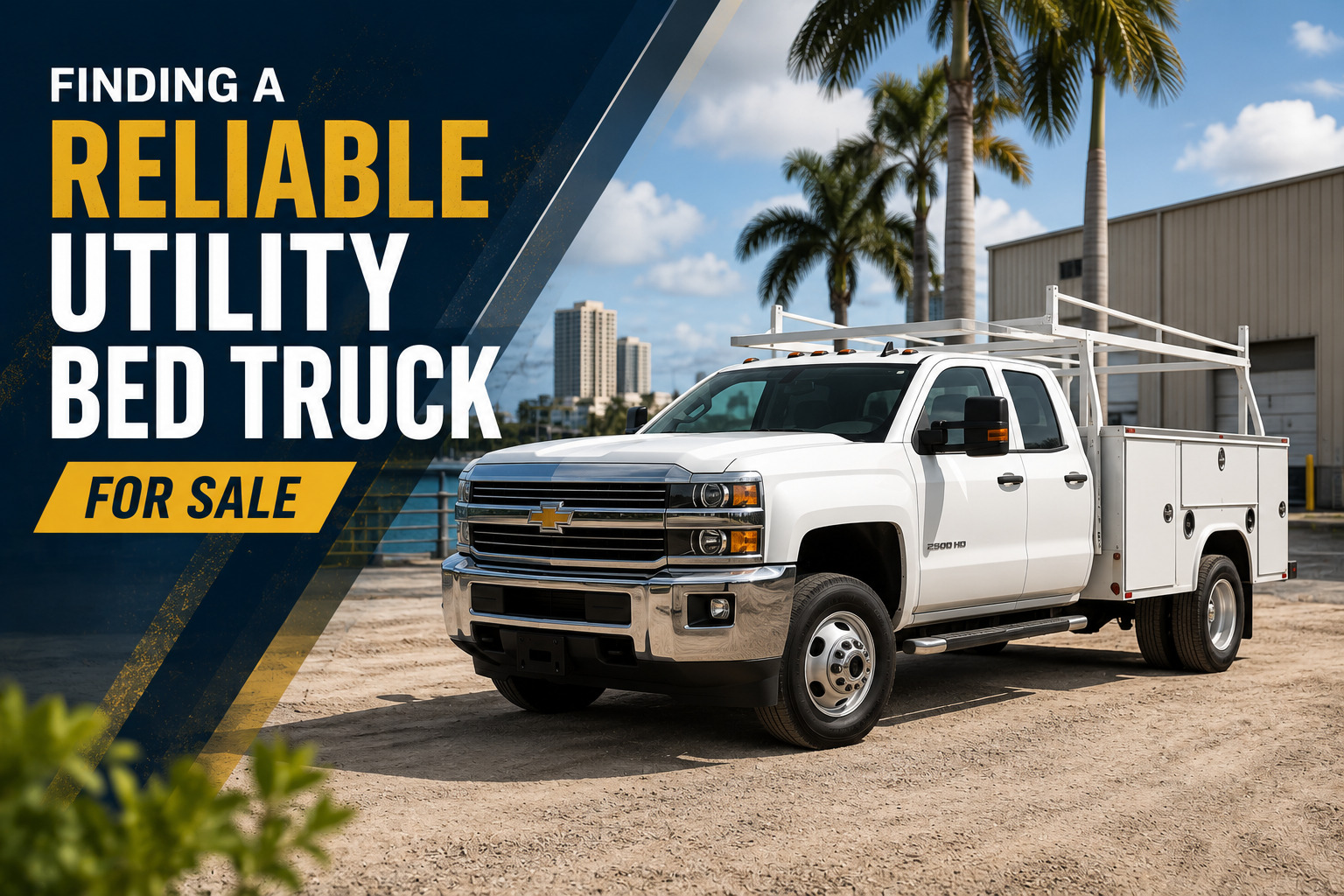
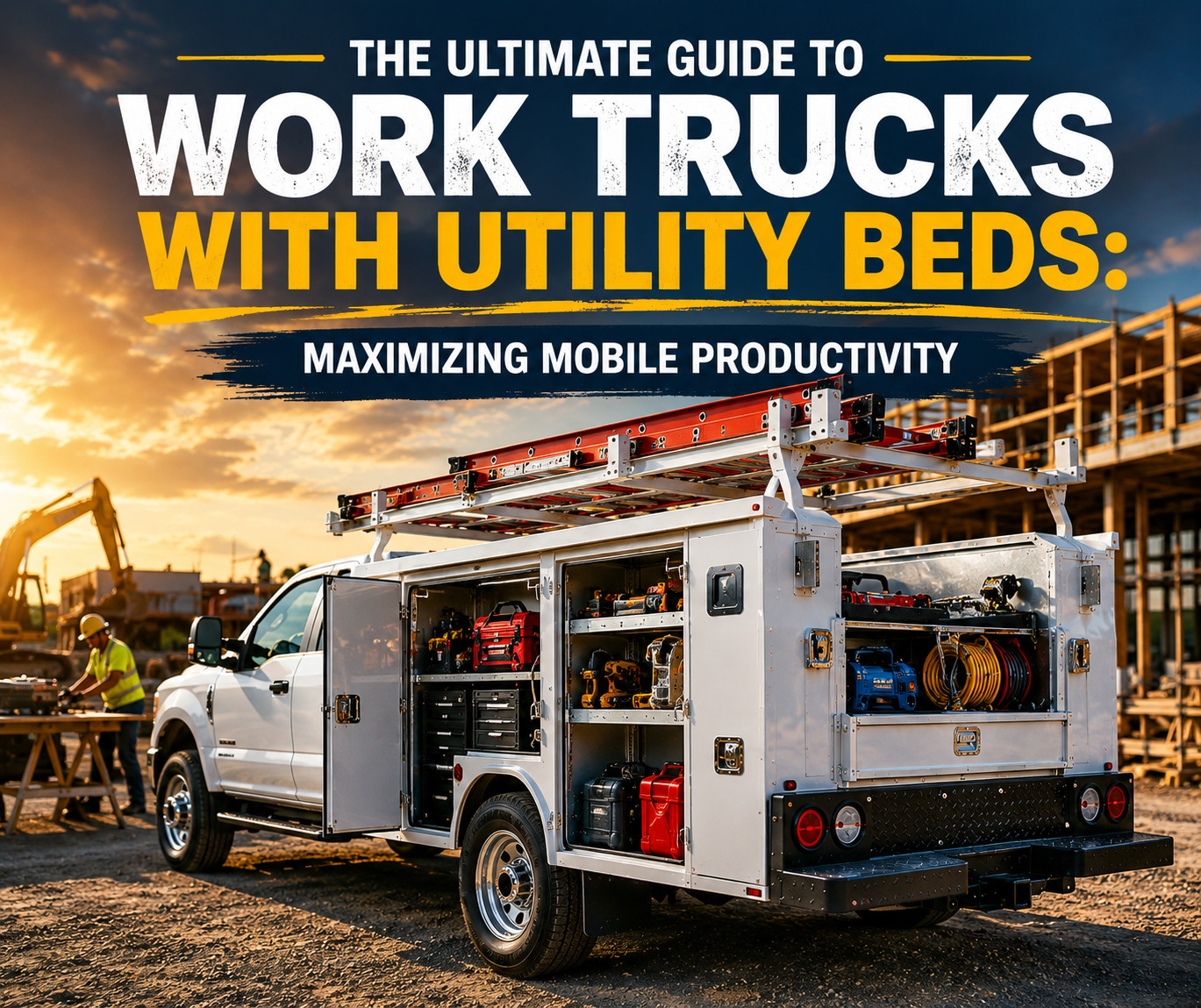
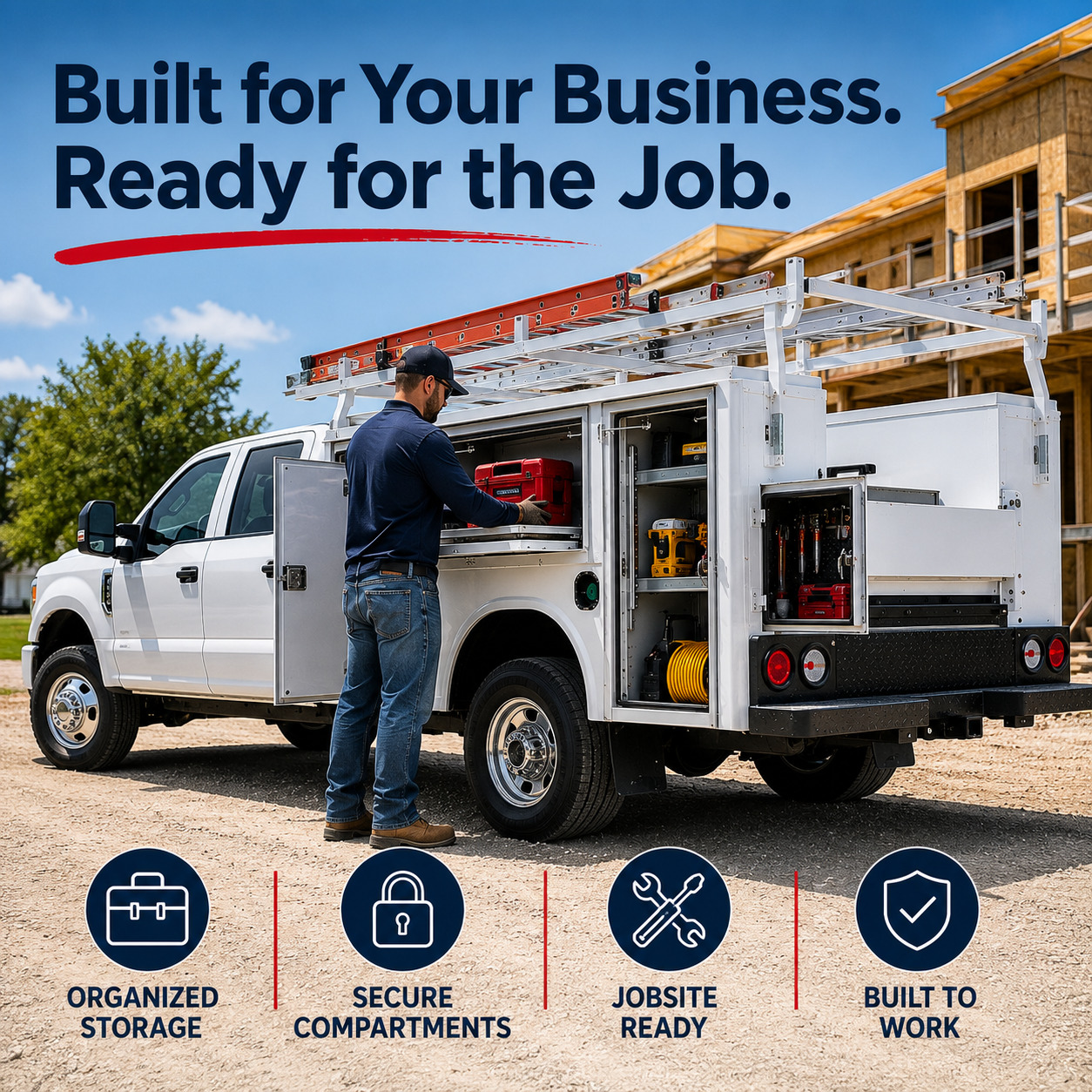
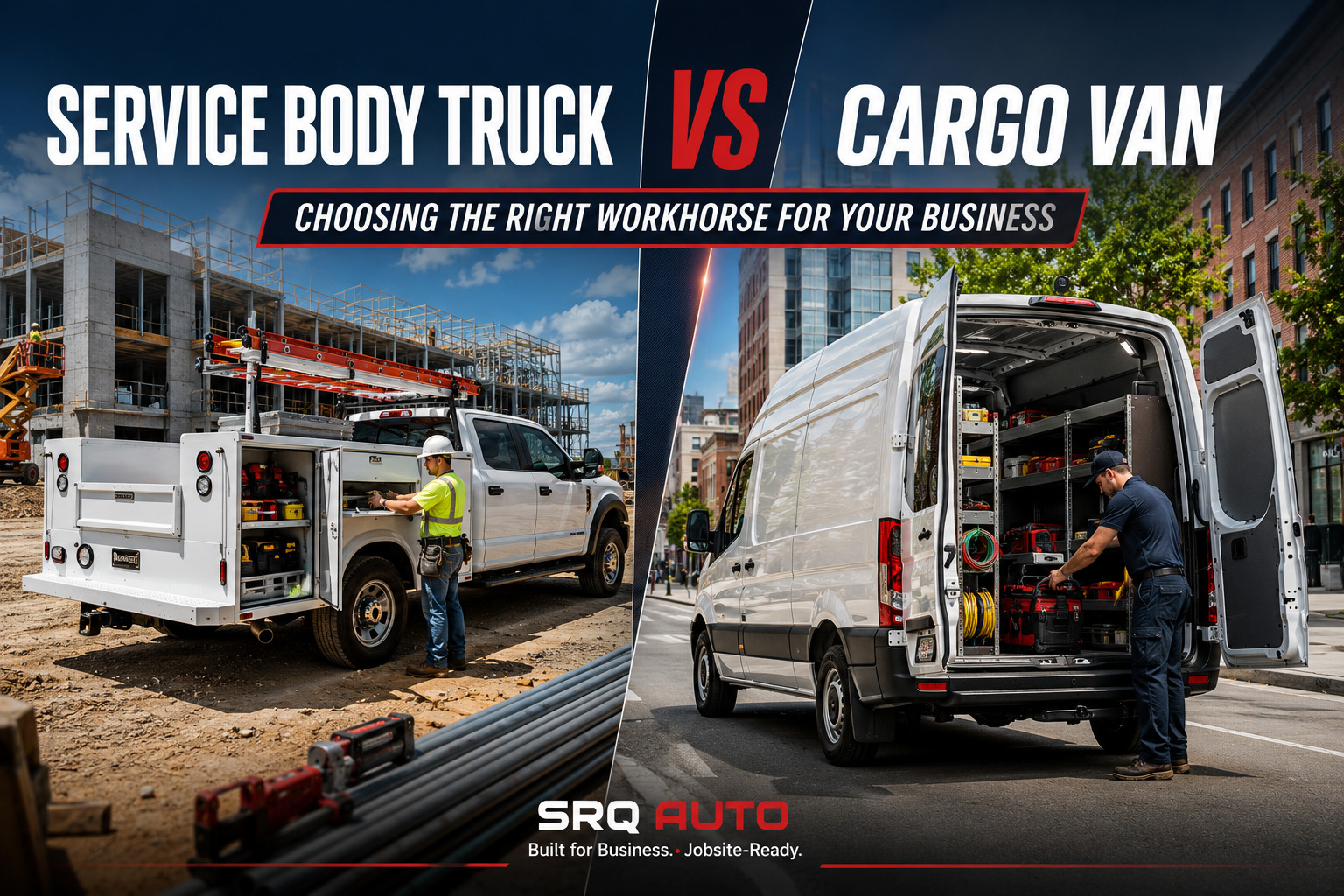
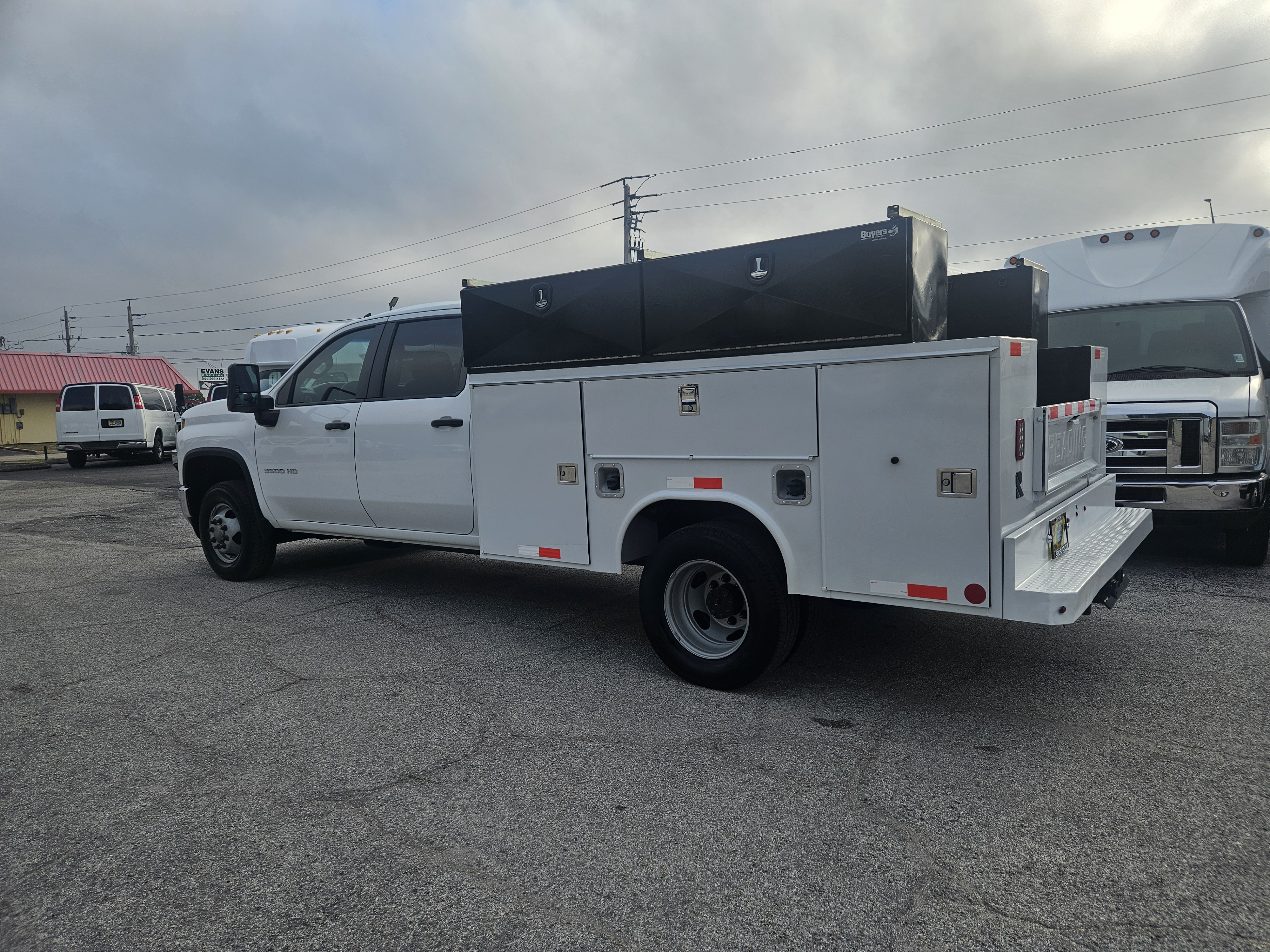
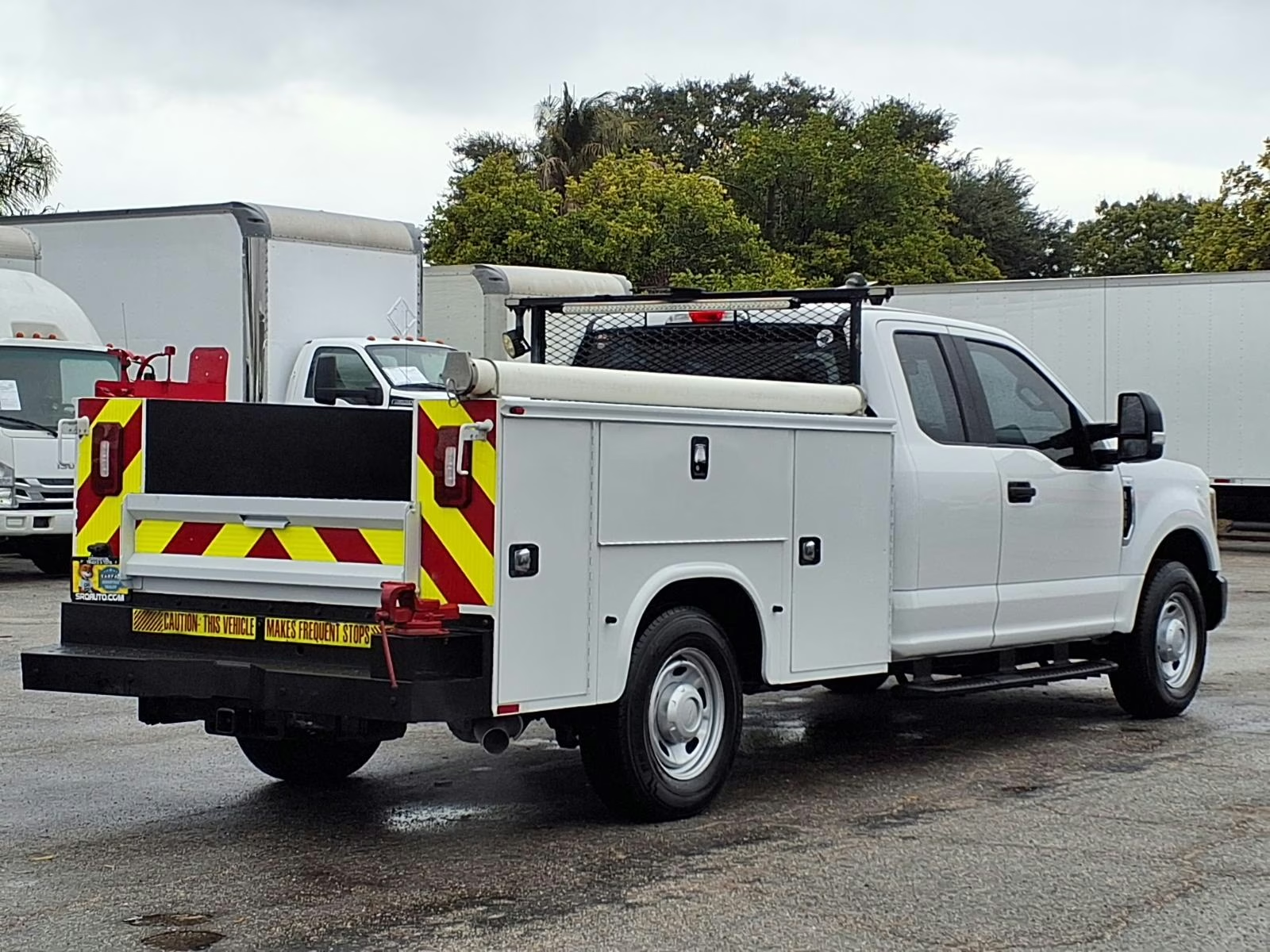
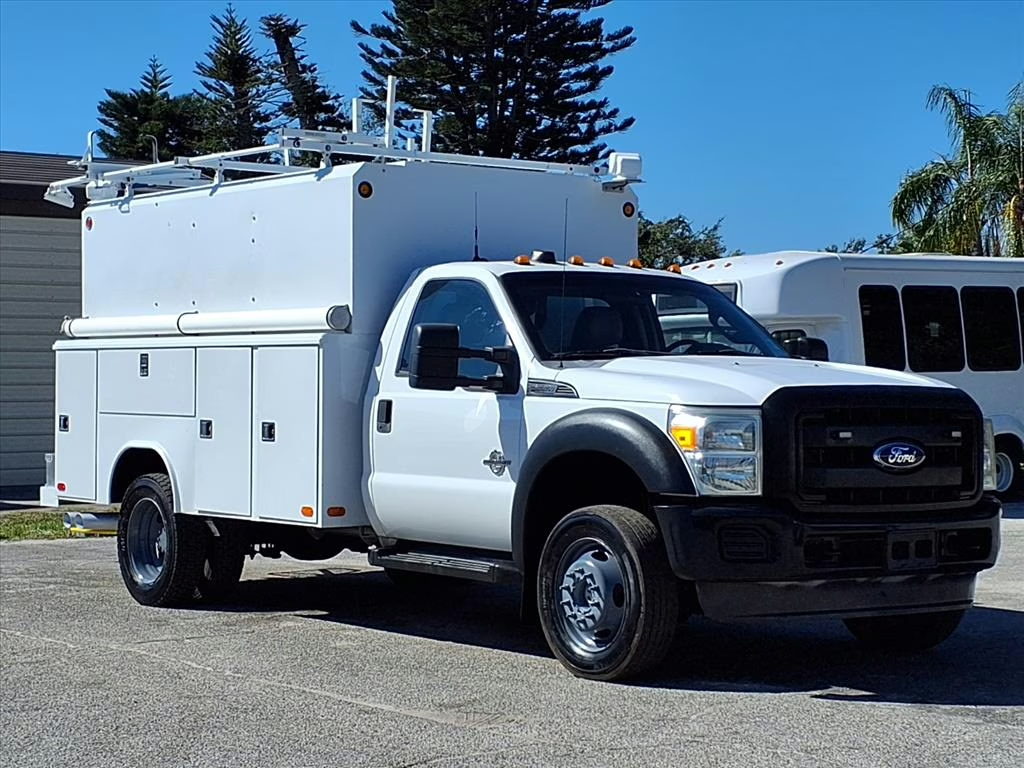
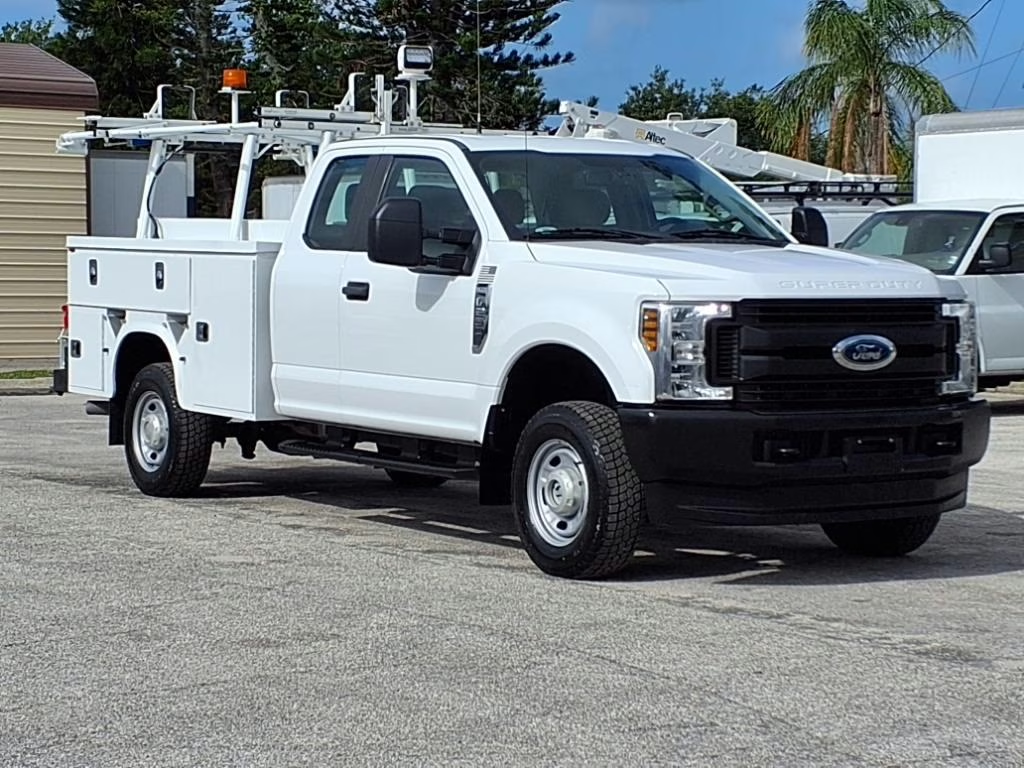
A service body can be an excellent foundation when organization and secure tool storage are priorities. Exterior compartments keep frequently used tools accessible without requiring the operator to unload the bed.
A flatbed can provide open space for larger equipment and materials and may allow a highly customized layout.
Neither is universally better. A mobile repair welder carrying many tools and parts may value compartment storage, while another operation may prioritize open deck space.
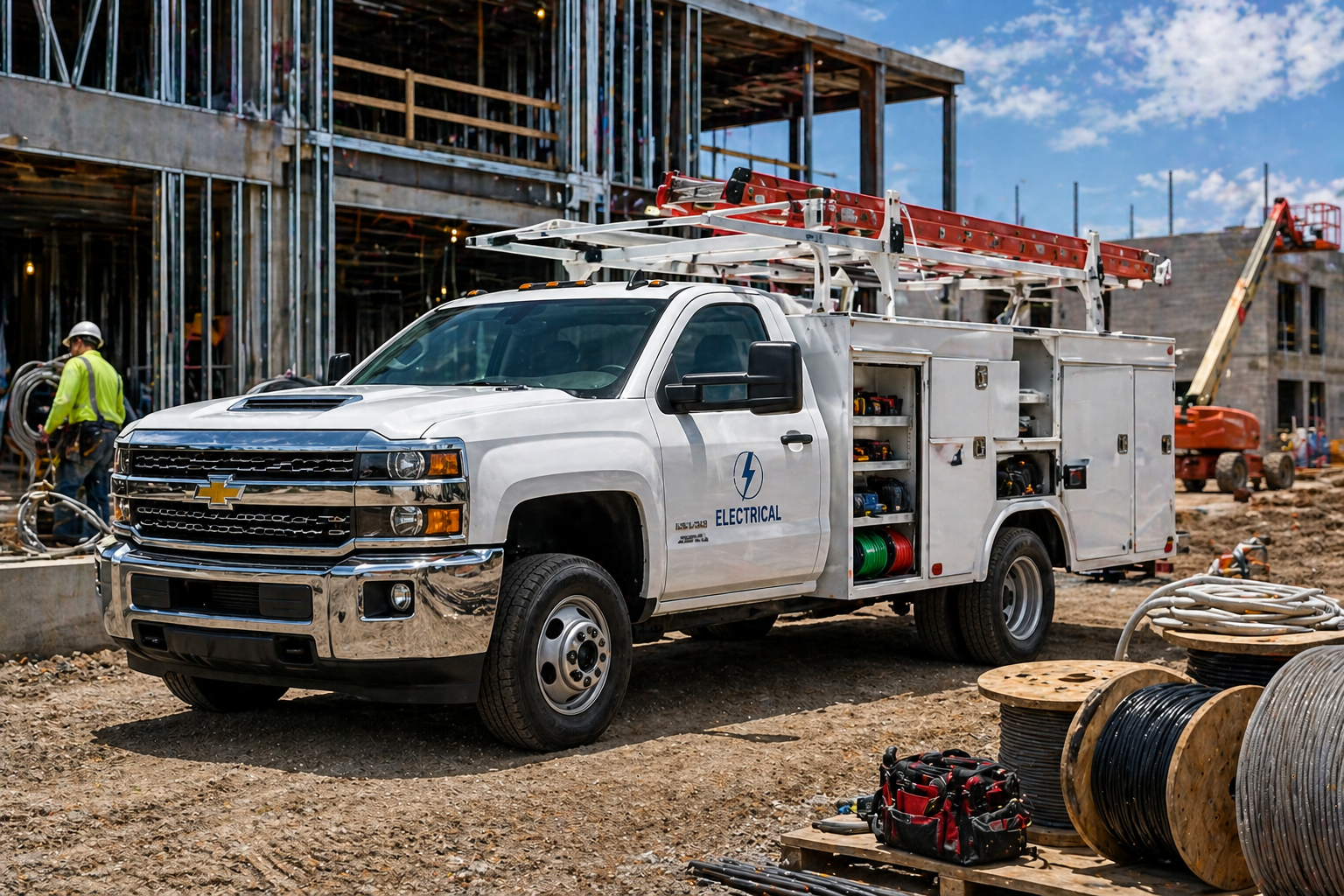
Why Service Bodies Work Well for Mobile Welders
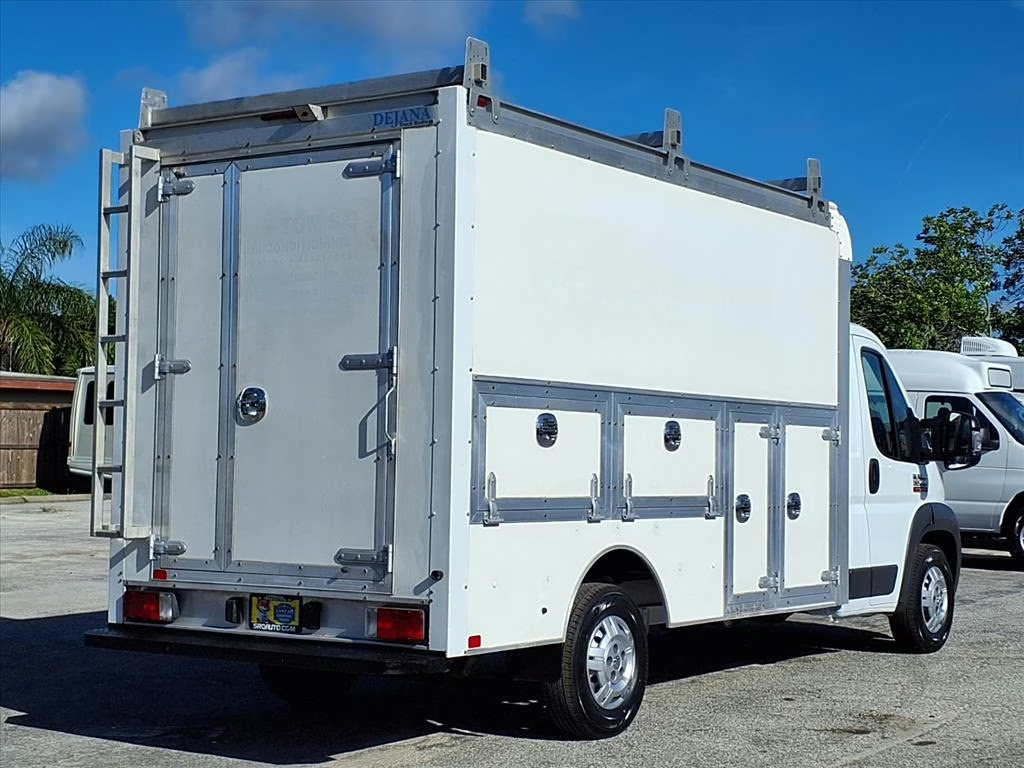
Service bodies are designed around access. Compartments can organize grinders, hand tools, consumables, PPE, electrical equipment and repair parts while leaving the central bed area available for larger equipment.
When inspecting a used service body, open every compartment and check doors, hinges, latches, locks, shelving, floors and visible mounting areas.
Read our Service Body Truck Buying Guide for more detail.
Where Should the Welder Be Mounted?
Equipment placement should account for the welder manufacturer's installation requirements, ventilation, service access, weight distribution and secure mounting.
A location that looks convenient may not be appropriate if it restricts airflow, creates poor weight distribution or makes routine maintenance difficult.
Follow the equipment manufacturer's instructions and use qualified installation professionals when appropriate.
How Should Welding Cylinders Be Carried?
Compressed-gas cylinders require proper handling and securement. The exact requirements depend on the gases, equipment and applicable regulations.
A welding-rig design should provide secure cylinder storage that protects the cylinders and does not interfere with normal truck operation or equipment access.
Do not improvise cylinder mounting. Follow cylinder supplier, equipment manufacturer and applicable safety requirements.
Why Compartment Layout Matters
A mobile welder may access the same tools dozens of times during a workday. Poor organization turns every repair into extra walking, climbing and searching.
Think about frequency of use. Frequently used tools should be accessible, while less-used equipment can occupy secondary storage.
Also consider where dirty tools, consumables, PPE, leads and replacement parts will go. The best layout supports the actual workflow.
What About Welding Leads and Cable Storage?
Long welding leads take up space and need to be stored so they can be deployed and put away efficiently without becoming damaged or creating unnecessary clutter.
Plan lead storage at the same time as the welder and compartments rather than treating it as an afterthought.
Do You Need a Compressor or Generator?
Some mobile welding operations need compressed air, auxiliary electrical power or both. The answer depends on the tools and equipment used in the field.
If additional equipment is required, include its weight, mounting needs, ventilation, fuel requirements and service access when planning the truck.
Adding equipment later can create a payload or space problem if the original chassis was selected with little capacity margin.
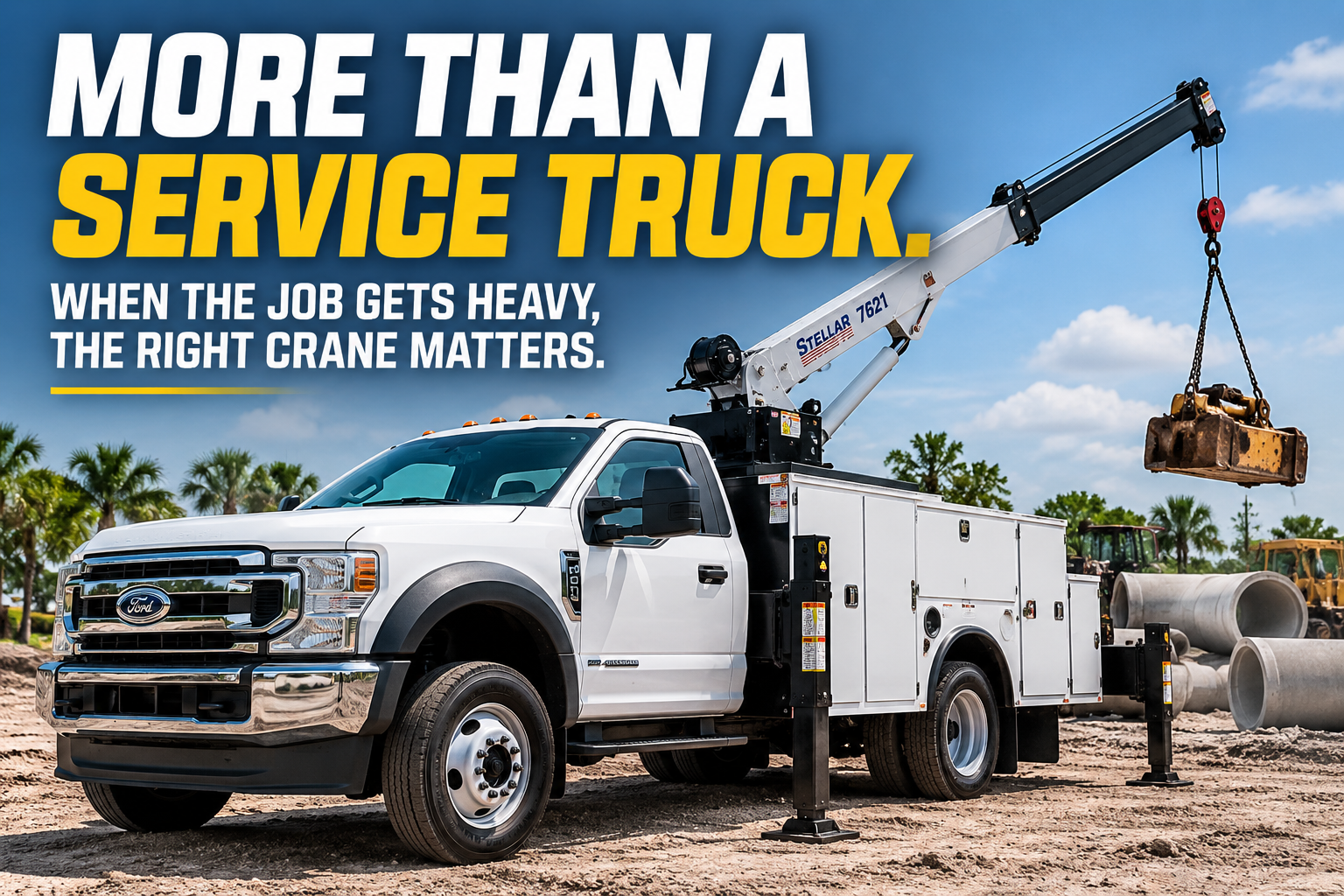
When Does a Crane Service Truck Make Sense?
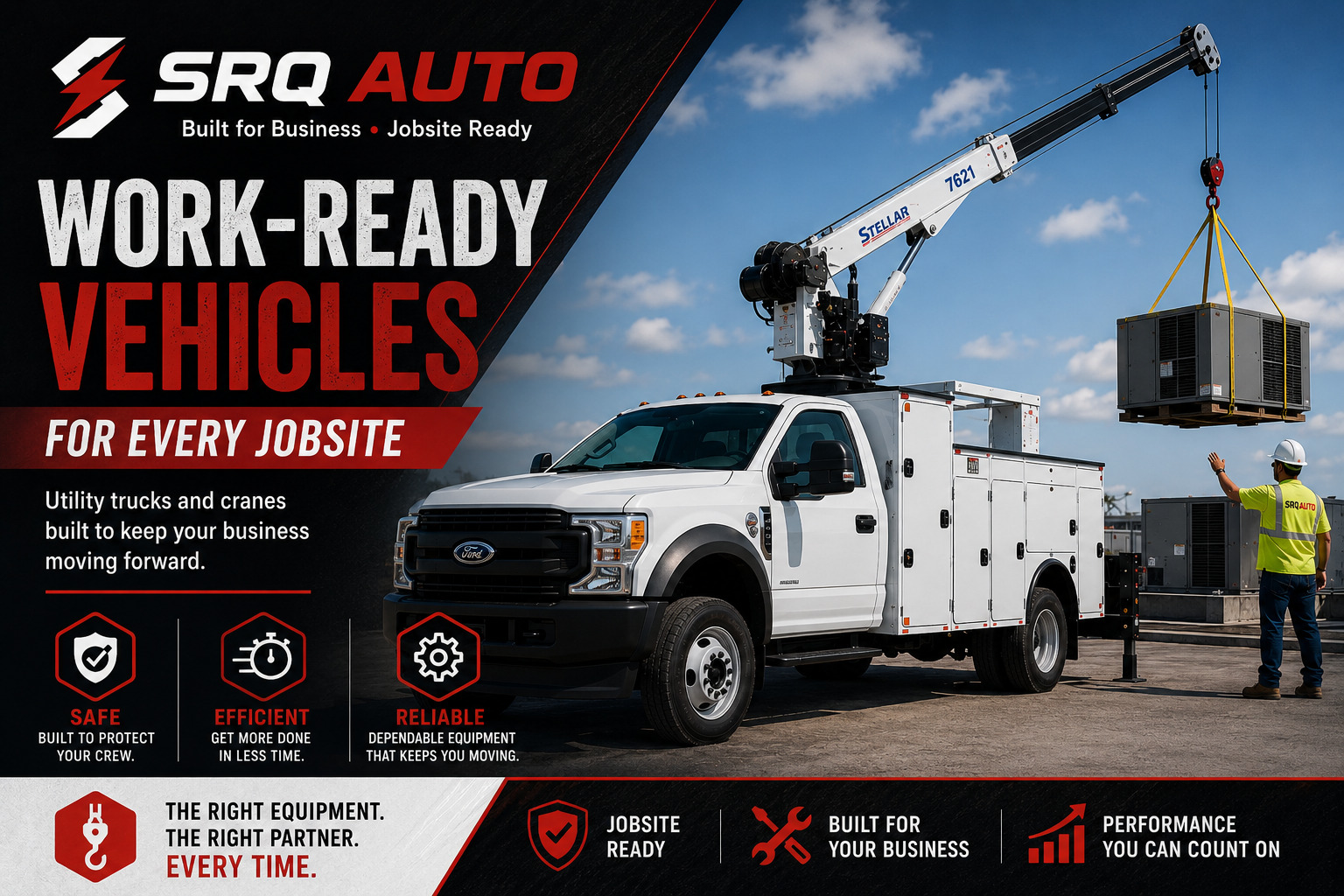
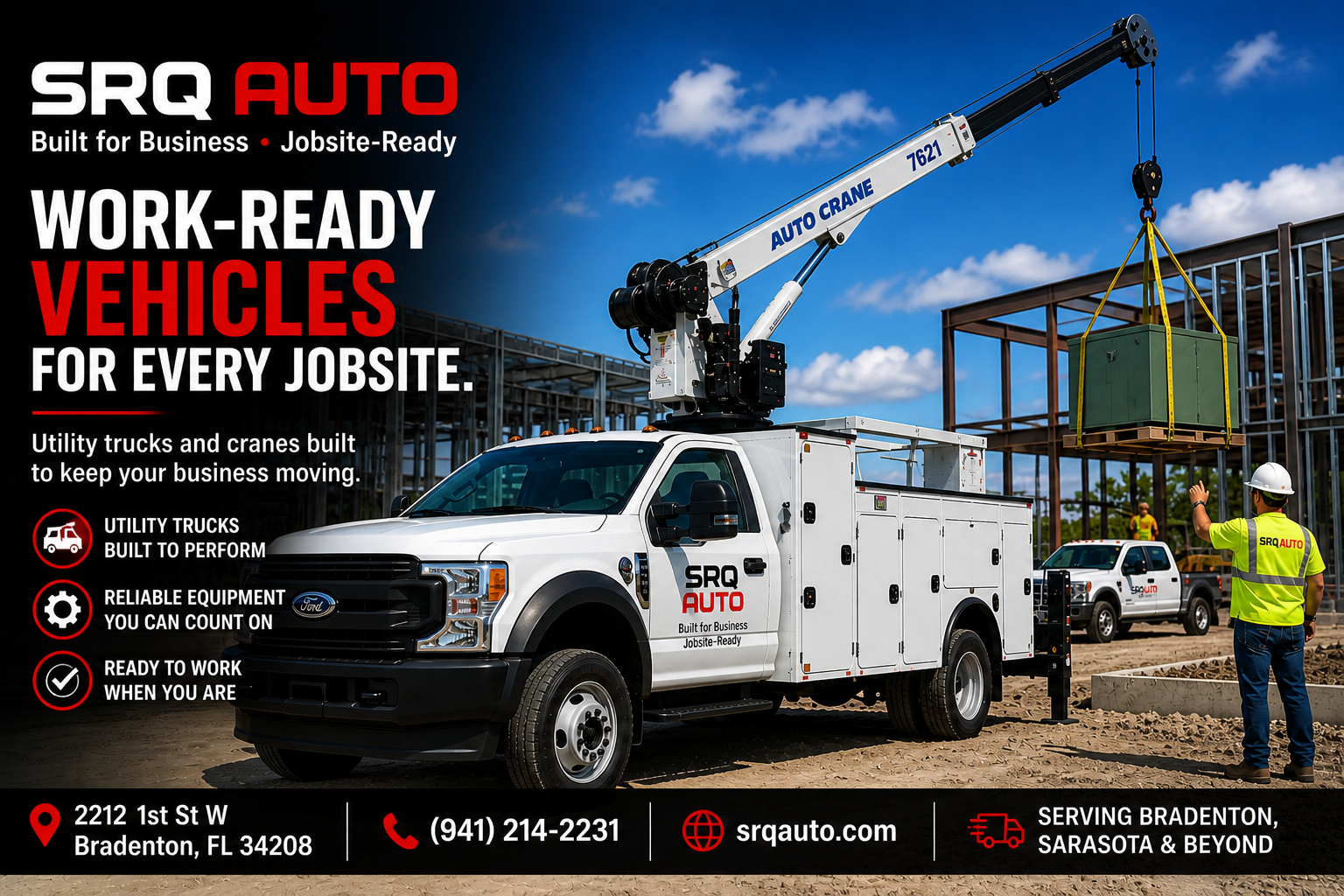
Some welding and field-repair operations handle components that are too heavy or awkward to move manually. In those applications, a properly configured crane service truck may provide valuable lifting capability.
The crane, body and stabilizing equipment add weight and place additional demands on the chassis. Crane capacity and vehicle configuration must be matched correctly.
SRQ Auto's inventory can include service trucks equipped with commercial cranes when available.
Regular Cab vs. Crew Cab for a Welding Truck
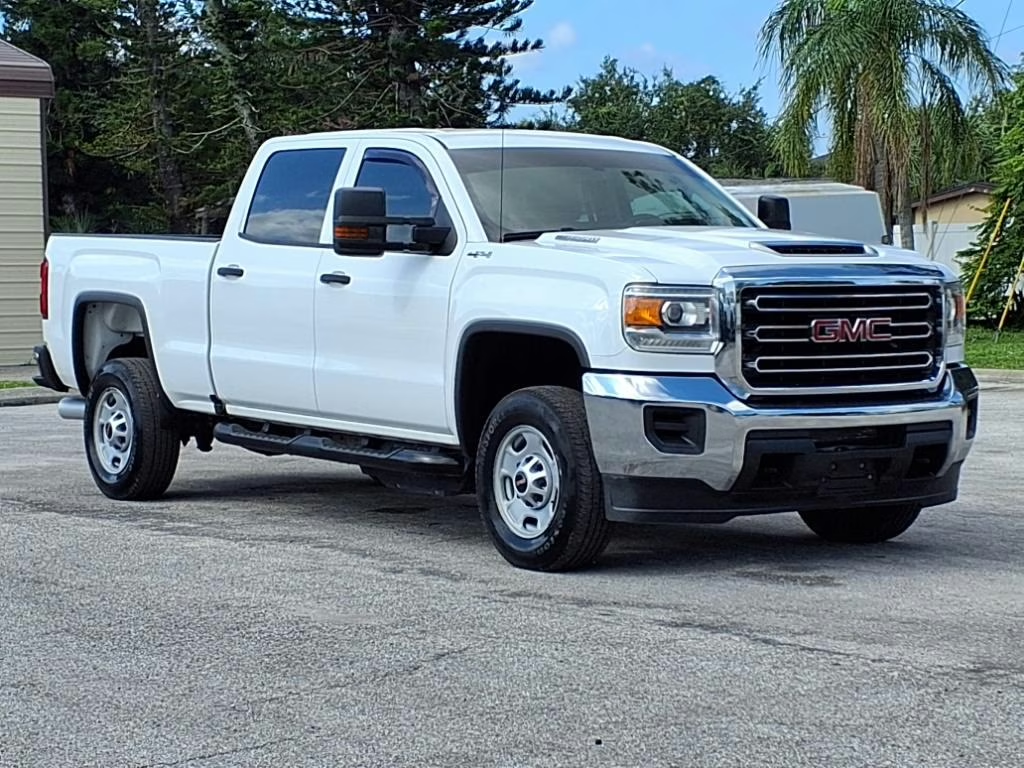
A regular cab can leave more of the vehicle's overall length available for working body and equipment. A crew cab provides seating when multiple employees need to travel together.
The tradeoff is not simply seating. Cab configuration also affects vehicle weight, wheelbase, overall length and the space available for the body.
Choose based on how the business actually operates.
2WD vs. 4WD for a Mobile Welding Rig
Four-wheel drive can be useful when welding work regularly takes the truck onto construction sites, farms, unpaved areas or other environments where additional traction is valuable.
For operations that remain primarily on paved roads and developed commercial properties, 2WD may be sufficient.
Consider terrain and real-world use rather than assuming every welding truck automatically needs 4WD.
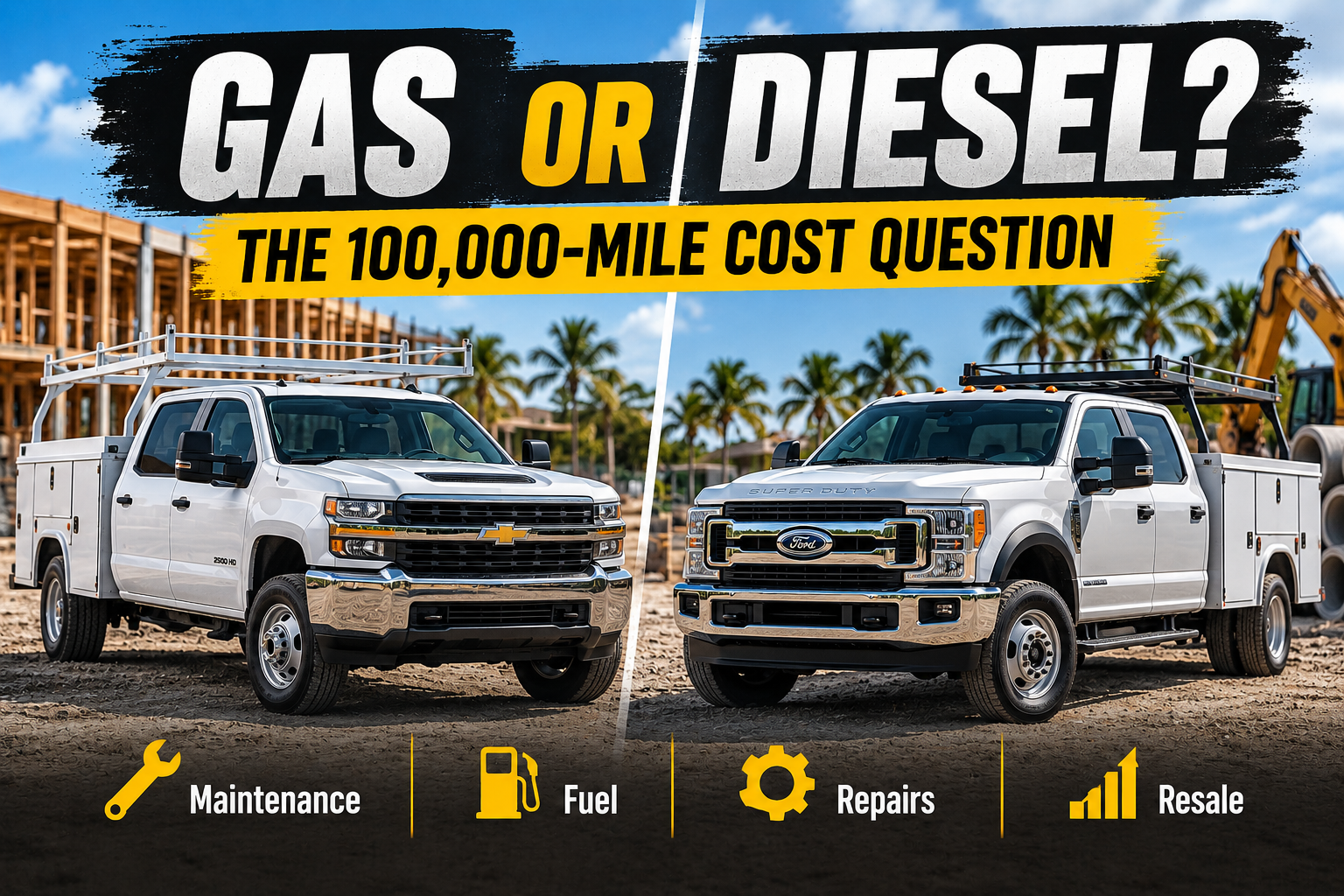
Gas vs. Diesel for a Welding Rig Truck
Both gasoline and diesel commercial trucks can serve mobile welding operations. The decision depends on chassis availability, expected mileage, towing, operating environment, maintenance preferences and the specific vehicle.
A well-maintained gas truck that fits the application can be a better purchase than a poorly maintained diesel truck chosen simply because it is diesel—and vice versa.
Condition and suitability matter more than choosing a powertrain by reputation alone.
F-250, F-350, Ram 2500 or Ram 3500: Which Size?
These types of platforms are commonly considered for service and trade applications, but model designation alone does not determine whether a truck can support a particular welding setup.
Cab configuration, drivetrain, chassis ratings, commercial body and installed equipment all affect the completed vehicle.
Calculate the working setup and verify the ratings of the individual truck before deciding.
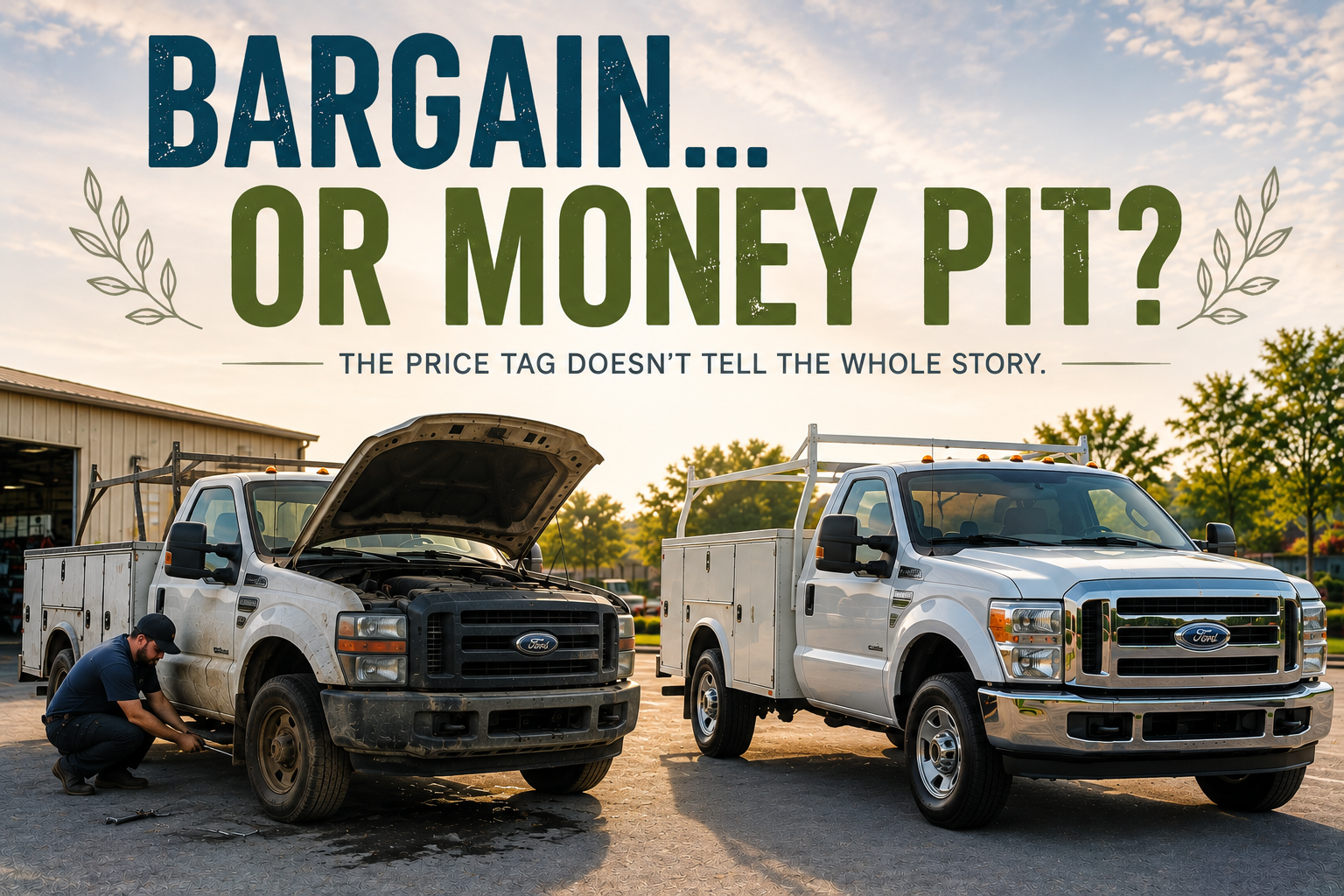
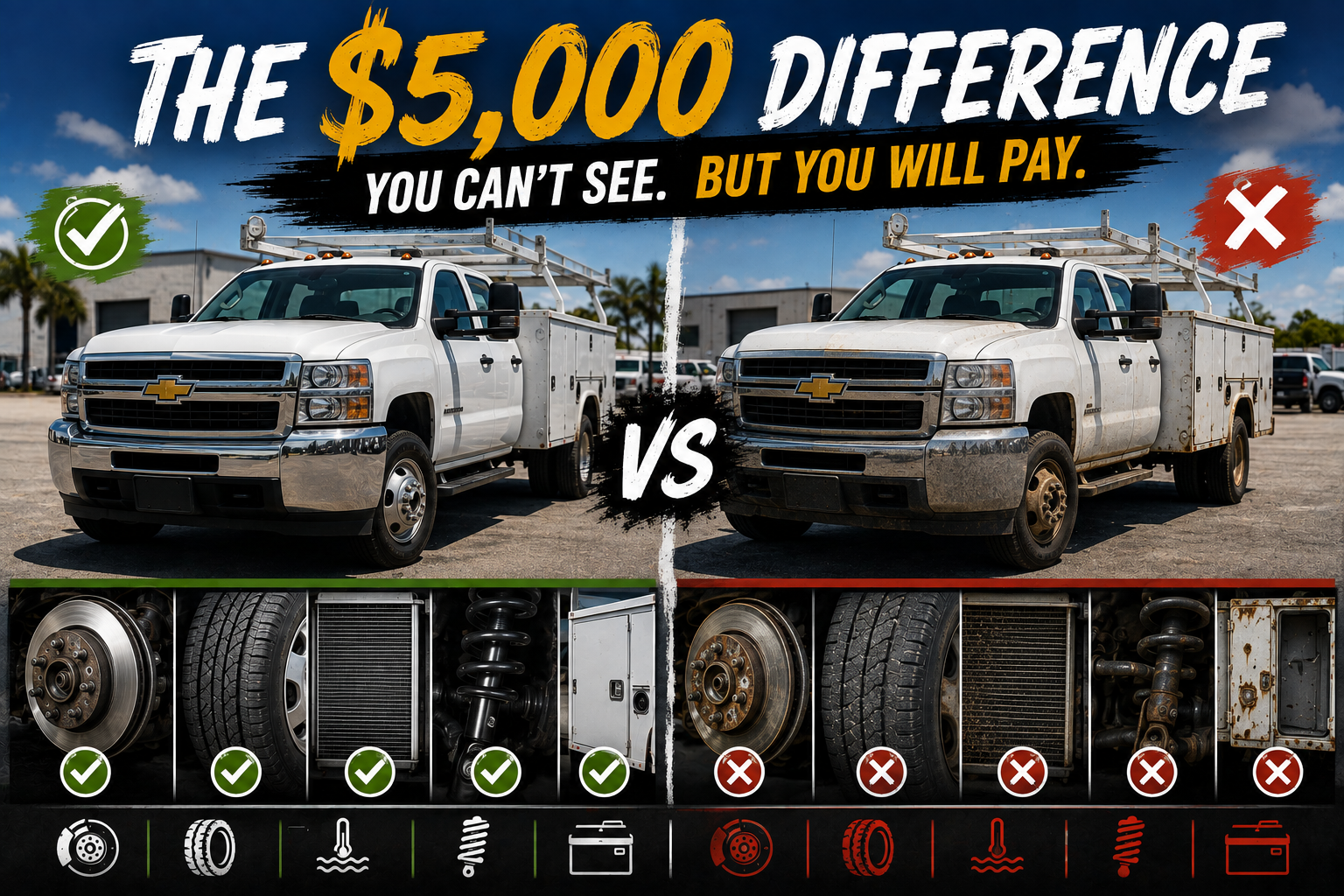
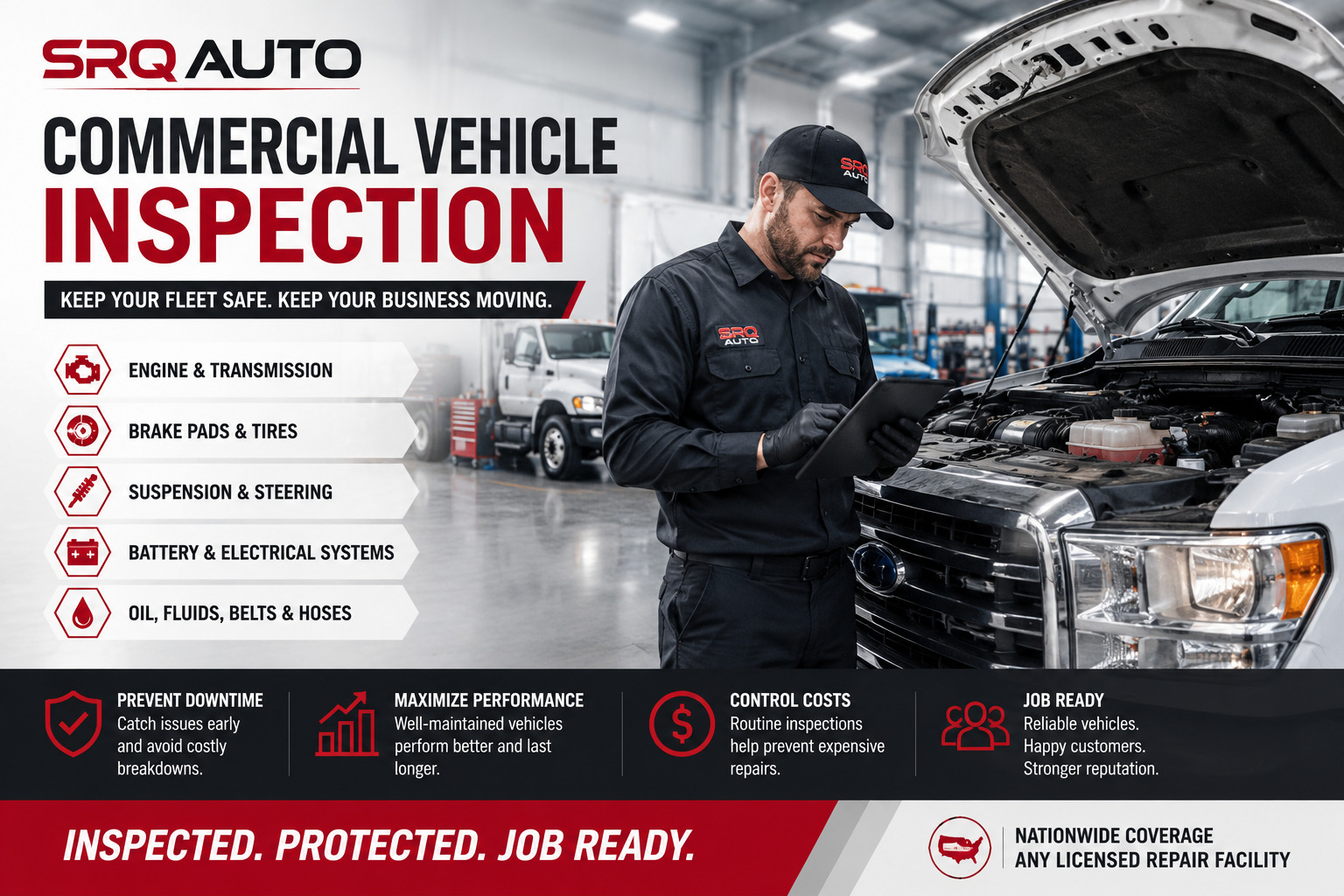
What Should You Inspect When Buying a Used Welding Rig Truck?
Evaluate both the chassis and the commercial equipment.
- Mechanical condition: Engine, transmission, cooling system, brakes, steering and suspension.
- Tires: Condition, age, specifications and wear patterns.
- Frame and undercarriage: Look for damage, corrosion, leaks and questionable repairs.
- Service body or flatbed: Inspect floors, compartments, doors, latches, shelving and mounting areas.
- Electrical modifications: Look for abandoned wiring or poorly executed additions.
- Equipment mounts: Check visible mounting areas and modifications.
- Crane or hydraulic equipment: Operate installed equipment and evaluate condition where applicable.
- Cab: Check controls, warning indicators, seating and general condition.
What SRQ Auto Looks for in a Used Service Truck
When SRQ Auto evaluates a service truck for inventory, we consider the complete commercial asset: chassis, body, compartments, equipment, mechanical condition, previous use and the reconditioning required before retail.
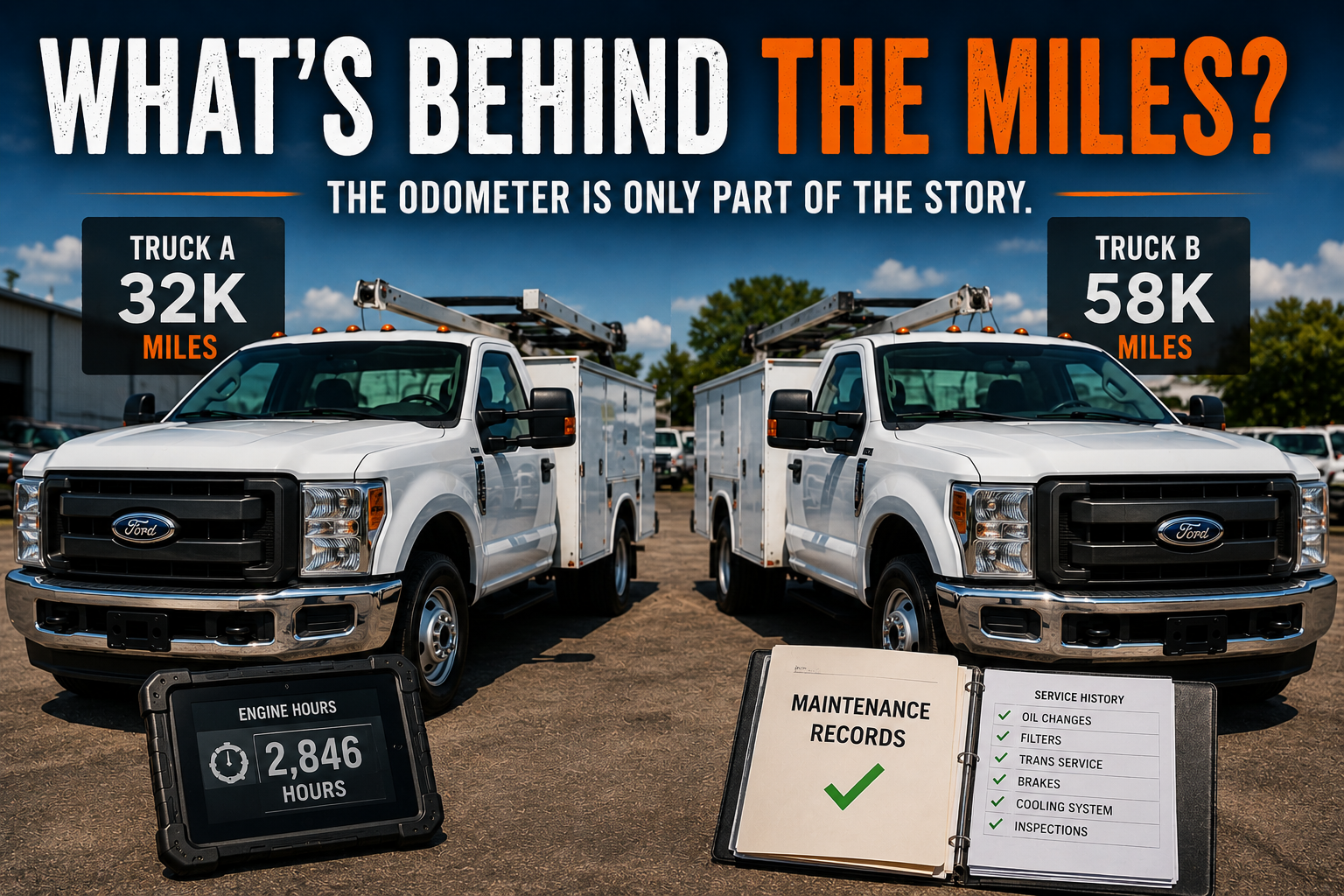
We also consider whether the configuration makes sense for trades likely to use it. A body with practical storage, useful equipment and a properly matched chassis can be much more valuable to a working business than a truck selected only because it has low mileage.
Why Job Ready Matters for a Welding Business
A mobile welder depends on the truck to reach jobs and carry the equipment that produces revenue. Immediate tire, mechanical, body or storage problems can create downtime before the rig ever earns its keep.
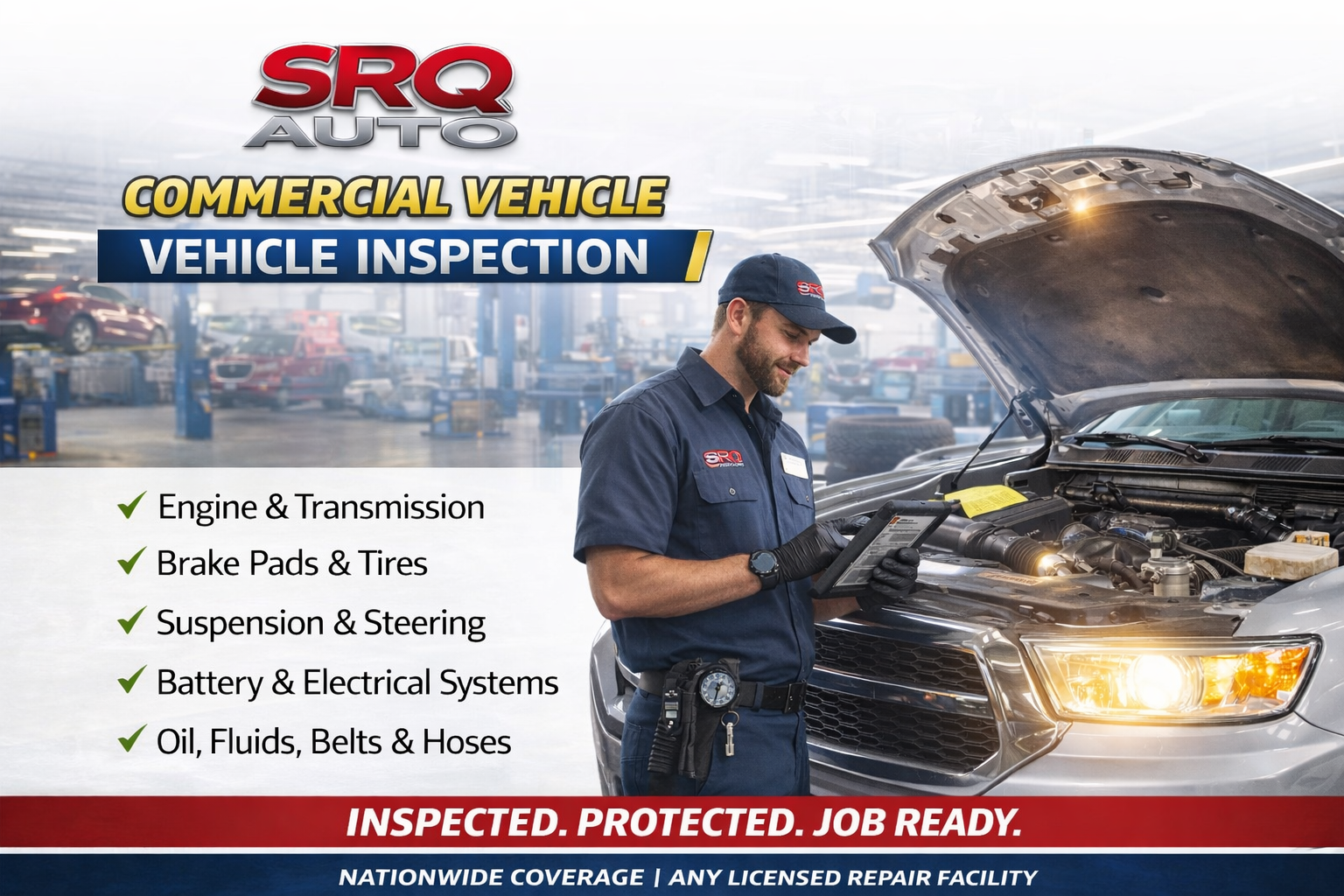
SRQ Auto's Job Ready process addresses identified mechanical, functional and presentation needs on qualifying used commercial vehicles before they are offered to the next business.
Learn more about SRQ Auto's commercial vehicle reconditioning process.
Questions to Answer Before Building a Welding Rig
- What welder and supporting equipment will the truck carry?
- What is the realistic completed weight of the rig?
- How much additional payload margin is needed for tools, parts and materials?
- Is secure compartment storage more important than open deck space?
- How will cylinders and leads be stored?
- Will the operation need compressed air or auxiliary power?
- Does the work require a crane?
- How many employees need seating?
- Will the truck regularly operate off pavement?
- Does the complete configuration fit the specific truck's ratings?
Frequently Asked Questions About Welding Rig Trucks
What is the best truck for a welding rig?
There is no single best model for every welding rig. Choose a truck whose chassis ratings, body, payload, drivetrain and configuration fit the completed welding setup and operating environment.
Is a service body good for a welding rig?
Yes, a service body can work well for mobile welders who need organized, lockable exterior storage for tools, consumables and repair equipment.
Do I need a one-ton truck for a welding rig?
Not every welding setup has the same weight. Calculate the completed rig, including body, equipment, occupants, tools and materials, and verify the ratings of the specific truck.
Do welding rigs need 4WD?
Not always. Four-wheel drive can be useful for jobsites and unpaved terrain, while businesses operating primarily on paved roads may not require it.
Can a used service truck be converted into a welding rig?
Potentially, if the chassis, body, payload and condition are appropriate for the planned equipment. Installation and equipment securement should follow manufacturer and applicable safety requirements.
Should I buy a gas or diesel welding truck?
Either can work. Consider the specific vehicle's condition, chassis capacity, operating environment, expected mileage, towing needs and maintenance requirements.
Shop Service Trucks for Your Welding Rig at SRQ Auto
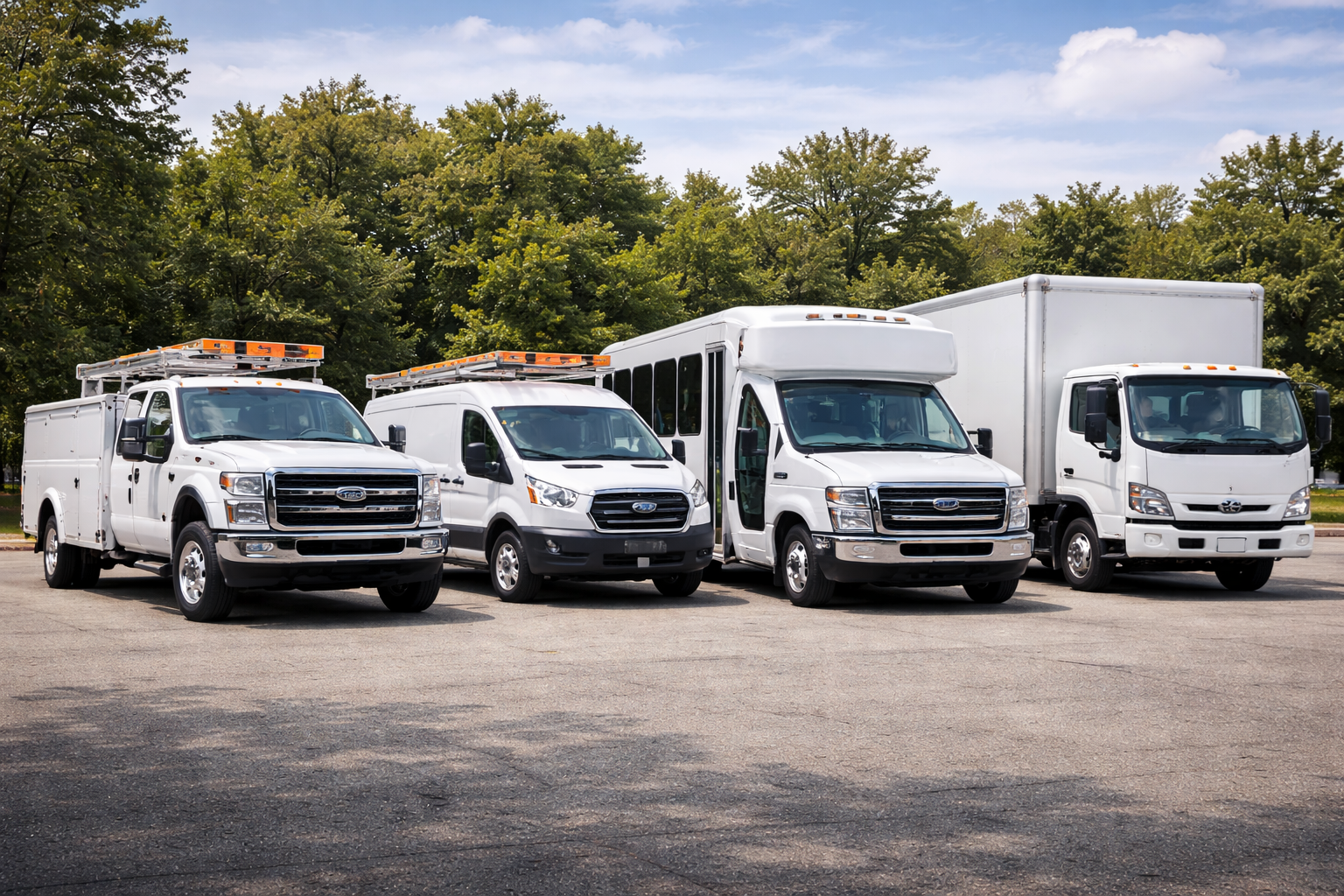
SRQ Auto specializes in fully reconditioned commercial vehicles for welders, contractors, trades, fleets and businesses throughout Florida and nationwide.
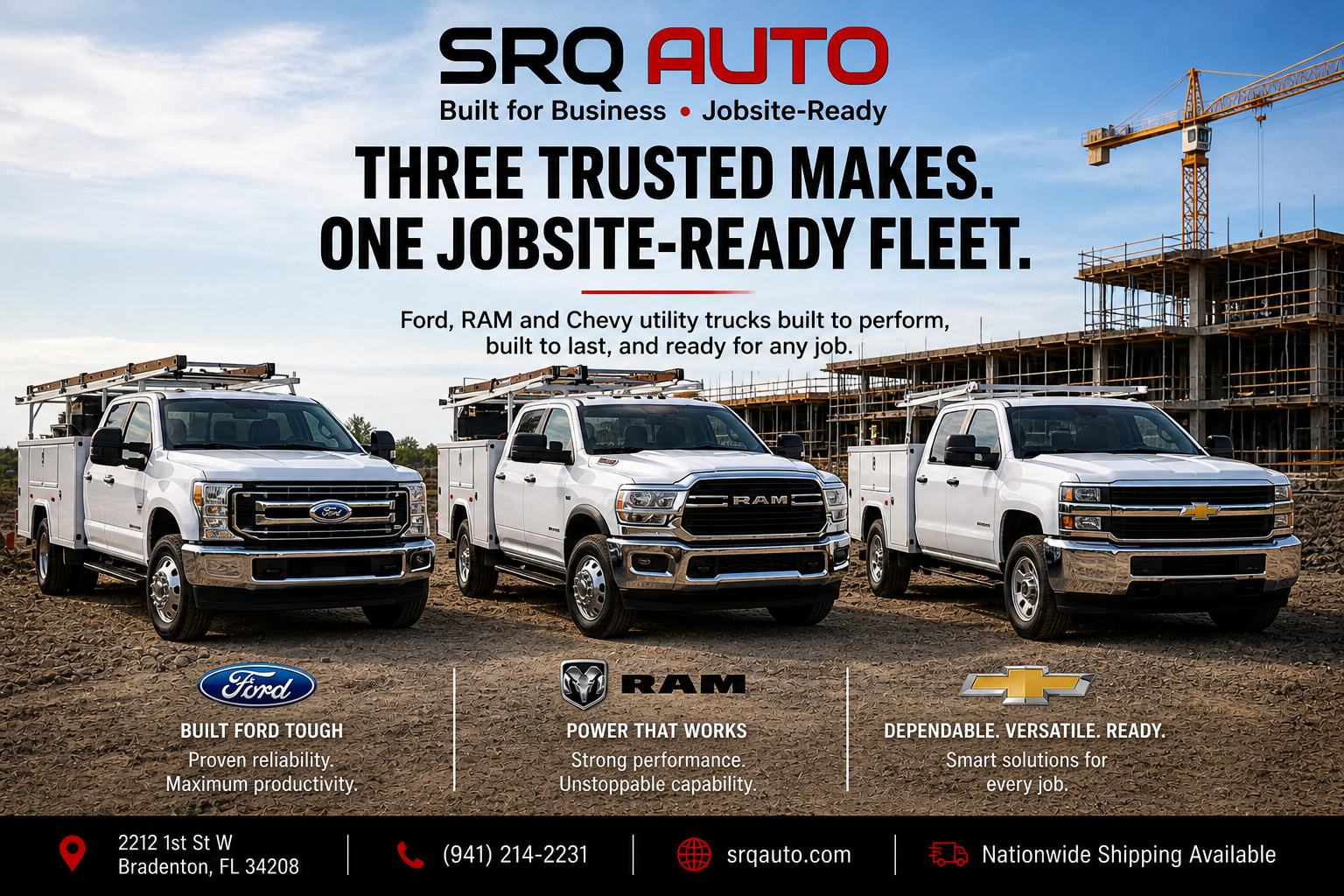
Our inventory can include regular-cab and crew-cab service trucks, utility bodies, 4WD work trucks and crane-equipped service trucks depending on availability.
Browse Current Service & Utility Trucks
SRQ Auto also offers Tailored Commercial Financing, remote documents and nationwide vehicle shipping.
SRQ Auto has earned 550+ 5-Star Google Reviews.
{ "@context": "https://schema.org", "@type": "FAQPage", "mainEntity": [ { "@type": "Question", "name": "What is the best truck for a welding rig?", "acceptedAnswer": { "@type": "Answer", "text": "There is no single best model for every welding rig. Choose a truck whose chassis ratings, body, payload, drivetrain and configuration fit the completed welding setup and operating environment." } }, { "@type": "Question", "name": "Is a service body good for a welding rig?", "acceptedAnswer": { "@type": "Answer", "text": "Yes, a service body can work well for mobile welders who need organized, lockable exterior storage for tools, consumables and repair equipment." } }, { "@type": "Question", "name": "Do I need a one-ton truck for a welding rig?", "acceptedAnswer": { "@type": "Answer", "text": "Not every welding setup has the same weight. Calculate the completed rig, including body, equipment, occupants, tools and materials, and verify the ratings of the specific truck." } }, { "@type": "Question", "name": "Do welding rigs need 4WD?", "acceptedAnswer": { "@type": "Answer", "text": "Not always. Four-wheel drive can be useful for jobsites and unpaved terrain, while businesses operating primarily on paved roads may not require it." }