
Used Service Trucks With Cranes: What to Know Before You Buy
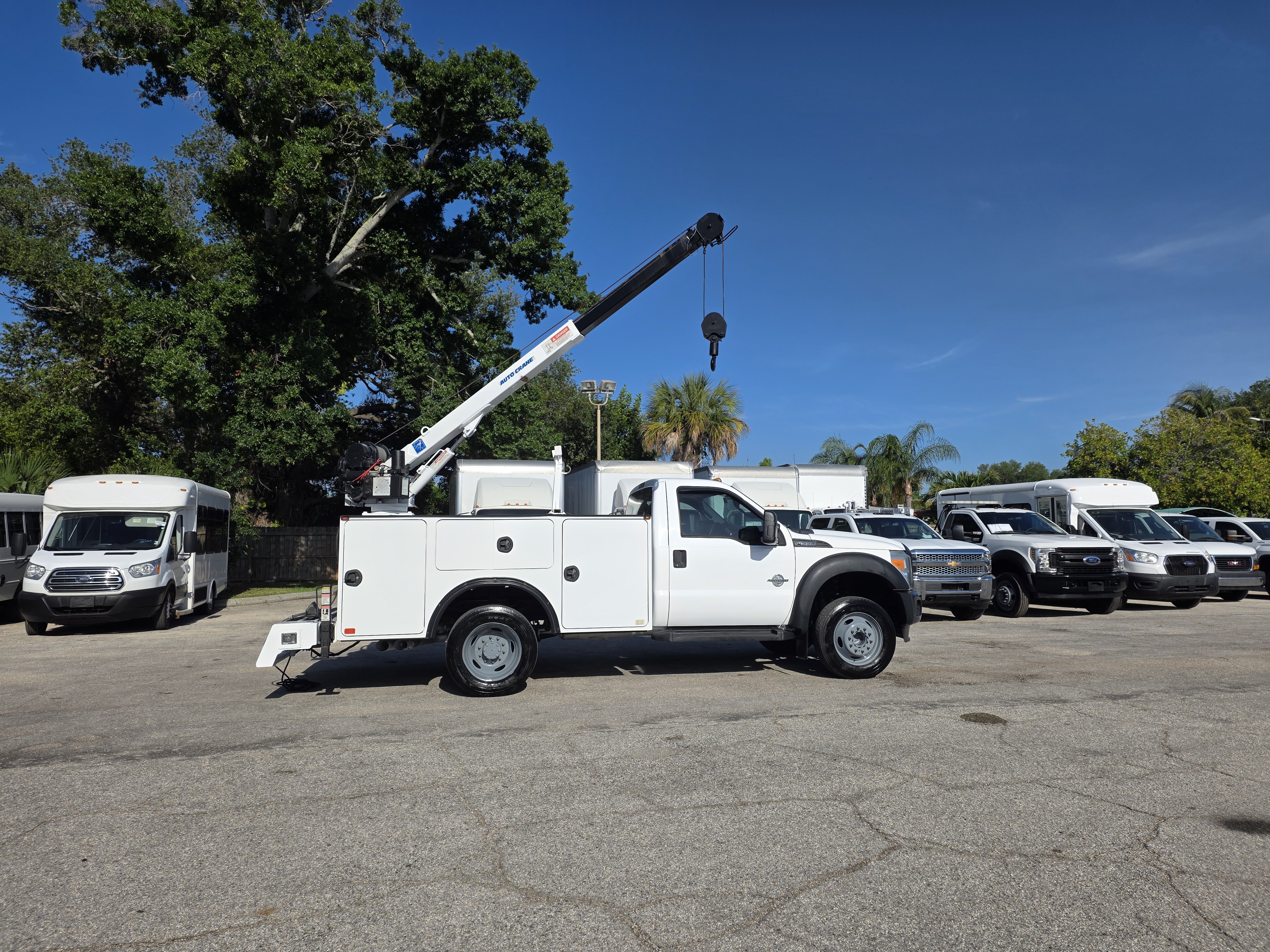
A used service truck with a crane can turn a commercial vehicle into a mobile lifting and repair platform—but only when the chassis, service body and crane are correctly matched to the work.
That is why buying a crane truck requires more than checking the truck's year, mileage and engine. The crane itself adds weight, changes how the service body is used and introduces another working system that should be inspected before the vehicle goes to work.
At SRQ Auto, we work with specialized utility and service trucks used by contractors, mobile mechanics, equipment-service companies, agricultural operations, municipalities and other businesses that need tools, parts and lifting capability at the jobsite.
The goal of this guide is simple: help a business understand what matters before buying a used service truck with a crane—and when a conventional service body may actually be the better choice.
Browse Current Service and Utility Trucks for Sale
What Is a Service Truck With a Crane?
A crane service truck combines a commercial chassis, compartment-style service body and truck-mounted crane. Depending on the configuration, the vehicle can carry tools, parts and equipment while also providing lifting capability in the field.
That combination can be valuable when technicians routinely handle components that are difficult or unsafe to move manually. But the crane should solve a real business need. If the operation rarely requires lifting capability, the added equipment, weight and complexity may not provide enough benefit over a conventional service body.
See a Crane Service Truck in Action
Seeing the truck, service body and crane together helps illustrate why a crane truck should be evaluated as a complete working system rather than simply as a truck with an accessory bolted to it.

Expert Perspective: Jeff Reece
Jeff Reece brings 36 years of automotive experience along with knowledge of vehicle acquisition and parts. That combination matters on specialized commercial equipment because the condition of the truck is only part of the buying decision.
A used crane truck also has a service body, crane, controls, mounting system and related components that need to make sense for the next owner. Parts availability and the ability to maintain the equipment after purchase deserve consideration before the truck becomes part of a working fleet.
A crane truck should be evaluated as three connected systems: chassis + service body + crane.
What Does Your Business Actually Need the Crane to Lift?
This should be one of the first questions in the buying process.
Businesses may use crane service trucks to handle pumps, motors, compressors, machinery components, heavy tools, equipment parts and other job-specific loads. The actual application determines what crane configuration deserves consideration.
Do not buy based solely on the largest capacity number associated with a crane. Buyers should understand the specific crane's rating information, reach and operating limitations and confirm that the equipment is appropriate for the intended work.
Crane Capacity vs. Reach: Why Both Matter
A truck-mounted crane does not necessarily have the same lifting capacity at every boom position. As reach changes, allowable lifting capacity can change as well.
That makes the crane's actual load chart and manufacturer information important. A maximum-capacity figure by itself does not tell a buyer what the crane can safely handle at a particular working distance.
Before purchasing a used crane truck, identify the typical component or equipment weight your business expects to lift and how far from the truck that lift normally occurs.
Why the Crane Changes Available Payload
The crane is part of the truck's completed weight. So are the service body, compartments, stabilizers or outriggers where equipped, tools, fuel, occupants and other installed equipment.
That means a heavy-duty-looking truck can still have less usable payload than a buyer expects after all permanent equipment is accounted for.
Never assume crane capacity and vehicle payload are the same thing. They describe different limitations and both matter.
Why the Service Body Matters
The crane may attract the attention, but technicians may interact with the service body dozens of times during a workday.
Inspect compartment layout, doors, hinges, latches, shelving, floors, seals and evidence of corrosion or previous repairs. Consider whether the body actually organizes the tools and parts your technicians carry.
A crane that fits the lifting requirement does not automatically make the truck a good fit if the service body is poorly configured for the rest of the job.
What Should You Know About the Crane Mounting Area?
The crane transfers load into the body and truck structure. Buyers should inspect visible mounting areas, reinforcement, fasteners and surrounding body structure for damage, distortion, corrosion, cracking or questionable previous repairs.
If anything about the mounting structure raises concerns, have the equipment evaluated by a qualified crane or service-body professional before placing it into service.
Outriggers and Stabilizers
Some crane-truck configurations use stabilizers or outriggers as part of the lifting system. Where equipped, they should be inspected and operated according to the crane manufacturer's procedures.
Check visible components, mounting areas and operation. The presence of outriggers does not replace the need to follow the crane's load chart, setup requirements and operating instructions.
Controls and Remote Operation
Test the crane's operating controls and, where equipped, remote-control functions. Confirm that functions respond properly and inspect visible wiring, connectors and control components for damage or improvised repairs.
Replacement controls and specialized crane components can matter to future downtime and ownership cost. This is one area where Jeff's parts experience is particularly relevant: specialized equipment is more useful when the business can realistically maintain it.
Electric vs. Hydraulic Crane Systems
Used service trucks can be equipped with different crane systems. The correct inspection depends on the actual equipment installed.
For electrically powered systems, buyers should consider batteries, wiring, connectors, controls and charging requirements. Hydraulic systems add pumps, hoses, fittings, fluid and other components that should be checked for condition and leaks.
Do not assume one system is universally better. Application, crane design, maintenance requirements and parts and service support all matter.
Single Rear Wheel vs. Dual Rear Wheel
Crane trucks can be built on different chassis configurations. Dual-rear-wheel trucks are common in heavier commercial applications, but the correct chassis depends on the completed vehicle, ratings and intended load.
Rather than selecting SRW or DRW by appearance, verify the specific truck's GVWR, axle ratings, completed weight and intended operating load.
Do You Need 4WD on a Crane Service Truck?
Four-wheel drive can be valuable for businesses that regularly operate on unimproved jobsites, farms, construction areas or other environments where additional traction is useful.
For businesses operating primarily on pavement, 4WD may be less important than payload, body configuration, crane capability or overall condition.
The right answer depends on where the truck actually works.
Who Benefits From a Crane Service Truck?
Common applications can include:
- Mobile mechanics and equipment service
- Construction and field-service operations
- Agricultural and farm equipment service
- Municipal and fleet maintenance
- Industrial maintenance
- Welding and mechanical operations
- Pump, compressor and machinery service
- Contractors routinely handling heavy components
The common thread is repeated field work where lifting capability can reduce dependence on separate lifting equipment.
When Is a Standard Service Body the Better Choice?
Not every contractor needs a crane.
If your technicians primarily need organized compartments for tools, parts and supplies—and rarely lift components that justify a truck-mounted crane—a conventional service body may be simpler and leave more of the vehicle's capacity available for the equipment the business actually carries.
Buying specialized equipment that rarely gets used can add weight, maintenance and complexity without improving productivity.
Compare Current Service and Utility Trucks
Used Crane Service Truck Inspection Checklist
- Chassis: Engine, transmission, cooling system, steering, suspension, brakes and tires.
- Vehicle ratings: Verify GVWR, axle ratings and the completed configuration.
- Service body: Compartments, doors, hinges, latches, floors, shelving and corrosion.
- Crane identification: Confirm manufacturer and model information and available documentation.
- Crane operation: Test functions according to appropriate operating procedures.
- Boom and visible structure: Look for damage, distortion, corrosion or questionable repairs.
- Mounting area: Inspect visible reinforcement and attachment points.
- Controls and remotes: Test operation and inspect condition.
- Hydraulic or electrical system: Inspect the system appropriate to the installed crane.
- Outriggers or stabilizers: Inspect and test where equipped.
- Parts and service support: Consider future maintenance before the truck enters service.
Why Reconditioning Matters on a Used Crane Truck
A specialized service truck has more working systems to evaluate than an ordinary pickup. Mechanical condition, body function and installed equipment all contribute to whether the truck is ready for commercial use.
SRQ Auto's Job Ready process focuses on identified mechanical, functional and presentation needs on qualifying commercial vehicles before they are offered to the next business.
Learn More About the Job Ready Reconditioning Process
Frequently Asked Questions About Used Crane Service Trucks
What is a crane service truck?
A crane service truck combines a commercial chassis, compartment-style service body and truck-mounted crane so a field technician can carry tools and parts while also having lifting capability at the jobsite.
How much can a service truck crane lift?
Capacity depends on the specific crane, boom position and working radius. Buyers should use the manufacturer's identification, load chart and operating information for the actual crane rather than relying on a generic capacity figure.
Does the crane reduce truck payload?
Yes. The crane, service body and other permanently installed equipment contribute to the completed vehicle's weight and therefore affect the remaining capacity available for tools, parts and cargo.
Should I buy a 4WD crane truck?
Four-wheel drive can be useful for businesses regularly operating on unimproved jobsites or other low-traction surfaces. Businesses working primarily on pavement may prioritize payload, crane capability, body layout and condition.
What should I inspect before buying a used crane truck?
Inspect the chassis, service body, crane, mounting area, controls, hydraulic or electrical components, stabilizers where equipped, vehicle ratings and available crane documentation. Specialized equipment should be evaluated by qualified professionals when appropriate.
Do I need a crane truck or a regular service body?
If your business regularly handles components that justify field lifting capability, a crane truck may be valuable. If technicians mainly need organized tool and parts storage, a conventional service body may be the more practical configuration.
Shop Used Service and Utility Trucks at SRQ Auto
SRQ Auto specializes in fully reconditioned, Job Ready commercial vehicles for contractors, trades, mobile-service businesses, fleets and other commercial buyers throughout Florida and nationwide.
Browse Current Service and Utility Trucks for Sale
Need help structuring the purchase? Learn about Tailored Commercial Financing or complete our online credit application .
SRQ Auto has earned 550+ 5-Star Google Reviews and serves commercial buyers throughout Florida and nationwide with remote documents and nationwide shipping.
{ "@context": "https://schema.org", "@type": "FAQPage", "mainEntity": [ { "@type": "Question", "name": "What is a crane service truck?", "acceptedAnswer": { "@type": "Answer", "text": "A crane service truck combines a commercial chassis, compartment-style service body and truck-mounted crane so a field technician can carry tools and parts while also having lifting capability at the jobsite." } }, { "@type": "Question", "name": "How much can a service truck crane lift?", "acceptedAnswer": { "@type": "Answer", "text": "Capacity depends on the specific crane, boom position and working radius. Buyers should use the manufacturer's identification, load chart and operating information for the actual crane rather than relying on a generic capacity figure." } }, { "@type": "Question", "name": "Does the crane reduce truck payload?", "acceptedAnswer": { "@type": "Answer", "text": "Yes. The crane, service body and other permanently installed equipment contribute to the completed vehicle's weight and therefore affect the remaining capacity available for tools, parts and cargo." } }, { "@type": "Question", "name": "Should I buy a 4WD crane truck?", "acceptedAnswer": { "@type": "Answer", "text": "Four-wheel drive can be useful for businesses regularly operating on unimproved jobsites or other low-traction surfaces. Businesses working primarily on :contentReference[oaicite:0]{index=0}