What “Job Ready” Really Means: Inside SRQ Auto's Commercial Vehicle Reconditioning Process

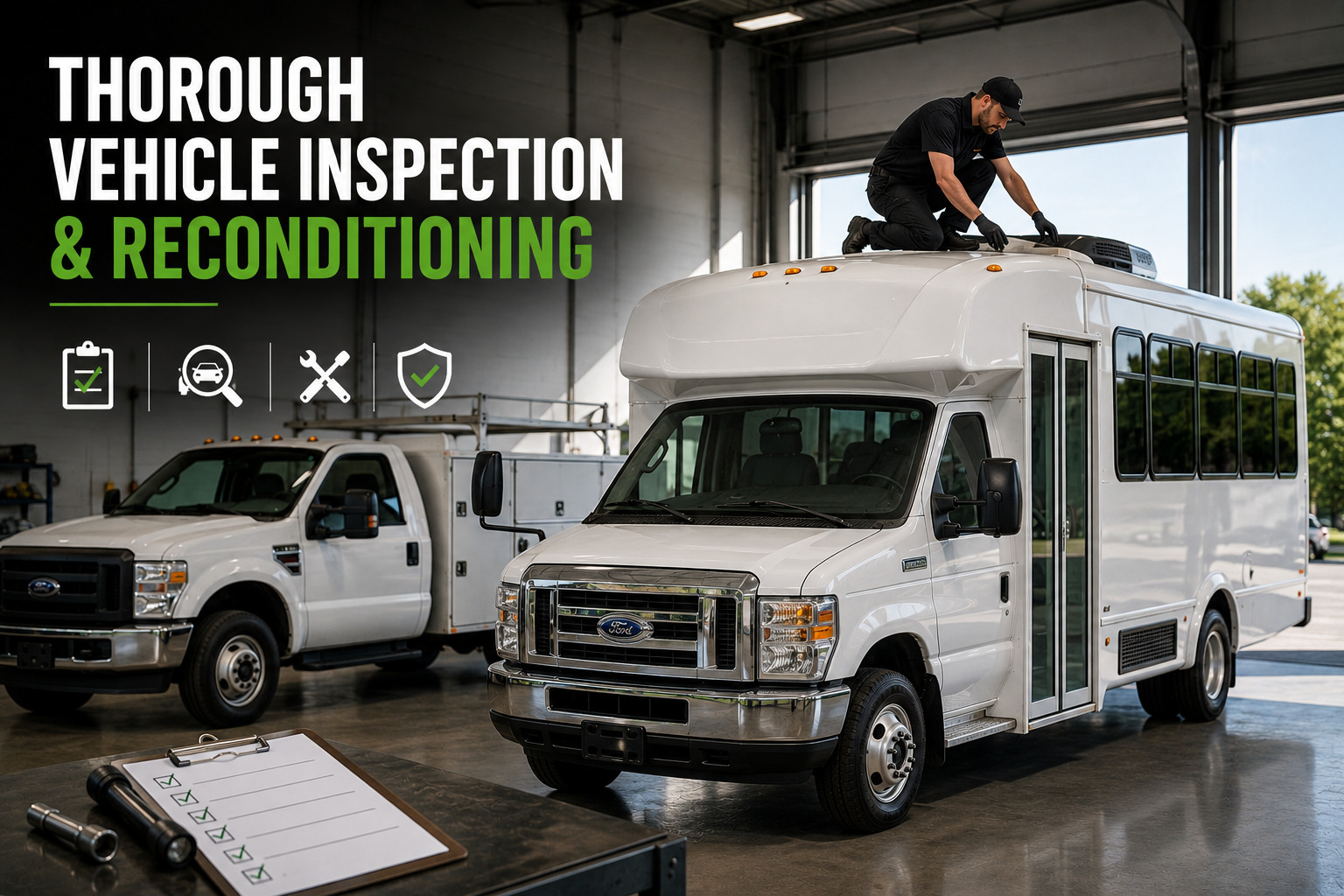
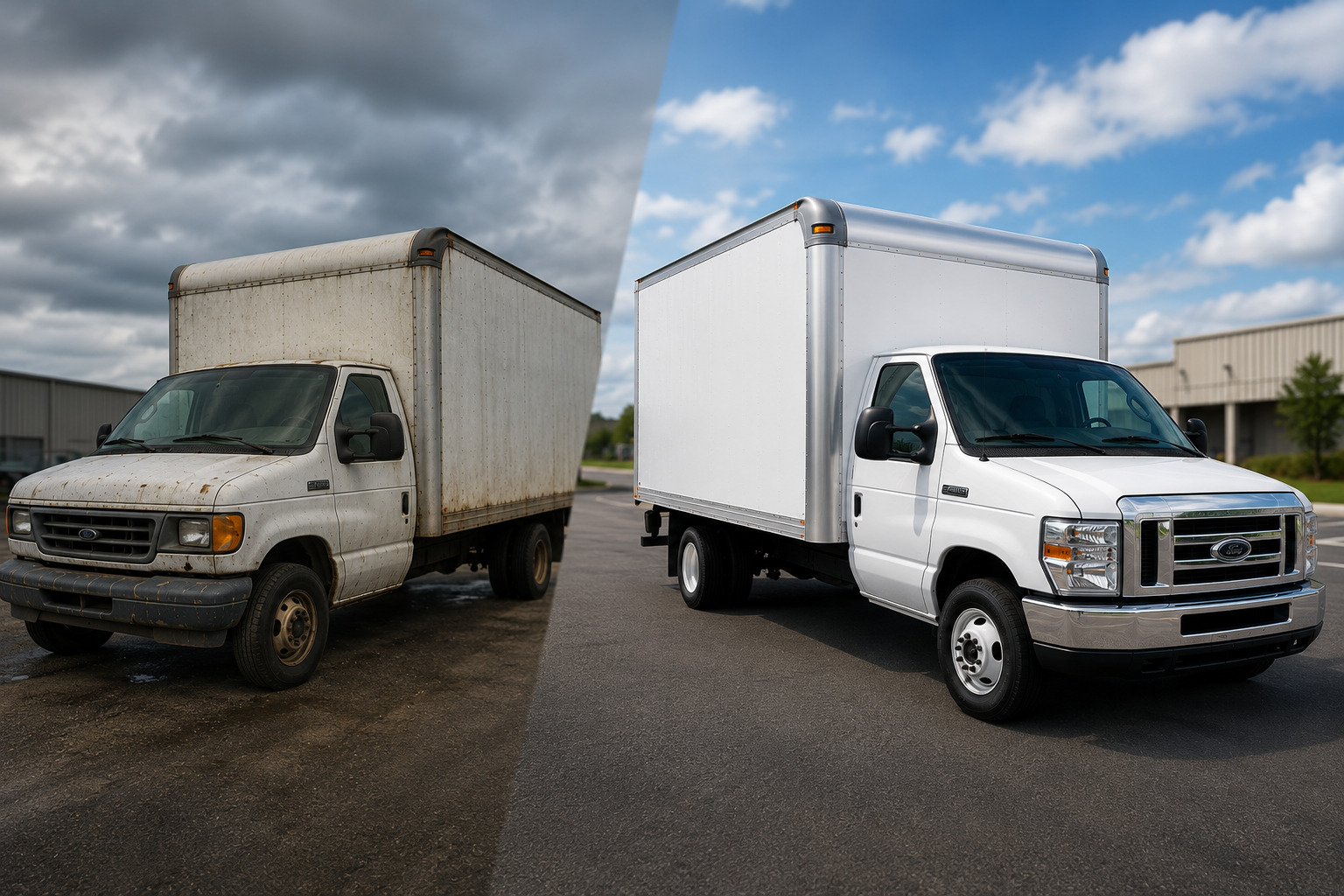
A commercial vehicle can look clean in photos and still need thousands of dollars in work before it is ready to earn money for a business. At SRQ Auto, reconditioning is not the final wash before a vehicle is listed—it is the process of turning a used commercial vehicle into something we are comfortable representing as Job Ready.
That process can involve mechanical inspection and service, tires, glass, upholstery, paint and body work, commercial-body repairs, compartment preparation, interior restoration and detailing. What each vehicle needs is different because every truck, van, box truck and shuttle arrives with a different history.
The goal is straightforward: reduce the work, expense and downtime facing the next owner before the vehicle goes to work.
Browse SRQ Auto's Current Job Ready Commercial Inventory
What Does “Job Ready” Actually Mean at SRQ Auto?
Job Ready does not mean that every used vehicle becomes new again, nor does it mean every future maintenance item can be eliminated. It means we evaluate the vehicle as a commercial asset and address the mechanical, functional and presentation needs identified through our inspection and reconditioning process before it is offered for sale.
For a business owner, that distinction matters. A work vehicle is expected to carry tools, employees, equipment or customers, represent the company professionally and start producing revenue.
The purchase price is only part of the equation. Immediate repairs, upfit corrections and downtime have a cost too.
Step 1: Jeff Reece Evaluates What We're Starting With
Jeff Reece, SRQ Auto's Inventory Manager and Buyer, brings 36 years of automotive experience spanning commercial vehicle acquisition, valuation, automotive parts, chassis and upfit evaluation, condition assessment, reconditioning-cost considerations, dealership logistics and nationwide shipping.
That experience matters before reconditioning even begins.
A truck's year and mileage do not tell us whether its service body is useful, whether compartments have been abused, whether an upfit makes sense for the chassis or how much investment may be required before the vehicle is retail-ready.
Buying correctly is the first step in reconditioning correctly. The better we understand the vehicle, its previous use and its commercial configuration, the better we can determine what it needs next.
Step 2: Chris Wood Looks at the Mechanical Side
Chris Wood is an SRQ Auto Certified Technician with 11 years of experience. His role in the Job Ready process centers on mechanical inspection, diagnostics, maintenance and repair.
A used commercial vehicle can accumulate wear very differently from a personal vehicle. Stop-and-go routes, extended idle time, towing, payload, jobsite use and long highway days can all affect components differently.
That is why current mechanical condition matters alongside the odometer.
Inspection and service needs vary by vehicle, but evaluation can include the engine, transmission, cooling system, brakes, steering, suspension, tires, electrical systems, fluid condition and other mechanical components relevant to that particular truck or van.
We do not want a generic mileage number to substitute for evaluating the actual vehicle in front of us.
Step 3: Billy Smith Takes Reconditioning Beyond Mechanical Repairs
Billy Smith, SRQ Auto's Reconditioning Manager, has 30 years of experience in commercial vehicle reconditioning, service bodies, interiors, detailing, paint and body condition, and bodywork.
This is where “reconditioned” becomes visibly different from “detailed.”
Detailing cleans a vehicle. Reconditioning addresses the condition of the vehicle itself.
Depending on what a unit needs, that can mean repairing body imperfections, improving paint condition, addressing worn upholstery, replacing damaged glass, restoring commercial interiors, preparing cargo areas, repairing utility-body compartments and completing the finish work that helps the vehicle properly represent its next owner's business.
Why Service Bodies and Utility Beds Need Special Attention
A service truck is more than a chassis with a body bolted behind the cab. The service body becomes part of the technician's workplace.
Compartments should open, close and latch properly. Shelving and floors need to be usable. Doors, hinges and mounting points deserve attention. Previous decals, adhesive, surface wear and years of tool storage can leave a commercial body looking—and functioning—far differently from the truck underneath it.
Where appropriate to the specific vehicle, SRQ Auto's reconditioning can include body and compartment preparation and protective finishes such as Raptor liner.
The objective isn't simply appearance. It's to make the commercial body functional and presentable for the next business.
Why Cargo Vans Need More Than a Quick Detail
Commercial vans often spend their lives carrying shelving, tools, packages, equipment and materials. That can leave mounting holes, adhesive, worn cargo floors, damaged interior panels and heavily used cab areas.
Reconditioning a work van means looking at both sides of the partition. The cab is where the driver spends the day. The cargo area is where the business operates. Both matter.
For businesses comparing different mobile-workspace configurations, read our Cargo Van vs. Service Body Truck Guide.
Why Box Trucks and Shuttle Buses Have Their Own Reconditioning Needs
Different commercial vehicles create different inspection and reconditioning priorities.
A box truck adds a cargo body, rear door, flooring, roof and potentially a liftgate or ramp. A shuttle bus adds passenger seating, entry systems, rear climate control, interior flooring and, on accessible models, wheelchair equipment.
That is why SRQ Auto's process cannot be reduced to one generic checklist that treats every commercial vehicle exactly the same.
The chassis matters, but so does the equipment that makes the vehicle commercially useful.
If you're researching passenger transportation, read our Used Shuttle Bus Buying Guide.
Why Tires, Glass, Upholstery and Paint Matter to a Business Buyer
These items can be easy to dismiss as cosmetic, but for a commercial buyer they can represent immediate expense and downtime.
A cracked windshield, worn seat, damaged body panel or tires approaching replacement may not stop a vehicle from moving today, but they can become expenses the business has to address shortly after purchase.
Presentation matters too.
A contractor, municipality or service company may put its name on the side of the vehicle. The condition of that truck or van becomes part of how the business presents itself to customers.
Why Lower Mileage Is Not the Only Measure of a Better Work Vehicle
Lower mileage can be valuable, but it should be considered alongside maintenance history, previous use, idle time, upfit condition and current mechanical condition.
A lower-mile vehicle that still requires substantial repairs and commercial-body work can represent a very different business purchase from a somewhat higher-mile vehicle that has been properly maintained and fully reconditioned.
We cover that subject in more detail in our Guide to Mileage, Maintenance and Condition on Used Commercial Vehicles.
What Does Reconditioning Have to Do With Downtime?
For a commercial buyer, downtime isn't simply inconvenient.
A vehicle sitting in a repair facility can mean missed service calls, delayed deliveries, employees without transportation or the expense of renting a temporary replacement.
Reconditioning cannot eliminate every future repair on a used vehicle. What it can do is address identified needs before delivery rather than knowingly transferring obvious deferred work to the next owner.
That's the business case behind SRQ Auto's Job Ready Promise.
77 Years of Experience Behind the Process
The three people highlighted in SRQ Auto's acquisition, mechanical and reconditioning process bring 77 combined years of automotive experience.
- Jeff Reece — Inventory Manager & Buyer — 36 years: Acquisition, valuation, parts, chassis/upfit evaluation, condition, logistics and shipping.
- Billy Smith — Reconditioning Manager — 30 years: Commercial reconditioning, service bodies, interiors, detailing, paint/body condition and bodywork.
- Chris Wood — Certified Technician — 11 years: Mechanical inspection, diagnostics, maintenance and repair.
That combination matters because Job Ready isn't one person's job.
It begins with what SRQ Auto buys, continues through mechanical evaluation and service, and finishes with the commercial reconditioning required to prepare the vehicle for its next business.
What Should a Buyer Ask About Reconditioning?
When comparing used commercial vehicles, ask what was actually done—not simply whether a vehicle was “inspected.”
Look at the current condition of the tires, brakes, glass, interior and commercial body. Operate compartments, doors, liftgates or accessibility equipment when applicable. Review available vehicle history and service information.
Most importantly, evaluate whether the vehicle is ready for the work you intend to give it.
A lower advertised price can become much less attractive if the business immediately has to spend money and lose time correcting deferred needs.
Frequently Asked Questions About Commercial Vehicle Reconditioning
What is the difference between detailing and reconditioning?
Detailing primarily cleans and improves presentation. Reconditioning is broader and can include mechanical service, repairs, tires, glass, upholstery, paint and body work, commercial-body preparation and other work identified for the specific vehicle.
Does every SRQ Auto vehicle receive exactly the same reconditioning?
No. Used commercial vehicles arrive in different conditions and configurations. The work required depends on the specific vehicle, its mechanical condition, commercial body or upfit, interior and identified needs.
Why does commercial vehicle reconditioning matter to a business?
Identified repairs and deferred needs can create immediate expense and downtime after purchase. Reconditioning addresses known needs before delivery and helps prepare the vehicle for commercial use.
Does lower mileage mean a commercial vehicle needs less reconditioning?
Not necessarily. Mileage is one factor. Previous use, maintenance, idle time, age, body condition, upfit condition and current mechanical condition can all affect what a vehicle needs.
What does SRQ Auto mean by Job Ready?
Job Ready is SRQ Auto's approach to inspecting, servicing and reconditioning qualifying used commercial vehicles so they are prepared for their next business application without knowingly passing obvious deferred needs to the buyer.
Shop Job Ready Commercial Vehicles at SRQ Auto
SRQ Auto specializes in commercial vehicles for contractors, trades, municipalities, fleets and businesses throughout Florida and nationwide.
Our inventory includes service and utility trucks, cargo vans, box trucks, shuttle buses, landscape trucks and other specialized commercial vehicles.
Browse Current Commercial Inventory
Need help structuring the purchase? Learn about Tailored Commercial Financing or complete our online credit application.
SRQ Auto has earned 550+ 5-Star Google Reviews. Read our customer reviews or get directions to SRQ Auto in Bradenton.
{ "@context": "https://schema.org", "@type": "Article", "mainEntityOfPage": { "@type": "WebPage", "@id": "https://www.srqauto.com/research/detail/bradenton-used-vehicles-job-ready-reconditioning" }, "headline": "What Job Ready Really Means: Inside SRQ Auto's Commercial Vehicle Reconditioning Process", "description": "See how SRQ Auto inspects, services and reconditions used commercial vehicles—and how 77 years of staff experience helps prepare trucks, vans and buses for work.", "image": ["YOUR-FEATURED-IMAGE-URL"], "dateModified": "2026-09-19", "author": { "@type": "Organization", "name": "SRQ Auto LLC", "url": "https://www.srqauto.com/" }, "contributor": [ { "@type": "Person", "name": "Jeff Reece", "jobTitle": "Inventory Manager / Buyer", "description": "36 years of automotive experience in commercial vehicle acquisition, valuation, automotive parts, chassis and upfit evaluation, condition assessment, reconditioning-cost considerations, dealership logistics and nationwide shipping.", "worksFor": { "@type": "Organization", "name": "SRQ Auto LLC" } }, { "@type": "Person", "name": "Billy Smith", "jobTitle": "Reconditioning Manager", "description": "30 years of experience in commercial vehicle reconditioning, service bodies, interiors, detailing, paint and body condition, and bodywork.", "worksFor": { "@type": "Organization", "name": "SRQ Auto LLC" } }, { "@type": "Person", "name": "Chris Wood", "jobTitle": "Certified Technician", "description": "11 years of experience in mechanical inspection, diagnostics, maintenance and repair.", "worksFor": { "@type": "Organization", "name": "SRQ Auto LLC" } } ], "publisher": { "@type": "Organization", "name": "SRQ Auto LLC", "url": "https://www.srqauto.com/" }, "articleSection": "Buying Guide", "keywords": [ "commercial vehicle reconditioning", "Job Ready commercial vehicles", "used work truck reconditioning", "commercial truck inspection", "service body reconditioning", "used commercial vehicles", "work truck inspection", "commercial vehicle maintenance" :contentReference[oaicite:1]{index=1}