Service Body vs. Utility Truck: What's the Difference & Which Setup Fits Your Business?

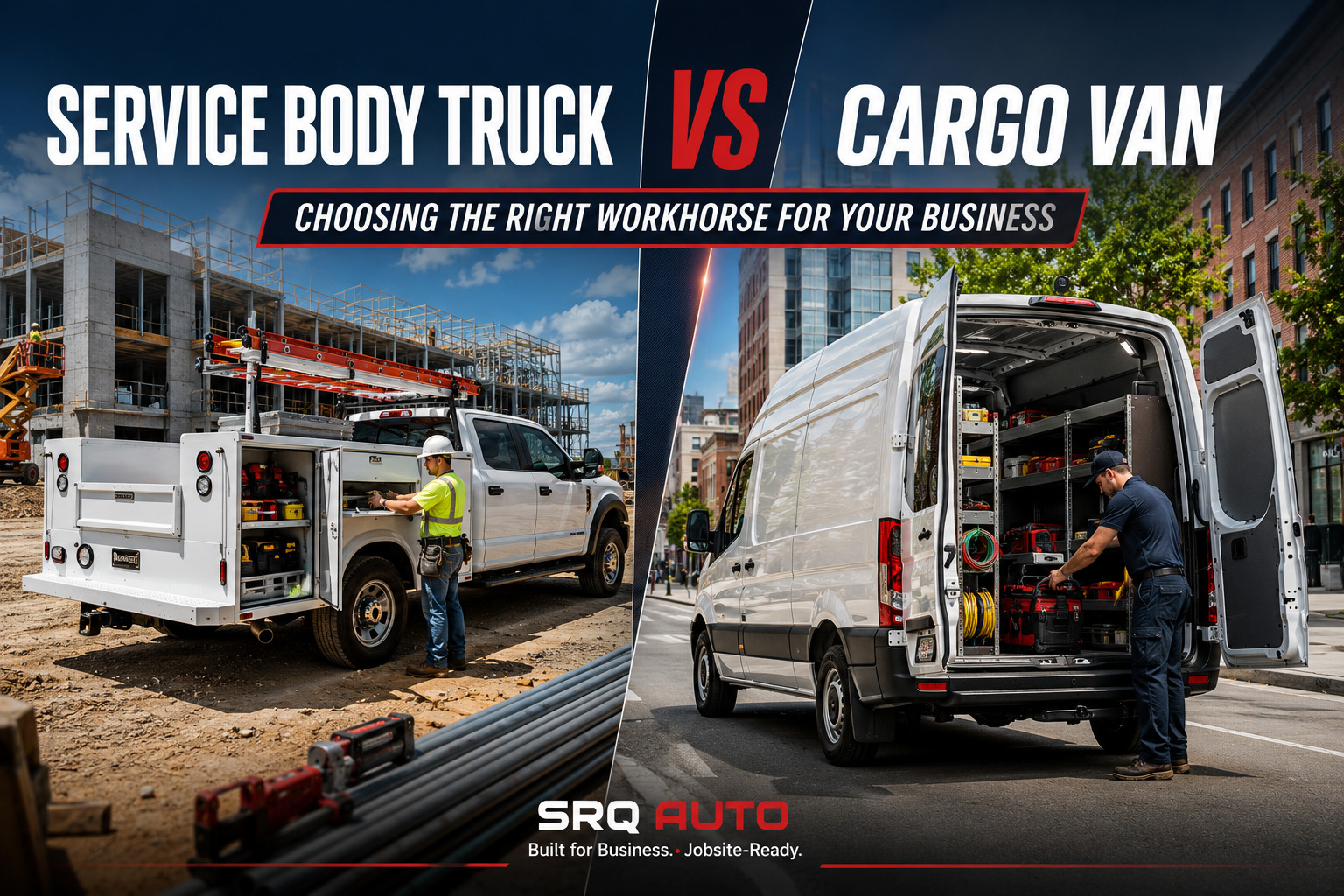
“Utility truck” and “service body truck” are often used to describe similar commercial vehicles, but the name alone does not tell you whether a truck fits your business. The important questions are how the body is configured, what the chassis can carry, how your technicians access their tools and what the truck needs to do every day.
An electrician organizing parts and conduit, an HVAC technician carrying tools and equipment, and a mobile mechanic working in the field may all use service-body trucks—but the ideal configurations can be very different.
At SRQ Auto, we evaluate the complete working package: chassis + service body + compartments + equipment + application.
Browse SRQ Auto's current service body and utility trucks for sale.
What Is a Utility Truck?
“Utility truck” is commonly used as a broad term for a work truck equipped to organize and transport tools, parts and equipment. Many vehicles advertised as utility trucks use a service body with externally accessible compartments on both sides of the bed. Because terminology varies, look at the actual body, chassis and equipment rather than the label alone.
What Is a Service Body Truck?
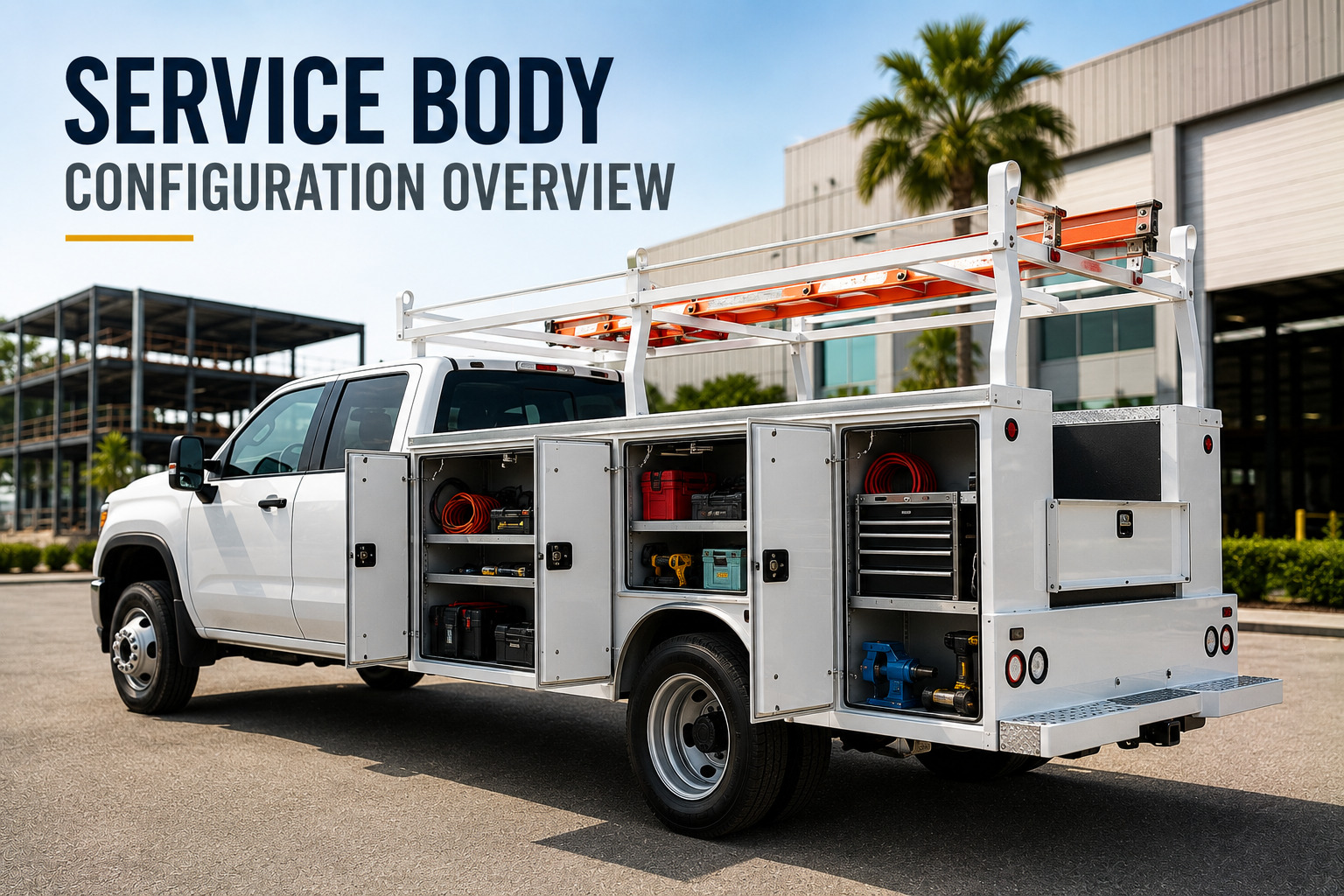
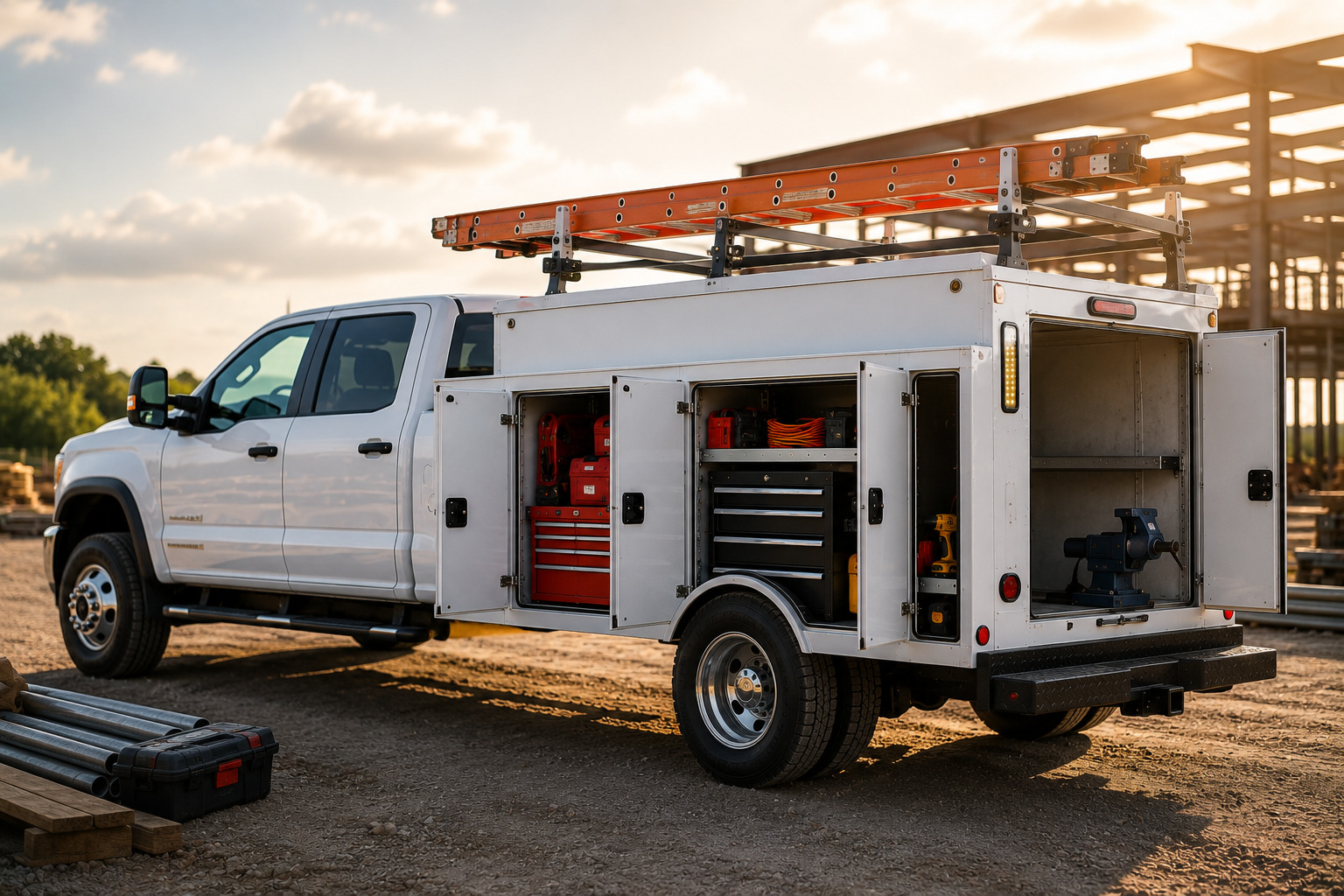
A service body replaces the conventional pickup bed with a purpose-built commercial body. Typical configurations provide exterior compartments for tools, parts and equipment while retaining an open center bed for larger materials. They are widely used by electricians, HVAC companies, plumbers, municipalities, mobile mechanics, construction businesses and field-service fleets.
Expert Perspective: Jeff Reece, Inventory Manager & Buyer
Jeff Reece has 36 years of automotive experience and serves as SRQ Auto's Inventory Manager and Buyer. His experience includes commercial vehicle acquisition, automotive parts, valuation, chassis and upfit evaluation, condition assessment, reconditioning-cost considerations, dealership logistics and nationwide shipping.
A desirable chassis does not automatically make a good service truck if the body is damaged, poorly configured or wrong for the intended application.
Start with what the business needs the truck to accomplish, then evaluate whether the chassis and service body solve that problem together.
Service Body vs. KUV: Open Bed or Enclosed Workspace?
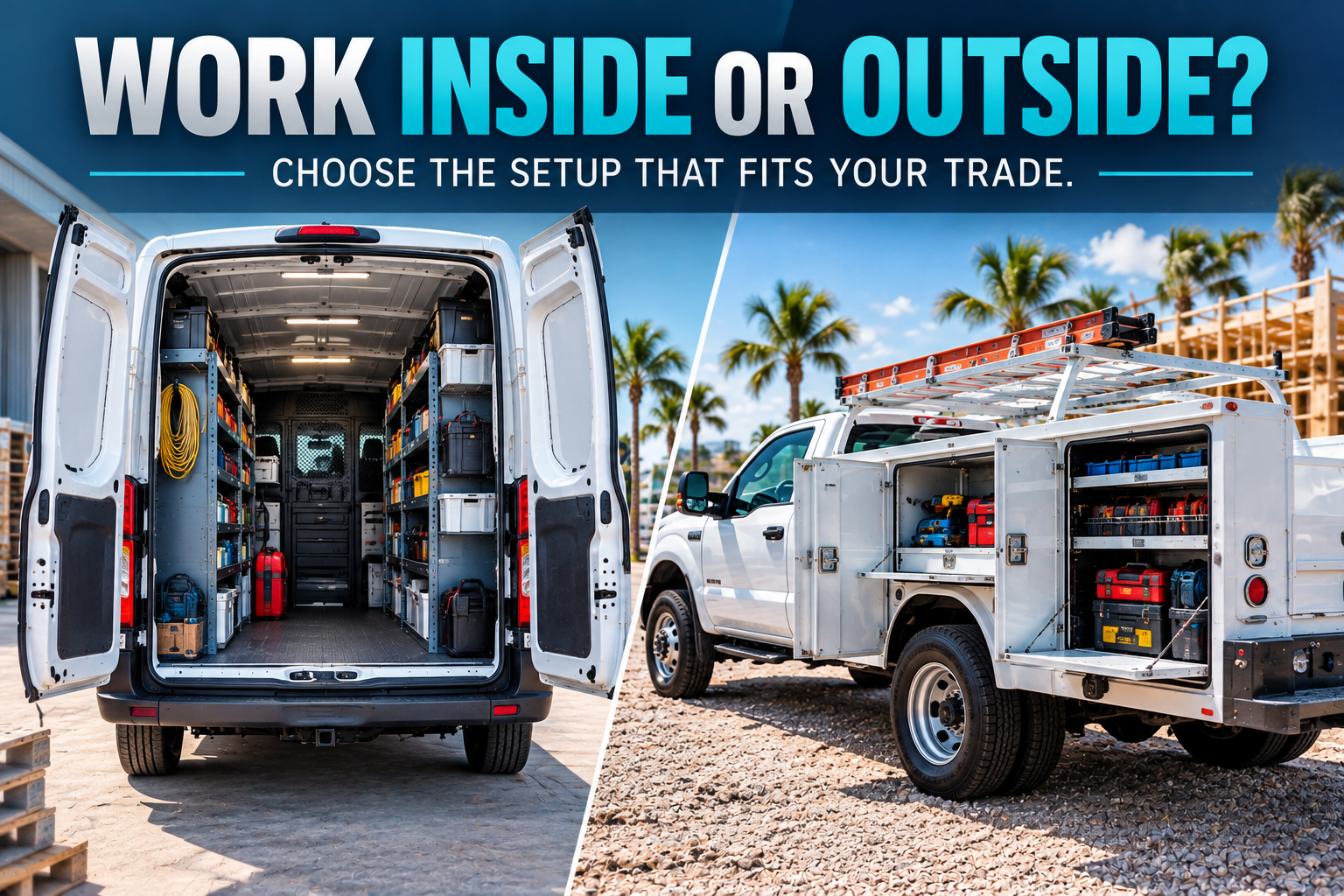
A conventional service body typically combines exterior compartments with an open center bed. A KUV-style body adds an enclosed cargo area above and between the service compartments, providing additional weather-protected storage while retaining exterior compartment access.
Consider what is carried, how often technicians enter the cargo area, overall body height, equipment access and the weight of the completed upfit.
Single Rear Wheel vs. Dually Service Truck
Both can be excellent commercial tools. The correct choice depends on the specific chassis ratings, body, equipment and payload requirements. A dually may be found on heavier-duty applications, but rear-wheel configuration alone does not determine payload. Verify the specific truck's GVWR, completed weight and intended load.
Regular Cab vs. Crew Cab
A regular cab can maximize simplicity and may provide a shorter overall truck. A crew cab provides additional seating for businesses that routinely send multiple employees to the same jobsite. Consider parking, wheelbase, turning needs, payload and how often those additional seats will actually be used.
2WD vs. 4WD Service Truck
Four-wheel drive can be valuable for construction sites, rural properties, utility work and environments where traction conditions justify it. Two-wheel drive can remain an excellent choice for businesses operating primarily on paved roads and established service routes.
Gas vs. Diesel
Consider annual mileage, idle time, payload, towing requirements, service availability, maintenance practices and expected ownership period. On a used commercial vehicle, condition and maintenance history can matter more than a generic gas-vs.-diesel rule.
What Service Body Length Does Your Business Need?
Used commercial trucks can have approximately 8-foot bodies as well as longer 9-, 11-foot and other configurations depending on chassis and manufacturer. Longer is not automatically better. Body length affects storage, wheelbase requirements, overall vehicle length and completed weight.
Why Compartment Configuration Matters
Two service bodies of similar exterior size can function very differently. Look at compartment height, depth, shelving, drawers, dividers, horizontal storage, locks and door openings. Think about which tools technicians use most often and whether they can reach them without climbing into the bed.
Do You Need Ladder or Conduit Storage?
For trades carrying ladders, pipe, conduit or long materials, storage should be planned as part of the truck. Depending on the body, that may involve a ladder rack, conduit storage or other trade-specific equipment. Inspect existing racks and mounting points carefully on a used truck.
Payload and GVWR: Why the Upfit Changes the Equation
A service body, shelving, racks, tools, occupants, fuel and additional equipment all contribute to vehicle weight before the business adds its normal payload. A chassis specification by itself does not tell you how much usable capacity remains on a completed service truck.
Evaluate the ratings and configuration of the actual completed vehicle.
Which Service Truck Fits Your Trade?
Electricians often benefit from organized compartments for tools, fittings, wire-related equipment and parts, plus conduit and ladder storage.
HVAC companies may need exterior compartments for frequently used items plus center-bed or enclosed KUV space for larger equipment.
Plumbers may prioritize parts storage, long-material storage, ladder-rack configuration and payload.
Mobile mechanics can place greater demands on payload and equipment organization. Compressors, generators, lubrication equipment or cranes can significantly change chassis and body requirements.
What Does Jeff Look at When SRQ Auto Buys a Used Service Truck?
A used service truck has two histories: the chassis history and the working body's history. Beyond mechanical condition, the service body deserves its own inspection. Compartment doors, hinges, latches, floors, shelving, racks, mounting points and evidence of previous commercial use all matter.
Previous decals, body repairs, worn compartments and damaged interiors can also affect how much reconditioning is required before the truck is ready for another business.
What Should You Inspect Before Buying a Used Service Body Truck?
- Chassis: Engine, transmission, cooling system, brakes, steering and suspension.
- Tires: Condition, matching and remaining service life.
- Service-body mounting: Inspect visible mounting areas and alignment.
- Compartments: Open every door and check hinges, latches, locks, shelving and floors.
- Body condition: Look for corrosion, damage, previous repairs and hard commercial wear.
- Bed floor: Inspect for damage and previous equipment mounting.
- Racks and storage: Check ladder racks, conduit storage and attachment points.
- Payload: Confirm the completed vehicle's ratings fit your normal tools, equipment and materials.
Why Reconditioning Matters
Service bodies live a hard commercial life. SRQ Auto's Job Ready process focuses on mechanical, functional and presentation needs identified on qualifying commercial vehicles before they are offered to the next business.
Depending on the vehicle, reconditioning may include mechanical service, tires, glass, upholstery, paint/body work, compartment preparation and protective treatments such as Raptor liner where appropriate.
Learn more about SRQ Auto's commercial vehicle reconditioning process.
Frequently Asked Questions About Service Body and Utility Trucks
What is the difference between a utility truck and a service body truck?
The terms are often used interchangeably. A service body specifically describes a commercial body with organized exterior storage compartments, while “utility truck” can be used more broadly. Evaluate the actual body and configuration rather than relying on the label.
Is a KUV better than an open service body?
Neither is universally better. A KUV adds enclosed cargo space while retaining exterior compartments. A conventional service body provides an open center bed that may be better for larger materials and equipment.
Should I buy a single-rear-wheel or dually service truck?
Choose based on chassis ratings, completed vehicle weight, body and expected payload. Rear-wheel configuration alone does not determine usable capacity.
Do I need 4WD on a service truck?
Four-wheel drive can be useful for jobsites, rural properties and low-traction environments. Businesses operating primarily on paved routes may not need it.
What should I inspect on a used service body?
Inspect compartment doors, hinges, locks, shelving, floors, racks, body mounting, bed condition and signs of previous repairs or hard commercial use in addition to the chassis.
Shop Job Ready Service Body & Utility Trucks at SRQ Auto
SRQ Auto specializes in fully reconditioned commercial vehicles for electricians, HVAC companies, plumbers, mobile mechanics, contractors, municipalities, fleets and field-service businesses throughout Florida and nationwide.
Browse Current Service Body & Utility Trucks
Learn about Tailored Commercial Financing or complete our online credit application.
SRQ Auto has earned 550+ 5-Star Google Reviews. Read our customer reviews.