Used Commercial Truck Condition Guide: What Wear Is Normal—and What Should Make You Walk Away?

Every used commercial vehicle has a history. The important question is whether the wear you see reflects normal work—or signals a truck that may become an expensive problem. Mileage matters, but condition, maintenance, previous use and the commercial body can tell you just as much about the vehicle you are considering.
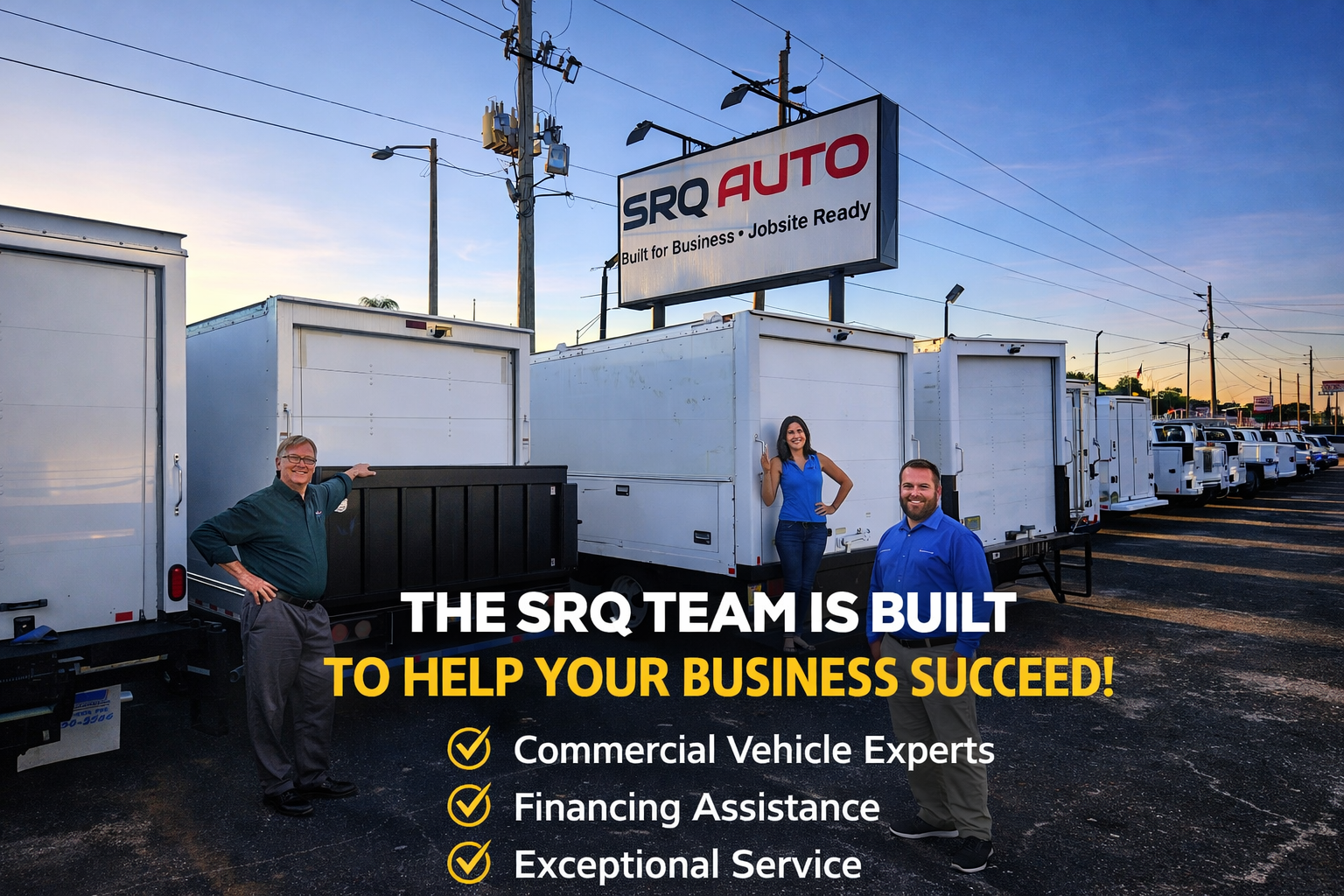
At SRQ Auto, we buy and recondition used commercial vehicles that have spent their lives doing real work. That includes service trucks, box trucks, cargo vans, landscape trucks, Isuzu NPRs, shuttle buses and other specialized vehicles.
We've learned that cosmetic wear does not automatically make a truck a bad purchase, and low mileage does not automatically make one a good purchase. The goal is to understand what you are looking at and evaluate the complete working vehicle.
Browse SRQ Auto's Current Job Ready Commercial Inventory
What Wear Is Normal on a Used Commercial Truck?
Commercial vehicles are tools. Scratches in a cargo area, worn step surfaces, evidence of shelving, minor compartment wear or a driver's seat that shows regular use can be consistent with a truck that has simply done its job.
That does not mean every cosmetic issue should be ignored. It means wear needs context.
A five-year-old service truck used by a field technician should not be evaluated exactly like a lightly used personal pickup. The important questions are how the vehicle was used, how it was maintained, whether the wear affects function and what work is required before the truck goes back into service.
When Should Wear Make You Look More Closely?
Some conditions deserve a deeper inspection because they can indicate hard use, deferred maintenance, water intrusion, previous damage or poorly executed repairs.
- Uneven or unusual tire wear
- Significant fluid leaks
- Structural corrosion or questionable frame repairs
- Damaged body mounting points
- Water-damaged box floors or walls
- Poorly repaired commercial-body doors or compartments
- Abandoned or poorly installed electrical wiring
- Hydraulic equipment that does not operate correctly
- Warning lights or unresolved mechanical symptoms
- Evidence that the vehicle was repeatedly overloaded or improperly modified
None of these observations should be judged from a photograph alone. They are reasons to investigate the vehicle more carefully.
Does Higher Mileage Automatically Mean Worse Condition?
No. Mileage is an important data point, but it does not tell the complete story.
A higher-mile commercial vehicle with documented maintenance and a favorable operating history may be a better working asset than a lower-mile vehicle that has been neglected.
Commercial use also varies dramatically. Highway mileage, short delivery routes, jobsite operation, repeated stop-and-go driving and long periods of idling can affect vehicles differently.
Evaluate mileage together with maintenance history, current condition and previous use.
Why Engine Hours and Idle Time Can Matter
Some commercial vehicles spend significant time running while stationary. Service operations, delivery work, shuttle applications and jobsite vehicles may accumulate engine operating time that is not obvious from the odometer alone.
When engine-hour information is available, it can provide additional context about how the vehicle was used.
Engine hours should not be interpreted in isolation, either. They are another piece of the vehicle's operating history that should be considered alongside mileage, maintenance and condition.
Fleet-Maintained vs. Low-Mileage Privately Owned: Which Is Better?
There is no universal winner.
Fleet ownership can be attractive when the company followed consistent preventive-maintenance practices and kept service records. But fleet vehicles can also experience demanding duty cycles.
A privately owned commercial truck may have lower mileage or lighter use, but maintenance quality can vary widely.
SRQ Auto looks at the individual vehicle rather than assuming that one ownership type automatically guarantees better condition.
What Should You Look for Underneath a Used Work Truck?
The underside of a commercial vehicle can provide useful clues about previous use and condition.
Inspect visible frame areas, suspension components, body mounts, fluid leaks, corrosion and signs of previous repairs or damage.
Surface oxidation and structural corrosion are not the same thing. Geography, previous use and exposure all matter. If corrosion appears significant or affects structural components, the vehicle should be evaluated by a qualified professional.
What Can Tire Wear Tell You?
Tires are expensive commercial-vehicle components, but they can also provide clues about the truck.
Look at tread depth, tire age, matching specifications and wear patterns. Uneven wear can have multiple causes, including alignment, suspension condition, tire pressure, rotation practices and operating conditions.
Mismatched tires do not automatically mean the truck is bad, but they can be a reason to understand the vehicle's maintenance history more closely.
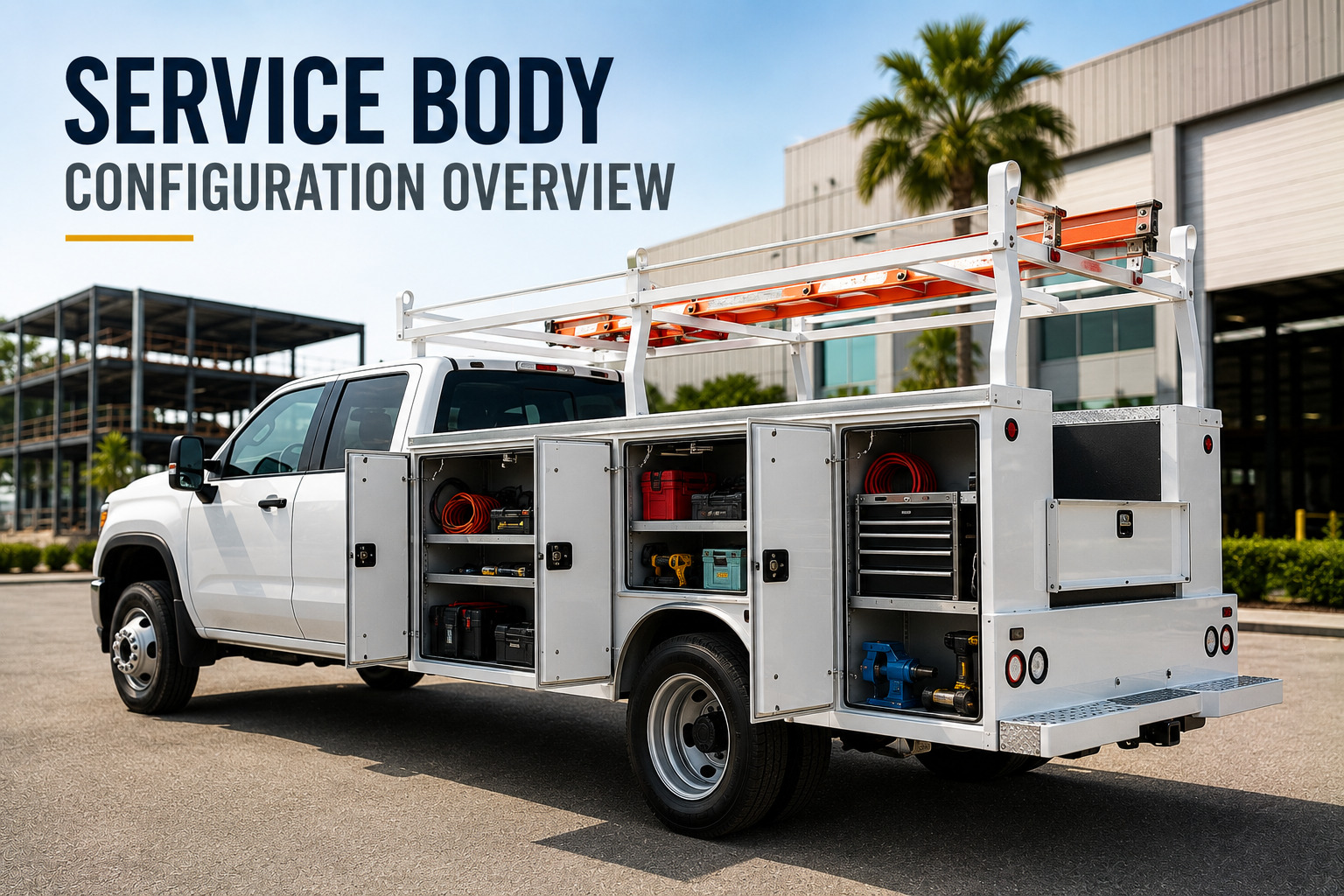
How Should You Evaluate a Used Service Body?
A service body should be inspected as working equipment, not simply as a truck bed.
Open every compartment. Check doors, hinges, latches, locks, shelving and floors. Look at ladder racks, conduit storage, bumpers and visible body mounting areas.
Normal scratches and tool wear may be cosmetic. Doors that do not align, damaged mounting points, severe corrosion or poorly repaired compartments deserve more attention.
For a deeper look at choosing a utility configuration, read our Service Body Truck Buying Guide.
What Should You Inspect on a Used Box Truck Body?
The box itself can be just as important as the chassis.
Inspect the cargo floor for damage, soft areas or poor repairs. Examine walls and roof for evidence of leaks or separation. Operate the rear door and inspect tracks, rollers, latches and hardware.
If the truck has a liftgate, operate it and evaluate the platform, controls, visible hydraulic or electrical components and mounting areas.
A mechanically strong chassis with a badly damaged cargo body can still create immediate expense and downtime.
Browse Current Box Trucks for Sale
What Wear Matters on a Cargo Van?
Cargo vans can show their work history in the cargo floor, interior walls, door openings and shelving mounting points.
Inspect rear and side doors for alignment and operation. Look for evidence of water intrusion, damaged flooring, excessive interior modifications or wiring left behind from previous equipment.
Driver-seat wear and cosmetic cargo-area scratches may be repairable presentation issues. Structural damage, serious leaks or poorly executed modifications deserve a different level of concern.
What Should You Inspect on a Landscape Truck?
Landscape trucks can experience repeated loading cycles, debris, moisture and jobsite use.
On a dump body, inspect the floor, sides, tailgate, hinges and hydraulic system. On a dovetail body, inspect the deck, ramps, expanded metal, tie-down areas and loading surfaces.
Because these bodies are working equipment, function matters more than whether every surface looks new before reconditioning.
What About Shuttle Buses?
A shuttle bus requires inspection beyond the basic chassis.
Seating, flooring, entry steps, interior panels, HVAC operation, doors and any wheelchair-accessibility equipment should be evaluated as part of the complete vehicle.
Where wheelchair lifts are installed, the lift, controls, platform and securement equipment deserve specific attention and appropriate inspection.
When Are Worn Seats Just Cosmetic?
Seat wear is common in commercial vehicles because drivers enter and exit frequently.
Torn upholstery or compressed seat material may be a reconditioning issue rather than a reason to reject an otherwise strong vehicle. But the complete cab should still be evaluated for seat function, belts, controls, warning indicators and overall condition.
This is an example of why SRQ Auto separates repairable presentation issues from conditions that affect the vehicle's mechanical or functional suitability.
What Previous Repairs Should Concern You?
A repaired commercial vehicle is not automatically a bad vehicle. The quality and nature of the repair matter.
Look more closely at repairs involving the frame, body mounting points, suspension, structural areas, electrical systems and commercial equipment.
Clean, professional repairs with appropriate documentation are very different from improvised wiring, poorly aligned panels, crude welds or modifications that appear inconsistent with the intended equipment.
What Can Be Reconditioned—and What May Not Be Worth It?
Many used commercial vehicles need work before they are ready for another business.
Depending on the vehicle, repairable items can include tires, glass, upholstery, paint, cosmetic body damage, compartment finishes, routine mechanical needs and other wear identified during inspection.
Other conditions can change the economics entirely. Extensive structural damage, severe corrosion, major commercial-body deterioration or multiple expensive mechanical problems can make a vehicle a poor reconditioning candidate.
The question is not whether the truck needs anything. The question is whether the complete vehicle makes sense after the necessary work is considered.
What SRQ Auto Looks at Before Buying a Used Commercial Vehicle
When SRQ Auto evaluates a commercial vehicle for inventory, we look beyond year and mileage.
We consider the chassis, mechanical condition, previous use, commercial body or upfit, tires, interior, exterior, installed equipment and the work required to bring the vehicle to our retail standard.
We also consider whether the configuration makes sense for the businesses likely to buy it. A truck can be mechanically sound and still be a poor acquisition if the body or equipment has limited commercial usefulness.
Why Reconditioning Changes the Used-Truck Buying Equation
Buying an inexpensive commercial vehicle that immediately needs tires, glass, upholstery, mechanical repairs and body work can change the real cost of the purchase quickly.
SRQ Auto's Job Ready process focuses on identified mechanical, functional and presentation needs before qualifying used commercial vehicles are offered to the next business.
Depending on the vehicle, that can include mechanical service and repairs, tires, upholstery, glass, paint/body work and preparation of the commercial body or cargo area.
Learn more about SRQ Auto's Job Ready reconditioning process.
Questions to Ask Before Buying a Used Commercial Vehicle
- How was this vehicle used previously?
- Is maintenance history available?
- Does the current condition match the mileage?
- What condition is the commercial body or upfit in?
- Are the tires appropriate and in good condition?
- Are there visible leaks, warning lights or unresolved mechanical issues?
- Has the truck been modified?
- Does all installed commercial equipment operate?
- What work will the vehicle need immediately?
- Does the vehicle still make financial sense after that work is considered?
Frequently Asked Questions About Used Commercial Truck Condition
Is surface rust normal on a used commercial truck?
Some surface oxidation can occur depending on age, geography and exposure. It should be distinguished from significant corrosion affecting structural components, mounting points or function.
Is high mileage bad on a used work truck?
Not automatically. Mileage should be evaluated with maintenance history, duty cycle, current condition and previous use.
Is a fleet-owned truck better than a privately owned truck?
Neither ownership type is automatically better. A well-maintained fleet vehicle can be an excellent commercial asset, while maintenance quality and use vary among both fleet and private owners.
Should I avoid a truck with worn upholstery?
Worn upholstery can be a repairable cosmetic issue. Evaluate it separately from mechanical, structural and functional condition.
What is the most important thing to inspect on a used box truck?
There is no single item. Evaluate both the chassis and the cargo body, including mechanical condition, floor, walls, roof, rear door and loading equipment.
What does Job Ready mean at SRQ Auto?
SRQ Auto's Job Ready process addresses identified mechanical, functional and presentation needs on qualifying used commercial vehicles before they are offered to the next business.
Shop Job Ready Used Commercial Vehicles at SRQ Auto
SRQ Auto specializes in fully reconditioned commercial vehicles for contractors, trades, fleets, municipalities and businesses throughout Florida and nationwide.
Our inventory can include service trucks, utility trucks, box trucks, cargo vans, landscape trucks, Isuzu NPRs, shuttle buses and other specialized commercial vehicles.
Browse Current Job Ready Commercial Inventory
SRQ Auto also offers Tailored Commercial Financing, remote documents and nationwide vehicle shipping.
SRQ Auto has earned 550+ 5-Star Google Reviews.
{ "@context": "https://schema.org", "@type": "FAQPage", "mainEntity": [ { "@type": "Question", "name": "Is surface rust normal on a used commercial truck?", "acceptedAnswer": { "@type": "Answer", "text": "Some surface oxidation can occur depending on age, geography and exposure. It should be distinguished from significant corrosion affecting structural components, mounting points or function." } }, { "@type": "Question", "name": "Is high mileage bad on a used work truck?", "acceptedAnswer": { "@type": "Answer", "text": "Not automatically. Mileage should be evaluated with maintenance history, duty cycle, current condition and previous use." } }, { "@type": "Question", "name": "Is a fleet-owned truck better than a privately owned truck?", "acceptedAnswer": { "@type": "Answer", "text": "Neither ownership type is automatically better. Maintenance quality and previous use should be evaluated for the individual vehicle." } }, { "@type": "Question", "name": "Should I avoid a truck with worn upholstery?", "acceptedAnswer": {