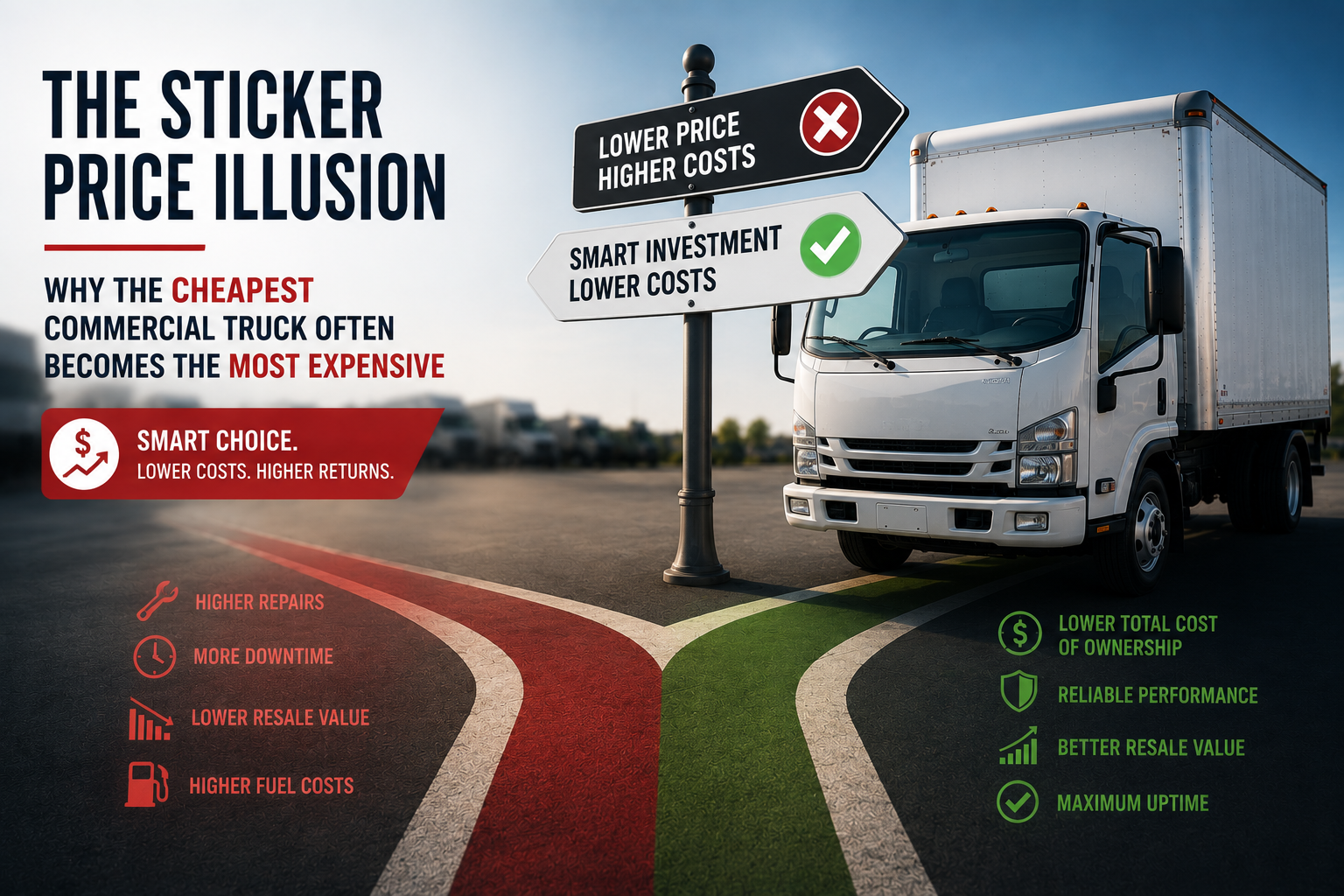
The Sticker Price Illusion: Why the Cheapest Commercial Truck Often Becomes the Most Expensive
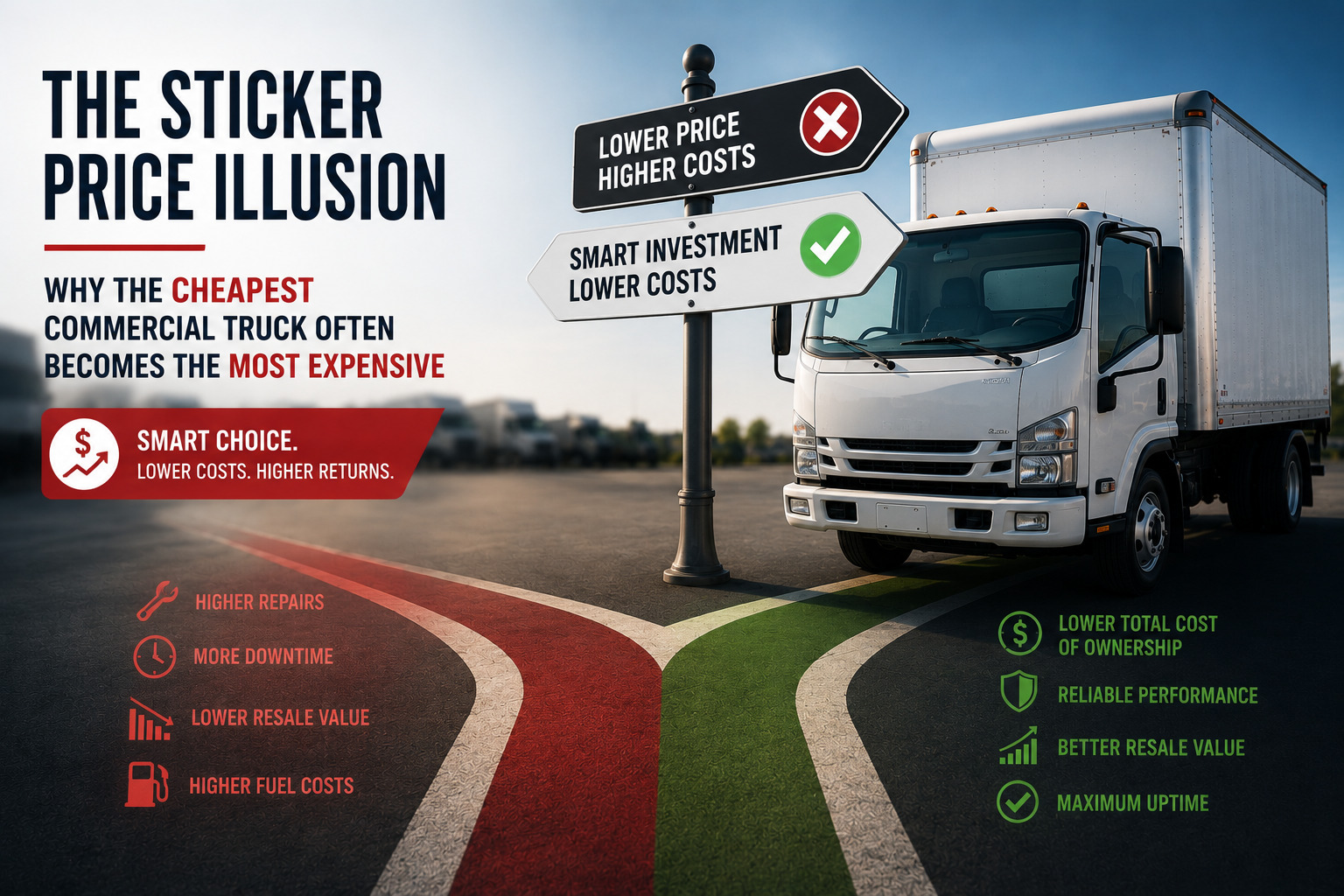
In the highly competitive world of commercial logistics, fleet operations, and local trade contracting, the temptation to minimize upfront capital expenditure is incredibly powerful. When shopping for a new addition to your work fleet, a low sticker price acts like a psychological magnet. It promises immediate relief to your balance sheet, preserves precious working capital, and looks fantastic on a quarterly procurement report. However, experienced fleet managers know that this initial price tag is a dangerous illusion. The true cost of a commercial asset is never fully realized at the point of sale. Instead, it unfolds over hundreds of thousands of miles, through demanding shifts, volatile fuel markets, and unexpected trips to the service bay. At SRQ Auto LLC, we have spent years helping business owners move past the initial sticker-price trap to look at the entire lifecycle of their investments. We believe in educating our clients like trusted partners, helping them understand that buying a commercial vehicle isn't just a transaction—it is a long-term operational commitment. When you purchase an under-spec'd, poorly maintained, or low-tier truck simply because it is the cheapest option on the lot, you are often signing up for a compounding series of financial liabilities. This guide serves as a practical, data-driven roadmap to help you navigate the complexities of Total Cost of Ownership (TCO), ensuring your next purchase from our Used Commercial Inventory is a high-yield asset rather than a cash-draining liability.
Why Does a Lower Initial Purchase Price Often Lead to a Higher Total Cost of Ownership (TCO)?
Cost Component (5-Year Lifecycle) | Cheap/Under-Spec'd Truck | Premium/Correctly Spec'd Truck |
|---|---|---|
Initial Acquisition Cost | $25,000 (Cheap Cash Buy) | $38,000 (Quality Investment) |
Fuel Expense (150k Miles @ Florida Rates) | $42,000 (Outdated/Mismatched Powertrain) | $31,500 (Optimized Axle & Engine) |
Unscheduled Maintenance & Repairs | $14,500 (Frequent Component Failures) | $4,000 (Robust Build Quality) |
Cost of Lost Productivity (Downtime) | $18,000 (30 Days Out of Service) | $1,800 (3 Days Out of Service) |
Estimated Resale Value (Year 5) | $4,000 (Extreme Depreciation) | $14,000 (Strong Market Demand) |
Total Landed Lifecycle Cost | $95,500 | $61,300 |
How Unscheduled Downtime Impacts the True Cost of Operating a Cheap Commercial Truck
In commercial operations, there is an old industry maxim that holds true across every sector: 'If the wheels aren't turning, you aren't earning.' When a retail vehicle breaks down, it is an inconvenience. When a commercial truck breaks down, it is a full-blown operational emergency. The price of unscheduled downtime goes far beyond the invoice from the mechanic. It ripples through your entire business structure, creating compounding costs that can easily erase a year's worth of profit margins on a single route.
How Can a Lower Purchase Price Truck End Up Costing More Than a Higher-Priced One?
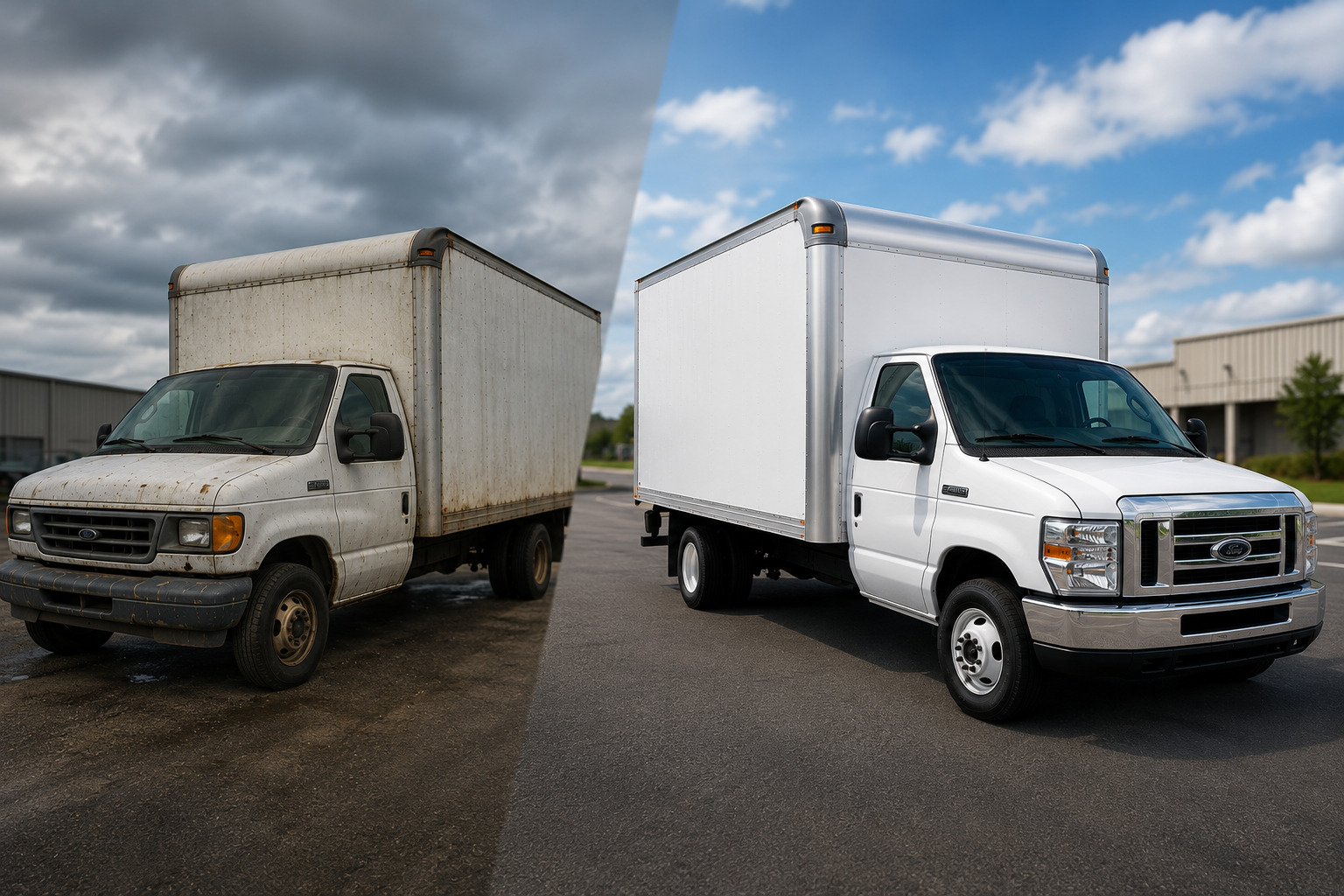
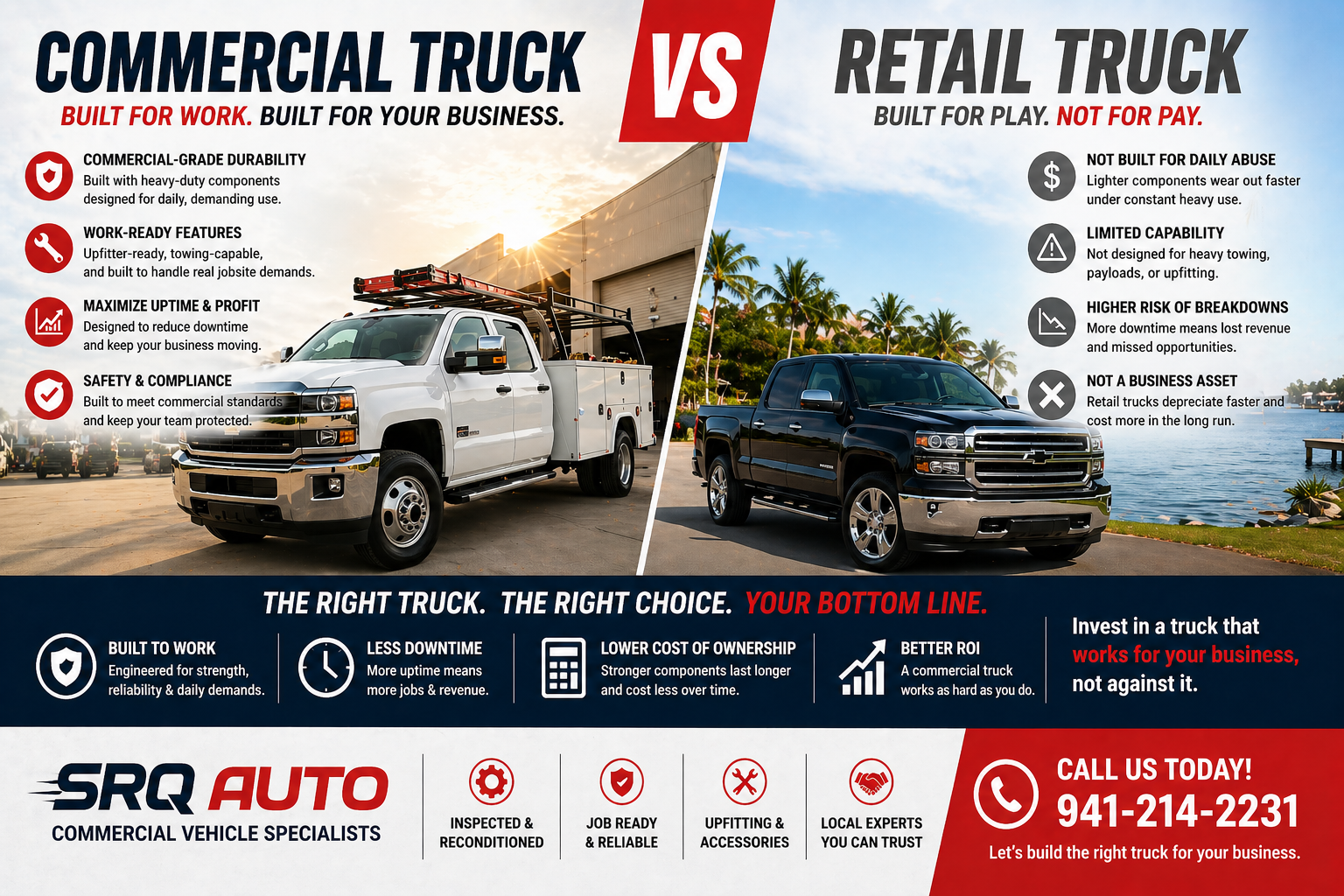
The mechanical differences between a bargain-basement commercial truck and a premium, well-maintained asset are profound. Cheap vehicles often suffer from what the industry calls 'spec'ing compromises.' To hit a rock-bottom price point, initial buyers might choose the smallest available engine, light-duty transmissions, basic cooling packages, and entry-level suspension setups. While these specifications are technically rated to carry a payload, they operate at the absolute limit of their mechanical capacity during daily tasks. Running any mechanical component at 95% capacity day in and day out causes rapid, exponential wear. A light-duty transmission forced to constantly haul heavy equipment will overheat, degrade its fluid, and suffer premature gear failure. Conversely, a premium truck equipped with an oversized cooling system, heavy-duty transmission coolers, and a robust commercial-grade engine operates comfortably at 50% to 60% capacity. This extra mechanical headroom ensures the vehicle runs reliably for hundreds of thousands of miles without major component overhauls. At SRQ Auto LLC, we believe that smart financing makes these higher-quality, reliable trucks highly accessible. By utilizing our dedicated Commercial Financing programs, you can secure low-rate loans that fit your cash flow. This allows you to acquire a premium, reliable work truck that protects you from catastrophic breakdown expenses, making it far cheaper to own over the course of its service life than a cheap cash-buy liability that drains your reserves.
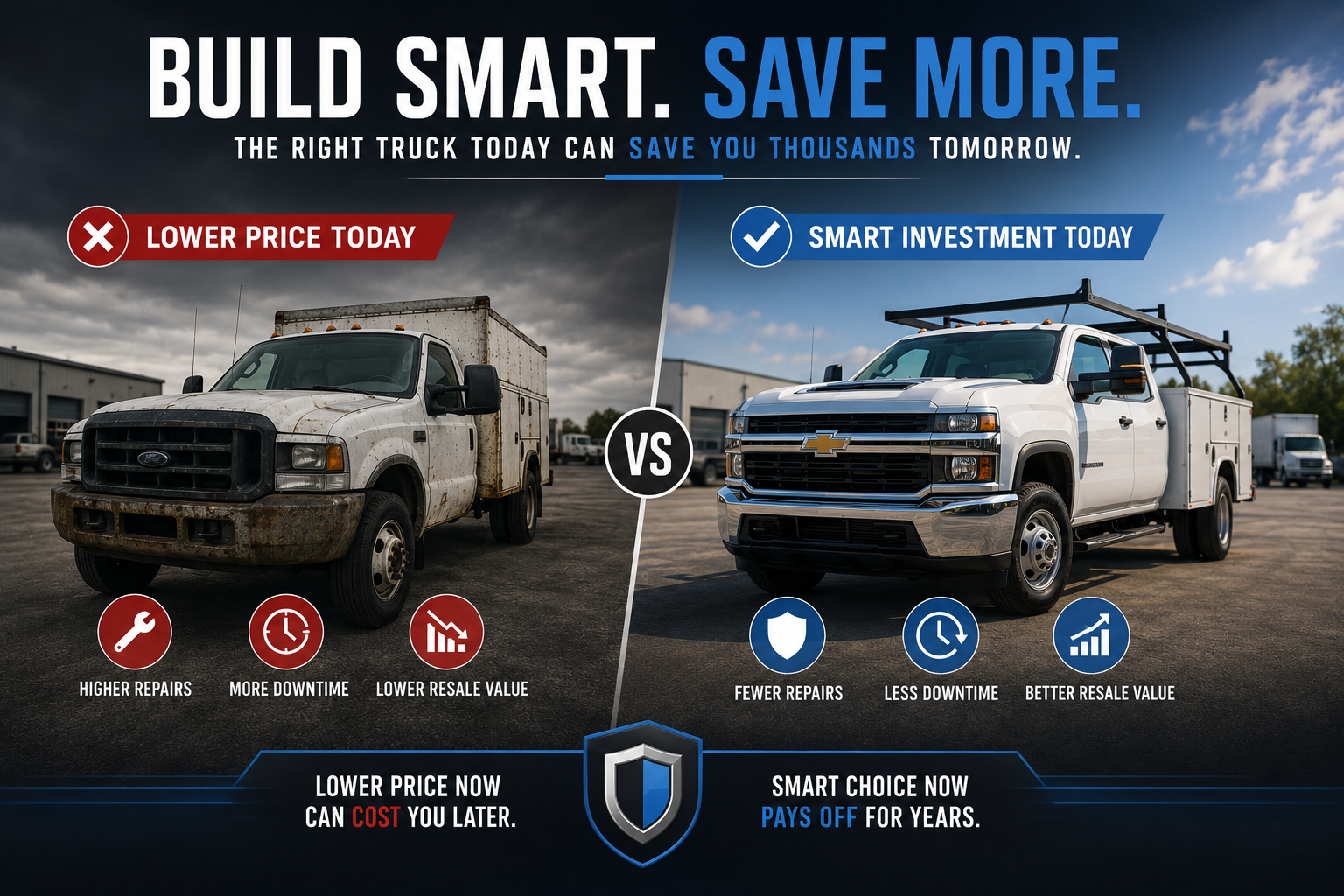
The Hidden Drain of Fuel Inefficiency and Spec'ing Errors in Florida's Flat Coastal Terrain
How Resale Value Changes Whether the Cheapest Commercial Truck is Really the Best Deal
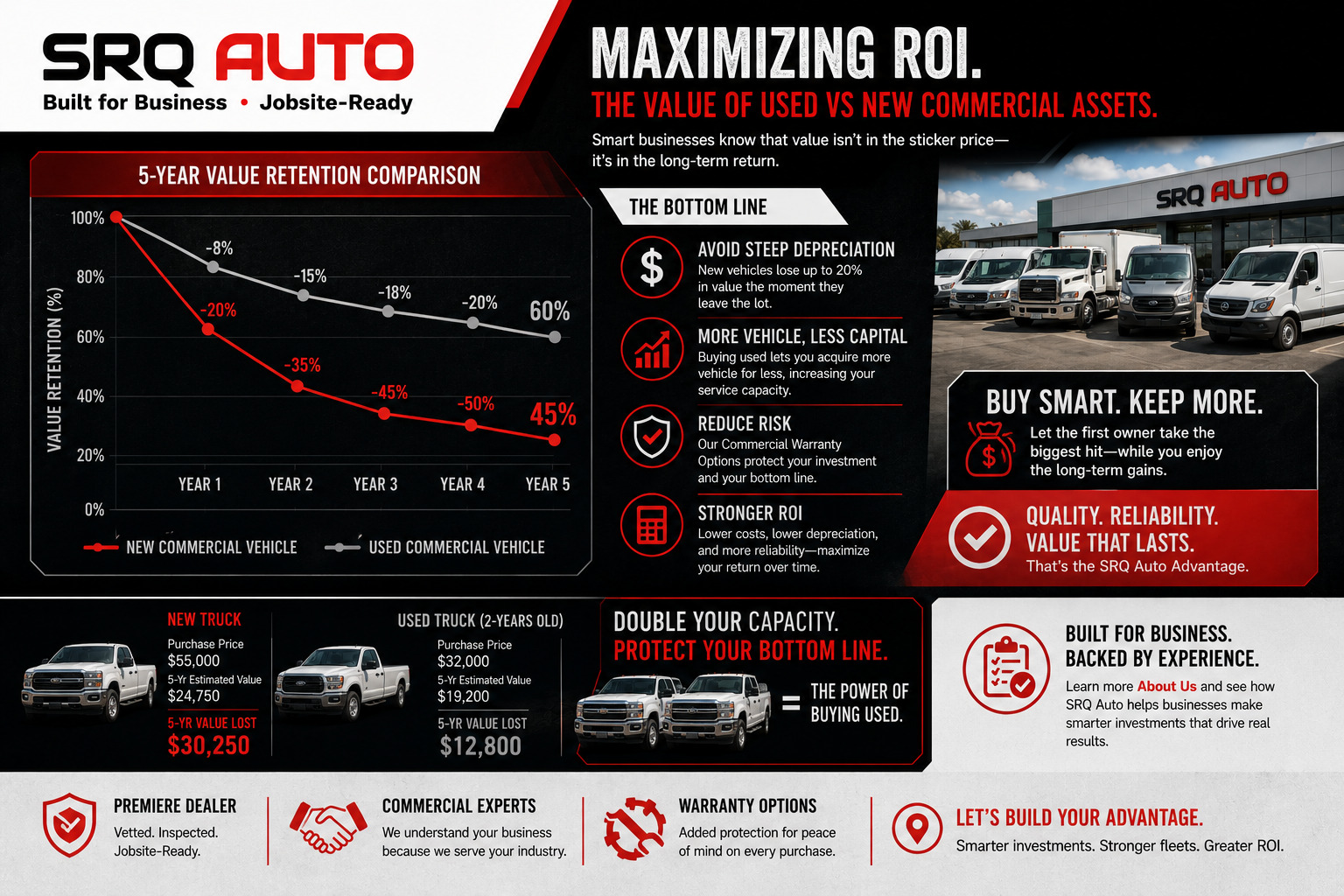
A commercial truck is an investment that eventually must be liquidated. The actual cost of owning that asset is the difference between what you paid for it and what you sell it for when it is retired. This is where cheap, off-brand, or poorly specified trucks suffer their final, devastating financial blow. Let's look at how the backend of the vehicle lifecycle determines true profitability.
How a Three-to-Five-Year Replacement Cycle Changes Which Truck is the Best Value
Most modern commercial fleets operate on a disciplined three-to-five-year vehicle replacement cycle. This rotation strategy is designed to maximize reliability while capturing peak residual value before a truck enters its high-maintenance sunset years. How a vehicle behaves during this 3-to-5-year window completely dictates its overall value proposition. Premium commercial trucks are designed to run flawlessly during this exact phase of their lives. They are protected by robust manufacturer or aftermarket commercial warranties, and their primary mechanical systems (engine, transmission, emissions components) require nothing more than basic preventative maintenance. When you reach the end of year five, you trade the truck in for a high residual value, having experienced almost zero unexpected downtime. Cheap or under-spec'd vehicles, however, experience a rapid decline in reliability right in the middle of this replacement cycle. Because they are built with lighter-duty components, they often require major, expensive repairs—such as suspension overhauls, engine head gaskets, or transmission rebuilds—around years three or four. This forces the business owner into a painful dilemma: invest thousands of dollars to fix a depreciating, low-value asset, or try to sell a broken, non-running truck for pennies on the dollar. By trying to save money on the initial purchase, you end up paying for the truck twice over through repairs and premature replacement.
What Data Should Fleets Use to Choose the Right Trucks Instead of the Cheapest Ones?
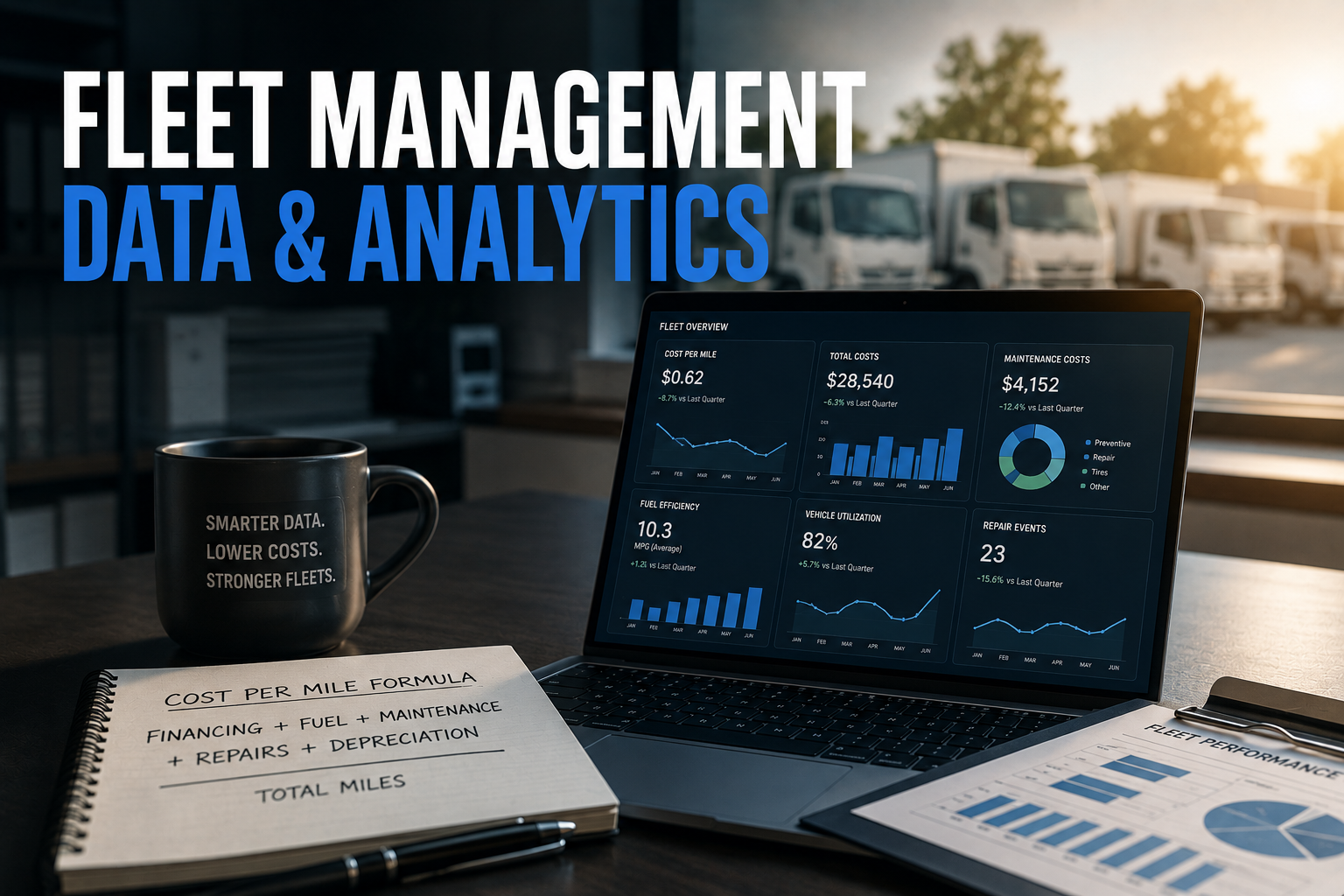
How Focusing Only on Rate Instead of Total Landed Cost Misleads Shippers and Fleet Operators
From a logistics and shipping perspective, focusing strictly on the initial acquisition rate or cheap monthly lease payments is one of the most common procurement mistakes. It obscures the 'total landed cost' of moving freight and equipment, leading to poor decisions that directly harm business profitability. Let's explore how this rate-focused tunnel vision misleads fleet operators.
Navigating Southwest Florida's Commercial Demands from Sarasota to Fort Myers
The Smart Fleet Buyer's Checklist for Calculating Lifetime Value
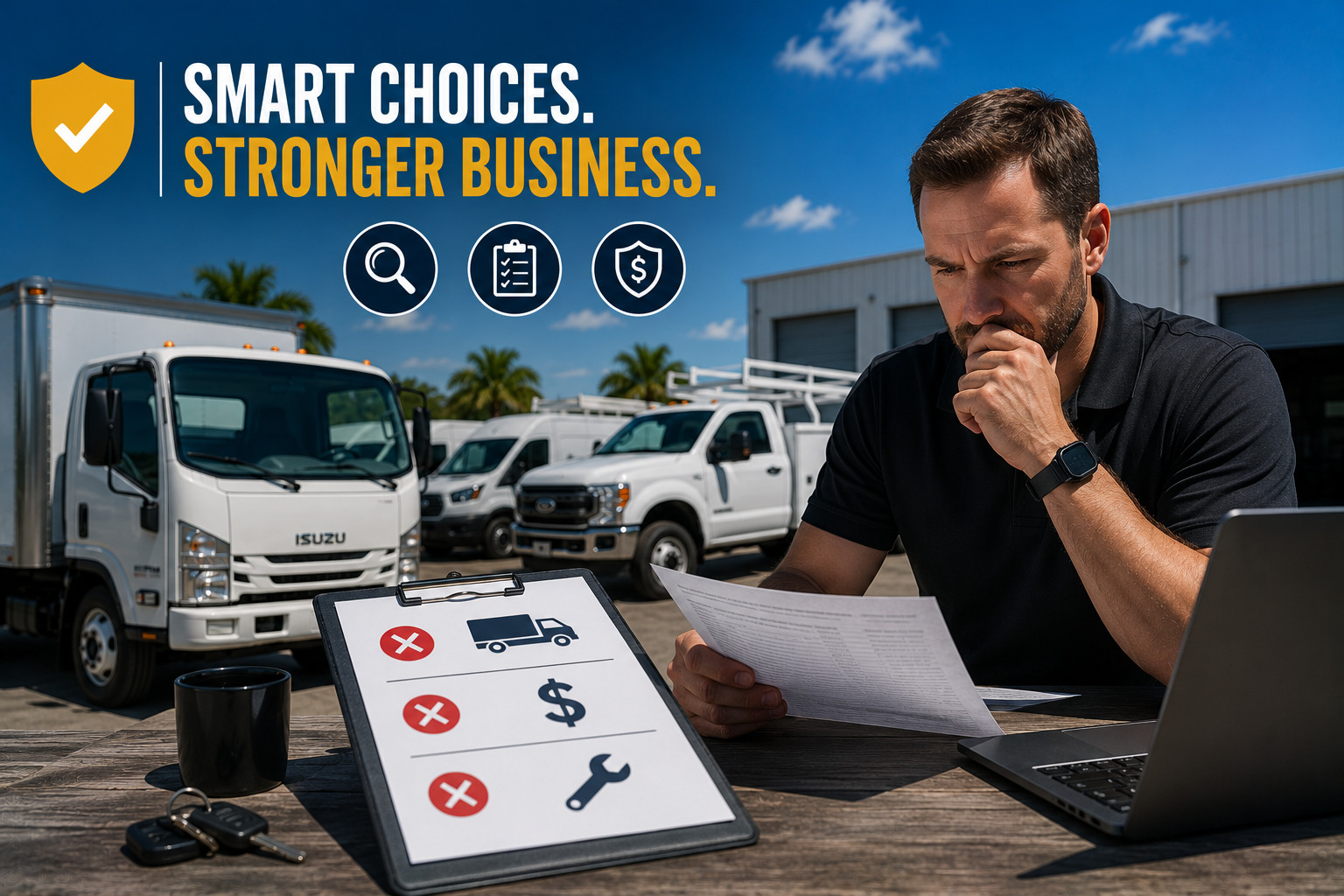
Before purchasing your next commercial truck, do not let the sticker price blind you. Use this practical, step-by-step checklist to evaluate the vehicle's long-term lifetime value and protect your business from costly surprises down the road. Comparing assets using these metrics will guarantee a much higher return on your investment.
Checklist Item | What to Look For | Why It Matters |
|---|---|---|
Warranty Coverage | Affordable, commercial-grade warranties featuring Roadside Assistance and Towing. | Protects your cash flow against major, unexpected repair costs during operation. |
Parts Availability | Common, domestic, or highly supported commercial platforms (Ford, Chevy, Ram). | Reduces downtime from weeks to hours by ensuring local parts are always in stock. |
Service Network | A dealer with strong in-house service capabilities and local mechanic networks. | Saves you from long, unproductive waits in crowded, expensive commercial service bays. |
Powertrain Specs | Auxiliary transmission coolers, heavy-duty cooling, and correct rear-axle ratios. | Prevents overheating and ensures optimal fuel efficiency under heavy Florida payloads. |
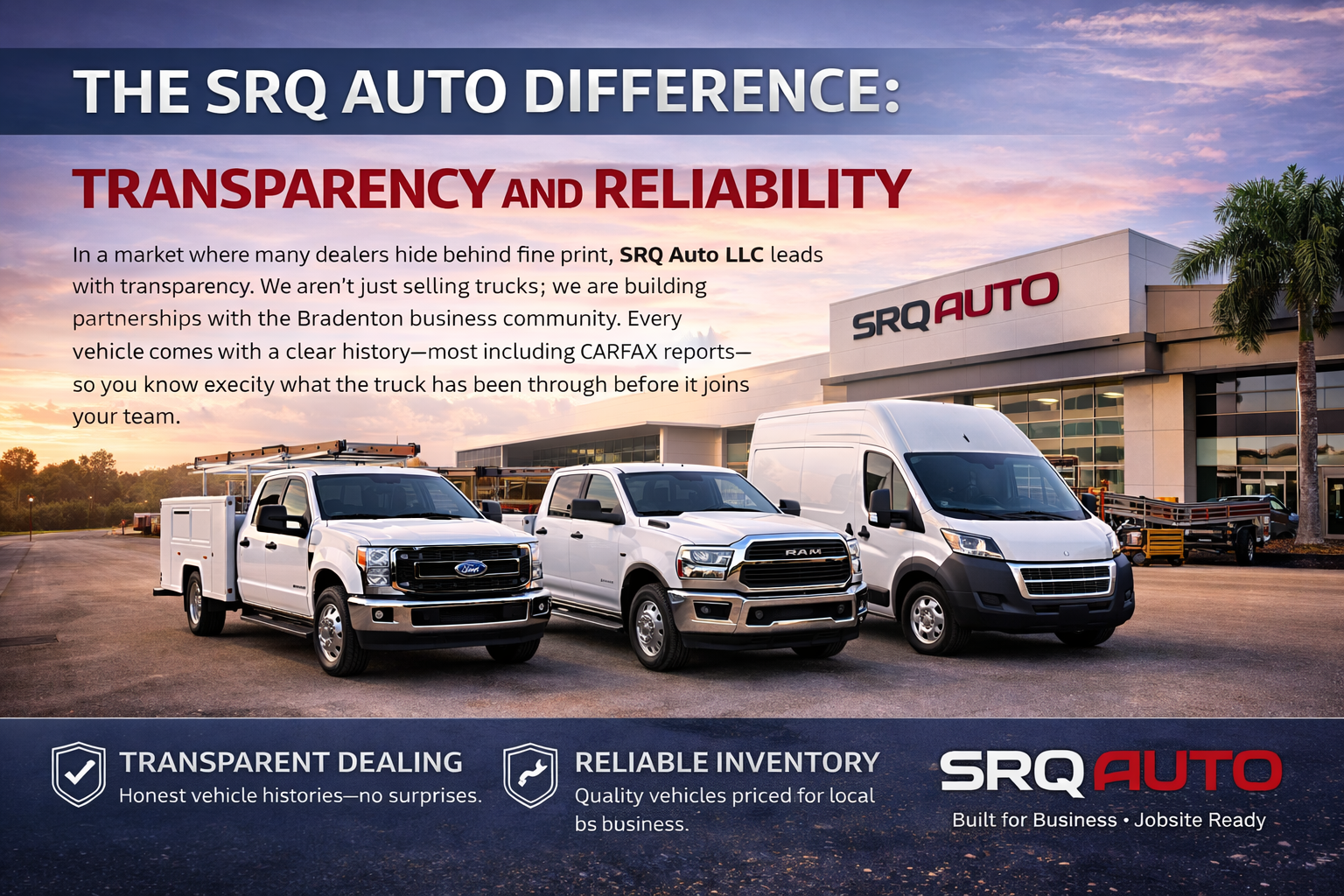
Vehicle History | Transparent, clean CARFAX reports detailing regular fleet service intervals. | Guarantees the truck was not abused, saving you from hidden mechanical failures. |
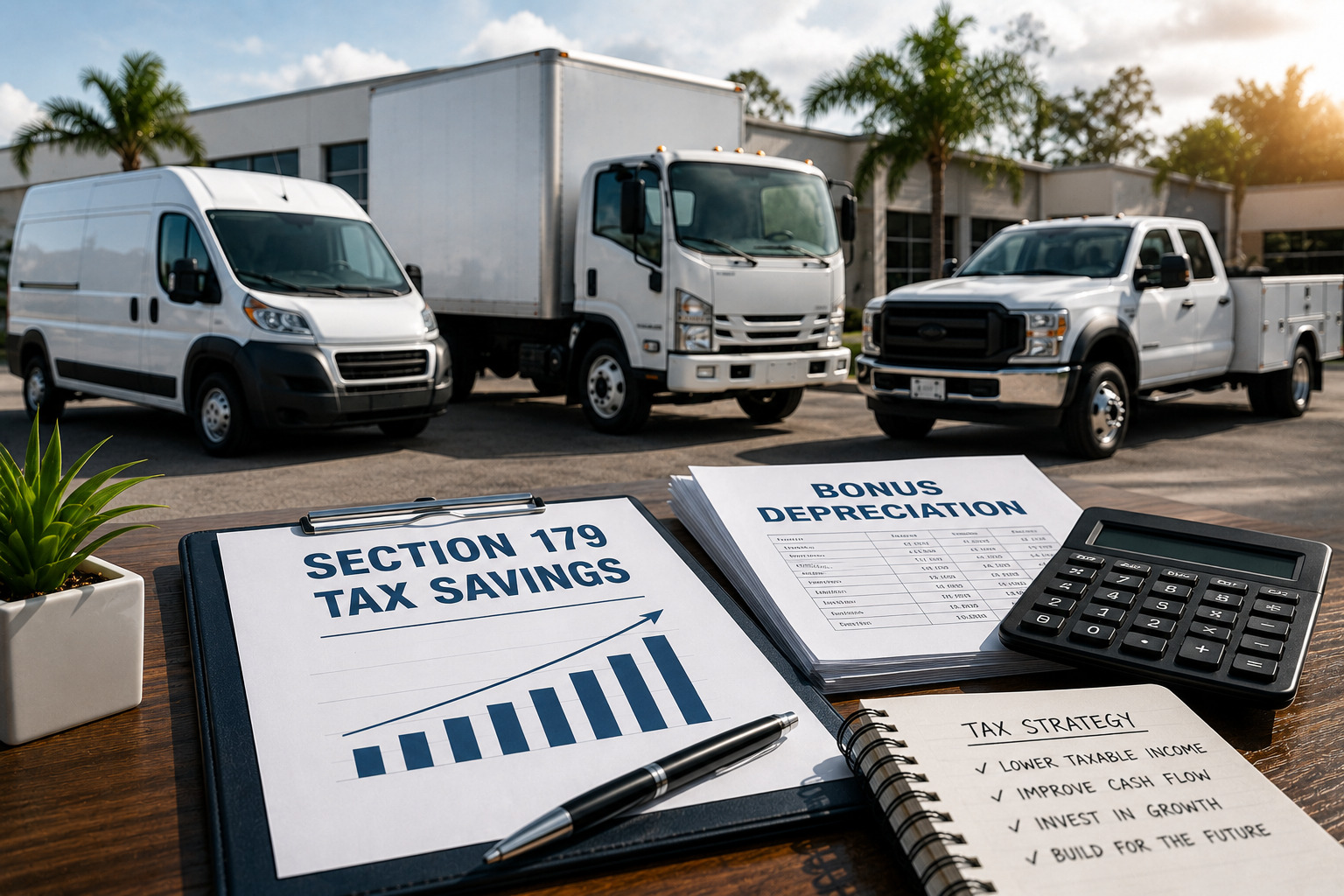
Tax Benefits | Section 179 eligibility for heavy commercial and work-use vehicles. | Provides immediate tax relief, allowing you to write off the purchase cost in year one. |
By systematically verifying each of these items, you can confidently identify which truck is the best long-term value. For example, understanding tax advantages can significantly lower your net acquisition cost. To learn more about how to write off your next purchase, read our detailed guide on Used Vehicle Tax Deductions. Additionally, protecting your purchase with our robust, comprehensive Commercial Warranty Options provides ultimate peace of mind, featuring 24/7 Roadside Assistance and towing reimbursement to keep your business moving forward no matter what.
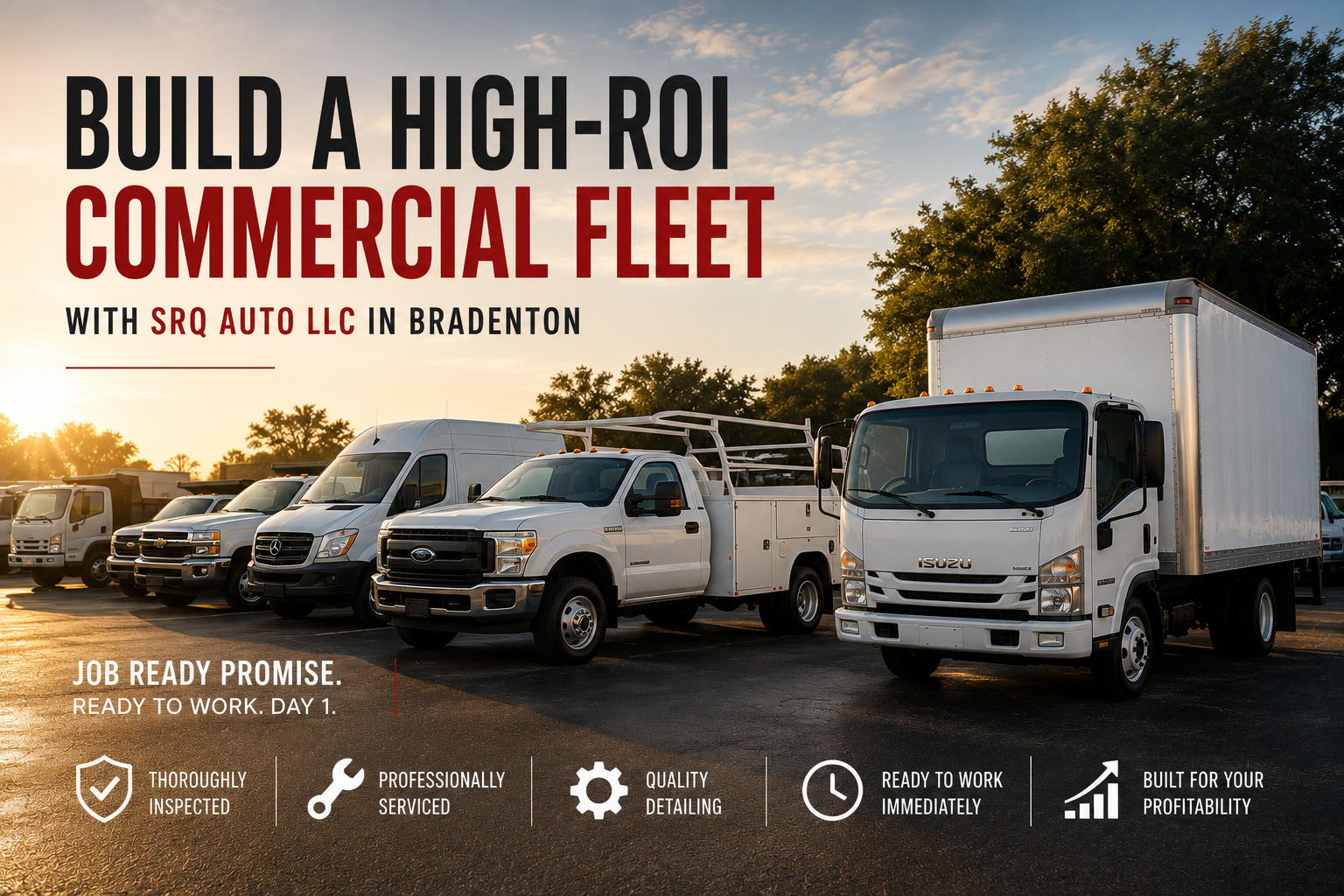
Build a High-ROI Commercial Fleet with SRQ Auto LLC in Bradenton
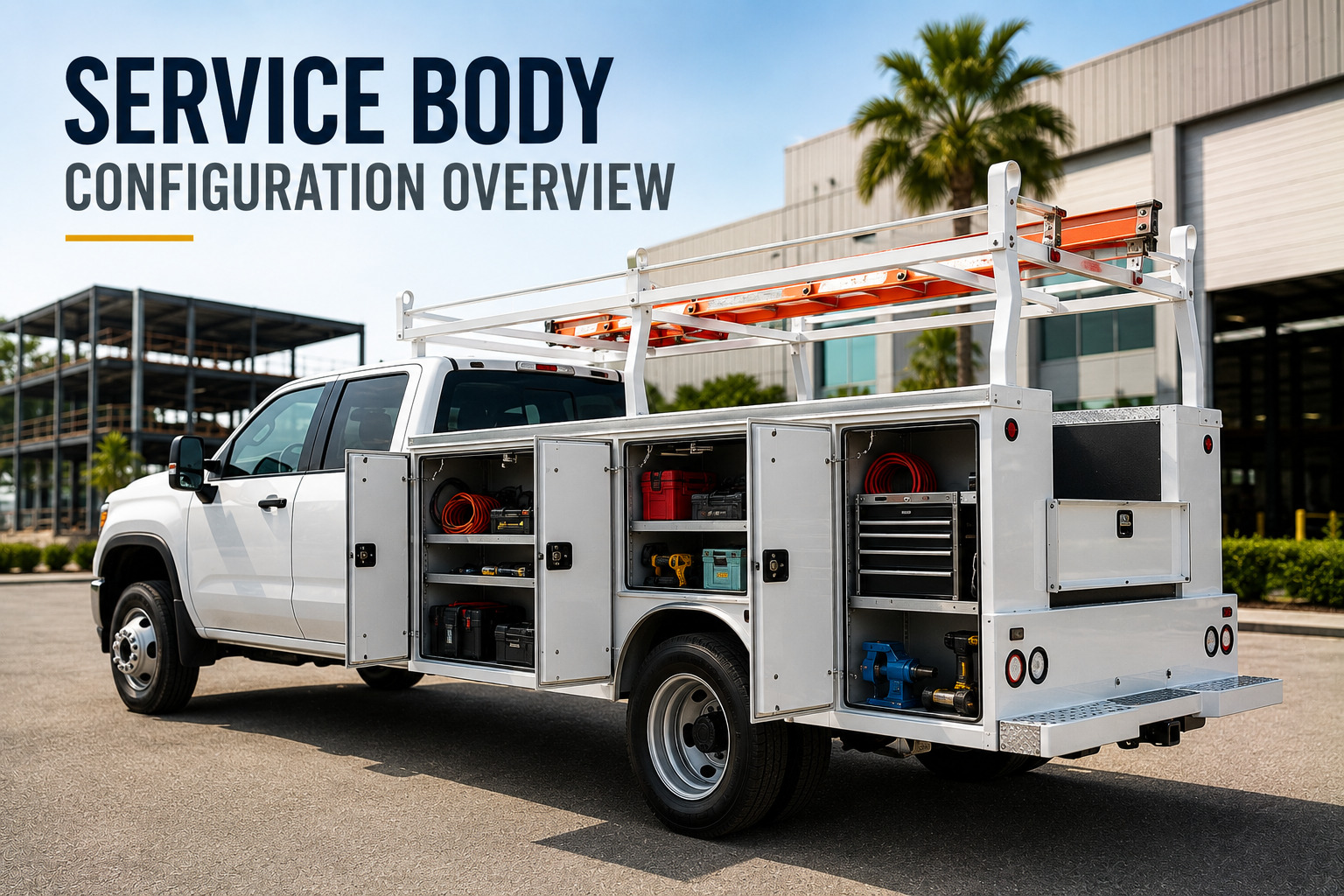
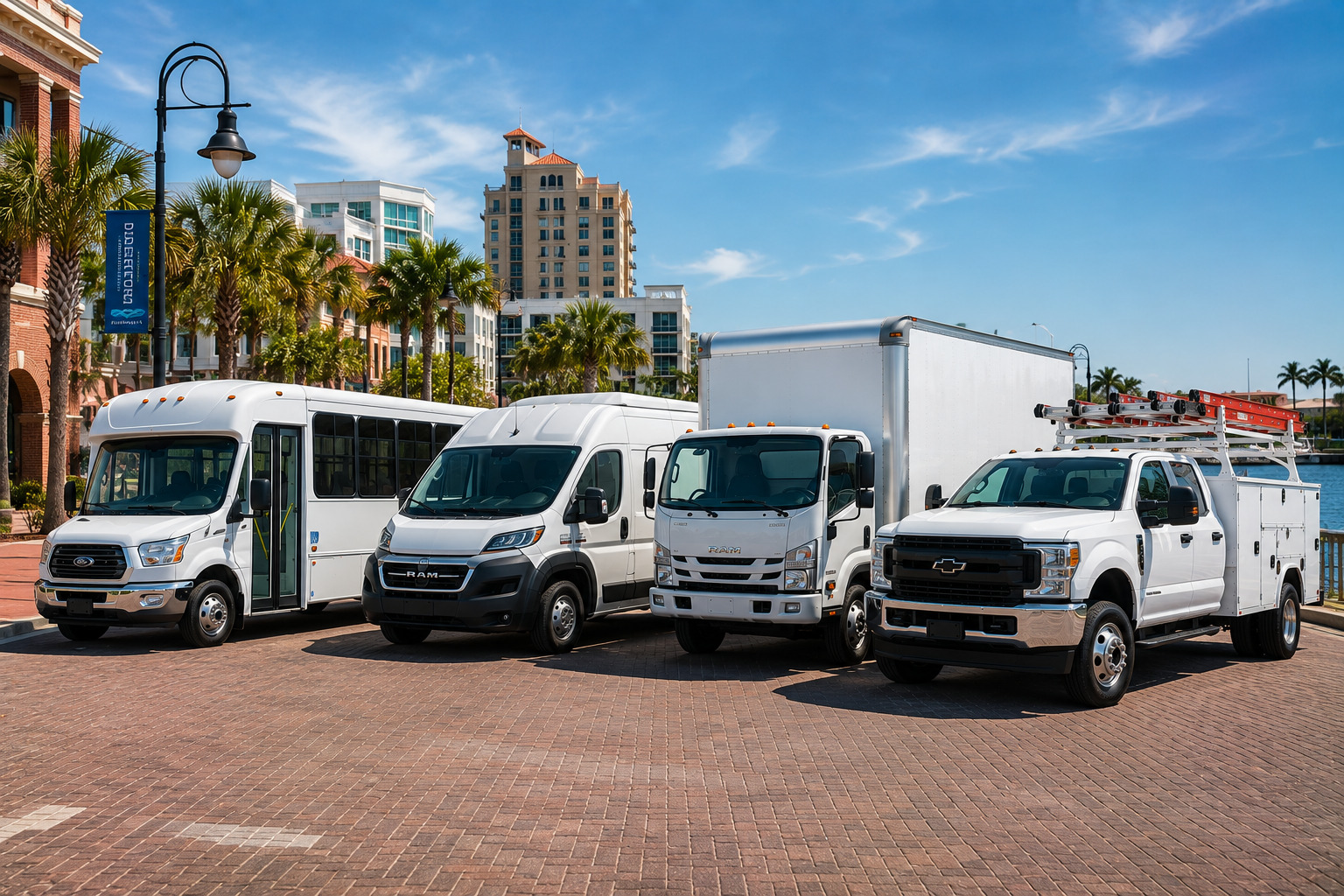
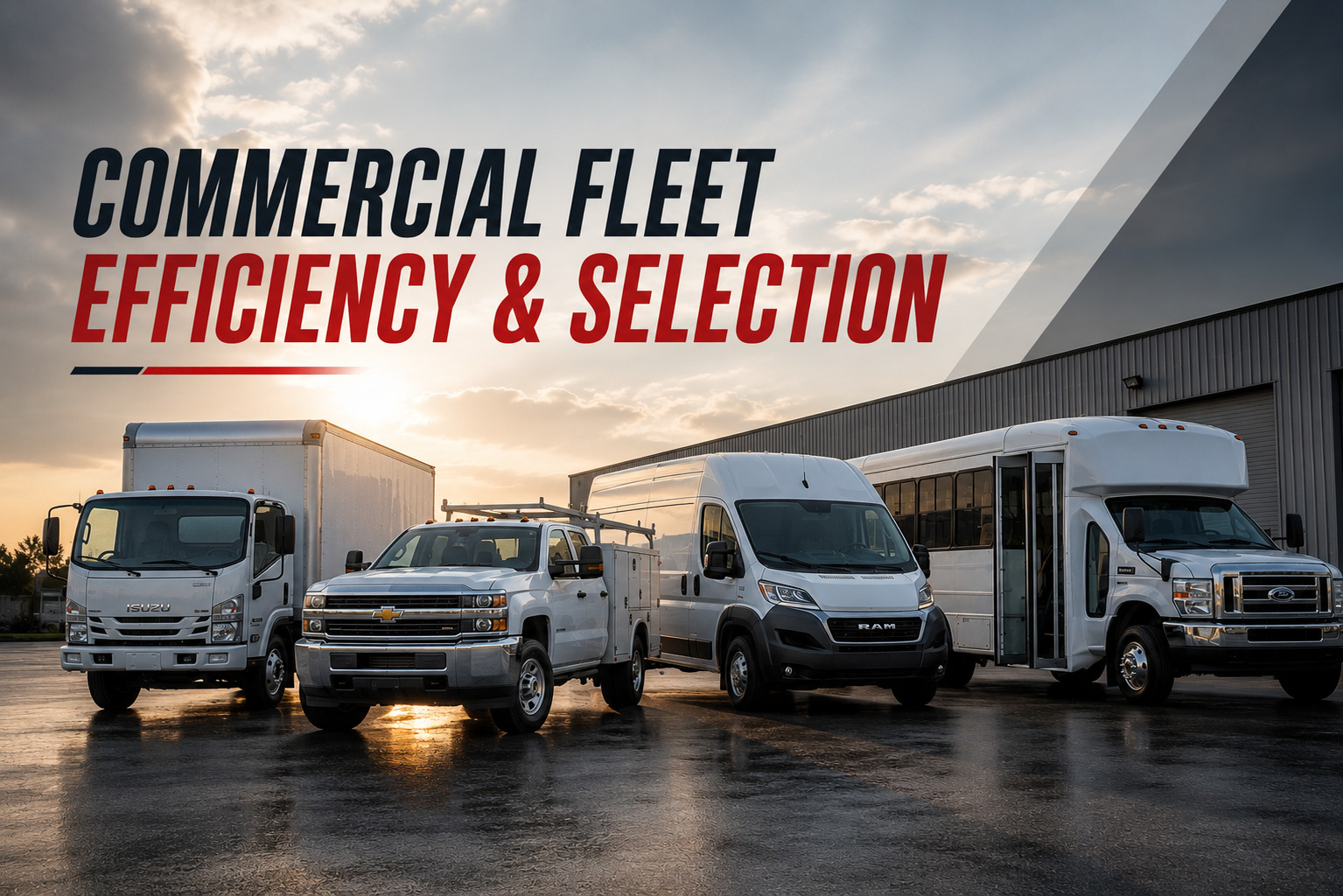
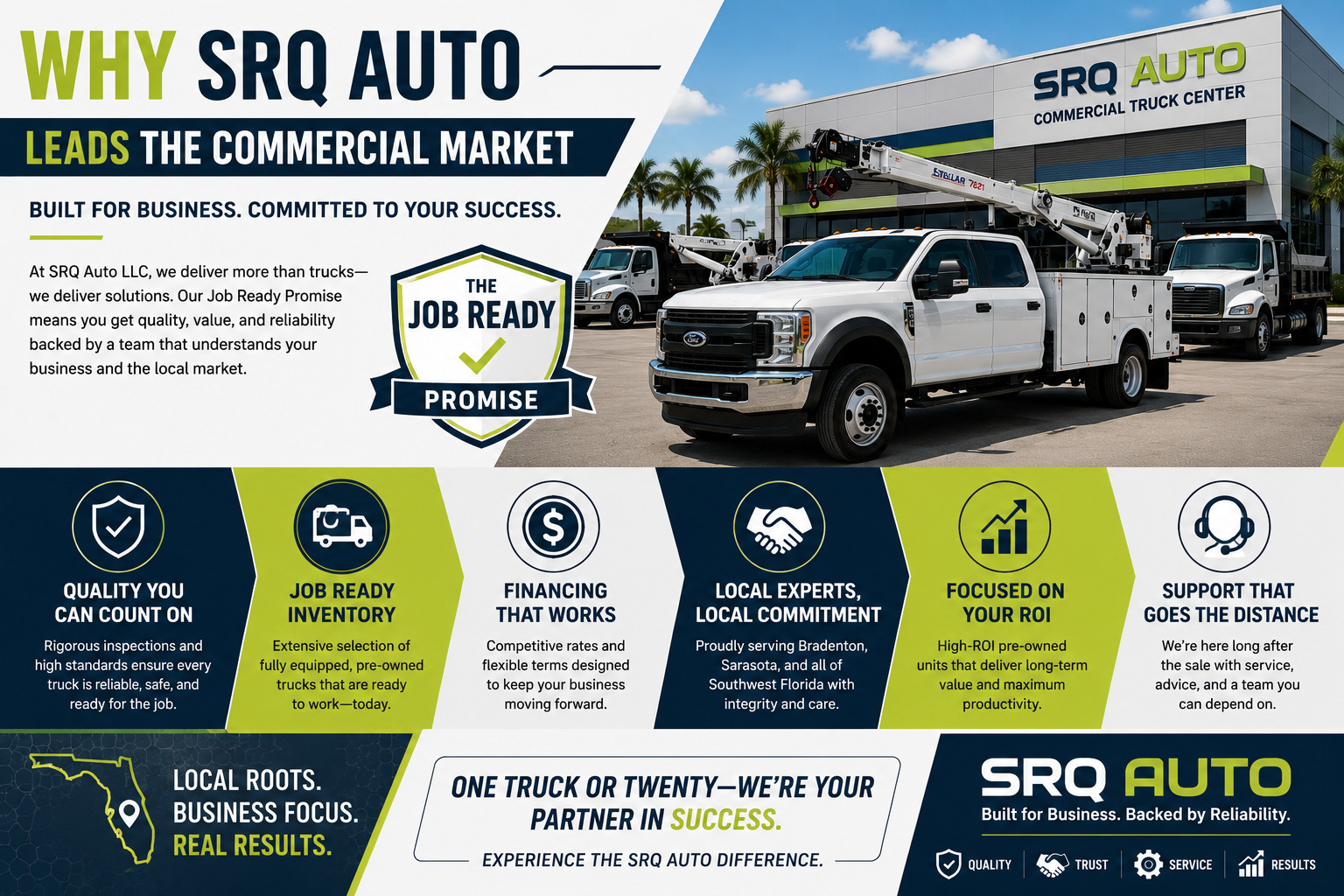
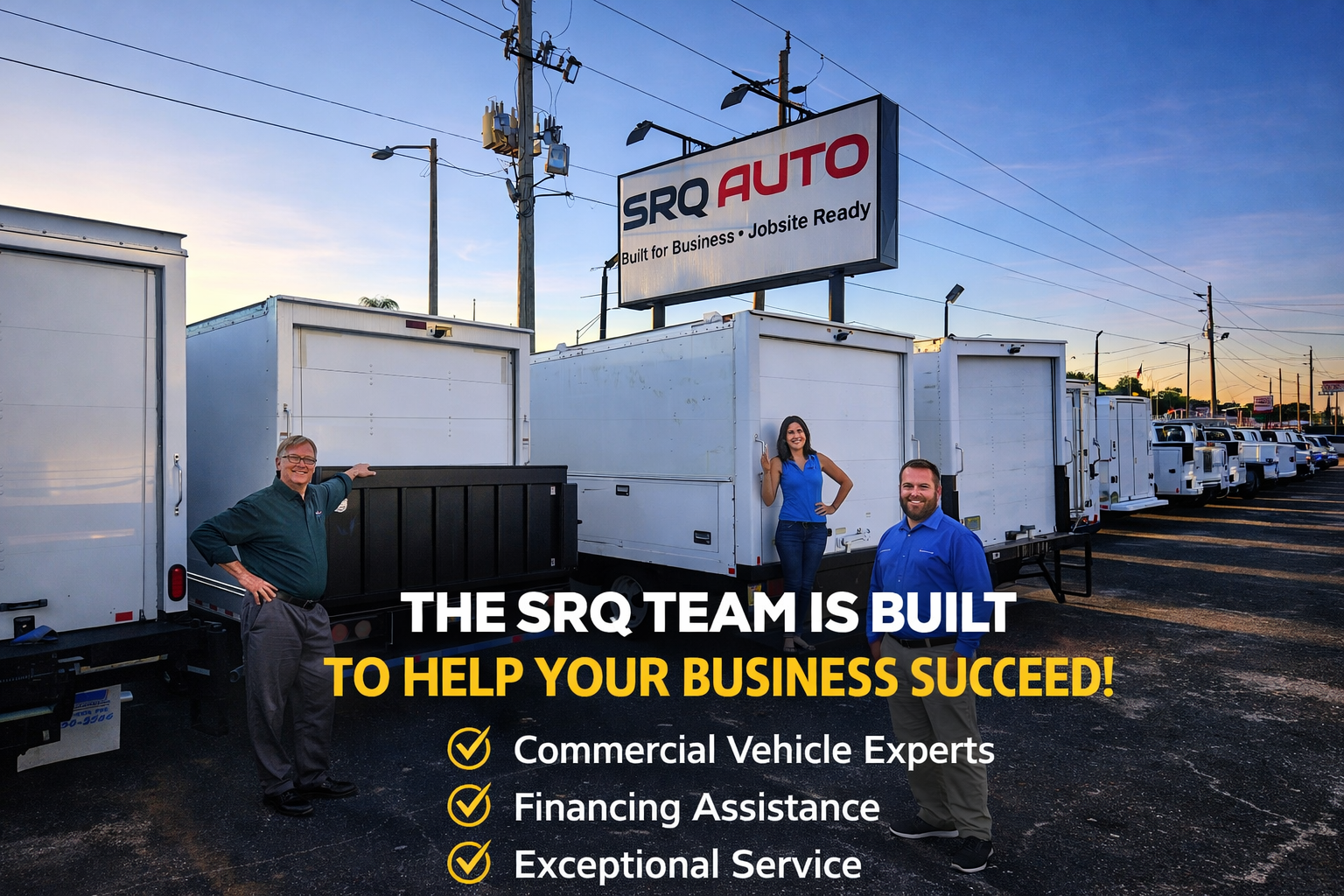
At SRQ Auto LLC, we believe that local businesses are the backbone of our Southwest Florida community. We are not just here to sell you a truck; we are here to help you build a highly profitable, reliable, and efficient commercial fleet. Through our exclusive Job Ready Promise, we guarantee that every single vehicle in our inventory has been meticulously inspected, serviced, and detailed in-house by our professional team. When you buy from us, you receive an asset that is ready to work immediately—no delays, no surprise repairs. We specialize in a massive range of commercial configurations tailored for your specific trade: heavy-duty pickups, versatile cargo and passenger vans, utility and contractor service bodies, flatbeds, landscape dumps, and box trucks. Our commercial team provides honest, transparent guidance to match the exact vehicle specifications to your daily tasks. Learn more About Us and our commitment to helping local businesses thrive. Ready to elevate your fleet's profitability and leave the headache of cheap, unreliable trucks behind? We invite you to visit our state-of-the-art dealership in Bradenton. Come explore our current inventory, talk face-to-face with our commercial finance experts, and find out why businesses from Sarasota to Fort Myers trust us as their commercial partner. Get Directions to SRQ Auto LLC to see us in person, or Call us at 9412142231 today to discuss your commercial needs!