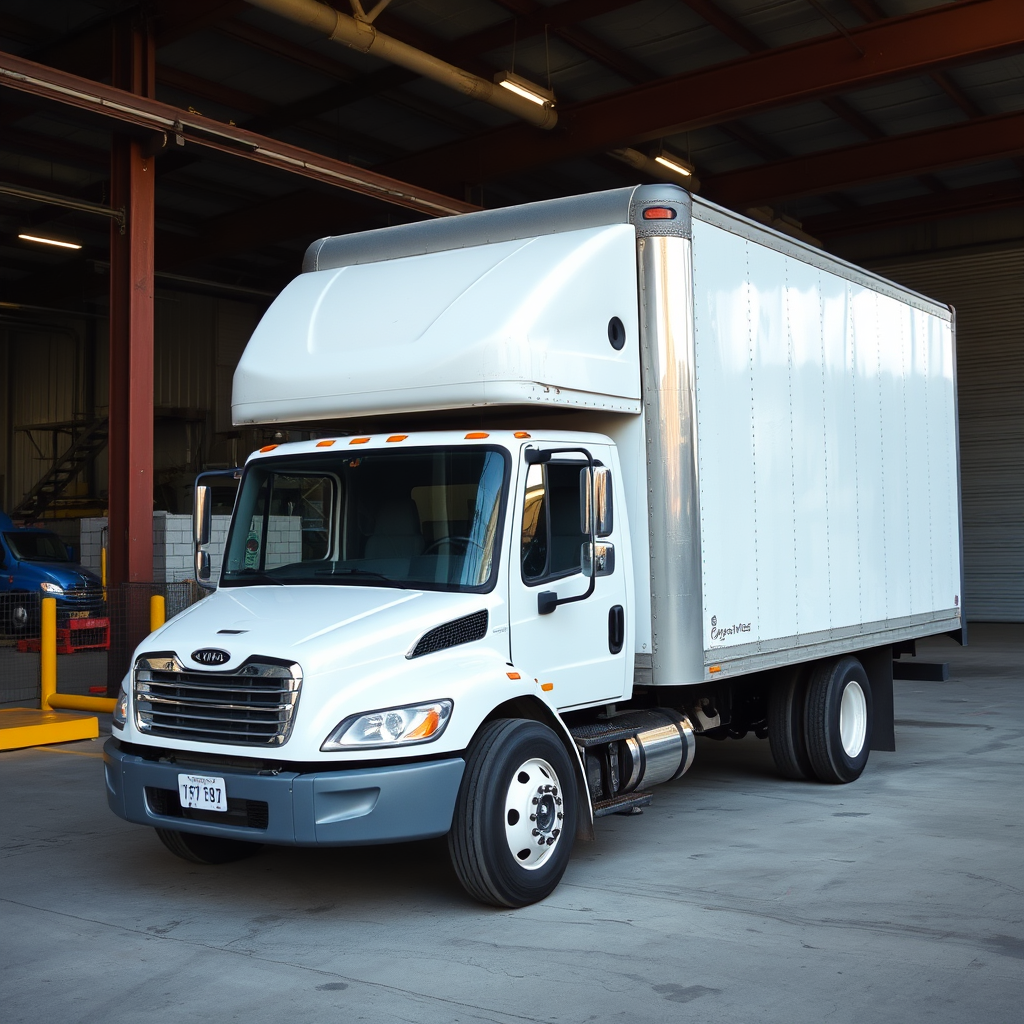
What Is the Best 16-Foot Box Truck for Commercial Use?

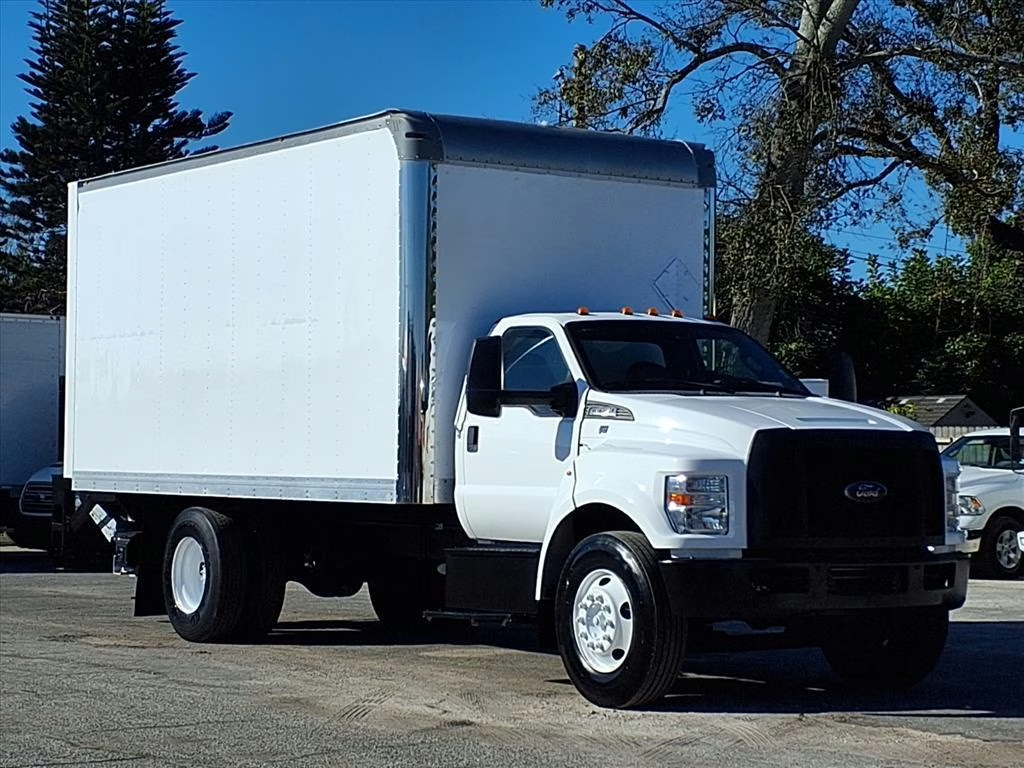
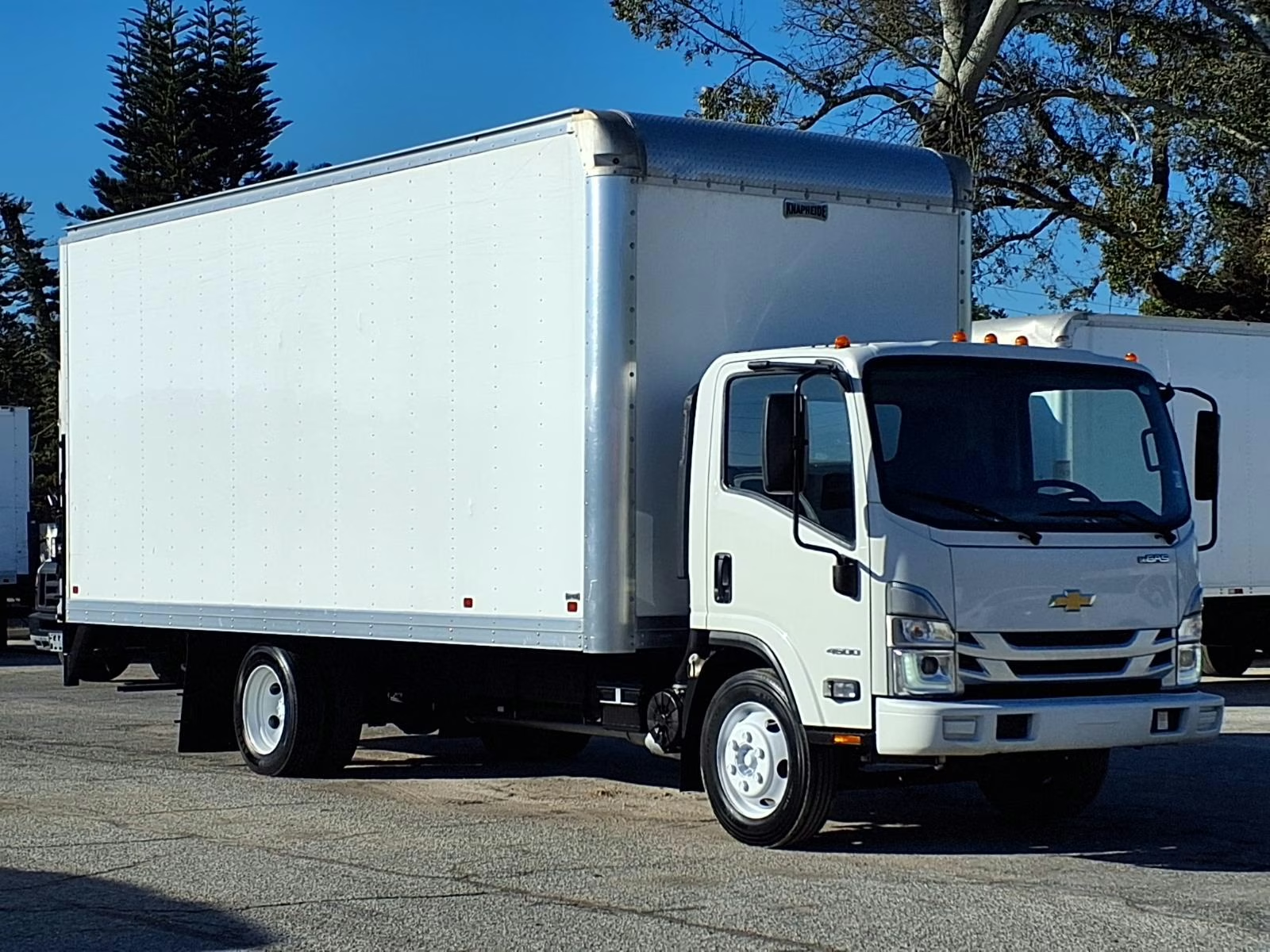
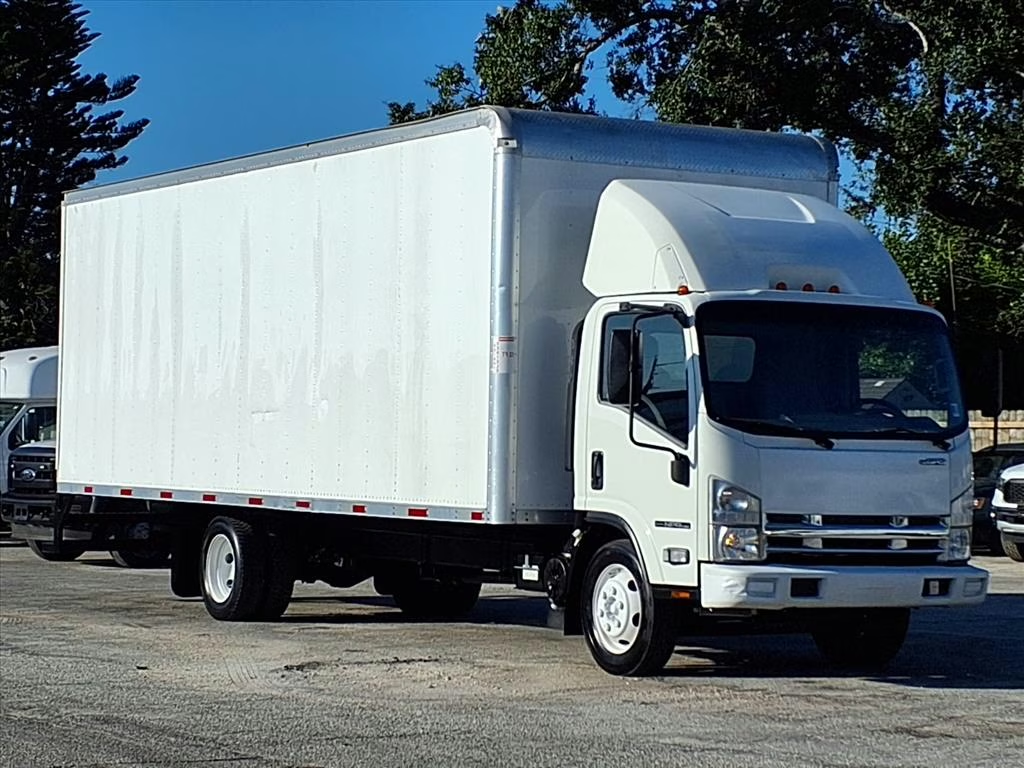
The best 16-foot box truck for commercial use is either the Isuzu NPR for low-cab-forward urban maneuverability or the Ford F-450 chassis cab for conventional hood access and highway power. Both platforms fall into Class 3 or Class 4 with a GVWR between 10,001 and 16,000 pounds, offering roughly 800 to 960 cubic feet of interior cargo space and handling payloads between 5,000 and 7,500 pounds without requiring a Commercial Driver's License (CDL).
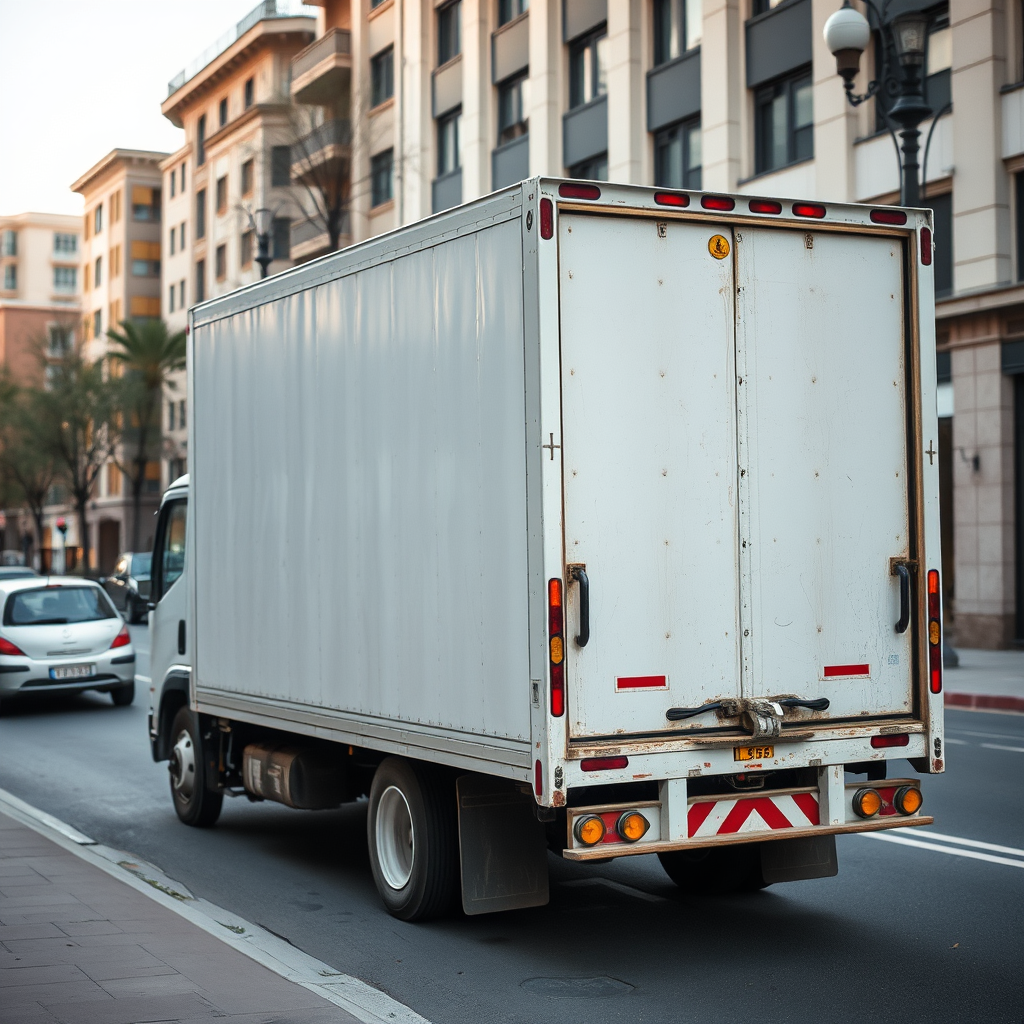
A standard 16-foot commercial box truck features exterior cargo box dimensions measuring 16 feet in length, 96 inches in width, and 96 inches in height. This body style strikes a practical balance for local delivery operators, trade contractors, and freight logistics companies. It provides sufficient floor space for bulky equipment or multiple cargo pallets while maintaining a overall vehicle height and wheelbase that easily navigates suburban streets, business parks, and tight commercial loading bays.
Choosing between top models comes down to your specific daily route demands and payload requirements. Low-cab-forward (LCF) designs maximize interior cargo volume relative to total bumper-to-bumper vehicle length, making them ideal for multi-stop city deliveries. Conventional chassis cab configurations place the engine out front under a standard hood, providing a longer cab nose, familiar cab ergonomics, and straightforward engine bay access for routine service checks.
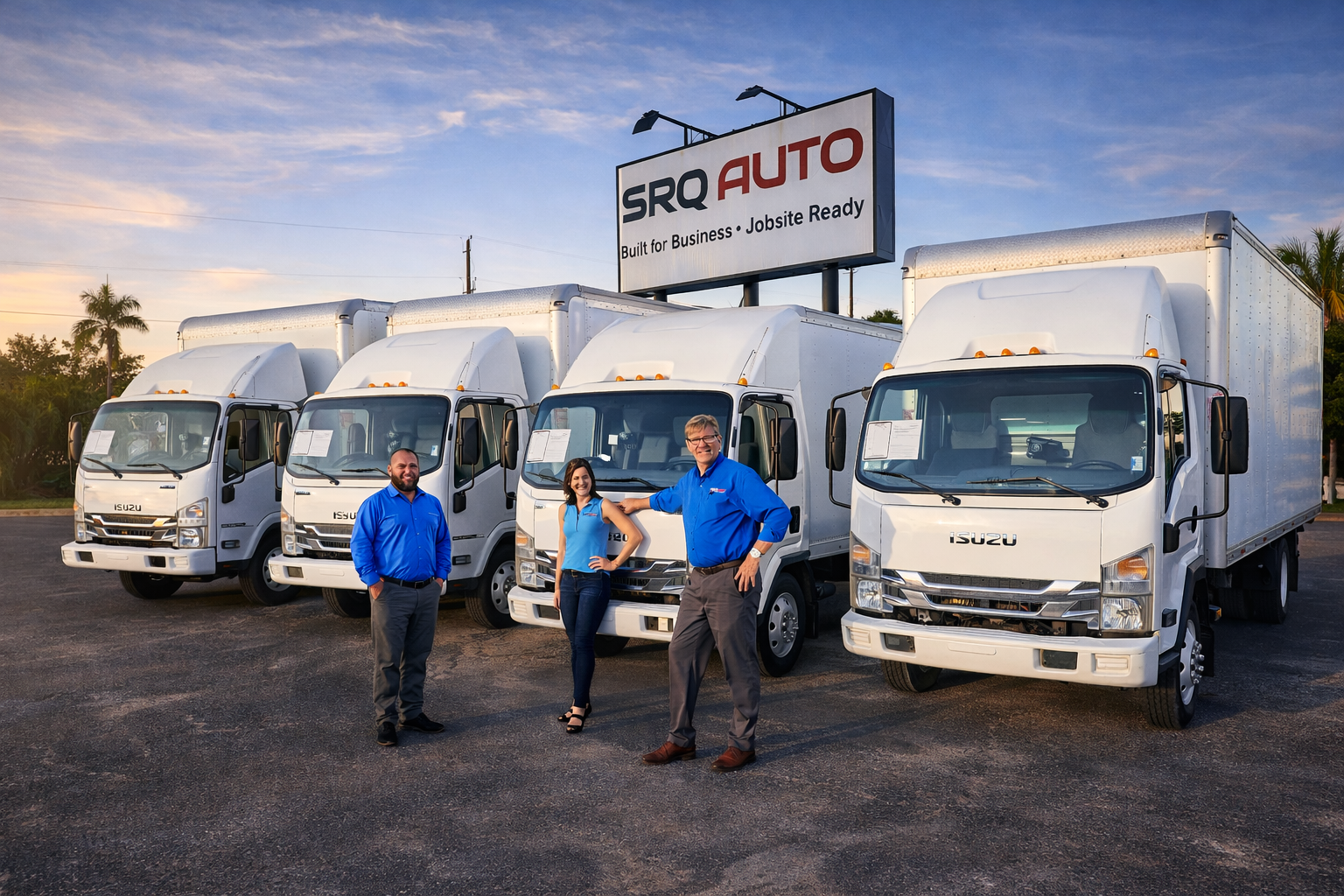
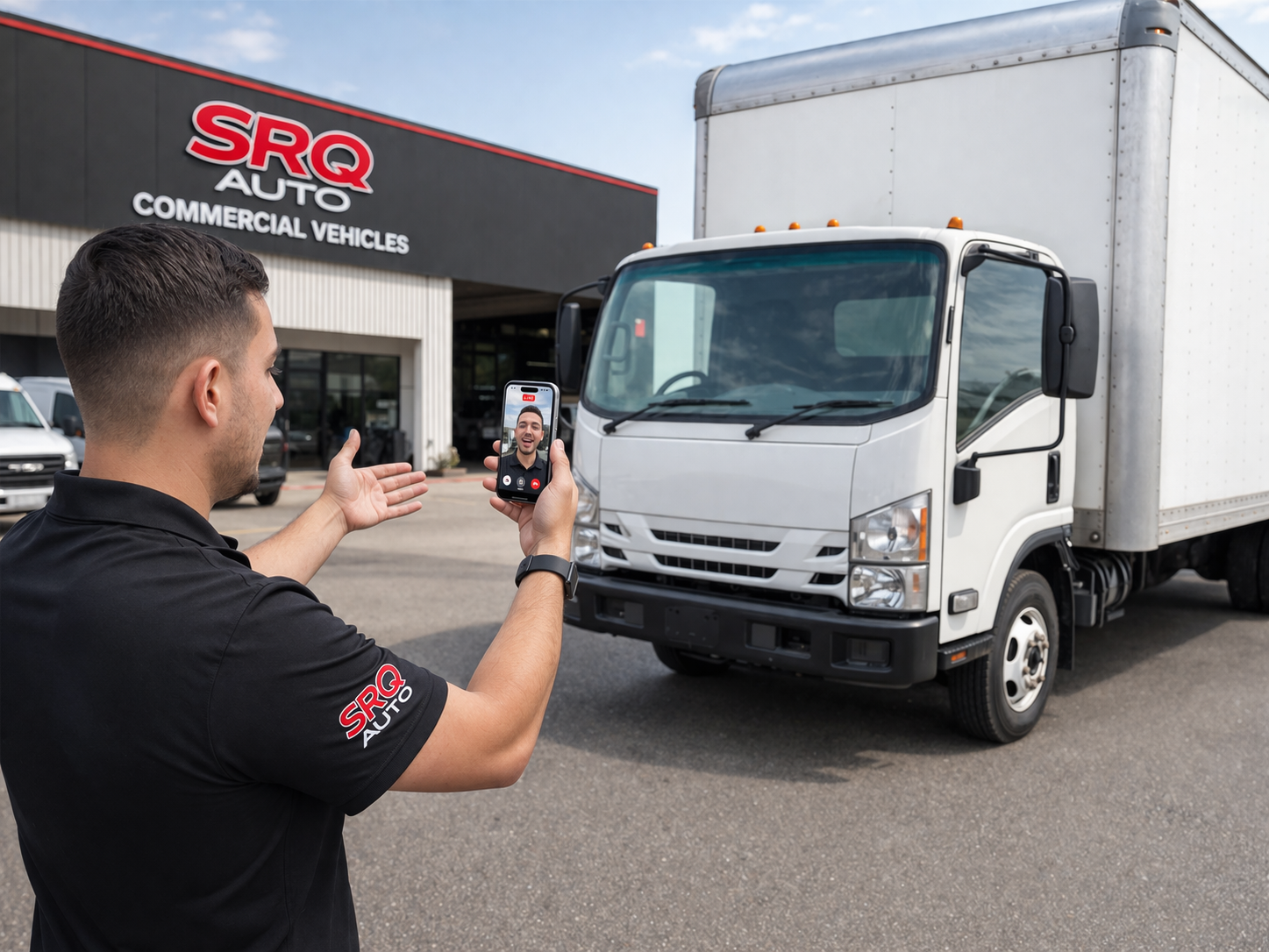
At SRQ Auto LLC, we specialize in high-quality pre-owned commercial trucks thoroughly reconditioned to ensure work-ready performance from day one. You can inspect our current commercial inventory in person at our Bradenton commercial showroom location or speak directly with a commercial vehicle specialist by giving our sales team a quick call today.
Table of Contents
- How Does the Isuzu NPR Compare to the Ford F-450 Chassis Cab for a 16-Foot Box?
- Which Liftgate Type and Weight Capacity Do You Need for Heavy Cargo?
- Do Dealers Sell Pre-Owned Rental Fleet Box Trucks?
- How Much Does Commercial Box Truck Insurance Cost per Month in Florida?
- What Should You Look For When Buying a Pre-Owned Box Truck?
- Common Questions About Commercial Box Truck Operations
- Step Into a Work-Ready Commercial Box Truck at SRQ Auto LLC
How Does the Isuzu NPR Compare to the Ford F-450 Chassis Cab for a 16-Foot Box?
The Isuzu NPR low-cab-forward design delivers a tighter turning radius of approximately 33.5 feet and superior forward sightlines for crowded urban spaces, whereas the conventional Ford F-450 chassis cab provides traditional driver legroom, an extended hood, and higher highway cruising stability.
Evaluating these two commercial workhorses requires comparing cab layout, powertrain configurations, and long-term operating costs across your delivery routes:
- Maneuverability and Visibility: The Isuzu NPR positions the cab directly over the front axle. This cab-forward setup eliminates the front hood, allowing drivers to see the ground just 8 feet in front of the bumper. Route operators managing multi-stop delivery schedules along the commercial corridors near Fort Myers often favor the low-cab-forward Isuzu NPR for its tight turning clearance in congested loading zones.
- Engine and Powertrain Options: The Isuzu NPR offers a 6.6L V8 gas engine generating 350 hp and 425 lb-ft of torque, alongside a 5.2L turbo-diesel engine producing 215 hp and 452 lb-ft of torque. The Ford F-450 chassis cab comes equipped with a 7.3L V8 gas engine pushing 335 hp and 468 lb-ft of torque, or the high-output 6.7L Power Stroke V8 turbo-diesel engine delivering 330 hp and 950 lb-ft of torque for heavy towing and highway hauling.
- Cab Comfort and Ergonomics: Drivers stepping into the Ford F-450 chassis cab experience standard light-truck cabin layouts, wide door openings, and generous seat travel. The Isuzu NPR features an upright seating position that enhances visibility but offers slightly firmer cab suspension characteristics on uneven pavement.
- Resale Value and Market Demand: Isuzu diesel models consistently command premium resale value in the pre-owned commercial market due to the long-term durability of their industrial diesel engines. Ford commercial chassis cabs hold equally strong market value due to widespread domestic parts availability and broad technician familiarity.
| Feature | Isuzu NPR (16-Foot Box) | Ford F-450 Chassis Cab (16-Foot Box) |
|---|---|---|
| Cab Configuration | Low Cab Forward (LCF) | Conventional Chassis Cab |
| Standard Turning Radius | Approximately 33.5 feet | Approximately 41.5 feet |
| Gasoline Engine | 6.6L V8 gas engine | 7.3L V8 gas engine |
| Diesel Engine | 5.2L turbo-diesel engine | 6.7L Power Stroke V8 turbo-diesel engine |
| Average Payload Capacity | 5,000 to 6,800 pounds | 5,500 to 7,500 pounds |
Which Liftgate Type and Weight Capacity Do You Need for Heavy Cargo?
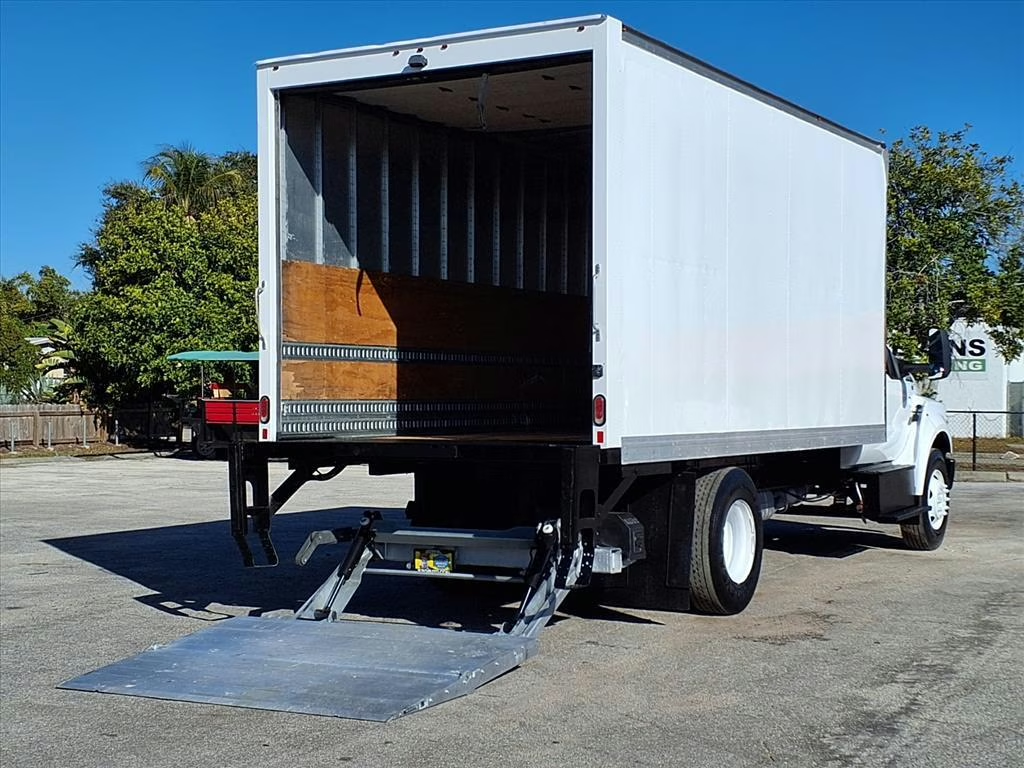
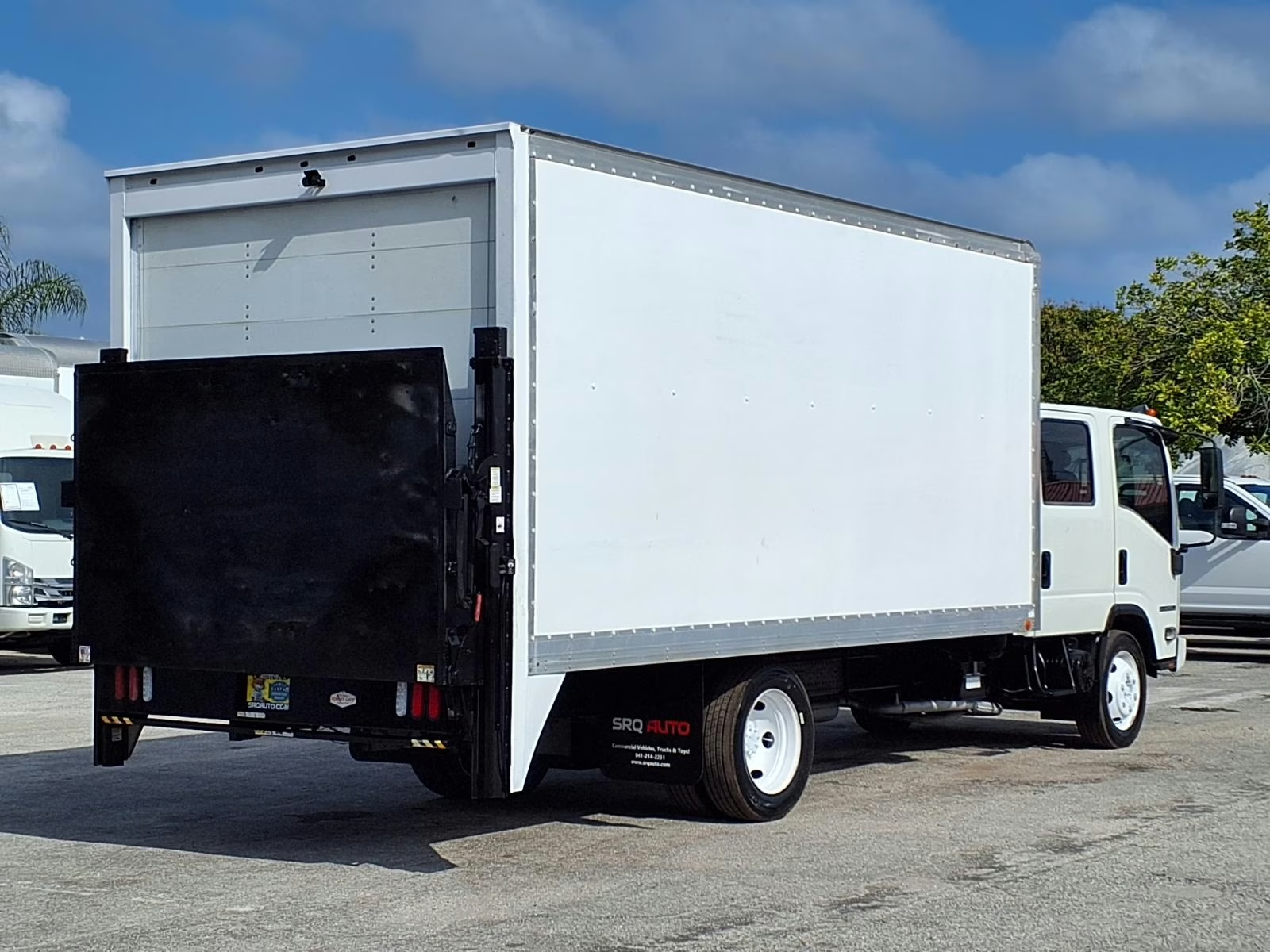
For heavy commercial cargo such as palletized freight, industrial machinery, or commercial appliances, select a hydraulic liftgate rated for 2,000 to 3,000 pounds, choosing a tuckunder liftgate for dock loading versatility or a railgate liftgate for maximum platform surface area and lifting stability.
Commercial liftgate capacities generally range from 1,000 to 5,000 pounds. Choosing the right style depends on how your crew loads and unloads cargo throughout the workday:
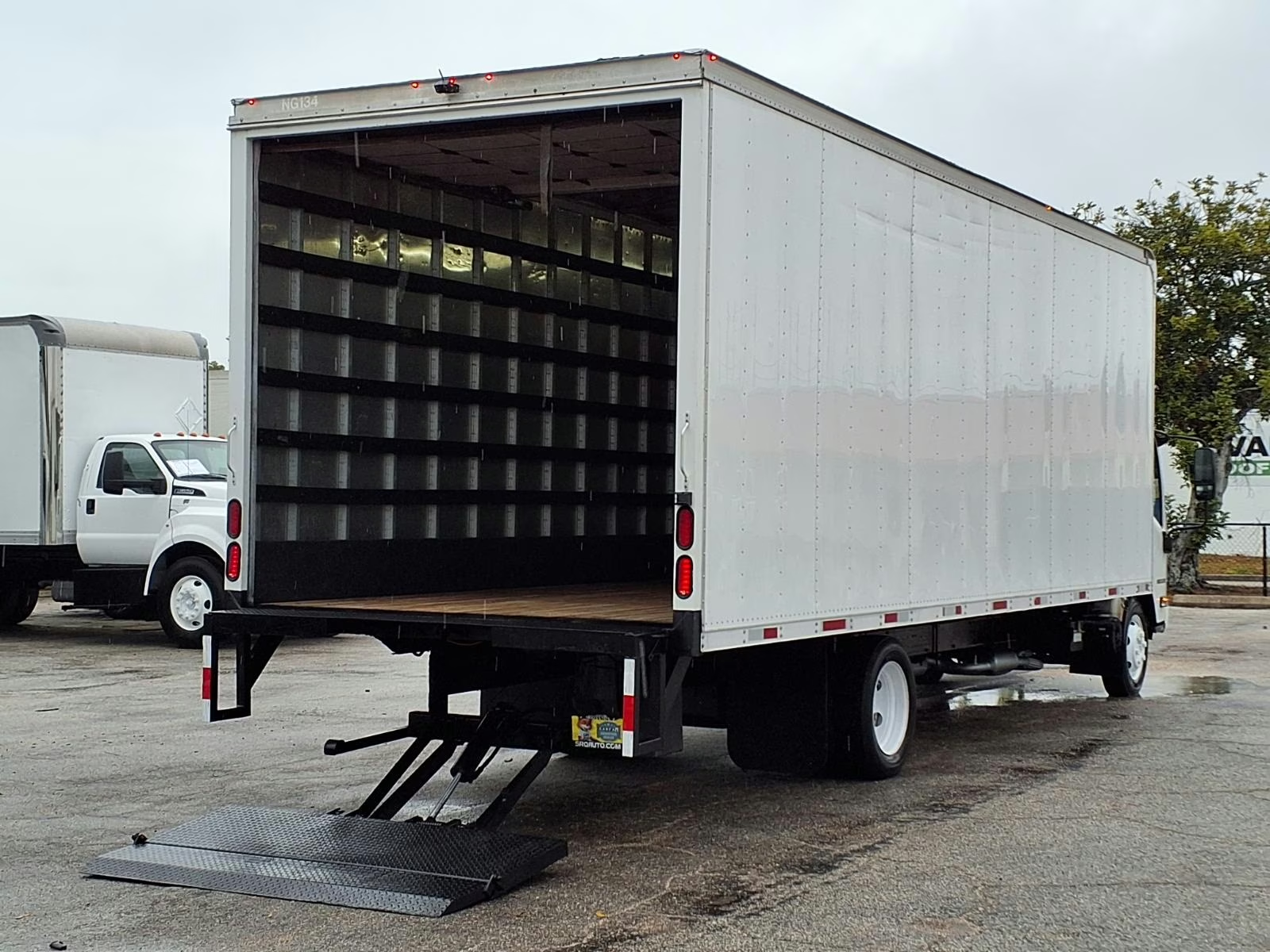
- Tuckunder Liftgate Capabilities: A tuckunder liftgate folds in half and stores neatly beneath the rear frame of the box body when retracted. This design leaves the rear roll-up door completely clear, allowing your driver to back directly up to warehouse loading docks or use a forklift without unfolding the liftgate. Tuckunder platforms typically handle load capacities between 2,000 to 3,000 pounds, making them the industry standard for general parcel and freight delivery.
- Railgate Liftgate Capabilities: A railgate liftgate mounts directly to the rear vertical frame posts of the box body. The platform remains flat and rides vertically along heavy-duty steel tracks. Because the platform does not fold underneath the frame, railgates accommodate much larger, completely flat loading platforms. They excel at lifting wide palletized loads, wheeled vending equipment, or heavy machinery requiring up to 5,000 pounds of lifting capacity.
Equipping your 16-foot box truck with the appropriate liftgate prevents worker injury, reduces cargo damage, and drastically speeds up turnaround times at every job site.
Do Dealers Sell Pre-Owned Rental Fleet Box Trucks?
Yes, reputable commercial dealerships acquire and sell pre-owned rental fleet and lease-return box trucks that have completed controlled service cycles under structured fleet maintenance programs.
Commercial fleet vehicles managed by major rental companies undergo scheduled preventive maintenance, including strict fluid change intervals, systematic brake inspections, and regular tire replacements. When these vehicles reach specific mileage thresholds, fleet management programs rotate them out of service, making them available to commercial truck dealers as high-value pre-owned inventory.
Buying a former fleet box truck offers distinct operational advantages for growing businesses:
- Complete Service Documentation: Rental fleet vehicles feature documented service histories detailing past oil changes, tire rotations, and component updates.
- Standardized Commercial Upfits: Fleet box trucks typically come upfitted with industry-standard composite or aluminum box bodies, heavy-duty hardwood floor planks, interior E-track tie-down rails, and rear roll-up doors.
- Rigorous Dealer Reconditioning: Commercial dealers inspect the box floor subframe crossmembers, hydraulic liftgate pumps, door weather seals, and engine diagnostics before offering the vehicle for sale.
At SRQ Auto LLC, every pre-owned work truck in our pre-owned commercial vehicle inventory undergoes a comprehensive inspection and reconditioning process backed by our Job Ready Promise, ensuring your truck arrives ready to generate revenue immediately.
How Much Does Commercial Box Truck Insurance Cost per Month in Florida?
Commercial box truck insurance in Florida generally costs between $150 to $400 per month per vehicle, depending on your drivers' motor vehicle records, cargo classifications, operating radius, and chosen liability coverage limits.
Several primary operational factors determine where your business falls within that monthly cost spectrum:
- Operating Radius: Local pickup and delivery fleets operating within a 50-mile or 100-mile radius incur lower liability premiums than regional freight haulers traveling statewide. Freight logistics companies running daily cargo trips through the port corridors of Tampa see lower commercial premiums when drivers maintain clean records and operate within a 100-mile local radius.
- Driver Qualification and Motor Vehicle Records: Insurance underwriters heavily weigh driver age, commercial driving experience, and clean driving records. Drivers free of moving violations or preventable accidents lower monthly policy costs significantly.
- Cargo Type and Hazard Level: Transporting dry goods, non-perishable general freight, or landscaping materials costs less to insure than hauling high-value electronics, hazardous materials, or refrigerated goods.
- Vehicle GVWR and Physical Damage Value: Vehicles registered with a GVWR between 10,001 and 16,000 pounds carry lower insurance risk tiers than heavy-duty Class 7 or Class 8 semi-trucks, keeping comprehensive and collision deductibles manageable.
When building your fleet budget, pairing predictable monthly commercial truck financing payments with competitive insurance coverage ensures clear long-term cash flow projections. Explore our selection of box trucks and review custom commercial vehicle financing options designed to fit your operational bottom line.
What Should You Look For When Buying a Pre-Owned Box Truck?
When evaluating a pre-owned box truck, inspect the hardwood box floor subframe for structural rust, verify smooth hydraulic operation on the liftgate, check rear roll-up door tracking, examine brake liner thickness, and review vehicle maintenance logs to confirm the GVWR between 10,001 and 16,000 pounds matches your target payload.
A thorough physical inspection protects your investment and prevents unexpected downtime:
- Box Structure and Subframe: Climb underneath the box body to inspect the steel crossmembers supporting the cargo floor. Look for severe surface corrosion or cracked welds. Inside the box, check for light penetration around ceiling corner caps, which indicates water leaks that could ruin paper goods or wood freight.
- Hydraulic Liftgate and Roll-Up Door: Operate the liftgate through a full lift and tilt cycle under load. Listen for hydraulic pump whining or slow extension, and check cylinder rams for oil leaks. Ensure the rear roll-up door rollers glide smoothly along their side tracks without binding.
- Engine Diagnostics and Brake System: Run an OBD-II diagnostic scan for stored fault codes in the engine control module. Check front brake pad thickness and rear dual-wheel brake drum condition, ensuring tire tread depth meets commercial road standards across all rear dual tires.
When business owners inspect a 16-foot box truck on our lot, our commercial team walks them through a full liftgate load cycle and box floor crossmember check before discussing financing applications. Starting our streamlined online credit approval process allows you to secure pre-qualification prior to your showroom visit.
Common Questions About Commercial Box Truck Operations
Q: Does a 16-foot commercial box truck require a Commercial Driver's License (CDL)?
No, a standard 16-foot commercial box truck does not require a CDL to operate because its GVWR between 10,001 and 16,000 pounds remains well below the federal 26,001-pound CDL threshold. Any employee with a valid standard driver's license can legally drive the vehicle, simplifying hiring for delivery fleets.
Q: How many pallets can fit inside a standard 16-foot box truck?
A standard 16-foot box truck accommodates 6 to 8 standard 48x40-inch pallets arranged flat on the floor. Loading pallets side-by-side or pinwheel style utilizes the interior 96-inch box width efficiently while keeping cargo weight distributed evenly over the rear axle.
Q: What are the interior dimensions and payload limits of a 16-foot box truck?
Standard interior box dimensions measure 16 feet long, 96 inches wide, and 96 inches high, delivering approximately 800 to 960 cubic feet of usable cargo space. Payload capacity generally ranges from 5,000 to 7,500 pounds, depending on chassis weight and liftgate equipment.
Q: What driver-assist safety features are available on modern commercial box trucks?
Modern pre-owned commercial box trucks frequently include active driver-assist safety technologies such as adaptive cruise control, automatic emergency braking, lane departure alerts, and blind-spot monitoring systems to help drivers safely manage tight traffic corridors.
Q: What is the main difference between a tuckunder and a railgate liftgate?
A tuckunder liftgate folds and stores underneath the box frame to allow direct vehicle backing up to loading docks without deploying the platform. A railgate liftgate attaches to the rear vertical frame posts, riding up and down on tracks to provide a larger, completely level platform for heavy cargo.
To learn more about how our commercial vehicle team supports local business fleets, visit our Bradenton sales location, give our team a quick call, or learn more about our team online.
Step Into a Work-Ready Commercial Box Truck at SRQ Auto LLC
Expanding your commercial fleet requires dependable vehicles that deliver immediate productivity without unexpected mechanical surprises. At SRQ Auto LLC, we specialize exclusively in pre-owned commercial trucks engineered to keep your operations moving forward. Every box truck, utility vehicle, and cargo van on our lot undergoes an exhaustive multi-point inspection, thorough servicing, and complete reconditioning backed by our Job Ready Promise.
Whether you need a single 16-foot box truck with a hydraulic liftgate or multiple low-cab-forward delivery vehicles to expand your operating territory, our knowledgeable team provides transparent vehicle histories, flexible commercial financing terms, and nationwide delivery support. Connect with our commercial vehicle specialists today to schedule your walkthrough and drive home a dependable work truck built for your business success.
© 2026 SRQ Auto LLC. All rights reserved.