CDL vs. Non-CDL Box Trucks: The Ultimate Guide for Florida Business Owners

CDL vs. Non-CDL Box Trucks: The Ultimate Guide for Florida Business Owners
CDL vs. Non-CDL Box Trucks: The Ultimate Guide for Florida Business Owners

For business owners in Bradenton and across the Sunshine State, the decision to invest in a box truck isn't just about cubic feet and engine displacement—it's a high-stakes choice between operational flexibility and heavy-duty capacity. The line between a standard driver's license and a Commercial Driver's License (CDL) is drawn at a precise weight, but the implications ripple through your insurance premiums, hiring pool, and long-term scalability. Whether you are launching a local delivery service or expanding a regional logistics fleet, understanding the nuances of Gross Vehicle Weight Rating (GVWR) is essential to your bottom line. At SRQ Auto LLC, we help local entrepreneurs navigate these regulatory waters every day, ensuring they drive away with a vehicle that empowers their growth rather than complicating their compliance. In this comprehensive guide, we will break down the fundamental differences between CDL and non-CDL box trucks, explore the hidden costs of each, and help you determine which class aligns with your five-year business plan. From the bustling streets of downtown Sarasota to the long stretches of I-75, your truck is more than a tool—it's the backbone of your brand. Let's ensure it's the right one for the job.
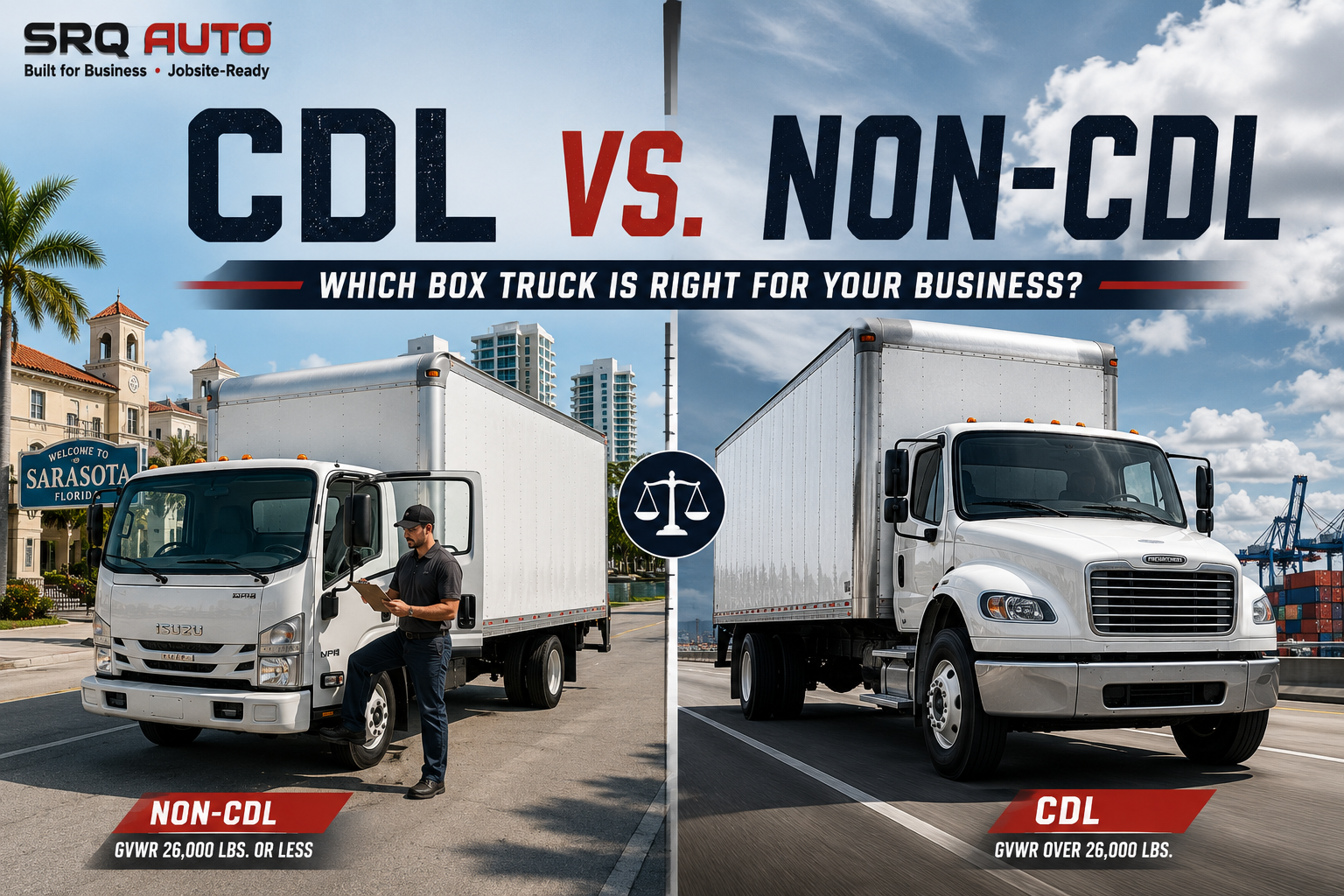
Understanding the GVWR Threshold

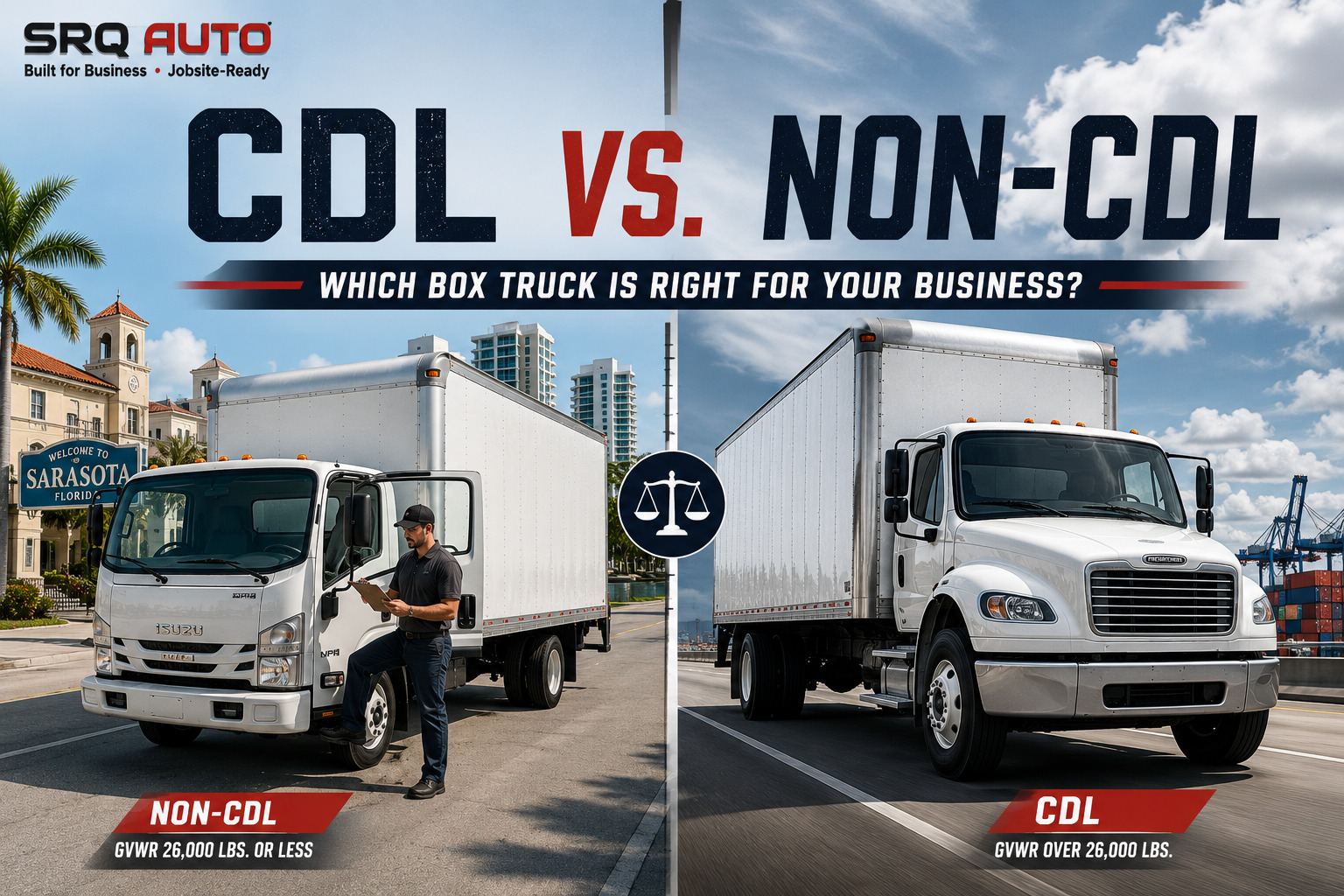
Gross Vehicle Weight Rating, or GVWR, is the maximum operating weight of a vehicle as specified by the manufacturer. This includes the chassis, body, engine, fluids, fuel, accessories, driver, passengers, and—most importantly—the cargo. In the United States, the 'magic number' is 26,001 pounds. If your truck has a GVWR of 26,000 lbs or less, it is classified as a non-CDL vehicle. Once you hit 26,001 lbs, you are entering the world of Class 7 and Class 8 commercial vehicles, which require specialized licensing.

Why does this number matter so much? It is the legal boundary set by the Department of Transportation (DOT) to ensure safety on public roads. Vehicles exceeding this weight are inherently more complex to stop, maneuver, and maintain. For a business owner, this threshold represents a fork in the road: do you prioritize the ease of hiring any driver with a clean standard license, or do you need the raw hauling power that only a heavy-duty CDL truck can provide? Before you sign a Credit Application, you must calculate your average daily load to ensure you aren't paying for capacity you'll never use—or worse, overloading a non-CDL truck and risking massive DOT fines.

The Benefits of Non-CDL Box Trucks

Massive Hiring Pool

One of the greatest challenges in Florida's current labor market is finding qualified CDL drivers. By choosing a non-CDL box truck (Class 4-6), you can recruit from a significantly larger pool of applicants. Anyone with a valid Class E license and a clean driving record can operate your vehicle, reducing recruitment time and wage pressure.

Lower Insurance Costs

Generally, insurance companies view non-CDL vehicles as lower risk than their heavier counterparts. Premiums for a 26,000-lb truck are often substantially lower than those for a 33,000-lb unit. This translates to direct monthly savings that can be reinvested into your business or fleet maintenance.

Simplified Compliance

While all commercial vehicles must follow safety rules, non-CDL trucks often face fewer regulatory hurdles regarding logbooks and Electronic Logging Devices (ELDs) if they operate within a certain radius. This reduces the administrative burden on your back-office team and keeps your drivers focused on deliveries.

When a CDL is Non-Negotiable

There are scenarios where 'sizing down' to avoid a CDL simply isn't an option. If your business involves hauling heavy machinery, bulk construction materials, or dense food products, a non-CDL truck's payload capacity will be exhausted long before the cargo box is full. A Class 7 truck (26,001 to 33,000 lbs) or a Class 8 (over 33,000 lbs) provides the structural integrity and braking power required for these massive loads. Furthermore, if your vehicle is equipped with air brakes, even if it is under 26,001 lbs, many states—including Florida—require specific endorsements or may classify the operation differently based on the vehicle's specific configuration. Operating a heavy-duty unit requires a driver with a Class B CDL (for straight trucks) or Class A (if towing a trailer over 10,000 lbs). While the hiring pool is smaller, CDL drivers are professionals who are often more experienced with vehicle inspections and safety protocols, which can lead to fewer accidents and better vehicle longevity. If you're ready to scale to heavy-duty, explore our Used Commercial Inventory today.

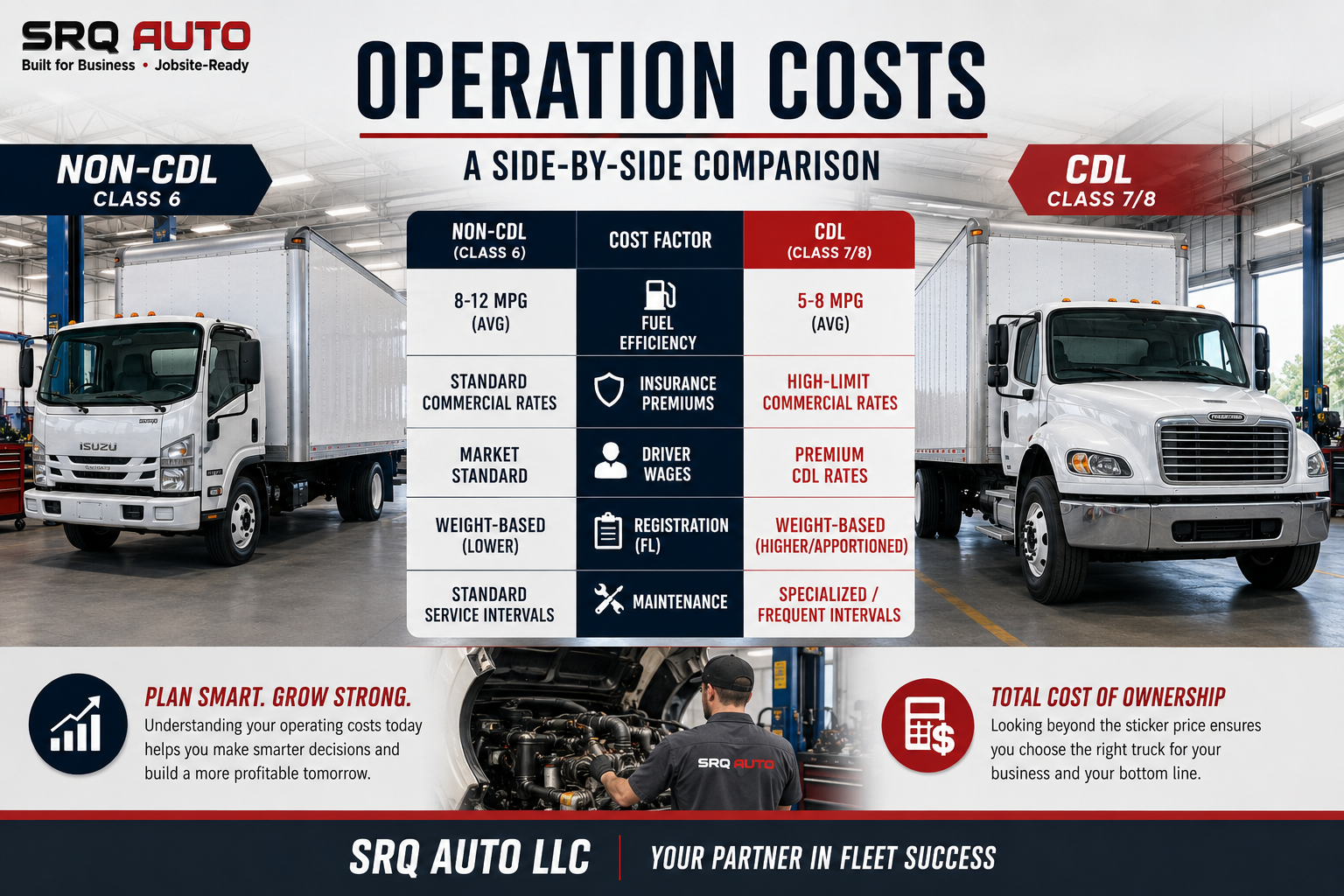
Operational Costs: A Side-by-Side Comparison

Financial planning for a fleet expansion requires looking beyond the purchase price. At SRQ Auto LLC, we want our customers to understand the 'Total Cost of Ownership' for both truck classes in the Florida market.

Cost Factor

Non-CDL (Class 6)

CDL (Class 7/8)

Fuel Efficiency

8-12 MPG (Avg)

5-8 MPG (Avg)

Insurance Premiums

Standard Commercial Rates

High-Limit Commercial Rates

Driver Wages

Market Standard

Premium CDL Rates

Registration (FL)

Weight-Based (Lower)

Weight-Based (Higher/Apportioned)

Maintenance

Standard Service Intervals

Specialized/Frequent Intervals

Payload vs. Practicality

The 'Empty' Weight Trap: Remember that a 26,000 GVWR truck might weigh 14,000 lbs empty. This leaves you with only 12,000 lbs of actual cargo capacity. If your daily loads exceed this, you are risking safety and legal trouble.

The Volume Factor: Some businesses haul 'popcorn'—lightweight but bulky items. For these users, a non-CDL truck with a 26-foot box is the perfect solution, maximizing volume without hitting weight limits.

Future-Proofing: Buying a truck that barely meets your current needs can stunt your growth. Consider if your cargo needs will increase over the next 3 years. We often recommend browsing Used Box Truck Inventory with slightly higher specs than you currently need.

Florida DOT Regulations & Compliance

Operating a commercial vehicle in Bradenton means staying compliant with Florida Department of Transportation (FDOT) rules. Regardless of CDL status, any vehicle used for commerce with a GVWR over 10,000 lbs must display a USDOT number. In Florida, you must also be aware of weigh station requirements—if the 'Scales Open' sign is lit, and your truck is over the weight threshold, you must pull in. Failure to do so can result in hefty fines from the Florida Highway Patrol.

For intrastate commerce (staying within Florida), the rules are slightly more relaxed than interstate rules, but the core safety requirements remain. You'll need a medical examiner's certificate for your drivers and must maintain a driver qualification file. To ensure you're protected, we recommend checking out our Commercial Warranty Options to keep your fleet compliant and on the road. Need help finding the right unit? Call us at 9412142231 for expert guidance.

Driver Recruitment and Retention Strategies

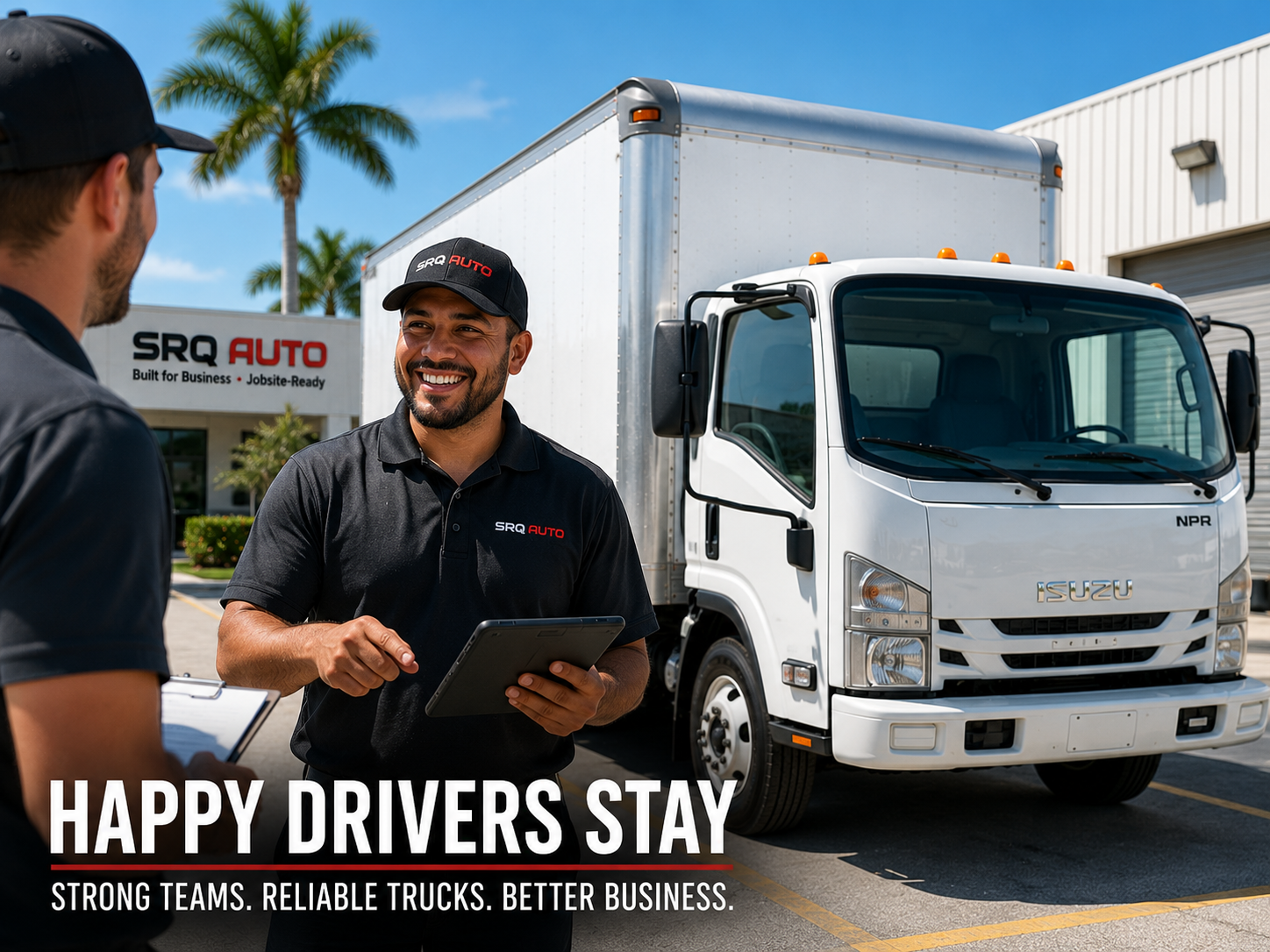
In Manatee County, the competition for skilled labor is fierce. If your business relies on CDL drivers, you are competing with major logistics firms and national carriers. This often leads to higher turnover as drivers chase cent-per-mile increases elsewhere. Conversely, a non-CDL fleet allows you to hire local workers who may be looking for steady, daytime delivery routes without the stress of maintaining a commercial license. At SRQ Auto LLC, we've observed that businesses using non-CDL trucks often have higher retention rates because they can train their own staff from within. A warehouse worker can easily transition to a driver role with a few days of ride-along training. This internal mobility builds loyalty and reduces the constant churn of the hiring cycle. To see how other businesses have scaled with us, read our Reviews and see why we are the trusted partner for Bradenton fleets.
Financing Your Fleet Expansion

Securing the right truck is only half the battle; securing the right capital is the other. Whether you are eyeing a Class 6 non-CDL unit or a heavy-duty Class 8 hauler, SRQ Auto LLC offers specialized Commercial Financing tailored to the needs of small to mid-sized businesses. We understand that your credit needs are different from a retail car buyer. We look at your business potential, not just a score.

Our financing partners specialize in commercial credit, offering flexible terms that help preserve your cash flow. We can help you navigate the tax benefits of your purchase, including potential Used Vehicle Tax Deductions under Section 179. Don't let upfront costs stall your momentum. Our 'Job Ready Promise' ensures that every vehicle you finance is inspected and ready to hit the road the moment the papers are signed.

Common Myths About Box Truck Licensing
The Air Brake Myth

Myth: Any truck with air brakes requires a CDL. Fact: While air brakes often appear on CDL vehicles, the license requirement is based primarily on GVWR. However, some states require an air brake endorsement regardless of weight, so always check local Florida statutes.

The 26,000 lbs Limit

Myth: If I stay under 26k, I don't need a DOT number. Fact: If you are operating for business purposes and your vehicle is over 10,000 lbs GVWR, you generally need a DOT number and must follow commercial safety regulations.

Interstate vs Intrastate

Myth: Crossing state lines doesn't change anything. Fact: Moving from Intrastate to Interstate commerce triggers Federal Motor Carrier Safety Administration (FMCSA) rules, which can be much more stringent regarding ELDs and driver qualifications.

Maintenance Considerations for Heavy Duty Units

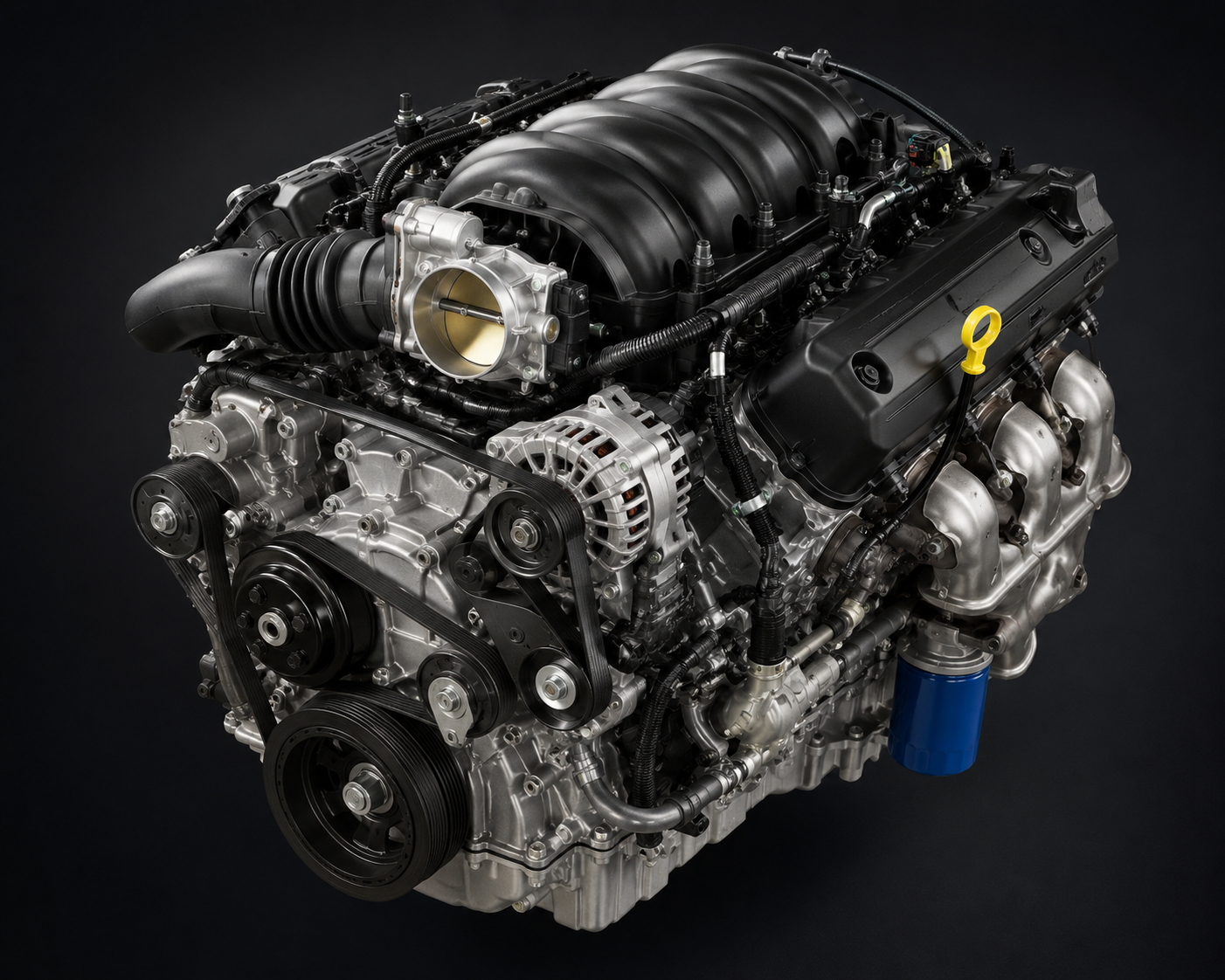
A CDL-class truck is built for the long haul. While a non-CDL chassis (like many used in light delivery) may have a service life of 250,000 miles, a Class 7 or 8 truck is often designed to hit 500,000 or even 750,000 miles with proper care. This longevity comes from heavier-duty components: larger cooling systems, sturdier axles, and more robust transmissions. However, these components require specialized service. You can't just take a Freightliner M2 to a standard auto shop. You need a commercial service center that understands diesel emissions systems and heavy-duty braking. At SRQ Auto, we ensure every truck in our Used Commercial Inventory has undergone a rigorous multi-point inspection, so you start your ownership journey with a clean bill of health.

A modern V8 internal combustion engine against a black background.

Safety Standards and Insurance Premiums

Safety is the primary driver behind the CDL threshold. Heavier trucks carry more momentum, making collisions potentially more devastating. This is why insurance companies scrutinize CDL fleets so closely. However, modern box trucks come equipped with advanced safety technology that can help mitigate these risks and lower your premiums. Look for units in our inventory with Collision Mitigation Systems, Lane Departure Warnings, and Rear-View Camera systems. By investing in a truck with superior safety features, you aren't just protecting your driver and the public—you're protecting your business from the catastrophic financial impact of an at-fault accident. For ultimate peace of mind, consider adding one of our Commercial Warranty Options, which include roadside assistance and trip interruption coverage. Ready to see our latest arrivals? Check out our Recent Deliveries to see what other Bradenton businesses are driving.

Expert Inventory Recommendations
The City Specialist

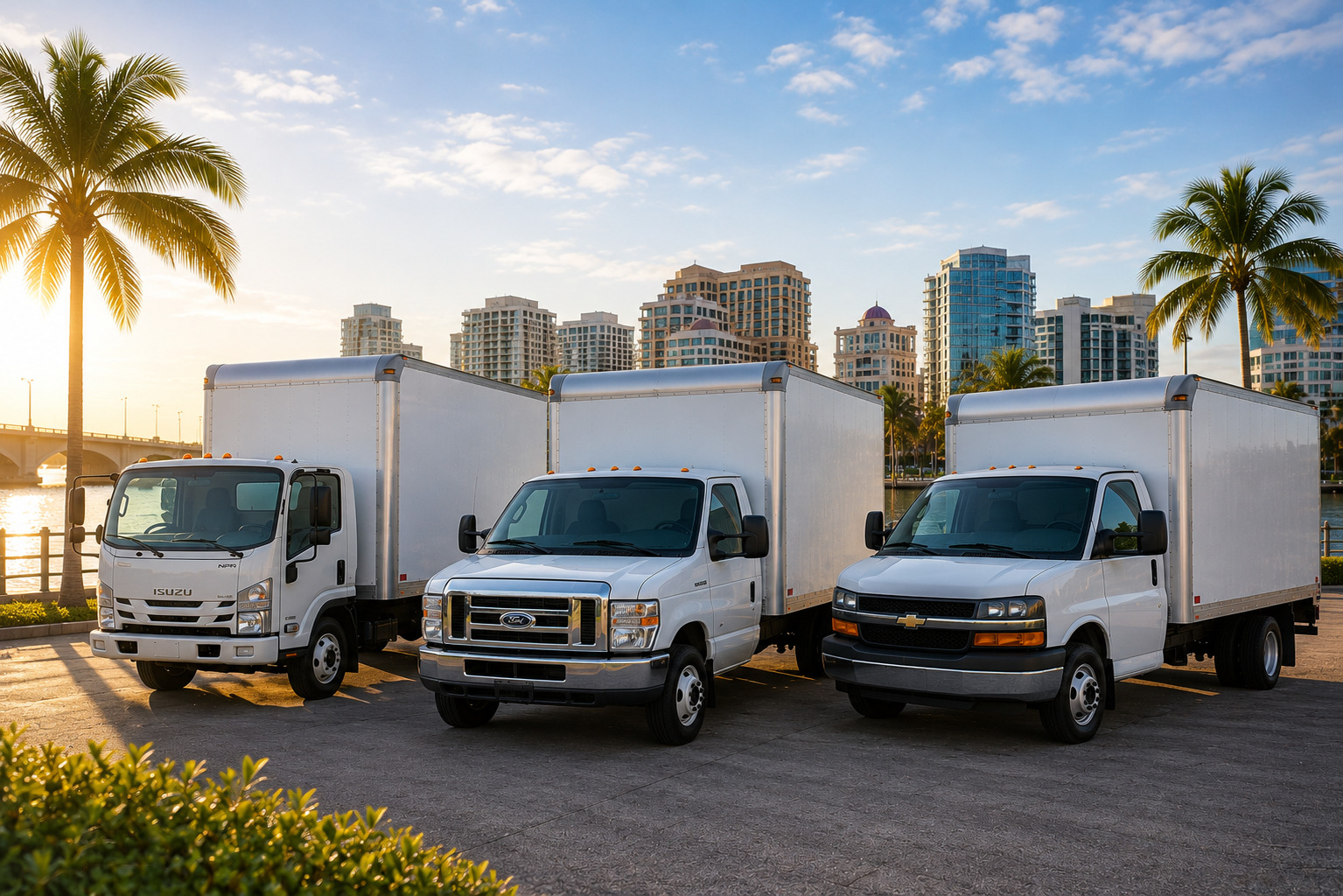
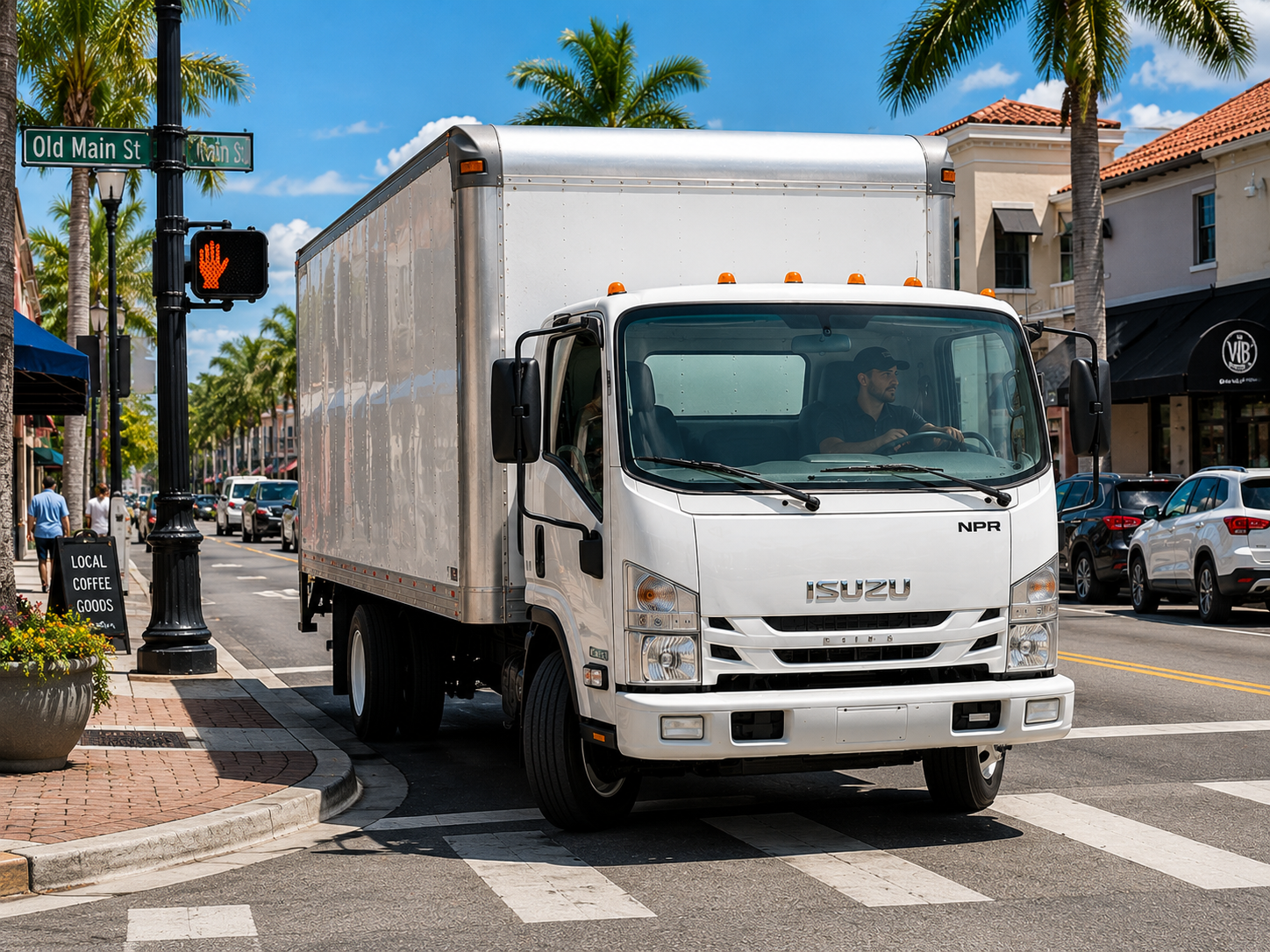
The Isuzu NPR/NRR series is the king of urban delivery. With a tight turning radius and excellent visibility, these non-CDL units are perfect for navigating tight Florida streets.

The Workhorse

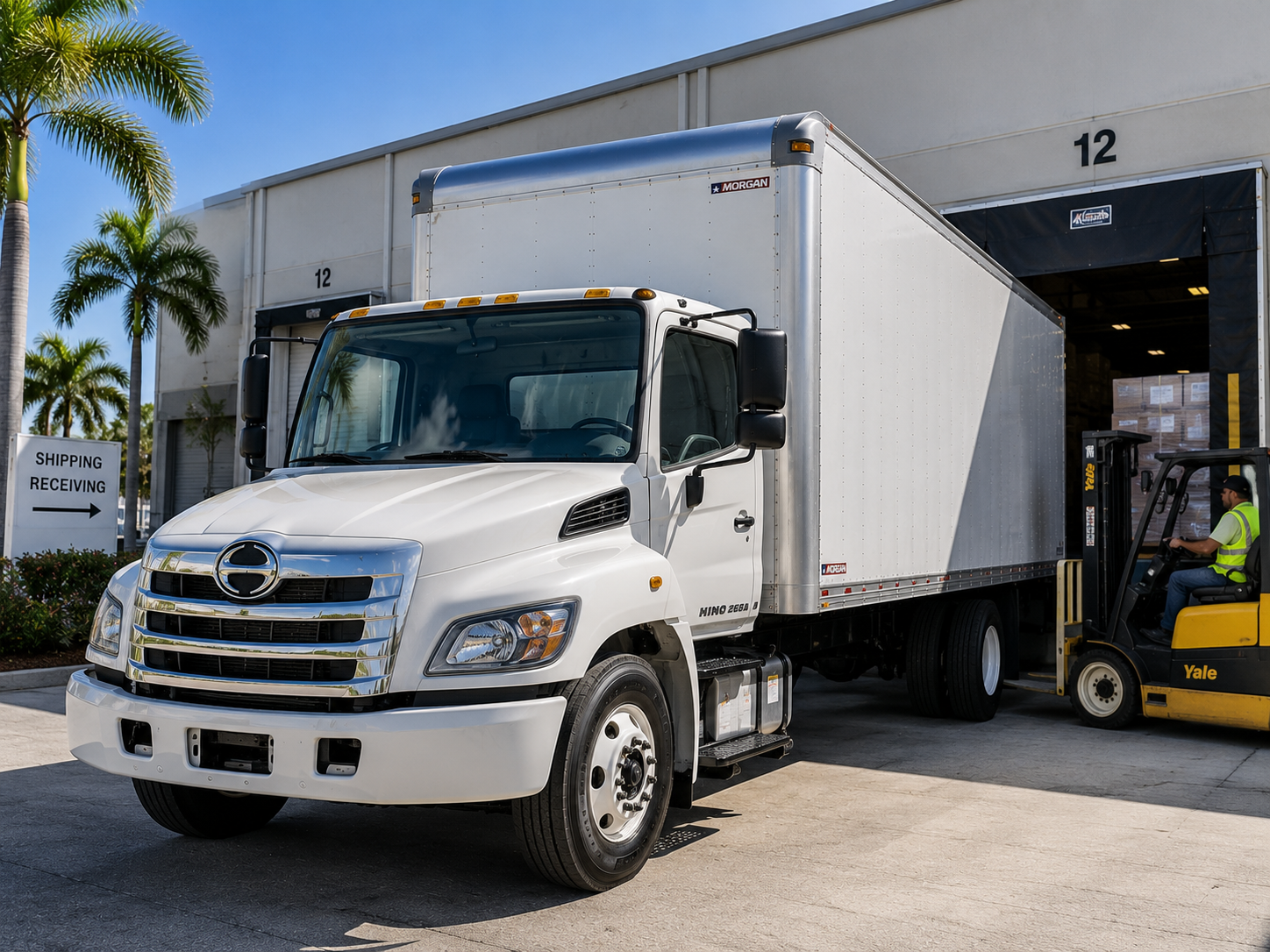
The Hino 268 is the gold standard for 26,000 GVWR non-CDL trucks. Known for Toyota-backed reliability, it offers the perfect balance of power and efficiency.

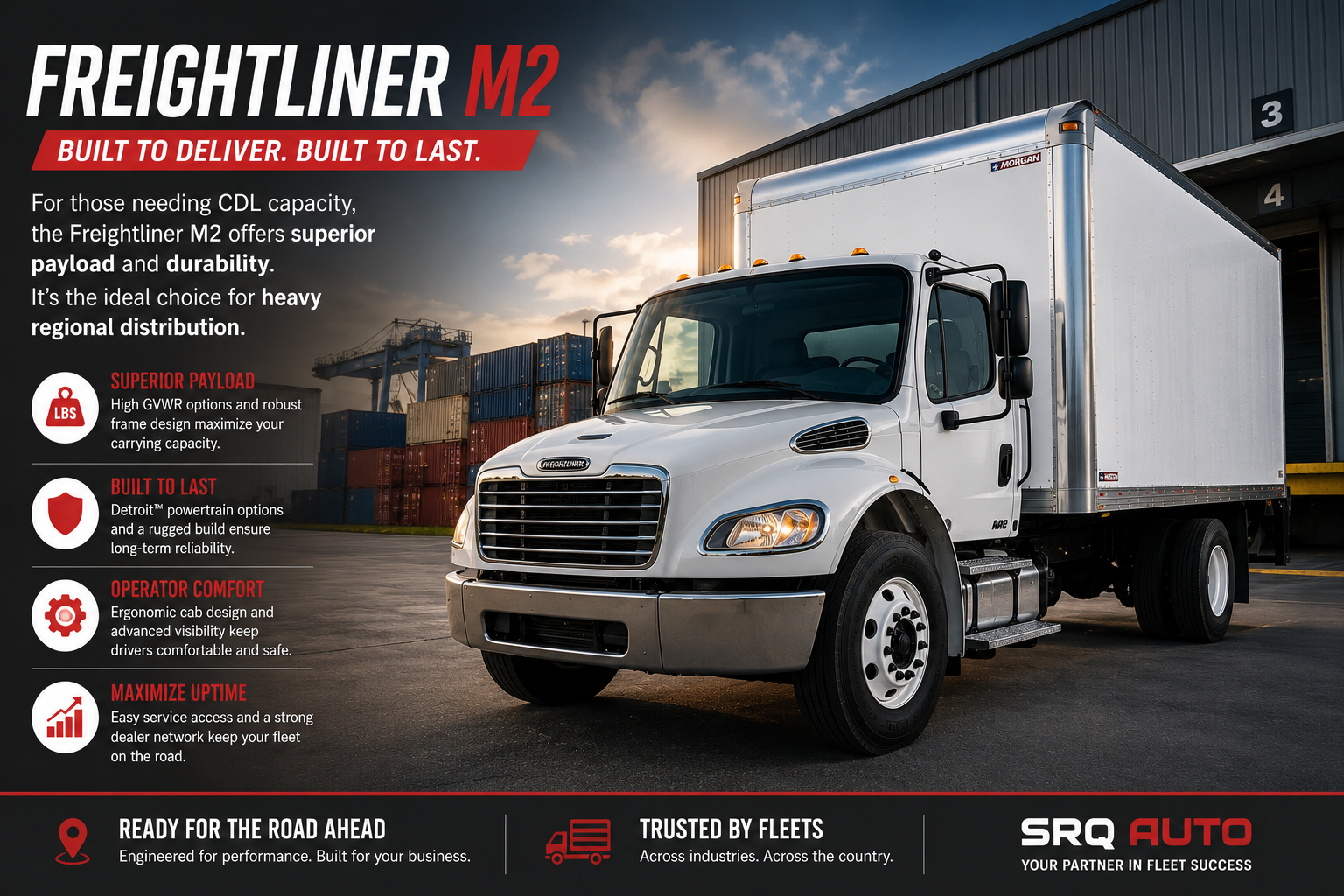
The Heavyweight

For those needing CDL capacity, the Freightliner M2 offers superior payload and durability. It's the ideal choice for heavy regional distribution.

Making the Final Decision

Before you commit to a purchase, take a moment to evaluate your business trajectory. Are you planning to add more routes? Will your cargo become denser? A mistake in truck classification can be expensive to fix once the vehicle is in service. We recommend sitting down with one of our commercial experts at SRQ Auto LLC to review your hauling requirements and driver availability.

Your Decision Checklist:

• Maximum expected daily payload weight? • Operating radius (Intrastate vs. Interstate)? • Existing driver certifications? • Long-term maintenance budget? • Need for specialized equipment (Liftgates, Reefers)?

Visit SRQ Auto LLC in Bradenton

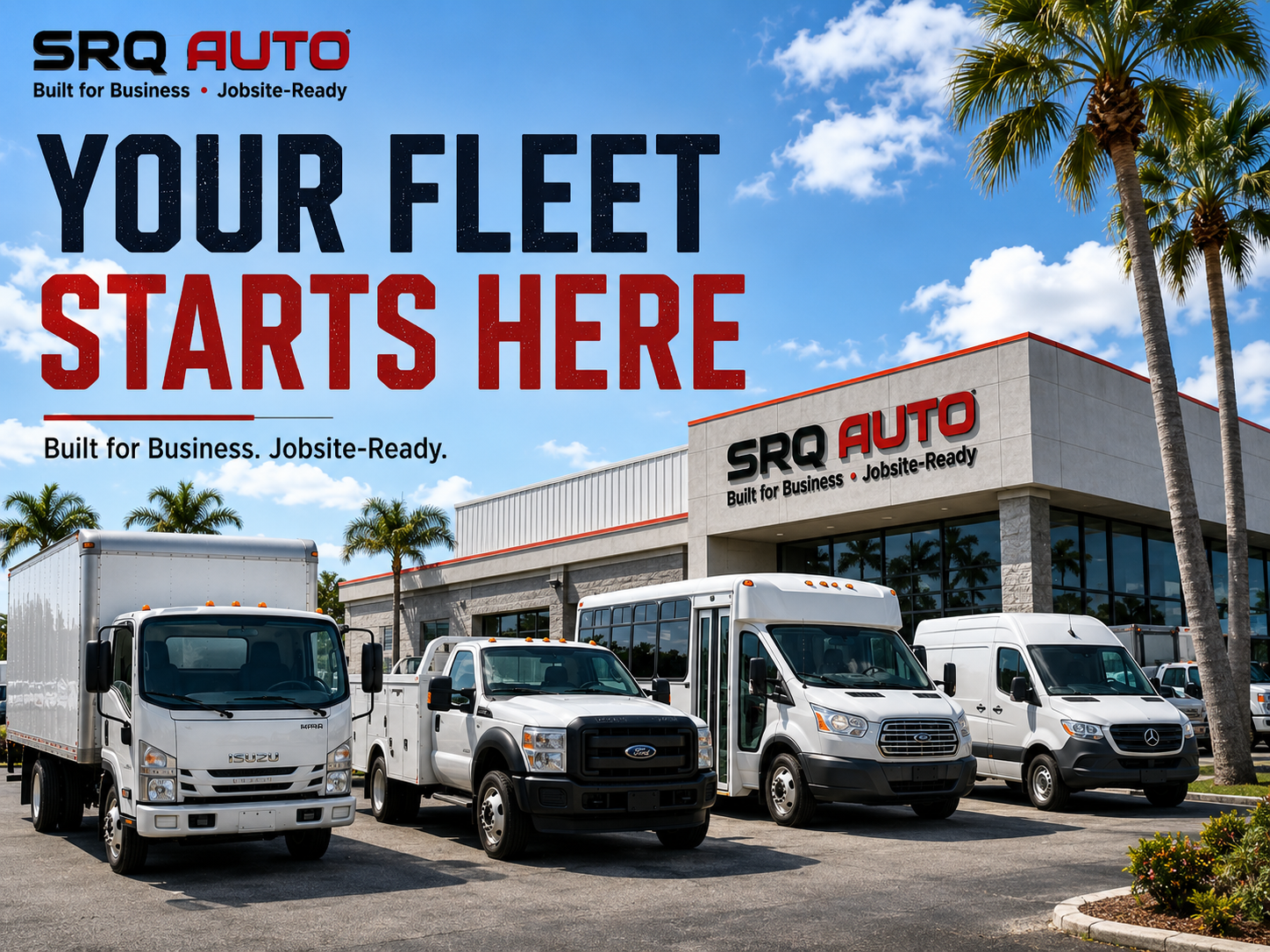
Choosing between CDL and non-CDL box trucks is a pivotal moment for your business. Don't go it alone. Visit us at 2212 1st St, Bradenton, FL 34208 to walk our lot and speak with professionals who understand the Florida commercial landscape. We take pride in being a leading supplier of commercial vehicles and used shuttle buses throughout the Southeast US. Whether you need a single 16-foot box truck or a fleet of Class 7 haulers, SRQ Auto LLC is your partner in delivering work-ready solutions. Get Directions to SRQ Auto LLC today or Call us at 9412142231 to schedule a consultation. Let's get your business moving forward with the right truck at the right price.