Box Truck vs. Work Van: Which One Actually Makes More Sense for Your Business?

A work van makes the most sense for trade services, parcel delivery, and local service calls requiring under 5,000 pounds of payload and fewer than 400 cubic feet of cargo space. A box truck makes sense for businesses hauling multi-pallet freight, bulky furniture, or heavy payloads above 5,000 pounds that require dock-height loading or straight vertical walls.
Choosing between these two commercial platforms directly impacts your daily operating costs, route efficiency, driver staffing, and revenue capacity. While a cargo van functions as a nimble mobile workshop that drives like a passenger vehicle, a dedicated box truck provides an industrial cargo container built for high-volume transport. Matching the vehicle structure to your actual load profile prevents costly safety liabilities, premature drivetrain wear, and frequent trip recycling.
When business owners evaluate work vehicles on our lot, they usually want to know how many standard pallets fit on the floor before they ask about total bumper-to-bumper vehicle length. Understanding how body geometry translates to usable floor space helps you make an immediate, profitable decision for your fleet.
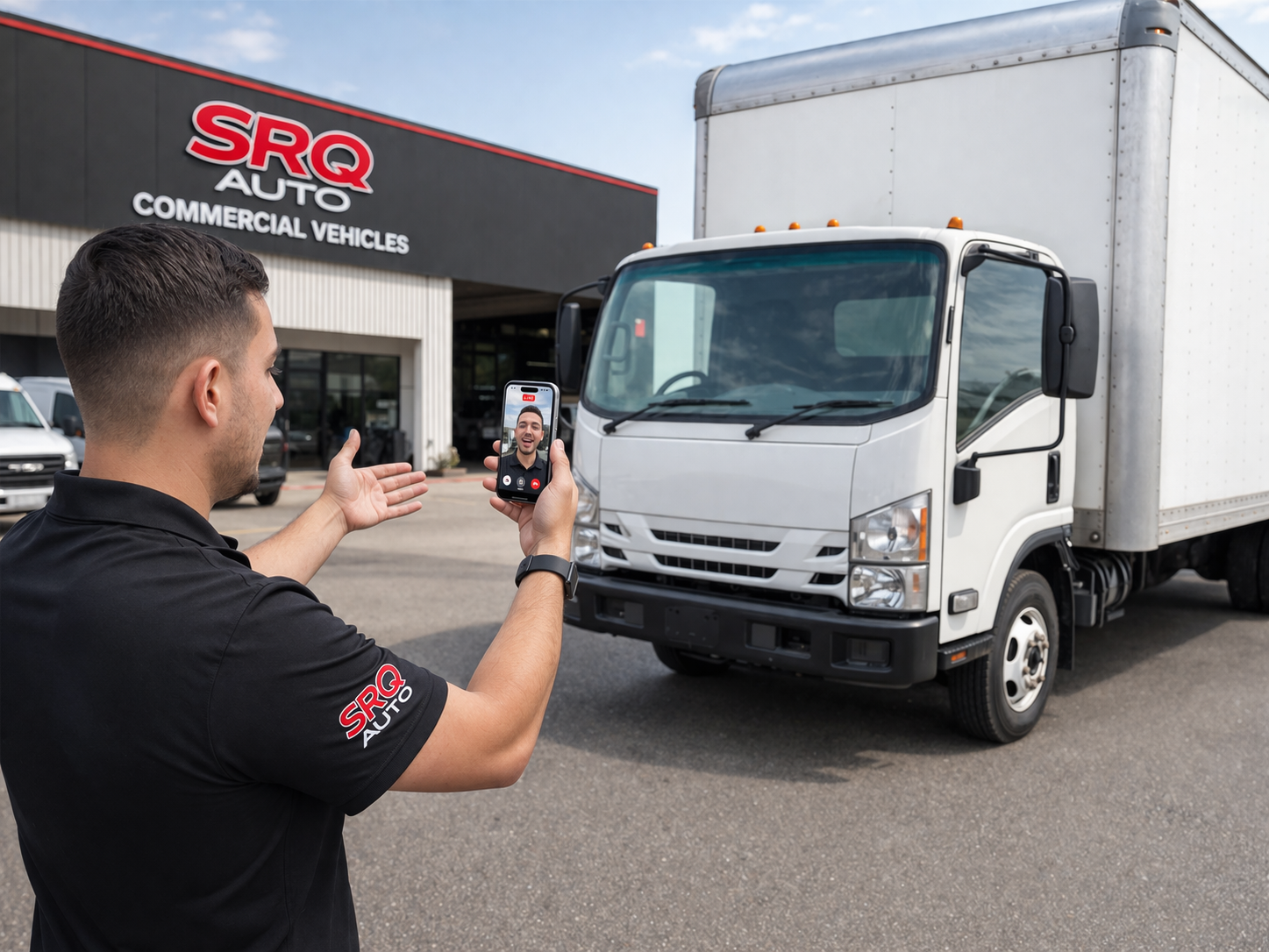
If you are ready to compare physical vehicle footprints in person, stopping by our Bradenton showroom gives you direct access to test drive both chassis styles side by side. You can also start the purchase process ahead of time when you get pre-approved online through our finance department, or get immediate answers by giving our commercial specialists a quick call at (941) 214-2231.
Table of Contents
- How Much Cargo Space and Payload Does a Box Truck Have Compared to a Work Van?
- Can You Stand Up Inside a Work Van Versus a Box Truck?
- What Jobs and Routes Are Better for a Work Van Than a Box Truck?
- Why Choose a Box Truck Over a Cargo Van for Heavy Freight?
- Is a Cutaway Van the Right Middle Ground Between a Work Van and a Box Truck?
- Common Questions About Commercial Work Vans and Box Trucks
- Take the Next Step Toward Your Commercial Vehicle Upgrade at SRQ Auto LLC
How Much Cargo Space and Payload Does a Box Truck Have Compared to a Work Van?
A standard full-size cargo van provides between 230 and 533 cubic feet of interior volume with payload capacities ranging from 3,000 to 4,650 pounds, whereas a medium-duty box truck delivers 800 to 1,800 cubic feet of storage and handles payloads from 4,500 to 15,000 pounds.
The architectural gap between these two options stems from unibody construction versus cab-chassis box construction. A cargo van utilizes a stamped steel body shell where side walls taper upward and interior wheel arches protrude into the cargo floor, reducing floor width between wheel wells to roughly 48 to 54 inches. This layout limits standard full-size cargo vans to carrying 2 or 3 standard 40x48-inch pallets.
| Vehicle Configuration | Cargo Volume | Payload Capacity | Typical GVWR Range | Standard Pallet Capacity |
|---|---|---|---|---|
| Standard Low-Roof Cargo Van | 230 - 280 cu ft | 3,000 - 4,200 lbs | 8,600 - 9,900 lbs | 2 Pallets |
| High-Roof Extended Cargo Van | 400 - 533 cu ft | 3,200 - 4,650 lbs | 9,500 - 10,360 lbs | 3 Pallets |
| 12ft to 14ft Cutaway Box Truck | 800 - 1,000 cu ft | 4,500 - 7,500 lbs | 12,000 - 14,500 lbs | 4 to 6 Pallets |
| 16ft to 20ft Medium-Duty Box Truck | 1,100 - 1,400 cu ft | 6,000 - 9,500 lbs | 16,000 - 25,999 lbs | 8 to 10 Pallets |
| 24ft to 26ft Heavy-Duty Box Truck | 1,500 - 1,800+ cu ft | 10,000 - 15,000+ lbs | 26,001 - 33,000 lbs | 12 to 14 Pallets |
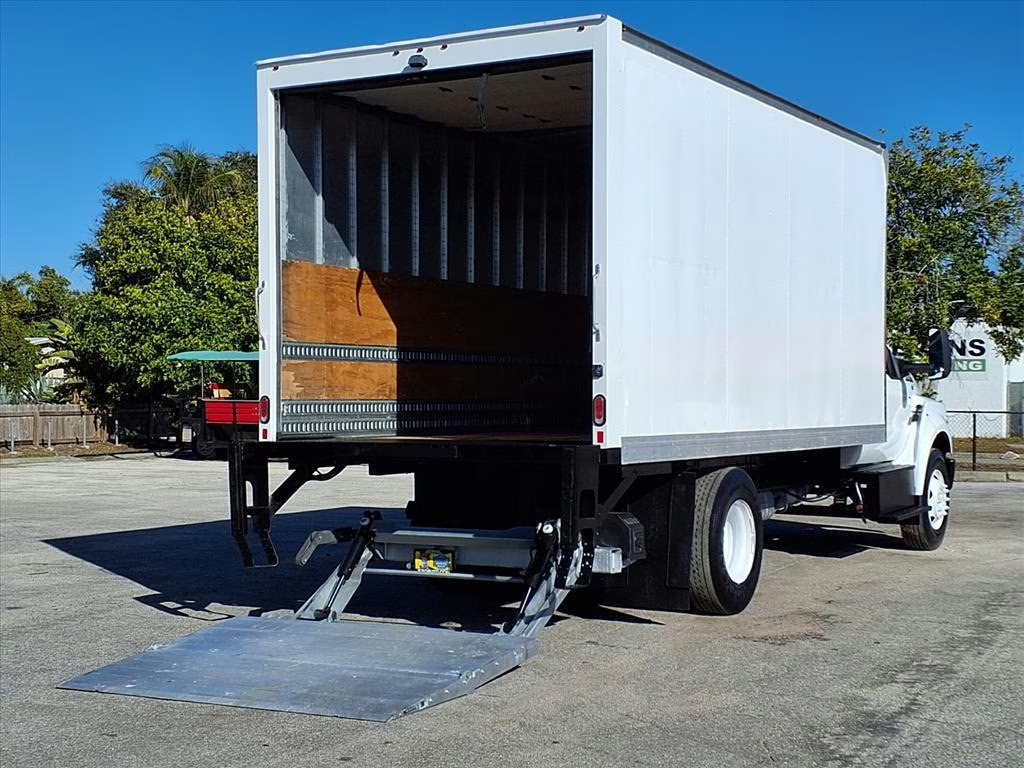
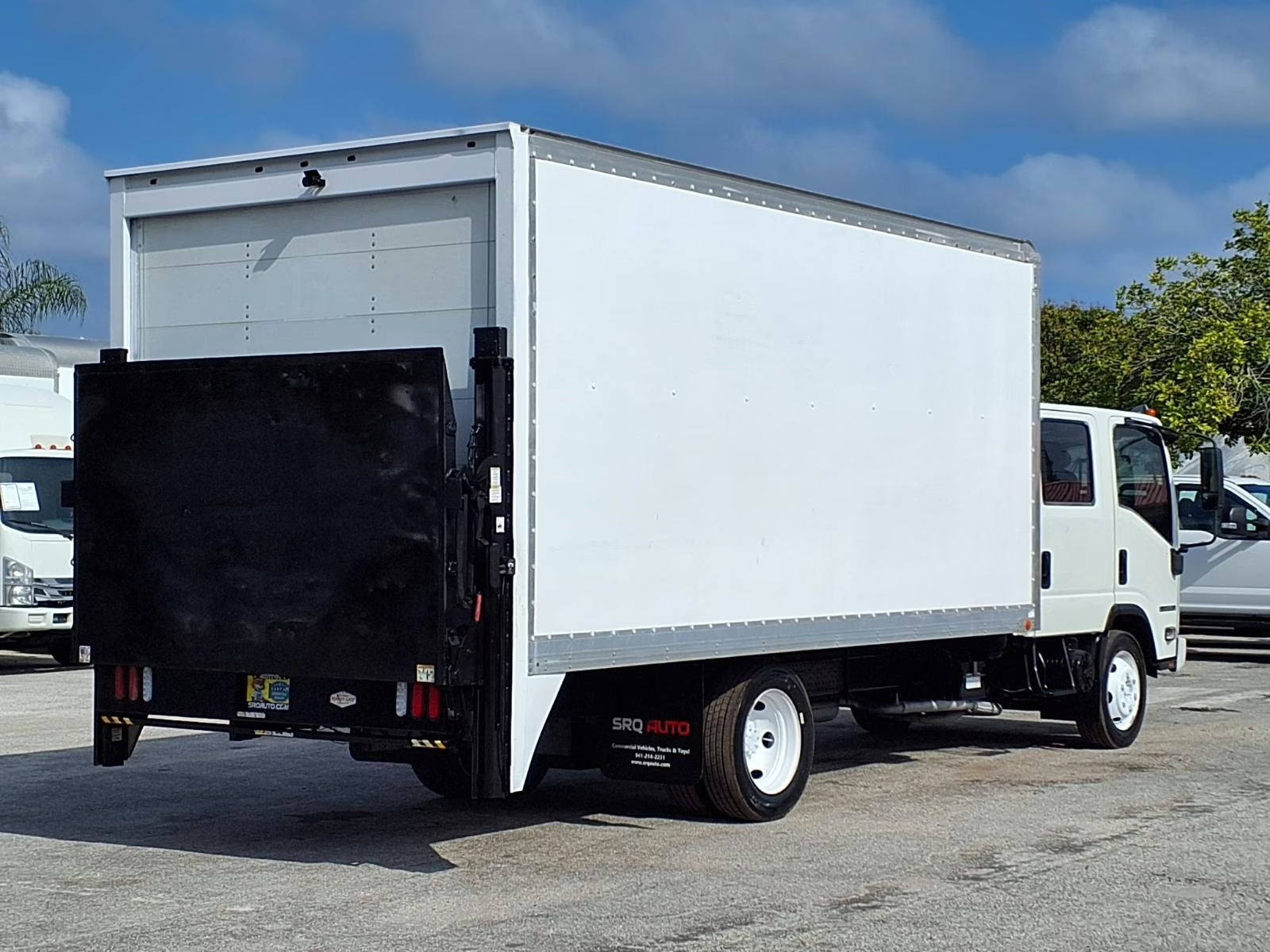
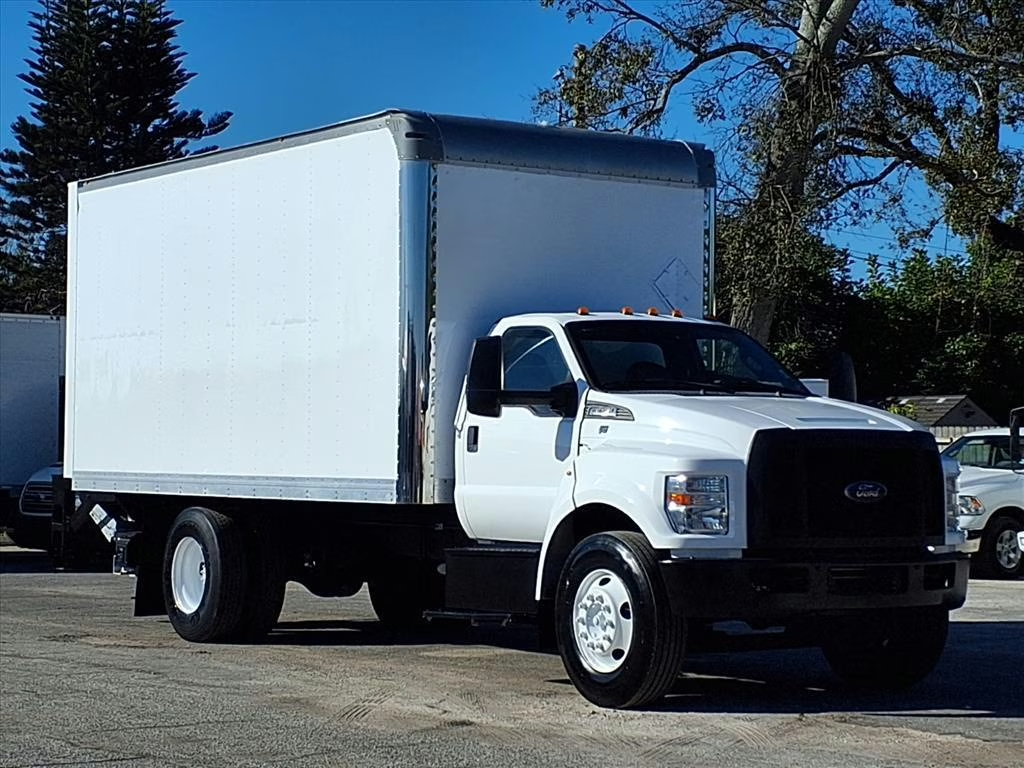
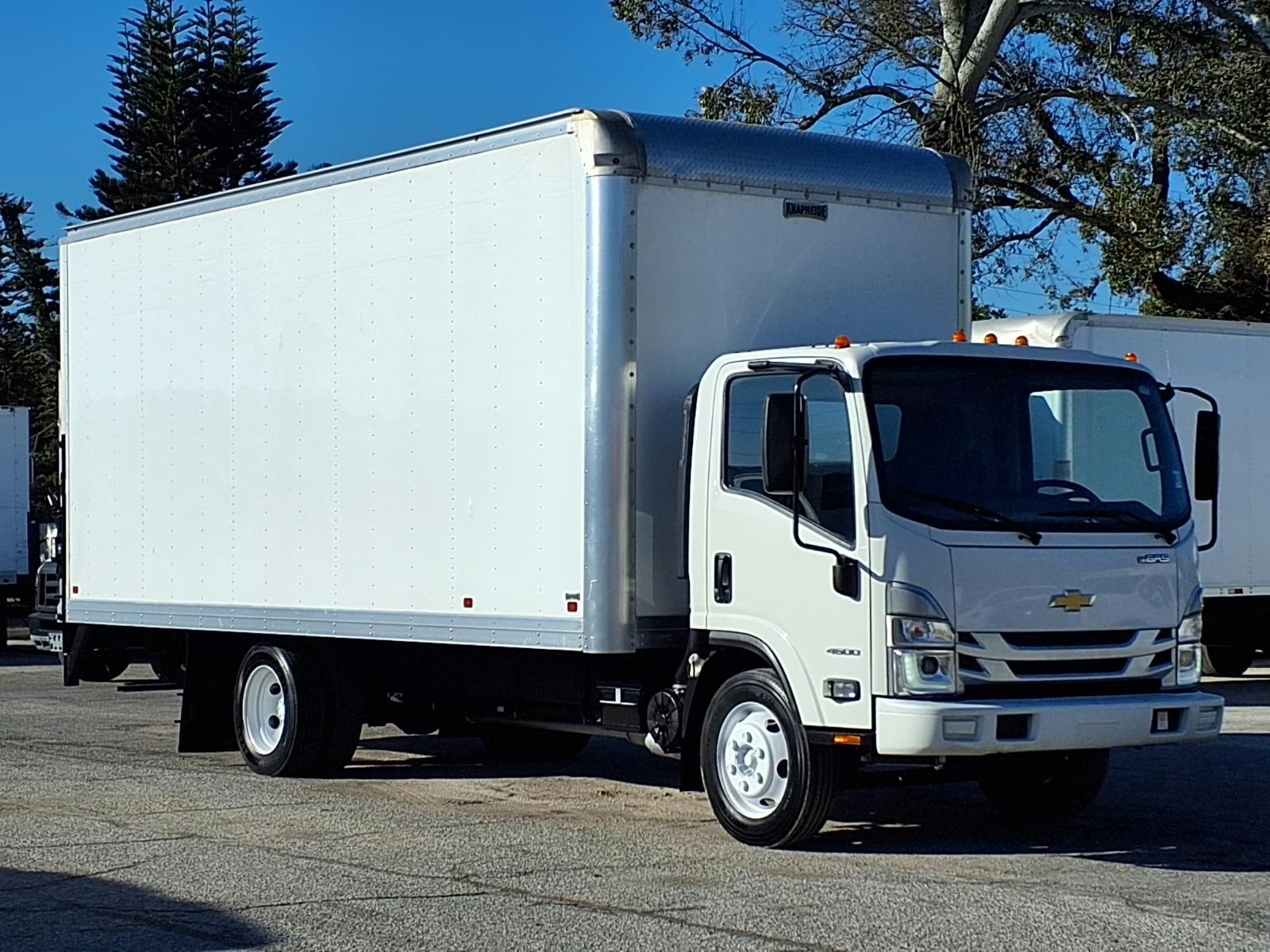
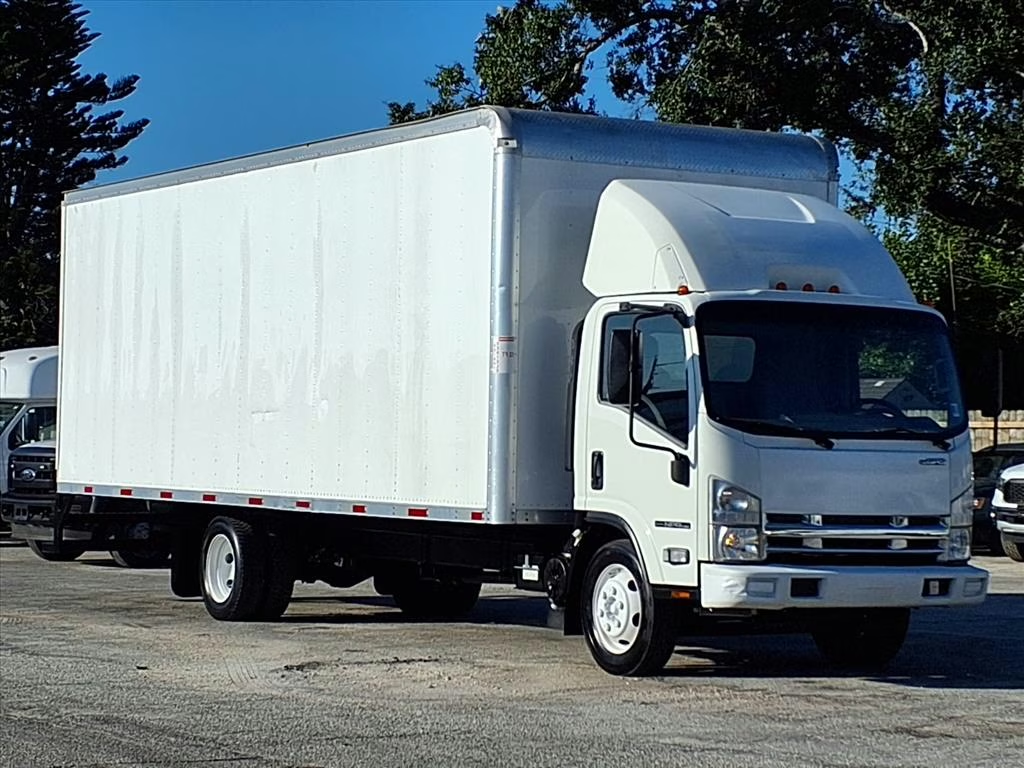
In contrast, a commercial box truck mounts a square freight container atop heavy-duty frame rails, delivering completely flat floors and 90-degree vertical walls. A 16-foot box truck offers nearly triple the cubic space of an extended high-roof van, accommodating 8 to 10 standard pallets loaded via forklift. Larger 26-foot straight trucks hold up to 14 pallets and handle substantial freight weights.
For business owners managing driver recruitment, operating non-CDL box trucks under the 25,999-pound GVWR limit allows staff with standard driver's licenses to operate medium-duty vehicles without commercial driver certifications. To find the right capacity balance for your operation, explore our selection of used box trucks or browse our broader pre-owned commercial inventory to compare load ratings.
Can You Stand Up Inside a Work Van Versus a Box Truck?
High-roof work vans offer interior standing heights up to 6 feet 5 inches, while box trucks provide vertical interior clearances ranging from 6 feet 6 inches to 7 feet or higher across a completely flat loading floor.
Inside a high-roof cargo van, technicians can walk upright along the center aisle, making it convenient to select tools, repair parts, and equipment from side-mounted shelving. However, because van roofs feature a slight side curvature and tapered upper walls, top-shelf storage depth is tighter than floor-level space.
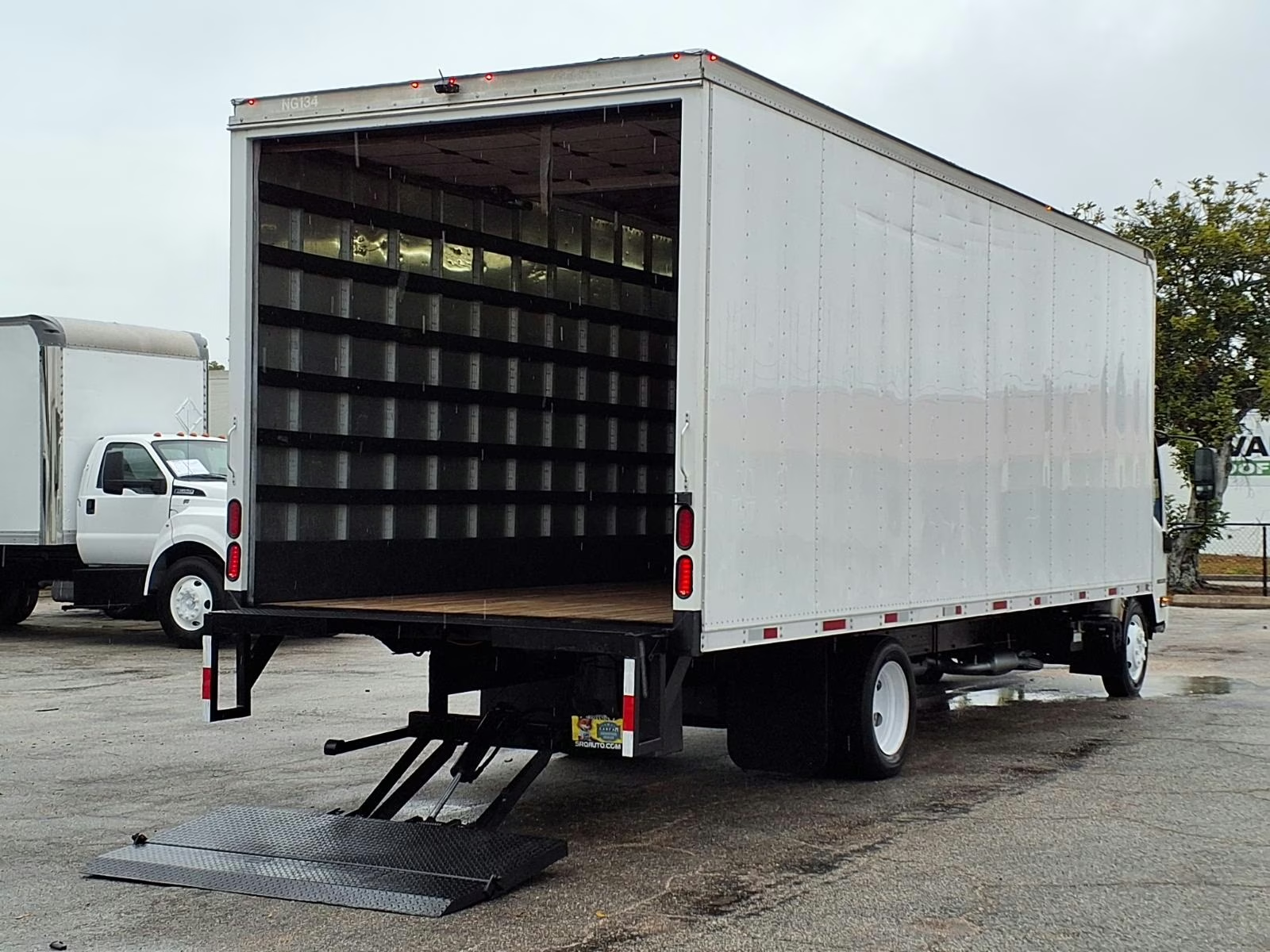
Box trucks provide true full-height vertical storage from edge to edge. The square container walls allow modular industrial shelving, E-track cargo tie-downs, and full-height stacking of large equipment right up to the ceiling joints. Roll-up rear doors eliminate swinging door hazards during street-side loading.
Work vans offer a lower step-in height from the ground, which reduces knee strain for technicians stepping in and out of the cargo bay thirty times a day. Box trucks sit higher on commercial chassis frames, utilizing rear pull-out ramps or hydraulic tuckaway liftgates to bridge the height gap between street level and warehouse loading docks. If your crew handles specialized trade gear or mobile service packages, view our inventory of used service trucks and vans to see functional interior upfits firsthand.
What Jobs and Routes Are Better for a Work Van Than a Box Truck?
Work vans excel at last-mile parcel distribution, mobile trade service calls, and urban routes where tight turning radii, low-clearance garages, and fuel efficiency between 14 and 20 MPG dictate daily productivity.
Plumbers, electricians, HVAC technicians, and mobile detailers generally achieve better organization inside a work van. Integrated cab-to-cargo interior access lets drivers retrieve tools without stepping out into inclement weather, while low exterior roof profiles allow easy parking in suburban driveways, multi-story commercial structures, and tight parking lots across Tampa.
Fuel consumption represents a major operational difference between these two platforms. Aerodynamic unibody vans powered by modern V6 engines achieve 14 to 20 MPG on mixed routes. Box trucks feature flat front air-drag profiles that reduce efficiency to 8 to 14 MPG. For routes covering 25,000 miles annually, operating a work van saves thousands of dollars per vehicle in fuel expenses while handling multi-stop service schedules effortlessly.
Why Choose a Box Truck Over a Cargo Van for Heavy Freight?
Businesses choose box trucks over cargo vans for freight because the square body profile accepts up to 14 standard pallets, accommodates dock-height forklift loading, and includes hydraulic liftgates for heavy palletized goods.
Palletized freight, residential furniture delivery, appliance distribution, and regional LTL freight require volumetric stacking height and raw payload capacity that exceed cargo van capabilities. A 16-foot or 24-foot box truck allows logistics operators to consolidate multiple delivery stops into a single driver shift, maximizing gross revenue per route mile.
While commercial insurance premiums run higher for box trucks due to greater vehicle mass and elevated cargo liability limits, the earning ceiling per run is substantially higher. Hydraulic liftgate upfits allow a single operator to move 2,000-pound pallet loads safely without manual lifting. If your current routes turn down heavy loads due to space limitations, check out our pre-owned cargo van lineup alongside our heavier box units to determine when upgrading makes financial sense.
Is a Cutaway Van the Right Middle Ground Between a Work Van and a Box Truck?
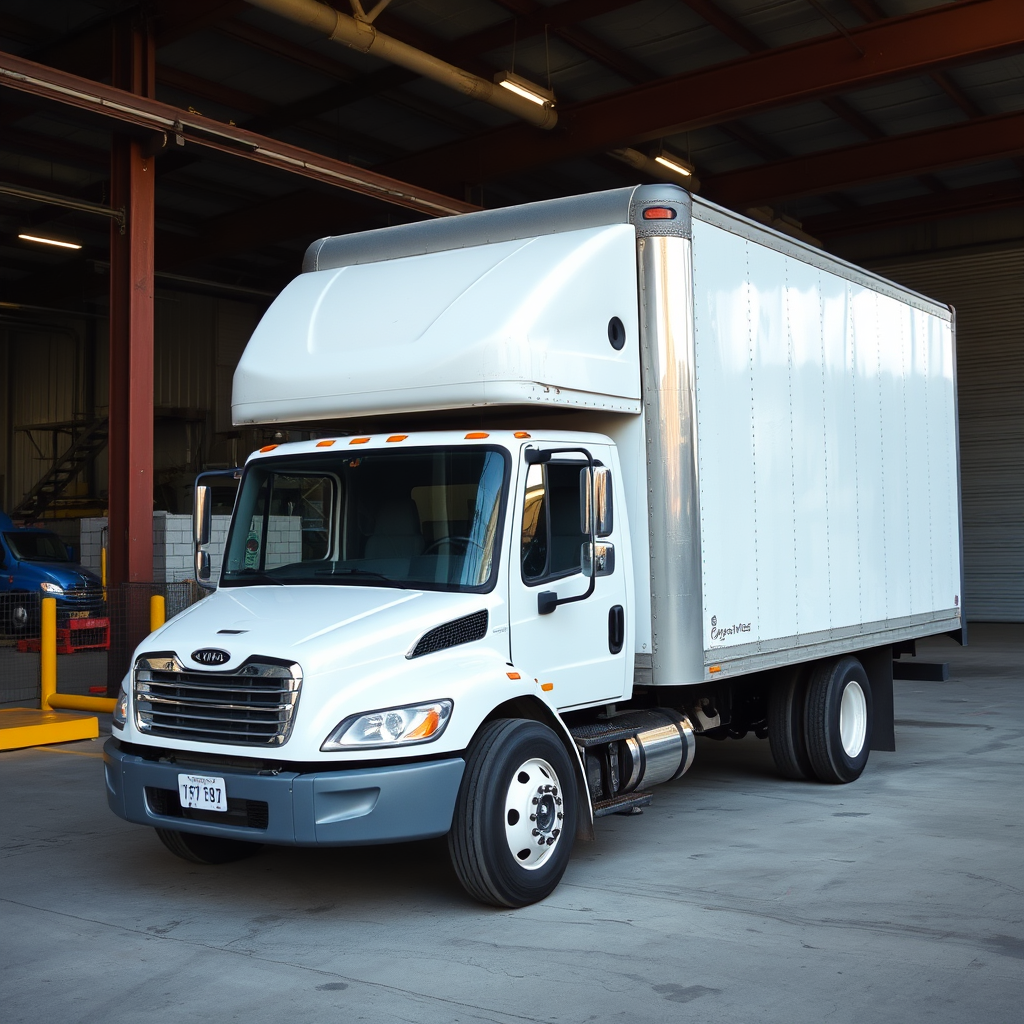
A cutaway van combines a van front cab with a rear box body, delivering 800 to 1,000 cubic feet of rectangular cargo space, cab-to-cargo pass-through access, and easier handling than a full-size straight truck.
Built on heavy-duty chassis frames with typical 12,000 to 14,500-pound GVWR ratings, 12-foot to 14-foot cutaway vans feature flat loading floors and square side walls while retaining the familiar seating position, cab controls, and maneuverability of a standard work van. Drivers can walk directly from the front cab into the rear freight area through a sliding partition door.
This hybrid design is popular among bakeries, event caterers, linen services, and appliance delivery drivers who require square box storage without sacrificing cab comfort or maneuverability in residential neighborhoods.
Common Questions About Commercial Work Vans and Box Trucks
Q: Do box trucks under 26,000 pounds GVWR require a Commercial Driver's License?
Commercial vehicles with a Gross Vehicle Weight Rating under 26,001 pounds can be driven legally with a standard non-commercial driver's license. Most 12-foot to 24-foot medium-duty box trucks are built with a 25,999-pound GVWR cap specifically to widen the pool of eligible drivers for business owners without requiring CDL certifications.
Q: How does commercial vehicle insurance cost compare between box trucks and work vans?
Commercial auto insurance premiums are generally higher for box trucks because higher gross vehicle weights create greater kinetic energy and liability exposure in collisions. Furthermore, box truck body repairs involve specialized commercial body shop labor, hydraulic liftgate servicing, and higher cargo liability minimums than standard vans.
Q: What is the real-world fuel economy gap between a cargo van and a box truck?
Full-size cargo vans typically achieve 14 to 20 MPG highway due to streamlined unibody aerodynamics and lighter curb weights. In contrast, box trucks deliver 8 to 14 MPG because the flat front surface of the cargo box generates significant aerodynamic drag, especially at highway speeds.
Q: Can a forklift load standard pallets directly into a cargo van?
Forklifts can load single pallets through the rear doors of a cargo van, but protruding interior wheel wells restrict floor width to roughly 48 to 54 inches. This wheel-well hump prevents side-by-side pallet placement, whereas box trucks feature completely flat floors built for easy forklift loading.
If you have specific licensing or upfit questions before visiting, stop by our Bradenton commercial dealership or contact our sales staff by phone at (941) 214-2231 to speak with a commercial vehicle specialist.
Take the Next Step Toward Your Commercial Vehicle Upgrade at SRQ Auto LLC
Selecting between a box truck and a work van comes down to how your business moves cargo every day. If your routes demand maximum cubic volume, forklift pallet loading, and heavy payload ratings, a box truck gives your fleet room to grow. If maneuverability, lower fuel burn, and quick urban access drive your daily revenue, a full-size work van offers the ideal combination of efficiency and practical storage.
At SRQ Auto LLC, we specialize exclusively in quality pre-owned commercial vehicles, serving business owners across Florida and shipping nationwide. Every commercial vehicle on our lot is thoroughly inspected, serviced, reconditioned, and backed by our Job Ready Promise so it is ready to perform from day one. With commercial financing solutions, transparent vehicle histories, and over 500 five-star Google reviews, our team helps you purchase work-ready vehicles with complete confidence.
Explore our inventory online, apply for commercial financing, or visit our Bradenton showroom today to test drive work vans and box trucks that match your business goals.
© 2026 SRQ Auto LLC. All rights reserved.