What Size Box Truck Does Your Business Need? 12', 14', 16' & Larger Compared

The right box truck size is not simply the biggest body your budget allows. The best size is the one that fits your normal cargo, weight, routes, loading method and parking environment without forcing your business to operate around the truck.
A 12-foot box truck can be an excellent tool for one company and far too small for another. A 16-foot truck may offer the right balance of cargo volume and maneuverability for many operations, while larger bodies can make sense when route density and cargo volume justify the additional size.
The important point is that box length alone does not tell you payload, GVWR or whether a particular truck fits your operation. Buyers should evaluate the complete vehicle.
Browse SRQ Auto's current used box trucks for sale.
What Size Box Truck Does Your Business Need?
Start with what happens on your heaviest normal workday—not the lightest day and not a hypothetical maximum that may happen once a year.
- What are you carrying? Furniture, appliances, packages, equipment and trade materials create different space and loading requirements.
- How heavy is it? Cargo volume and cargo weight are not the same thing.
- How is it loaded? Dock loading, forklifts, pallet jacks, ramps and liftgates can change which truck makes sense.
- Where does the truck operate? Dense routes, neighborhoods, parking lots and loading zones place a premium on maneuverability.
- How much room do you need to grow? Buying exactly enough space for today's lightest route can create another vehicle purchase sooner than expected.
Expert Perspective: Richard Reed, Commercial Vehicle Specialist
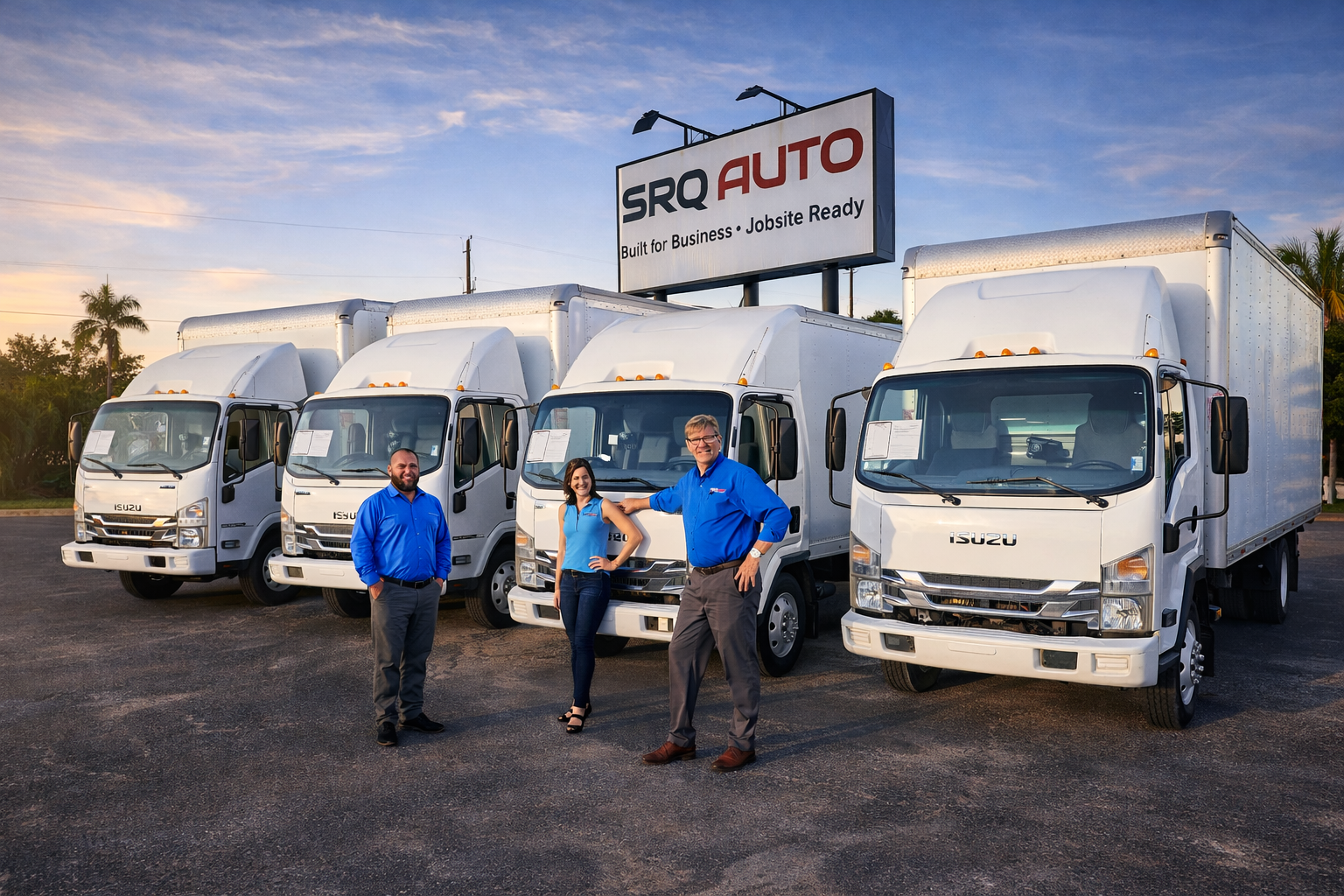
Richard Reed has 23 years of experience and specializes in matching businesses with the right commercial vehicle. His experience includes customer applications, box trucks, shuttle buses, KUVs, service bodies and helping buyers translate what their business actually does into the vehicle configuration that fits it.
Many buyers begin with a truck size in mind before fully defining the job. A better approach is to work backward from the cargo, route, loading method and daily operating environment.
The goal is not to sell a business the largest box truck. The goal is to match the business with the truck it can use productively every day.
When Does a 12-Foot Box Truck Make Sense?
A 12-foot box truck can work well when maneuverability and a compact footprint matter more than maximum cargo volume. Potential applications can include smaller delivery routes, equipment transport, local service operations and businesses moving moderate amounts of cargo in areas where parking and turning space are limited.
A smaller overall package can be easier to place in tighter commercial areas and may be more comfortable for operators moving up from a cargo van. But if the business routinely fills the box or leaves freight behind, the smaller truck can become inefficient quickly.
Is a 14-Foot Box Truck a Good Middle Ground?
A 14-foot box truck can provide additional cargo volume without moving all the way into a larger delivery-truck footprint. For businesses that have outgrown a cargo van or smaller box but still operate on routes where maneuverability matters, this size can deserve a close look.
Evaluate the specific chassis, GVWR, actual completed-vehicle weight and intended cargo. Two 14-foot trucks can have very different capabilities underneath similar-looking bodies.
Why Are 16-Foot Box Trucks So Common in Commercial Use?
A 16-foot box provides meaningful cargo volume while remaining practical for many local and regional commercial routes. That combination can work for delivery companies, moving operations, furniture and appliance businesses, contractors and other companies that regularly move bulky cargo.
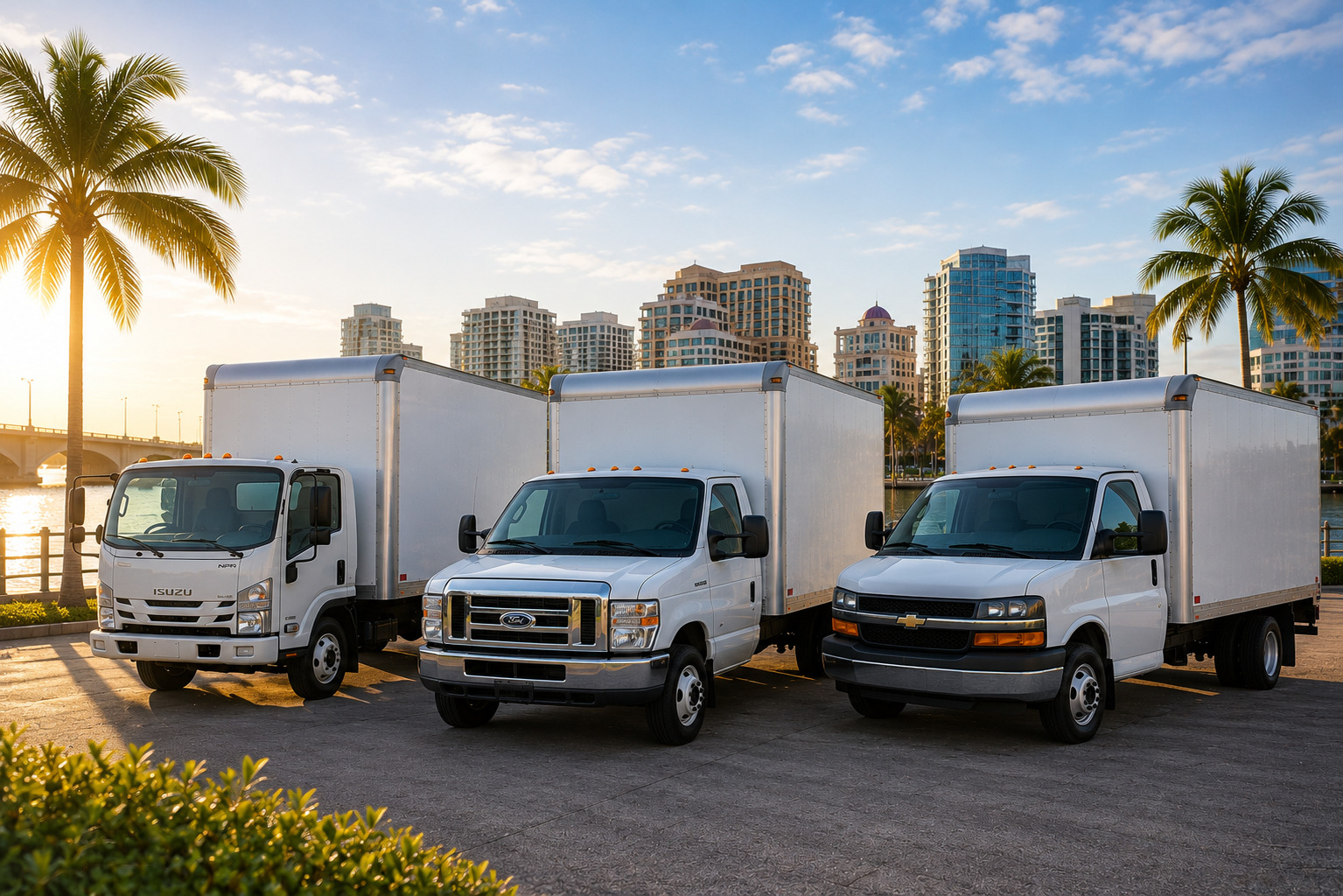
SRQ Auto frequently works with 16-foot configurations, including conventional-cab and cab-over chassis such as the Isuzu NPR.
For some businesses, a 16-foot truck is where cargo capacity, maneuverability and loading equipment come together particularly well. The right choice still depends on what the business carries and how the truck will operate.
When Should You Consider an 18- or 20-Foot Box Truck?
Longer bodies can make sense when cargo volume is consistently the limiting factor and the truck's routes can accommodate the additional size.
Before moving up, consider whether the extra space will actually be used. A larger truck can change parking, turning, loading-zone access and driver comfort. It may also change chassis requirements and the amount of weight available for cargo.
If the business is regularly making multiple trips because a smaller truck runs out of cube before it runs out of allowable weight, a larger body may improve route efficiency.
What About 22- to 26-Foot Box Trucks?
Larger box trucks are designed for operations that genuinely need substantial cargo volume. They can be appropriate for larger delivery routes, moving operations and other applications where the business can use the space productively.
At this size, buyers should be especially deliberate about GVWR, payload, licensing requirements, route restrictions, parking, dock access and driver needs.
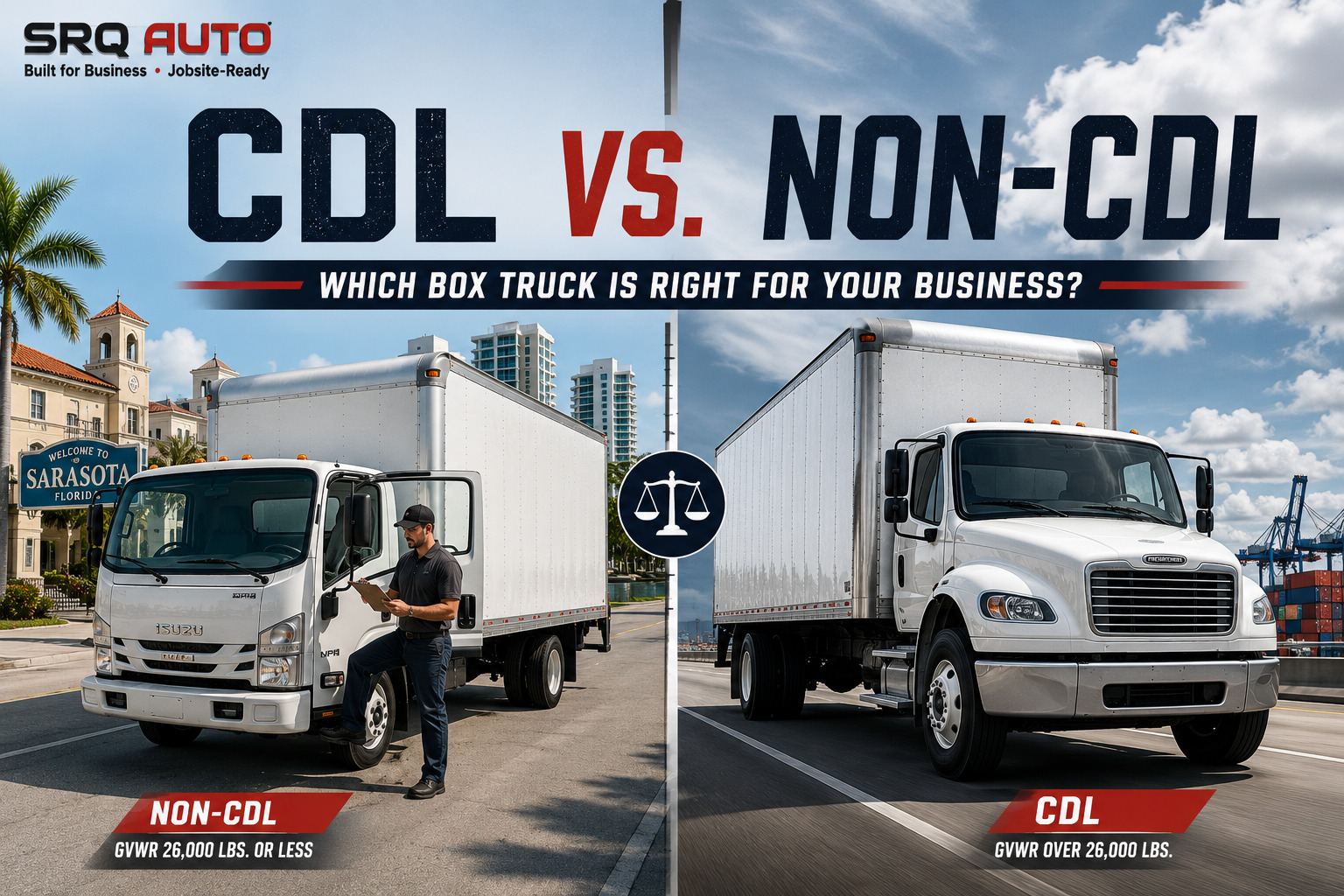
Do not assume a particular body length automatically requires—or avoids—a CDL. CDL requirements depend on the vehicle's ratings and operation, not simply the number of feet printed in a listing.
For more detail, read our CDL vs. Non-CDL Box Truck Guide.
Box Length vs. Payload: Why Bigger Does Not Always Mean More Weight
One of the easiest mistakes in box-truck shopping is confusing cargo volume with payload.
A longer box gives you more room, but the body itself has weight. Liftgates, shelving, ramps, fuel, occupants and other equipment also contribute to the completed vehicle's operating weight.
Payload should be evaluated using the specific truck's ratings and actual configuration. A generic search result for a model does not necessarily describe the completed used box truck you are considering.
If your freight is bulky but relatively light, cargo cube may be the constraint. If your freight is dense and heavy, available payload may become the constraint first.
Do You Need a Liftgate or a Ramp?
How the truck is loaded can be as important as the size of the box.
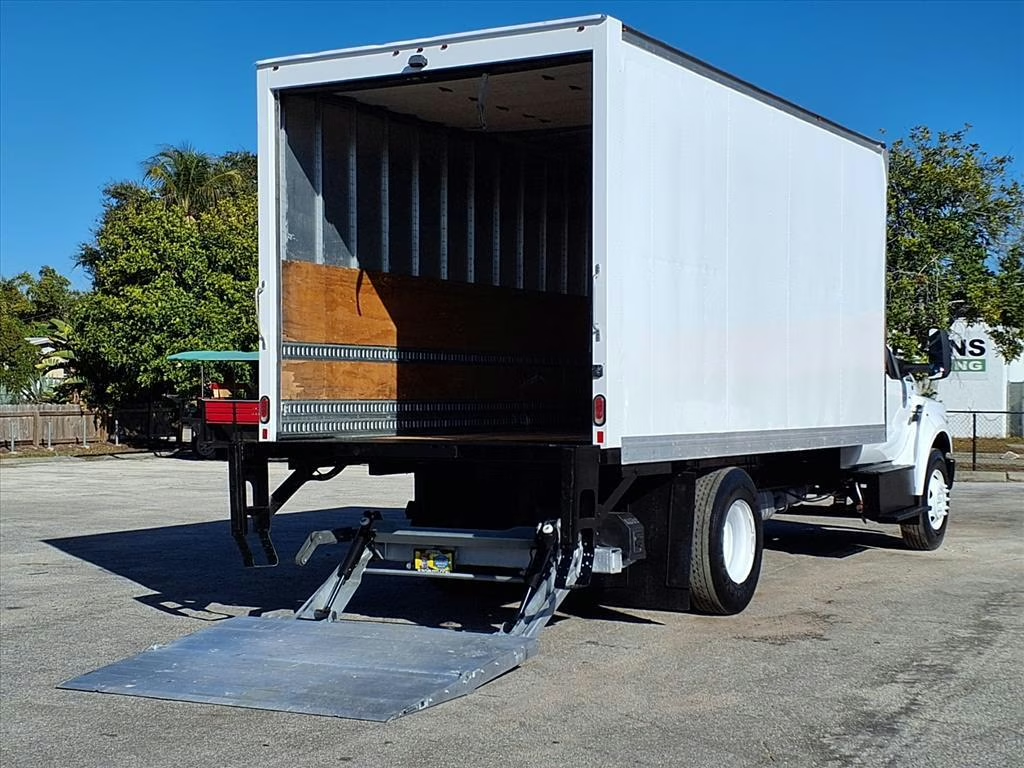
A liftgate can be valuable for businesses moving appliances, palletized freight, heavy equipment or other cargo when a loading dock or forklift is not available. A ramp may be simpler for businesses whose employees can safely move the cargo manually.
The right answer depends on cargo weight, delivery environment, frequency of use and how much additional equipment weight the truck can accommodate.
See our Liftgate Buying Guide for a deeper look.
Cab-Over vs. Conventional Cab: Does It Change the Decision?
Yes. Body length is only one dimension of the truck.
Cab-over trucks such as the Isuzu NPR place the cab over the front axle, which can create a compact overall footprint relative to the cargo body and provide excellent forward visibility. Conventional-cab trucks can feel more familiar to drivers accustomed to pickups and vans.
Neither layout is universally better. Route environment, service access, driver preference, wheelbase, turning needs and chassis capability should all be considered.
How Does Route Type Affect Box Truck Size?
A truck spending its day on open industrial routes faces different constraints from one making repeated stops in downtown areas, apartment communities or residential neighborhoods.
- Parking availability
- Turning radius and tight entrances
- Loading-zone dimensions
- Dock height and dock access
- Low-clearance areas
- Number of daily stops
- Highway vs. local driving
- Whether multiple drivers will operate the truck
A larger box can reduce trips, but if it makes every stop slower or harder, the extra cube may not improve productivity.
What Information Should You Bring When Shopping for a Box Truck?
Richard and the SRQ Auto commercial vehicle team can make a better recommendation when the conversation starts with the business rather than the badge on the truck.
- The heaviest normal cargo load
- The largest or bulkiest items you carry
- Whether freight is palletized
- Whether you normally have dock or forklift access
- How many stops the truck makes
- Where it will be parked overnight
- Whether towing is required
- How many people normally ride in the truck
- Whether a liftgate or ramp is needed
Those answers are more useful than simply saying, “I think I need a 16-footer.”
What Should You Inspect on a Used Box Truck?
Once the size and configuration fit the business, inspect the complete vehicle.
Evaluate the chassis mechanically, then inspect the box floor, roof, walls, rear door, seals, lighting and any ramp or liftgate. Look for evidence of water intrusion, damaged flooring, previous repairs and heavy commercial wear.
The truck should be evaluated as one working system: chassis + body + loading equipment.
For box-truck fundamentals, read What Is a Box Truck? Sizes, GVWR, Liftgates & Business Uses Explained.
Frequently Asked Questions About Box Truck Sizes
What is the best box truck size for a small business?
There is no single best size. The right truck depends on cargo volume and weight, loading method, route environment, parking and how much capacity the business normally needs.
Is a 16-foot box truck big enough for most businesses?
A 16-foot box is useful for many commercial applications, but it is not automatically right for every business. Compare normal cargo, payload requirements, route conditions and loading needs with the specific truck.
Does a bigger box truck have more payload?
Not necessarily. A larger body provides more cargo volume, but payload depends on the specific vehicle's ratings and completed weight. The larger body and added equipment also contribute weight.
Does a 16-foot or 20-foot box truck require a CDL?
Body length alone does not determine CDL requirements. Verify the vehicle's GVWR and other applicable ratings and confirm the licensing rules that apply to your operation.
Should I buy a box truck with a liftgate?
A liftgate can be valuable when heavy or palletized cargo must be loaded or unloaded without a dock or forklift. Businesses moving lighter cargo may prefer a ramp or another loading configuration.
Find the Right Box Truck at SRQ Auto
SRQ Auto specializes in fully reconditioned, Job Ready commercial vehicles for businesses throughout Florida and nationwide. Our used box-truck inventory can include 12-, 14-, 16-, 18-, 20- and larger configurations depending on current availability, with liftgate and non-liftgate options.
Browse Current Box Trucks for Sale
Need help structuring the purchase? Learn about Tailored Commercial Financing or complete our online credit application.
SRQ Auto has earned 550+ 5-Star Google Reviews. Read our customer reviews or get directions to SRQ Auto in Bradenton.