What Is a Box Truck? Sizes, GVWR, Liftgates & Business Uses Explained
A box truck is more than a cargo box mounted behind a cab. For a business, the useful question is not simply “What is a box truck?” but which box truck configuration actually fits the work.
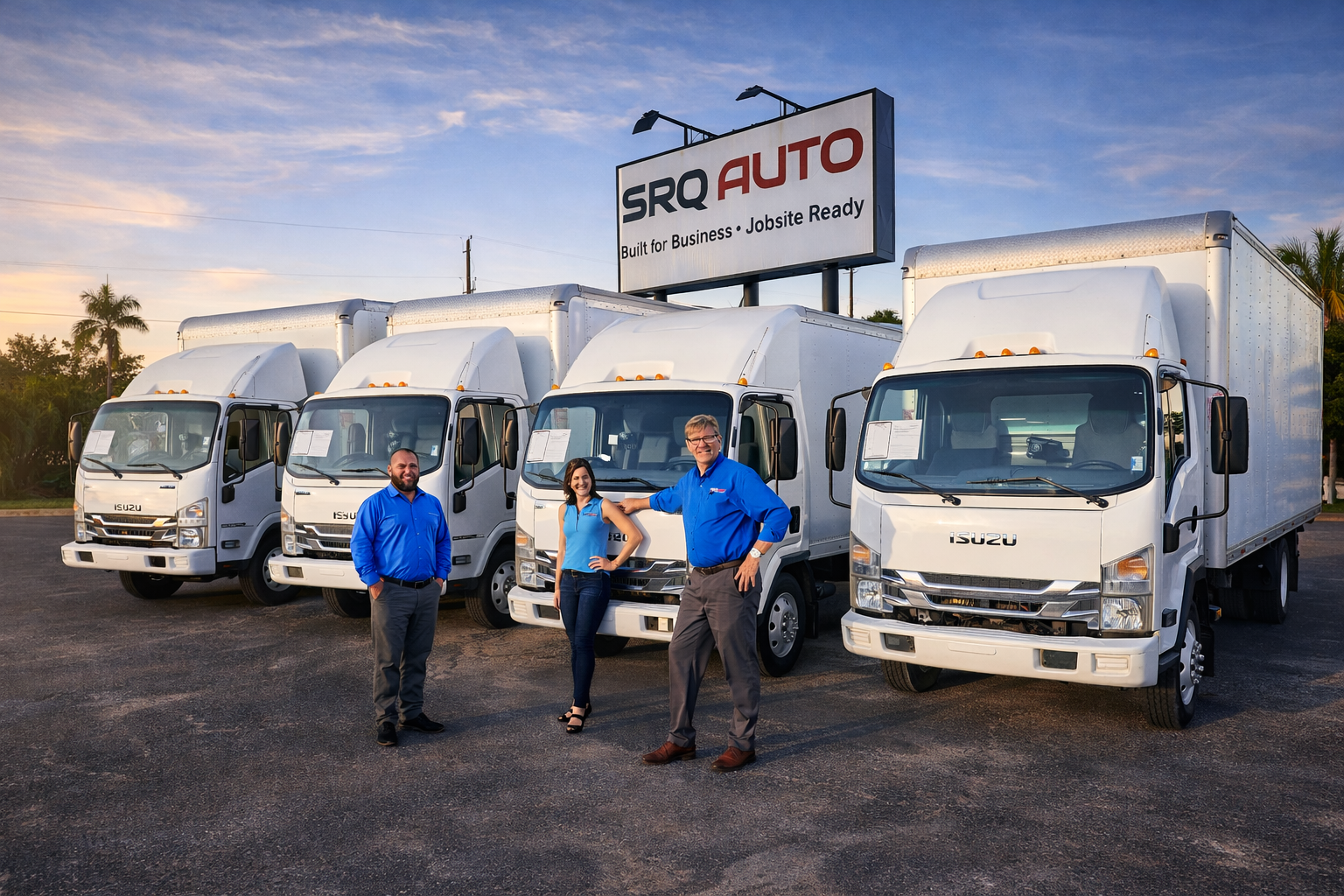
SRQ Auto has spent years buying, reconditioning and selling commercial vehicles to contractors, delivery companies, fleets, municipalities and small businesses. We regularly see box trucks that look similar online but differ substantially in body length, chassis, GVWR, payload, loading equipment and condition.
Those differences affect how the truck works every day—and whether it is the right commercial asset for the buyer.
Browse SRQ Auto's current box trucks for sale.
What Is a Box Truck?
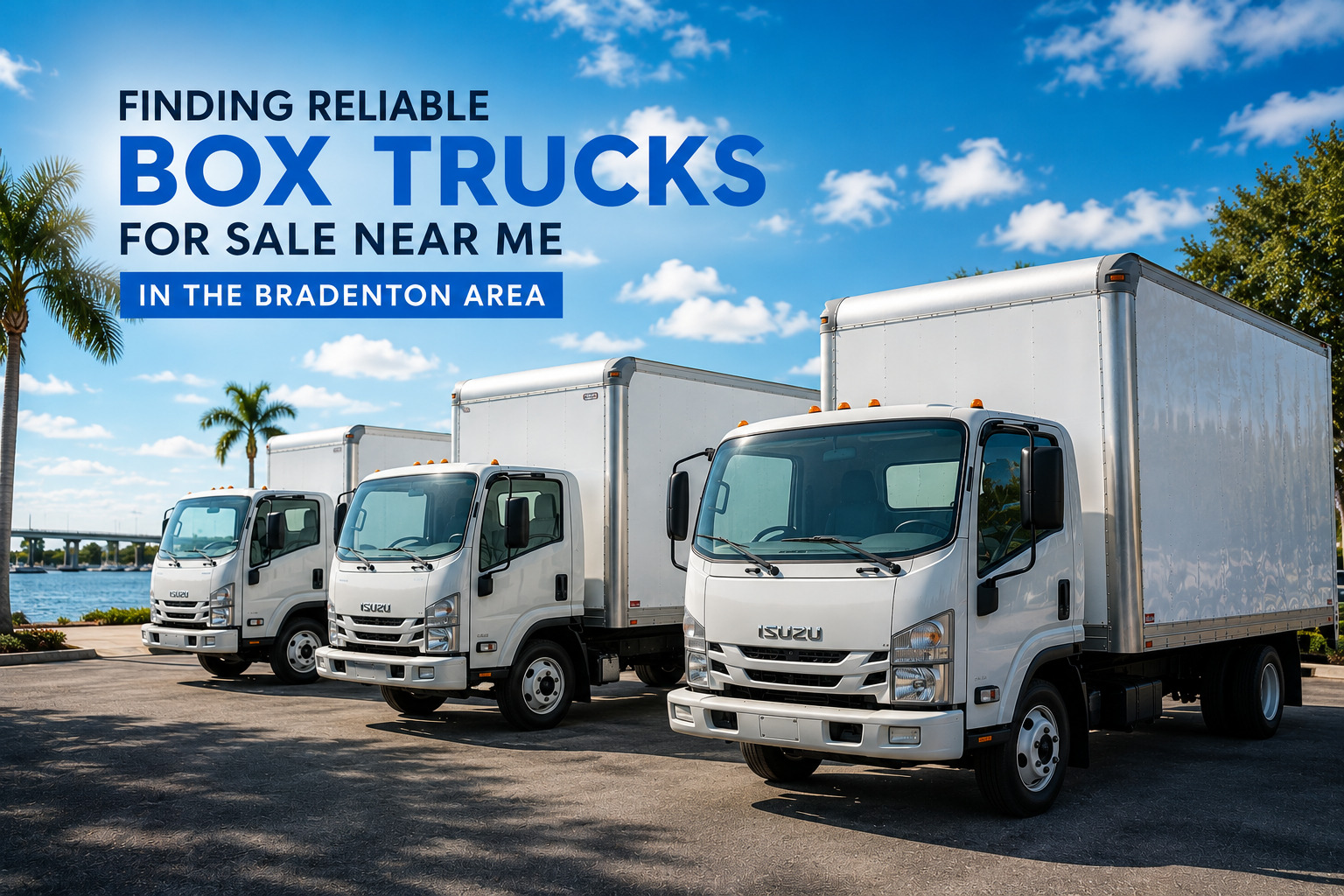
A box truck is a commercial vehicle with an enclosed, generally rectangular cargo body mounted behind a separate cab. Unlike a cargo van, the cargo box is a distinct body rather than part of the cab's original body structure.
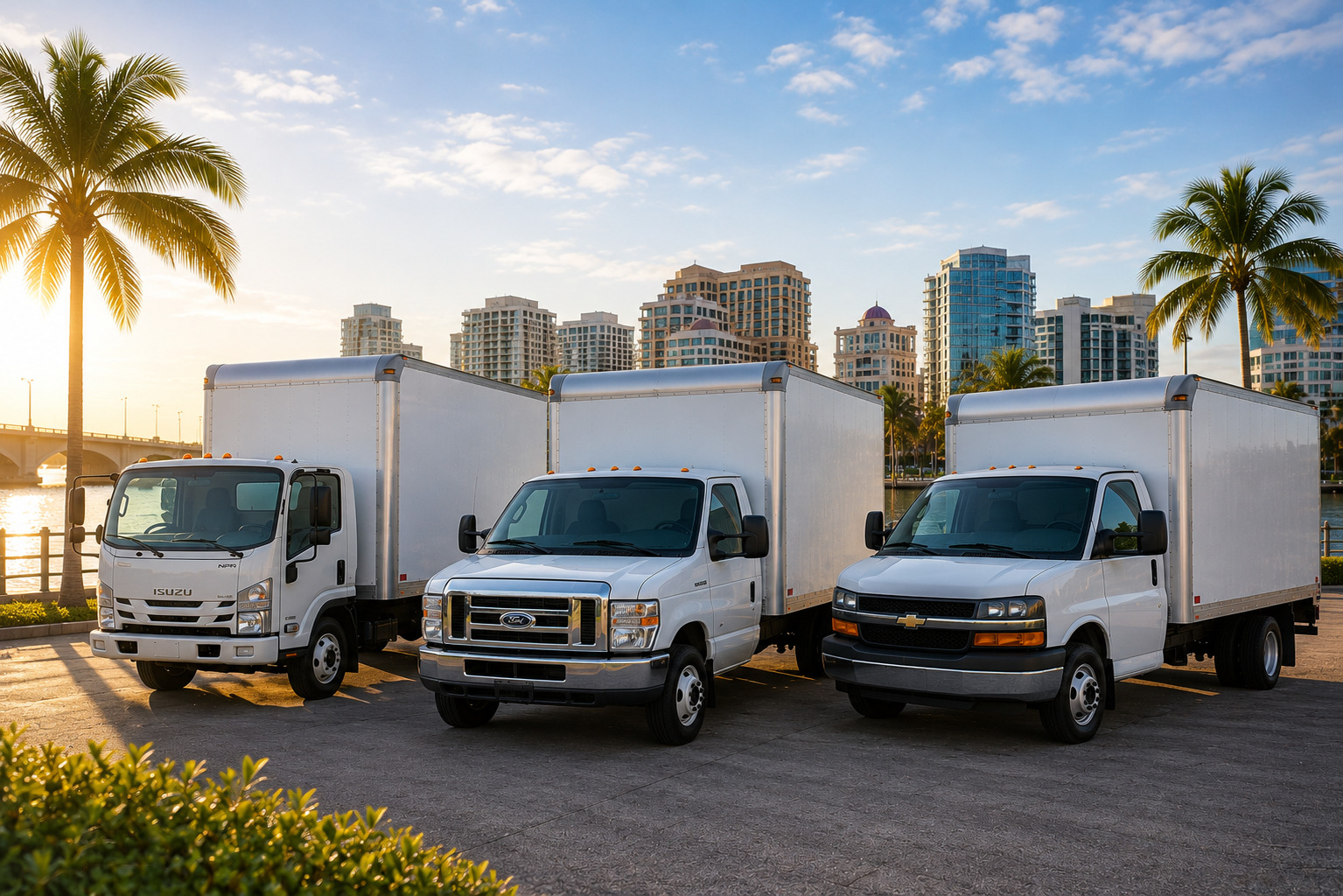
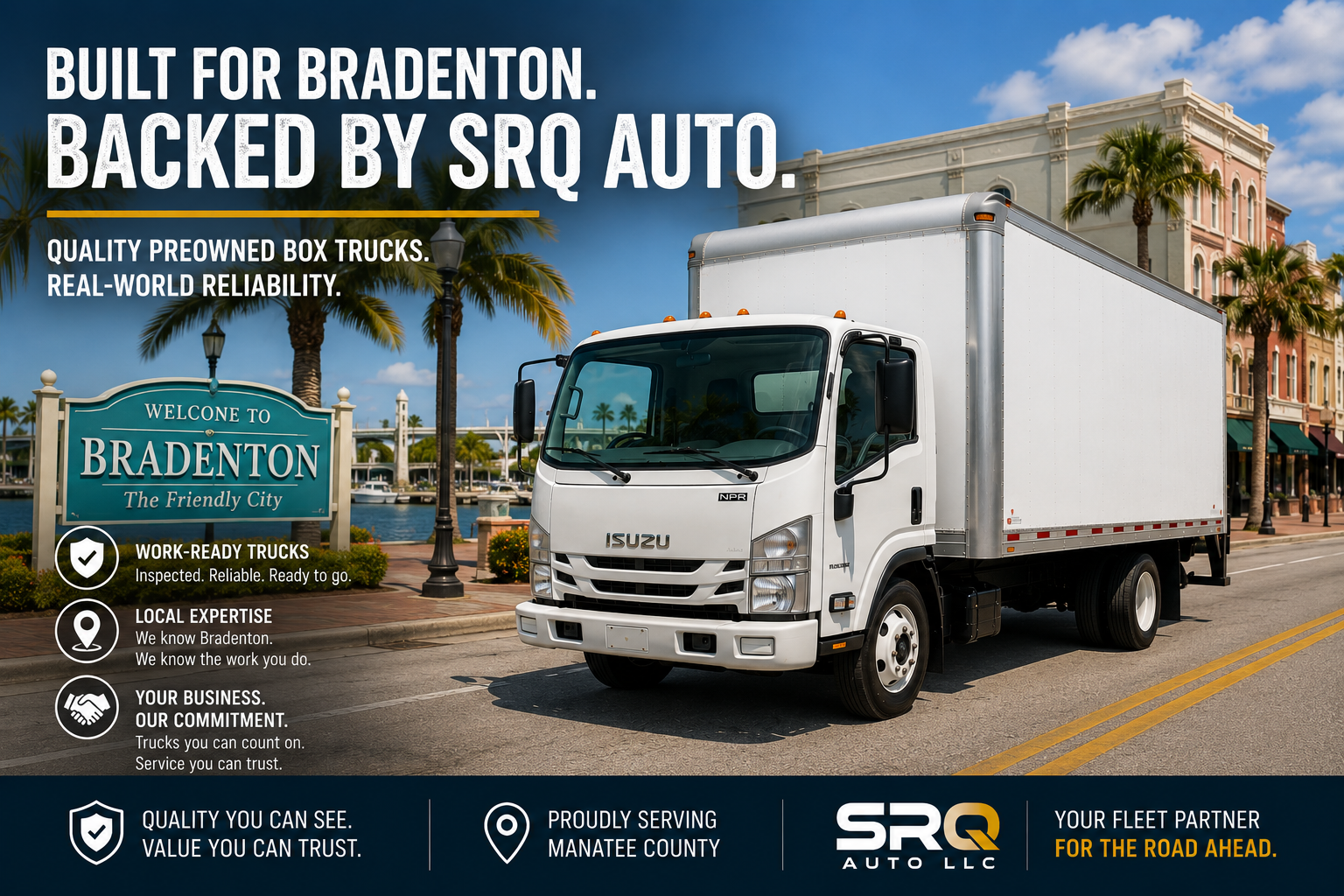
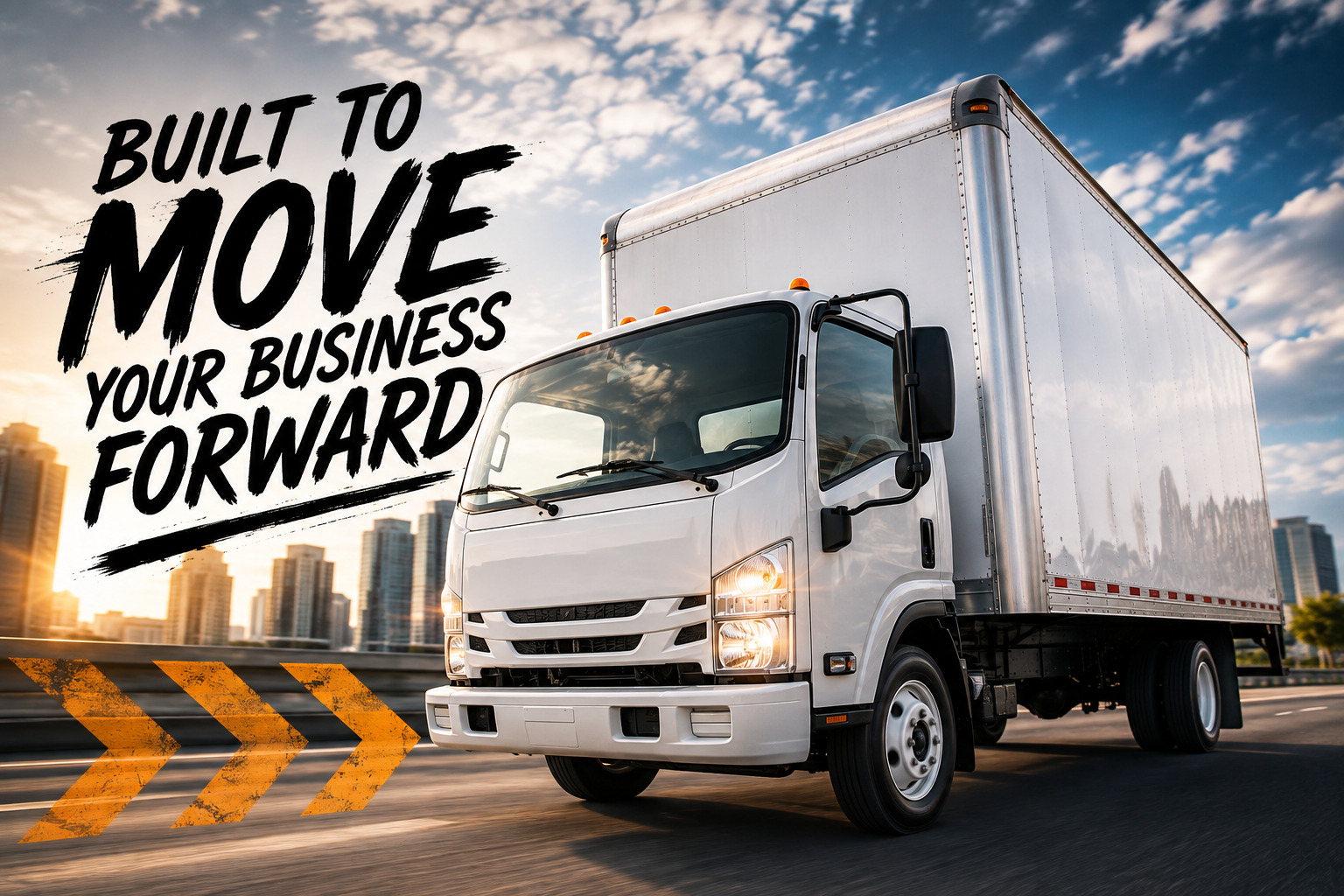
Depending on the chassis and application, box trucks may use conventional cabs, cutaway-style chassis or low-cab-forward designs such as an Isuzu NPR. They are widely used for delivery, moving, furniture and appliance transport, contractor work, route service and other commercial applications.
What SRQ Auto Has Learned About Buying Box Trucks
One of the easiest mistakes is to shop by box length alone. A 16-foot box truck is not automatically interchangeable with every other 16-foot box truck.
The chassis rating matters. The completed truck's weight matters. A liftgate adds weight. Body construction and condition matter. The floor, roof, walls and rear opening matter. Previous commercial use matters.
We look at the complete working vehicle: chassis + body + loading equipment + condition.
See a Box Truck Up Close
Specifications only tell part of the story. Seeing a commercial box truck up close can help you better understand cargo access, body configuration, loading equipment and the details that matter when the truck goes to work.
Watch our box truck video:
▶ Watch the Box Truck Video on YouTube
What Sizes Do Box Trucks Come In?
Used box trucks are commonly encountered in sizes such as 12, 14, 16, 18, 20 feet and larger, although actual body dimensions and configurations vary.
Smaller bodies can work well for businesses prioritizing maneuverability and lighter delivery applications. Larger bodies provide more cargo volume but may increase overall length and change payload, turning, parking and operating considerations.
Our Box Truck Size Guide goes deeper into choosing among common body lengths.
Is a 16-Foot Box Truck a Good Size?
A 16-foot box truck is a common commercial configuration because it can provide substantial enclosed cargo volume without moving into some of the largest straight-truck bodies.
Whether it is right for your business depends on what you carry, how much it weighs, how many stops you make, where the truck operates and how the cargo is loaded.
Do not choose a 16-foot body simply because it is common. Start with the job.
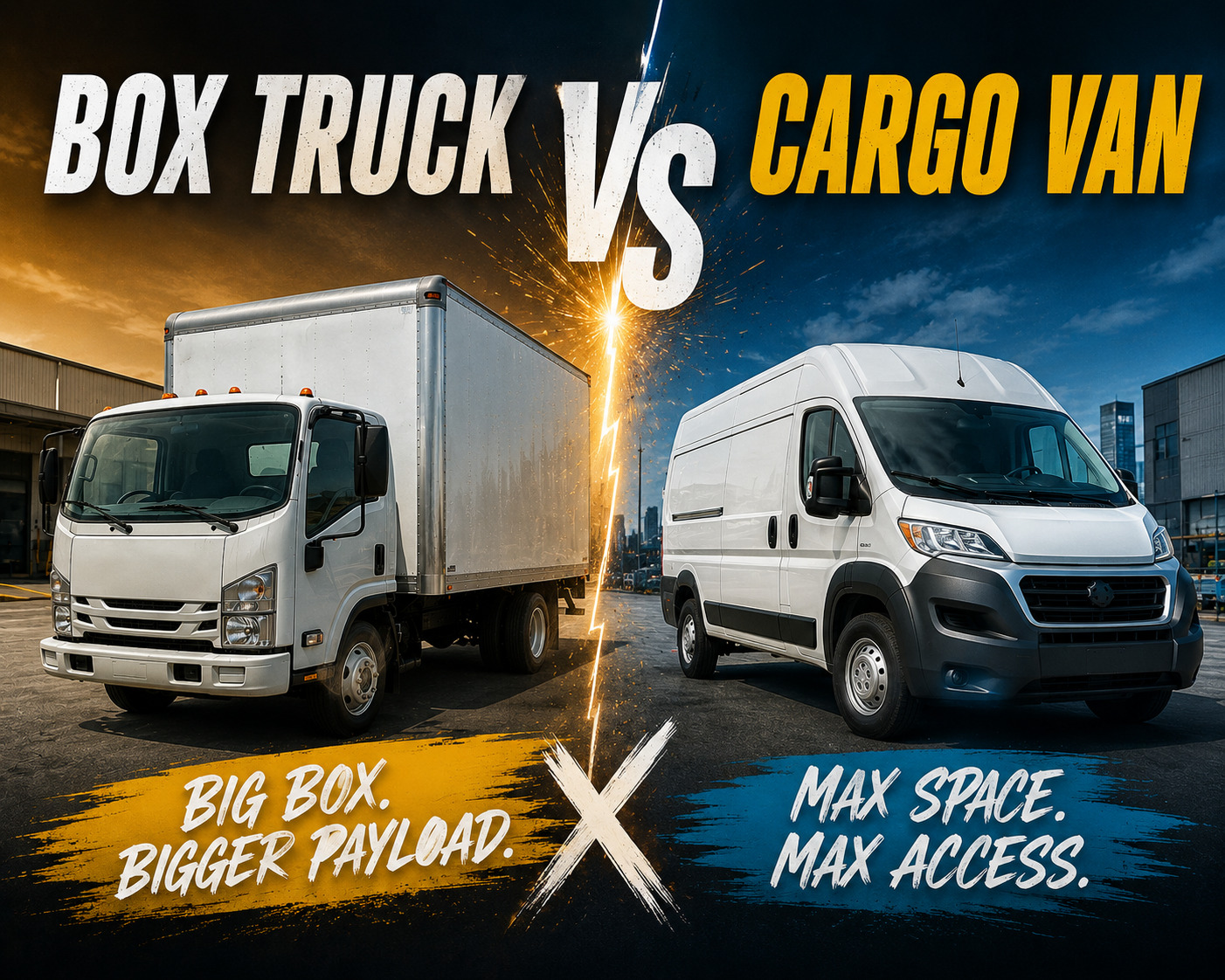
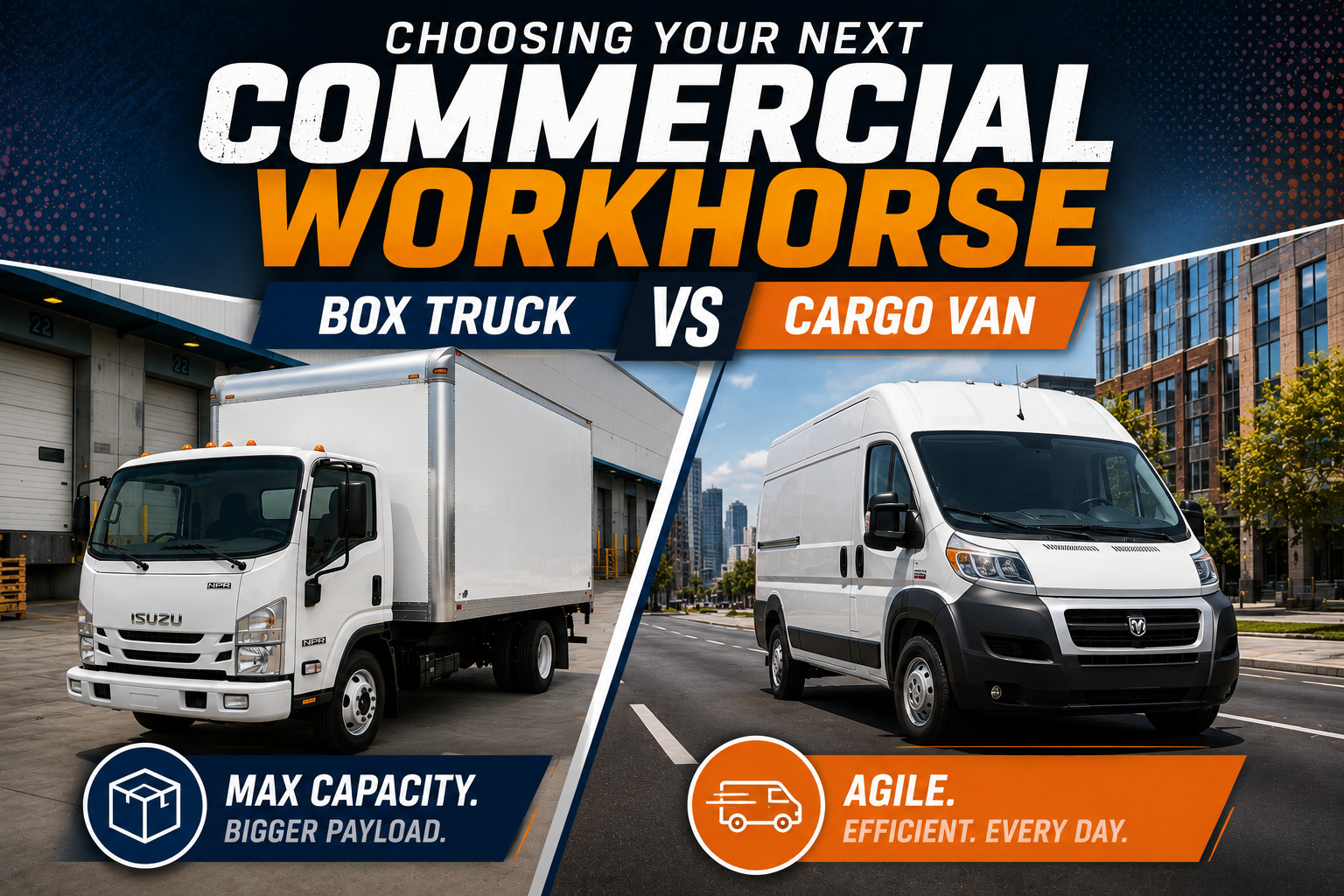
Box Truck vs. Cargo Van: What's the Difference?
A cargo van integrates the cab and cargo area into one vehicle body. A box truck has a separate cargo body behind the cab.
Cargo vans can offer easier cab-to-cargo integration, a lower overall profile in many configurations and excellent maneuverability. Box trucks can provide taller, wider and more rectangular cargo areas, making them useful when cubic volume, palletized cargo or bulky items matter.
The better choice depends on cargo, route, loading method, parking and whether technicians need access to the cargo area as a workspace.
What Is GVWR on a Box Truck?
GVWR—Gross Vehicle Weight Rating—is the maximum rated weight of the complete loaded vehicle.
It is not the same thing as payload.
The truck already has weight from the chassis, box body, liftgate or ramp, fuel, occupants and installed equipment before cargo is added. Usable payload depends on the completed vehicle's actual weight and ratings.
A bigger box does not automatically mean a truck can legally or safely carry more weight.
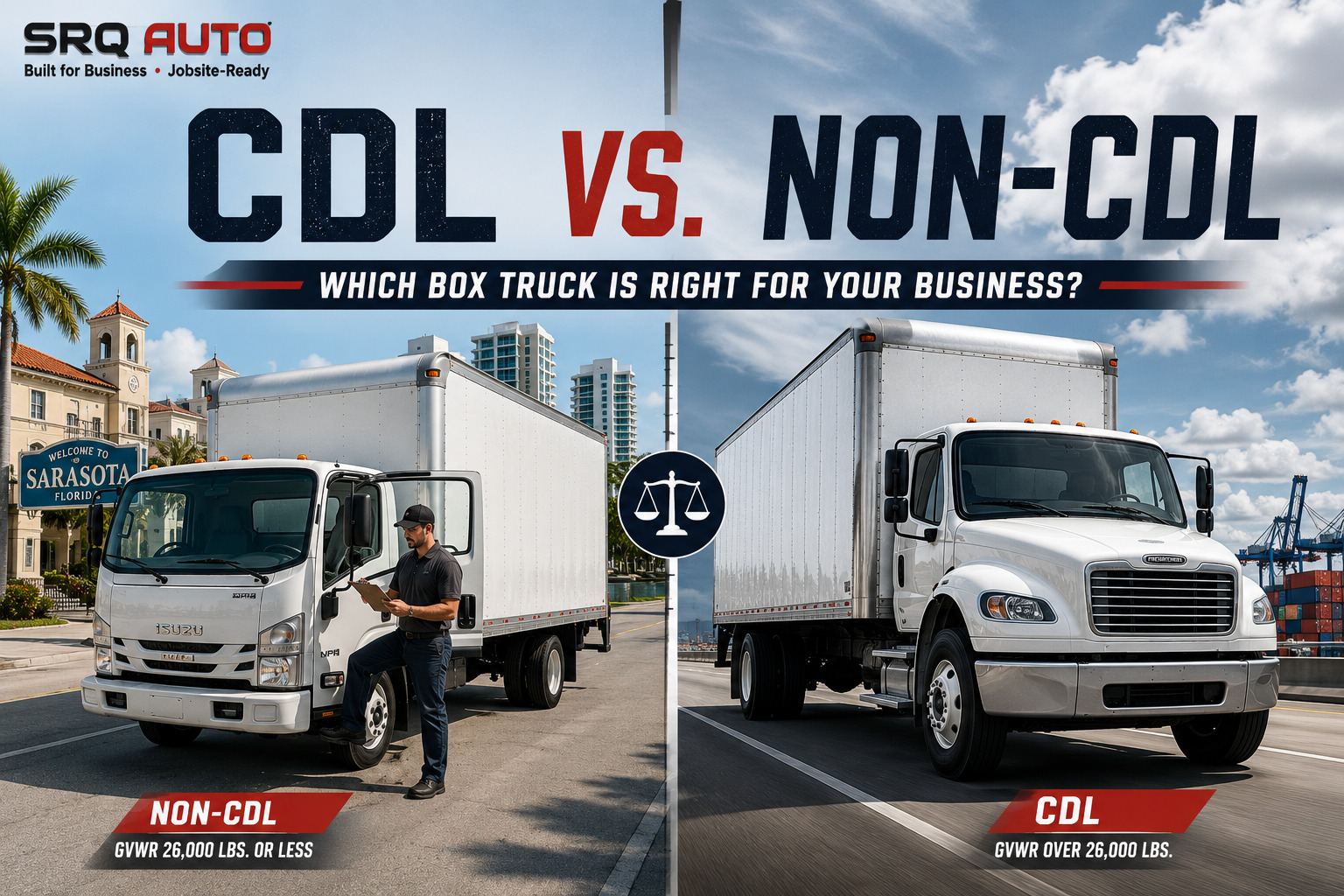
Does Box Truck Size Determine Whether You Need a CDL?
Body length by itself does not determine CDL requirements. Applicable weight ratings, vehicle configuration, use and federal or state requirements are what matter.
Businesses should verify the specific truck's ratings and the licensing rules that apply to their operation rather than assuming that every truck with a particular box length is automatically CDL or non-CDL.
Liftgate vs. Ramp: Which Is Better?
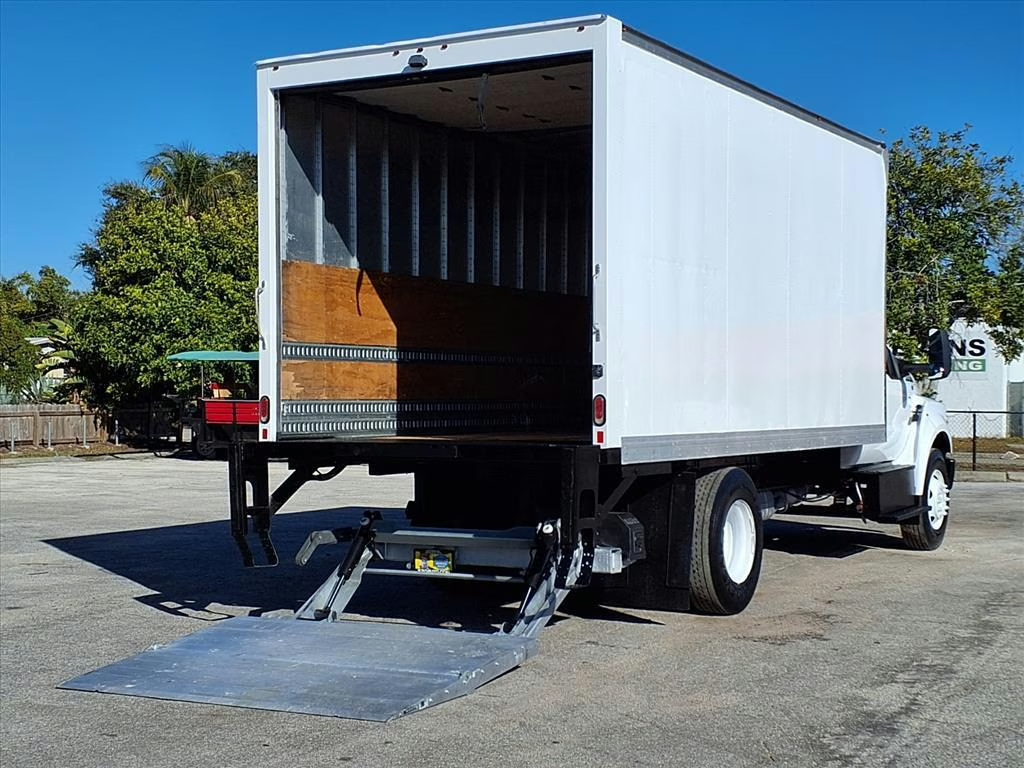
A liftgate can be valuable when heavy items need to move between ground level and the cargo floor without a loading dock. Delivery companies handling appliances, furniture, equipment or palletized freight may benefit substantially from one.
A ramp can be simpler and lighter, but workers must move cargo up or down the incline.
Neither is automatically better. Think about the weight and shape of the cargo, loading locations, frequency of use and how much the loading equipment itself affects vehicle weight.
What Should You Inspect on a Used Liftgate?
Operate it rather than simply confirming that one is installed. Inspect the platform, controls, hydraulic or electrical components, visible mounting areas and overall operation.
Confirm that its capacity and configuration are appropriate for the intended use.
Isuzu NPR vs. Conventional-Cab Box Truck
Low-cab-forward trucks such as the Isuzu NPR place the driver close to the front of the vehicle and can package substantial body space behind a compact cab. This can be useful where maneuverability and forward visibility matter.
Conventional-cab trucks may feel more familiar to drivers accustomed to pickups and traditional work trucks.
Neither layout wins every application. Route, body size, payload, service needs and driver preference should guide the decision.
Read our Isuzu NPR Buying Guide for more detail.
What Businesses Use Box Trucks?
- Delivery and last-mile businesses
- Moving companies
- Furniture and appliance companies
- Contractors and construction businesses
- Event and rental companies
- Food and supply distributors
- Property and facility maintenance operations
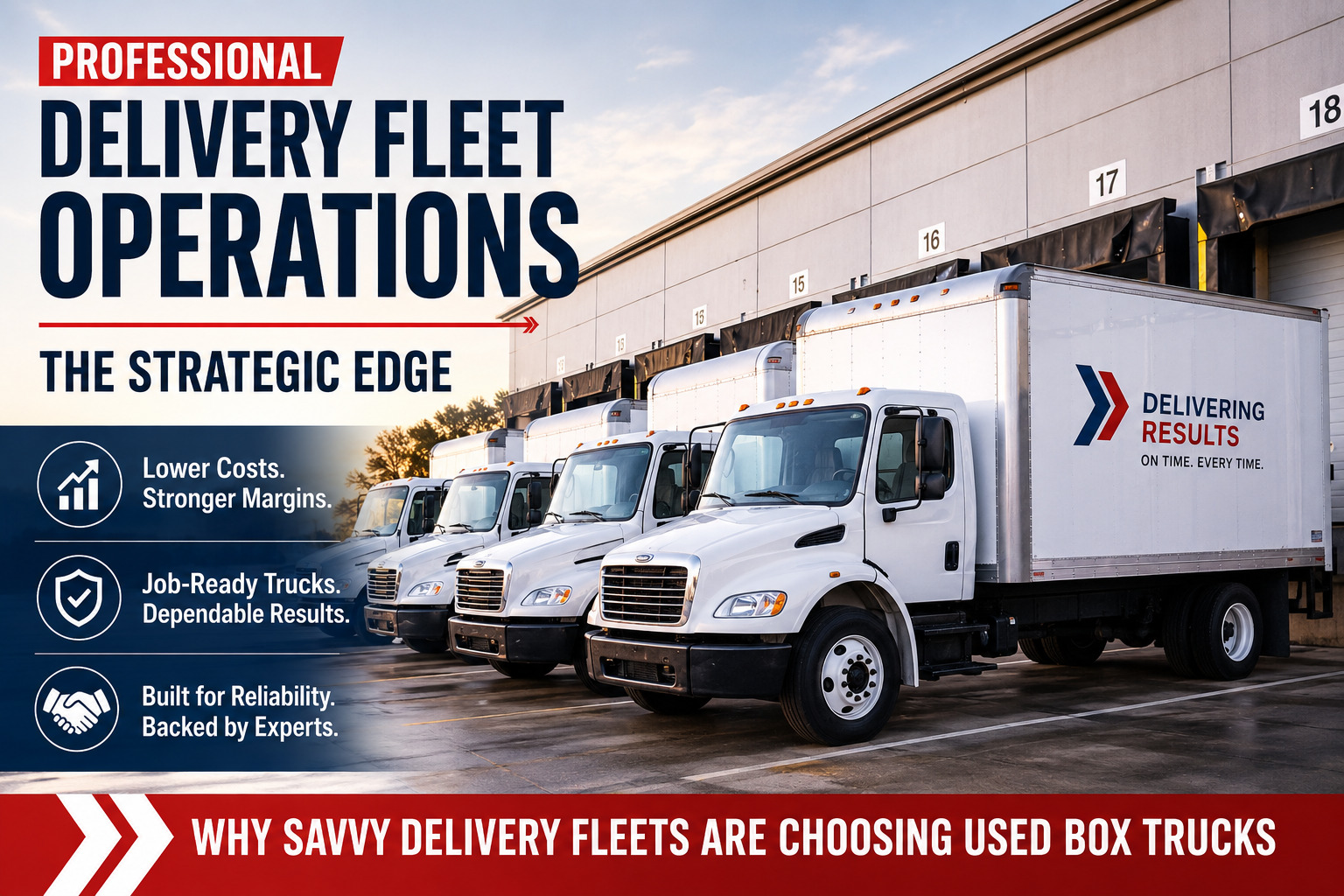
- Commercial fleets and municipalities
The same body length can serve very different industries, which is why the cargo and workflow should drive the purchase.
What Should You Inspect Before Buying a Used Box Truck?
Inspect the chassis and the commercial body as separate parts of the same working asset.
- Engine and transmission: Evaluate current operation and available maintenance history.
- Brakes, steering and suspension: Consider commercial stop-and-go use and previous payload.
- Tires: Check condition, age and appropriate commercial specification.
- Frame and chassis: Look for condition, damage and previous repairs.
- Box floor: Inspect for damage, soft areas, excessive wear and poor repairs.
- Roof and walls: Look for leaks, damage, separation and previous repairs.
- Rear door: Operate the door, tracks, rollers, latches and hardware.
- Liftgate or ramp: Operate and inspect the loading equipment.
- Interior dimensions: Verify the usable space fits the cargo.
Why Box Condition Matters as Much as Truck Condition
A mechanically strong chassis with a damaged cargo body can still become an expensive problem for a business.
Water intrusion, damaged flooring, worn rear-door hardware, wall damage and liftgate problems can affect the truck's usefulness immediately.
The commercial body is not decoration—it is equipment that earns money.
What Does SRQ Auto Look for When Buying a Used Box Truck?
We consider whether the complete truck makes sense for the next business owner. That includes chassis configuration, body size, body condition, loading equipment, previous use, mechanical needs and the likely reconditioning required before retail.
We also prefer configurations that solve common commercial applications rather than buying a truck simply because it is inexpensive.
Why Reconditioning Matters on a Box Truck
Commercial trucks often arrive with years of delivery use behind them. SRQ Auto's Job Ready process focuses on mechanical, functional and presentation needs identified on qualifying vehicles before they are offered to the next business.
Depending on the truck, that can include mechanical service, tires, glass, upholstery, paint/body work and commercial-body preparation.
Learn more about SRQ Auto's Job Ready reconditioning process.
Frequently Asked Questions About Box Trucks
What is a box truck?
A box truck is a commercial vehicle with an enclosed rectangular cargo body mounted behind a separate cab. It is commonly used for delivery, moving and other businesses that need secure enclosed cargo space.
What is the most common box truck size?
Box trucks are available in many body lengths, and no single size fits every operation. Common used configurations include approximately 12, 14, 16, 18 and 20 feet or larger.
Does a 16-foot box truck require a CDL?
Body length alone does not determine CDL requirements. Verify the specific vehicle's weight ratings, configuration, use and applicable licensing requirements.
Is a box truck better than a cargo van?
Neither is universally better. Box trucks can offer more rectangular cargo volume, while cargo vans can provide a more integrated and often more maneuverable package. The right choice depends on cargo and workflow.
What is the difference between GVWR and payload?
GVWR is the maximum rated loaded weight of the complete vehicle. Payload is the usable carrying capacity remaining after accounting for the actual weight of the truck, body, equipment, fuel and other components.
Should I buy a box truck with a liftgate?
A liftgate can be valuable when heavy cargo must be moved between ground level and the cargo floor. Whether you need one depends on cargo, loading locations and workflow.
Find the Right Box Truck at SRQ Auto
SRQ Auto specializes in fully reconditioned, Job Ready commercial vehicles for businesses throughout Florida and nationwide.
Browse Current Box Trucks for Sale
Need help structuring the purchase? Learn about Tailored Commercial Financing or complete our online credit application.
SRQ Auto has earned 550+ 5-Star Google Reviews and offers remote documents and nationwide vehicle shipping for commercial buyers.