What Financing Options Exist for Purchasing a Commercial Shuttle Bus in Florida? The Direct Answer

What Financing Options Exist for Purchasing a Commercial Shuttle Bus in Florida? The Direct Answer
Operating a commercial shuttle service or maintaining a private passenger fleet across Florida demands robust capital planning. Whether you run a luxury hotel transit service in Sarasota, a senior living shuttle program in Lakewood Ranch, or an airport transport operation bridging Bradenton and Tampa International Airport, securing the right capital structure is just as critical as selecting the right chassis. Florida business owners have access to five main financial structures tailored specifically for commercial shuttle buses: Terminal Rental Adjustment Clause (TRAC) leases, conventional commercial auto loans, Small Business Administration (SBA 7a and 504) loan programs, municipal tax-exempt lease-purchase agreements, and flexible in-house dealer financing packages.
Navigating these capital options requires understanding how each structure impacts cash flow, working capital reserves, balance sheet liabilities, and end-of-term vehicle equity. At About Us at SRQ Auto LLC in Bradenton, FL, we assist fleet managers and business owners across the Suncoast in matching their operational model with the optimal finance arrangement. Explore our Used Shuttle Bus Inventory to see current passenger van and shuttle bus options ready for immediate deployment.
Commercial vehicle lenders evaluate risk differently than retail automotive financiers. Because shuttle buses accumulate higher annual mileage and serve commercial revenue purposes, lenders look closely at debt service coverage ratios (DSCR), corporate credit history, time in business, and vehicle utilization rates. By exploring specialized commercial financing products through Commercial Financing, Florida businesses can preserve liquidity while expanding passenger transit capabilities with minimal upfront capital outflow.

TRAC Leases vs. Traditional Loans for Florida Commercial Shuttle Fleets

Terminal Rental Adjustment Clause (TRAC) Leases

A TRAC lease is a specialized commercial structure that combines the cash flow advantages of leasing with the flexibility of vehicle ownership. Under a TRAC agreement, a predetermined residual value is established at lease inception based on projected mileage and operating conditions. Florida shuttle operators benefit from lower monthly payments compared to conventional debt because payments cover only the vehicle's anticipated depreciation during the term.
At the conclusion of a TRAC lease, the lessee has the option to purchase the shuttle bus for the residual amount, sell the vehicle on the open market, or trade it in. If the resale price exceeds the agreed residual value, the lessee receives 100% of the financial gain. Conversely, if market value falls below residual, the lessee pays the difference. For high-mileage hotel or airport shuttles in Sarasota and Bradenton, proper mileage management ensures maximum financial return under TRAC terms.

Traditional Commercial Auto Loans

Conventional commercial vehicle loans function similarly to standard auto finance, offering fixed monthly payments across 36 to 72 months. The borrowing business takes immediate title ownership while the lender holds a commercial lien until full repayment. Traditional loans are ideal for operators who plan to run their shuttle buses long-term (7 to 10+ years) and accumulate significant mileage without worrying about residual value obligations.
While conventional commercial loans generally require a down payment between 10% and 20% and carry higher monthly payments than TRAC leases, they build true asset equity on your corporate balance sheet. Commercial operators in Florida can also take immediate advantage of full depreciation tax write-offs under federal tax codes. You can browse our Used Commercial Inventory to compare vehicles suitable for loan or lease acquisition.

Leveraging SBA 7(a) and 504 Loans for Florida Shuttle Bus Acquisition
Small Business Administration (SBA) loan programs offer attractive long-term capital solutions for growing transportation providers across Manatee and Sarasota counties. The SBA 7(a) loan program is the government's primary flag program for providing financial assistance to small businesses. When applied to commercial vehicle acquisitions—such as 15-passenger shuttle vans or 24-passenger cutaway buses—SBA 7(a) guarantees allow approved lenders to extend term lengths up to 10 years for equipment and rolling stock.
Longer term amortization significantly lowers monthly debt service obligations compared to standard 48-month or 60-month commercial auto loans. Furthermore, SBA financing allows businesses to bundle auxiliary expenses into a single loan package—including custom vehicle graphics, ADA wheelchair lift installations, farebox systems, and extended commercial vehicle protection plans.
For expanding transportation providers purchasing multiple shuttle units or building dedicated fleet maintenance facilities, the SBA 504 loan program provides fixed-rate, long-term financing. Working with a Certified Development Company (CDC) and a local banking partner enables Florida fleet owners to lock in competitive interest rates with minimal down payment requirements, preserving liquid capital for operational growth and payroll.

Maximizing Section 179 Tax Deductions and Depreciation on Commercial Vehicles

Immediate Expense Deduction

Internal Revenue Code Section 179 allows qualifying Florida businesses to write off the entire purchase price of eligible commercial shuttle buses during the tax year the vehicle is placed into service. Because heavy commercial shuttles exceeding 6,000 lbs. Gross Vehicle Weight Rating (GVWR) are classified as qualified non-personal commercial vehicles, they generally escape passenger car depreciation caps.

Bonus Depreciation Advantage

In addition to Section 179 limits, bonus depreciation applies to qualified new and pre-owned commercial vehicles placed into service. This dual tax treatment allows shuttle operators to drastically reduce reported taxable income, directly translating to preserved cash flow for business expansion. Learn more details on our dedicated Used Vehicle Tax Deductions guidance page.

Florida Corporate Tax Impact

Florida imposes no state personal income tax, and corporate tax-paying entities benefit significantly when aligning capital acquisitions with accelerated depreciation schedules. By placing a commercial shuttle bus into service before December 31st, your business can offset operational revenues from peak Florida tourist seasons.

Where Can Businesses Buy or Lease Commercial Shuttle Buses Near Bradenton, Florida?

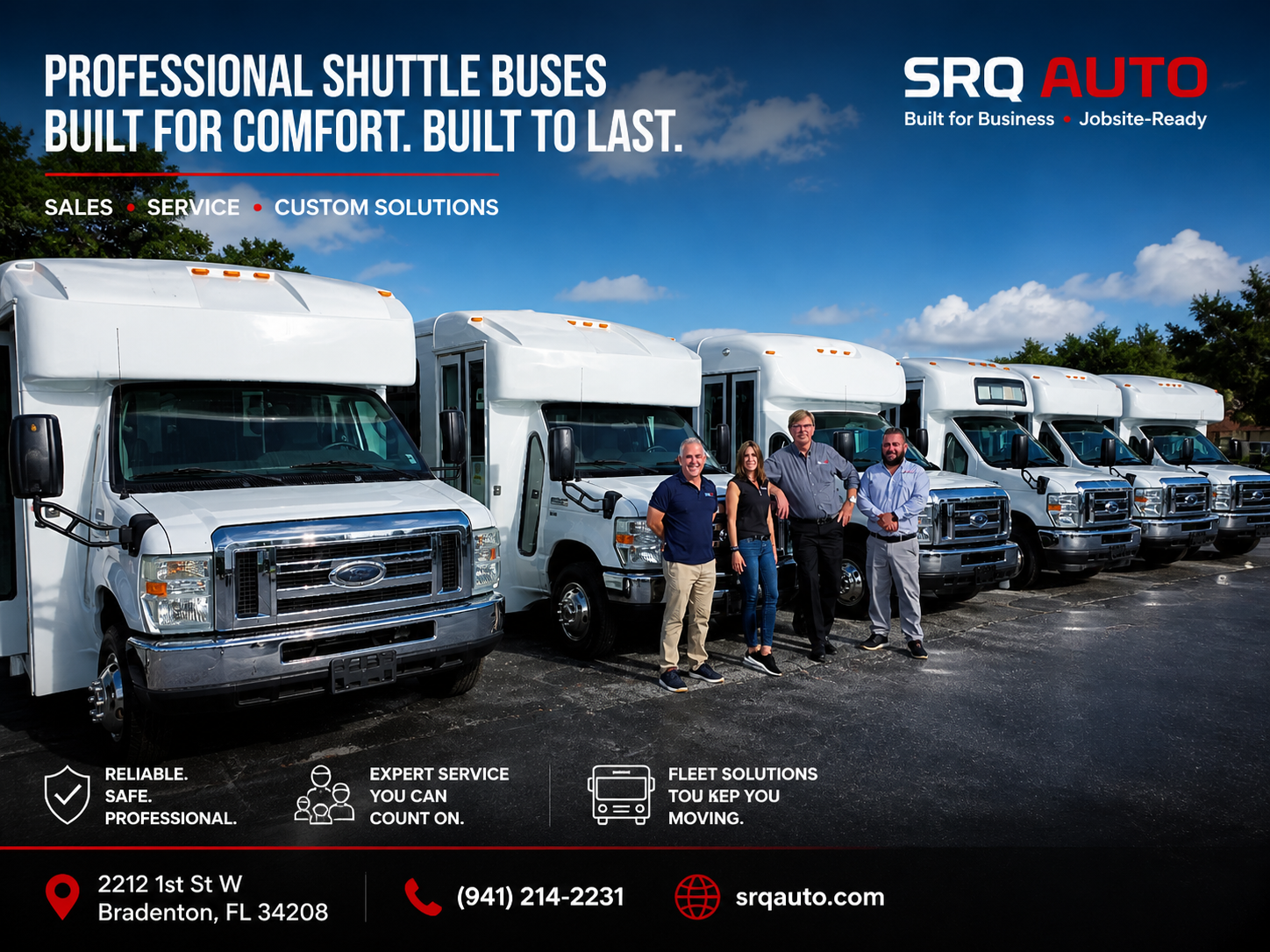
When sourcing commercial shuttle buses on the Gulf Coast, working with a dedicated commercial vehicle specialist makes all the difference. Located conveniently at 2212 1st St, Bradenton, FL 34208, SRQ Auto LLC serves businesses throughout Bradenton, Sarasota, Venice, Palmetto, Lakewood Ranch, and surrounding areas. Feel free to Get Directions to SRQ Auto LLC to visit our dedicated commercial facility.
Unlike retail auto lots that carry occasional vans, SRQ Auto LLC specializes exclusively in work-ready commercial fleet units. Every vehicle undergoes rigorous mechanical inspection and reconditioning under our Job Ready Promise. Operators searching for specialized equipment can also browse our related lineup including Used Box Truck Inventory, Used Cargo Van Inventory, Used Service Truck/Van Inventory, and Landscape Dump Trucks.
Our commercial finance center partners directly with regional credit unions, national commercial lenders, and specialized equipment lease underwriters. You can complete our streamlined online pre-qualification or Call us at (941) 214-2231 to speak directly with our commercial fleet consultants.

How Do I Choose the Right Shuttle Bus Size for My Group?

12 to 15 Passenger Vans

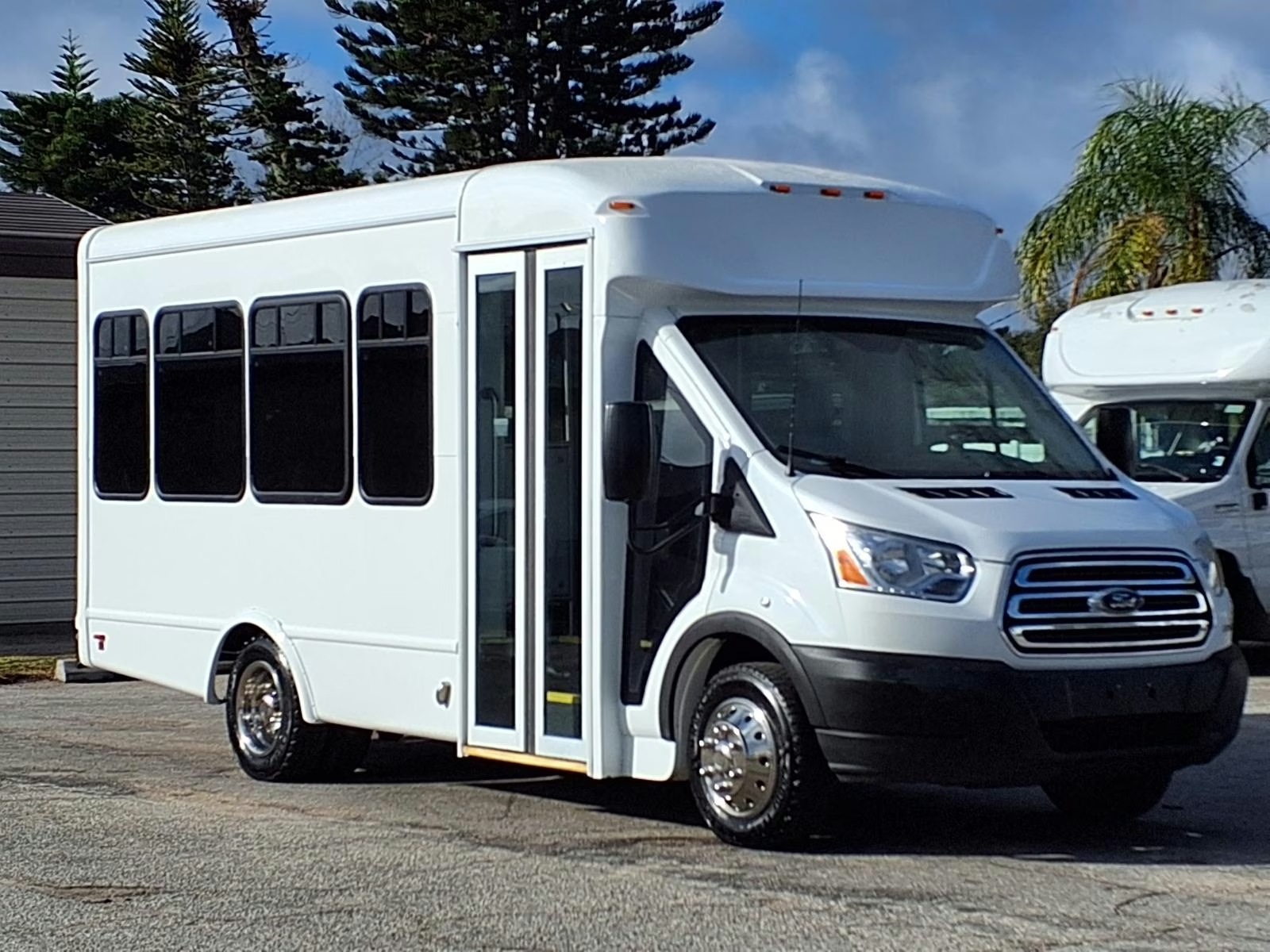
Ideal for boutique hotel transfers, executive airport runs, and non-profit community programs. These full-size passenger vans operate on standard light-duty chassis (Ford Transit, Ram ProMaster, Chevy Express), offering superior fuel economy and easy maneuverability in crowded Florida downtown corridors.

16 to 24 Passenger Cutaways

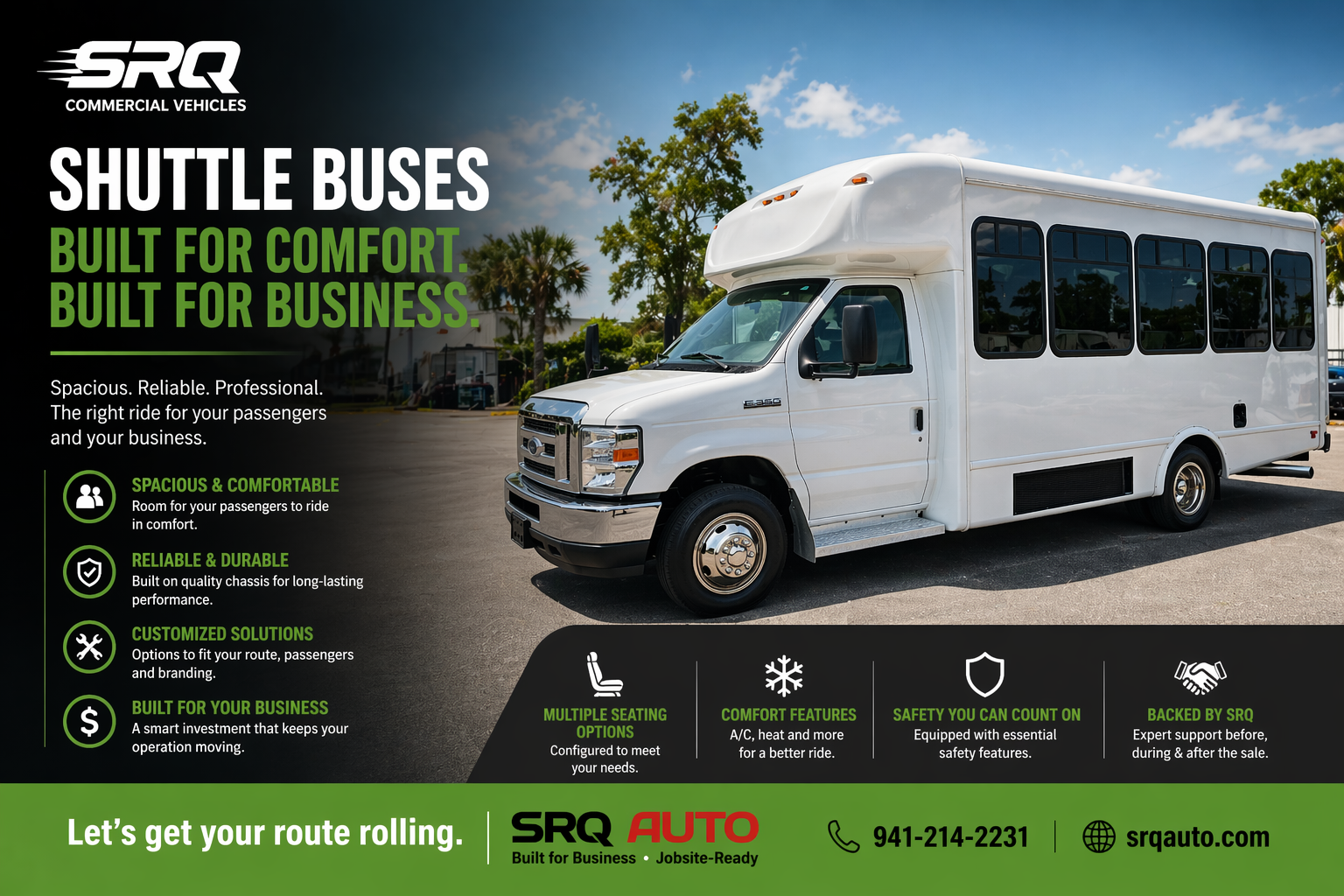
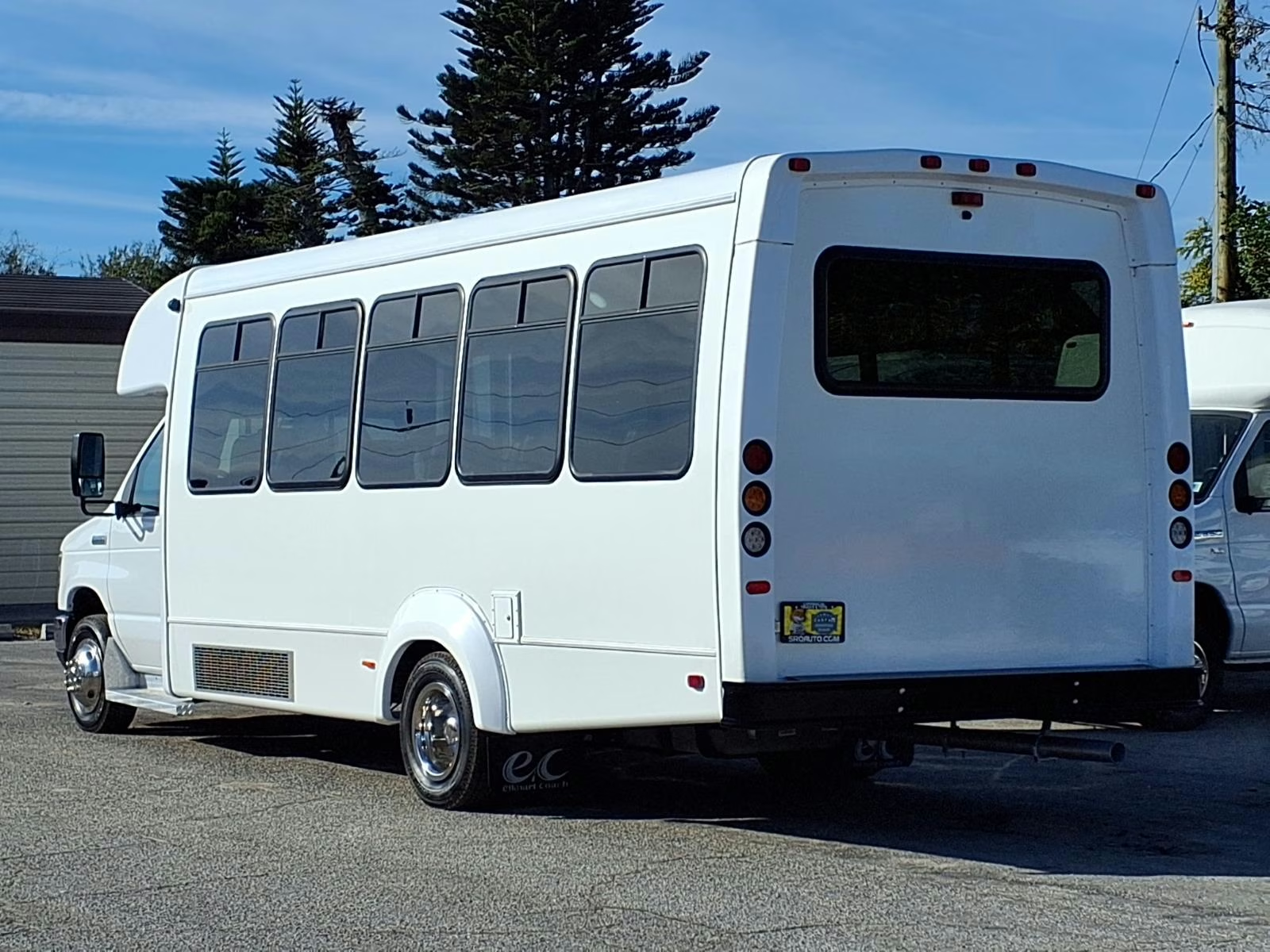
The standard workhorse for regional transit, church groups, and retirement community outings. Built on heavy-duty Ford E-350/E-450 or Chevy Express 3500/4500 cutaway chassis, these buses provide wide center aisles, high headroom, dual rear wheels, and dedicated luggage bays.

25 to 30+ Passenger Buses

Designed for heavy-volume transit, tour operations, and municipal park-and-ride routes. These larger cutaway or medium-duty chassis units offer maximum seating capacity, ADA-compliant wheelchair lifts, and heavy-duty dual HVAC systems essential for Florida summers.

How Do I Compare Shuttle Bus Value by Passenger Count?
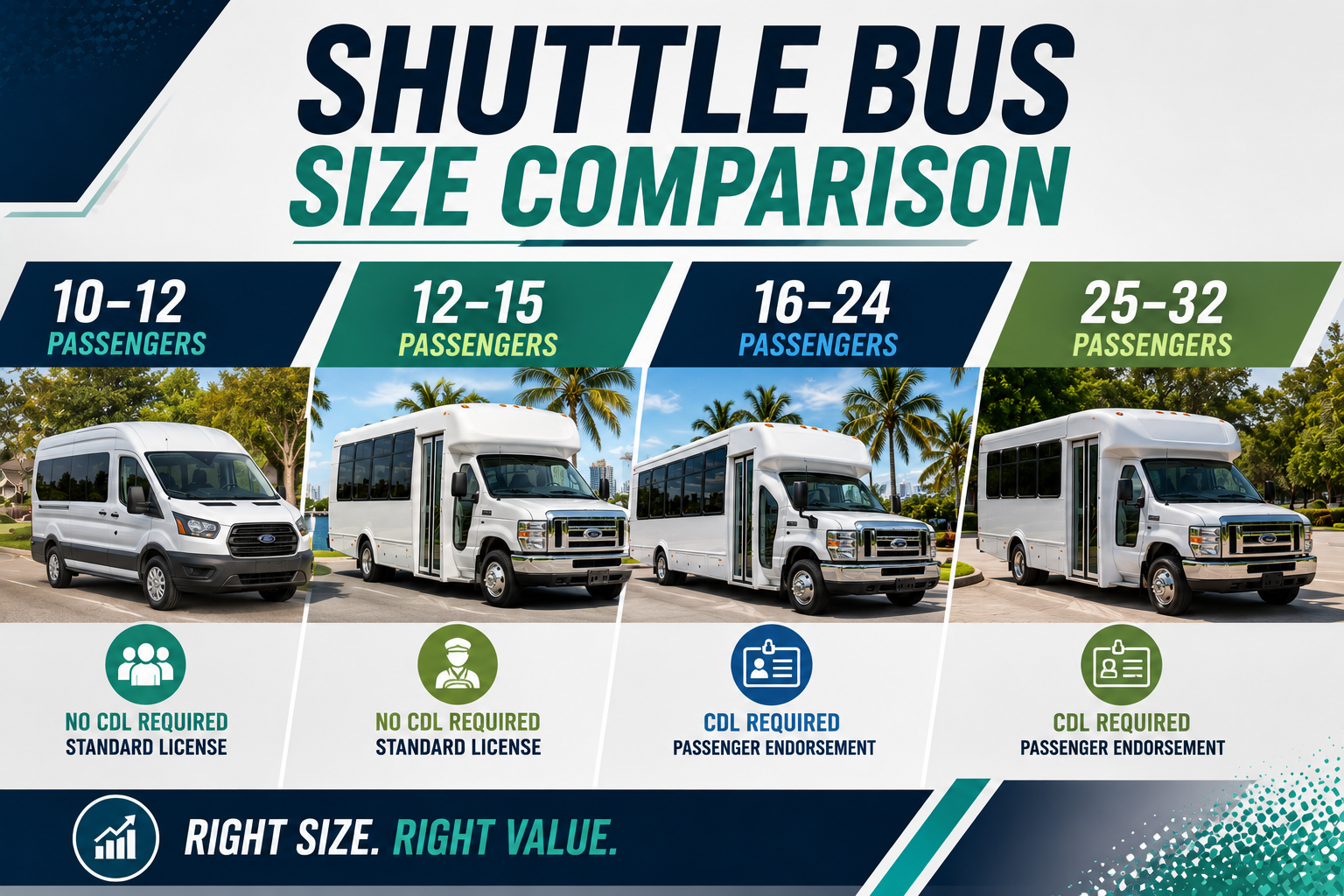
Evaluating shuttle bus value requires analyzing per-seat capital cost, ongoing operational expenditure, and driver licensing requirements. In Florida, vehicles designed to carry 16 or more passengers (including the driver) require the operator to hold a Commercial Driver's License (CDL) with a Passenger endorsement. If your business faces driver staffing shortages, staying at or below 15 passenger positions enables standard licensed employees to drive.
The table below breaks down key operational metric comparisons across popular commercial shuttle size classes available in the pre-owned market:

Shuttle Class

Passenger Capacity

CDL Required (FL)

Avg Fuel MPG

Primary Use Case

Low-Roof Transit Van

10 - 12

No

14 - 17 MPG

Hotel & VIP Airport

High-Roof Passenger Van

12 - 15

No

13 - 16 MPG

Resort & Corporate Transit

Mid-Size Cutaway Bus

16 - 24

Yes

8 - 11 MPG

Senior Living & Regional

Large Cutaway Bus

25 - 32

Yes

6 - 9 MPG

Tour & Municipal Shuttle

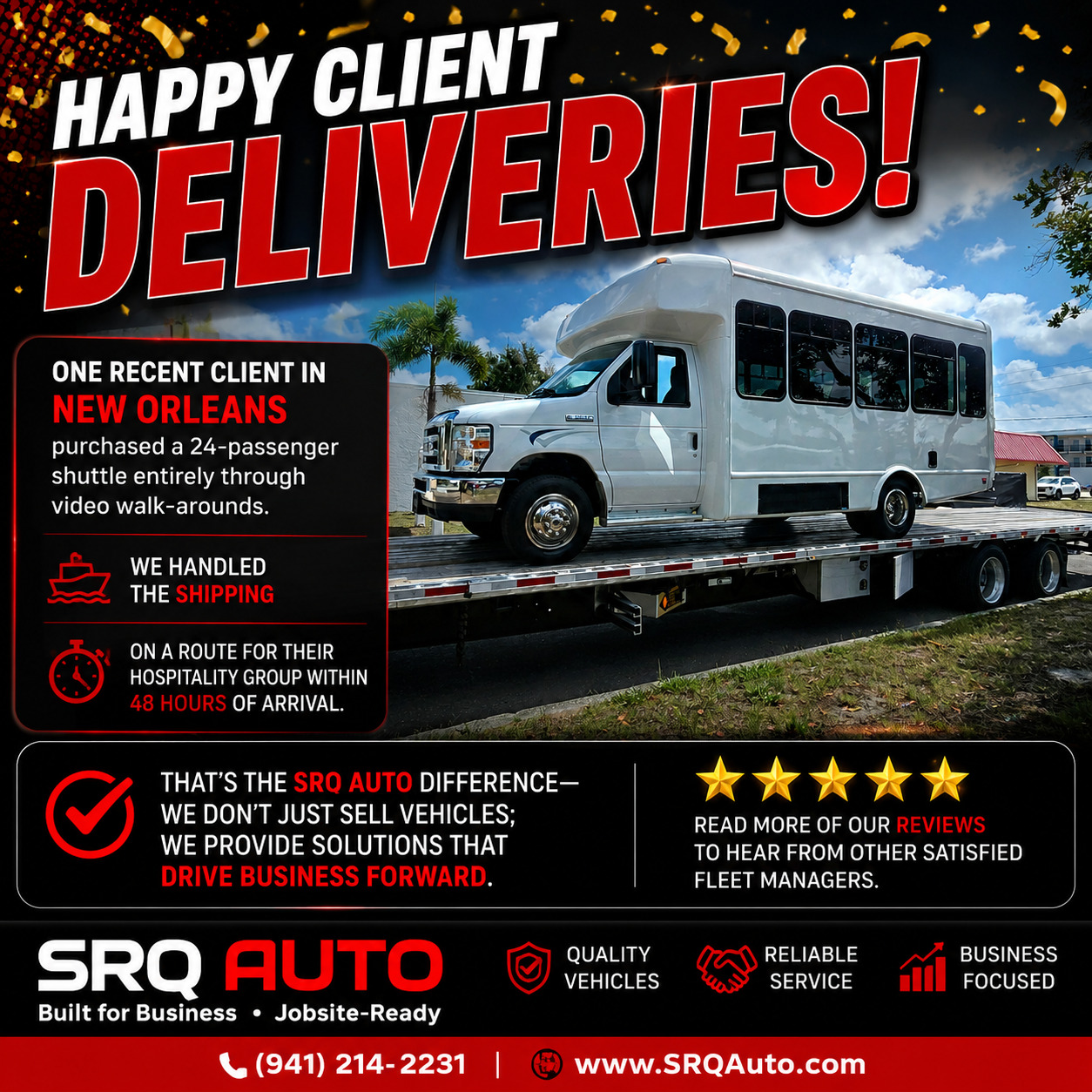
For custom fleet advice, explore our Recent Deliveries to see how other Gulf Coast organizations structured their transit setups.

The Hidden Costs of an Unreliable Shuttle Bus on Business Operations

Purchasing an bargain-priced commercial bus without verifiable service records often leads to financial traps. In commercial passenger transit, vehicle unreliability drains corporate capital through several compounding channels: emergency towing costs, premium shop labor rates, third-party vehicle rental charges, and driver overtime paid while waiting for roadside service.
In addition to repair bills, repeated breakdowns cause accelerated depreciation and sudden vehicle equity loss. When a shuttle bus suffers persistent mechanical issues, its market trade-in value drops sharply. Choosing quality pre-owned inventory backed by dedicated reconditioning ensures your initial financing capital builds durable asset value rather than funding unexpected shop repairs.
Protect your fleet investment with specialized commercial protection policies. Check out our comprehensive Commercial Warranty Options designed specifically for active commercial shuttle vehicles.

What Are the Most Common Mechanical Failures on Commercial Shuttle Buses?
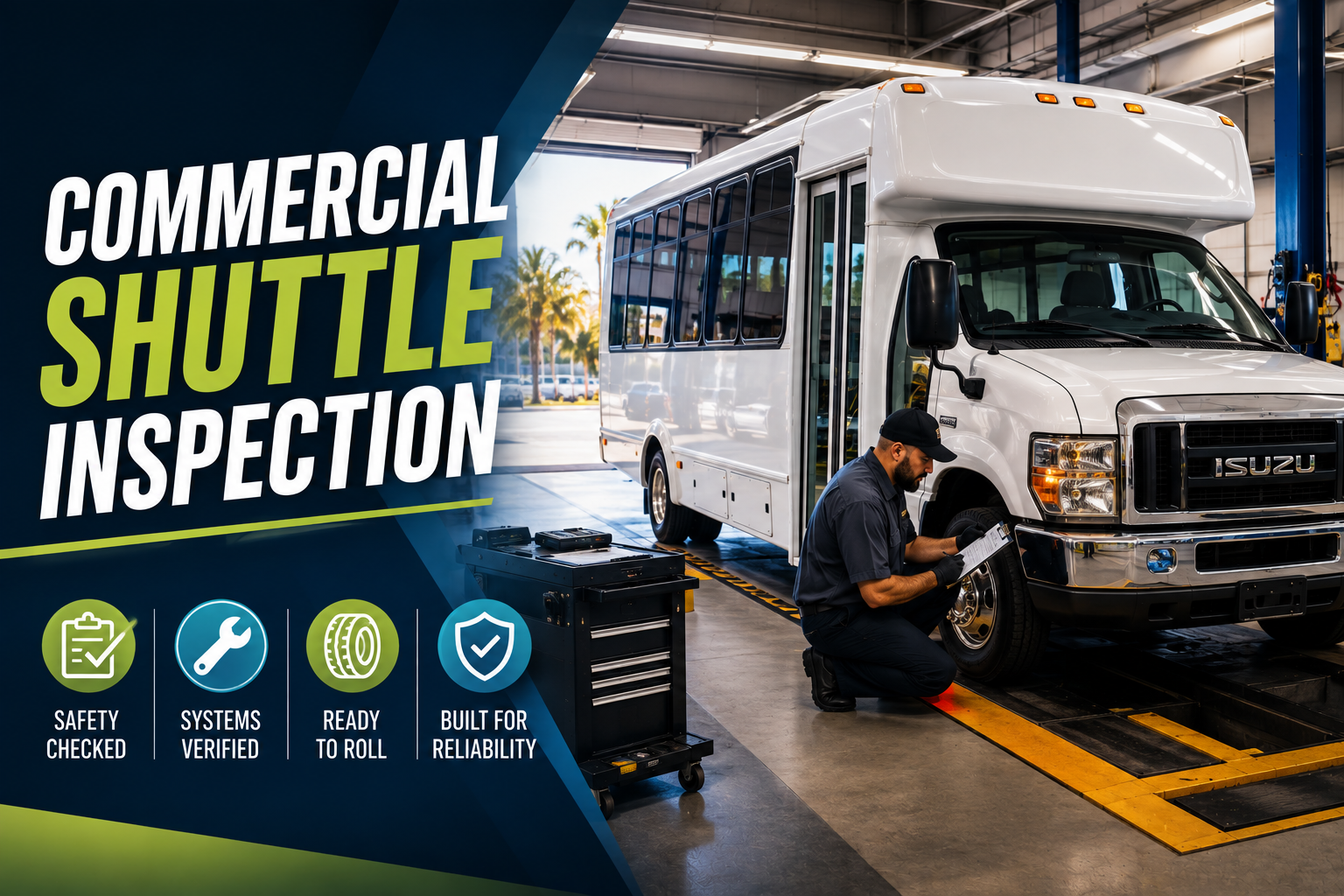
HVAC & AC System Overheat

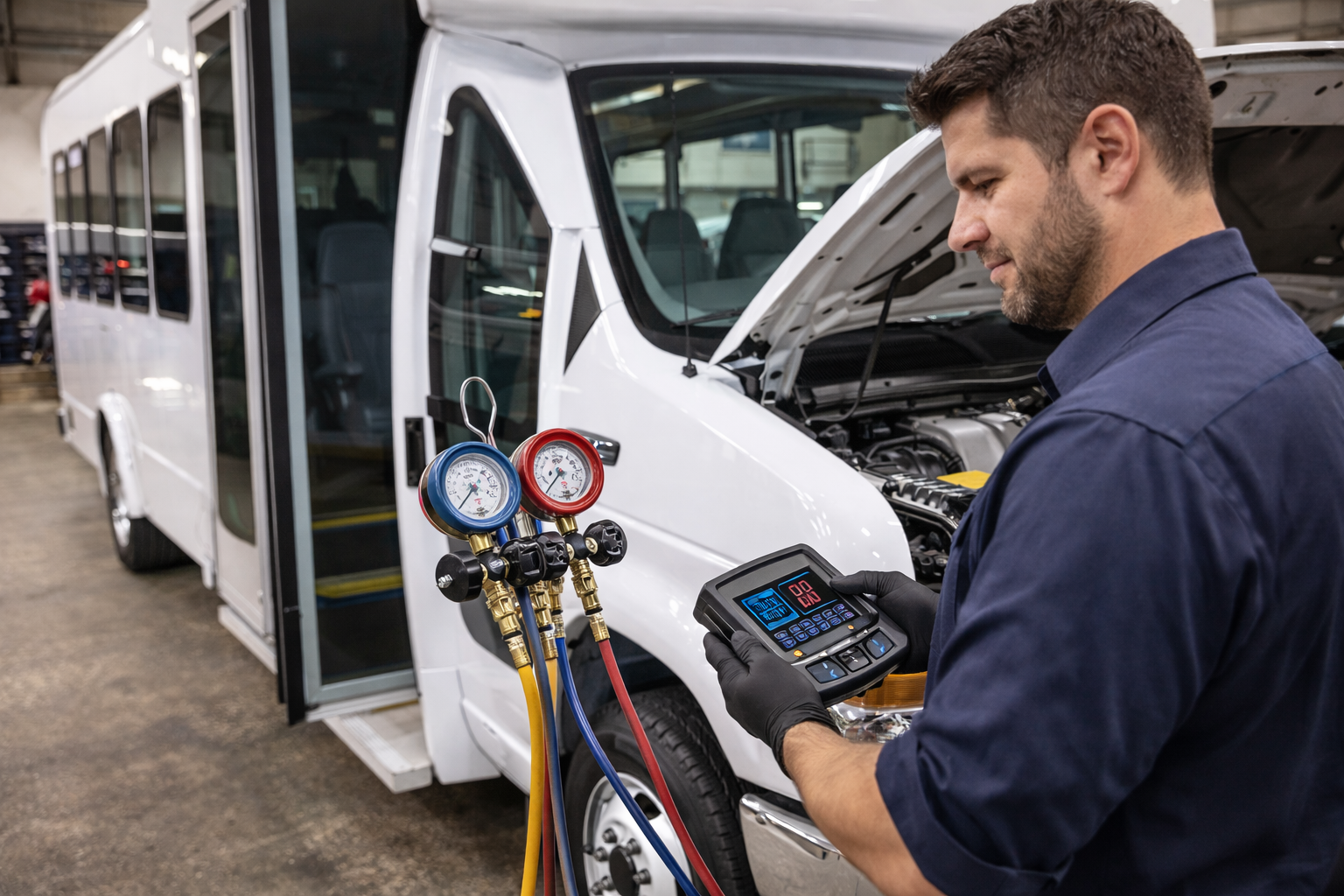
Florida's intense high-temperature summer climate places severe strain on shuttle bus air conditioning compressors, auxiliary rear evaporators, and condenser fans. Inadequate AC maintenance causes rapid passenger discomfort and costly compressor lockups.

Transmission & Drivetrain Wear

Frequent stop-and-go driving with heavy passenger payloads builds excessive thermal stress inside automatic transmission fluids. Slipping bands, torque converter wear, and fluid breakdown are major failure risks on non-serviced shuttles.

Electrical & Braking Systems

High electrical draw from interior passenger lighting, dual AC blowers, and power entry doors can overwhelm stock alternators. Heavy vehicle weight also accelerates brake pad and rotor wear, requiring commercial-grade replacement components.

How Much Does Commercial Shuttle Bus Downtime Cost a Business?

Daily Downtime Cost Formula

Calculating the true cost of shuttle bus downtime requires adding direct revenue losses and wasted operational overhead. Business owners can apply this standard financial formula: Total Daily Downtime Loss = (Lost Daily Passenger Revenue) + (Wasted Driver Payroll) + (Temporary Vehicle Rental Fee) + (Contract Penalty Fines)
For a typical Florida resort or contract transit provider, losing a single 24-passenger shuttle for 3 days can cost between $1,500 and $4,500 in lost income and substitute vehicle costs alone—often exceeding the annual cost difference of buying a premium, job-ready bus.

Contract SLA Risk

Corporate, municipal, and private transit contracts usually contain strict Service Level Agreements (SLAs) regarding on-time performance and vehicle availability. Fleet downtime directly triggers contractual default clauses or financial penalties.
Investing in pre-inspected commercial shuttles from Reviews verified dealerships like SRQ Auto LLC eliminates early operational failures and protects your ongoing revenue streams.

What Are the Indirect Financial Impacts of Shuttle Bus Breakdowns?

Reputational Harm & Customer Churn

In hospitality, healthcare, and corporate transportation, reliability is your primary service brand. Stranded passengers on airport routes or delayed senior residents leave negative online reviews and cancel recurring service subscriptions. The cost of acquiring new corporate accounts far outweighs the investment in reliable fleet equipment.

Insurance & Liability Increases

Roadside breakdowns on Florida highways elevate safety risks for passengers. Emergency roadside assistance calls and safety incidents can increase commercial liability insurance premiums during annual policy renewals, adding persistent overhead to fleet operational budgets.

Commercial Loan Approval Checklist: Credit Scores, Financials, and Down Payments

1. Corporate Financials

Commercial underwriters require 2 years of corporate business tax returns, profit & loss statements, year-to-date balance sheets, and recent bank statements demonstrating healthy cash reserves.

2. Credit Profile & History

Lenders check business credit scores (Paydex, Experian Commercial) and primary owner personal credit. Strong credit profiles qualify for zero-down options and competitive interest rates.

3. Contracts & Down Payment

Active transit contracts or proof of recurring revenue routes strengthen applications. Expect standard down payments between 0% and 20% depending on business credit age.

Apply for Commercial Shuttle Financing at SRQ Auto LLC in Bradenton
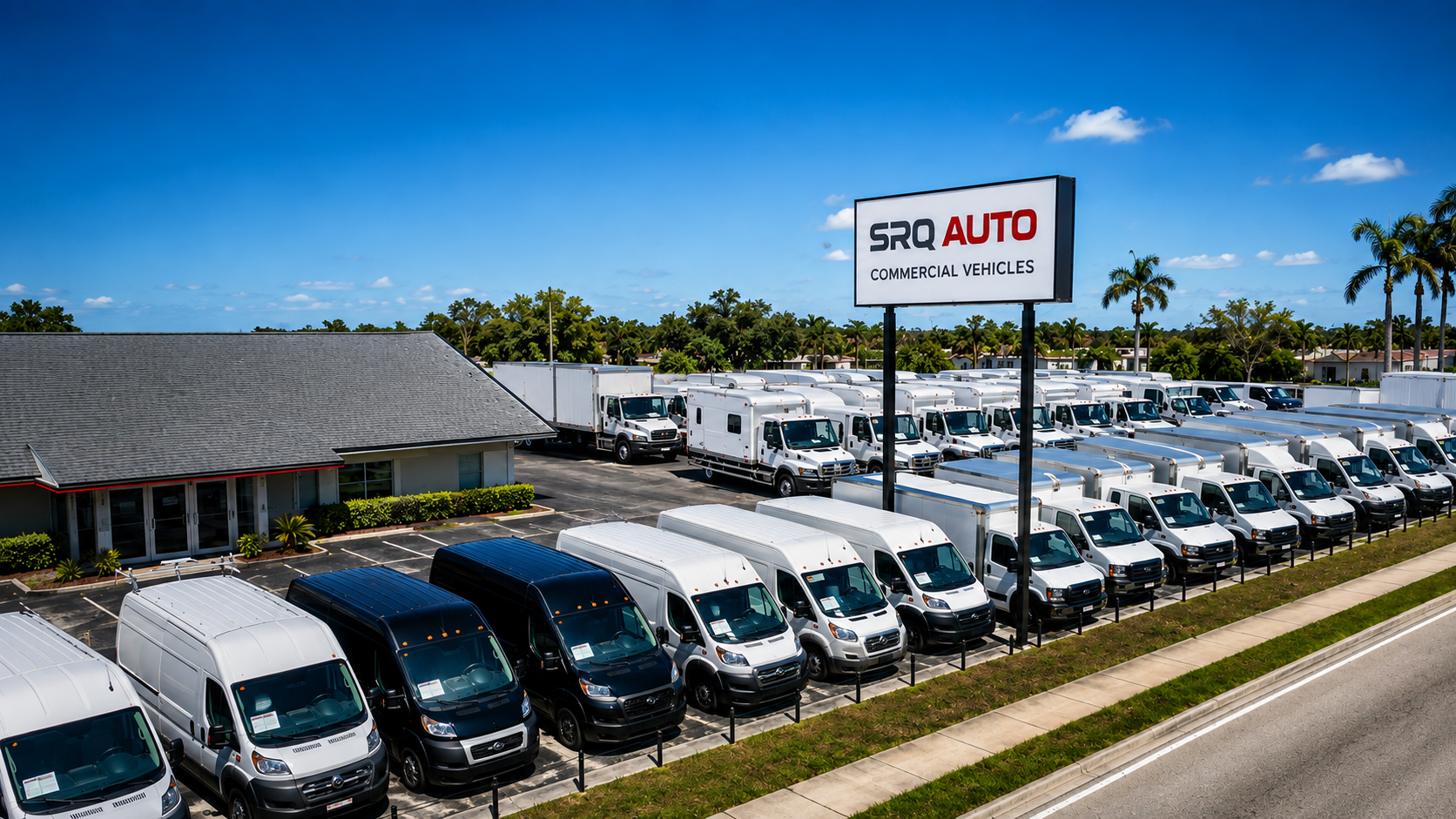
SRQ Auto Commercial Vehicles dealership lot filled with rows of white and black cargo vans and box trucks.
Ready to upgrade or expand your Florida shuttle bus fleet? At SRQ Auto LLC, we make commercial financing fast, simple, and tailored to your business model. Our experienced finance department works directly with lenders who understand the commercial transport market, helping you lock in favorable terms whether you need a single passenger van or a multi-unit fleet expansion.
Start your journey today by filling out our secure online credit application through Get Approved Now, or review our Recently Sold Vehicles to see recent commercial inventory acquisitions across Sarasota and Manatee counties.
Visit our showroom at 2212 1st St, Bradenton, FL 34208, or call our commercial department directly at Call us at (941) 214-2231. Let SRQ Auto LLC keep your passengers moving and your business growing!