How to Start a Shuttle Bus Business: Costs, Routes & Your First Bus

Starting a shuttle bus business begins with identifying a paying customer, testing the route and calculating the complete cost of providing the service. Choose your first bus after those decisions. Passenger count, luggage, boarding needs and operating hours should shape the vehicle purchase, rather than an attractive asking price shaping the business.
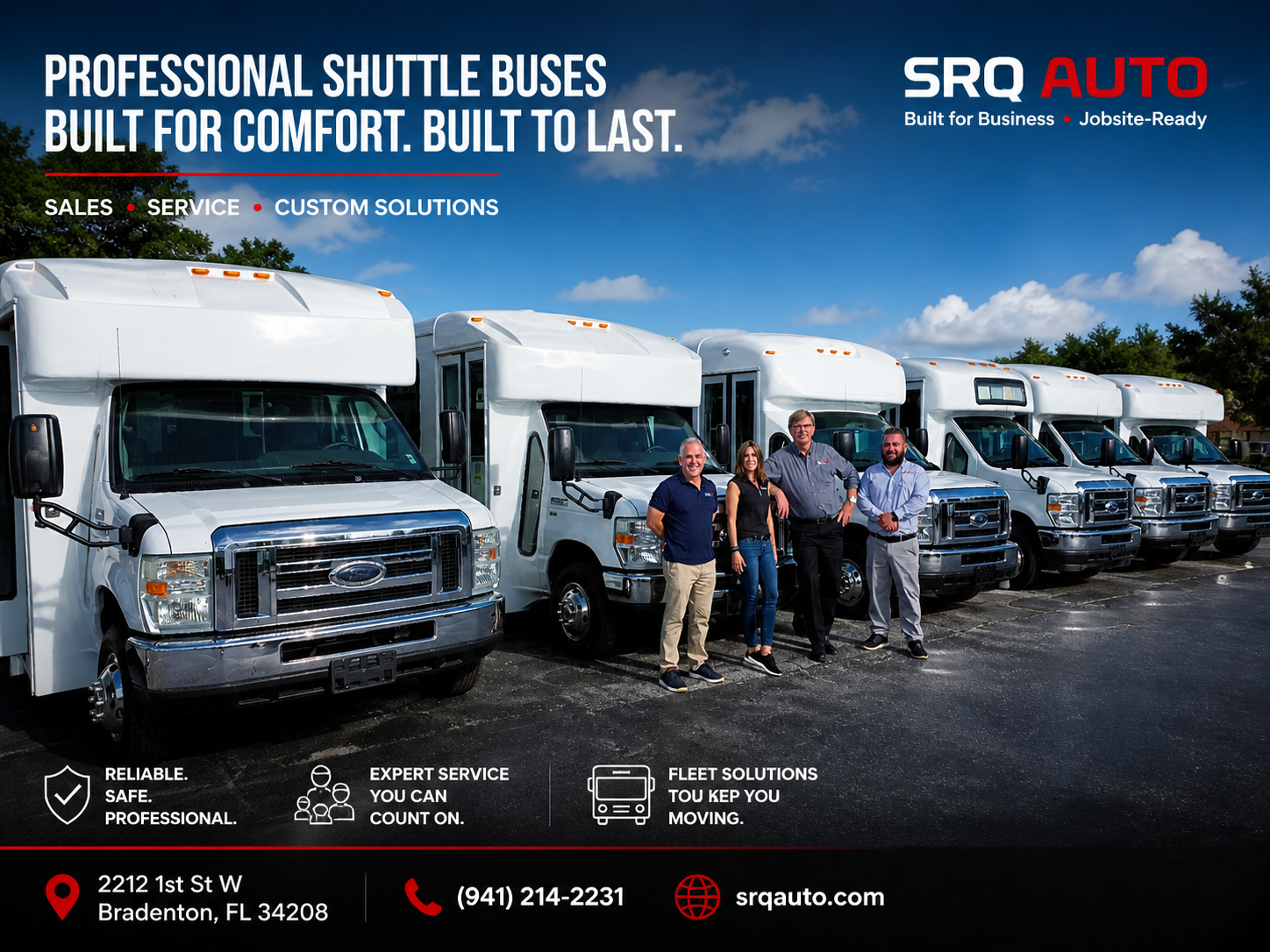
At SRQ Auto in Bradenton, Florida, we help commercial buyers connect vehicle configuration with the work ahead. This guide uses that vehicle-buying perspective to help prospective operators in Sarasota, Tampa Bay and beyond prepare a useful purchase brief. It does not promise a particular income or replace an operating plan.
Decide who pays before deciding how many seats
A hotel contract, employee transportation agreement and individual airport bookings create different businesses. Write down who pays, what they purchase and when you receive payment. A full bus does not automatically mean a profitable trip if the fare or contract rate leaves too little after expenses.
For a hotel shuttle, ask about departure frequency, guest luggage, late arrivals and whether service must continue during quiet hours. For employee transportation, confirm shift changes, pickup locations and attendance patterns. For events, establish waiting time, cancellation terms and the final return trip.
Speak with prospective customers before committing to a bus. Separate a signed agreement from an encouraging conversation. Build a conservative plan around business you can reasonably support, and identify how long you could operate if bookings develop more slowly than expected.
Test the whole route, including the empty miles
Drive the proposed route at the hours you intend to operate. Time the approach, boarding, luggage loading, unloading and return. Check legal stopping locations, parking arrangements and any access restrictions with the property or facility. A distance estimate alone misses much of the working day.
Deadhead miles are miles driven without paying passengers. Include travel from your parking location to the first pickup, empty returns and repositioning between customers. Driver time continues during those movements, as do fuel consumption and vehicle wear.
A hypothetical hotel loop might look manageable on a map but need additional time when two groups arrive together. Build recovery time into the schedule. If one bus cannot complete the promised departures, change the service plan before assuming a larger vehicle solves the problem.
Build a shuttle operating-cost worksheet
There is no single reliable startup price for every shuttle service. Your vehicle, insurance requirements, financing structure and service schedule determine the budget. Obtain written estimates for your actual operation instead of copying a national average into your business plan.
Separate startup spending from ongoing expenses. Startup items may include the bus, registration, required approvals, initial insurance payments, equipment and an operating reserve. Monthly costs should account for vehicle payments, insurance, parking, booking tools and administration. Variable costs include fuel, driver compensation, cleaning, maintenance and repairs.
Include compensation for your own driving and administrative work. Otherwise, a business can appear profitable because the owner is providing unpaid labor. Also allow for payment delays, cancelled trips and replacement transportation when the bus is unavailable.
For a simple planning illustration only, suppose your estimated monthly operating costs total $8,000 and you expect 20 paid service days. That is $400 per paid day just to cover those assumed costs, before profit or omitted expenses. These invented figures are arithmetic examples, not SRQ pricing, industry averages or an earnings forecast. Replace every input with your own quotes and operating assumptions.
Match the first used shuttle bus to the actual passengers
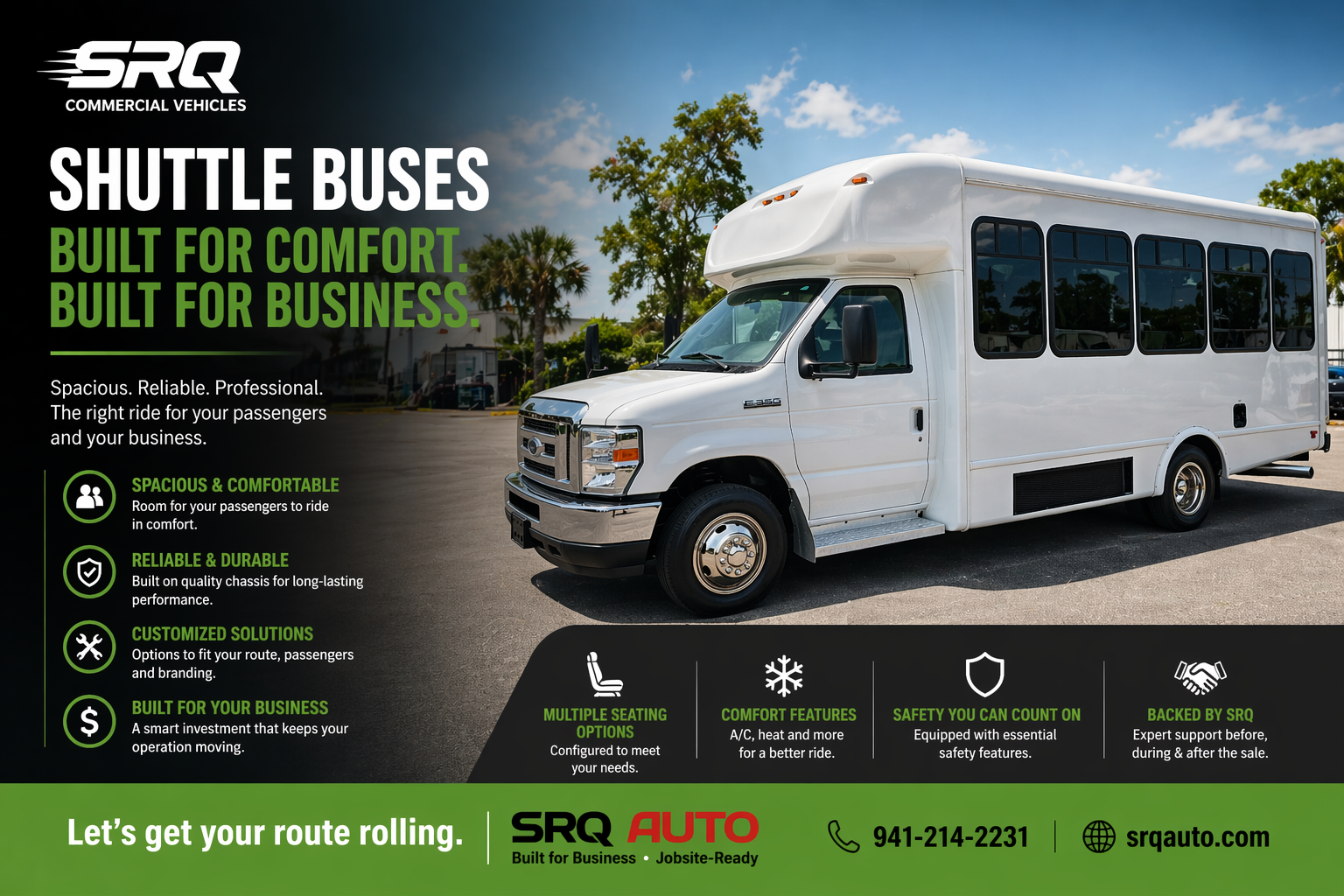
Start with the busiest realistic departure, not the largest group you hope to transport someday. Confirm the vehicle’s documented seating configuration and whether capacity figures include the driver. Then consider luggage, mobility devices and any equipment carried on the same trip.
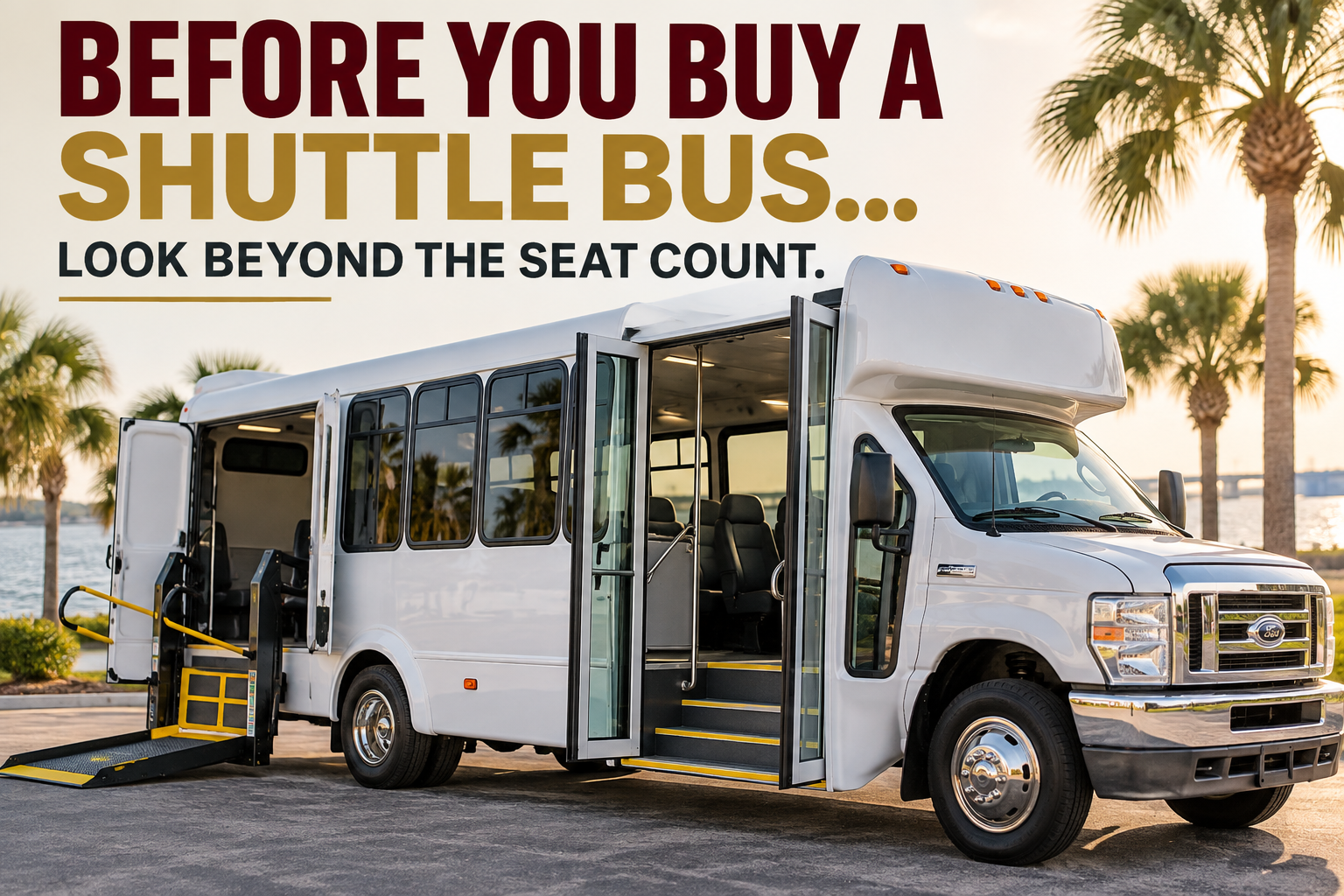
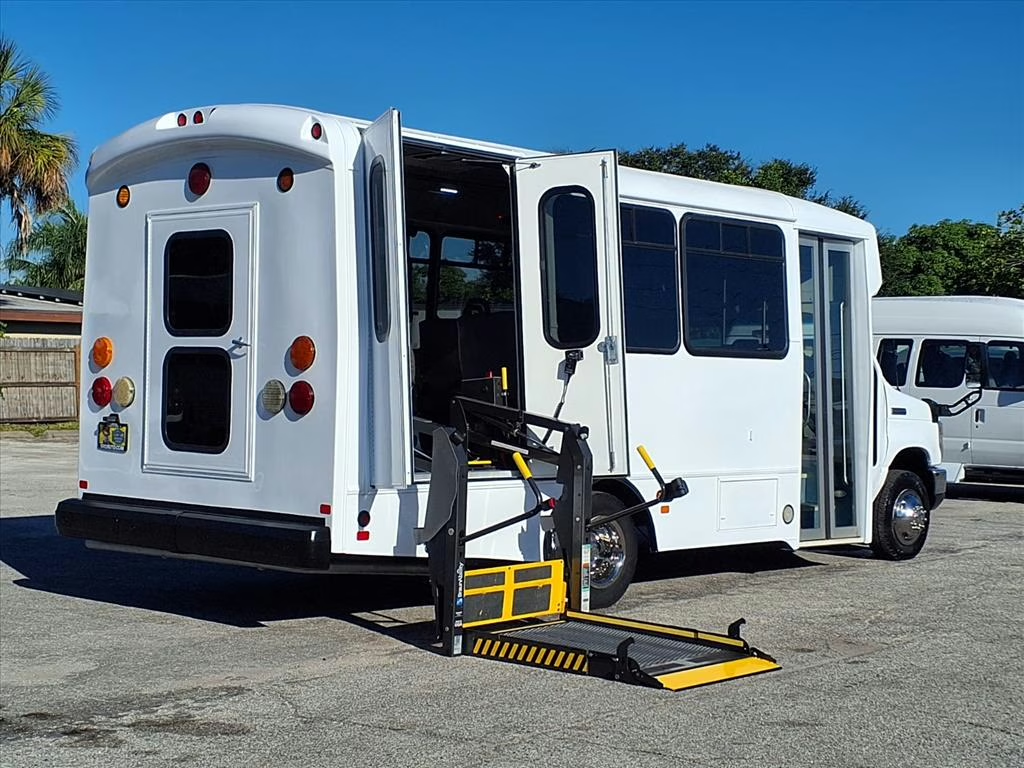
Airport passengers may need substantial bag space. An employee route may prioritize frequent boarding and a practical aisle. A service carrying passengers who use wheelchairs needs an appropriate accessible configuration, securement equipment and trained staff. Verify the specific vehicle’s arrangement; a lift does not establish every aspect of suitability by itself.
Ask for interior measurements and layout photographs. Check step height, handrails, entry-door operation and passenger comfort. Review vehicle weight ratings and loading limits with a qualified professional. Do not assume that removing seats or changing the interior is an approved shortcut to your desired capacity.
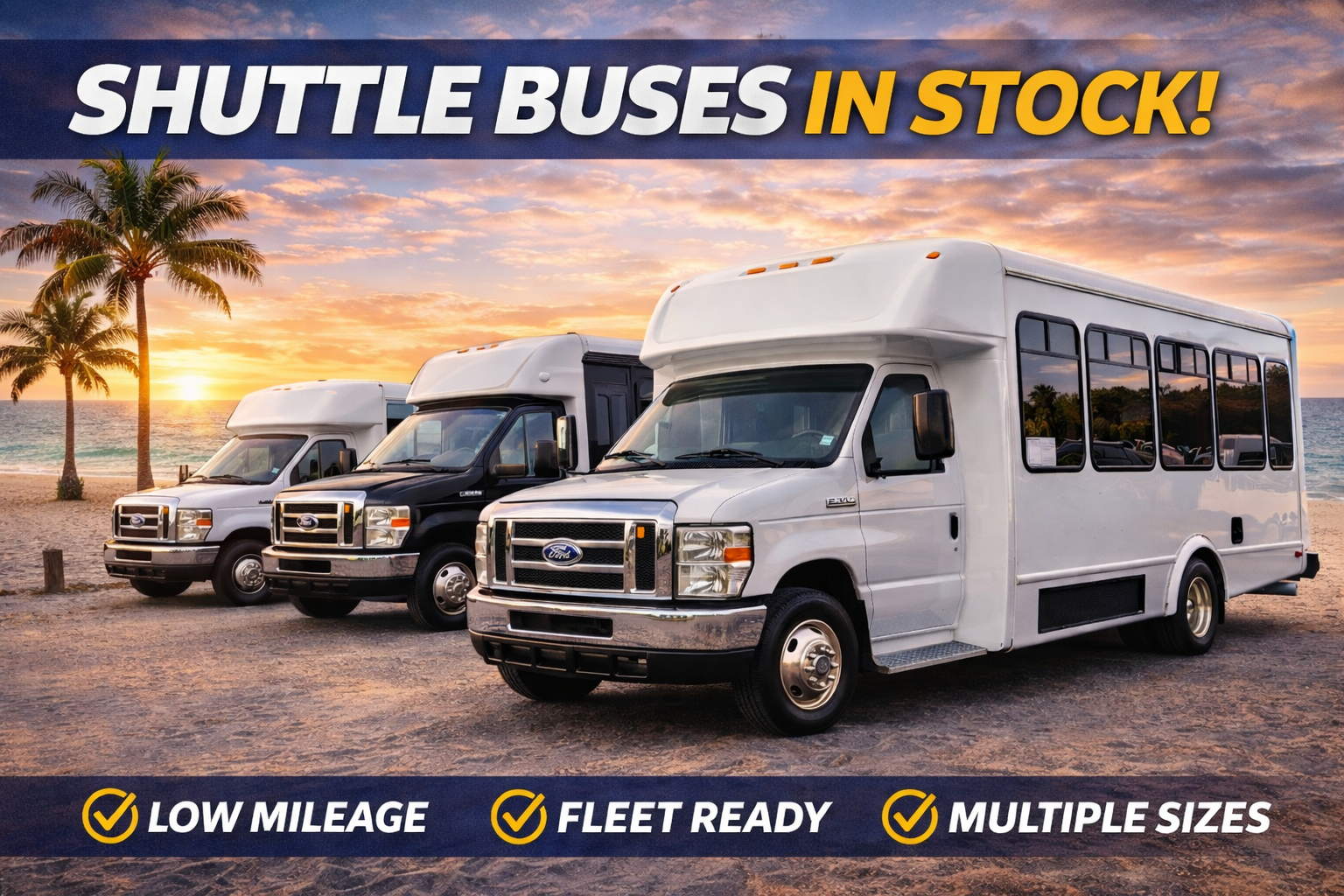
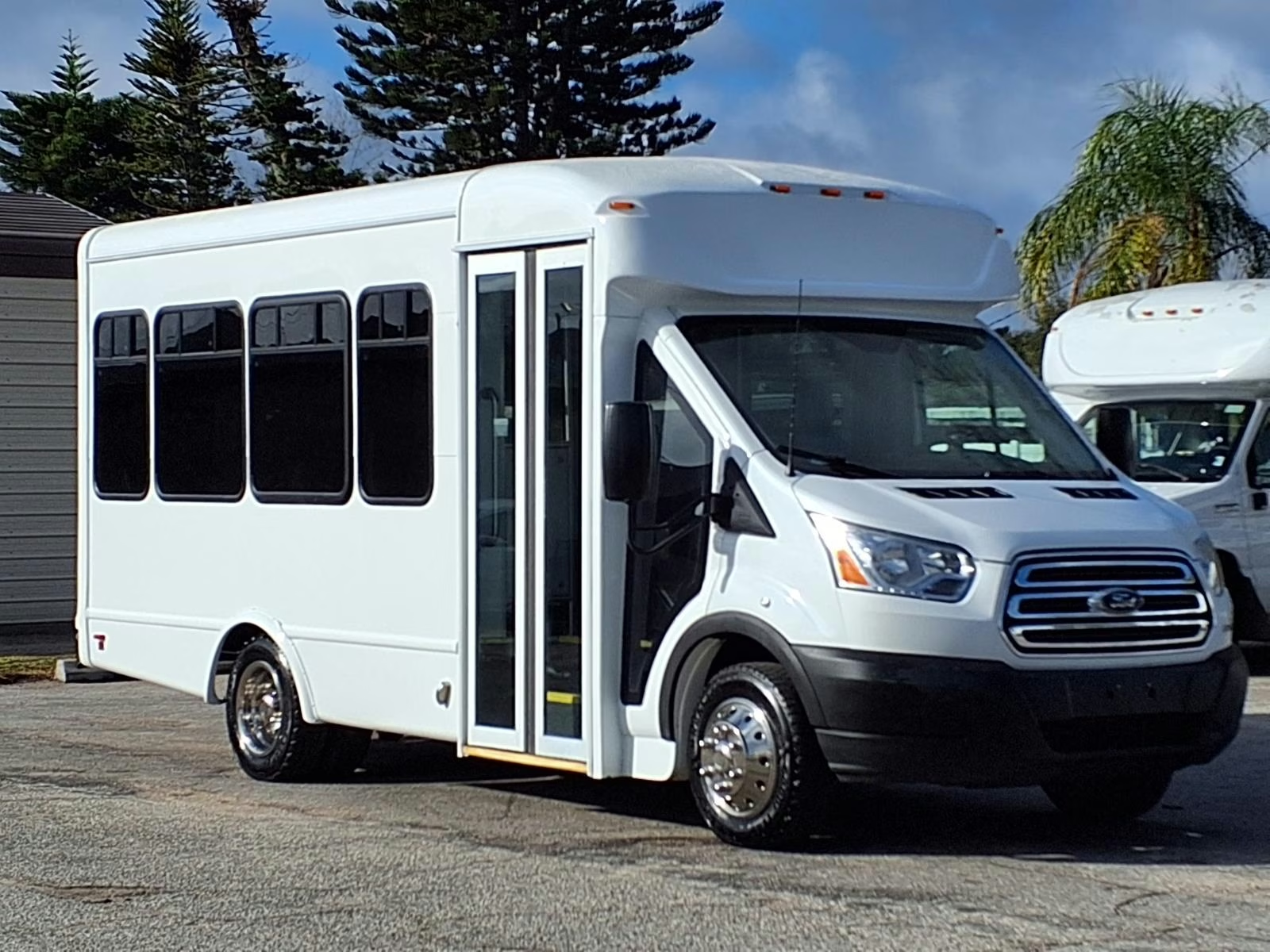
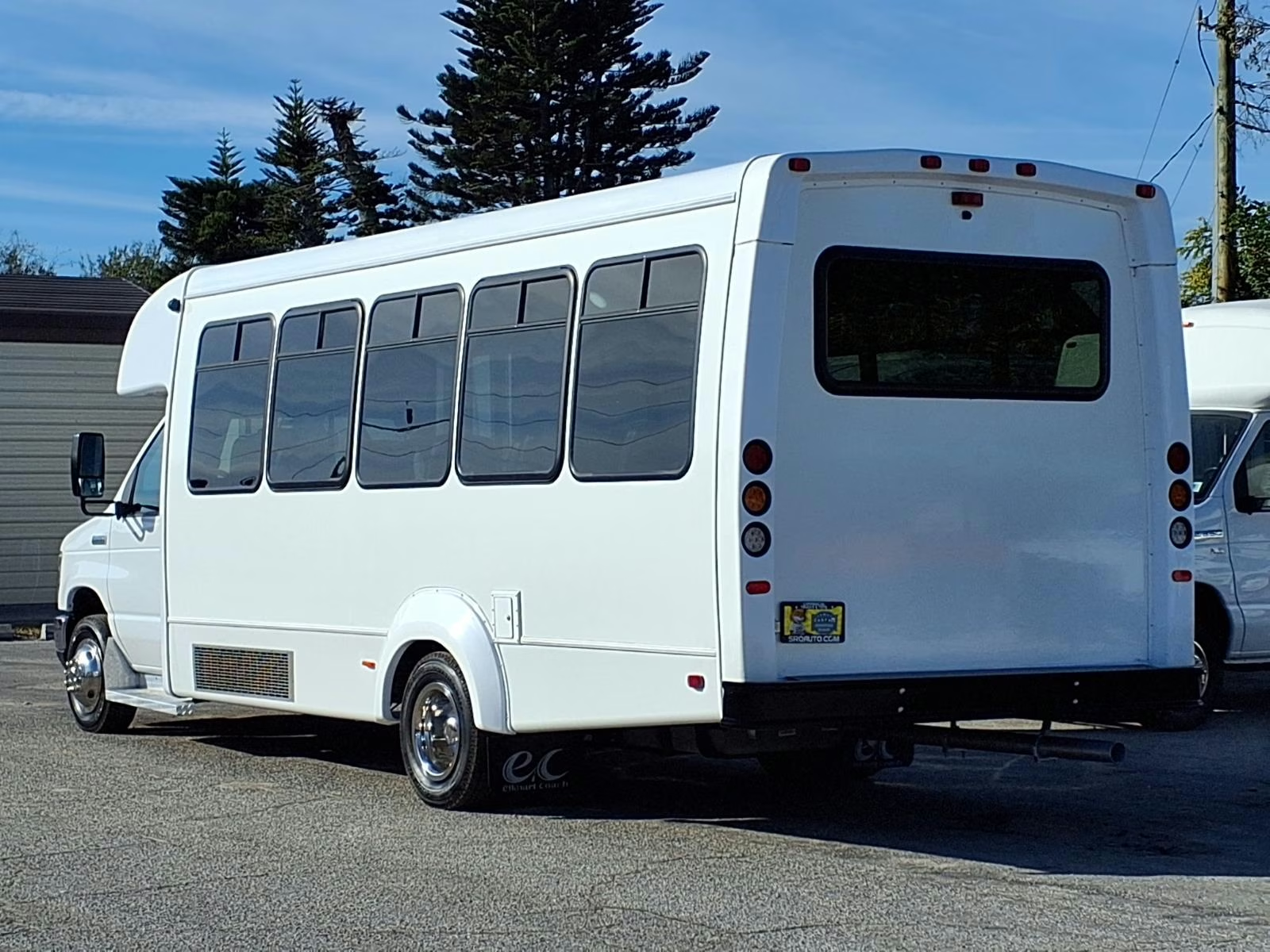
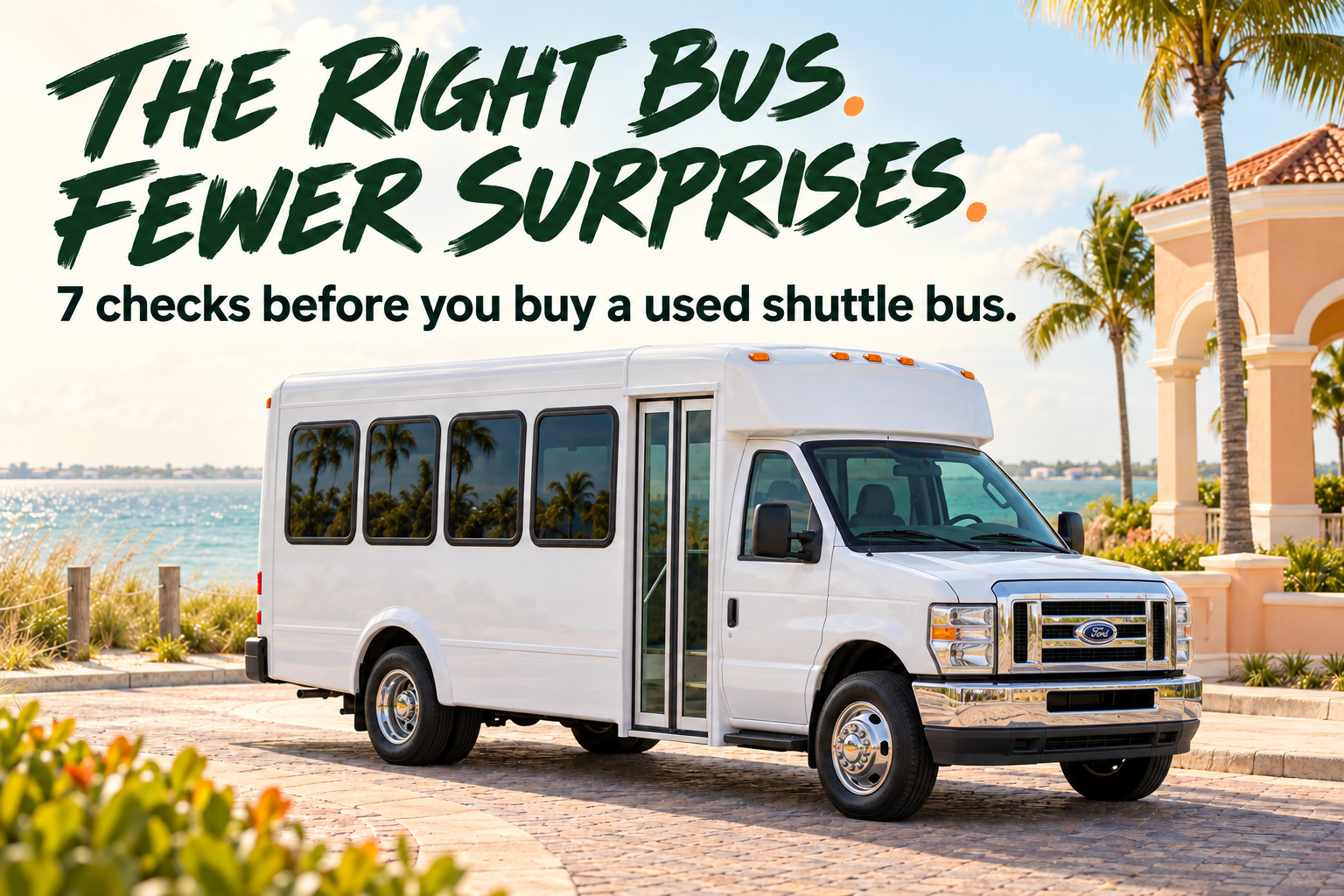
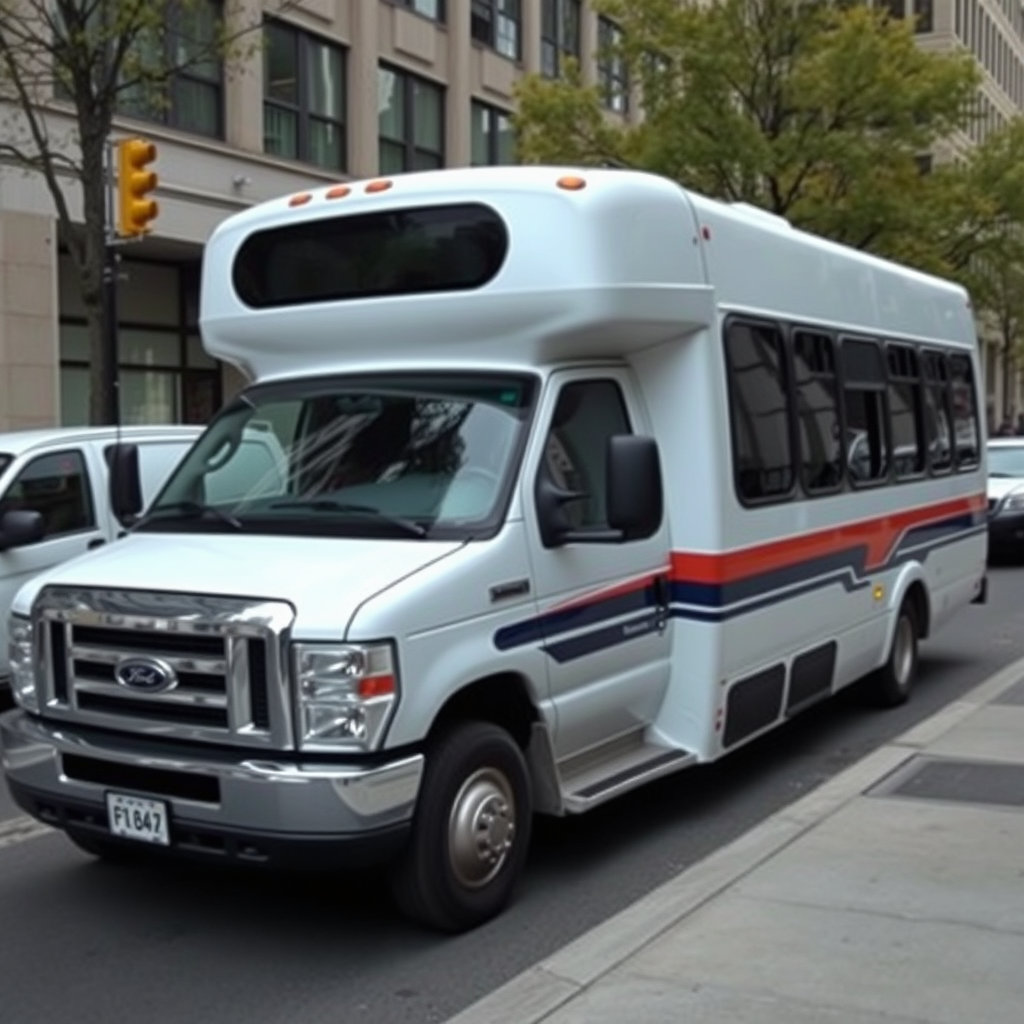
Compare available used shuttle buses for sale in Bradenton against this written brief. A correctly configured bus can be a better purchase than a cheaper unit that needs substantial changes before it can perform your service.
Check licensing, insurance and airport access before purchase
What do you need to start a shuttle service? Alongside customers and a suitable bus, you need confirmation that the proposed business, vehicle and drivers meet the requirements applying to that operation. Do this before placing the vehicle into passenger service.
Federal passenger-carrier requirements depend on the operation and vehicle. FMCSA explains that some prearranged airport transportation can be interstate commerce even when the shuttle itself stays within one state. Do not assume a local route is automatically outside federal requirements.
Discuss the exact route, compensation arrangement, vehicle specifications and passenger capacity with the appropriate authorities and a commercial insurance professional. Confirm driver licensing, required registrations, operating authority where applicable, coverage and any facility-specific permissions. A CDL label in an advertisement is not a complete compliance determination. Use FMCSA’s passenger-transportation guidance as a starting point and verify Florida and local requirements separately.
Buy preparation you can understand and document
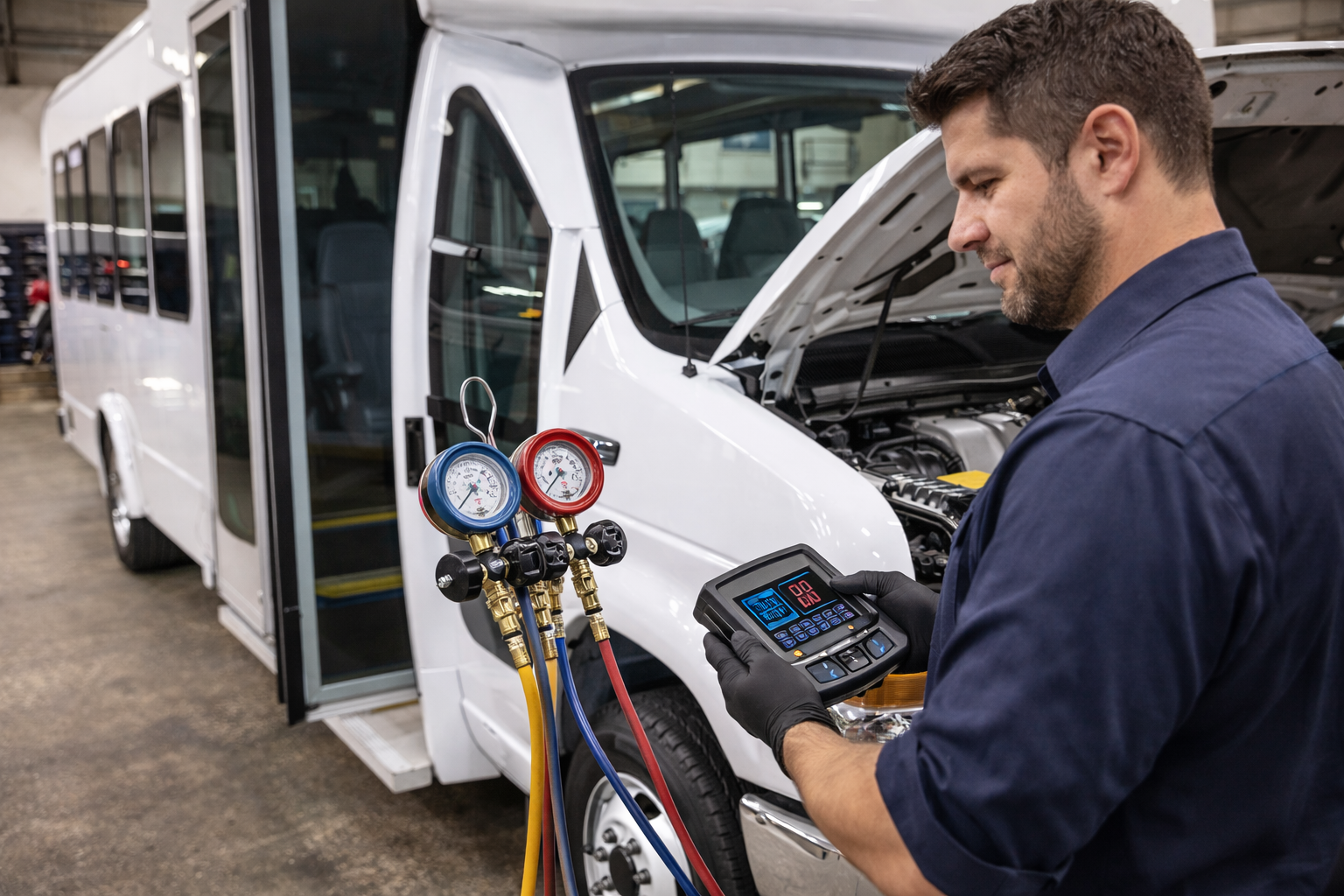
A shuttle bus has both a chassis and a passenger body. Request the available maintenance history and ask what inspection, servicing and reconditioning were performed on the particular bus. Review brakes, tires, cooling, starting and charging systems alongside passenger-area equipment.
Air conditioning deserves attention throughout the passenger compartment. Check door operation, seats, restraints, flooring, lighting and signs of water intrusion. Where fitted, discuss wheelchair-lift operation and securement equipment with someone qualified to evaluate them. Arrange an independent inspection when appropriate.
At SRQ Auto, reconditioning work depends on each vehicle’s needs and can include mechanical service, tires, glass, upholstery and cosmetic preparation. Ask us to explain the work completed on the bus you are considering. Our Job Ready Promise should support an informed purchase; it does not mean a used vehicle will never need repairs.
Review our warranty benefits for the actual terms, available coverage, limitations and eligibility. Keep a maintenance and downtime reserve in your business plan regardless of any coverage selected.
Compare purchase options against cash available
Keep the vehicle purchase separate from the money needed to begin service. A lower monthly payment does not tell you the total financing cost, and a cash purchase can leave too little available for insurance, payroll or a delayed customer payment.
Request the total purchase figures and review any financing offer carefully, including the down payment, term, fees and payment schedule. Compare those commitments with a conservative revenue plan. If the numbers depend on every seat being sold immediately, revisit the assumptions before committing. A suitable used bus should fit both the route and the operating reserve your business needs.
Plan the first month before adding another bus
Is a shuttle business profitable? It can be, but vehicle ownership alone does not establish demand or a workable margin. Your answer comes from actual customer payments compared with the full cost of providing the service.
Track paid service days, collected revenue, total miles, empty miles, driver hours and unavailable time. Compare actual results with the assumptions used to select the bus. If a route is underperforming, investigate scheduling, pricing and customer demand before buying additional capacity.
Prepare a backup arrangement for missed departures or mechanical downtime. Clarify who contacts passengers, how replacement transportation is arranged and who bears the expense. A second bus is one possible approach, but a new operator should evaluate affordable alternatives before taking on another payment.
Bring SRQ Auto your route and vehicle brief
Before contacting us, gather your route, expected passengers, luggage needs, accessibility requirements, operating hours and purchase budget. Chris Hilgeman and the SRQ Auto team can use those details to discuss suitable available vehicles and the questions to resolve before purchase.
SRQ Auto is an independent commercial vehicle dealer founded in 2011, based at 2212 1st St in Bradenton. We serve Sarasota, Tampa Bay and buyers across Florida and nationwide. Browse current shuttle bus inventory, review customer feedback and learn about our team before planning your visit.
If financing is part of your plan, ask about Tailored Commercial Financing, subject to lender approval and terms. Call (941) 214-2231 or use our directions link to plan a visit. Bring the business plan first; we will help you focus the vehicle search.