Avoiding Costly Commercial Vehicle Buying Mistakes: A Guide for Florida Businesses

Avoiding Costly Commercial Vehicle Buying Mistakes: A Guide for Florida Businesses

Avoiding Costly Commercial Vehicle Buying Mistakes: A Guide for Florida Businesses

For business owners across the Tampa, Sarasota, and Bradenton regions, a commercial vehicle is far more than just a means of transportation. It is a mobile workstation, a rolling billboard, and a primary driver of revenue. When your work trucks or delivery vans are running efficiently, your business thrives. However, purchasing a commercial vehicle involves a complex set of calculations, specialized regulatory requirements, and technical specifications that differ wildly from buying a personal car or SUV. Making a mistake during this high-stakes acquisition process can lead to immediate operational bottlenecks, crippling repair costs, safety hazards, and lost contracts. At About Us, we have spent years helping regional enterprise operators, local contractors, and independent service professionals navigate the complex landscape of commercial fleet acquisition. We have witnessed firsthand the common pitfalls that drain valuable business capital and disrupt daily operations. From choosing the wrong weight class to failing to account for regional coastal elements, these mistakes are entirely preventable with the right knowledge. This comprehensive guide is designed to serve as your ultimate resource for avoiding costly commercial vehicle buying mistakes and ensuring your next vehicle is truly job-ready from day one.

Operating a commercial vehicle in Southwest Florida presents unique environmental and logistical challenges. Whether you are navigating the tightly packed, stop-and-go streets of downtown Tampa, handling heavy-duty landscape work in Lakewood Ranch, or hauling payloads along the baking-hot asphalt of the Interstate 75 corridor, your vehicle must be tailored to the specific demands of your industry and climate. When businesses rush into fleet expansion without a rigorous evaluation of their true operational requirements, they inevitably face mechanical failures, legal liabilities, or premature vehicle depreciation. By partnering with a dedicated, local commercial specialist like SRQ Auto LLC, you gain access to an expert team that understands the nuances of commercial fleet requirements and is dedicated to keeping your business moving forward safely and profitably.

How should a business define its needs before choosing a work truck or van?

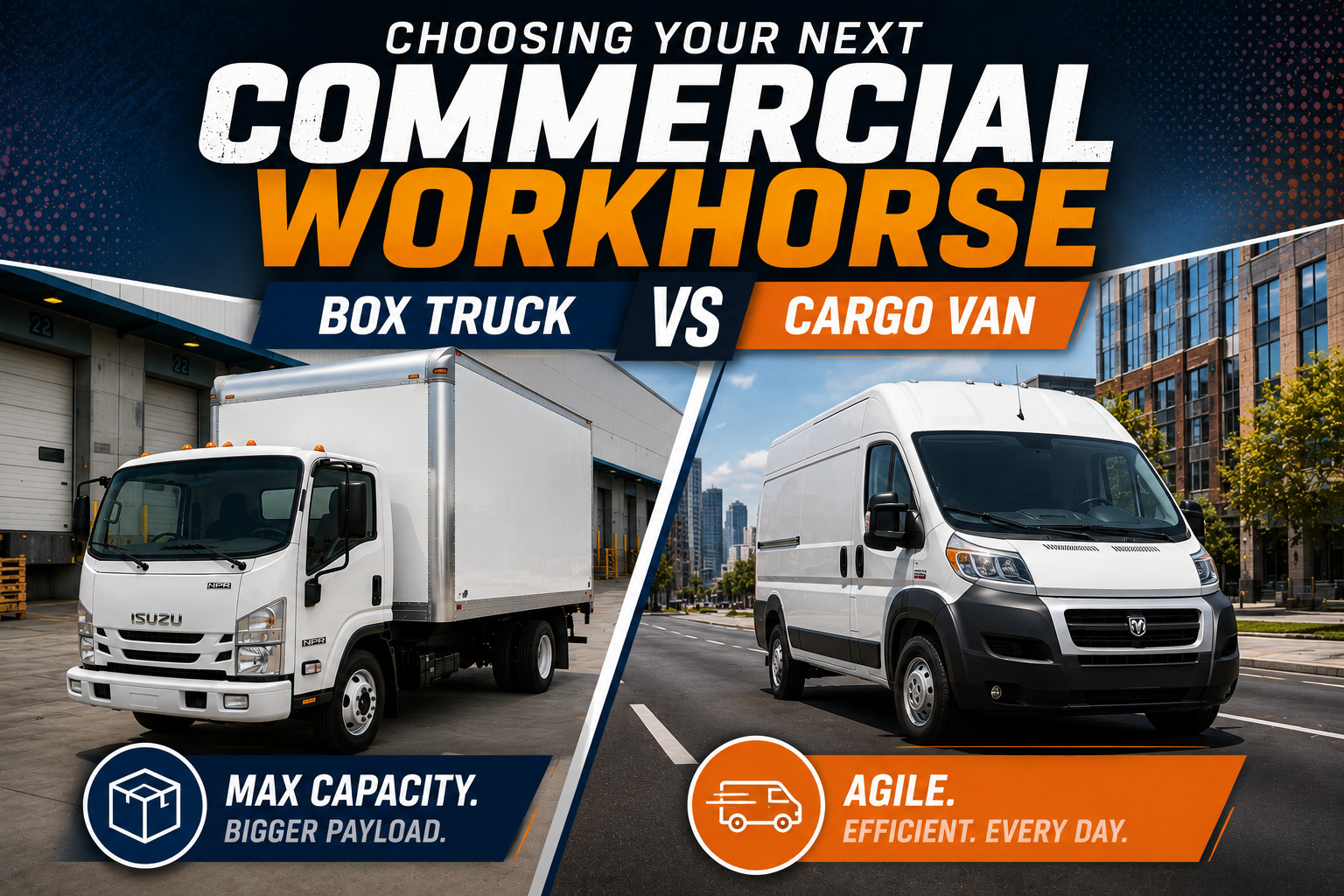
The absolute foundation of a successful commercial vehicle purchase is a comprehensive operational needs assessment. Far too many business owners commit the critical error of buying a vehicle based strictly on their immediate, current needs rather than projecting their business growth over the next three to five years. If you purchase a light-duty cargo van that is perfectly suited for your current client list of ten accounts, you will find yourself severely limited when your business expands to thirty accounts. The vehicle will quickly become overloaded, leading to excessive wear and tear, or you will be forced to make multiple, highly inefficient trips back and forth to your warehouse, wasting time, fuel, and labor hours. To conduct a proper operational needs assessment, you must carefully analyze your typical daily routes, cargo volume, tool storage requirements, and crew size. Are your vehicles primarily operated in urban, stop-and-go environments like downtown Tampa, where maneuverability, parking ease, and fuel economy are paramount? Or are they performing high-mileage highway deliveries to suburban developments in Lakewood Ranch, Bradenton, or Sarasota, where ride stability, highway cruising efficiency, and cargo security are more critical? An urban delivery business may find that a compact, highly maneuverable cargo van from our Used Cargo Van Inventory perfectly balances fuel efficiency with accessibility. Conversely, a regional distributor may require a heavy-duty chassis cab equipped with a spacious box from our Used Box Truck Inventory to safely transport large, bulky goods over long highway stretches.

Another common mistake is failing to balance volumetric capacity with weight capacity. It is entirely possible to fill a vehicle's cargo area completely with lightweight materials without exceeding its payload capacity. However, if you are transporting heavy materials like plumbing fixtures, electrical cable reels, tile, masonry supplies, or landscaping turf, you will quickly exceed the vehicle's weight rating long before the physical cargo space is full. Understanding this distinction prevents you from under-specifying your vehicle's mechanical capabilities. Additionally, consider the physical workspace of your crew. If your technicians must spend several hours a day working inside the vehicle—such as mobile locksmiths, detailers, or specialized technicians—investing in a high-roof van is an absolute game-changer. It allows employees to stand upright, reducing physical strain, improving efficiency, and boosting overall morale. By carefully mapping out these precise operational requirements before browsing any showroom, you ensure that the vehicle you select is a highly functional tool designed to optimize your workflow, rather than a daily headache for your staff.

What are the most common payload and towing capacity mistakes when buying a commercial vehicle?

Understanding the Terminology
To avoid catastrophic loading errors, every business owner must master commercial weight terminology. Gross Vehicle Weight Rating (GVWR) is the absolute maximum operating weight of a vehicle as specified by the manufacturer, including the vehicle's chassis, body, engine, fluids, fuel, accessories, driver, passengers, and cargo. Gross Combined Weight Rating (GCWR) represents the maximum allowable weight of both the fully loaded vehicle and its attached loaded trailer. A frequent and critical mistake is assuming that a vehicle's payload capacity is simply a fixed number found online. In reality, true payload is calculated by taking the GVWR and subtracting the vehicle's actual curb weight (the weight of the vehicle with a full tank of fuel but no occupants or cargo). If you add heavy aftermarket shelving, ladder racks, or a service body, you drastically increase the curb weight, which directly reduces your remaining payload capacity.

Mechanical & Safety Risks
Overloading a commercial vehicle beyond its designated GVWR or GCWR on Florida highways poses immense safety risks and severe mechanical consequences. Operating an overloaded vehicle puts extreme stress on the suspension, causing leaf springs to sag, shock absorbers to fail, and tires to overheat, which dramatically increases the risk of a high-speed blowout. Furthermore, overloaded vehicles require significantly longer distances to come to a complete stop, placing immense heat and strain on the braking system and causing brake fade. Legally, operating an overloaded commercial vehicle exposes your business to massive liabilities. If an overloaded truck is involved in an accident on Interstate 75 or Route 41, your business can face severe DOT fines, driver citations, and devastating personal injury lawsuits due to negligence.

Calculating True Requirements
When preparing to purchase, calculate your weight requirements with absolute precision. Weigh your tools, equipment, and typical cargo on a certified scale, or compile a detailed weight inventory of every item that will live inside the vehicle. Always build in a 15% to 20% safety margin to account for unexpected cargo demands, wet weather weight increases, or additional crew members. If your calculations place you near the absolute limit of a Class 2 vehicle (up to 10,000 lbs GVWR), it is highly advisable to step up to a Class 3 or Class 4 commercial vehicle. This ensures your vehicle operates well within its engineered safety parameters, extending its operational lifespan and keeping your crew safe.

How does upfitting affect a commercial vehicle's manufacturer warranty?

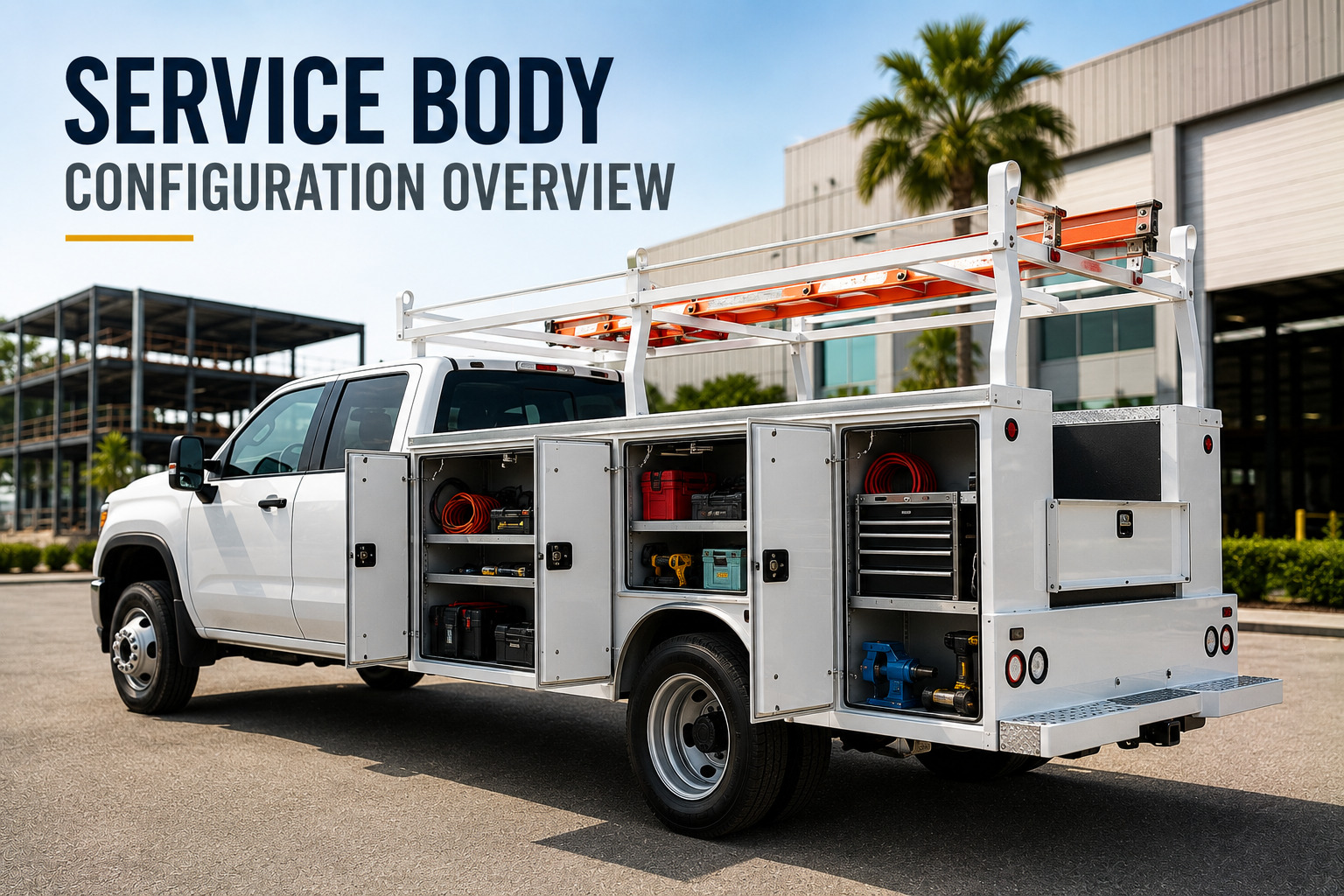
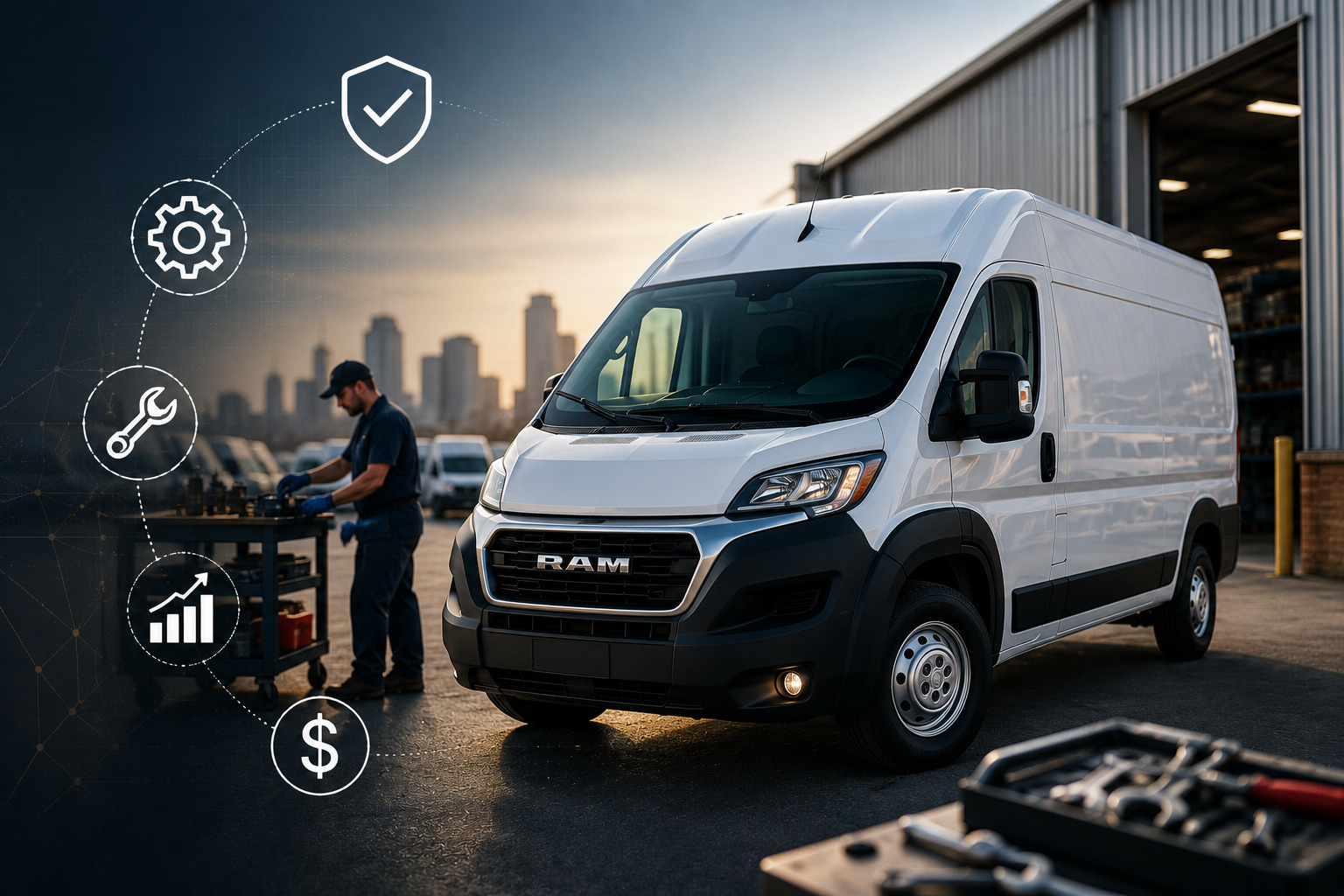
Upfitting—the process of customizing a commercial vehicle with aftermarket equipment such as specialized utility bodies, heavy-duty shelving, hydraulic cranes, liftgates, ladder racks, or custom refrigeration units—is essential for turning a base vehicle into an efficient, industry-specific tool. However, how these modifications interact with the vehicle's factory warranty is a critical area that many business owners fail to investigate before making a purchase. A common misconception is that adding any aftermarket equipment will completely void the vehicle's entire manufacturer warranty. This is not entirely true; however, manufacturers are only obligated to cover defects in their original parts and engineering. If an aftermarket upfit is installed improperly and directly causes a failure in an OEM component, the manufacturer will deny warranty coverage for that specific repair. For example, if an upfitter splices into the vehicle's main electrical wiring harness to power a high-draw hydraulic liftgate without installing proper relays or fuses, and this subsequently fries the vehicle's primary Engine Control Unit (ECU), the manufacturer will not cover the cost of replacing the ECU or repairing the harness. The financial burden of that repair will fall squarely on your business. This highlights the absolute necessity of utilizing certified, reputable upfitters who stand behind their craftsmanship and provide their own comprehensive warranties on the modifications they perform.

To minimize warranty risks and eliminate the downtime associated with managing custom upfit projects, many savvy business owners choose to explore pre-configured, high-quality pre-owned commercial vehicles. By selecting a vehicle that has already been professionally upfitted and thoroughly vetted, you avoid the administrative headaches, extended production lead times, and potential warranty disputes associated with post-purchase modifications. Our specialized Used Service Truck/Van Inventory features a wide selection of vehicles equipped with high-quality utility beds, robust shelving packages, and specialized equipment designed to go straight to work. When buying a pre-upfitted vehicle, always ask for detailed documentation regarding the upfit manufacturer, installation history, and any transferable warranties that may apply to the secondary equipment. This ensures that you have a clear understanding of your coverage. For additional peace of mind, inquire about the Commercial Warranty Options available through SRQ Auto LLC, which offer specialized mechanical protection designed specifically for the heavy-duty cycles of commercial-use vehicles.

What are the tax advantages of section 179 vehicle deductions for businesses?

One of the most powerful financial incentives available to business owners purchasing commercial vehicles is the Section 179 tax deduction. Under the Internal Revenue Code, Section 179 allows businesses to write off the entire purchase price of qualifying equipment—including new and pre-owned commercial vehicles—in the tax year the vehicle is purchased and placed into service, rather than depreciating the cost slowly over several years. For local business owners in Bradenton, Sarasota, and Tampa, leveraging this tax provision can result in massive, immediate cash flow savings that can be reinvested back into the company's operations. To maximize this advantage, it is critical to understand how weight thresholds and vehicle design dictate your deduction limits. The IRS categorizes vehicles into specific brackets based on their Gross Vehicle Weight Rating (GVWR). Vehicles with a GVWR of 6,000 pounds or less are subject to strict passenger vehicle limitations, which cap the maximum first-year depreciation deduction. However, vehicles with a GVWR between 6,001 and 14,000 pounds qualify for significantly higher expensing limits, provided they are used for business purposes at least 50% of the time. Vehicles with a GVWR exceeding 14,000 pounds, or those designed specifically for commercial use with no personal-use capability (such as cargo vans with fully enclosed cargo areas and no rear seating, box trucks, or heavy-duty shuttle buses), typically qualify for the full Section 179 deduction up to the annual statutory limit.

To illustrate the immense power of this deduction, consider a Florida contractor who purchases a pre-owned heavy-duty utility truck from SRQ Auto LLC for $45,000 to expand their service fleet. If the vehicle has a GVWR over 6,000 pounds and is used 100% for business, the owner can potentially deduct the entire $45,000 from their taxable income in the very first year. Assuming a corporate tax rate of 21%, this deduction translates directly to a tax savings of $9,450, effectively lowering the net purchase cost of the vehicle to $35,550. This immediate tax relief is an incredibly effective tool for managing acquisition capital. Because tax laws are highly complex and subject to change, it is absolutely essential to work closely with a certified public accountant (CPA) or a qualified tax advisor to verify your business's eligibility and ensure compliance with all IRS guidelines. To learn more about specific qualifying vehicles, weight categories, and how to structure your purchase for maximum savings, we invite you to read our detailed guide on Used Vehicle Tax Deductions. By proactively planning your vehicle acquisitions around these tax advantages, you can strategically expand your fleet while minimizing your overall tax burden.

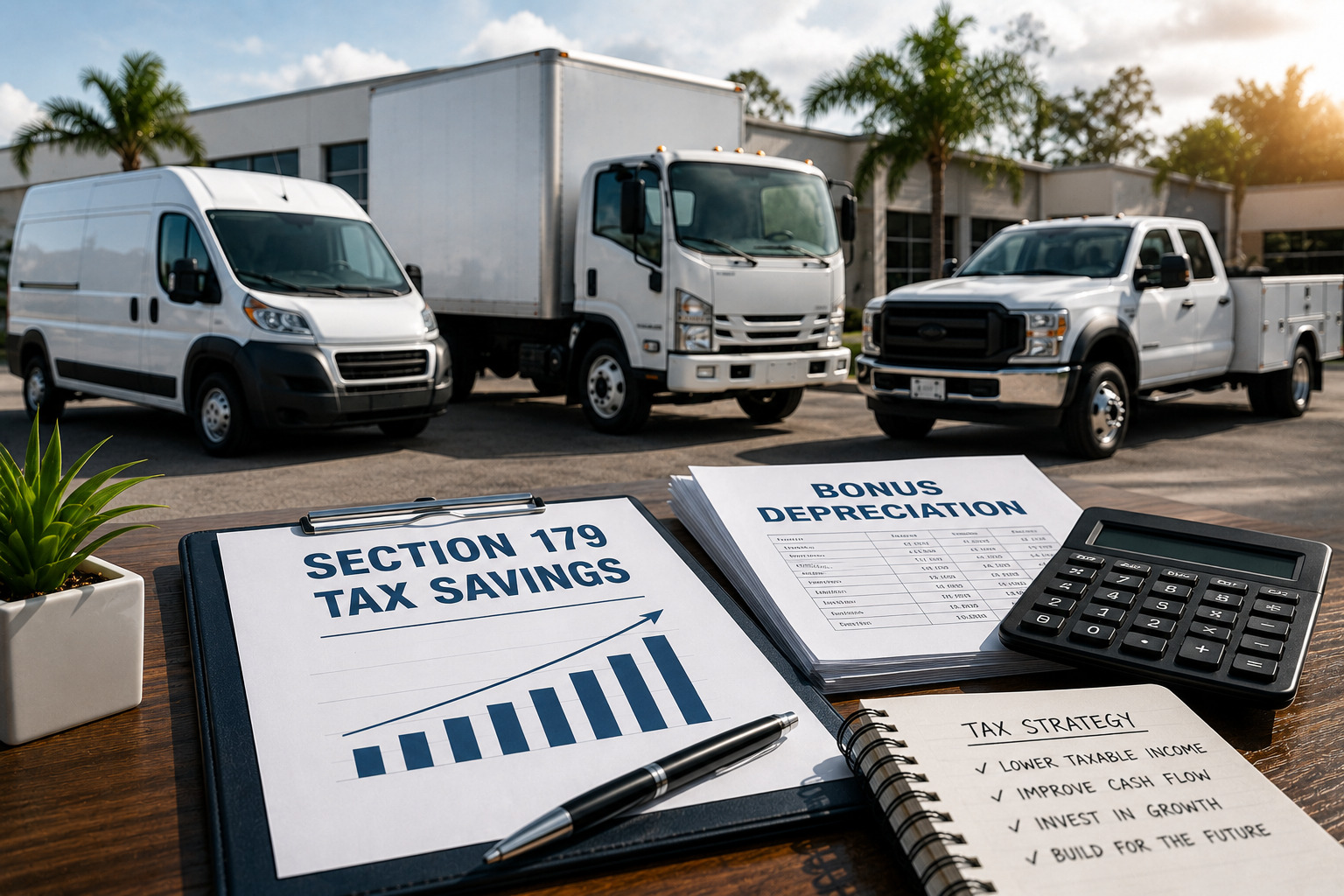
Commercial trucks parked behind tax documents on a desk, illustrating Section 179 tax savings.

How do safety features in commercial vehicles affect insurance premium rates?

When evaluating the total operating cost of a commercial vehicle, commercial auto insurance premiums represent a significant, ongoing expense. For businesses operating multiple vehicles, insurance costs can quickly become a major line item on the monthly balance sheet. A common and expensive oversight when cross-shopping work trucks and cargo vans is ignoring the vehicle's built-in safety features. Modern commercial vehicles equipped with advanced driver assistance systems (ADAS) are significantly safer to operate, and insurance underwriters heavily favor these technologies when calculating risk profiles and premium rates. Key safety technologies that have a direct, positive impact on reducing insurance premiums include forward collision warning, automatic emergency braking, lane departure warning, blind-spot monitoring, and rear-view camera systems. For larger vehicles like box trucks and extended-length cargo vans, blind-spot monitoring is incredibly valuable, as these vehicles naturally have massive blind spots. By actively warning drivers of adjacent vehicles or pedestrians during lane changes or reversing maneuvers, these systems prevent devastating low-speed collisions and side-swipes, which are among the most common claims filed by commercial fleet operators.

Beyond reducing the direct frequency and severity of accidents, investing in vehicles with advanced safety tech protects your business from the hidden, indirect costs of collisions. When a work vehicle is involved in a crash, your business suffers from immediate operational downtime, missed appointments, lost revenue, and potential worker's compensation claims for injured employees. Furthermore, in our highly litigious climate, operating a fleet with modern safety features provides an invaluable layer of liability protection. It demonstrates that your business takes driver safety and public welfare seriously, which can be a powerful defense in the event of a legal dispute. Many insurance providers also offer additional premium discounts for fleets that utilize integrated telematics systems. These systems track driver behavior, speed, braking force, and vehicle location in real-time. By combining safer, ADAS-equipped vehicles with driver safety monitoring programs, local businesses in Sarasota and Bradenton can secure highly competitive commercial insurance rates, driving down their total cost of ownership and ensuring their bottom line remains protected.

What comparison mistakes do buyers make when cross-shopping commercial vehicles?

The Initial Price Trap
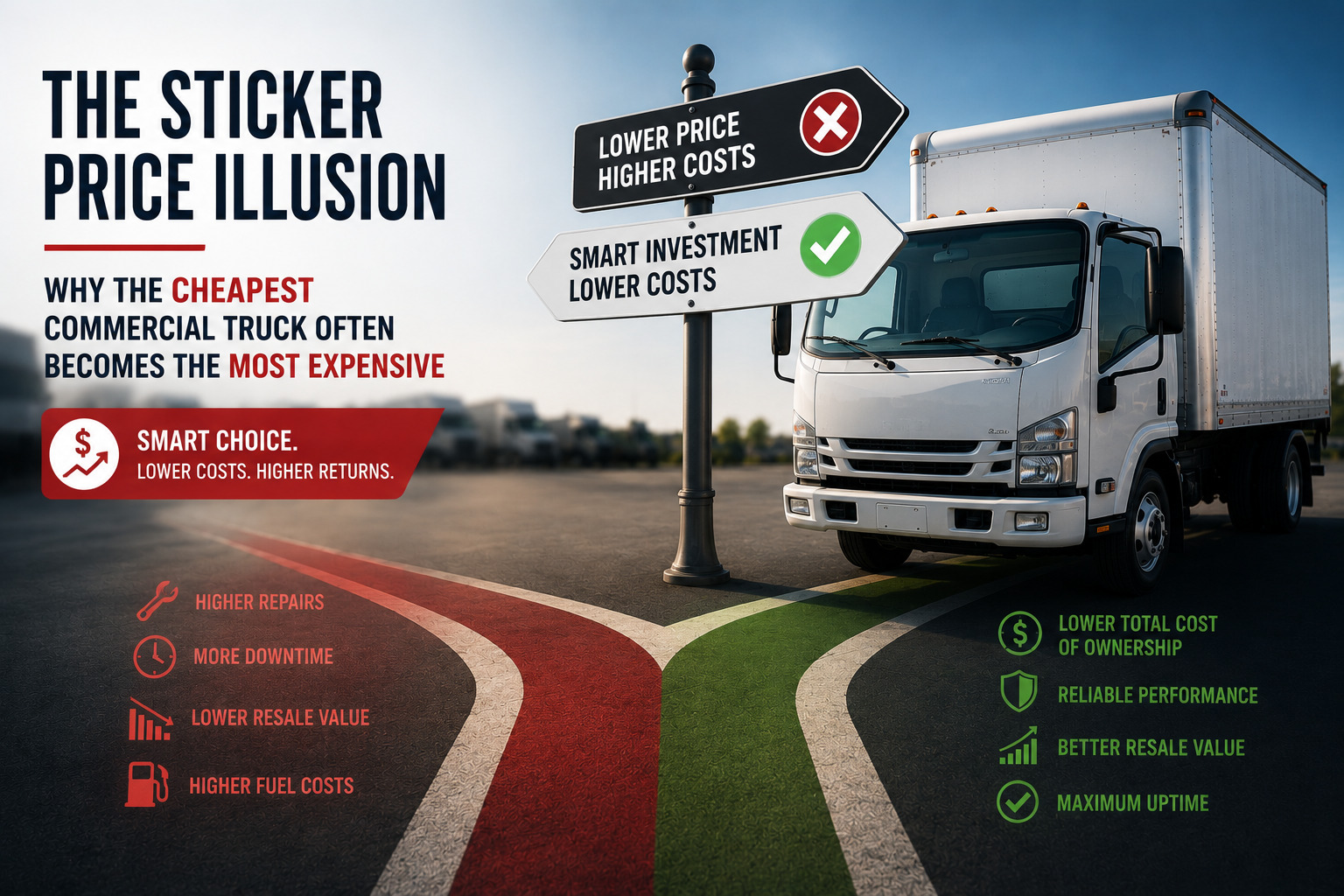
Perhaps the single most prevalent comparison mistake made by commercial buyers is focusing solely on the upfront purchase price of the vehicle, while failing to calculate the Total Cost of Ownership (TCO). A vehicle that appears to be an incredible bargain on paper due to a low initial price tag can easily become a financial sinkhole if it suffers from poor fuel economy, high maintenance requirements, or rapid depreciation. TCO is a holistic financial metric that accounts for every dollar spent on a vehicle throughout its operational life cycle, including financing interest, fuel, routine maintenance, unplanned repairs, insurance, taxes, and its eventual resale value when you retire it from your fleet.

Maintenance & Parts Dynamics
Before purchasing any commercial vehicle, research the long-term maintenance schedules, parts availability, and ease of repair for that specific make and model. Some imported or highly specialized commercial vehicles suffer from limited parts distribution networks, which means a simple mechanical failure can leave your vehicle stranded at a repair shop for weeks while waiting for replacement parts to arrive from overseas. For a service business, every single day a vehicle is out of service translates to lost revenue and disrupted client schedules. Selecting common, highly reliable commercial platforms—such as Ford Transit or Chevy Express chassis—ensures that parts are readily available and repairs can be handled quickly by almost any licensed technician.

Resale Value Considerations
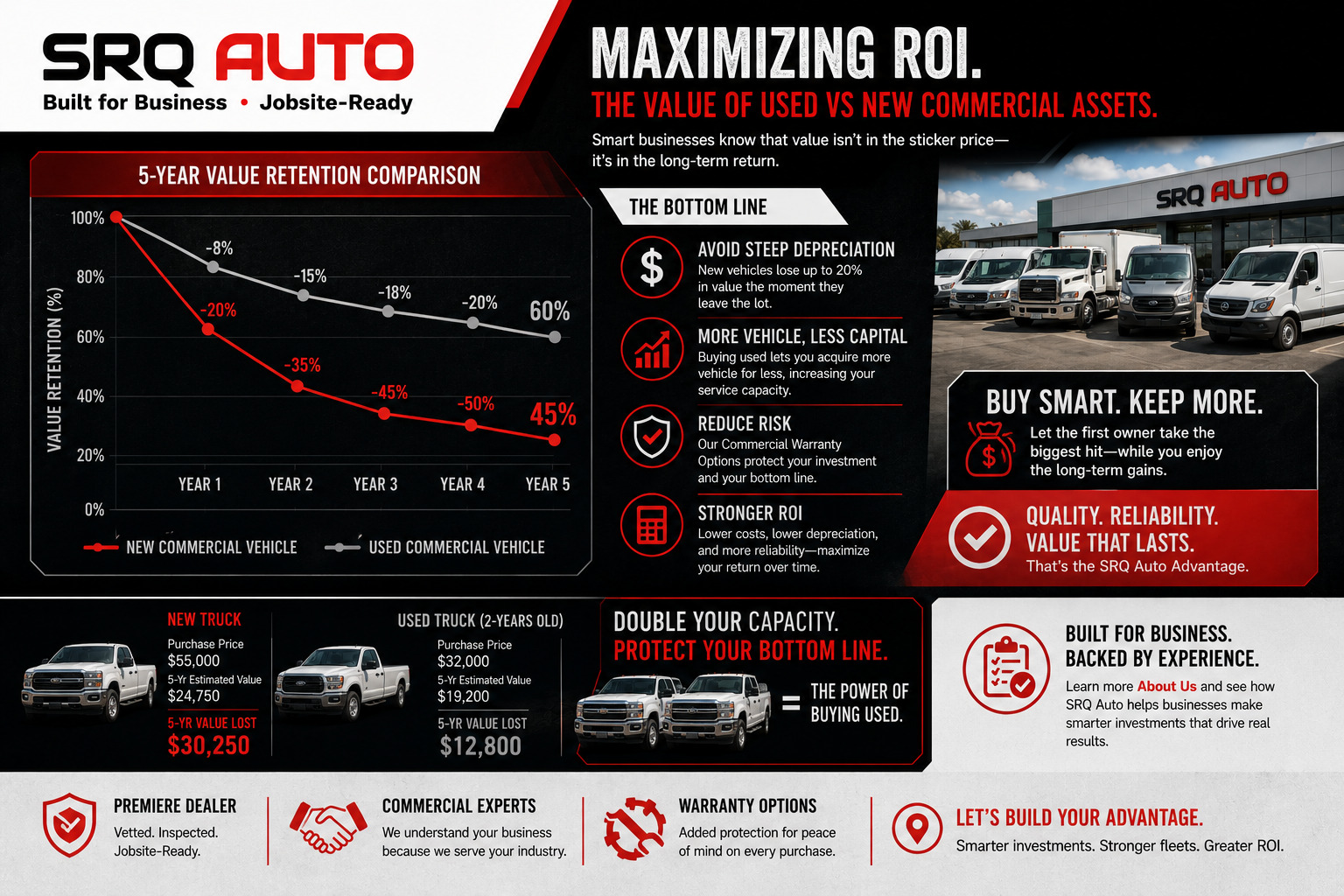
An often-overlooked component of TCO is historical resale value. A commercial vehicle is an asset, and its value at the end of its lifecycle directly impacts your company's balance sheet. To gauge which commercial vehicles hold their value best over time and see real-world market trends, we highly encourage you to review our catalog of Recently Sold Vehicles. By analyzing which configurations, makes, and models remain in high demand in the secondary market, you can make a highly strategic purchase that guarantees a strong return on your investment when it eventually comes time to upgrade or liquidate your commercial fleet assets.

What should be included in a pre-purchase inspection for a commercial vehicle?

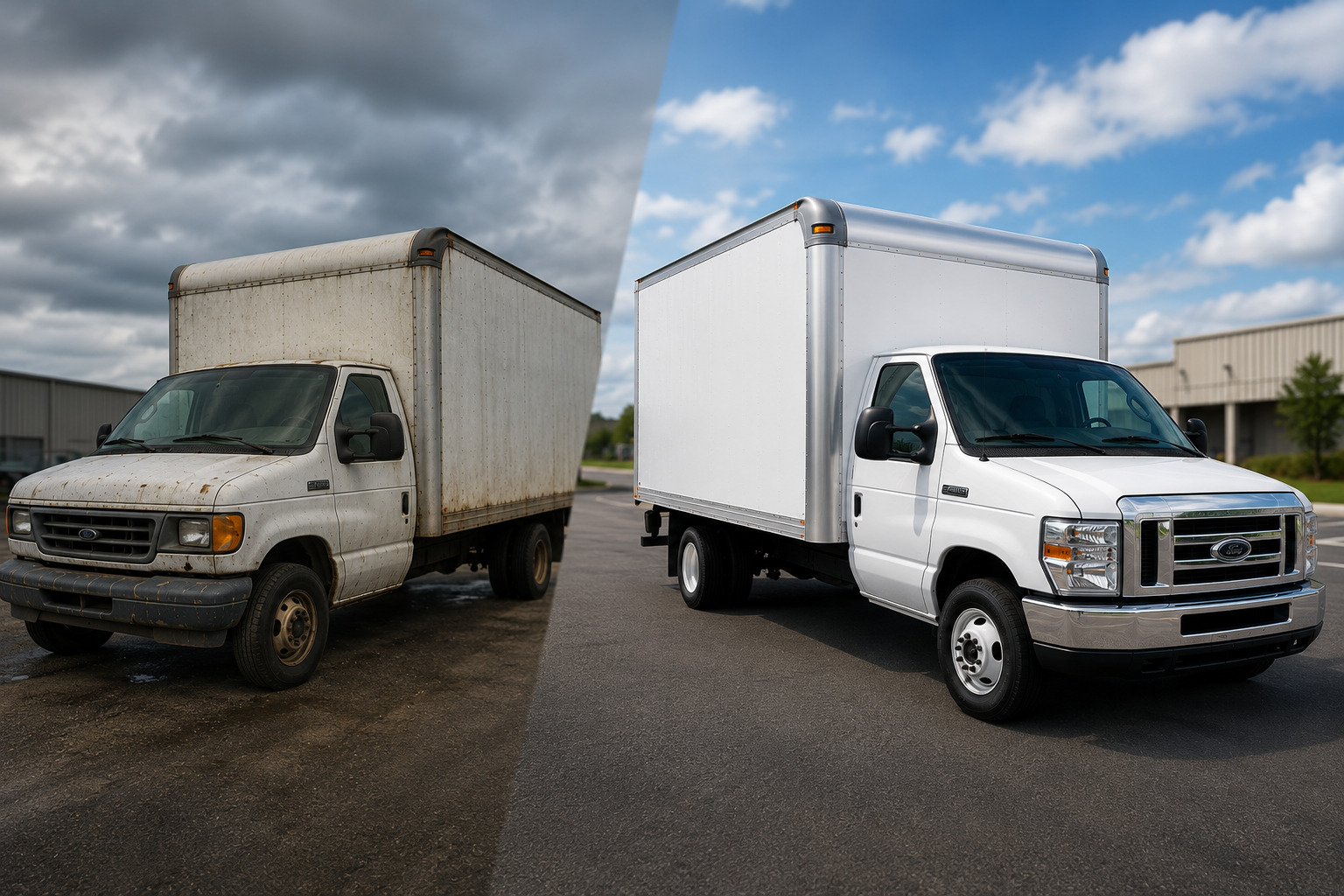
When purchasing a pre-owned commercial vehicle, a rigorous, highly specialized pre-purchase inspection is your absolute best defense against inheriting someone else's expensive mechanical problems. Unlike passenger vehicles, commercial trucks and vans operate under heavy loads, long idling hours, and demanding duty cycles, which accelerate mechanical wear. In our humid Southwest Florida coastal environment, a thorough inspection must begin with a meticulous examination of the vehicle's structural frame. Salty coastal air and frequent exposure to standing rainwater on job sites can lead to advanced frame scaling and structural rust, which can compromise the structural integrity of a heavy-duty chassis and render it completely unsafe. Next, the inspection should focus heavily on the vehicle's specialized mechanical systems. If you are purchasing a utility body, dump truck, or a vehicle equipped with a liftgate, the entire hydraulic system must be rigorously tested under load. Look for signs of hydraulic fluid leaks around cylinder seals, check the condition of all high-pressure hoses for cracking or dry rot, and ensure the hydraulic pump operates smoothly without excessive noise. The transmission must also be scrutinized, as hauling heavy payloads puts immense heat strain on automatic gearboxes. A certified technician should check for burnt transmission fluid, inspect the cooling lines, and perform a road test to ensure smooth, precise gear engagement under simulated payload conditions.

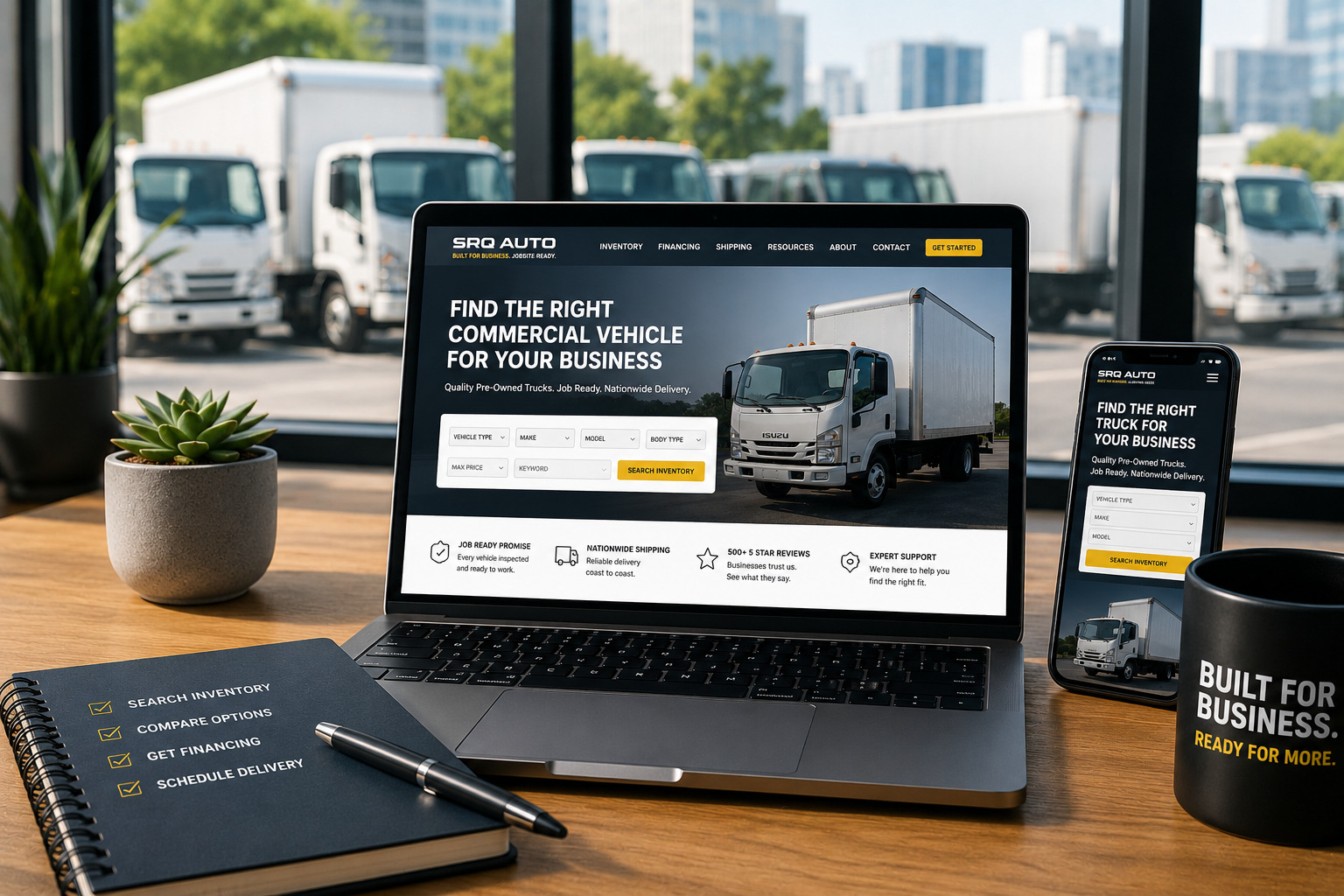
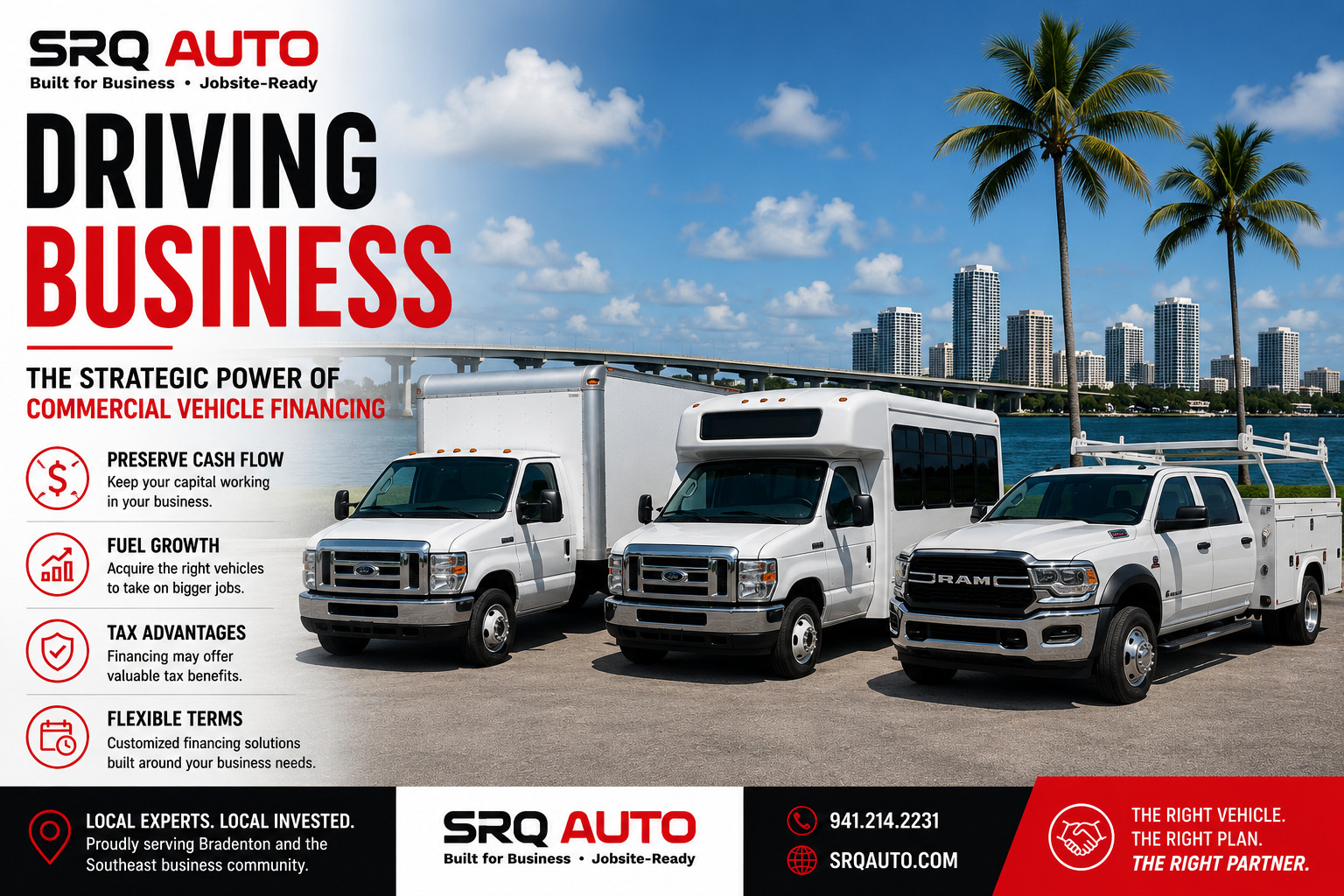
Furthermore, always request the vehicle's complete fleet maintenance history logs. A well-maintained commercial vehicle with higher mileage that has received documented, timely oil changes, fluid flushes, brake services, and routine inspections is often a far better investment than a lower-mileage vehicle that has been neglected and driven hard without proper care. At SRQ Auto LLC, we take the stress out of this process by putting every vehicle in our inventory through a rigorous, multi-point mechanical and safety inspection, ensuring every truck and van meets our strict "Job Ready Promise" standards before it ever hits our lot. To make your fleet acquisition process as seamless and financially viable as possible, we offer highly competitive, tailored financing solutions designed to fit the unique cash flow needs of local business owners. Whether you are operating as an LLC, corporation, or sole proprietorship, we encourage you to submit our secure online Credit Application. Our experienced team works with a broad network of commercial lenders to secure flexible terms, low down payments, and competitive rates that keep your business's capital working for you.

Why is it important not to rush through final paperwork when buying a work vehicle?

The excitement of finding the perfect work vehicle can easily lead buyers to rush through the final administrative stages of the purchase. However, rushing through commercial loan contracts, registration requirements, title designations, and warranty fine print is a recipe for severe operational and financial setbacks. Commercial vehicle transactions involve legal and regulatory complexities that simply do not exist in personal vehicle sales. Taking the time to meticulously audit every line of your final paperwork is vital for protecting your business's interests. First, pay close attention to the specific terms of your commercial loan. Verify that the interest rates, amortization schedule, and monthly payments align exactly with what was discussed and approved. Be on the lookout for any hidden fees, prepayment penalties, or restrictive covenants that could limit your ability to pay off the loan early or sell the vehicle before the loan term expires. Additionally, ensure that the financing contract correctly lists your business entity as the primary owner or co-signer, which is crucial for establishing proper corporate liability separation and securing the maximum Section 179 tax deductions.

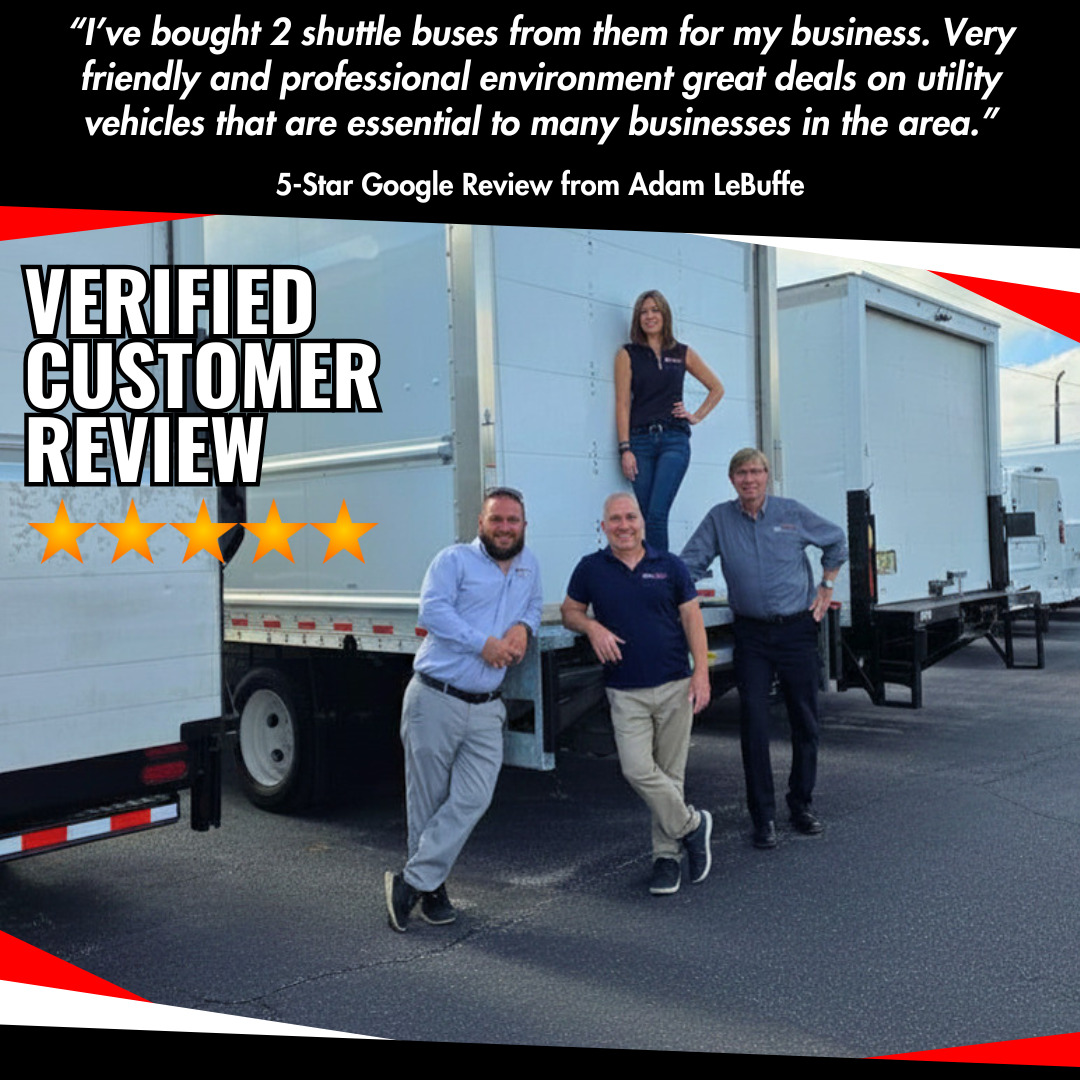
Second, you must verify that the vehicle's registered weight class matches local Department of Transportation (DOT) and Federal Motor Carrier Safety Administration (FMCSA) compliance standards. In Florida, commercial vehicles with a GVWR of 10,001 pounds or more are subject to strict state and federal safety regulations, requiring the business to display official DOT numbers, maintain driver logs, and undergo annual vehicle safety inspections. If a salesperson incorrectly registers your vehicle's weight or fails to provide the necessary weight certifications, your drivers can face immediate roadside citations, hefty fines, and your vehicle can be placed out of service by Florida highway patrol during routine commercial vehicle enforcement checks. Finally, take the time to carefully read the fine print of any commercial protection plans or extended warranties. Ensure you understand exactly what mechanical components are covered, what deductibles apply, and where the vehicle can be serviced. At SRQ Auto LLC, we believe in absolute transparency and structured simplicity throughout the entire commercial purchase process. We take the time to walk you through every document, verify all regulatory weight classifications, and ensure you leave our dealership with complete confidence. To see how our dedication to honest, transparent customer service has helped hundreds of local business owners buy with peace of mind, we invite you to read our stellar customer Reviews.
Matching Your Commercial Fleet to the Southwest Florida Climate and Terrain

Operating a commercial fleet in Southwest Florida—specifically across Bradenton, Sarasota, and the greater Tampa Bay region—requires a deep understanding of our unique geographic and environmental challenges. Failing to spec your vehicles for our distinct climate and terrain is a major mistake that leads to premature mechanical wear, frequent breakdowns, and inflated maintenance costs. The first and most obvious regional factor is our intense, year-round heat and high humidity. Under these brutal conditions, a vehicle's engine cooling and transmission cooling systems are put under continuous, extreme stress. If you are hauling heavy payloads or towing trailers along our major highways, a standard cooling package will quickly prove inadequate, leading to engine overheating and catastrophic transmission failure. Always look for vehicles equipped with heavy-duty cooling packages, auxiliary transmission coolers, and robust electrical charging systems designed to handle the continuous load of high-output air conditioning systems.
Our coastal geography also presents unique terrain challenges. Southwest Florida job sites—particularly for landscaping, roofing, pool construction, and general contracting—often feature deep, loose sugar sand and muddy terrain following our frequent summer rainstorms. If your work trucks are only equipped with standard two-wheel drive (2WD) and highway-terrain tires, they will easily become stuck on sandy job sites, wasting valuable crew hours and requiring expensive towing assistance. For businesses operating in these environments, investing in four-wheel drive (4WD) or all-wheel drive (AWD) drivetrains, coupled with high-quality all-terrain tires, is essential for maintaining daily productivity. Additionally, our salty coastal air accelerates metal corrosion. Ensuring your fleet vehicles receive regular undercarriage washes and are treated with corrosion-resistant coatings is vital for protecting your vehicle's frame and body from premature rust and degradation.

A heavy-duty work truck operating on a sandy coastal construction site under a bright sun, demonstrating the rugged terrain of Southwest Florida.

A Step-by-Step Checklist to Avoid Commercial Vehicle Buying Mistakes

Phase 1: Operational Planning
• Define cargo volume requirements and crew size.
• Contrast stop-and-go urban routes with high-mileage highway routes.
• Detail volumetric space vs weight capacity needs.
• Project fleet expansion and client growth over 3-5 years.

Phase 2: Mechanical Specs & Upfits
• Calculate true payload requirements (GVWR minus Curb Weight).
• Ensure a 15-20% safety margin for heavy cargo.
• Choose certified upfitters to protect OEM warranties.
• Select climate-appropriate cooling packages and drivetrains.

Phase 3: Financial & Legal Audit
• Calculate TCO (Total Cost of Ownership) over upfront price.
• Work with a CPA to maximize Section 179 tax deductions.
• Verify vehicle's weight matches local DOT standards.
• Conduct a comprehensive pre-purchase physical inspection.

Buying Phase

Key Focus Area

Critical Action Item

Needs Assessment

Volumetric vs. Weight

Calculate payload requirements incorporating passenger and fuel weights.

Upfitting Integration

Warranty & Safety

Ensure certified installations; explore pre-upfitted inventory to save lead time.

Tax Optimization

Section 179 Deduction

Verify vehicle GVWR is over 6,000 lbs for maximum write-off potential.

TCO Comparison

Long-term Fleet Operating Costs

Evaluate real parts availability, historical resale values, and fuel efficiency.

Physical Inspection

Mechanical & Structural Integrity

Inspect frames for rust in coastal climates and test heavy hydraulic equipment.

Ready to Upgrade Your Fleet? Contact SRQ Auto LLC in Bradenton Today

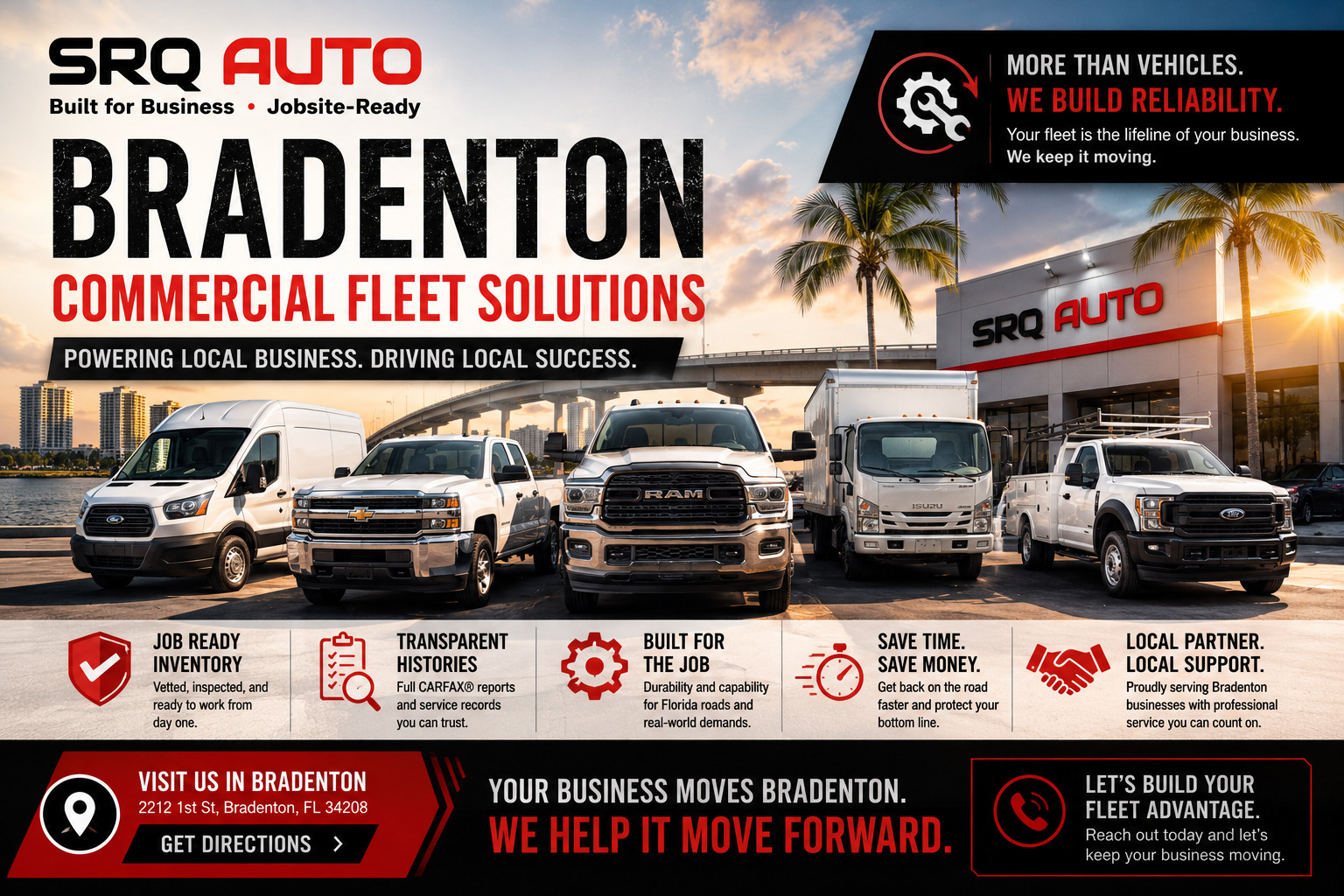
Map and promotional graphic for SRQ Auto LLC in Bradenton, FL, highlighting location, shipping, and financing.

Why Choose SRQ Auto for Your Commercial Vehicle Needs?
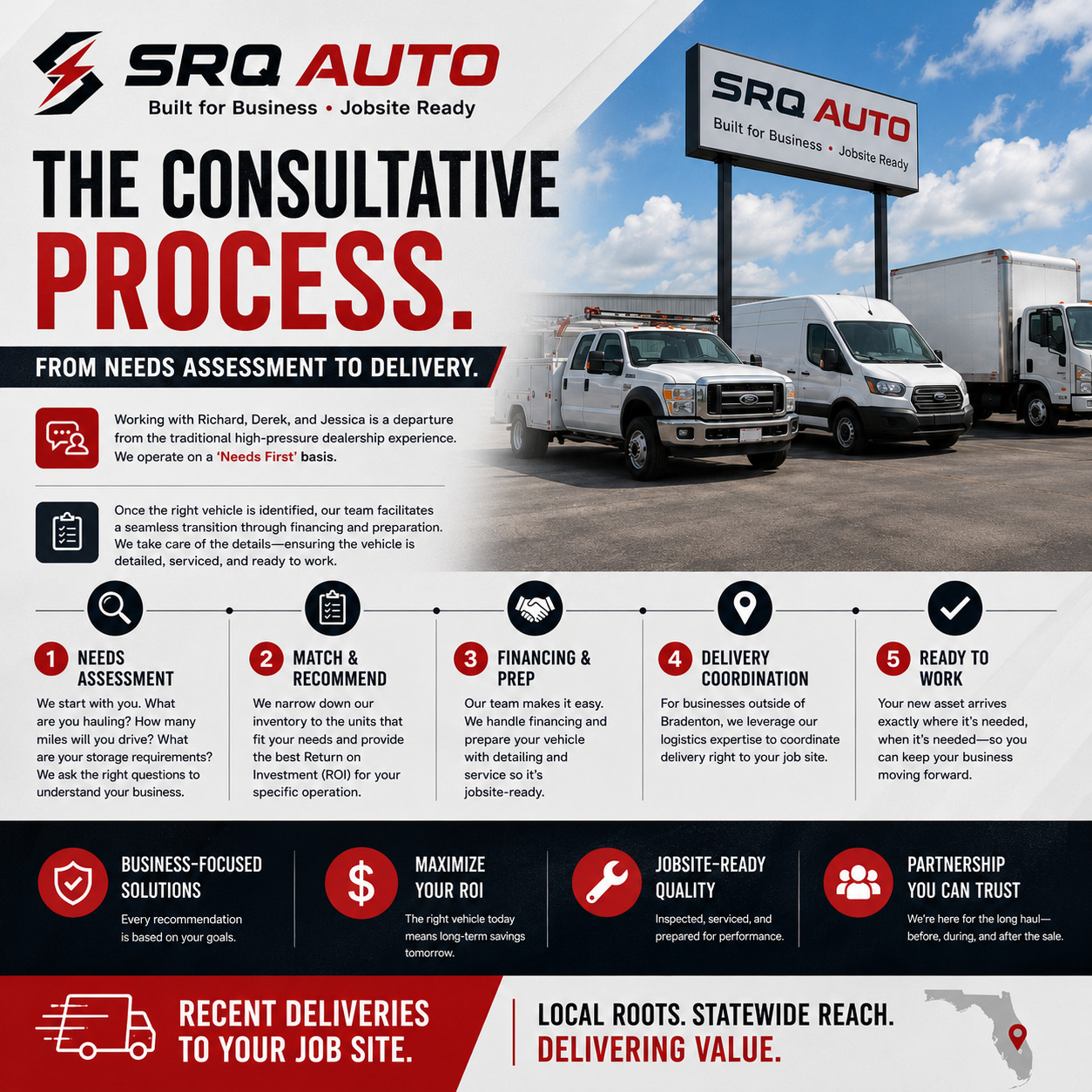
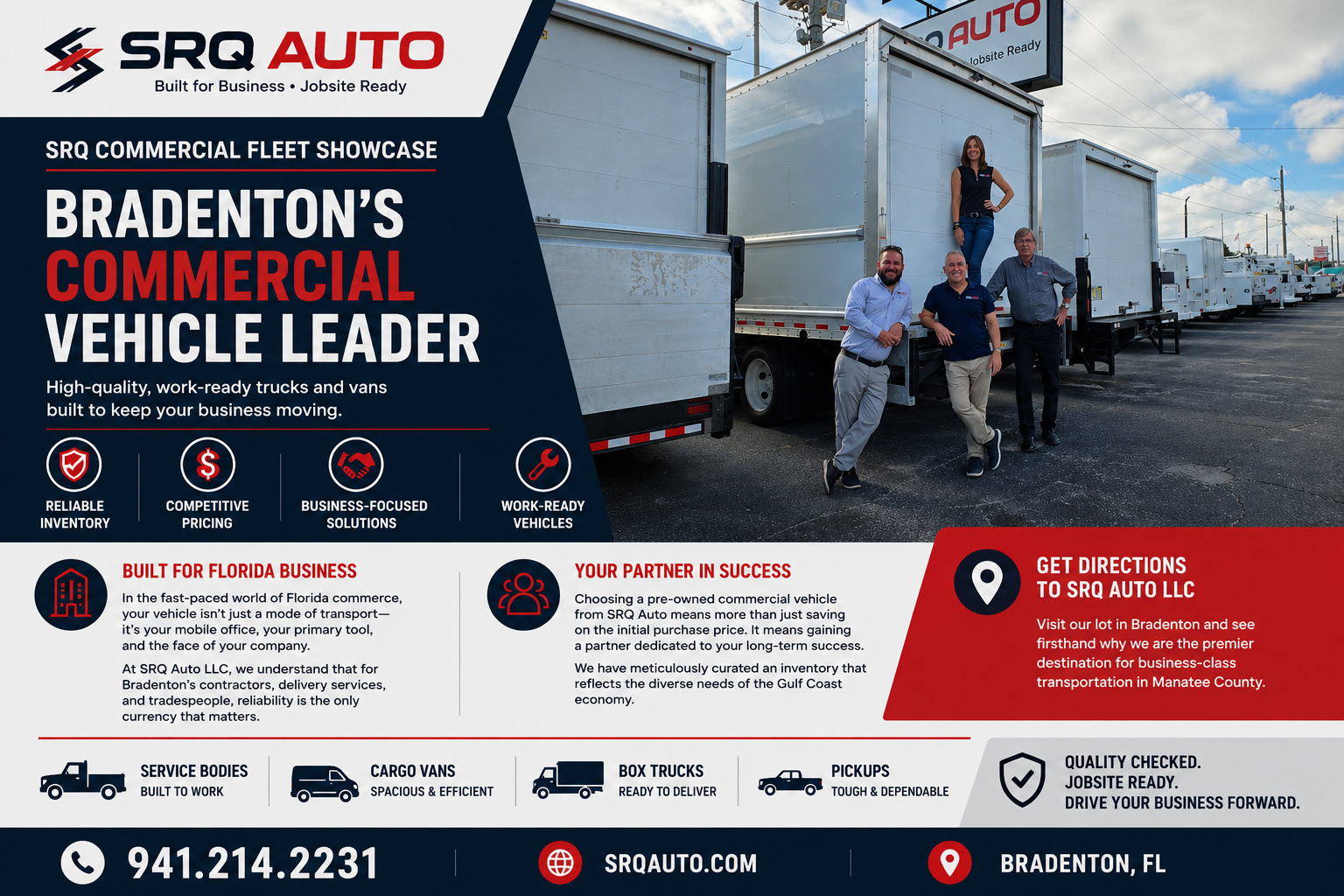
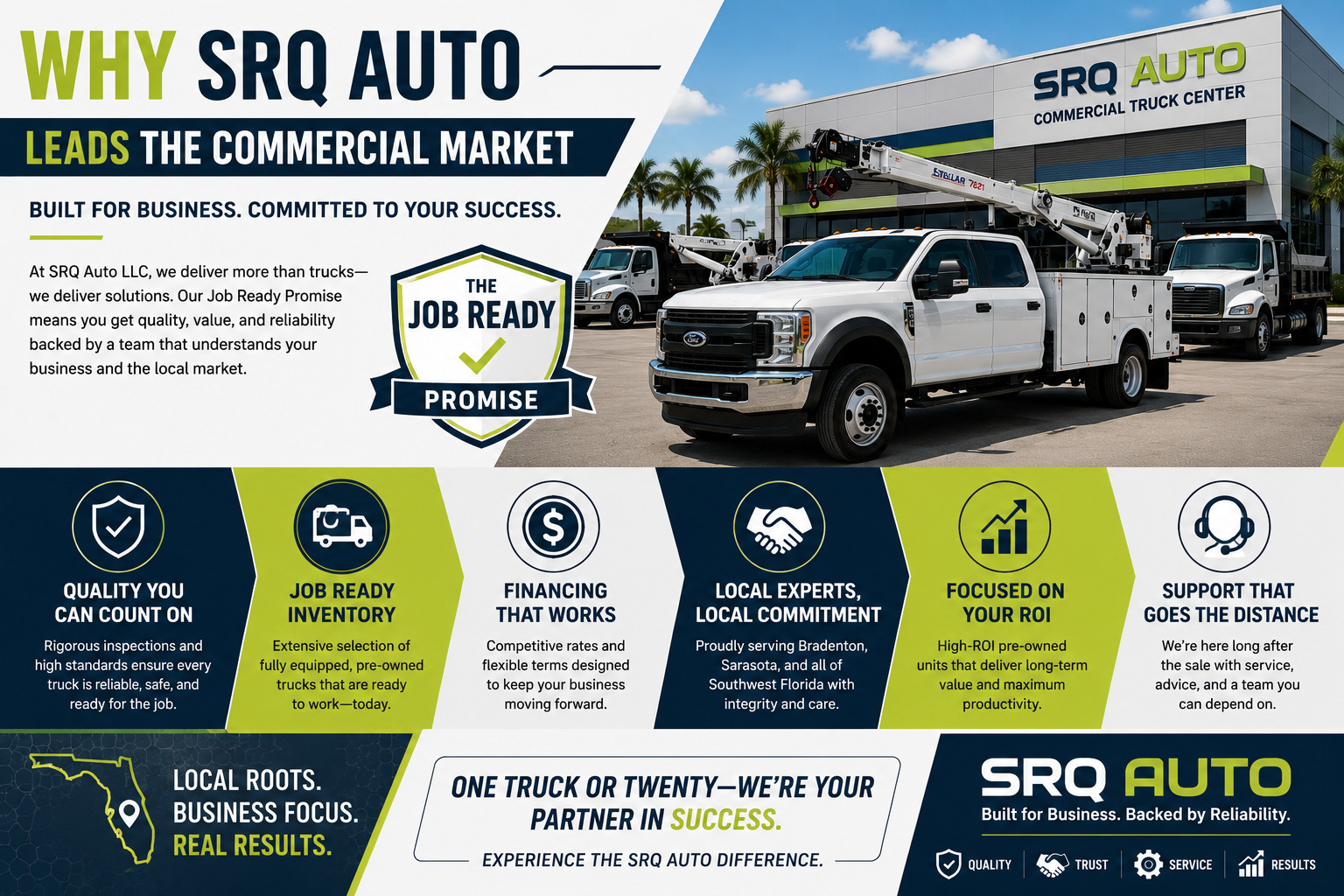
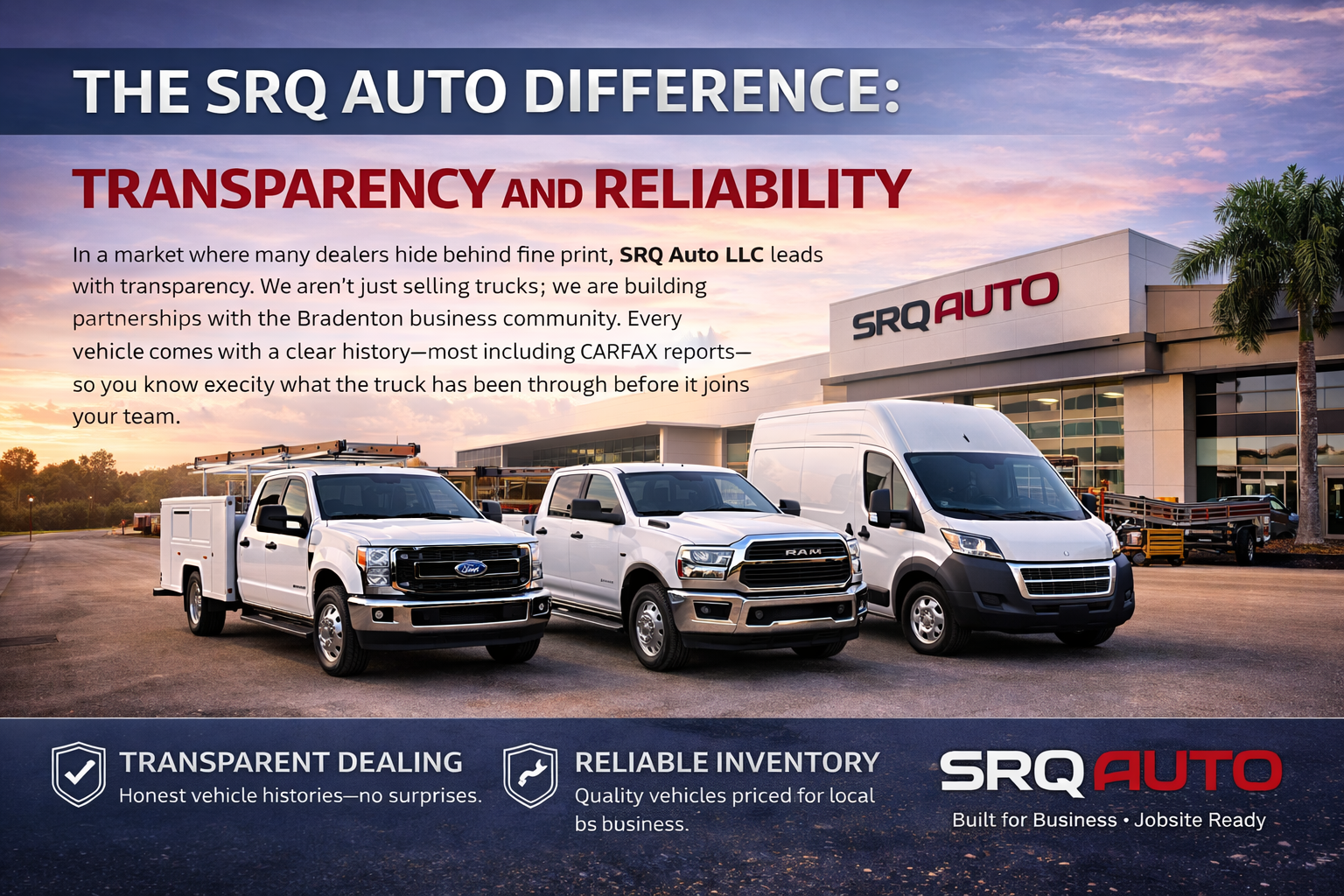
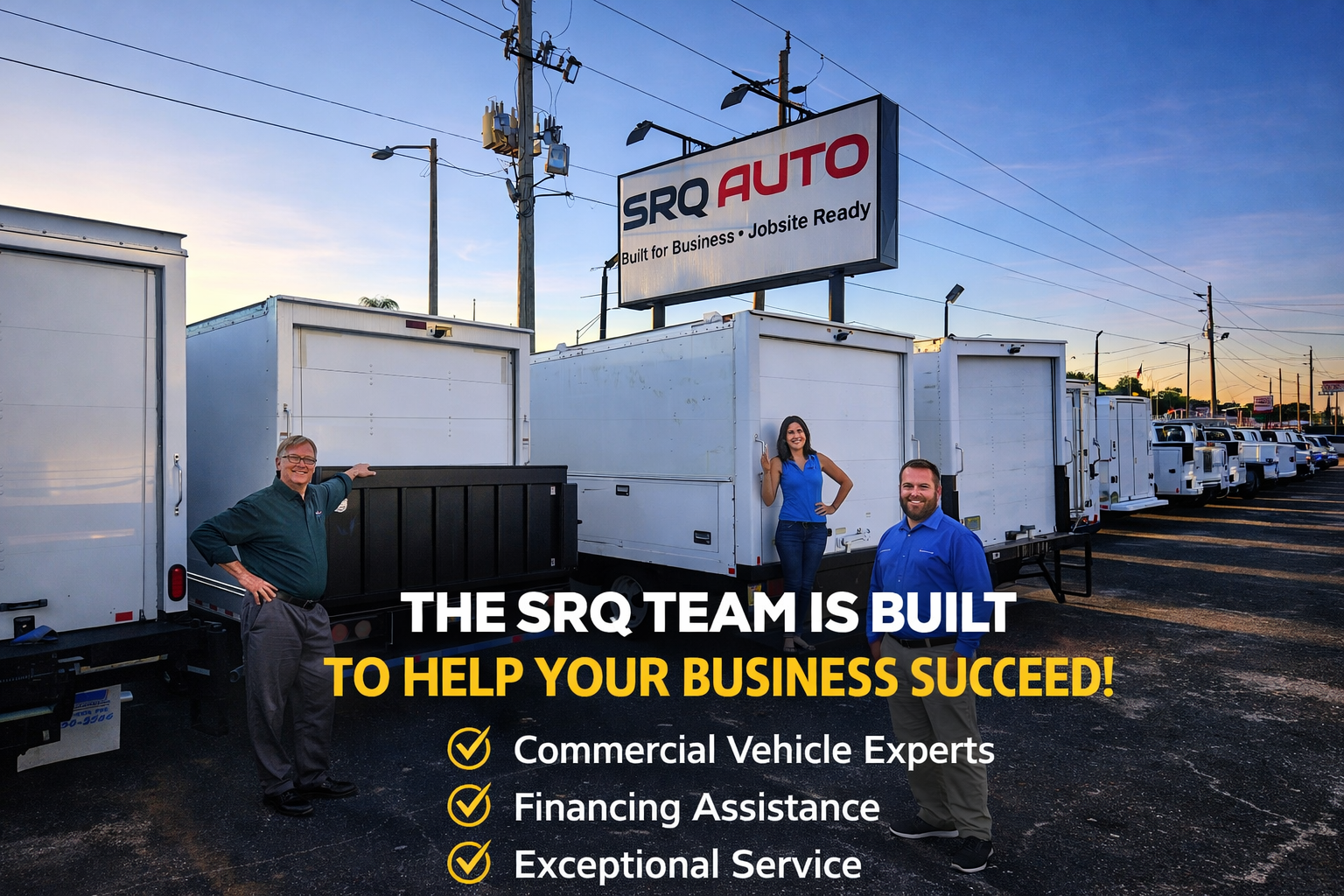
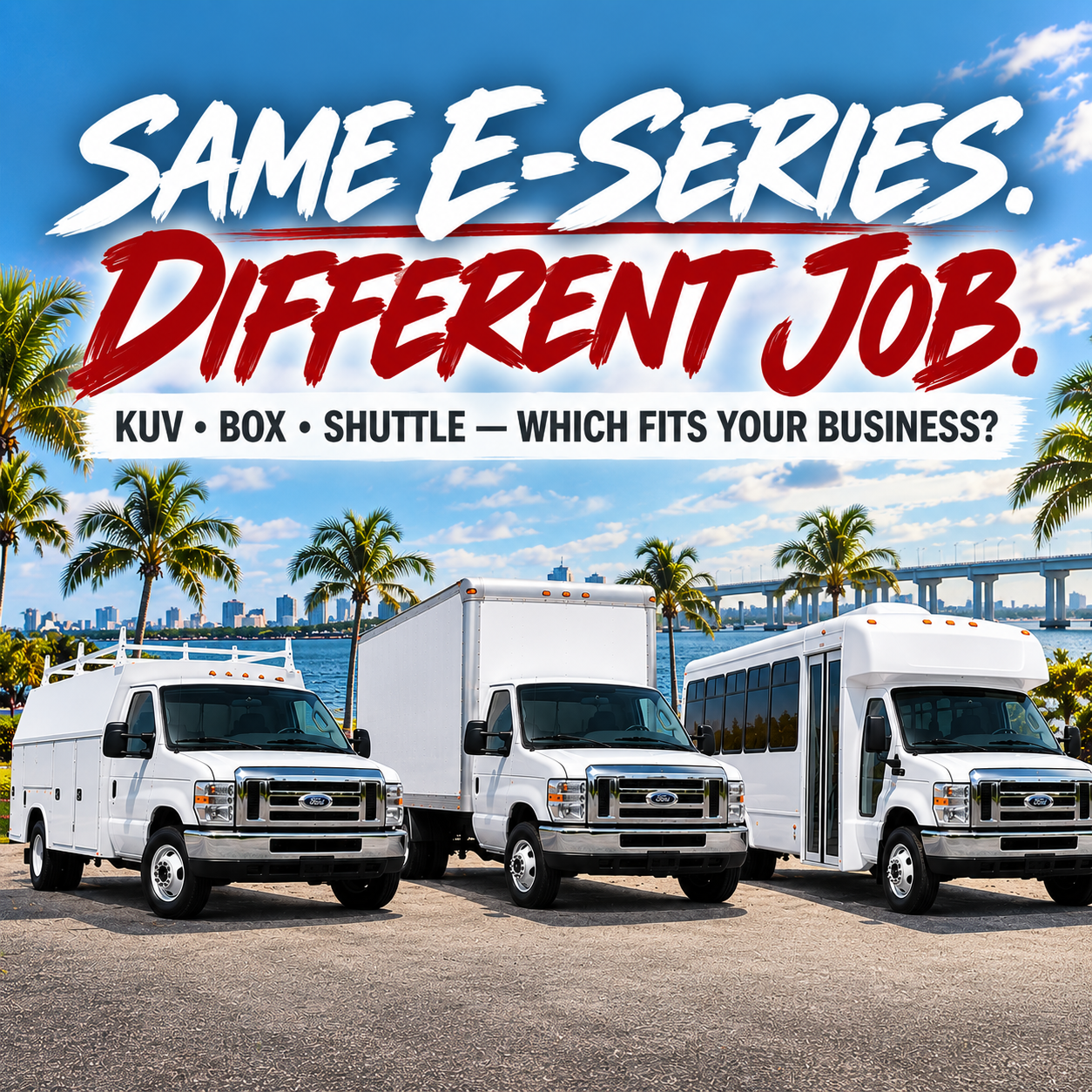
At SRQ Auto LLC, we know your business depends on vehicles that are ready to perform from day one. That's why every commercial vehicle we sell is thoroughly inspected, serviced, reconditioned, and backed by our Job Ready Promise. From cargo vans and utility trucks to box trucks, shuttle buses, and heavy-duty pickups, we specialize exclusively in commercial vehicles built to keep businesses moving. With transparent vehicle histories, commercial financing, nationwide shipping, and over 500 five-star Google reviews, we've earned the trust of contractors, fleet operators, municipalities, and business owners across the country. Whether you're purchasing one vehicle or expanding an entire fleet, SRQ Auto delivers dependable, work-ready solutions that help your business stay productive. Our expansive inventory is curated to support a vast range of commercial applications. If you are operating a local landscaping or tree service business, explore our rugged Landscape Dump Trucks. If your business focuses on hospitality, municipal transit, or group excursions, we feature high-quality Used Shuttle Bus Inventory designed for optimal passenger safety and comfort. For trade professionals, our pre-owned work vans and utility trucks provide the ultimate mobile workshop. No matter what your industry requires, our team is dedicated to pairing you with a vehicle that is mathematically and mechanically suited to your operations.

Nationwide Commercial Shipping Expertise
At SRQ Auto LLC, our reach extends far beyond Bradenton. We specialize in Nationwide Shipping specifically tailored for commercial vehicles. Because we facilitate commercial transport daily, our team is deeply familiar with the specialized logistics required for trucks, vans, and chassis cabs. We handle every detail of the process, ensuring your vehicle arrives at your job site safely, promptly, and ready to work—no matter where in the country you are located. You can explore our Recent Deliveries to see how we regularly ship top-tier work vehicles to satisfied business owners nationwide. Do not let a costly buying mistake compromise your company's cash flow, safety, or efficiency. Partner with the commercial vehicle experts at SRQ Auto LLC. We invite you to visit our showroom located at 2212 1st St, Bradenton, FL 34208 to inspect our inventory in person. You can easily Get Directions to SRQ Auto LLC to plan your visit, or Call us at (941) 214-2231 today to speak directly with an experienced commercial vehicle consultant. Let us help you find the dependable, high-performing, work-ready vehicles your business needs to grow.