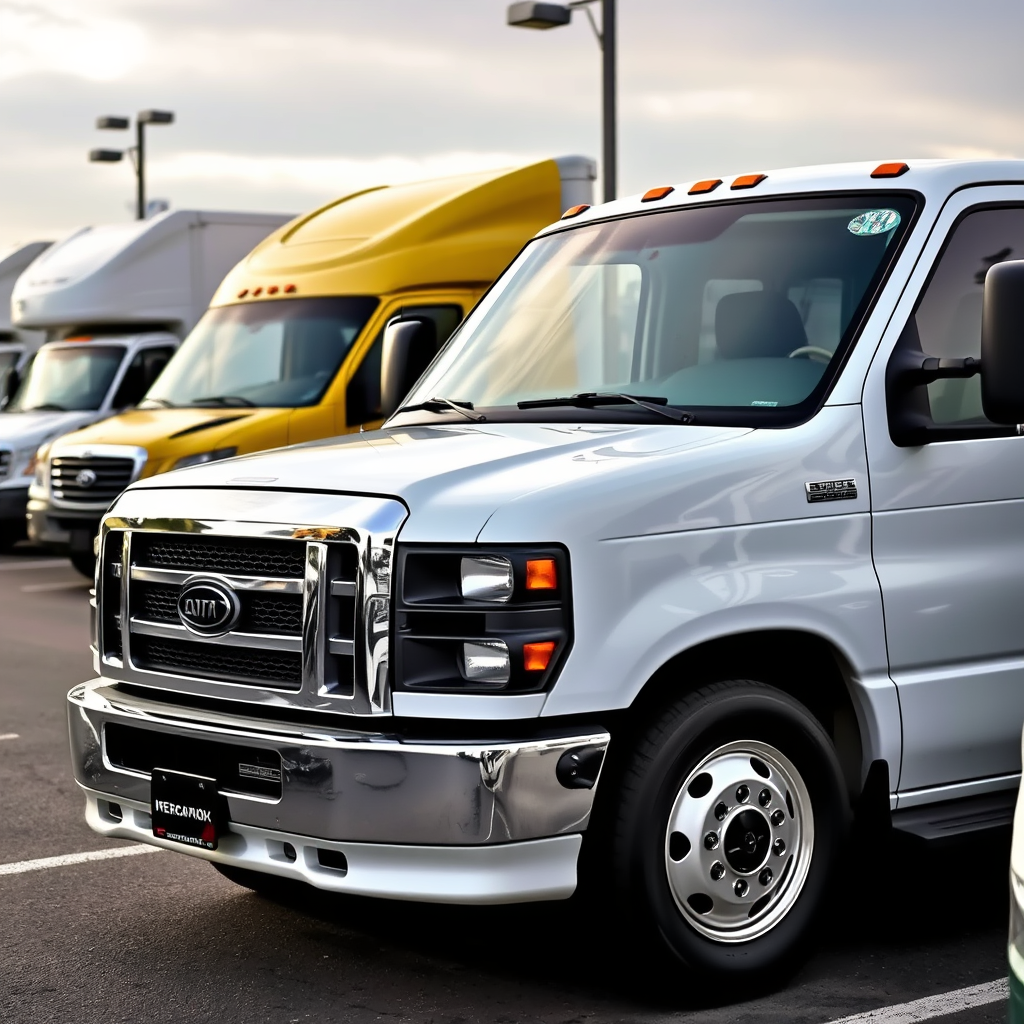
How Do You Choose the Right Commercial Work Truck for Your Business?

Selecting the right commercial work truck requires calculating net payload capacity by subtracting body weight from the chassis Gross Vehicle Weight Rating, choosing between single-rear-wheel and dual-rear-wheel layouts, and matching cab-to-axle dimensions to your trade requirements. You must also align engine torque and axle ratios with daily trailer loads to maintain job site efficiency without risking mechanical strain or overloading.
When contractors evaluate utility trucks, matching the truck chassis to job site demands prevents costly operational downtime. Class 2 through Class 5 chassis cabs serve as the base for service bodies, ranging from a 10,000-lb GVWR light-duty model up to a 19,500-lb GVWR heavy-duty platform. Determining your total daily payload—including tools, equipment, driver, crew, and onboard fluids—establishes the minimum chassis class required.
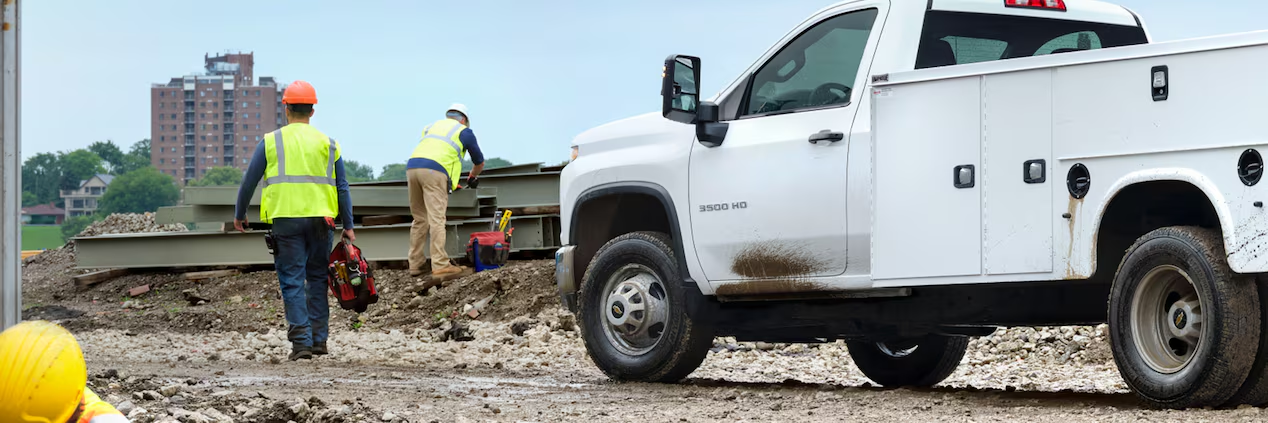
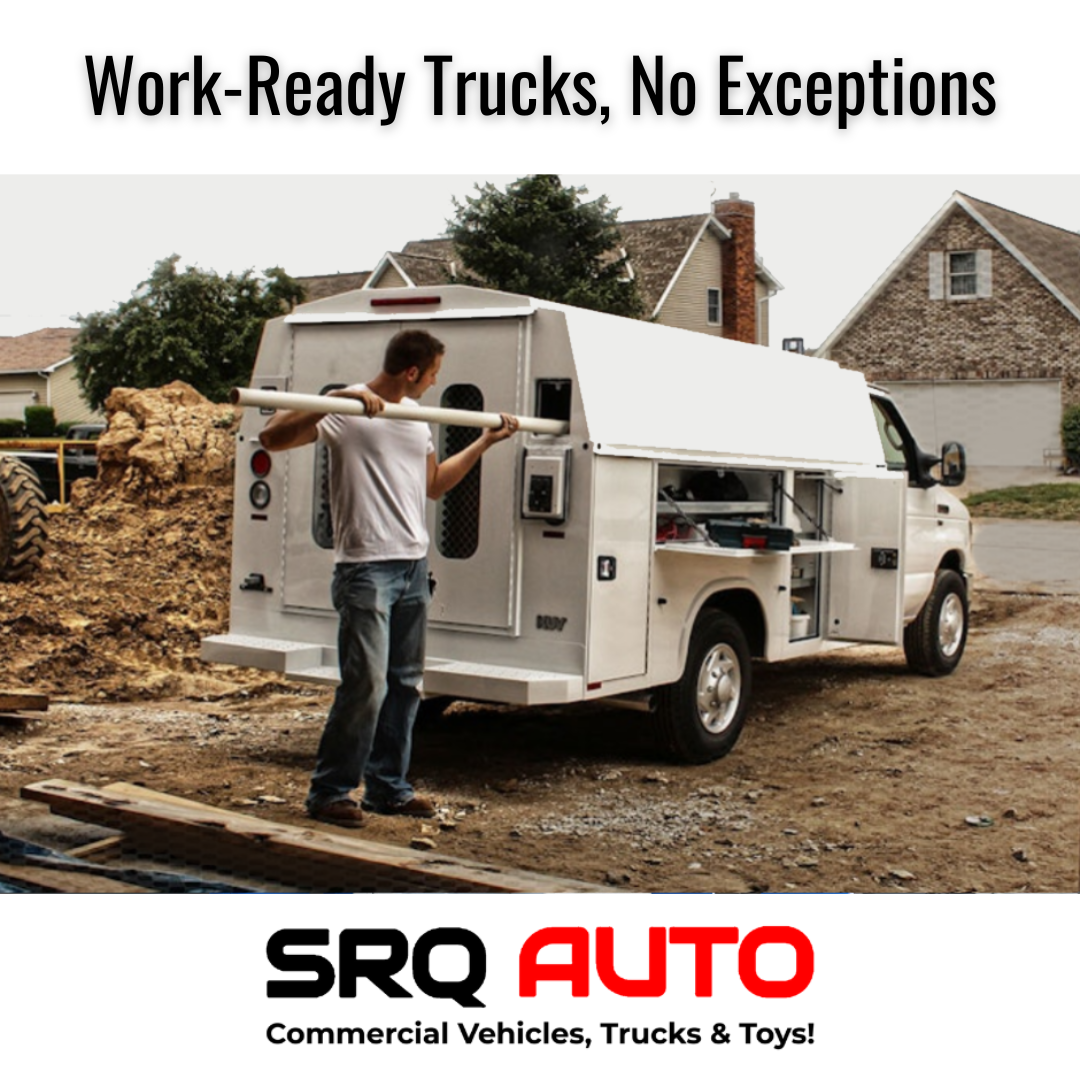
Cab-to-axle (CA) measurements determine which body lengths fit a chassis. Standard industry CA dimensions include 56 inches or 60 inches for 8-foot and 9-foot utility beds, while an 84-inch CA accommodates 11-foot service bodies. Trade contractors managing residential construction and service projects near Lakewood Ranch need organized utility storage to keep tools secure and accessible on the road. When trade contractors walk our lot, they usually measure side compartment drawer depth and check tailgate latch clearance before even turning the key.
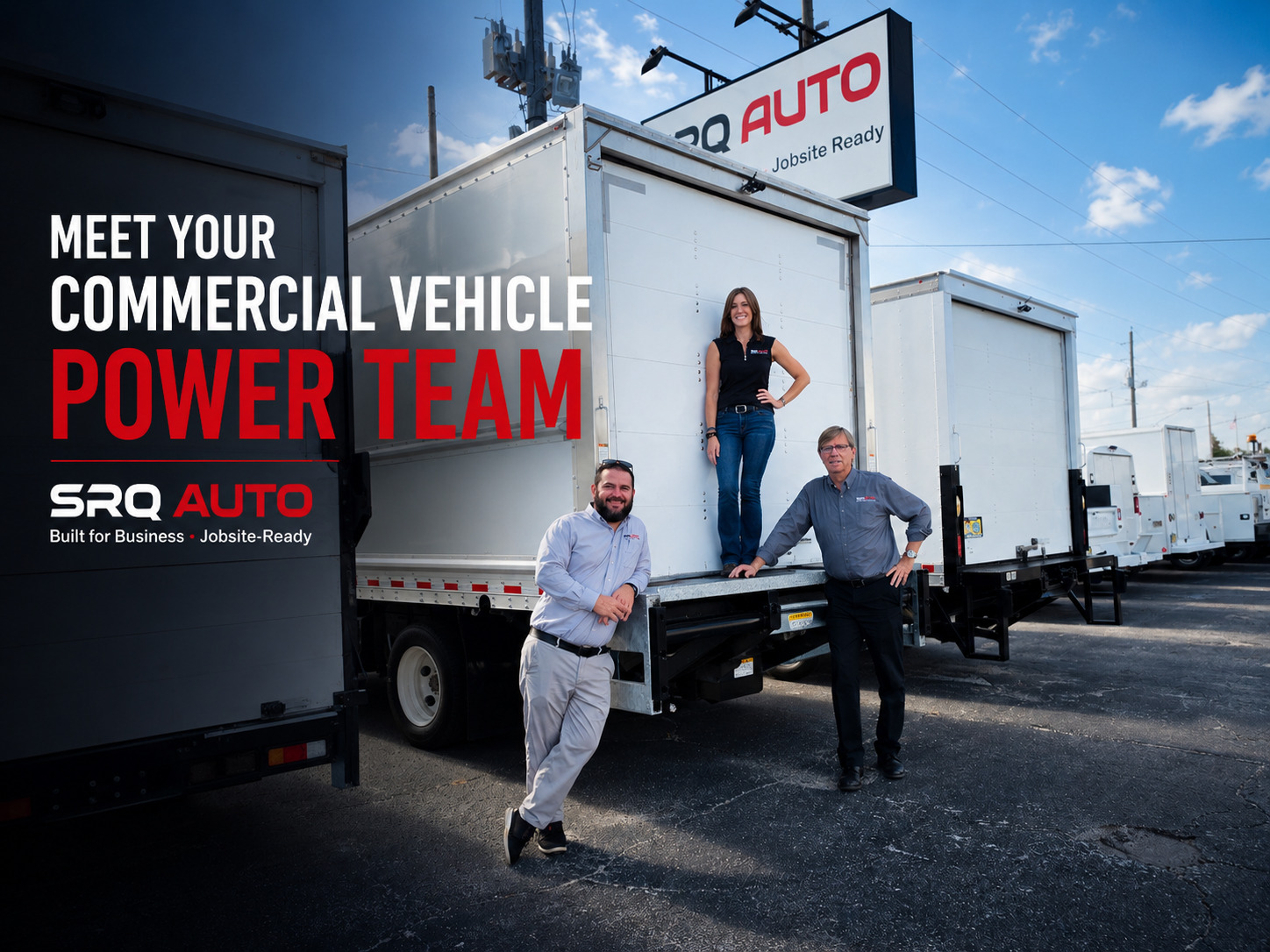
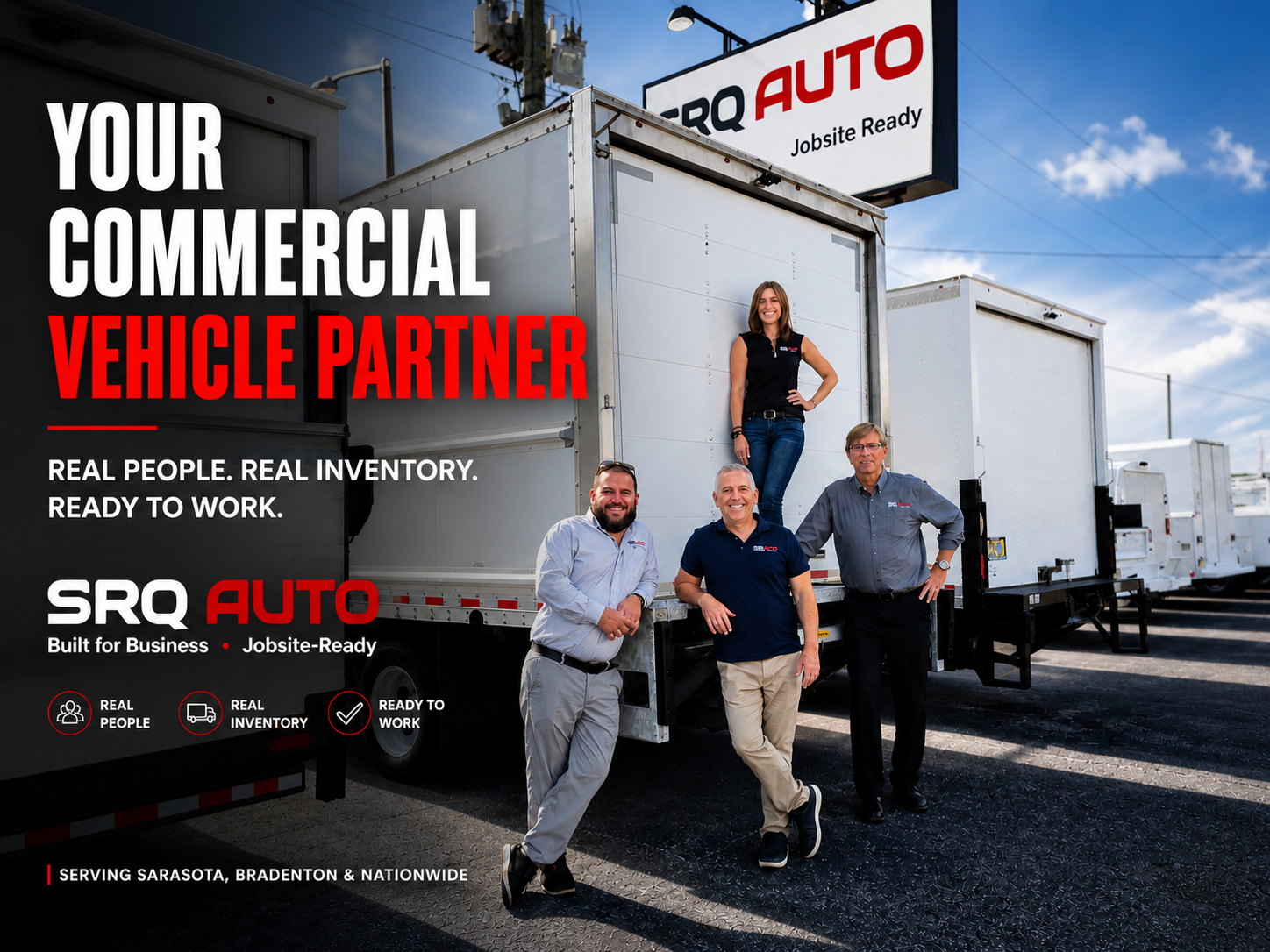
Making a smart buying decision means selecting a work truck that is ready to perform on day one without requiring unexpected aftermarket modifications. You can explore work-ready vehicles in person by finding our Bradenton showroom or speaking directly with our commercial specialists by calling (941) 214-2231 today.
Table of Contents
- What Are the Main Types of Commercial Work Trucks and Their Weight Capacities?
- How Can Business Owners Measure Operating Costs and Leverage Section 179 Tax Rules?
- What Work Truck Configurations Are Available for Bradenton Contractors and Fleets?
- Where Can Business Owners Source Commercial Work Trucks?
- Quick Answers to Common Commercial Work Truck Buying Questions
- Drive Your Business Forward with Work-Ready Trucks at SRQ Auto LLC
What Are the Main Types of Commercial Work Trucks and Their Weight Capacities?
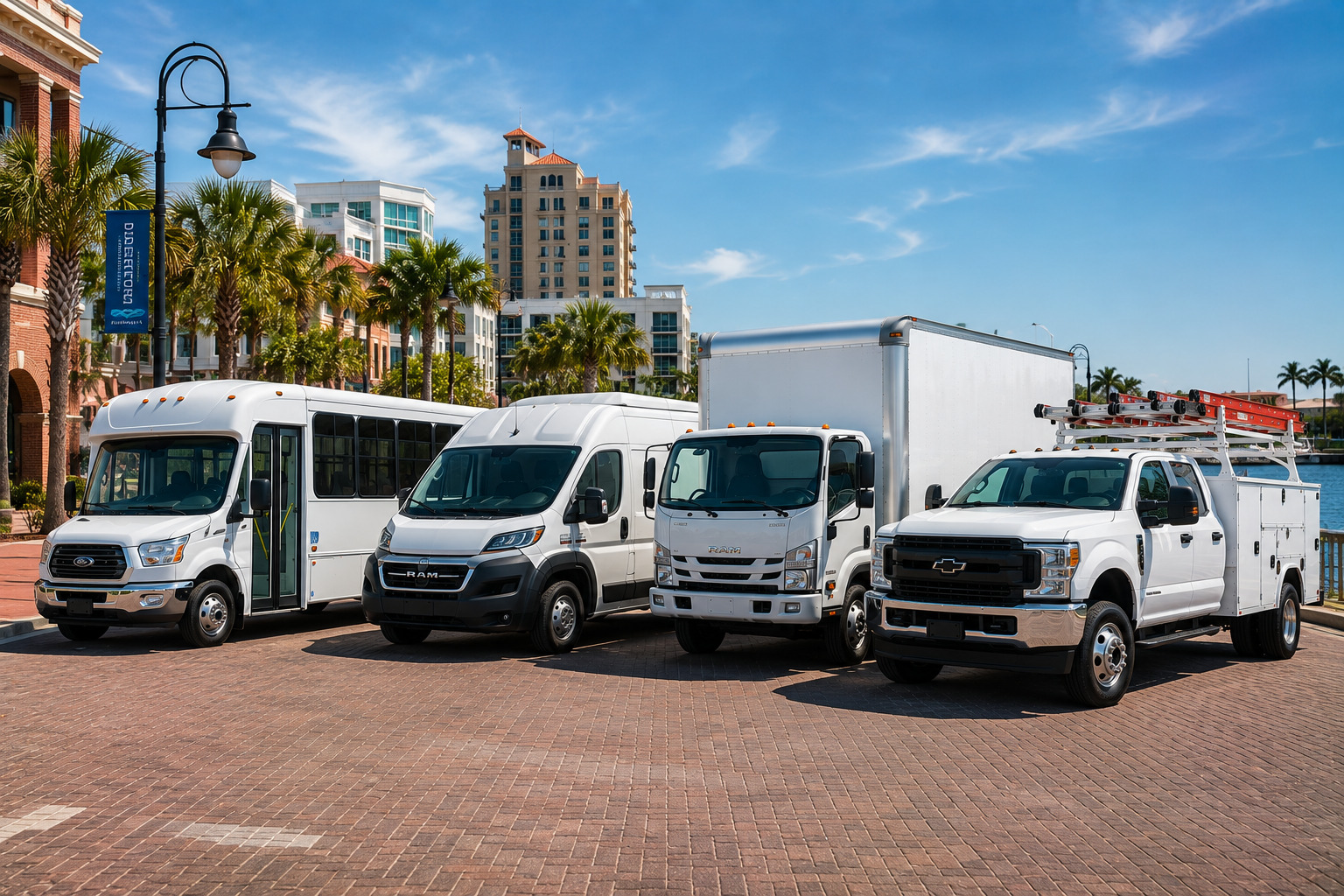
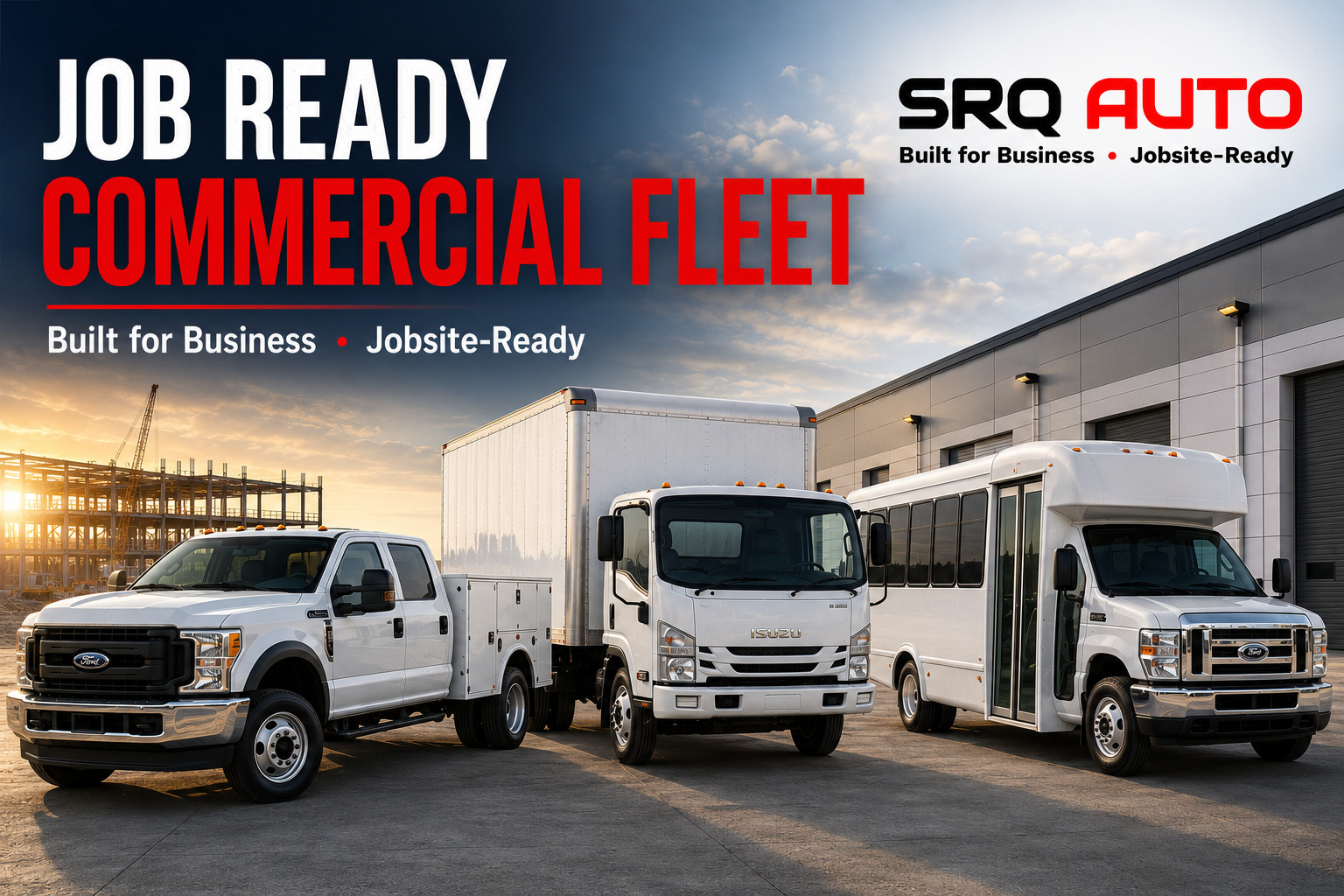
Commercial work truck types range from light-duty pickups and high-roof cargo vans to heavy-duty service bodies, flatbeds, box trucks, and chassis cabs built across Class 1 through Class 5 weight ratings. Payload limits scale from roughly 1,500 lb on Class 1 platforms up to over 10,000 lb on Class 5 chassis, with maximum towing capacities extending beyond 35,000 lb depending on axle configurations and hitch setups.
Understanding how different body styles handle weight and cargo volume helps fleet buyers match the proper vehicle class to their business:
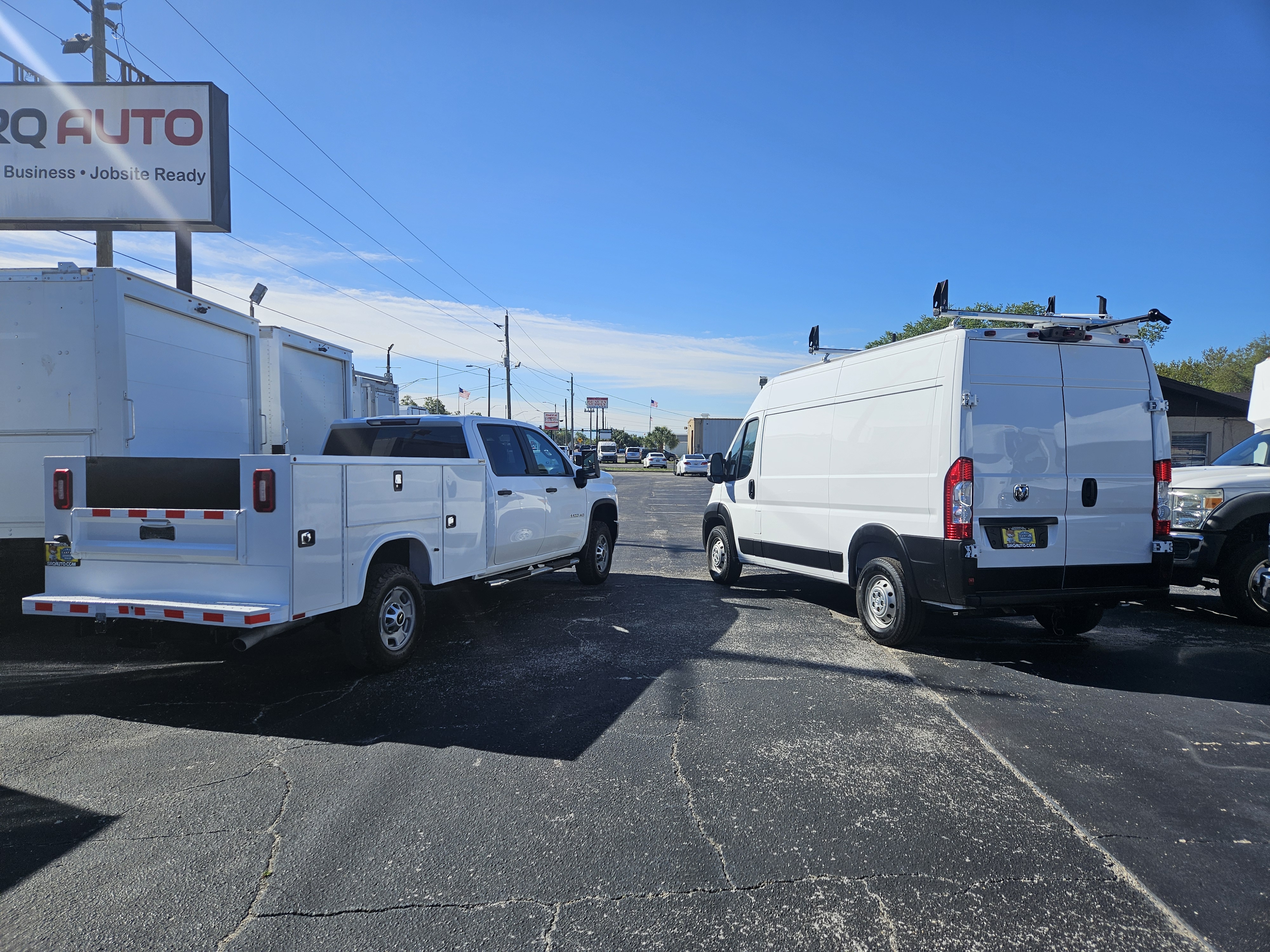
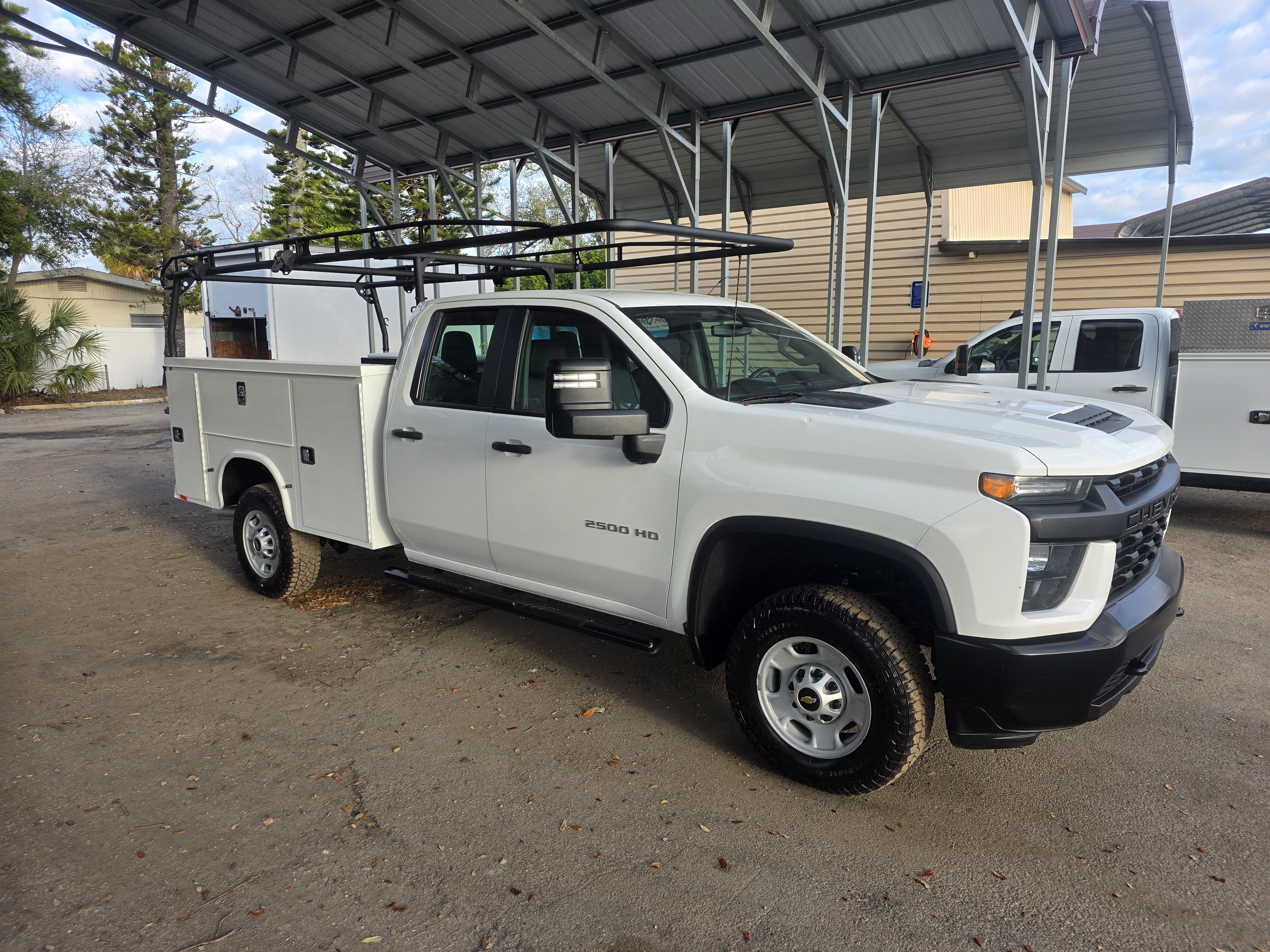
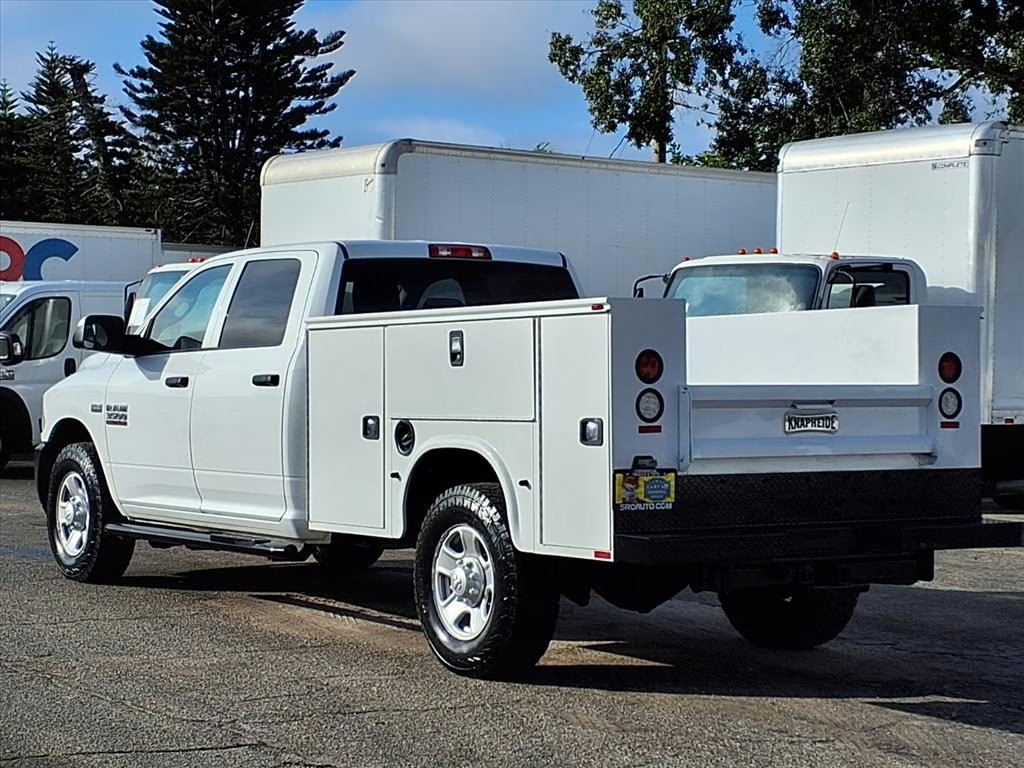
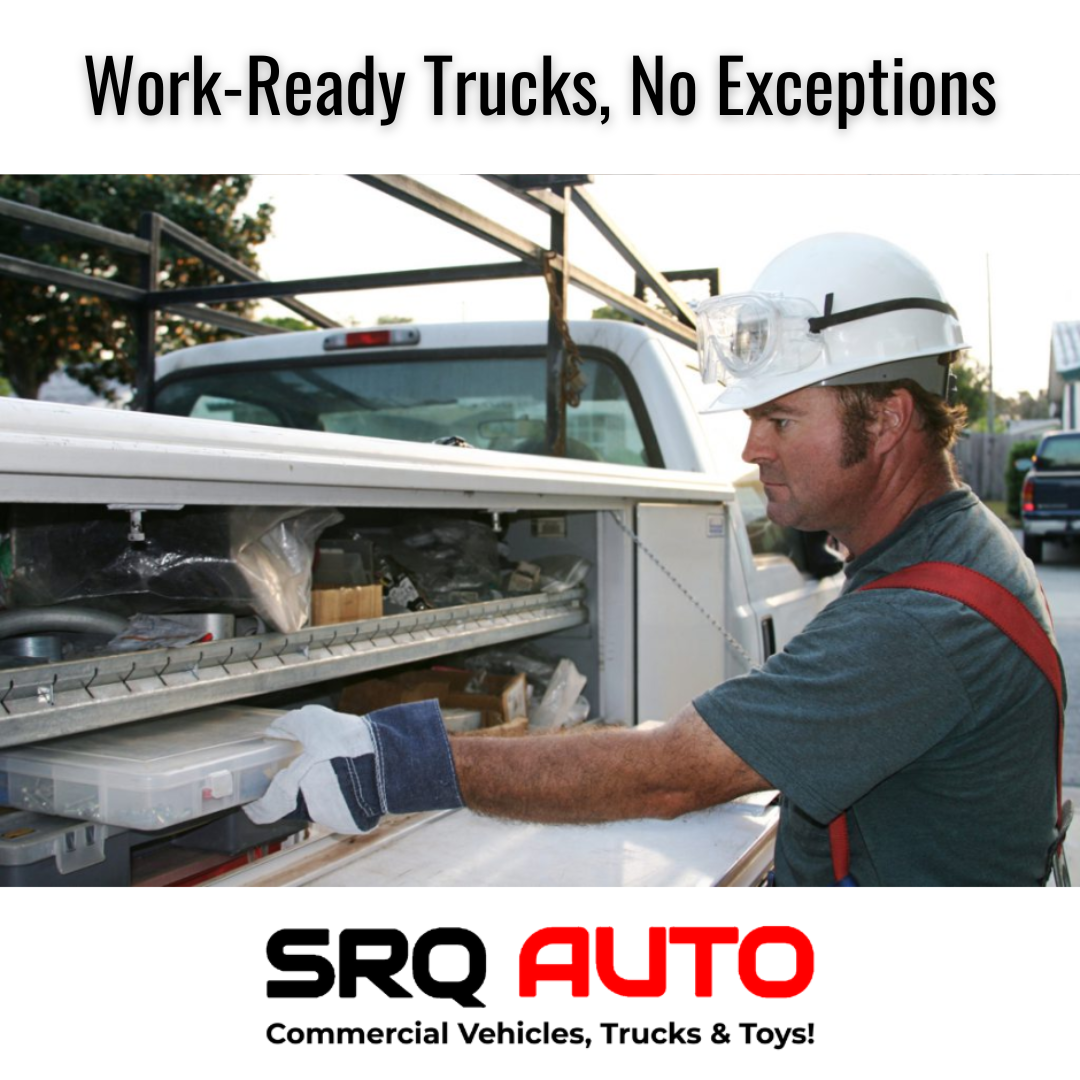
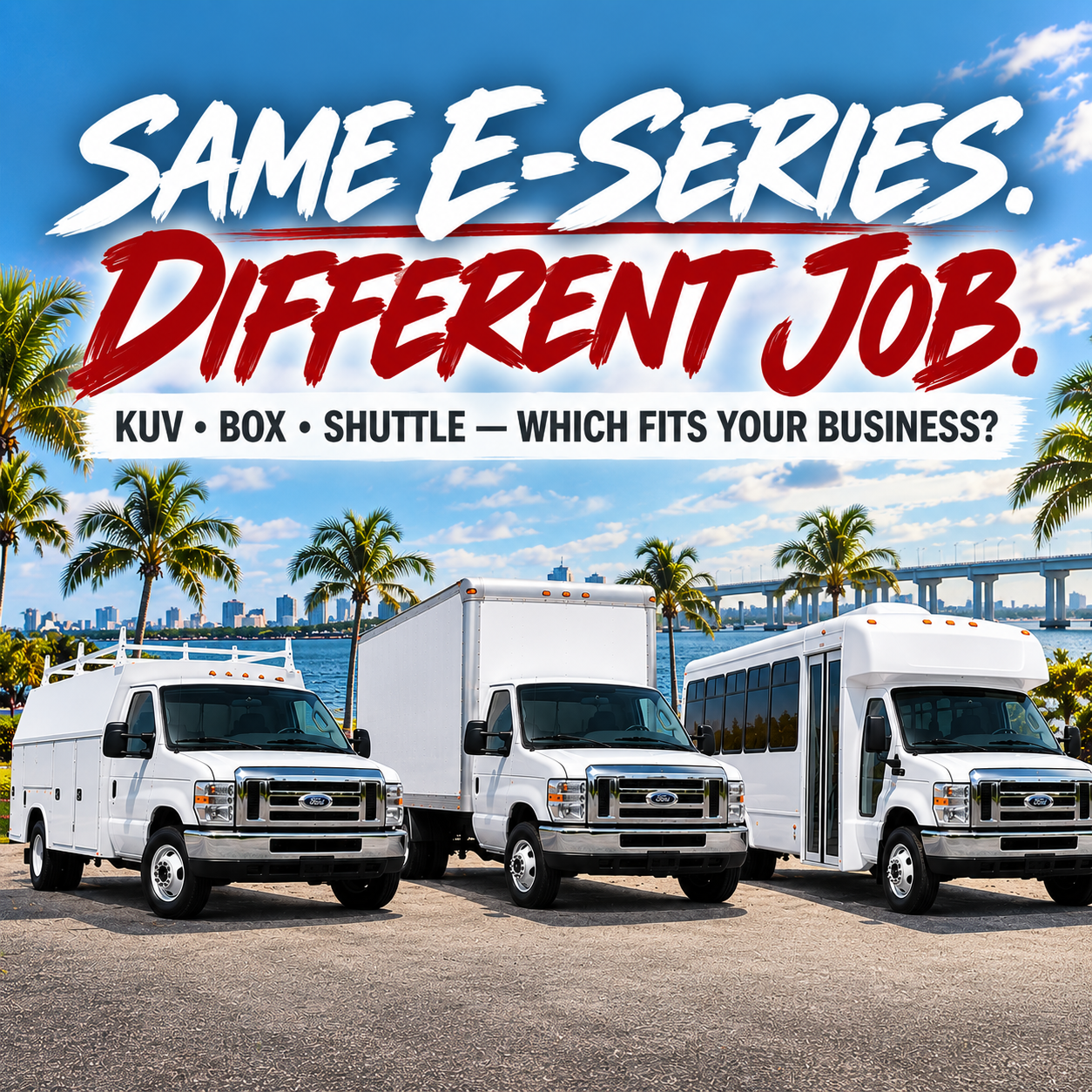
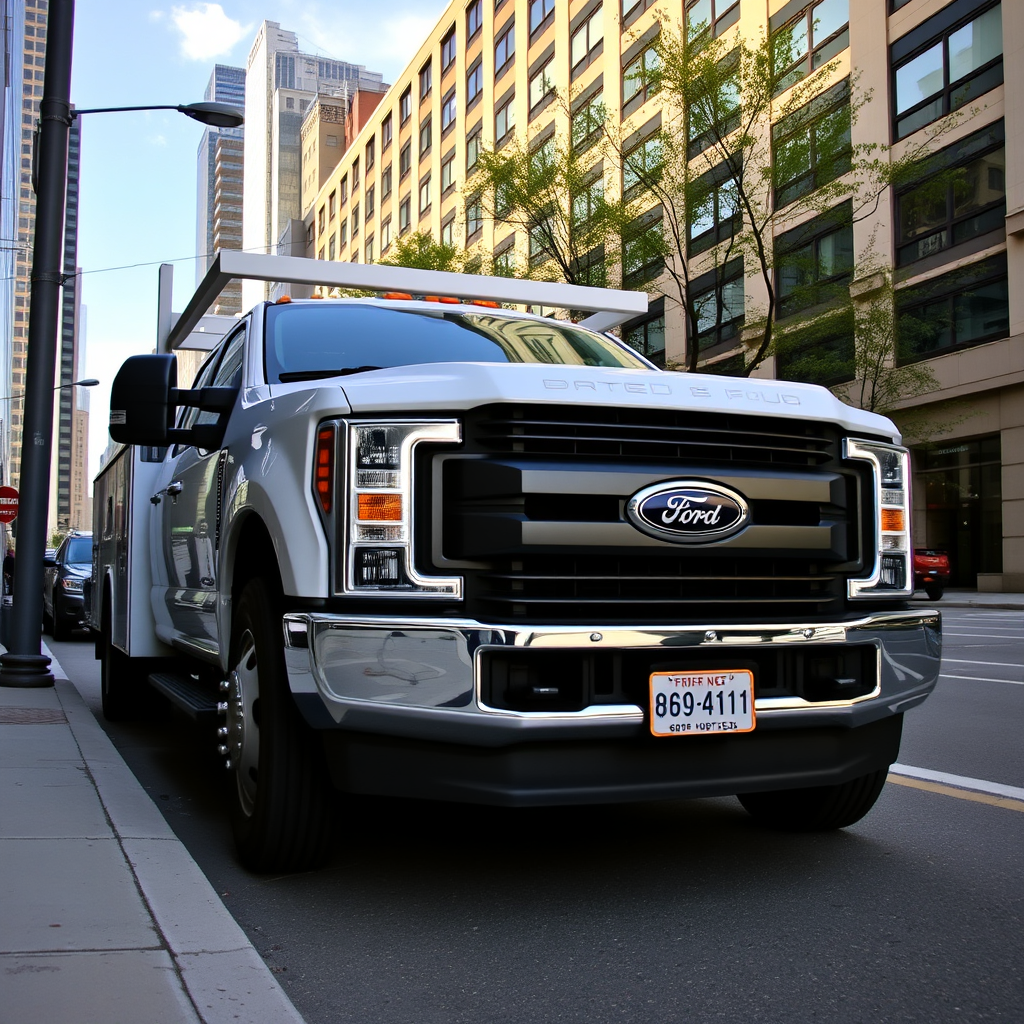
- Service and Utility Body Trucks: Built on Class 2 through Class 5 chassis cabs, these vehicles feature side storage compartments and an open bed center floor. A single-rear-wheel ( SRW) setup on a 10,000-lb GVWR chassis provides easy maneuverability for light service work, while a dual-rear-wheel ( DRW) platform on a 14,000-lb GVWR frame adds lateral stability for heavy tool loads.
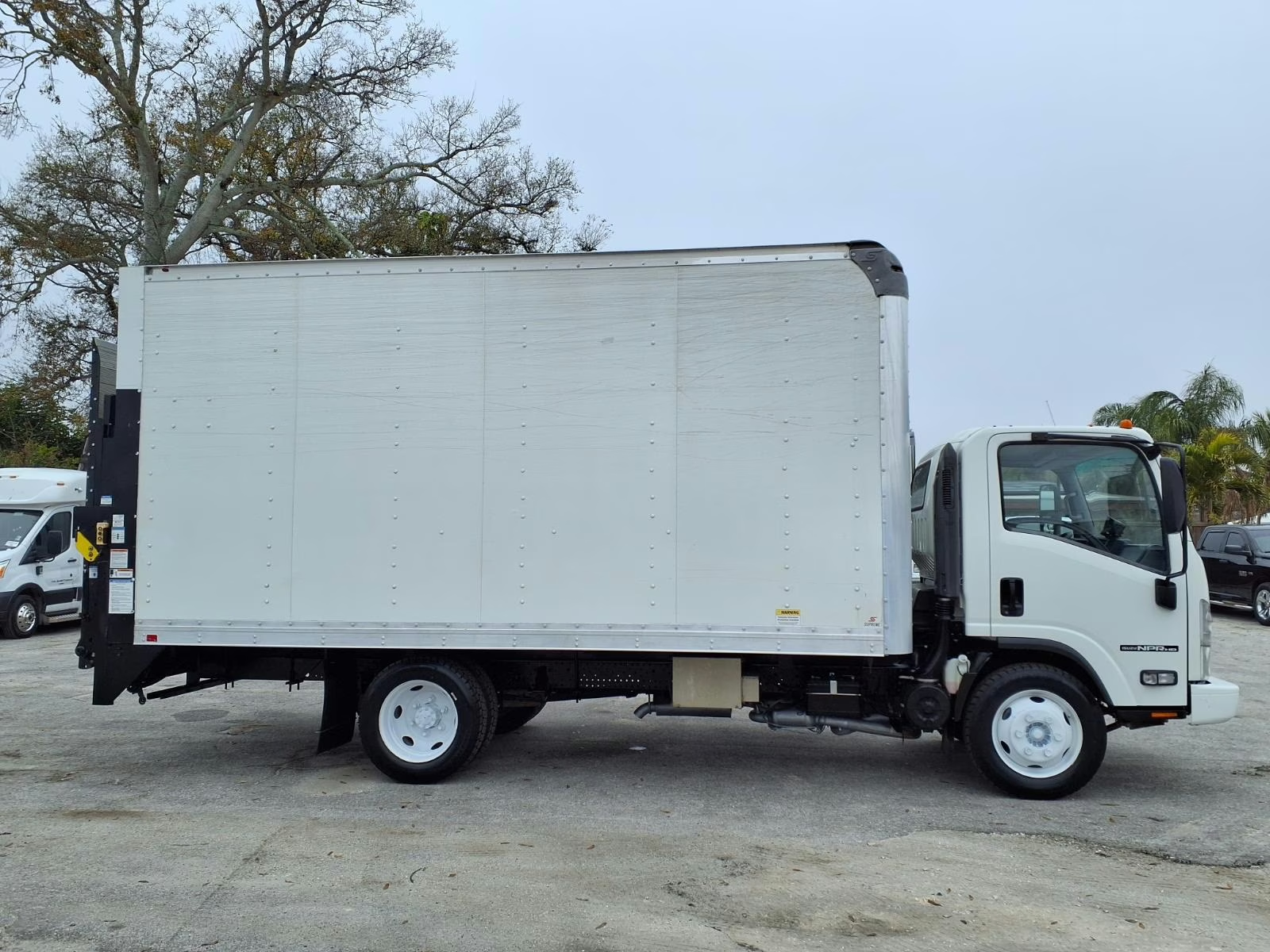
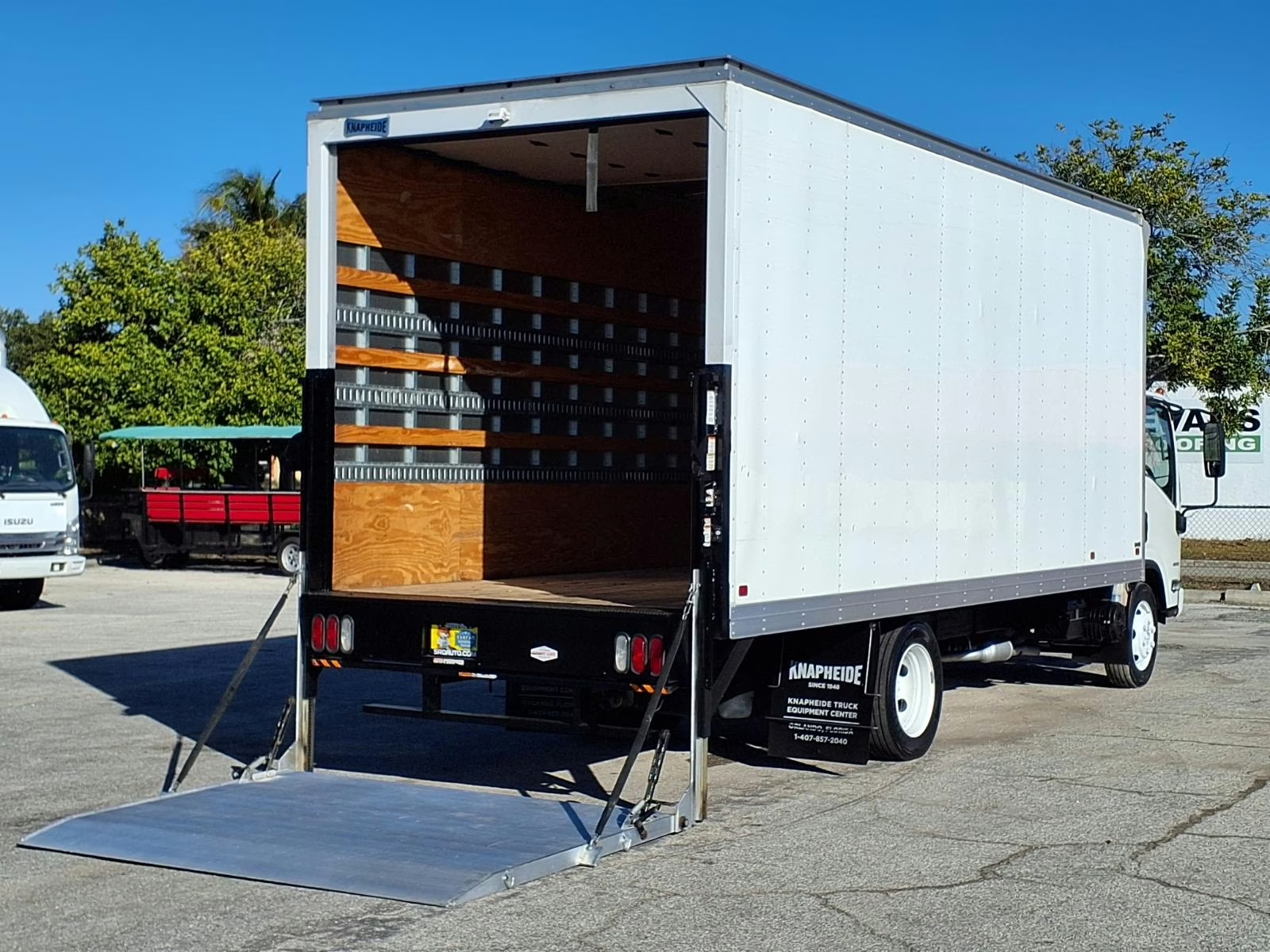
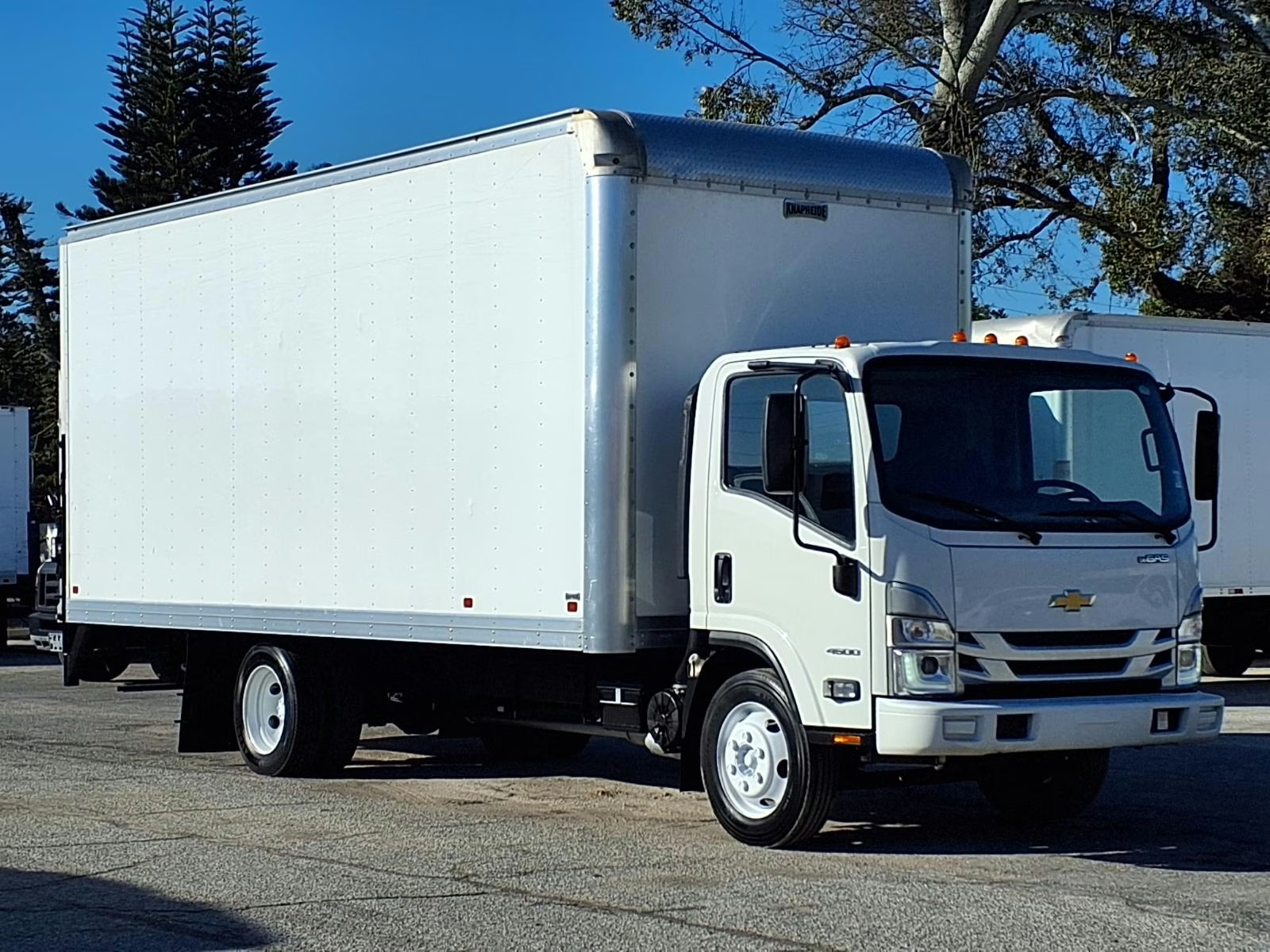
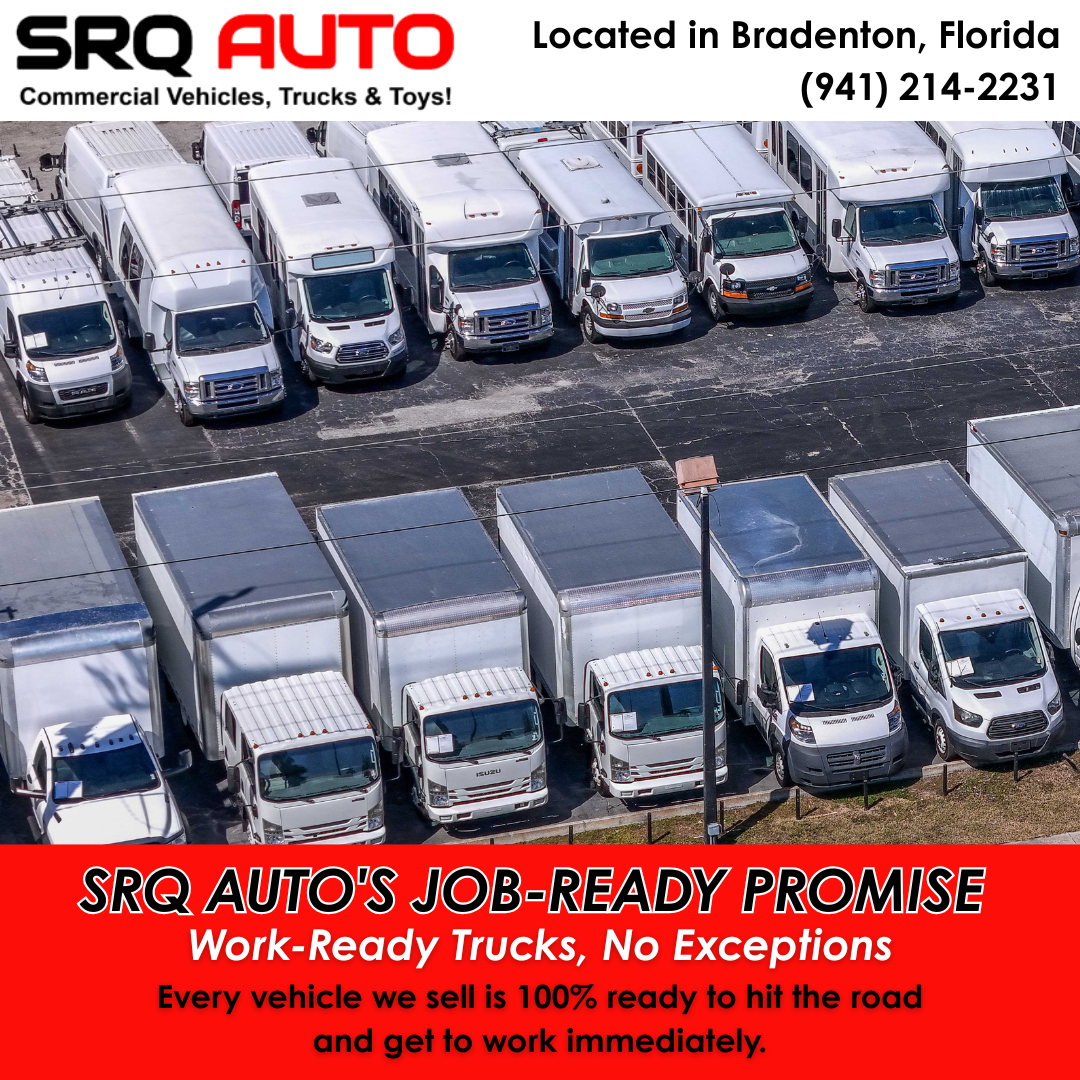
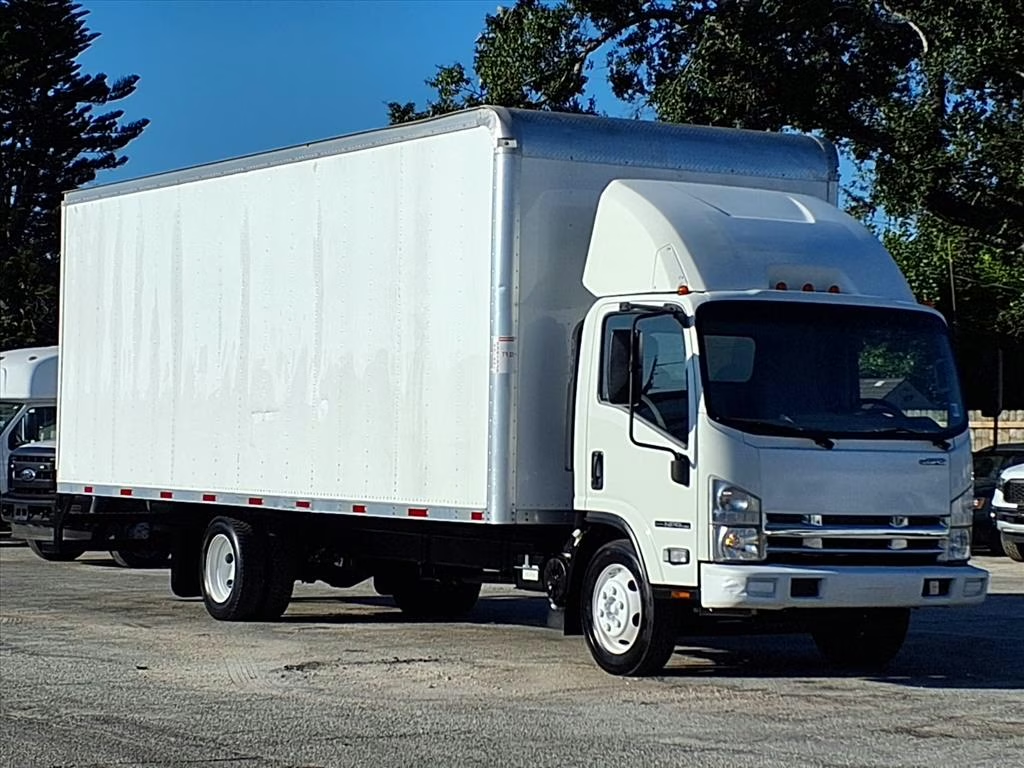
- Box Trucks and Enclosed Delivery Vans: Designed for secure, weather-protected cargo hauling, box trucks offer expansive square footage for furniture, equipment, and parcel delivery. Reviewing our current inventory of pre-owned box truck options allows business owners to choose the right box length and liftgate combination for daily routes.
- Chassis Cabs and Flatbeds: Featuring open frame rails behind the cab, chassis cabs accept custom flatbed, stake-bed, or dump bodies. Heavy-duty DRW models frequently include a recessed 30,000-lb gooseneck hitch or a 2.5-inch receiver hitch for hauling heavy construction machinery.
| Chassis Class | Chassis GVWR Range | Typical Net Payload | Common Cab-to-Axle (CA) | Standard Rear Layout |
|---|---|---|---|---|
| Class 3 | Up to 14,000 lb | 3,000 lb to 5,000 lb | 56 inches / 60 inches | SRW or DRW |
| Class 4 | 14,001 lb to 16,000 lb | 5,000 lb to 7,000 lb | 60 inches / 84 inches | DRW Standard |
| Class 5 | 16,001 lb to 19,500 lb | 7,000 lb to 10,500 lb | 84 inches / 108 inches | DRW Heavy-Duty |
Choosing an aluminum utility bed reduces structural body weight by 30 to 50 percent compared to steel, converting saved dead weight into extra payload capacity. High-strength steel remains ideal for heavy impact environments where heavy tools or piping are loaded continuously. Protecting your investment with specialized commercial protection plans provides added peace of mind when operating heavy-duty platforms. You can browse our wide selection of pre-owned commercial inventory to compare payload specs side-by-side.
How Can Business Owners Measure Operating Costs and Leverage Section 179 Tax Rules?
Measuring true operating costs requires tracking total cost per mile across fixed loan payments, commercial insurance, fuel usage, and unscheduled downtime while accounting for Section 179 tax rules that allow qualifying businesses to deduct up to 100% of a work truck's purchase price in the first year. Evaluating these operational variables prevents cash flow bottlenecks and ensures capital investments yield a positive return on investment.
To calculate net usable payload accurately, use this formula: Gross Vehicle Weight Rating (GVWR) - Curb Weight = Maximum Payload Capacity. Subtracting the bare vehicle weight, onboard fluids, driver, passengers, and body upfits from the total GVWR reveals the true remaining capacity for tools and job materials. Exceeding factory ratings overpowers brake calipers, causes thermal heat buildup in transmissions, flattens suspension leaf springs, and creates severe legal liability during roadside commercial inspections.
Small business owners should monitor these key cost factors:
- Fixed Capital and Insurance Costs: Monthly financing obligations and commercial auto liability insurance form the baseline expense of keeping a vehicle in your fleet.
- Variable Operating Expenses: Fuel consumption, tire wear, and routine service intervals scale directly with mileage and route terrain.
- Downtime and Opportunity Loss: When a work vehicle breaks down, the cost includes both the physical repair invoice and lost revenue from missed client calls.
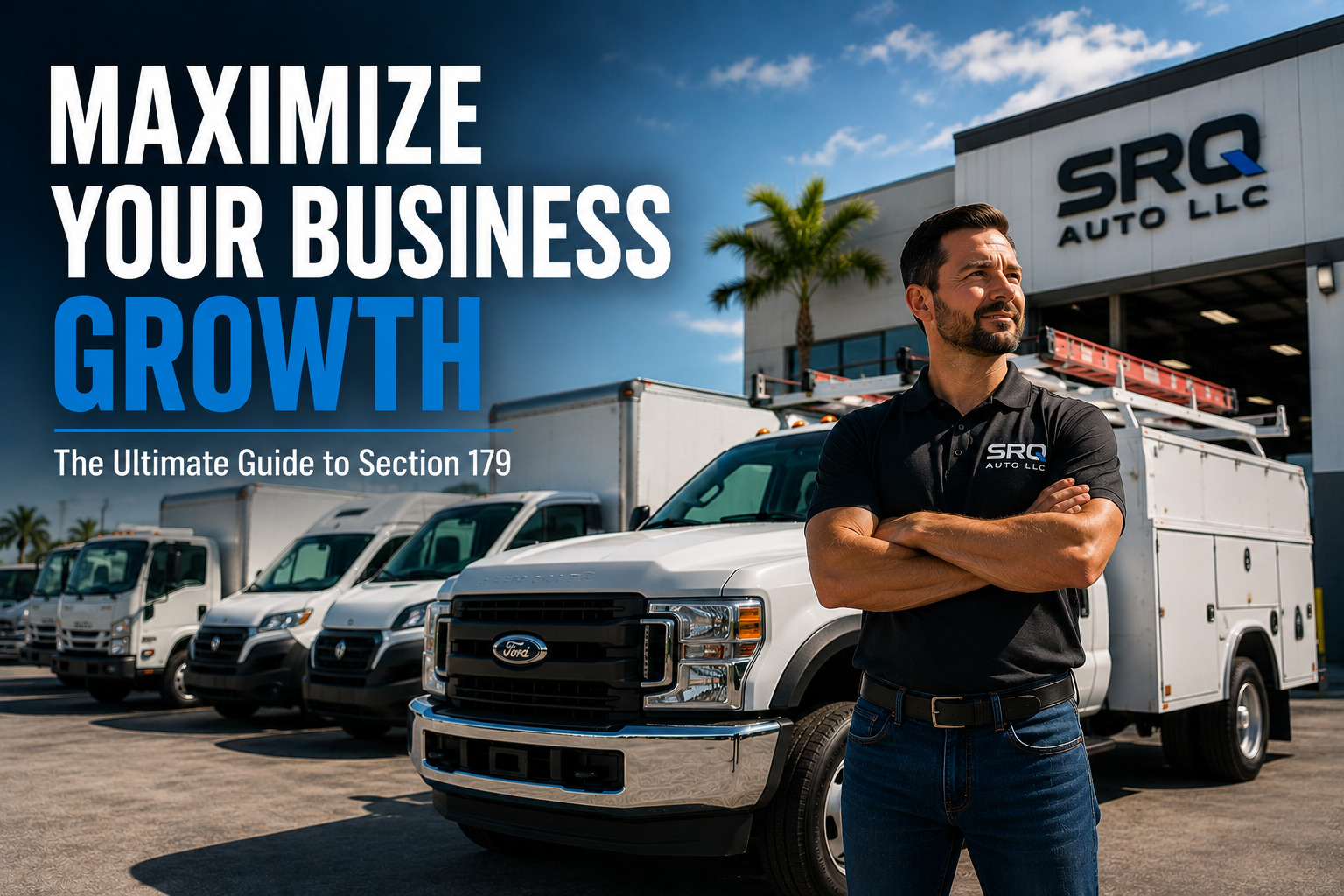
Under Section 179 tax guidelines, qualifying commercial vehicles placed in service during the tax year can be fully deducted on current tax filings rather than depreciated over multiple years. This deduction significantly reduces first-year tax liabilities for expanding fleets.
What Work Truck Configurations Are Available for Bradenton Contractors and Fleets?
In Bradenton, contractors often choose from Class 2 to Class 5 chassis cabs paired with utility bodies ranging from 8 to 11 feet, alongside high-roof cargo vans and heavy-duty dually pickups designed for heavy trailer loads. These setups allow plumbing, electrical, HVAC, and construction fleets to customize storage compartments and hitch receivers to their specific daily trade operations.
Commercial service crews operating along the Manatee River corridor in Bradenton rely on balanced weight distribution and heavy-duty cooling systems during hot summer workdays. Storing heavy recovery tools, fittings, or generators evenly between driver-side and passenger-side compartments prevents vehicle lean and uneven tire wear. Low-profile utility beds featuring 32-inch side compartments keep the vehicle's center of gravity low while giving drivers an unobstructed view over the rear bed.
Modern work trucks equipped with driver-assist technologies like adaptive cruise control and blind-spot monitoring improve highway safety during busy morning commutes. Selecting a model with an aggressive numerical rear axle ratio, such as 3.73 or 4.10, delivers maximum low-end pulling torque for heavy trailers, whereas a lower 3.31 ratio maximizes highway fuel economy for long-distance deliveries.
Where Can Business Owners Source Commercial Work Trucks?
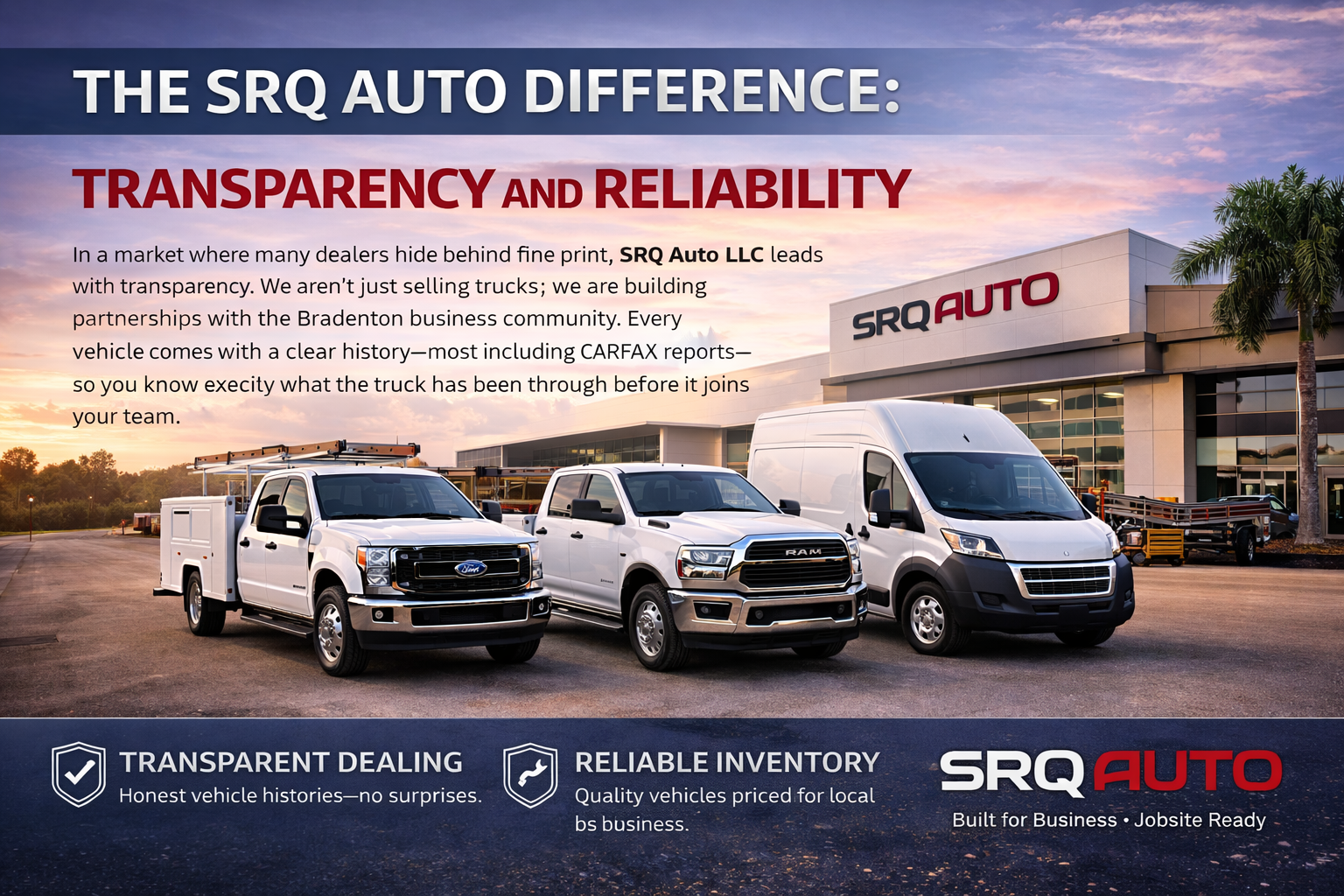
Business owners can source commercial work trucks from dedicated commercial vehicle dealerships that specialize in pre-owned utility trucks, chassis cabs, and box trucks backed by reconditioning standards and commercial financing solutions. Purchasing from an established commercial provider ensures transparent vehicle histories and access to work-ready inventory without extended upfit delays.
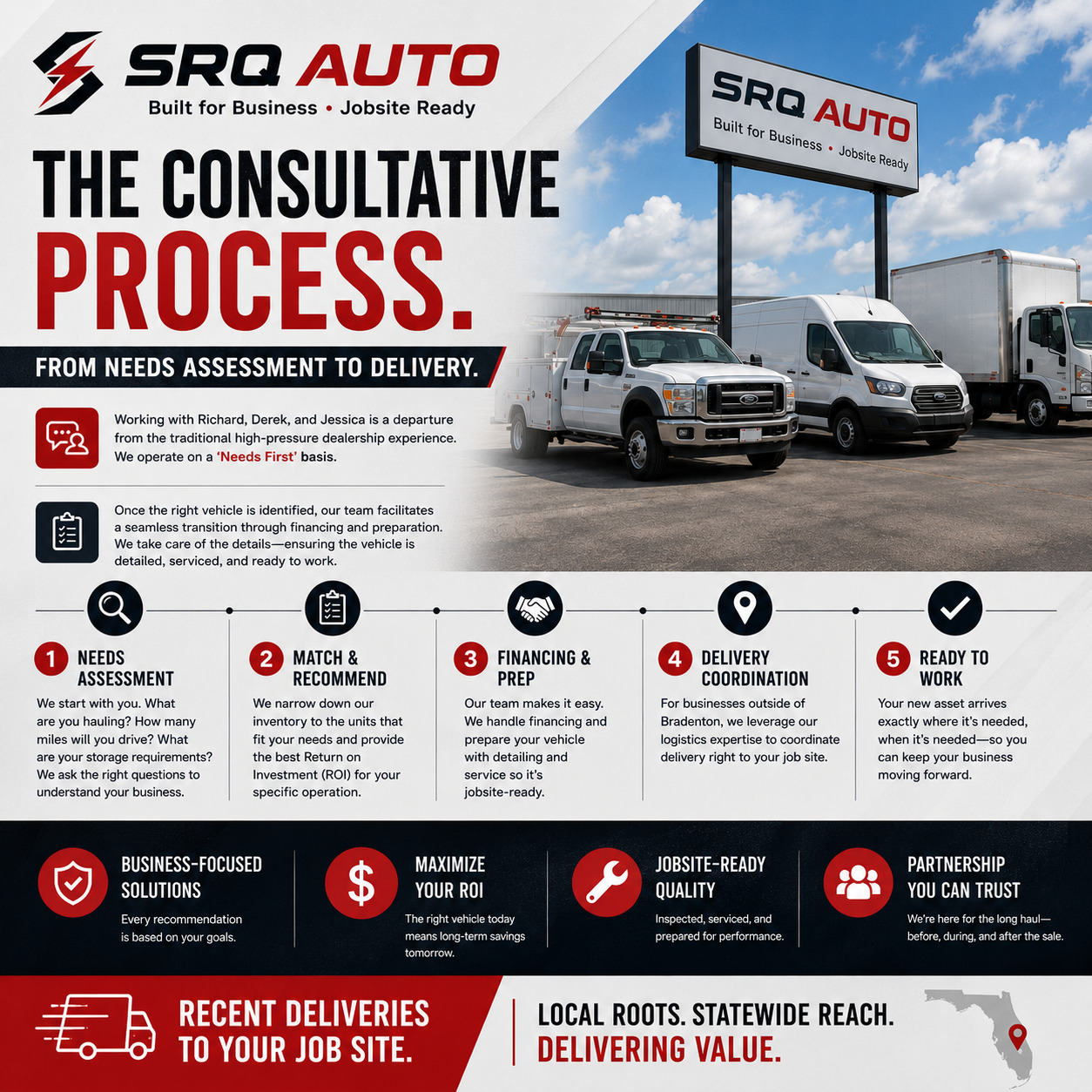
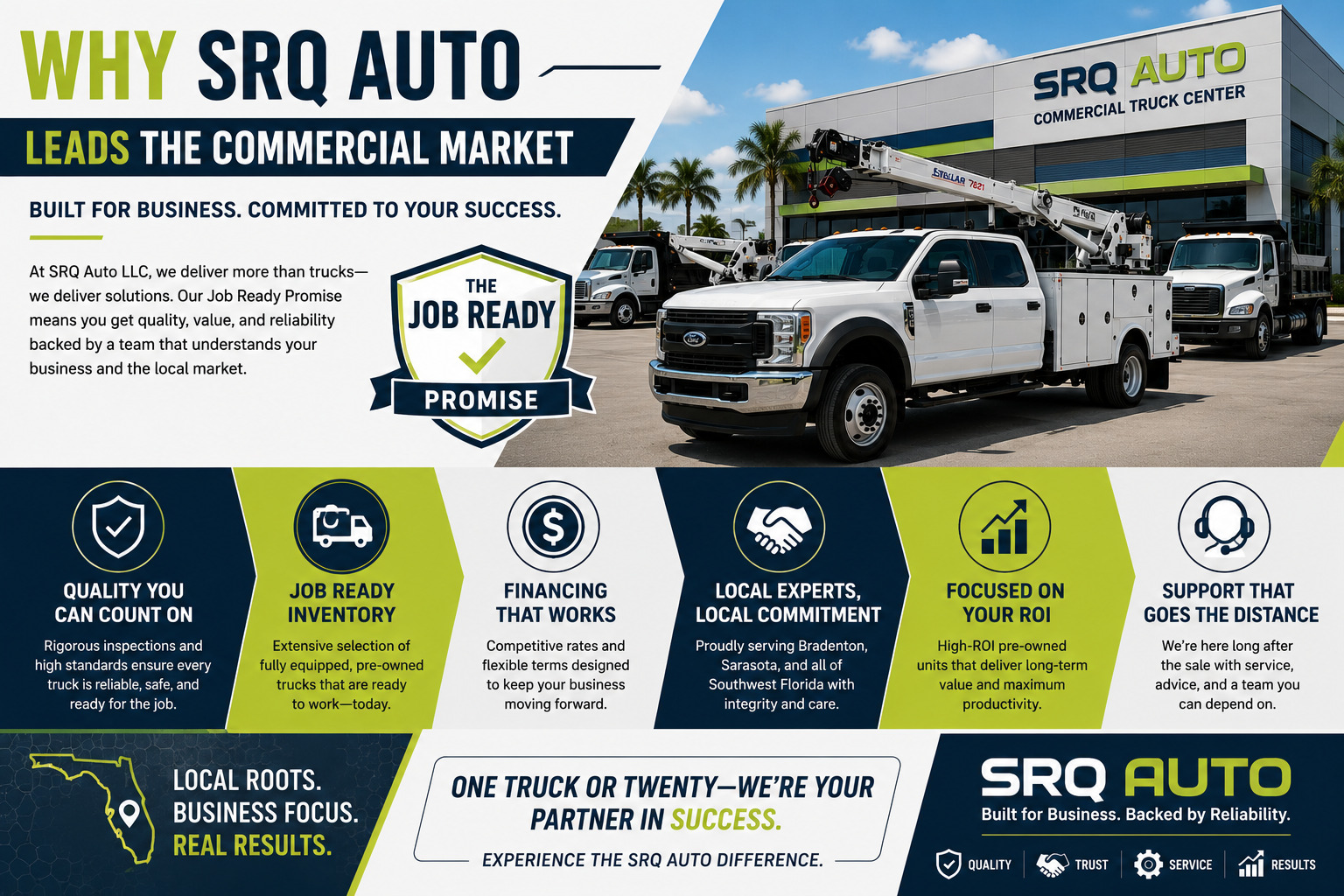
At SRQ Auto LLC, every commercial vehicle in our lineup undergoes a rigorous multi-point inspection to ensure it fulfills our Job Ready Promise. We understand that small businesses need dependable transportation that generates revenue immediately. Our reach extends far beyond local job sites, offering expert nationwide commercial shipping logistics to deliver fleet-ready trucks directly to your operational facility.
Securing competitive auto loans through tailored flexible commercial financing options helps business owners preserve liquidity while scaling fleet size. Whether adding a single service truck or replacing multiple aging vehicles, working with a commercial specialist streamlines acquisition from application to delivery.
Quick Answers to Common Commercial Work Truck Buying Questions
Q: What is the weight capacity of a standard steel utility bed truck?
The net weight capacity of a steel utility bed truck depends on its chassis GVWR and bare curb weight. Class 2 and Class 3 trucks equipped with standard steel utility bodies generally offer net payload capacities ranging from 1,500 lb on SRW models to over 4,000 lb on DRW chassis cabs. Subtracting the bare vehicle weight from the total GVWR gives your exact usable payload limit.
Q: How do single-rear-wheel and dual-rear-wheel utility trucks compare for towing?
Single-rear-wheel ( SRW) utility trucks offer a narrower footprint, superior maneuverability in residential neighborhoods, and lower rolling resistance for better fuel economy. Dual-rear-wheel ( DRW) utility trucks provide a wider rear track, significantly higher payload limits, and enhanced sway control when towing heavy equipment trailers or operating cranes.
Q: What documents are required when applying for commercial vehicle financing?
Commercial applicants typically need business formation documents, recent corporate bank statements or tax filings, a valid driver's license, and an active commercial auto insurance quote. Gathering these materials ahead of time accelerates credit underwriting. Business owners can easily apply for credit online to begin the approval process before visiting the lot.
Q: Why is axle ratio important when choosing a commercial towing truck?
The rear axle ratio determines the relationship between driveshaft revolutions and axle revolutions. Higher numerical ratios like 3.73 or 4.10 multiply engine torque to move heavy payloads and tow heavy trailers effortlessly from a complete stop. Lower numerical ratios like 3.31 offer lower engine RPMs and improved fuel efficiency during sustained highway cruising.
Drive Your Business Forward with Work-Ready Trucks at SRQ Auto LLC
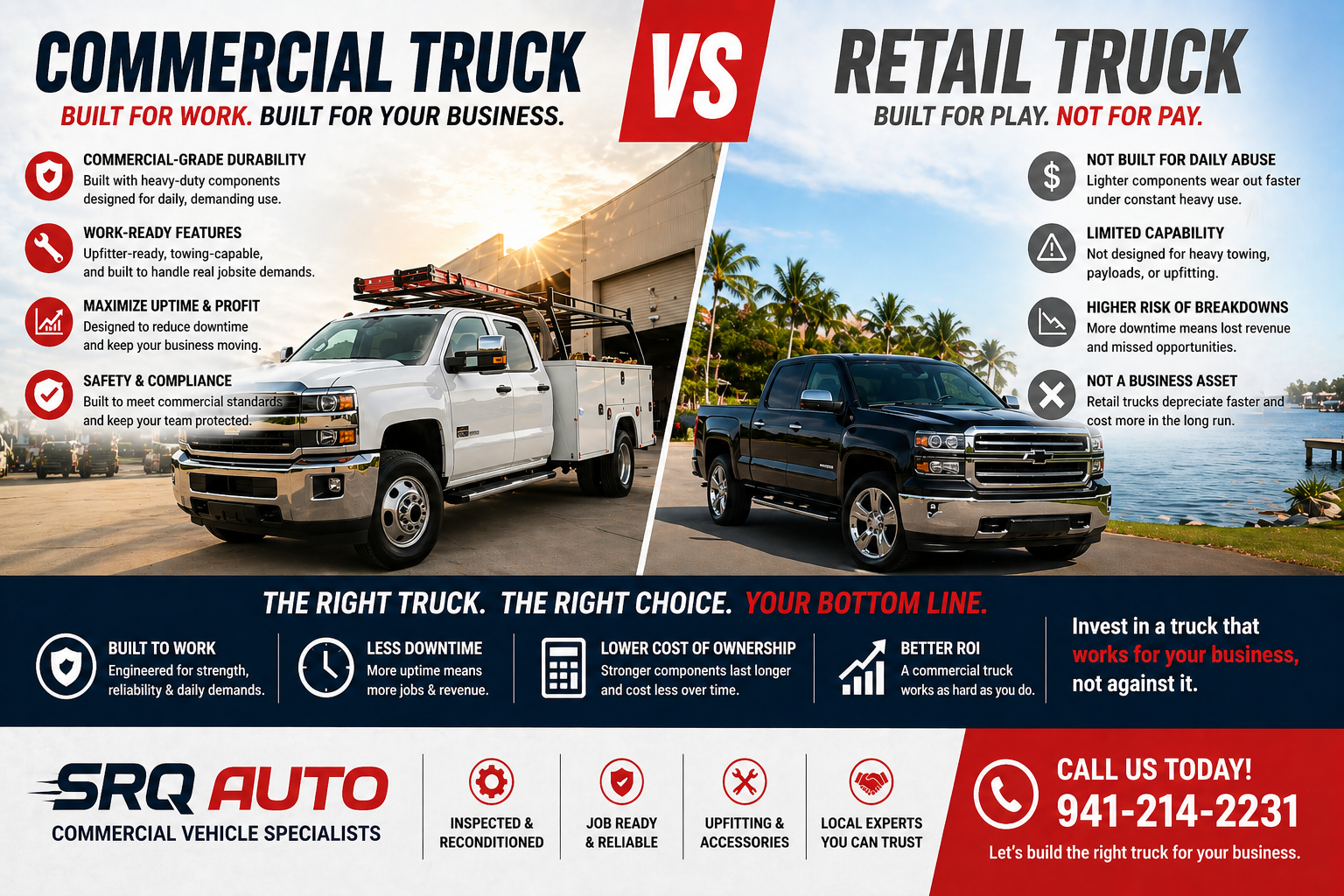
A dependable work truck is the foundation of your daily operations, keeping your crews equipped and your service calls on schedule. Choosing the right weight class, upfit configuration, and commercial financing structure protects your cash flow and minimizes unscheduled downtime. At SRQ Auto LLC, our commercial team is dedicated to providing high-quality, pre-owned work vehicles that are inspected, serviced, and ready to go to work for your business immediately.
To explore our current commercial inventory, request an upfit consultation, or take a test drive, visit our Bradenton location today. You can also get immediate assistance by calling our commercial department at (941) 214-2231 to speak with our sales specialists about finding the ideal truck for your fleet.
© 2026 SRQ Auto LLC. All rights reserved.