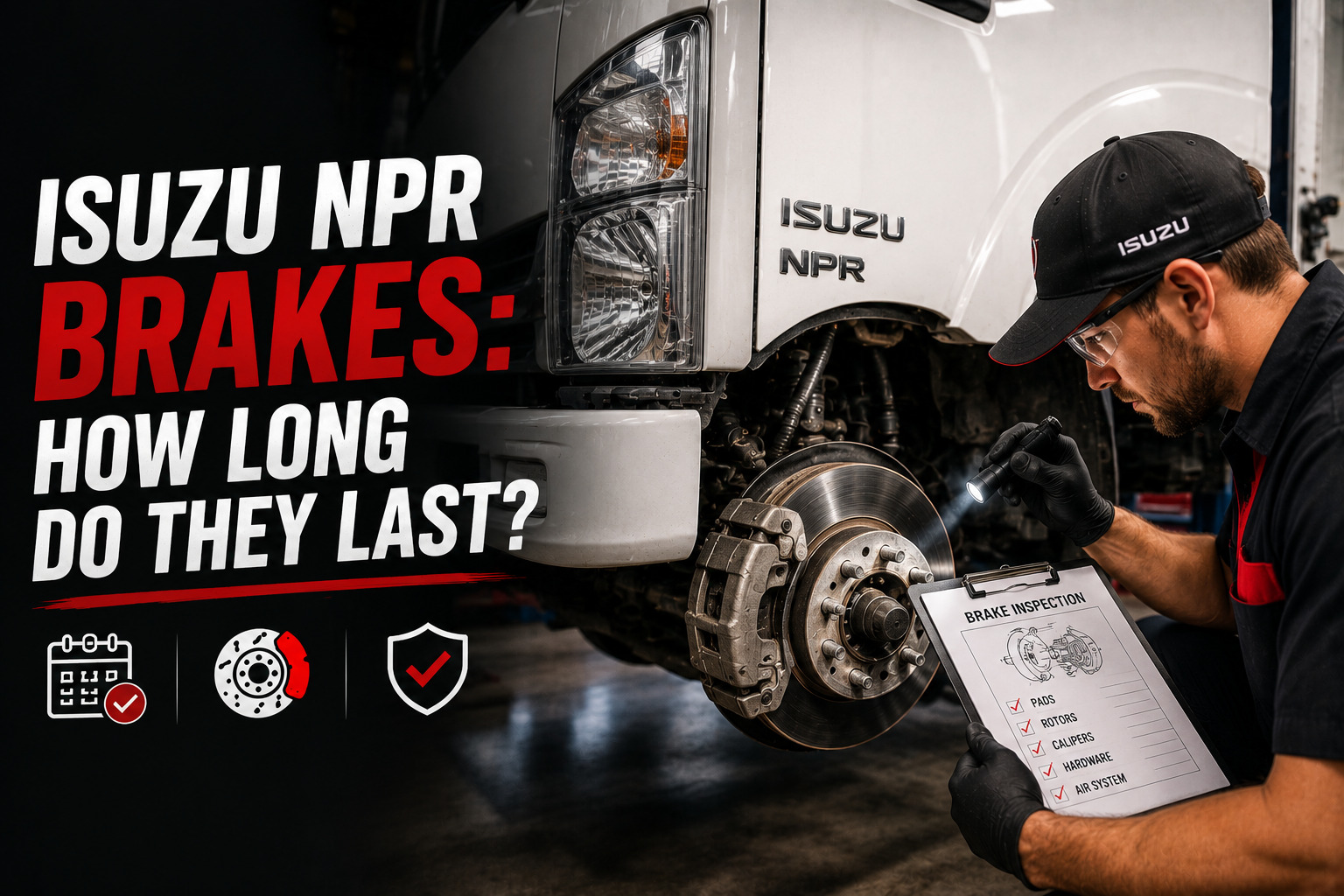
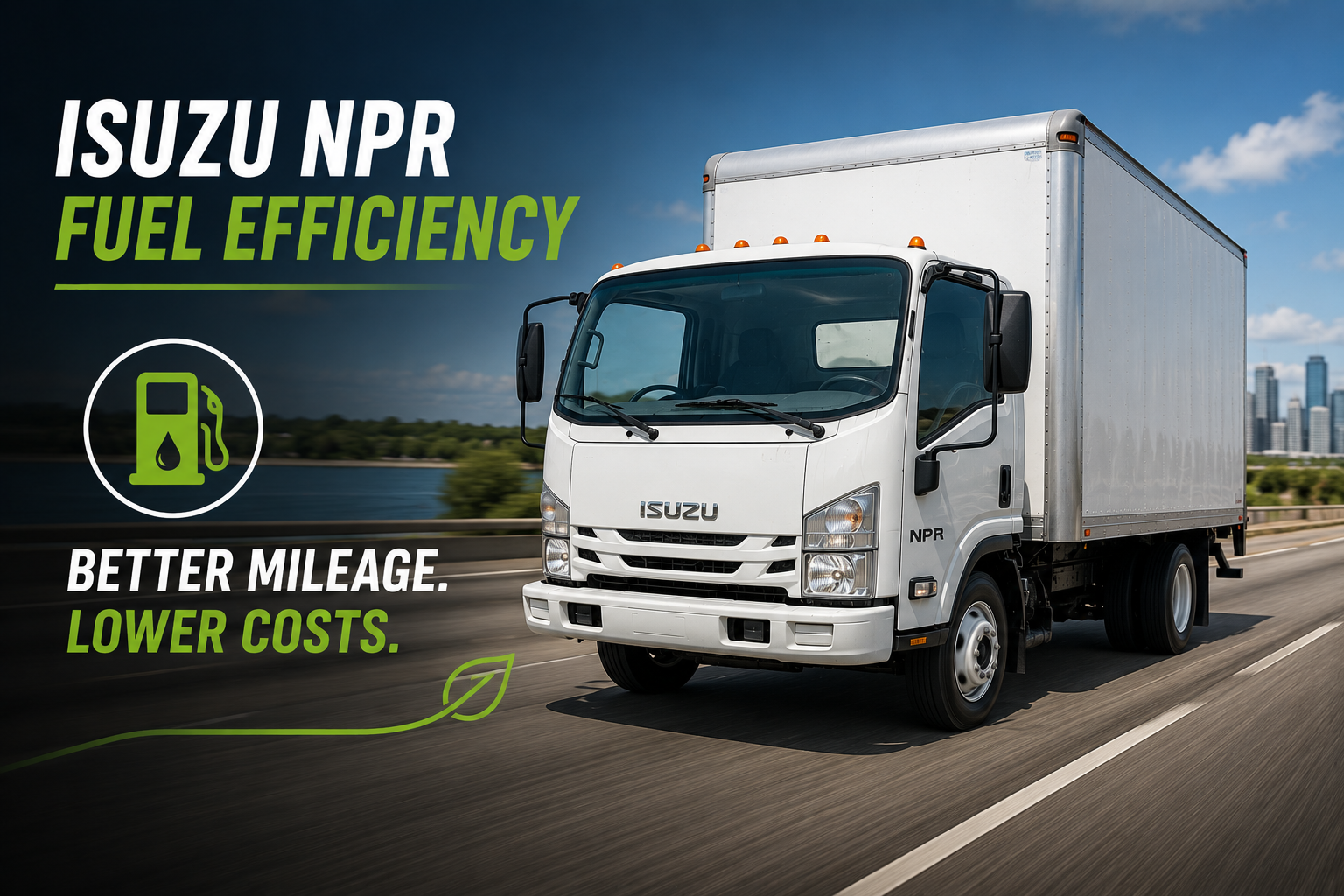
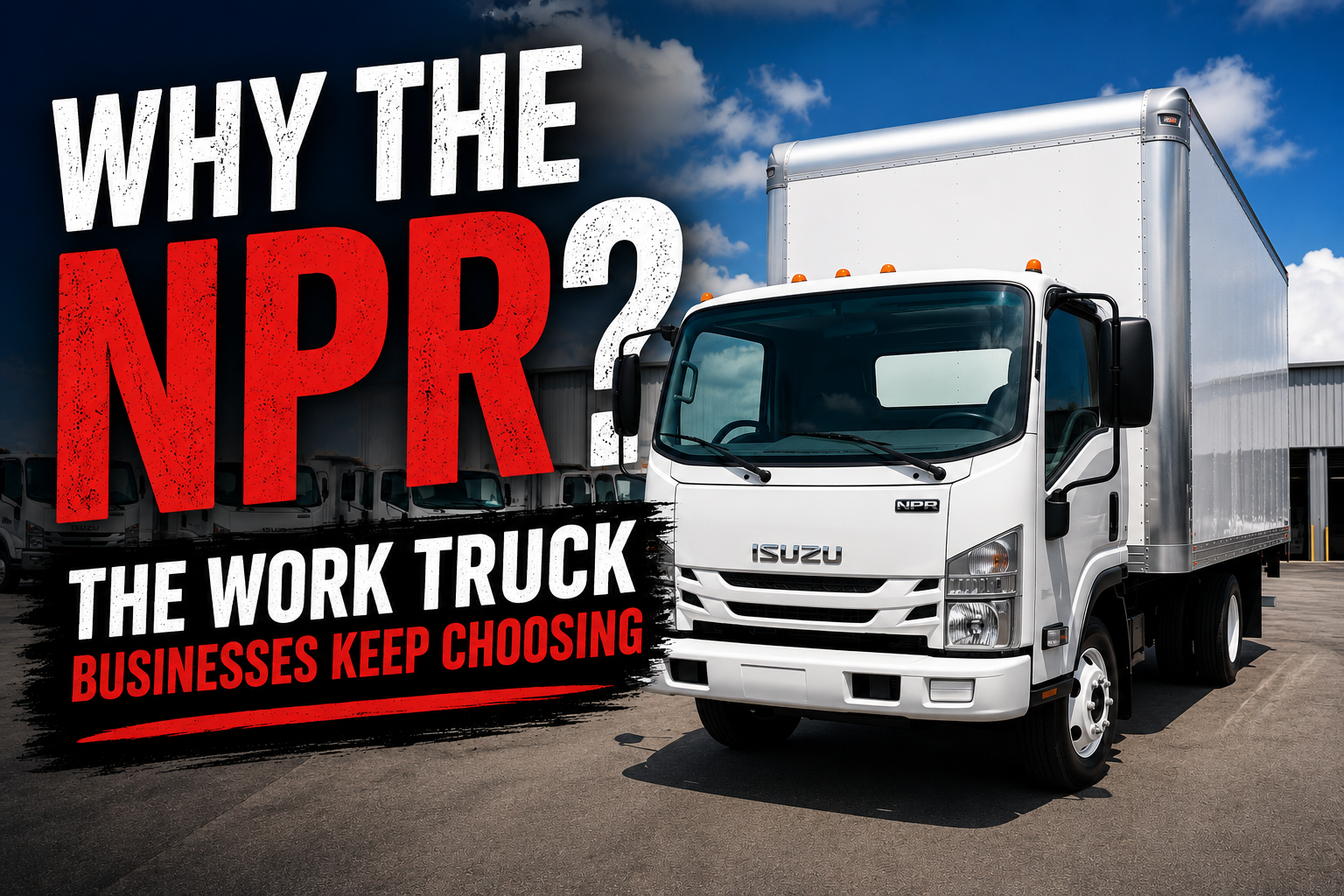
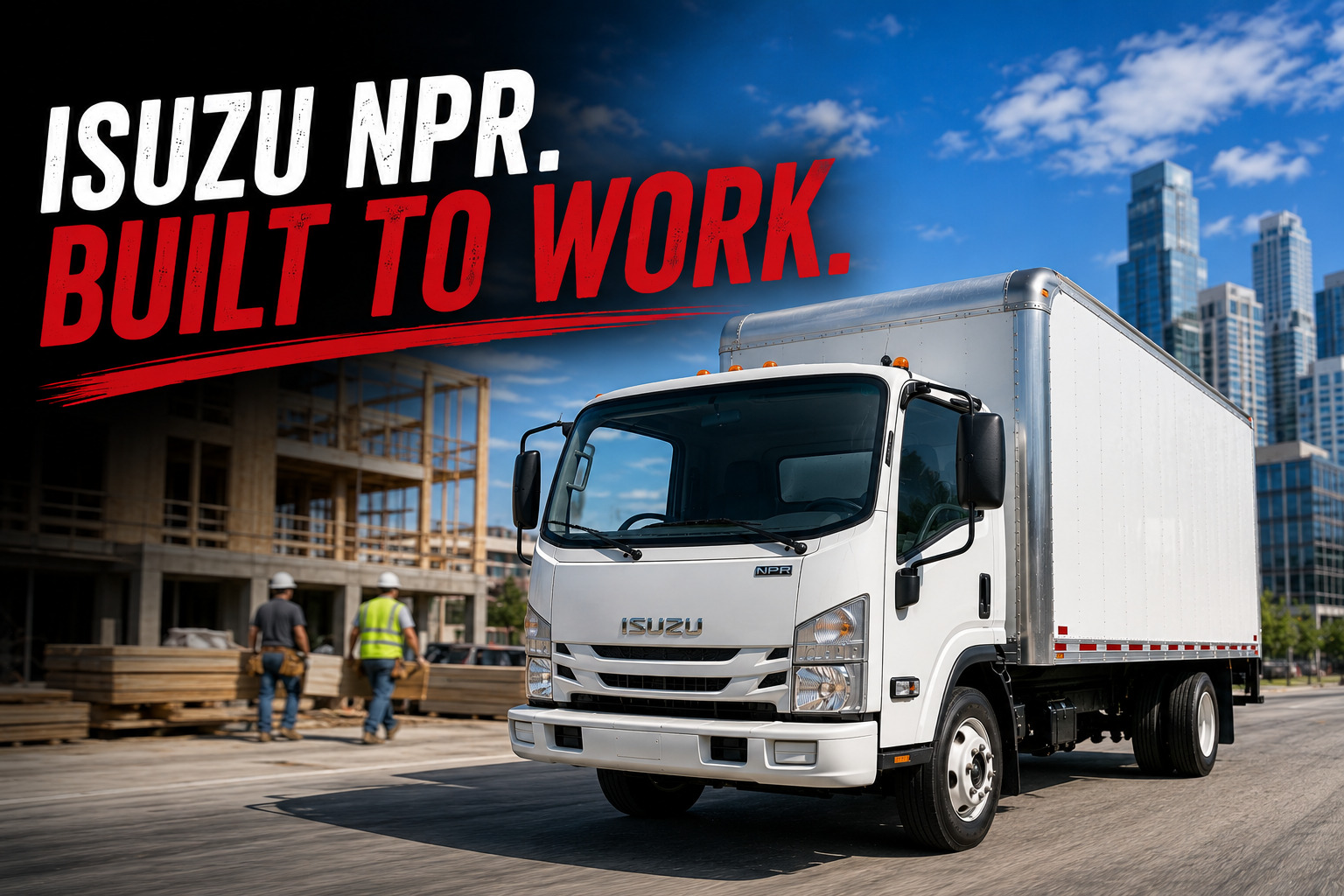
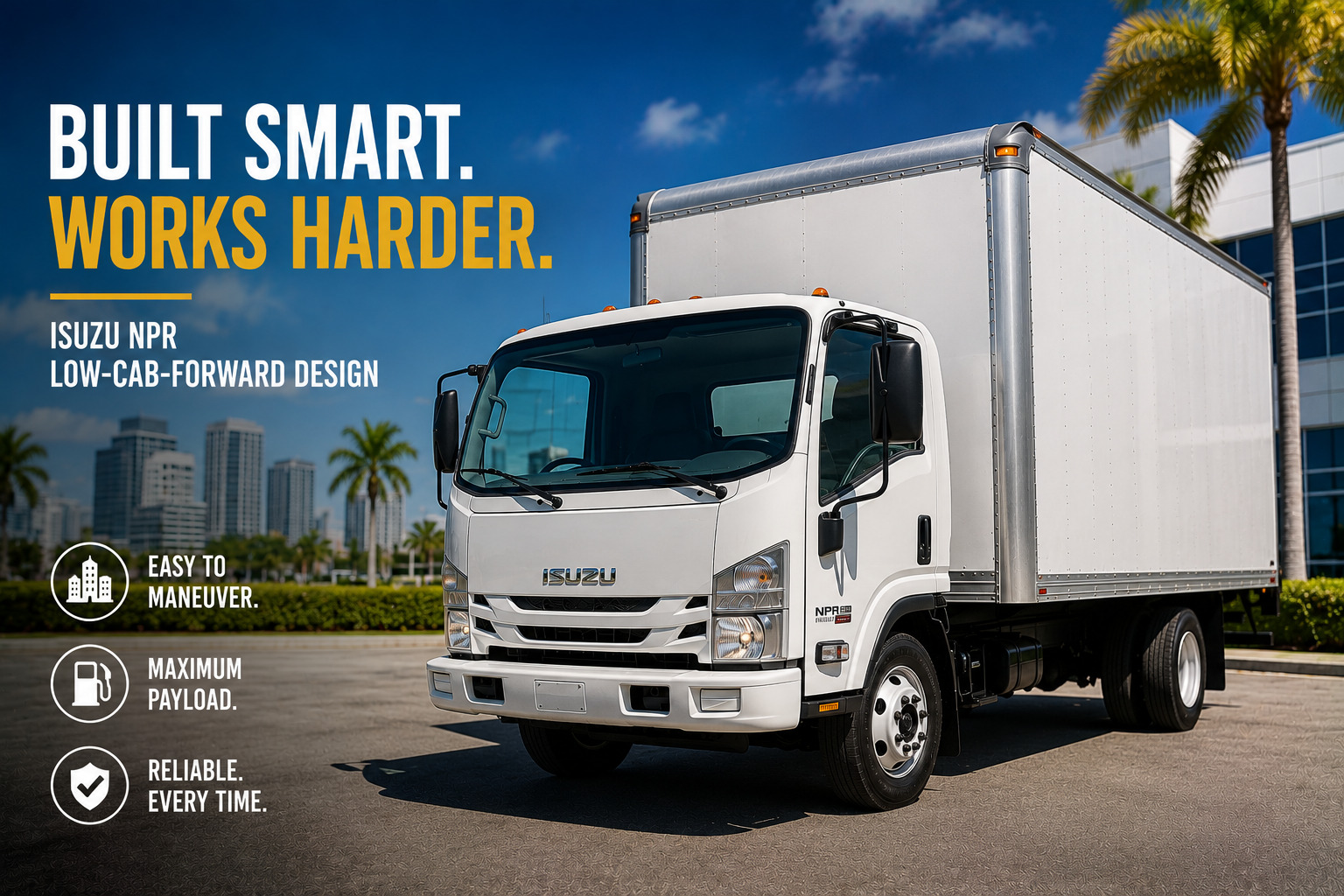
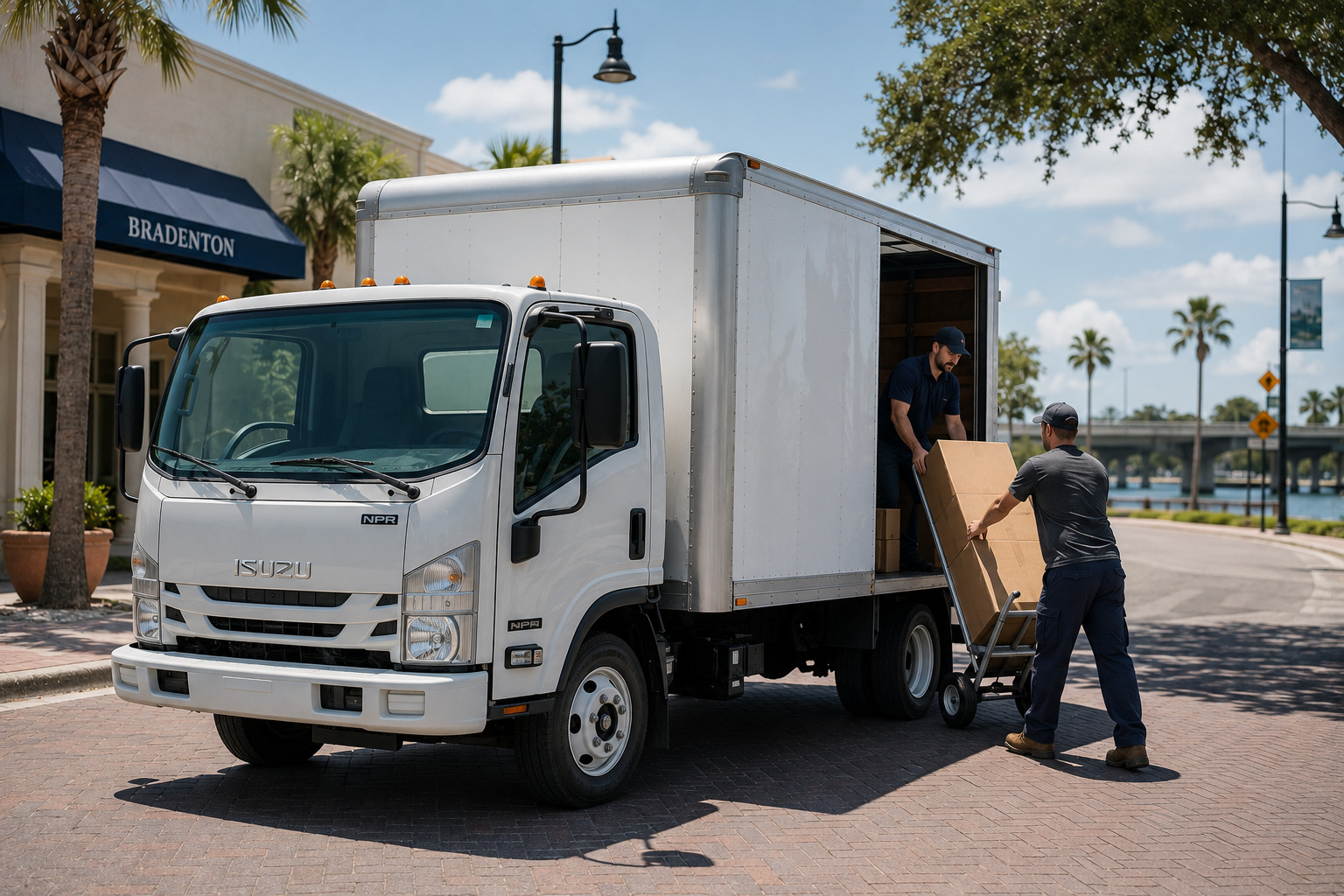
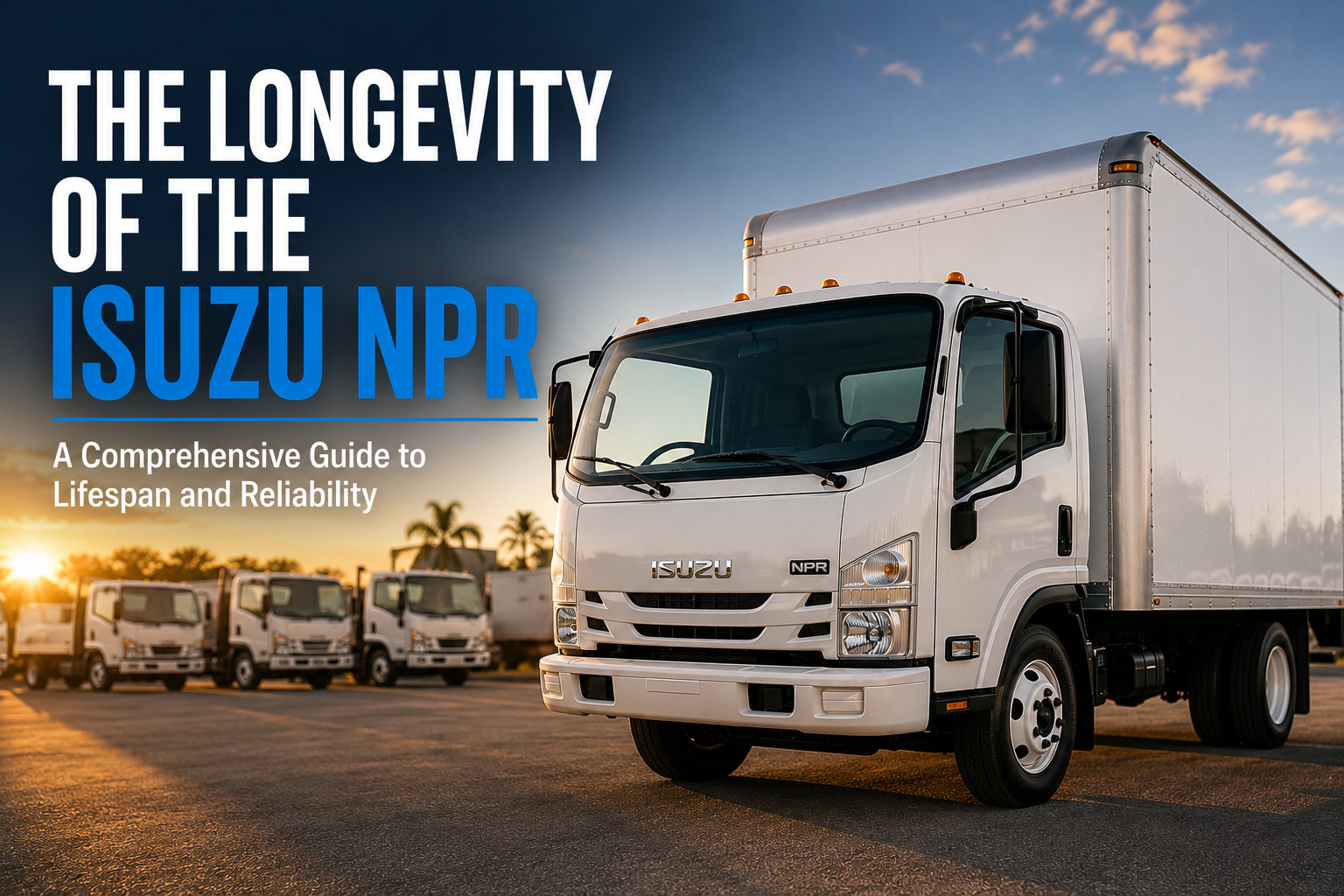
Under standard commercial operating conditions, the brake pads on an Isuzu NPR typically last between 30,000 and 60,000 miles. However, because the Isuzu NPR is the quintessential workhorse for everything from final-mile box truck deliveries to heavy landscape dumping, that lifespan varies dramatically based on route topography, gross vehicle weight management, and driver habit. In dense stop-and-go urban routes around Bradenton, Sarasota, and Tampa with consistent maximum payloads, friction material wear accelerates quickly—often bringing brake pad service intervals down to 20,000 to 25,000 miles.
Conversely, fleet operators who run long regional highway corridors along I-75 and consistently train drivers to engage the factory exhaust brake system routinely see brake pad longevity exceed 70,000 miles before requiring friction replacement. The Isuzu NPR uses robust hydraulic multi-piston disc brakes on both front and rear axles (or air-over-hydraulic systems in heavier HD configurations), designed specifically for high thermal endurance. Understanding how your specific duty cycle impacts thermal wear is the single most important step in controlling maintenance costs across your fleet.
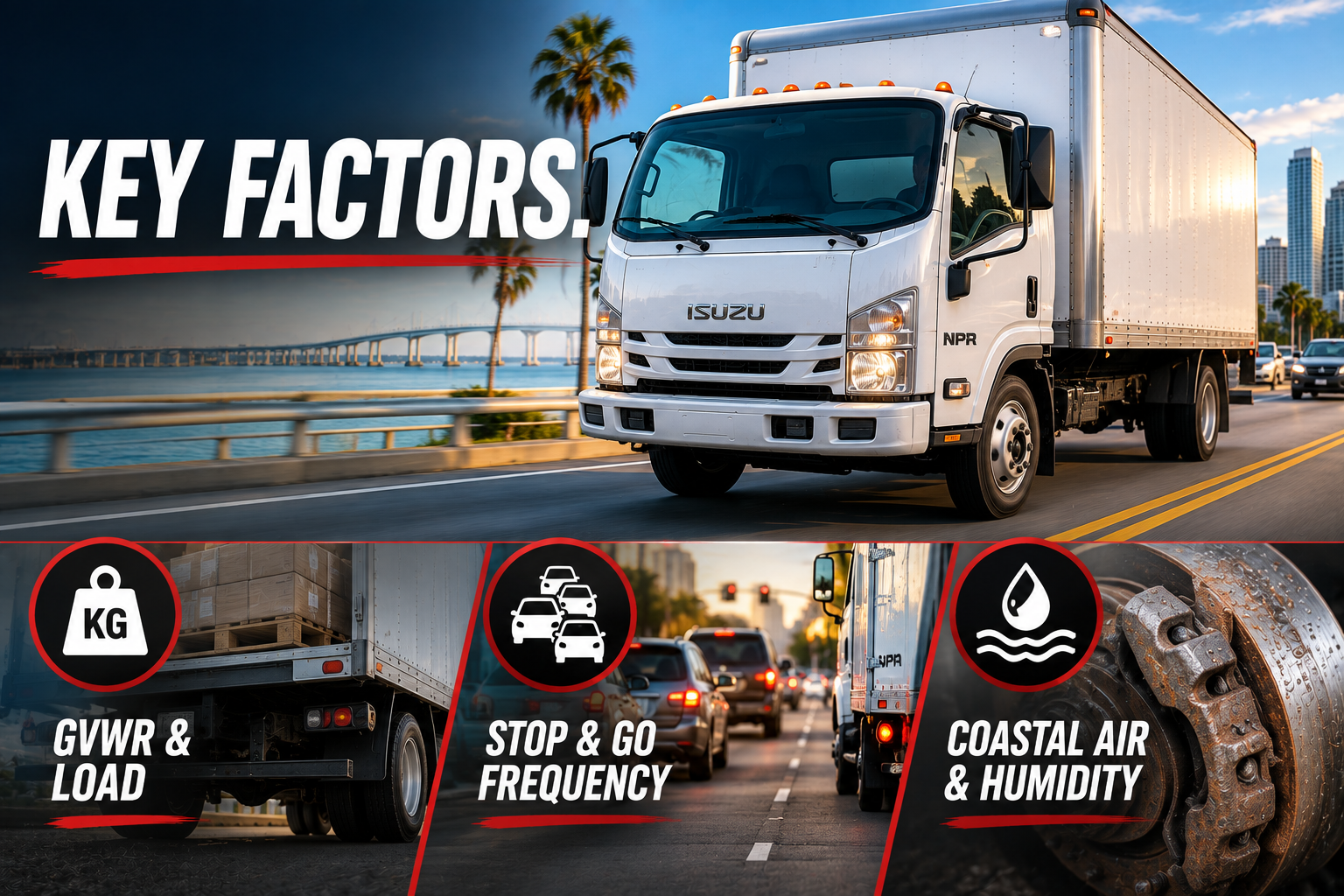
At SRQ Auto LLC, we inspect hundreds of medium-duty commercial chassis every year. Whether you are managing a single delivery body or a regional fleet, monitoring rotor thickness and slide pin lubrication at routine oil service intervals keeps your trucks safe and operating at full efficiency. Explore our current inventory of work-ready box trucks, flatbeds, and service vehicles in our Used Commercial Inventory to find the ideal match for your operational needs. Key Factors That Impact Isuzu NPR Brake Wear in Commercial Applications
1. Gross Vehicle Weight Rating (GVWR) & Load Management
Operating continuously near the Isuzu NPR's maximum GVWR (ranging from 12,000 lbs up to 14,500 lbs on NPR-HD models) significantly increases kinetic energy during stopping. Double the vehicle weight, and the braking system must convert four times as much kinetic energy into heat. Overloaded trucks create micro-fractures in pad friction material and glaze rotors quickly.
2. Stop-and-Go Frequency on Commercial Corridors
Local routes along busy Florida thoroughfares like US-41, Cortez Road, and Route 64 subject commercial brakes to repeated thermal cycling. Lacking long cooling periods between stops, brake fluid temps rise, caliper seals harden prematurely, and pad material transfers unevenly onto the rotor face.
Protect your fleet investments with flexible commercial coverage. Learn more about our specialized protection plans under Commercial Warranty Options. 3. Coastal Air Humidity & Salt Corrosion
Operating in Gulf Coast environments creates unique maintenance hurdles. High ambient humidity combined with airborne sea salt accelerates surface oxidation on exposed brake rotors overnight. When driven, this rust layer gets scraped into the friction pad, increasing abrasive wear and causing premature grooving.
4. Driver Braking Techniques & Exhaust Brake Utilization
Aggressive hard braking elevates pad temperature beyond recommended thermal limits. Instructing drivers to use the Isuzu engine exhaust brake switch on the steering column can reduce friction brake wear by up to 35% during city and highway decelerations.
Richard Reed’s Commercial Sales Insight: Maximizing Isuzu NPR Brake Lifespan
"In my two years serving commercial fleet operators at SRQ Auto LLC, I've observed that the biggest differentiator between a fleet changing brakes at 25,000 miles versus 60,000 miles comes down to driver education regarding the Isuzu factory exhaust brake."— Richard Reed, Commercial Sales Representative
The Isuzu NPR features a butterfly valve inside the exhaust pipe activated via the left steering column stalk. When engaged, it creates backpressure during off-throttle coasting, slowing the truck without touching the brake pedal. Driver training should emphasize leaving this system switched on continuously during daily operation, particularly when carrying heavy payloads down highway off-ramps or rolling hills.
Another critical maintenance habit that Richard recommends is insistence on slide pin lubrication during every 10,000-mile oil chassis service interval. The floating caliper design of the Isuzu NPR requires smooth movement across slide pins. In humid climates, dry or corroded pins freeze the inner pad against the rotor face, causing uneven tapered pad wear, drag, and drastically reduced fuel economy.
Learn more about our dedicated commercial truck sales team and client commitment on our About Us page. Expert Maintenance Quote: Preventing Costly Brake Rotor Failure
"A routine set of front brake pads for an Isuzu NPR is an affordable maintenance item. But if an operator pushes pads past the friction wear metal rivets, a scored rotor replacement paired with hub seal replacement quickly jumps to over $1,800 to $2,500 per axle in downtime and parts. Furthermore, Florida humidity introduces water into brake fluid over time, lowering its boiling point. Flush your brake fluid every 24 months or 40,000 miles to prevent internal master cylinder corrosion."
— Richard Reed, SRQ Auto LLC Commercial Specialist
Ready to finance your next commercial truck upgrade? Get pre-approved in minutes with our quick online application: Get Approved Now. How Many Passengers Can Fit Inside an Isuzu NPR Standard Cab Versus Crew Cab?
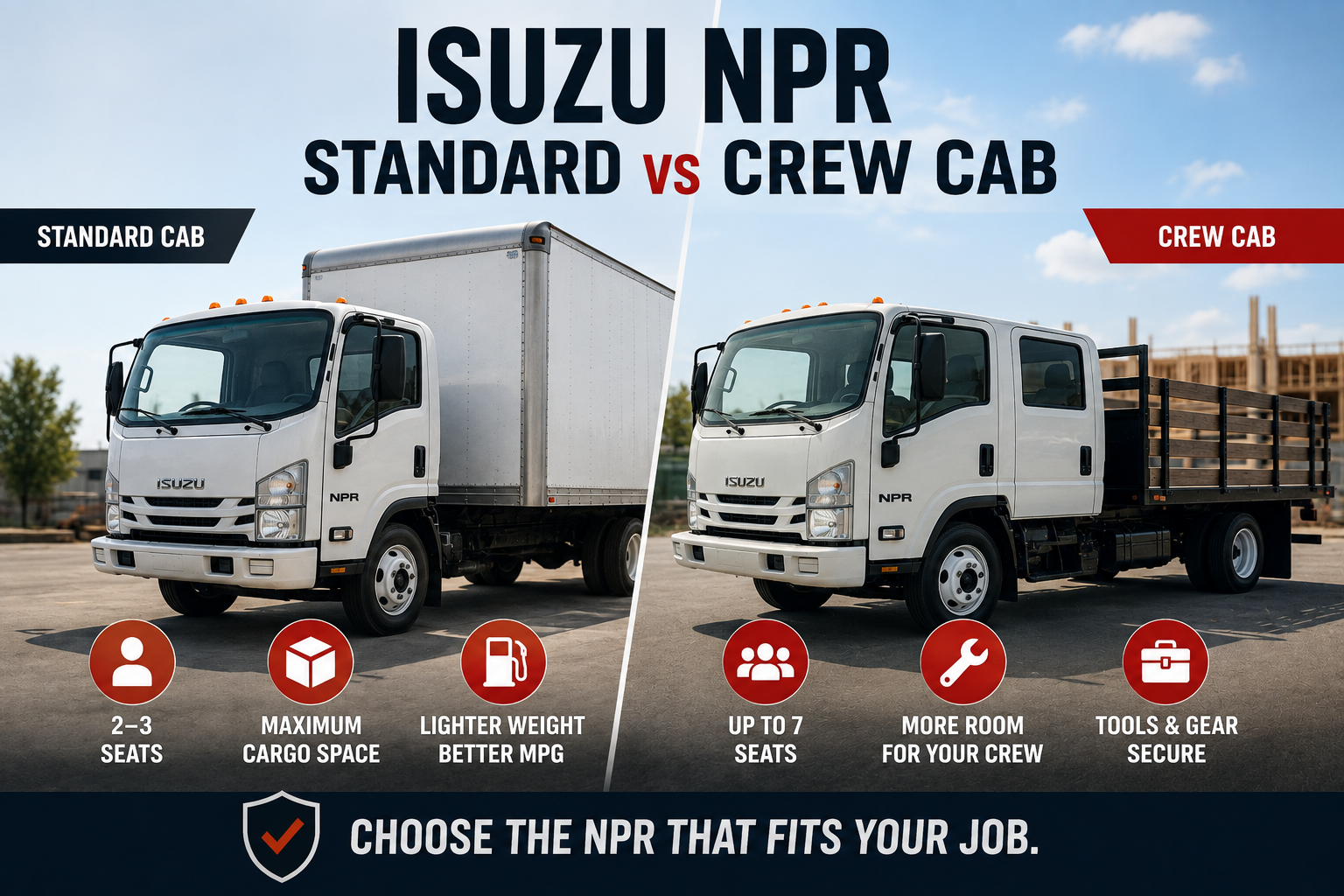
Standard Cab Configuration: 3 Seating Positions
The Standard Cab features a high-visibility low-cab-forward design built for maximum cargo box length relative to overall frame size. It accommodates up to 3 passengers across a driver bucket seat and a 2-person fold-down center/passenger bench. The center seatback folds flat to serve as a mobile desk top for job site clipboards and invoicing.
Crew Cab Configuration: 7 Seating Positions
For work crews, landscaping teams, and municipal utility squads, the Isuzu NPR Crew Cab offers seating for up to 7 passengers (3 front, 4 full rear bench). Eliminating the need to dispatch secondary chase vehicles to job sites slashes fuel costs and insurance liability across your company fleet.
What Are the Available Wheelbase Lengths for the Isuzu NPR?
Choosing the right wheelbase length directly impacts payload balance, turning radius, and brake wear distribution between the front and rear axles. Below is an overview of the primary Isuzu NPR wheelbase configurations:
109" & 132" Wheelbase
• Accommodates 10 ft to 14 ft bodies.
• Ultra-tight turning radius (as low as 31.5 ft).
• Ideal for tight city deliveries, landscaping dump setups, and urban maneuvering.
• High front-axle brake bias during rapid stopping.
150" Wheelbase
• Designed for 16 ft to 18 ft cargo boxes.
• The most popular fleet sweet spot for freight volume and turning agility.
• Well-balanced weight distribution across front and rear brake disc surfaces.
176" Wheelbase
• Accommodates 20 ft to 22 ft body bodies.
• Maximizes cubic storage capacity.
• Ideal for furniture movers and bulky, lower-density cargo.
• Explore options in our Used Box Truck Inventory. What Are Common Problems with the Isuzu NPR Fleet Managers Should Know?
DPF Regeneration & Short-Trip Clogging
Isuzu NPR diesel models equipped with 4HK1-TC engines require active Diesel Particulate Filter (DPF) regeneration. Fleet trucks subjected strictly to low-speed short idling trips without reaching full operating temp can suffer from clogged DPF systems. Periodic highway runs clear accumulated soot naturally.
Front Suspension Alignment Drift
The solid front axle and leaf spring assembly can experience camber alignment drift if consistently driven over harsh jobsite potholes with heavy front load placement. Regular kingpin lubrication and tire rotations prevent uneven inner tire tread cupping.
Exhaust Brake Relay & Actuator Sticking
Because exhaust soot accumulates near the exhaust butterfly valve, infrequent use can cause the actuator arm to stick. Regular engagement ensures smooth operation and prevents loss of engine braking efficiency.
Vacuum-Hydraulic Brake Booster Hose Cracking
Under intense Florida summer heat, rubber vacuum booster lines can harden over time. Regular inspections prevent vacuum leaks that cause stiff pedal feel. See examples of high-performing vehicles in our Recently Sold Vehicles archive. How Much Fuel Does an Idling Isuzu NPR Consume During Daily Operation?
An idling Isuzu NPR consumes approximately 0.3 to 0.5 gallons of fuel per hour depending on engine type (6.6L Gas V8 vs. 5.2L Turbo Diesel) and whether the air conditioning compressor is cycling under heavy summer conditions in Lakewood Ranch or Sarasota.
While 0.4 GPH seems small, a commercial fleet truck idling 3 hours per day during jobsite unloading accumulates over 220 gallons of wasted fuel per year per vehicle. Excessive idling also lowers DPF combustion temps, accelerating oil dilution and engine wear.
How Does the Isuzu NPR Compare to the Mitsubishi Fuso FE?
Brake System & Maintenance
Isuzu NPR features widespread replacement part availability and standard dual-caliper vacuum-hydraulic disc setups. Fuso models often utilize dual-clutch transmission braking drag, but replacement brake components for Isuzu are substantially easier to source rapidly across North America.
Powertrain & Ergonomics
Isuzu's 5.2L 4HK1-TC engine delivers legendary low-end diesel torque (452 lb-ft), pulling heavy loads from a dead stop effortlessly. Excellent cab-forward windshield glass provides superior sightlines in busy city traffic compared to standard conventional cab designs.
What Are Typical Financing and Commercial Lease Terms for an Isuzu NPR?
At SRQ Auto LLC, we offer customized commercial financing solutions designed specifically for small businesses, contractors, and regional fleet operations. Financing options include:
• TRAC Leases (Terminal Rental Adjustment Clause): Allows businesses to lower monthly payments while establishing a predetermined residual value at lease end.
• Traditional Commercial Loans: Terms ranging from 36 to 72 months with competitive interest rates.
• Seasonal Payment Schedules: Customized payment structures for agricultural or lawn care businesses with variable seasonal cash flow.
About the Author: Richard Reed, Commercial Sales Representative
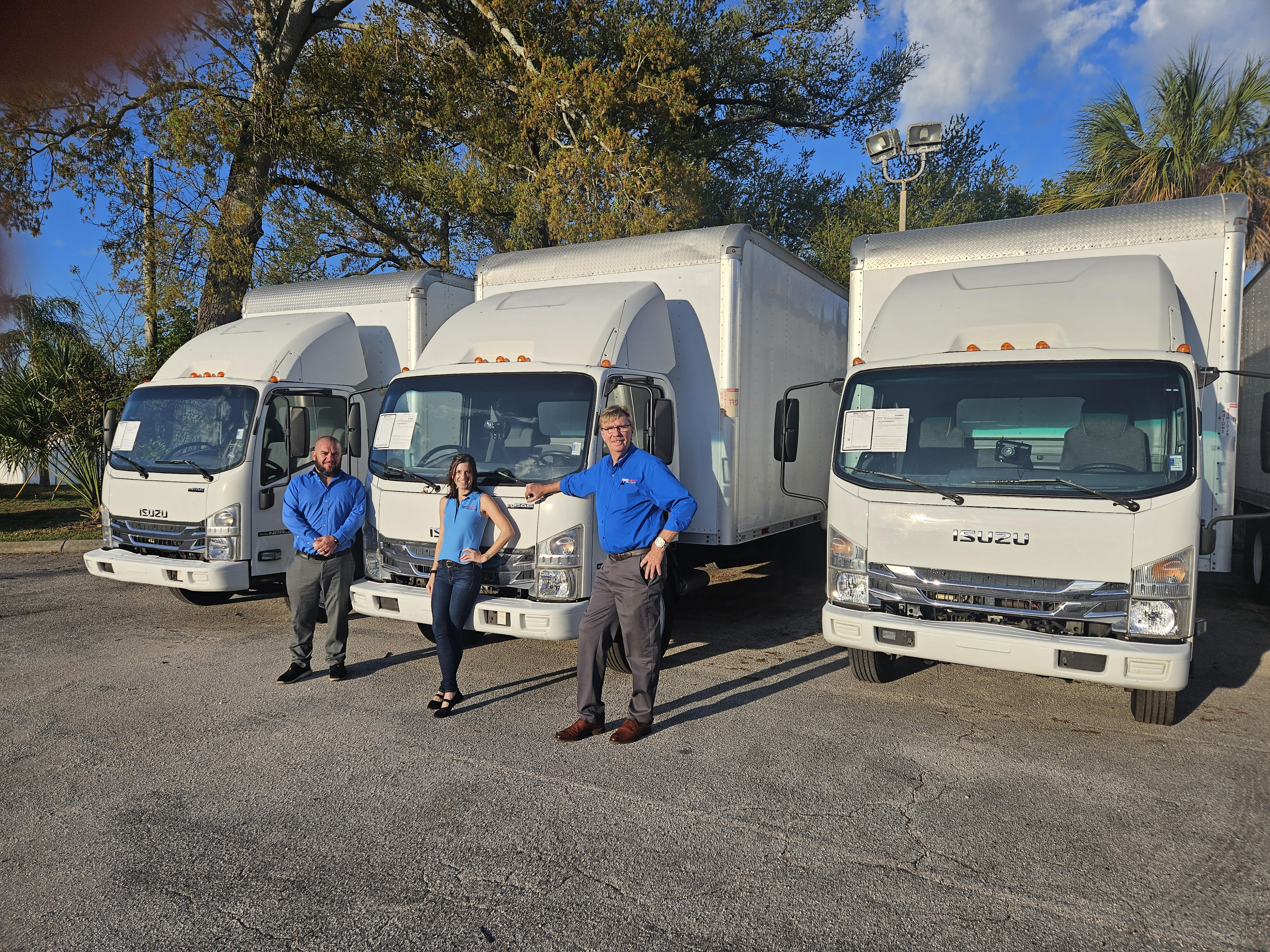
Richard Reed serves as Commercial Sales Representative at SRQ Auto LLC in Bradenton, Florida. With 2 years of hands-on expertise in medium-duty truck specs, chassis selection, and custom body upfitting, Richard works directly with business owners across the Suncoast region to streamline fleet growth.
His deep understanding of low-cab-forward design, gross payload balancing, and preventative maintenance protocols helps buyers select vehicles that deliver low total cost of ownership. See our track record on Recent Deliveries and read customer feedback on Reviews. Where Is the Best Place to Buy or Service an Isuzu NPR in the Bradenton Area?
Job-Ready Commercial Inventory
SRQ Auto LLC in Bradenton, FL is your premier destination for high-quality pre-owned commercial trucks. Every vehicle undergoes rigorous multi-point mechanical inspections and reconditioning to ensure job-ready reliability from day one.
Nationwide Shipping Expertise
Located outside Florida? We specialize in seamless commercial shipping across the entire continental United States. We manage logistics so your new work truck arrives directly at your job site ready to produce revenue.
Schedule Your Isuzu NPR Brake Inspection or Test Drive at SRQ Auto LLC Today
Don't wait for worn brake pads to damage your brake rotors or create unnecessary fleet downtime. Contact the commercial vehicle specialists at SRQ Auto LLC today to schedule a thorough multi-point brake inspection, discuss commercial financing terms, or test drive our latest selection of pre-owned Isuzu NPR work trucks.