Buying a Used Ford F-250 or F-350: What to Check Before You Buy

Expert perspective: Chris Hilgeman, owner of SRQ Auto LLC in Bradenton, Florida.
Buying a used Ford F-250 or F-350 for your business takes more than finding the right badge and monthly payment. Before buying, verify the truck’s history, inspect its mechanical condition and commercial equipment, and confirm that the completed vehicle can carry your crew, tools and materials. A clean-looking truck still needs a careful evaluation.
At SRQ Auto, we work with contractors, trades and fleet buyers who need their next vehicle to earn its place in the business. Start with our used service body and utility trucks, then use this checklist to compare the actual vehicles on your shortlist.
Start With the Work, Then Shop the Truck
Write down what leaves your shop each morning: employees, ladders, replacement parts, tools, machines and trailer loads. Include anything you plan to add after purchase. A truck that works for a solo electrician may be a poor match for a plumbing crew carrying substantially heavier equipment.
Record your longest materials, required compartment sizes and typical parking conditions. Consider whether the truck will spend its day on Sarasota service routes, moving between Bradenton jobsites or covering the wider Tampa Bay area. Cab space, access and maneuverability affect everyday usefulness as much as equipment lists.
For the chassis comparison itself, read our F-250 vs. F-350 service truck guide. This checklist focuses on evaluating the used truck you may actually purchase.
1. Verify the VIN, History and Maintenance Records
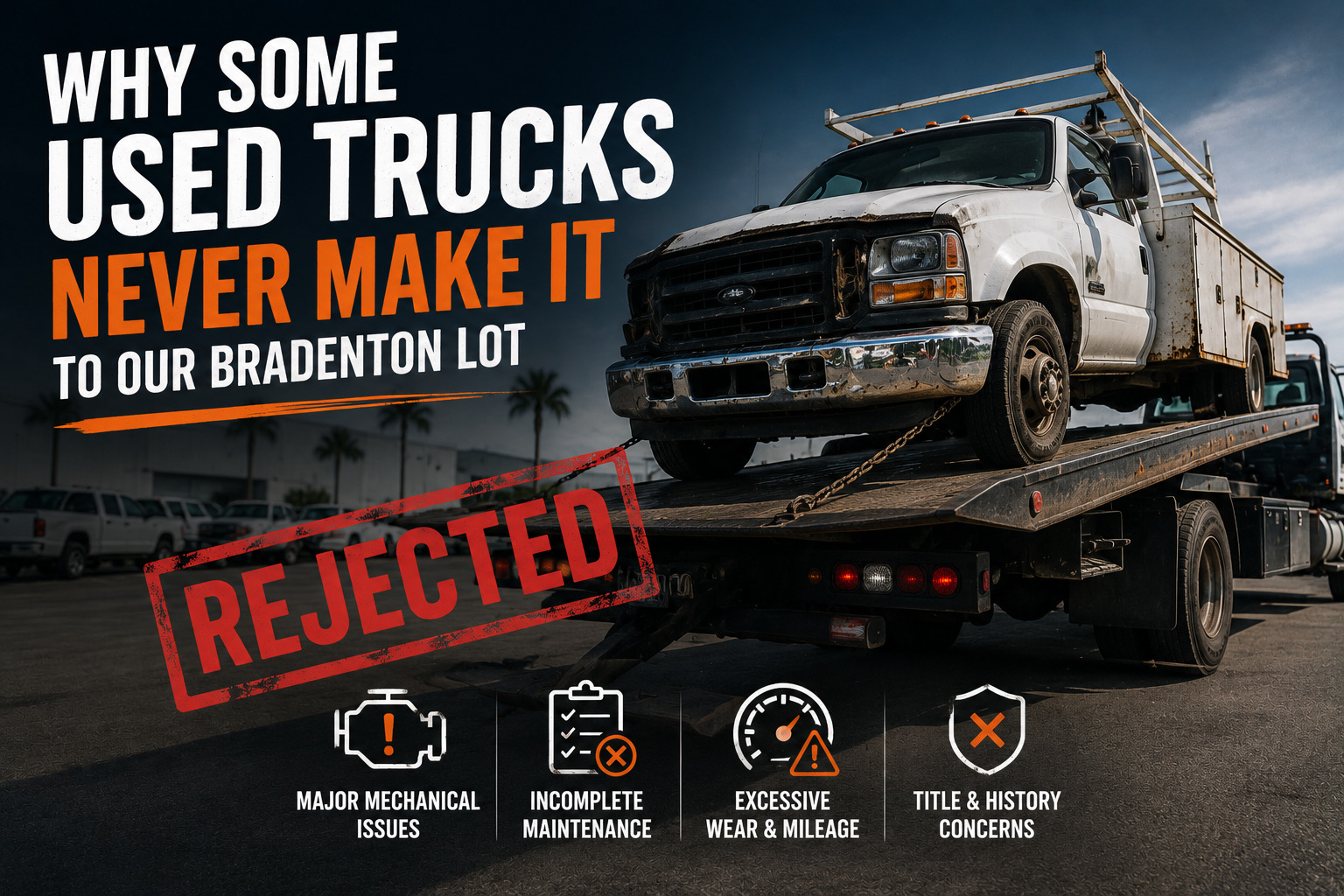
Match the VIN on the truck to the paperwork and history report. Review reported ownership, title events, mileage entries and service information. Ask about gaps or inconsistencies before treating the listing as a complete picture.
A vehicle history report is useful, but it cannot document every repair or operating condition. Ask what maintenance records are available, what the selling dealer inspected and what work was completed before sale. Fleet ownership alone does not prove either exceptional maintenance or hard use.
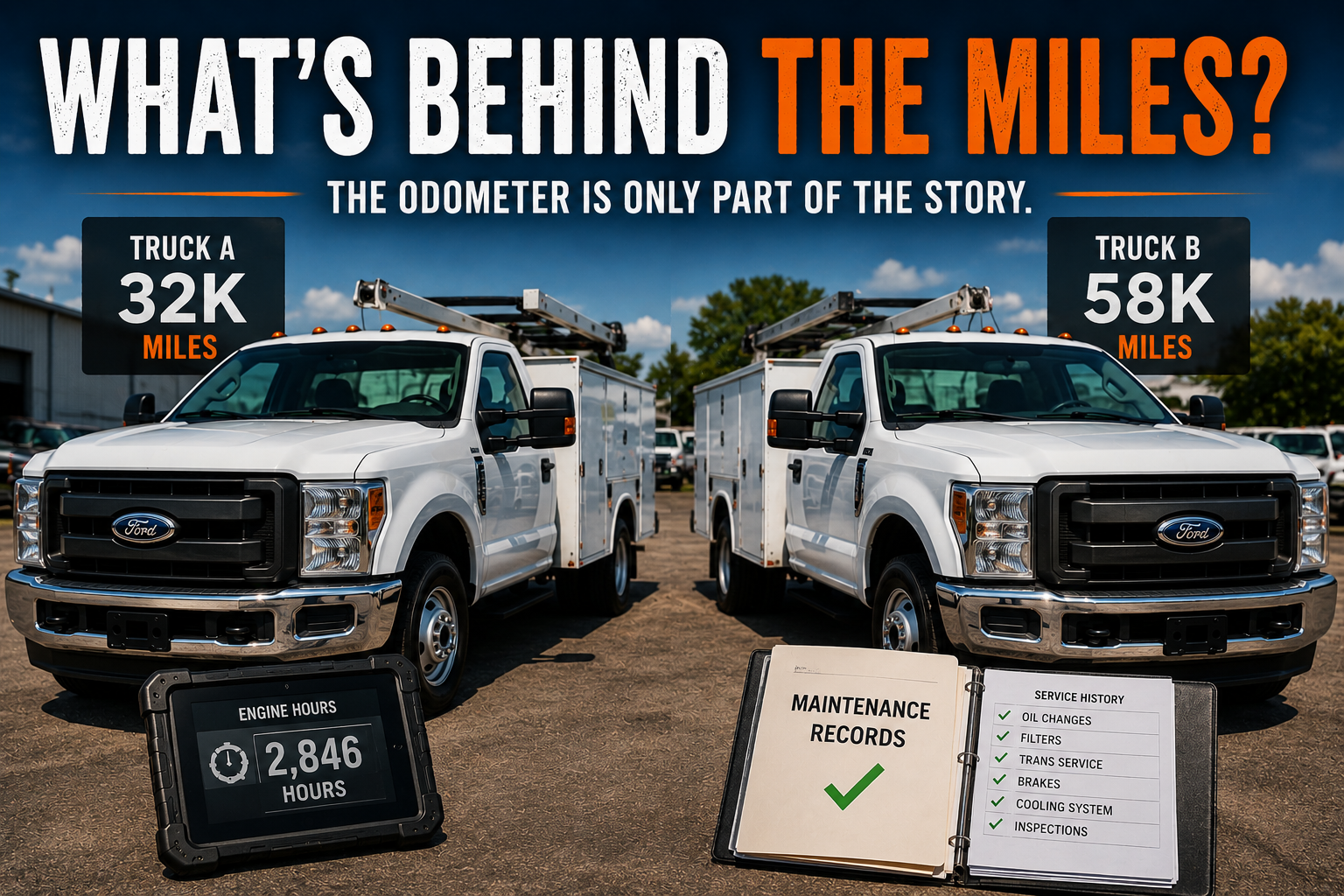
Look at age, mileage and available engine-hour information together. Service routes and extended idling can produce a different operating history than highway travel. Use those clues to decide what needs closer inspection rather than assuming lower mileage automatically means better condition.
2. Inspect Mechanical Condition Beyond the Test Drive
Ask to evaluate starting behavior, warning lights, fluid condition, leaks and cooling-system operation. During the test drive, pay attention to shifting, steering, braking, vibration and unusual noises. Test the air conditioning; Florida workdays make that more than a comfort feature.
For a diesel truck, ask about relevant fuel-system, emissions-system and maintenance history. For a gas truck, review the service requirements for its particular engine and year. Avoid assuming every used Super Duty has the same equipment or maintenance needs.
An inspection by a qualified technician can help resolve questions a brief drive will not answer. Ask for an explanation of identified concerns and completed repairs. A fresh detail or a quiet dashboard should not replace that conversation.
3. Look Underneath and Inside the Service Body
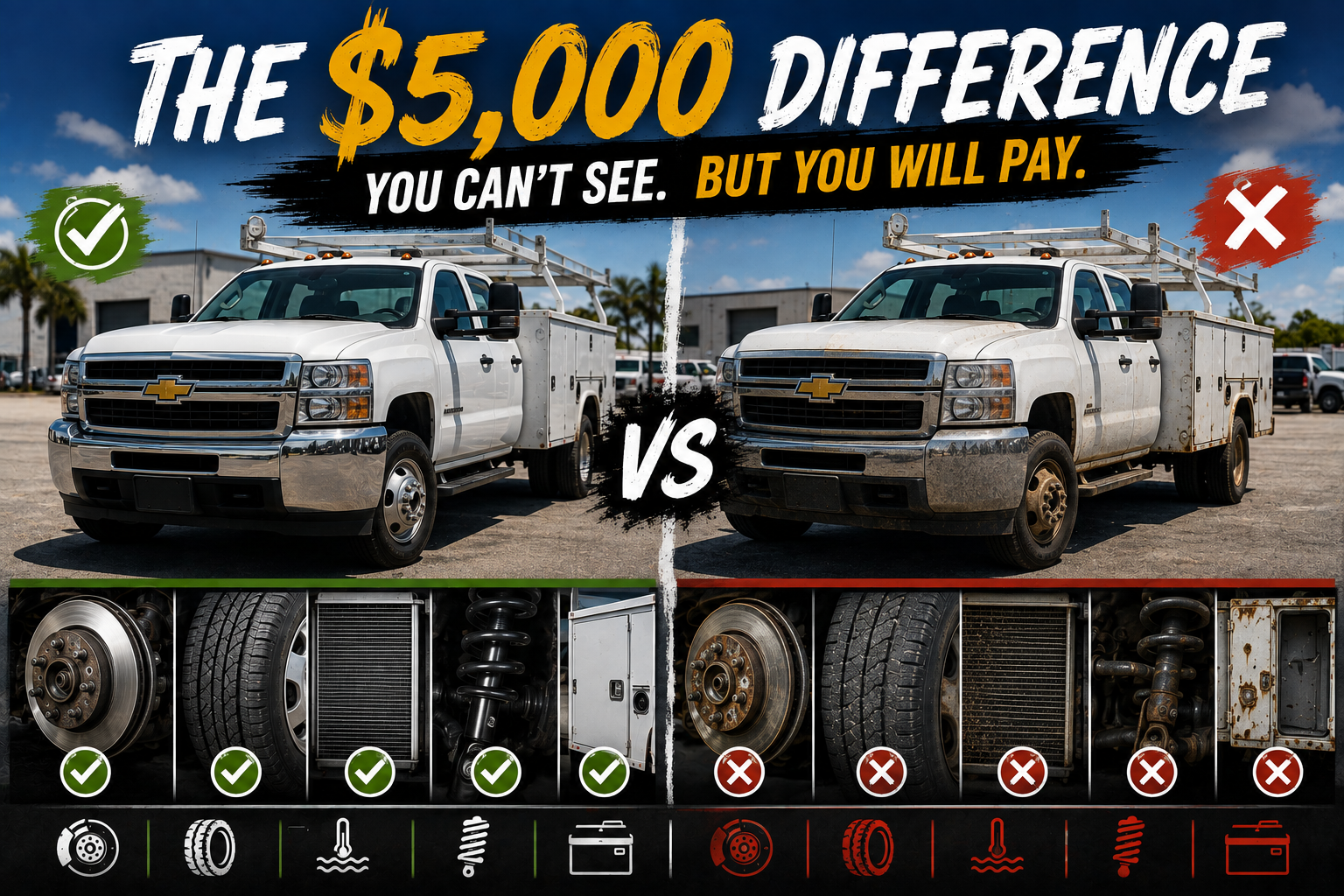
Inspect the frame, body mounts, suspension components and visible underside for corrosion, damage or questionable repairs. Florida history does not guarantee a corrosion-free truck, particularly when coastal exposure or previous operating locations are unknown.
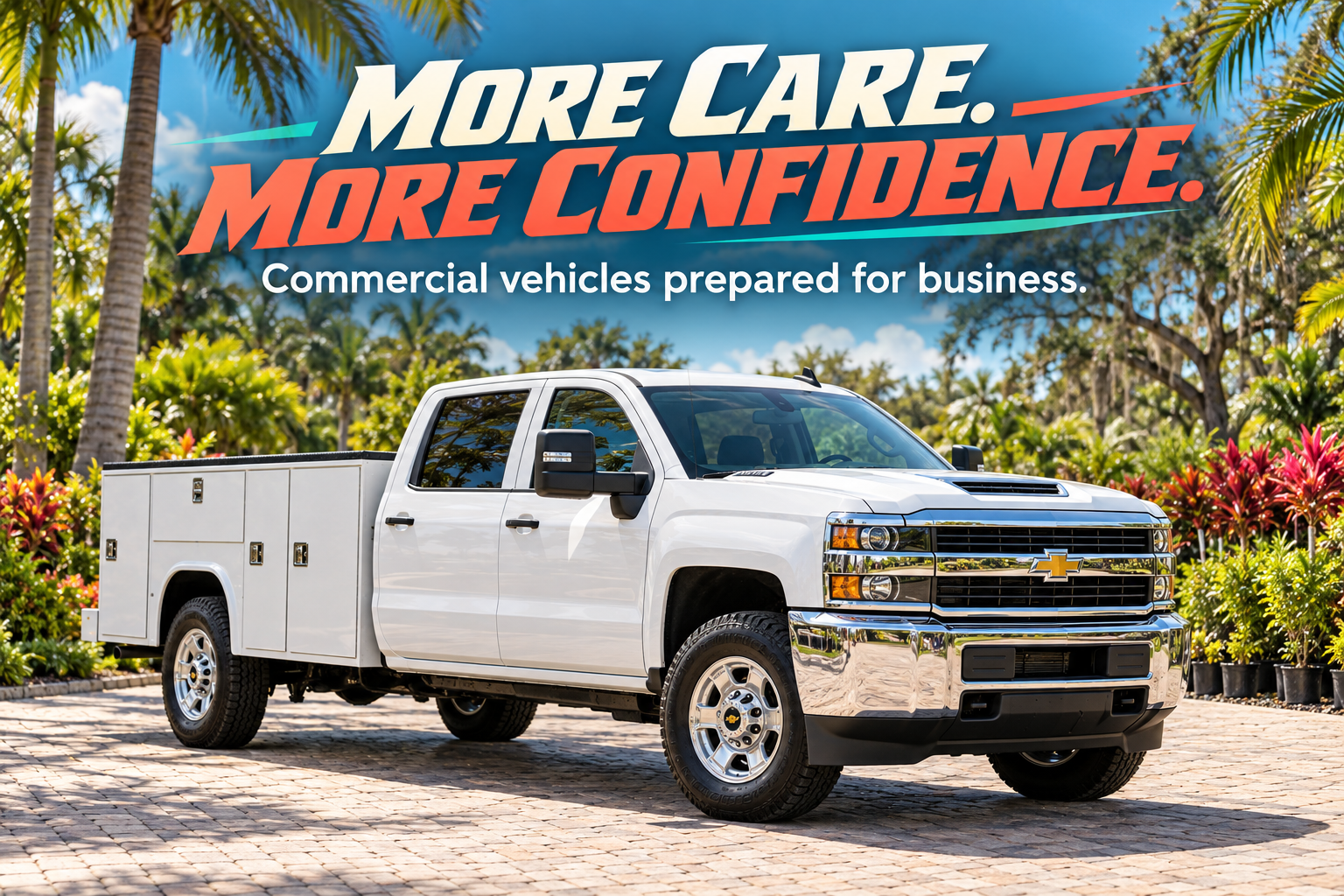
Open every service-body compartment. Check hinges, latches, locks, weather seals, floors and shelves. Look for water intrusion, damaged mounting points and evidence that equipment was poorly installed. A compartment that photographs well may still have an inconvenient opening or a difficult latch.
Fresh paint and protective coatings can be useful parts of reconditioning. Ask what preparation and repairs were performed underneath them. Evaluate the condition of the structure and the quality of the work alongside its appearance.
4. Test the Equipment Your Trade Will Depend On
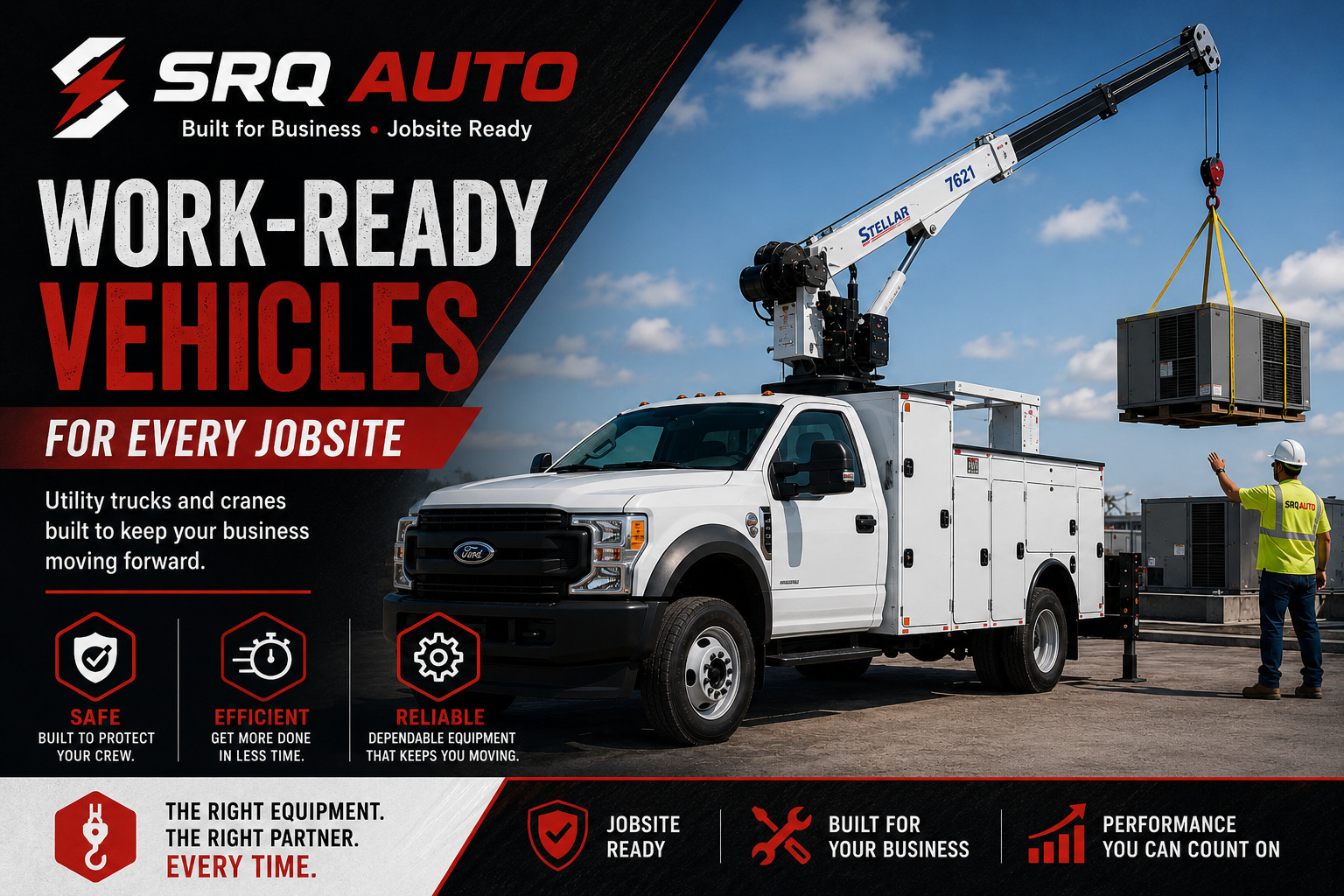
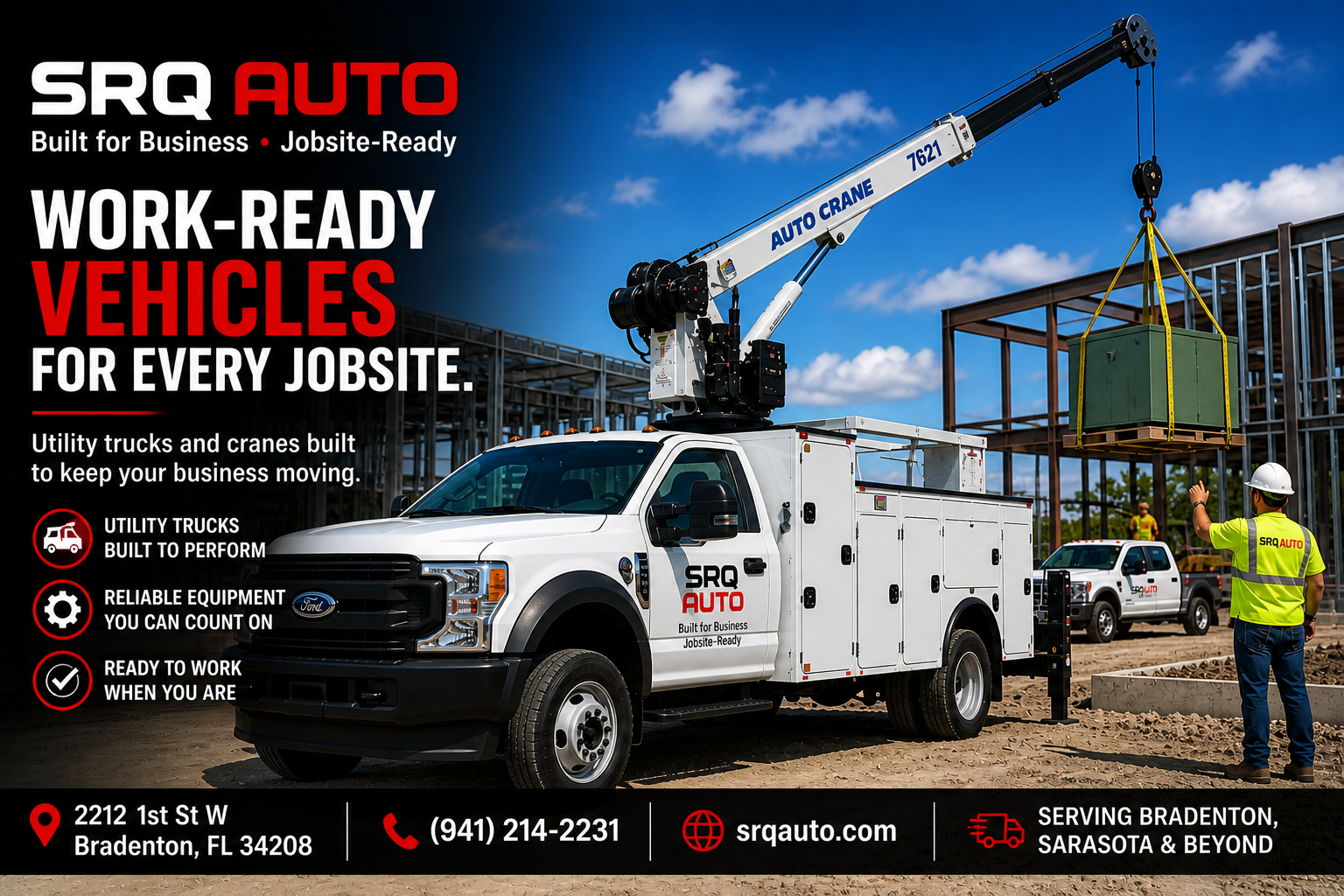
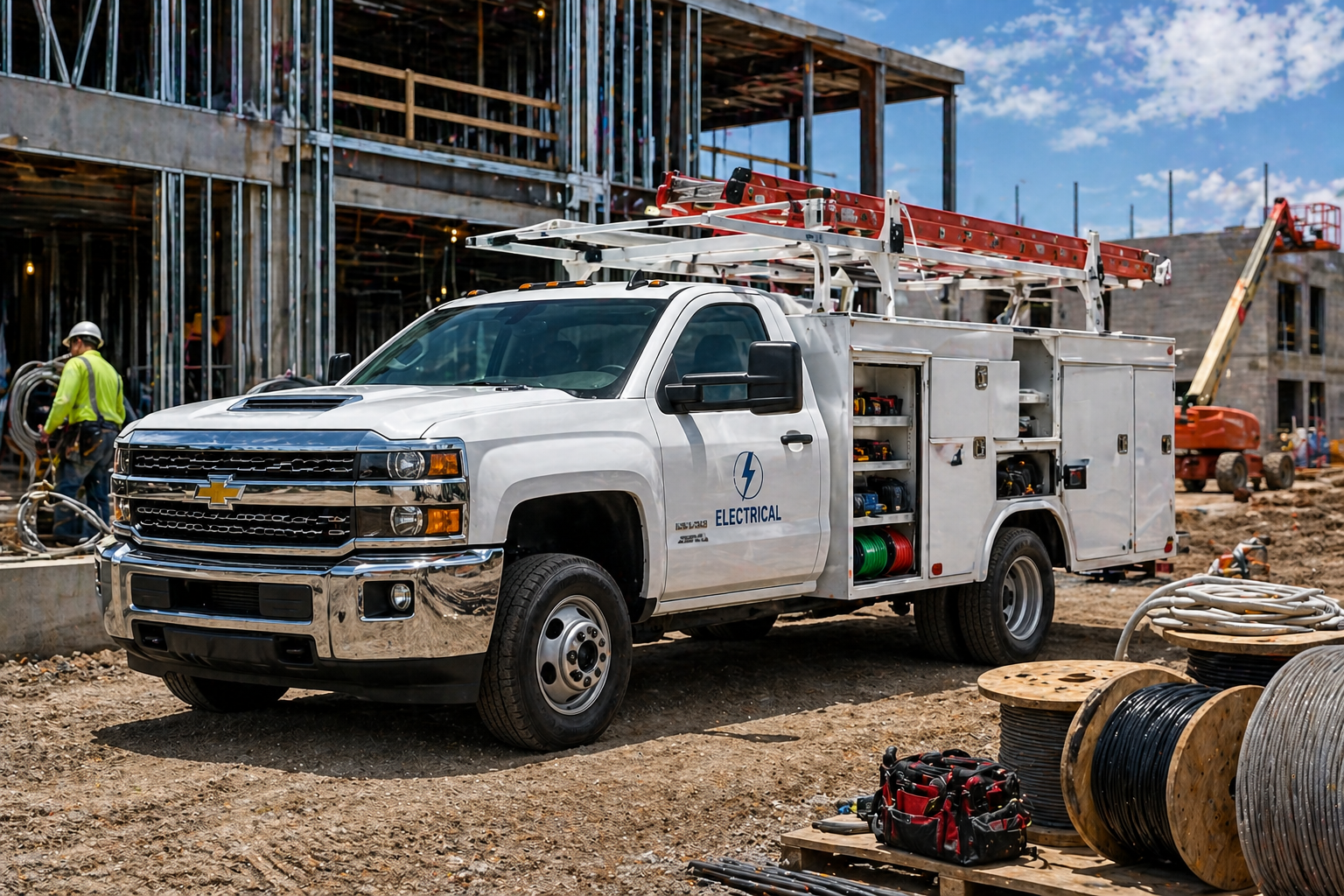
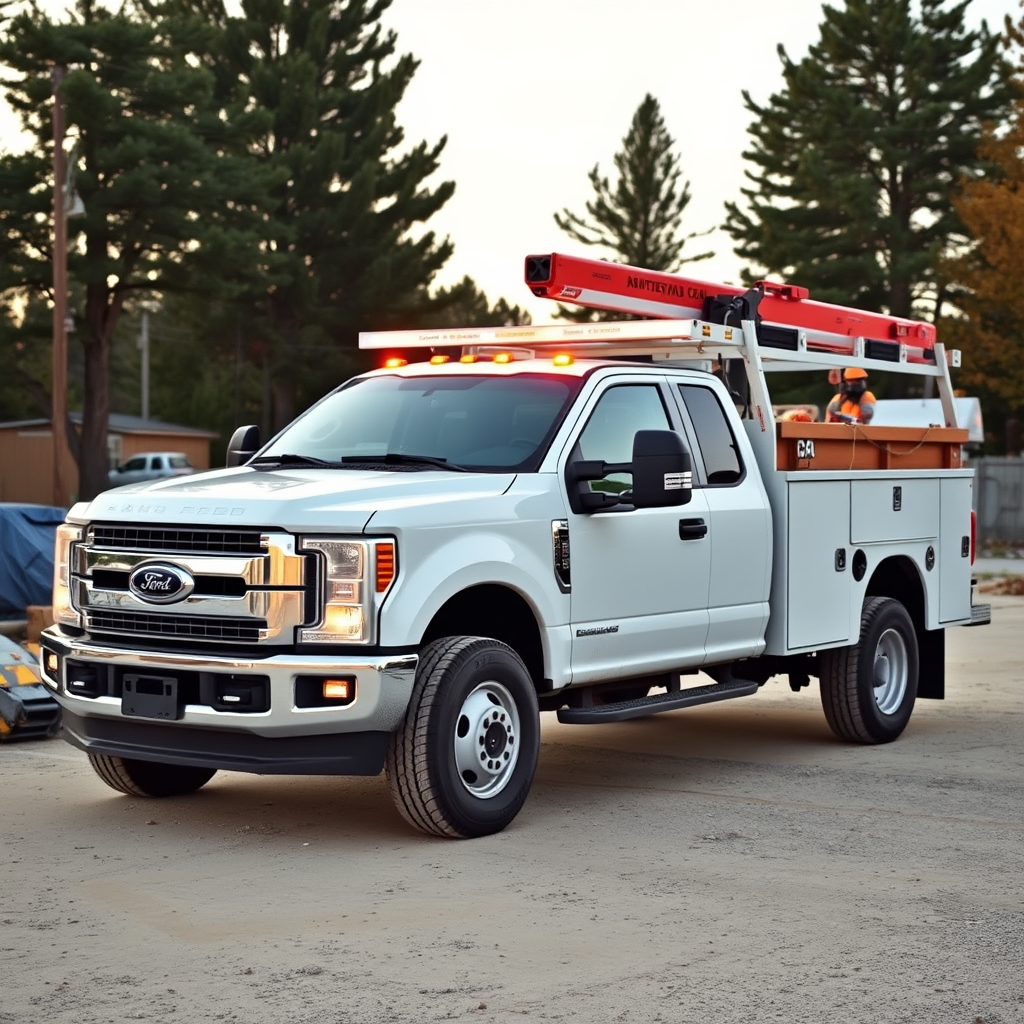
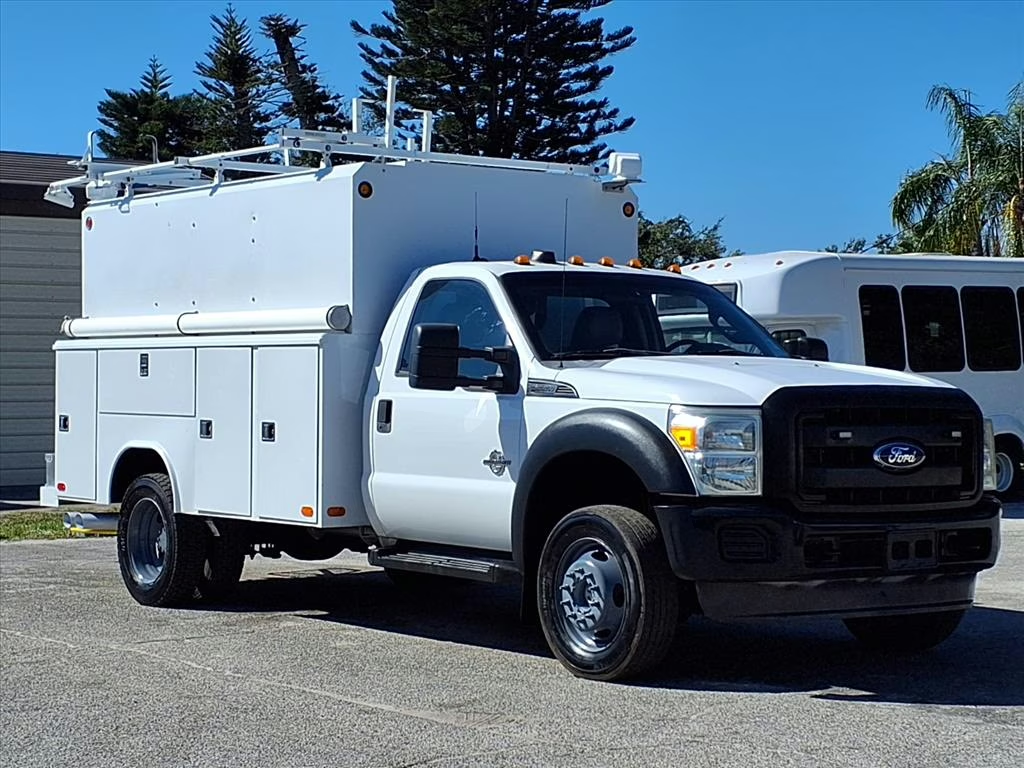
Verify the actual upfit rather than relying on a generic “utility truck” description. Measure storage openings and the usable bed area. Check rack mounts, lighting, power outlets and any installed equipment that matters to your operation.
- Ladder racks: inspect attachment points, condition and applicable load information.
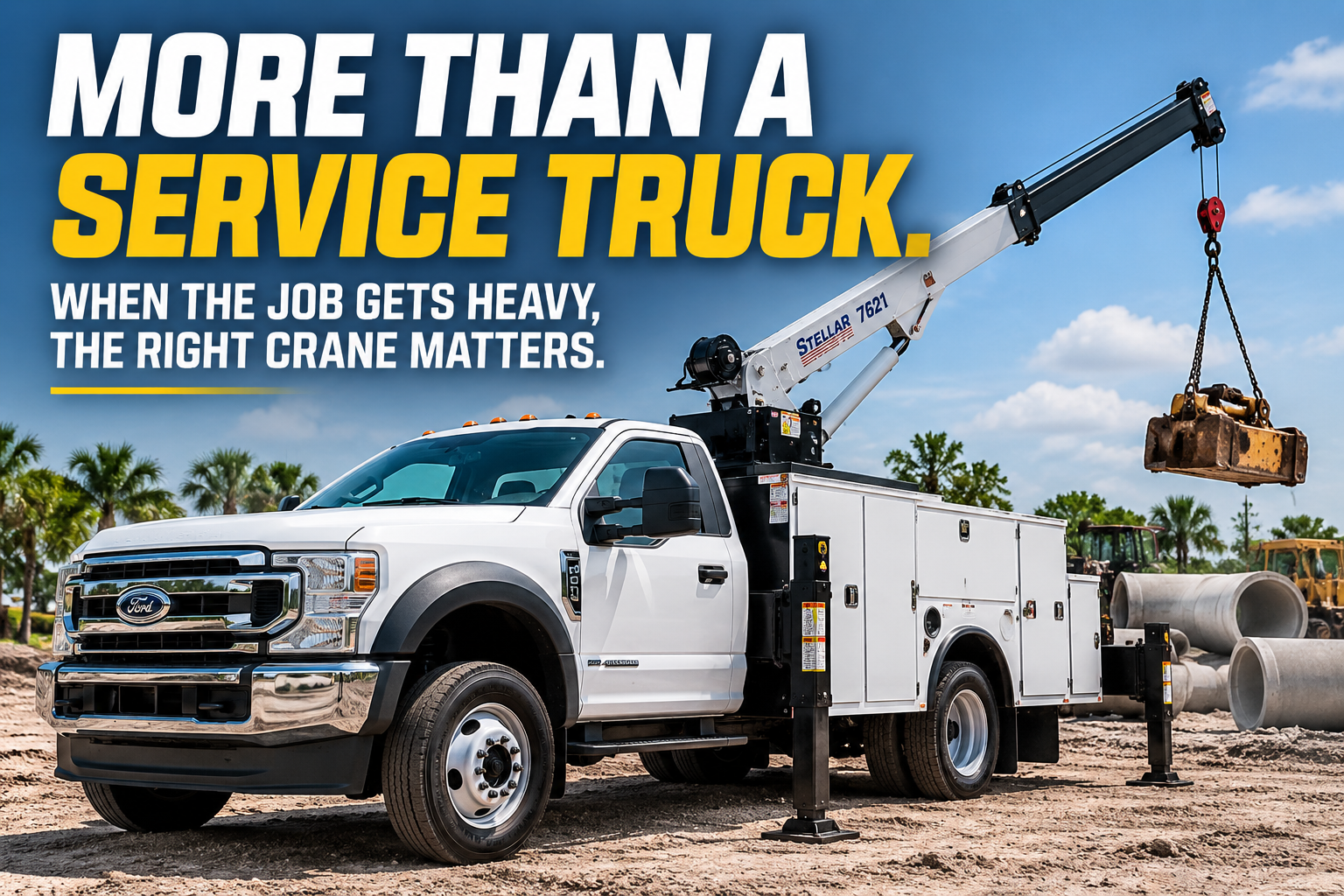
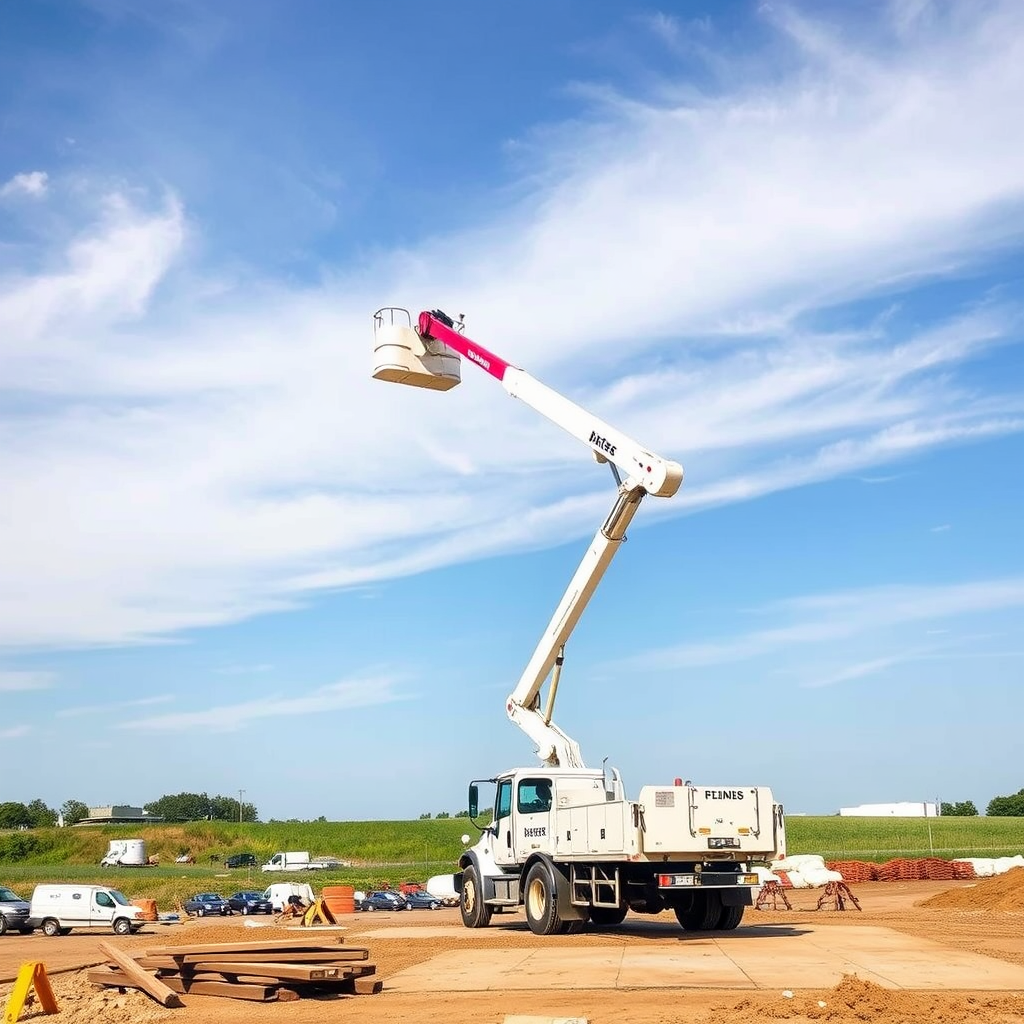
- Crane or compressor: request equipment identification, operating demonstrations and available inspection or service records.
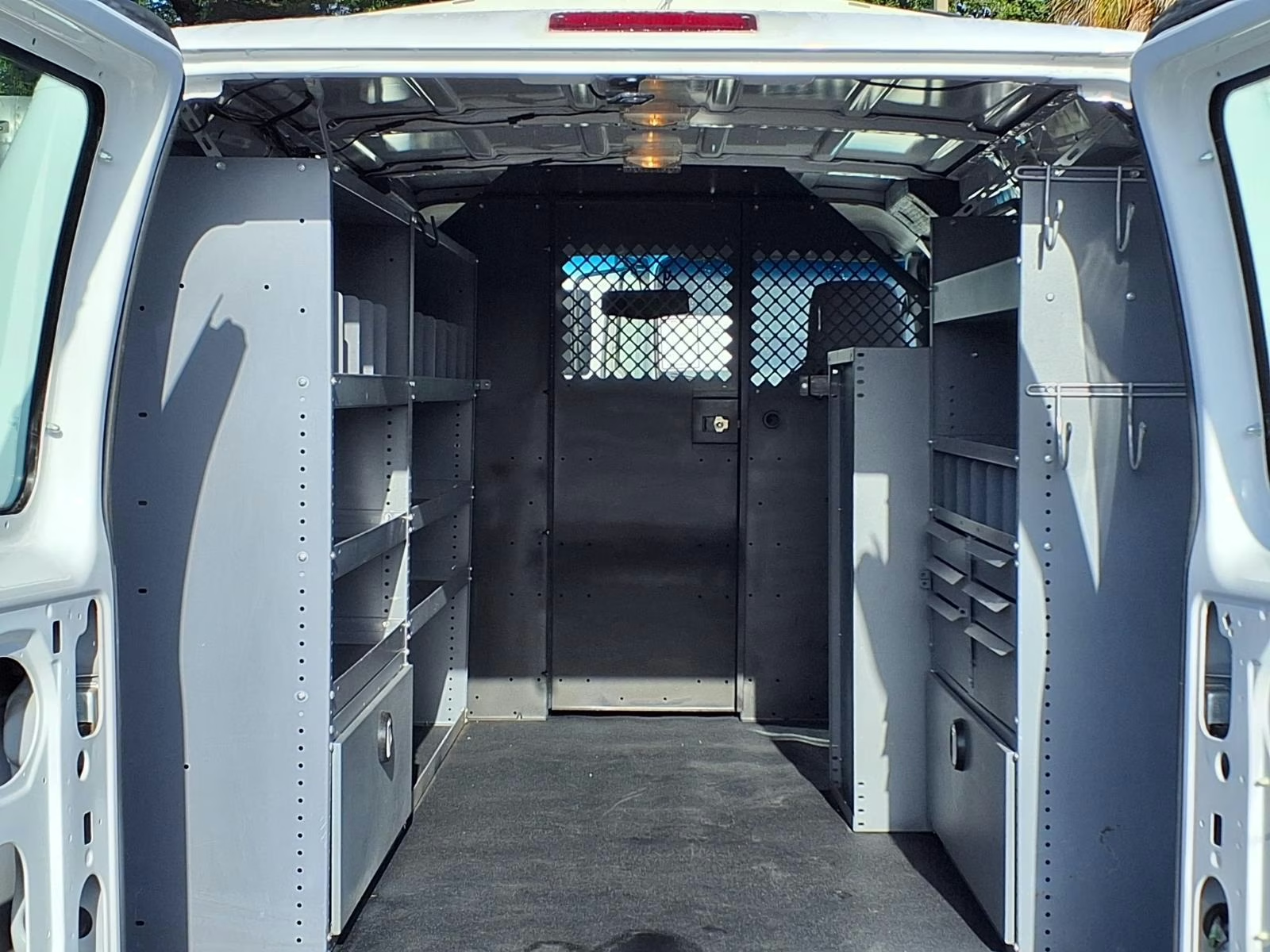
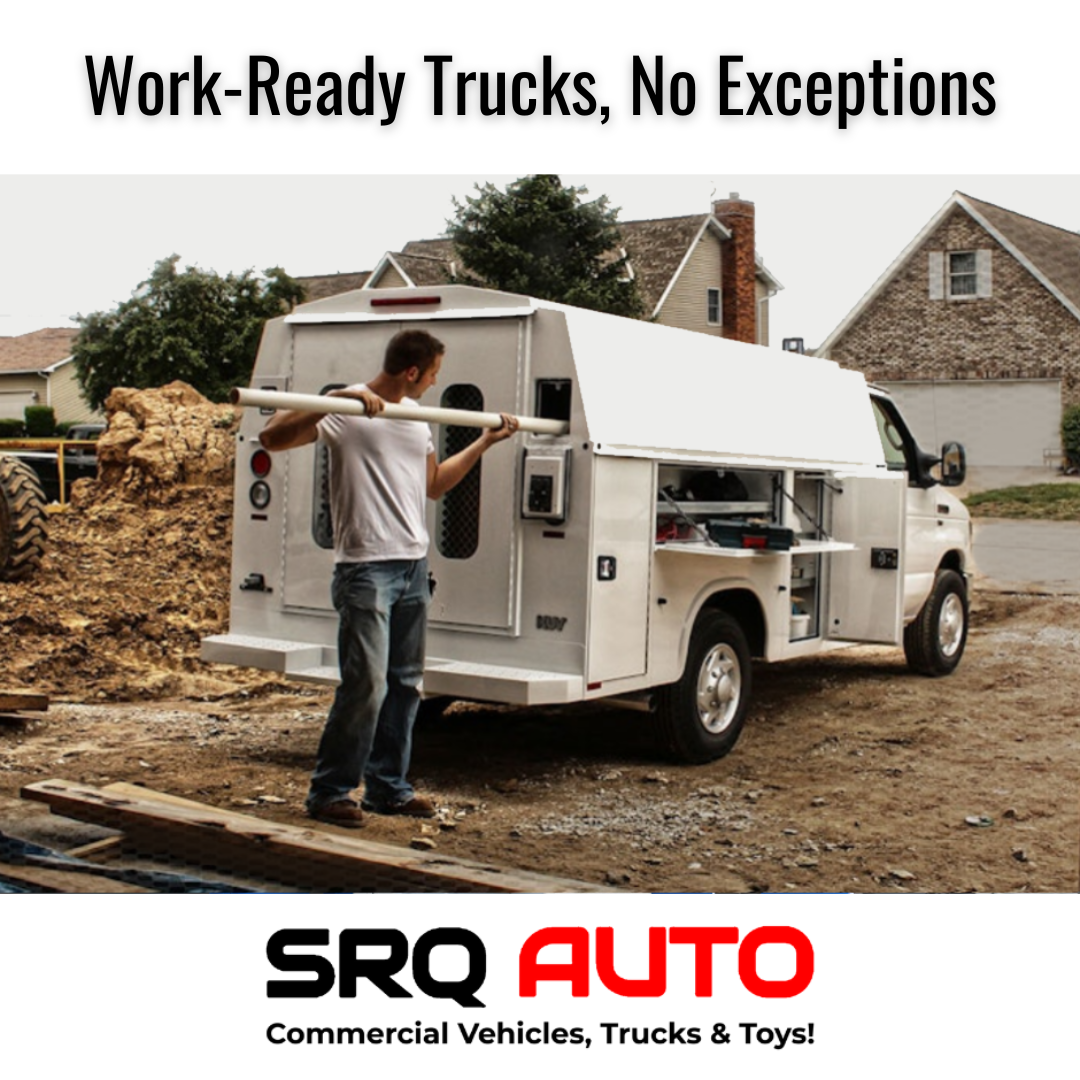
- Enclosed utility bodies: evaluate interior access, shelving security, door operation and cargo protection.
- Trailer equipment: confirm the receiver, connectors and brake-control equipment match the intended trailer setup.
Do not assume accessories pictured in an older photograph are included. Confirm included equipment and its condition before agreeing to the purchase.
5. Confirm Capacity for the Completed Truck
There is no single payload or towing number that applies to every used F-250 or F-350. Ratings depend on model year and configuration. A service body, rack, crane or other added equipment also affects how much capacity remains for daily working loads.
Ford’s guidance explains that added equipment uses available payload and that trailer tongue or pin weight counts as load on the truck. Review the specific vehicle’s labels and the appropriate model-year towing information. For a substantially modified truck, obtain an actual scale weight and review vehicle and axle limits.
Use Ford’s load-carrying guidance as a starting reference, then verify the documentation for the truck you are considering. Never substitute a model-line advertising maximum for that vehicle’s ratings.
6. Compare Purchase-Ready Condition, Not Just Asking Price
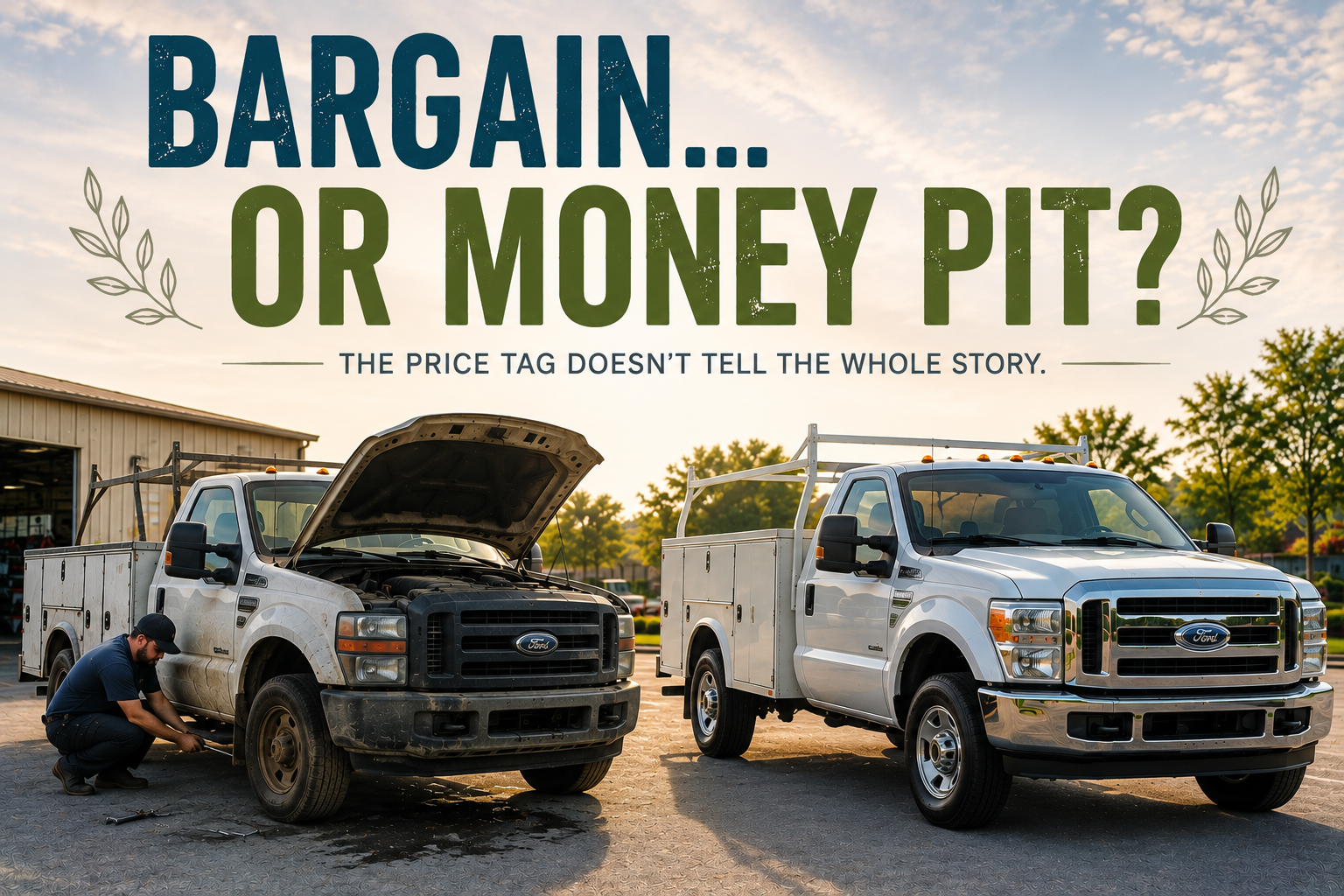
Two similarly priced trucks can require very different spending before they enter service. Compare tires, glass, seating, compartment condition, scheduled maintenance and equipment repairs. Include the time needed to arrange that work.
Build a short side-by-side worksheet for your finalists. Record purchase cost, immediately needed repairs, equipment you must install and expected time before the truck can work. Include differences in tire replacement costs and the practicality of maintaining the installed equipment. Ask which items are estimates and which have written quotes. A lower asking price can still be the better purchase, but only when you understand what remains to be done. Likewise, paying more makes sense only when the condition, preparation and configuration provide value your operation will actually use.
SRQ Auto’s reconditioning goes beyond washing and detailing. Depending on the vehicle’s needs, preparation may include mechanical inspection and service, replacement tires or glass, upholstery work, frame or body refinishing, compartment preparation and Raptor Liner treatments. Commercial equipment also needs attention appropriate to its configuration.
Ask what was completed on the specific truck. Our Job Ready Promise reflects that preparation; it is not a guarantee against future repairs. Learn about SRQ Auto and read our customer reviews as part of your dealer comparison.
7. Settle Financing, Coverage and Delivery Details
Request the complete purchase figures and discuss financing before scheduling your business around the truck. SRQ offers Tailored Commercial Financing, subject to lender approval and applicable terms. Compare the total obligation as well as the payment.
Ask which commercial vehicle warranty and service contract options are available for that vehicle. Review covered components, exclusions, deductibles, eligibility and claim procedures. Coverage varies; service contracts do not cover every repair or automatically replace lost business income.
For remote purchases, request current photographs, a walkaround and answers to your inspection questions. Confirm document requirements and any delivery quote or timing before committing. Nationwide buyers should evaluate the actual truck as carefully as local buyers.
Questions Buyers Ask Before Purchasing
Is a lower-mileage F-250 always better than a higher-mileage F-350?
No. Compare condition, records, operating history, equipment and suitability for the work. Mileage is one part of the decision, and a larger model badge does not establish better condition.
What should I request before buying remotely?
Request current photographs, a walkaround, available history and maintenance records, details of completed reconditioning, and a demonstration of important commercial equipment. Resolve inspection, payment, paperwork and delivery questions before purchase.
Should I choose the truck or the service body first?
Evaluate them together. The body must support your workflow, while the completed truck must have sufficient capacity for that body, equipment, occupants, cargo and trailer load.
Find a Used Ford Work Truck That Fits Your Business
Bring us your equipment list, crew needs and trailer information. We can help you compare available configurations and identify questions worth resolving before you buy. Inventory changes, so check current listings for actual availability.
Browse used service and utility trucks, or view all commercial inventory. Call (941) 214-2231 to discuss a truck, or get directions to SRQ Auto in Bradenton.