Buying Used Service Trucks for Your Fleet: Condition, Equipment & Value

Buying used service trucks for your fleet starts with matching each truck to the work, equipment, and crew it must support. A lower purchase price is useful only when the vehicle's condition and configuration make sense for your business. Compare service-body storage, available vehicle ratings, maintenance information, and any immediate preparation costs. For multiple purchases, consider how consistent layouts can help technicians move between trucks. Chris Hilgeman, owner of SRQ Auto, brings nearly 20 years of automotive experience to evaluating commercial vehicles and their business applications. This guide helps fleet buyers in Bradenton, Sarasota, Tampa Bay, and beyond compare used utility trucks with the next workday in mind.
Commercial-vehicle expertise: Chris Hilgeman, Owner, SRQ Auto LLC.
Start with SRQ Auto's used service and utility trucks for sale, then use the comparisons below to narrow your choices. Tell our team how many trucks you need and what each one must carry.
When does buying used service trucks make sense for a fleet?
Buying used can make sense when an available truck delivers the configuration and condition your business needs at an acceptable total cost. It may help a growing company add capacity or replace a truck without ordering a new chassis and body. Actual savings and availability depend on the vehicles being compared.
Do not assume used always costs less to own. Compare the truck's price, immediate preparation, operating costs, financing, and expected use. A cheaper truck needing extensive mechanical or body work may be less useful than a better-prepared alternative.
What should you standardize when buying multiple utility trucks?
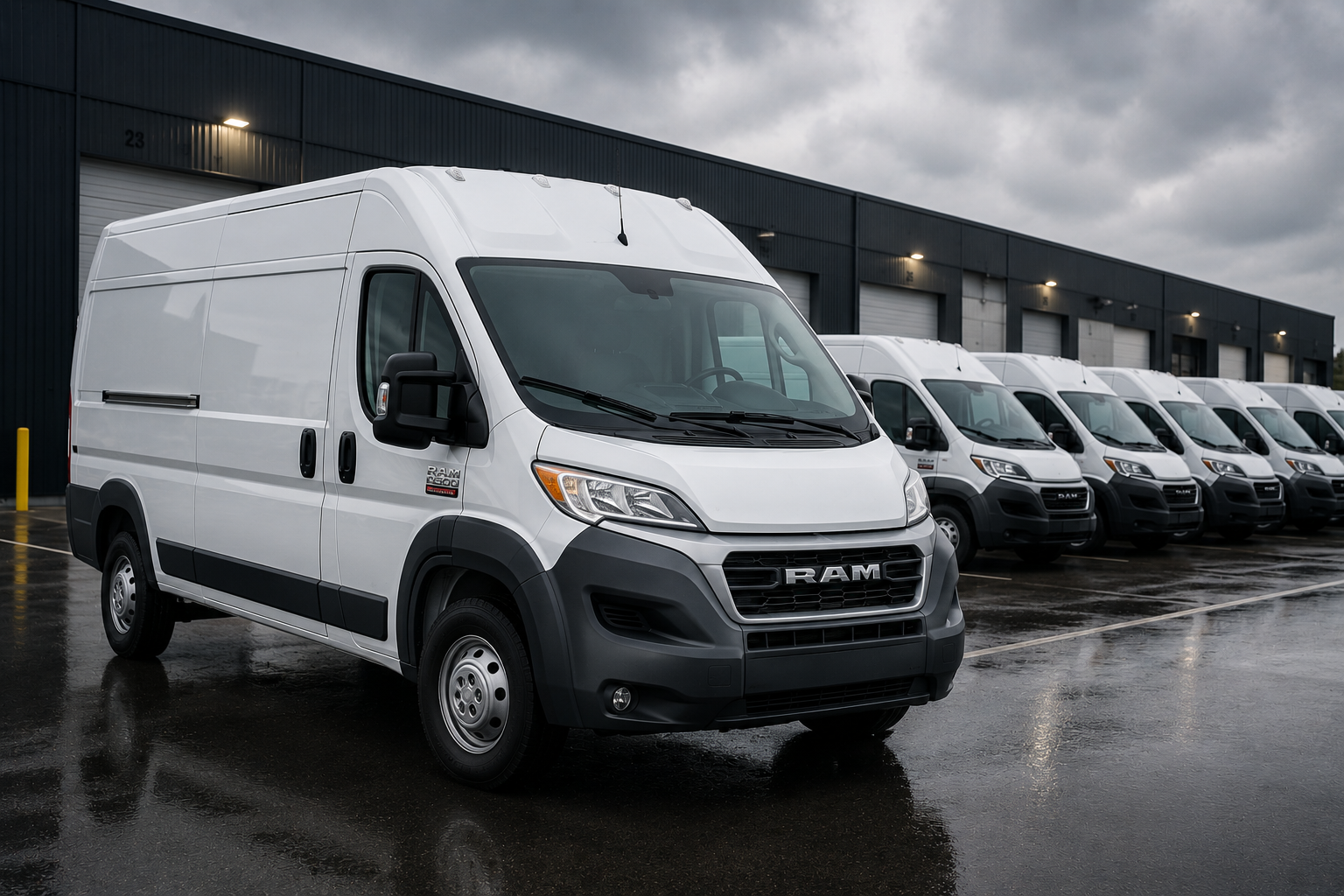
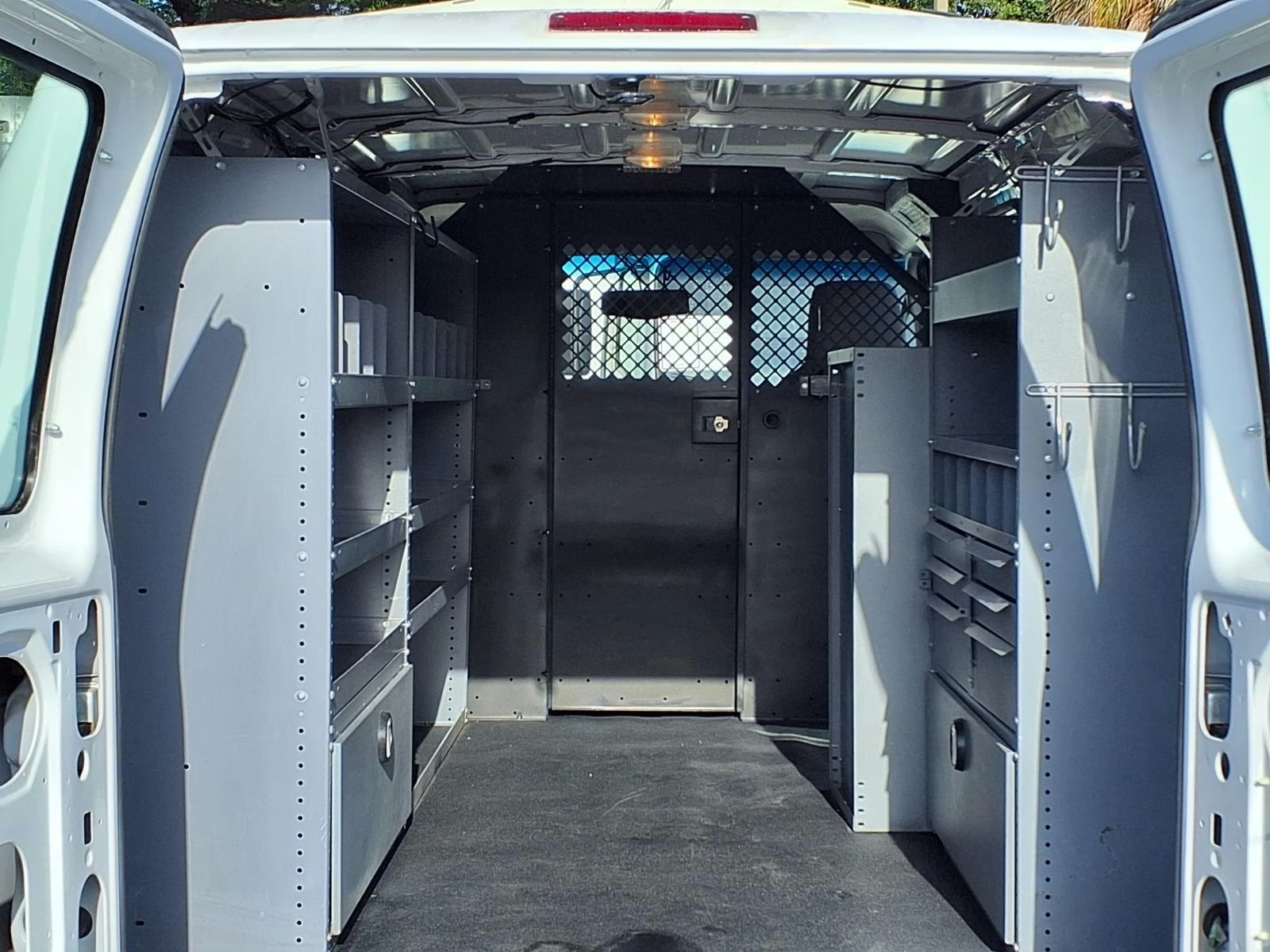
Standardize the features your crews use every day where practical. Consistent compartment layouts, tool locations, and access can make it easier for a technician to move from one truck to another.
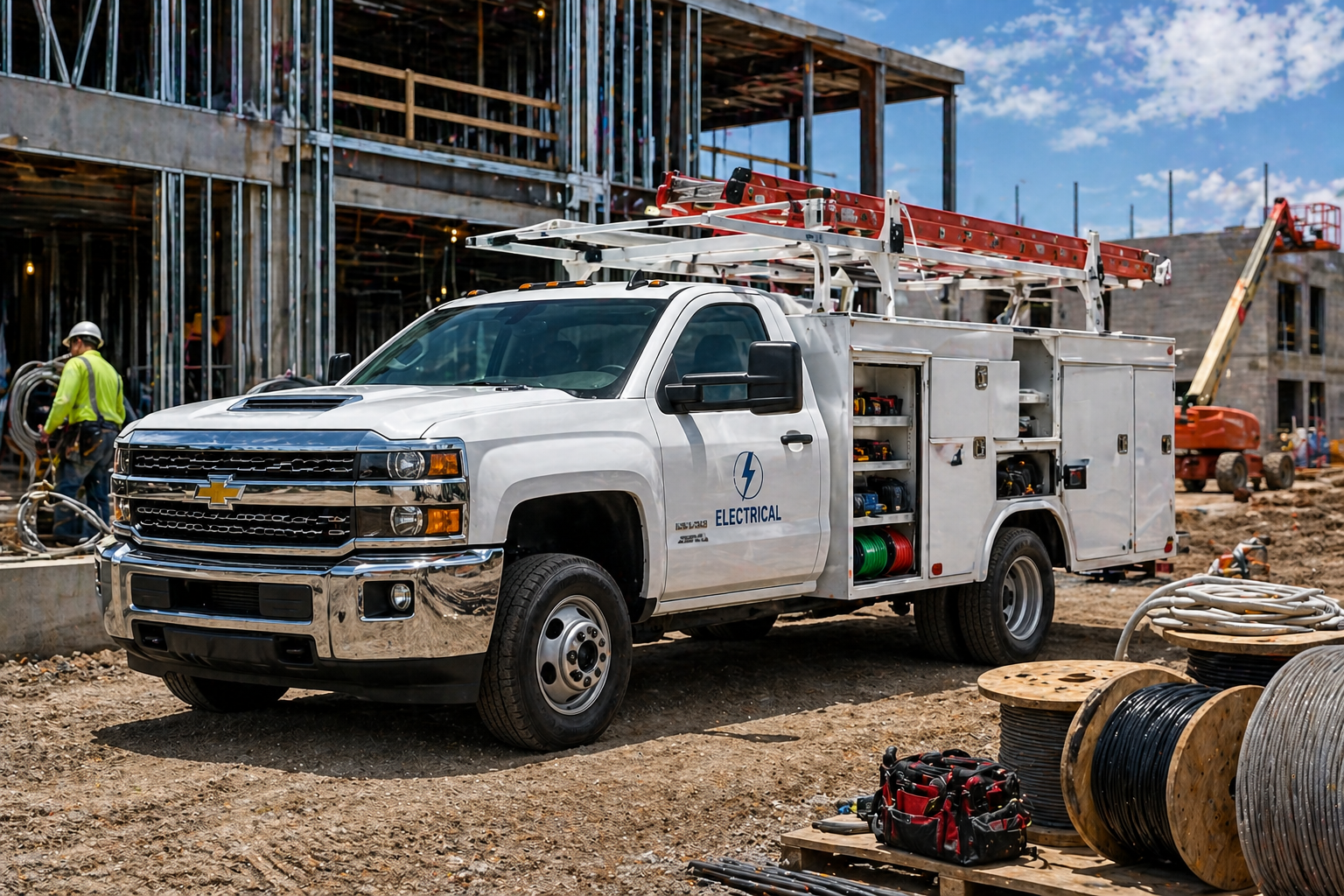
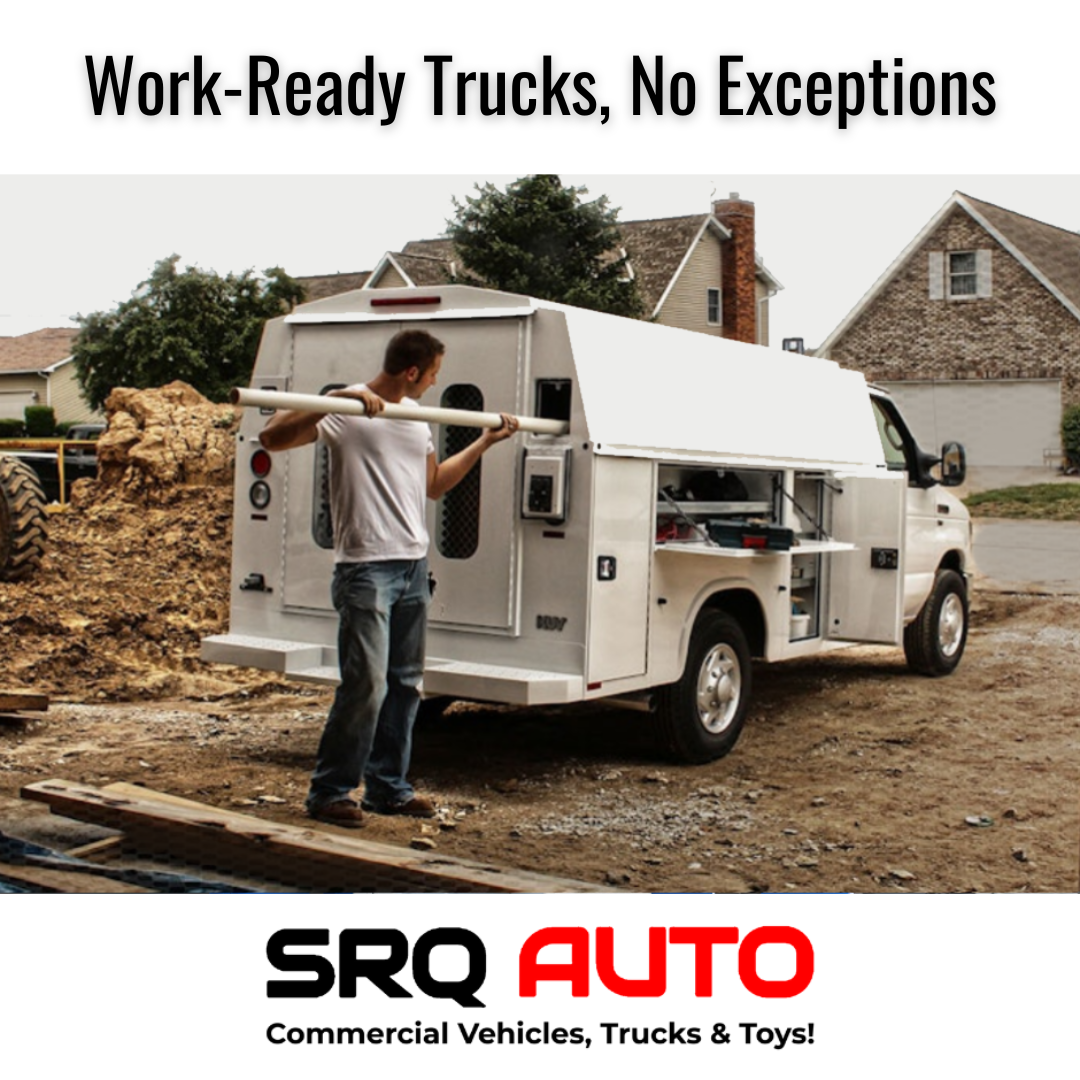
- Storage layout: Compare compartment dimensions, shelves, drawers, locks, and access to frequently used equipment.
- Crew requirements: Match seating and cab configuration to the people who travel together.
- Working equipment: Identify needs for racks, towing equipment, compressors, or cranes instead of paying for equipment your crews will not use.
- Vehicle requirements: Compare fuel type, drivetrain, service access, and ratings against your routes and loads.
A plumbing crew and a mobile equipment technician may need different trucks. Standardization should support the work rather than force every assignment into the same configuration.
How do you compare condition across used fleet trucks?
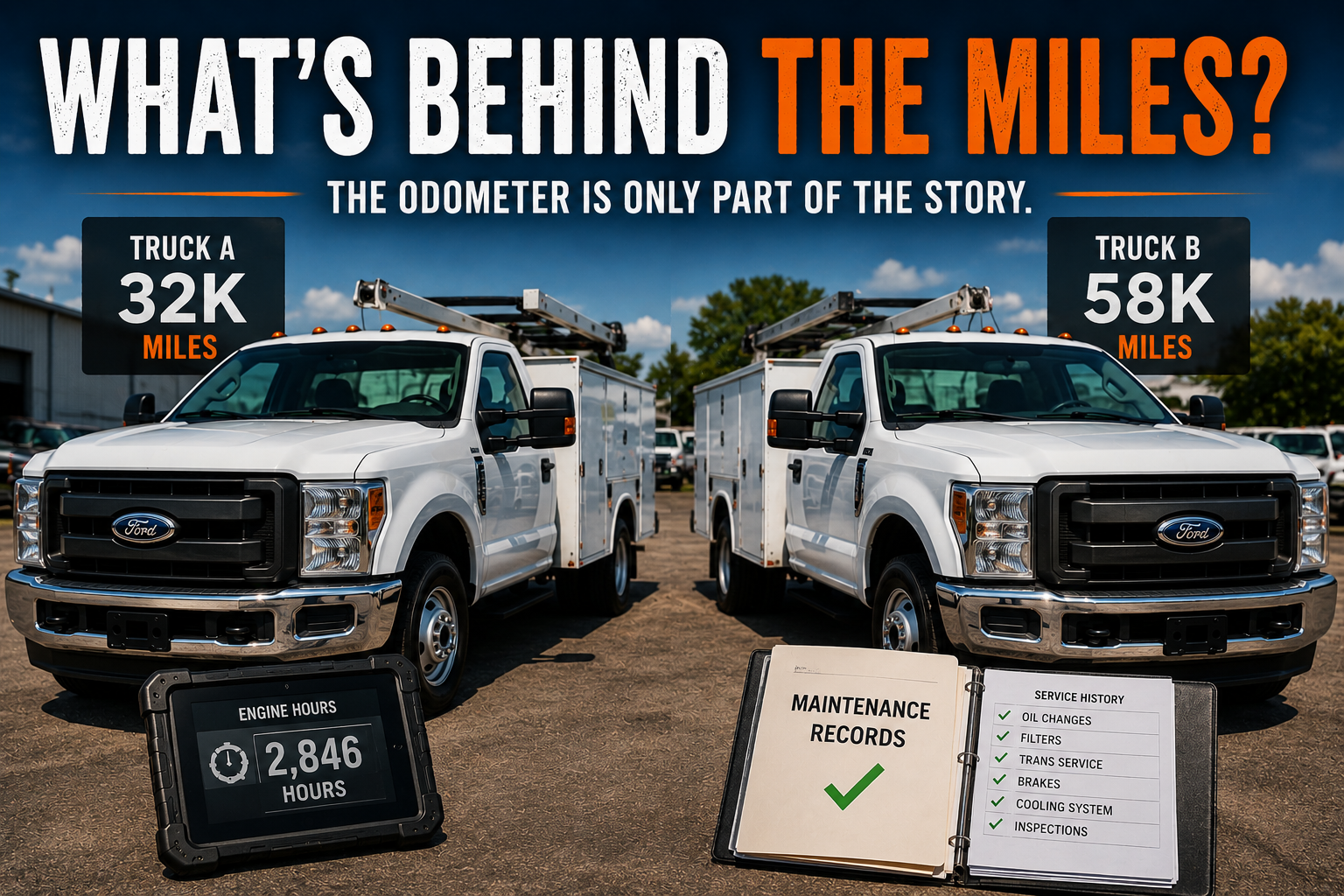
Compare documented condition and preparation rather than odometer readings alone. Ask about previous commercial use, available service records, inspection findings, and completed repairs for each candidate.
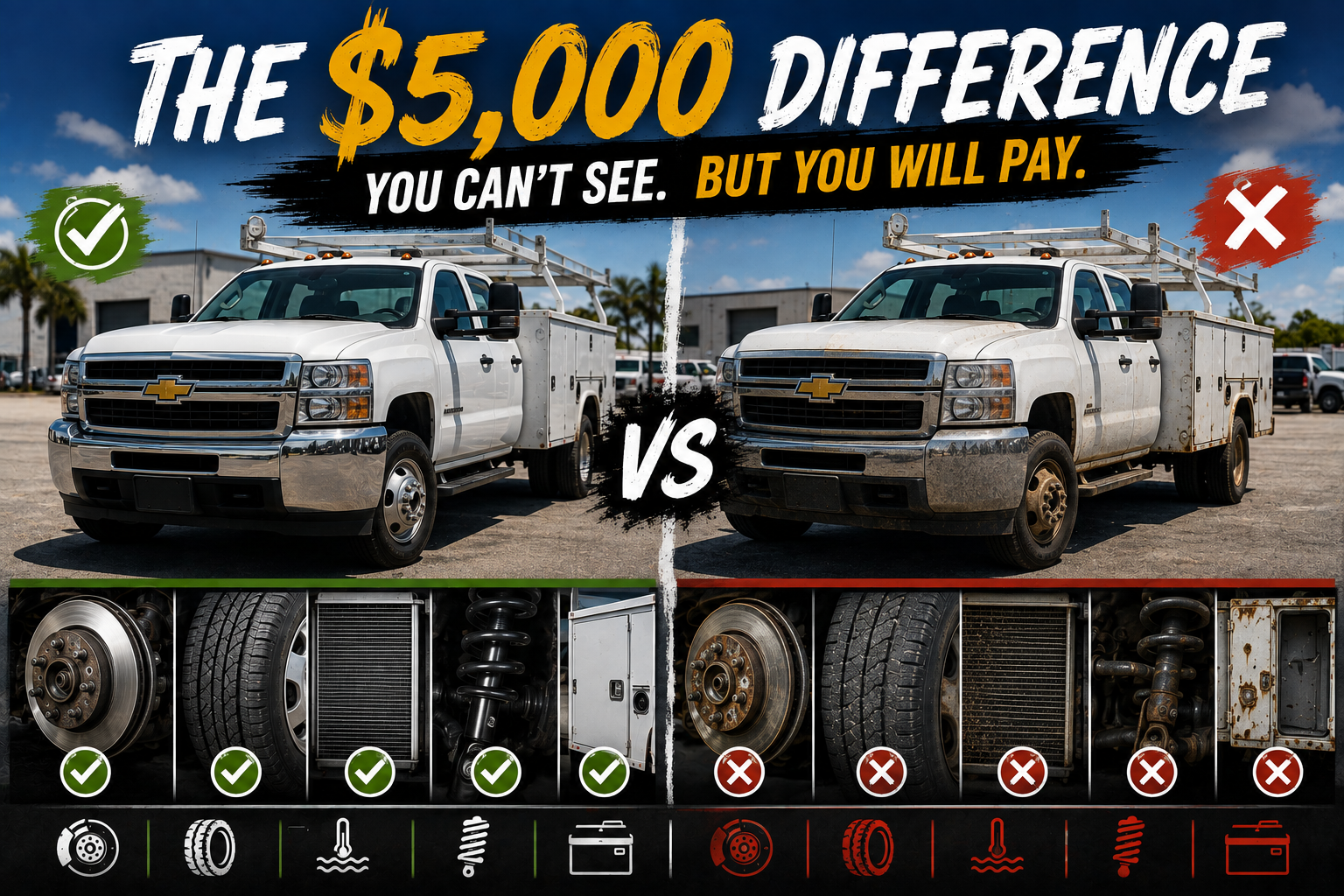
Review tires, brakes, steering, suspension, cooling, air conditioning, drivetrain operation, and chassis condition with appropriate technical help. Look at engine-hour information when available and relevant to the vehicle's previous use. A vehicle-history report can provide useful background, but it does not replace an inspection.
Use the same comparison checklist for each truck. That helps explain why two similarly priced units may require different amounts of work before joining your fleet.
Why is service-body condition part of the buying decision?
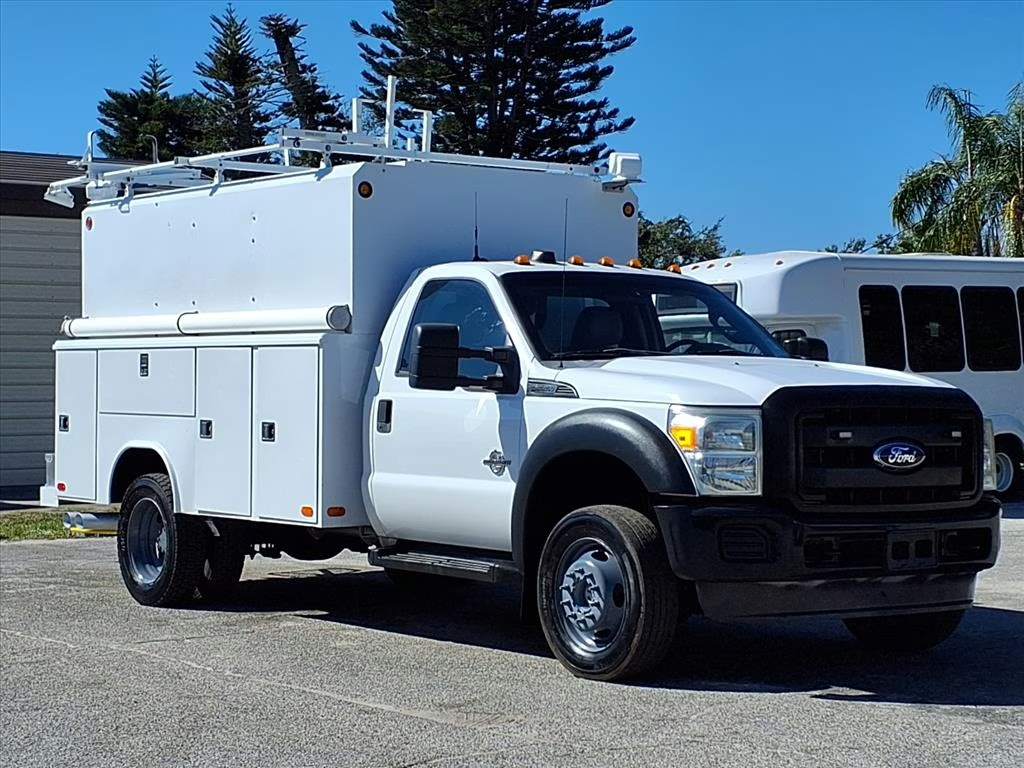
The body is the part of a utility truck your crew works with throughout the day. Damaged doors, weak latches, water intrusion, or worn storage can undermine an otherwise suitable chassis.
Check compartment doors, seals, locks, shelves, flooring, body mounts, and signs of corrosion or previous repairs. Evaluate installed equipment and mounting as applicable. Ask what has been repaired or refinished and which items may still need attention.
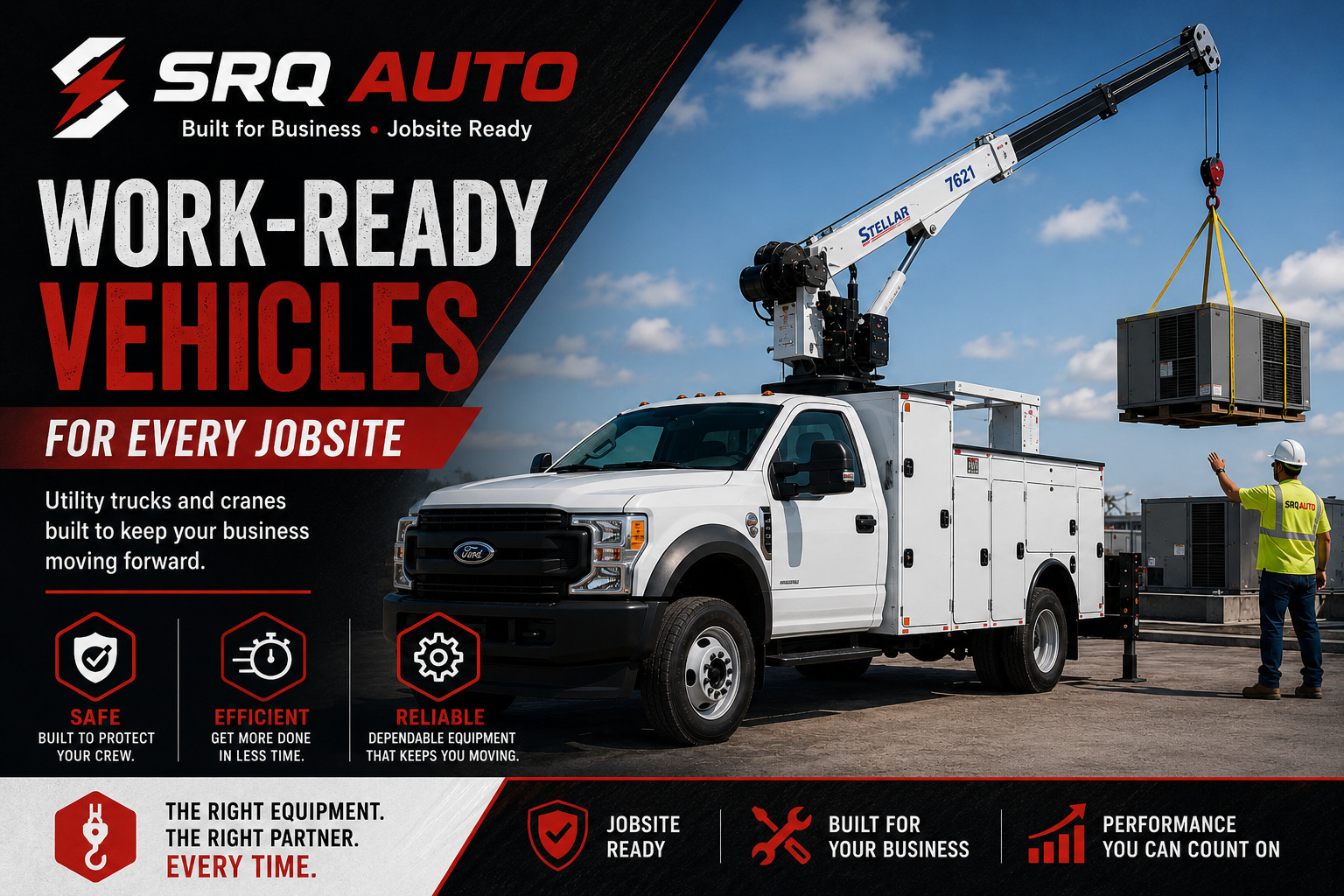
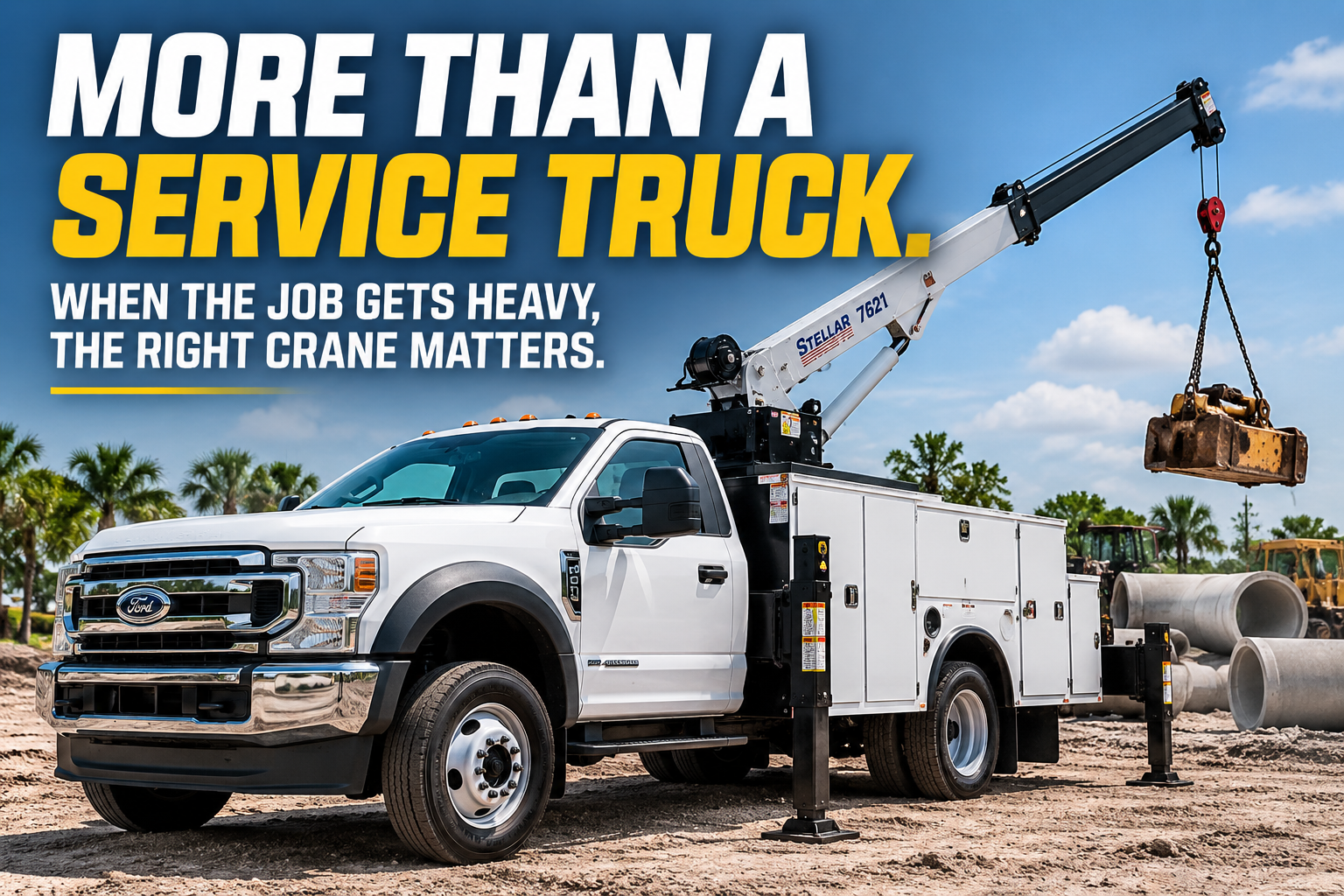
For a crane-equipped or otherwise specialized truck, have the equipment assessed by someone qualified for that equipment. Do not assume every service truck has hydraulic equipment or a PTO.
How do you check whether the truck can carry your equipment?
Verify the specific truck's ratings and completed configuration. The service body, installed equipment, occupants, fuel, tools, and materials all affect the load the vehicle must support.
Describe your heaviest normal workday, not just an empty trip. Review vehicle labels and applicable manufacturer information, and obtain a suitable weight assessment when needed. Also confirm that towing equipment and ratings fit any planned trailer use.
A large body or heavy-duty model badge alone does not establish that the finished truck fits your load.
How should fleet buyers compare value?
Compare the cost of making each truck useful for the business. Use written estimates where available instead of relying on blanket depreciation or insurance-saving percentages.
- Purchase: Vehicle cost and financing terms.
- Preparation: Immediate repairs, tires, body work, or needed equipment changes.
- Operations: Insurance quotes, fuel, scheduled service, and wear items.
- Deployment: Delivery, documents, and the time required to prepare the truck for its intended use.
- Business fit: Whether the storage, seating, and equipment support the assigned crew.
Chris Hilgeman's commercial-vehicle perspective centers on evaluating the complete truck: chassis, body, equipment, condition, and the customer's application. That gives buyers a more useful comparison than price alone.
What does SRQ Auto's commercial reconditioning add?
SRQ Auto's preparation addresses identified mechanical, functional, and appearance needs. Depending on the truck, that may include mechanical inspection and service; tires, windshield, headlights, or upholstery; paint and body work; chassis or compartment refinishing; Raptor Liner treatments; and cleaning of beds and storage areas.
Applicable doors, lighting, and installed commercial equipment are evaluated as part of preparation. Ask which work was completed on the specific truck you are considering. Our Job Ready Promise emphasizes readiness for business use while recognizing that ongoing maintenance and future repairs remain part of used-vehicle ownership.
A professional-looking service truck also represents your company at each customer's property. Condition and presentation belong in the fleet decision alongside equipment and cost.
How do you plan a purchase of several service trucks?
Give SRQ Auto a clear purchase brief: the number of trucks, crew seating, storage layout, equipment, intended loads, budget, and timing. Separate the requirements every truck must meet from preferences you can adjust.
Ask about current matching configurations and the preparation completed on each unit. Used inventory changes, so do not assume several identical trucks are available together. If your schedule allows purchases in stages, discuss how that could work without compromising your requirements.
For businesses in Bradenton, Sarasota, Lakewood Ranch, and Tampa Bay, our team can help compare the available trucks. Nationwide buyers can ask about remote documents, additional vehicle details, and delivery arrangements.
Where can you find used service trucks for sale?
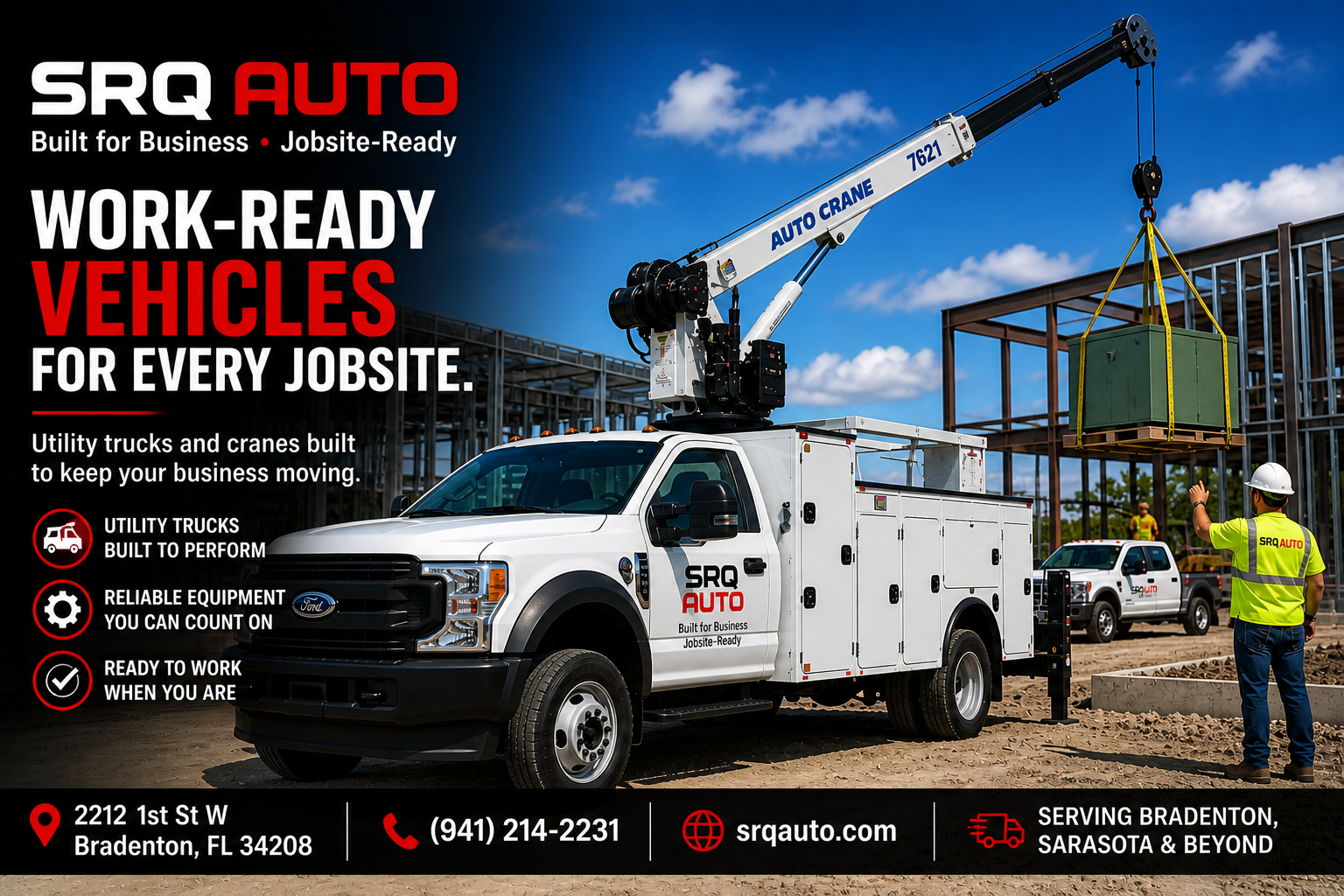
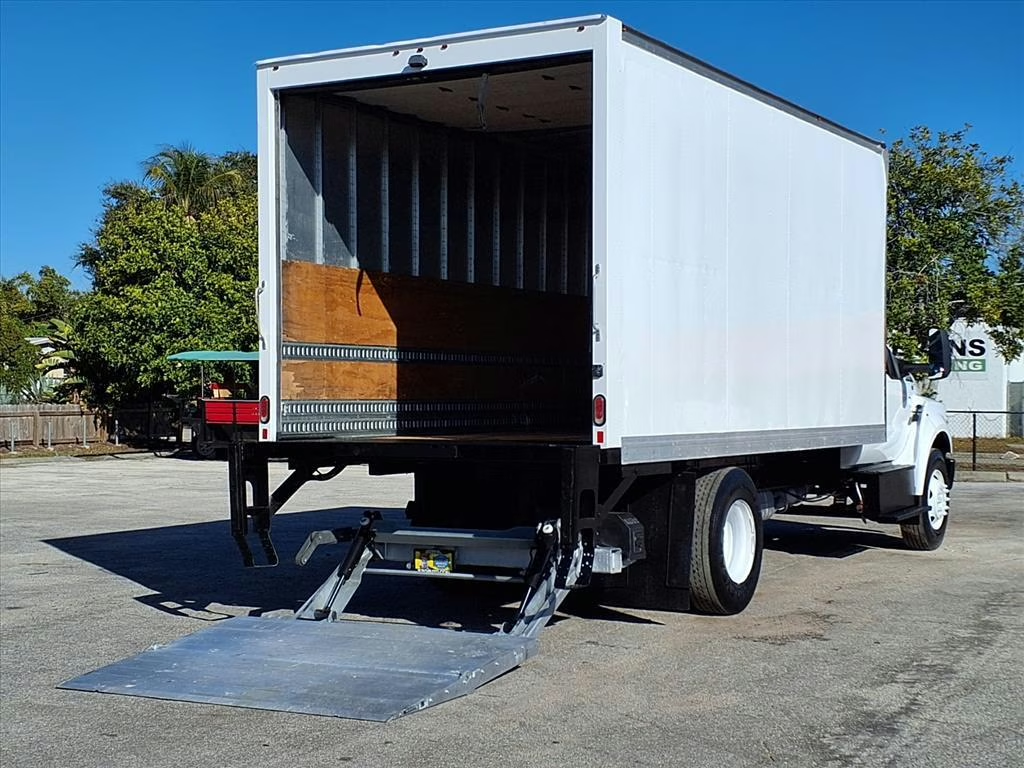
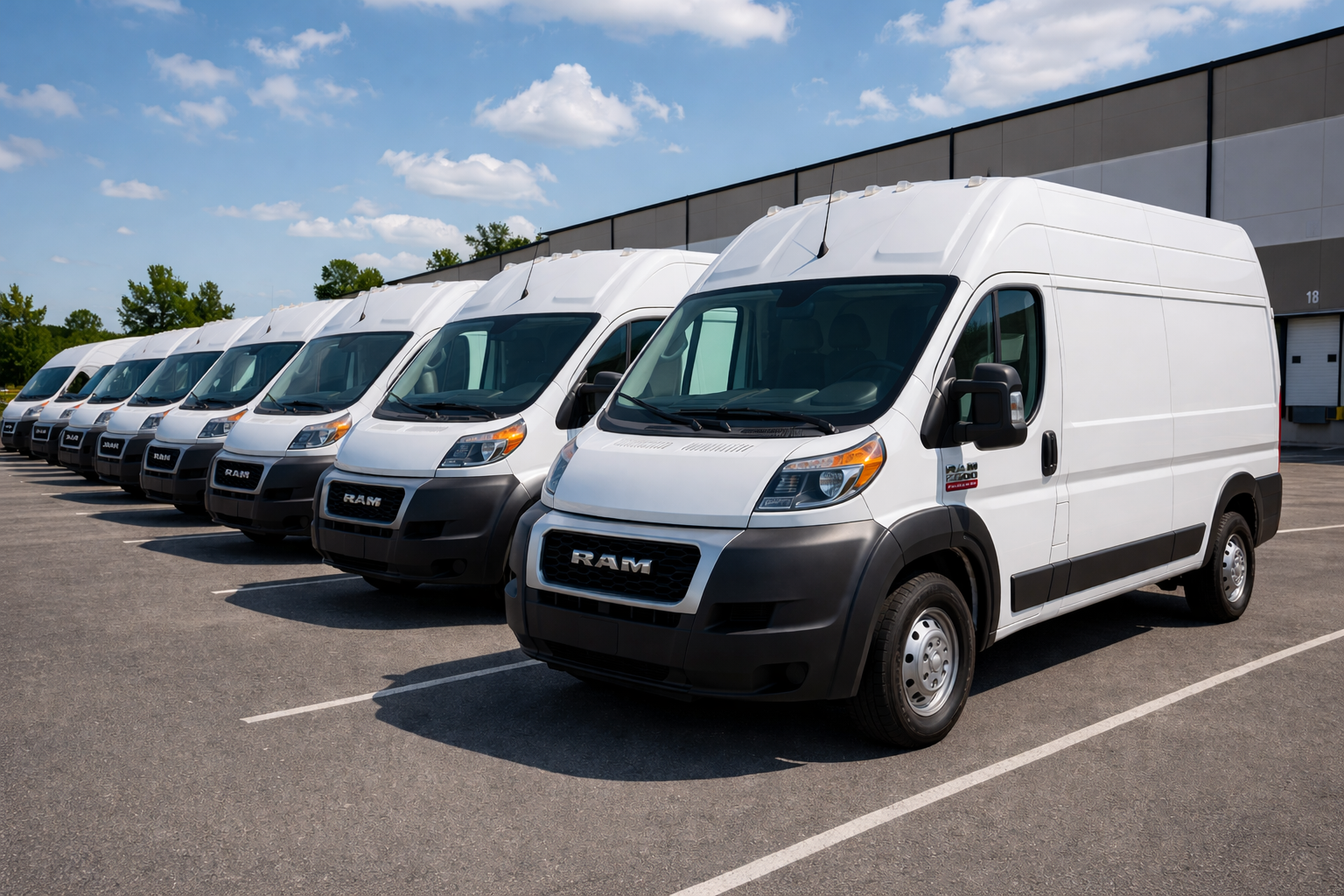
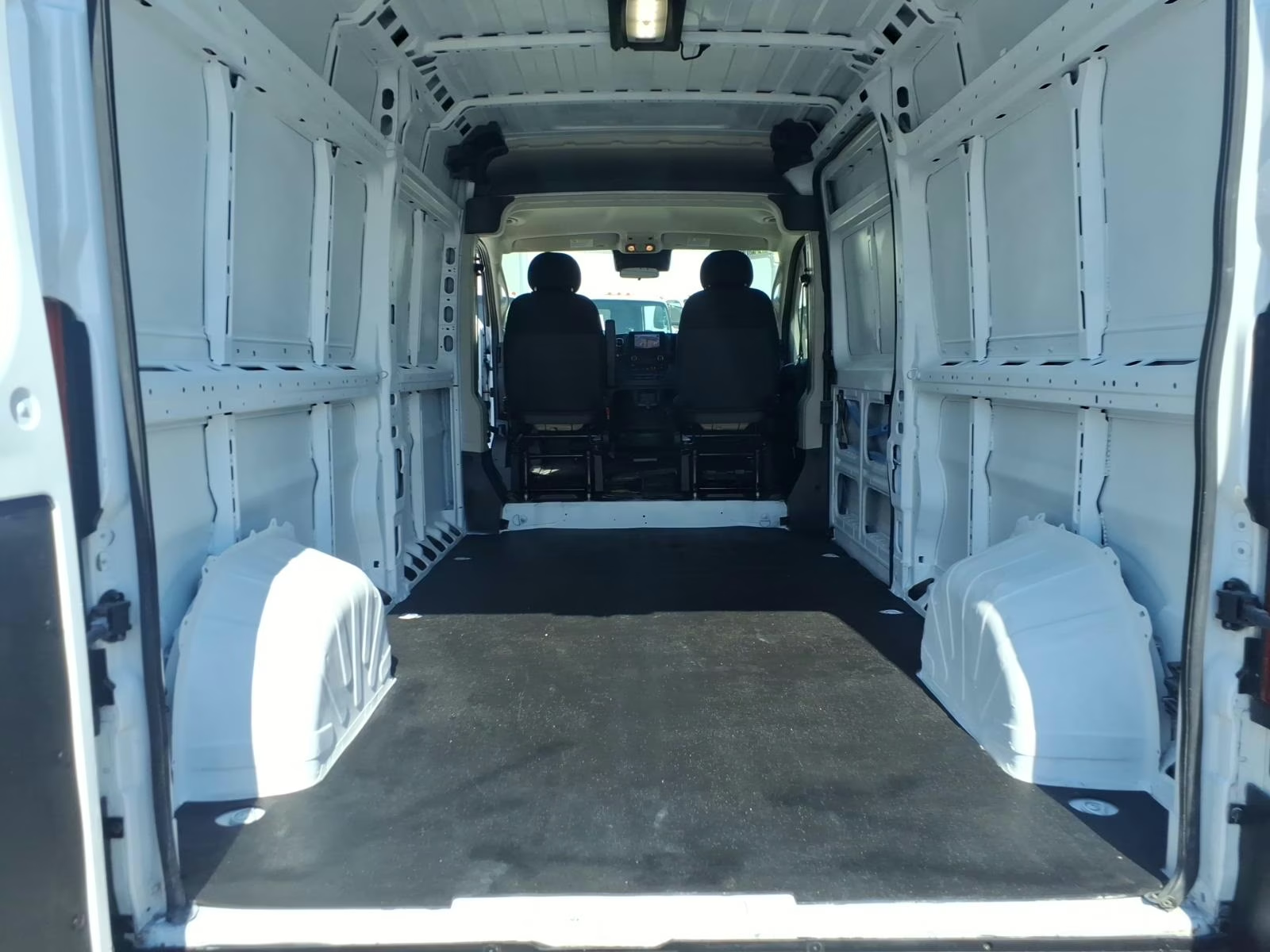
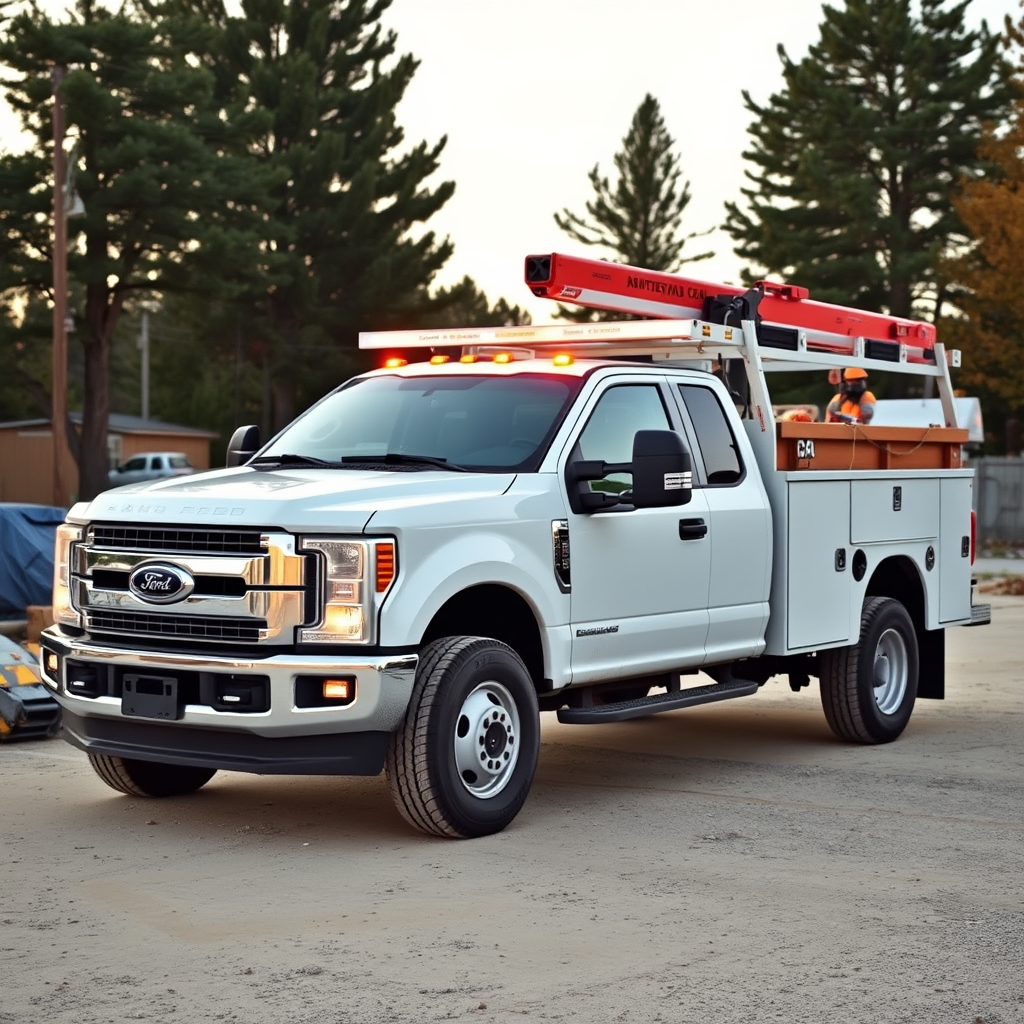
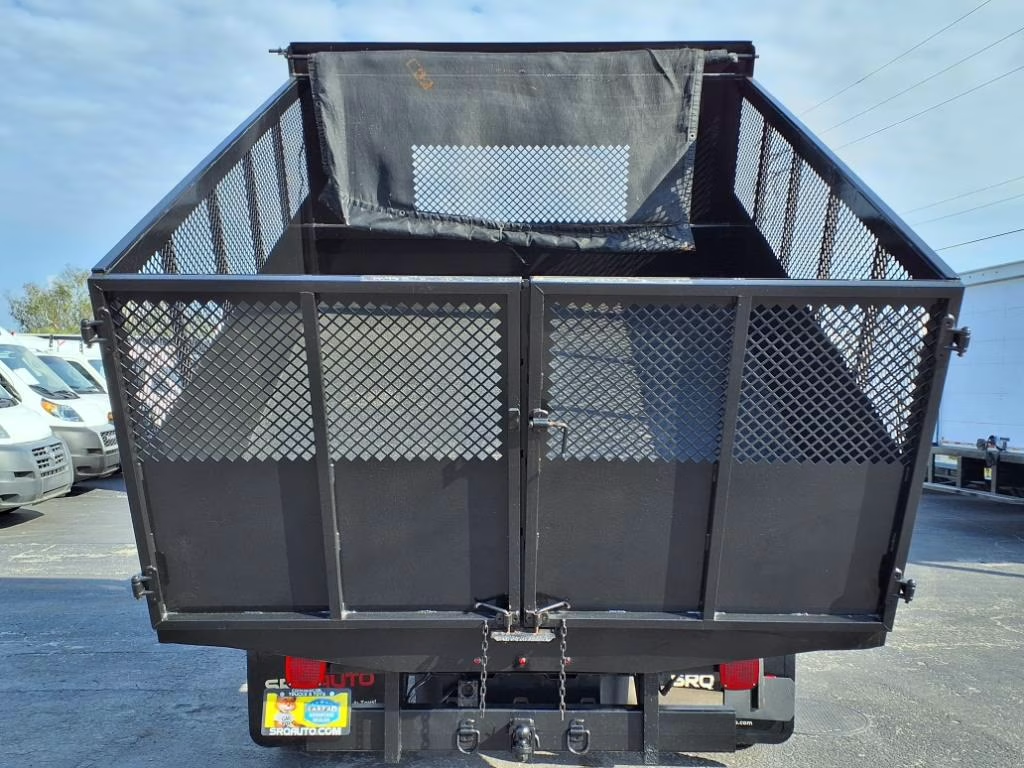
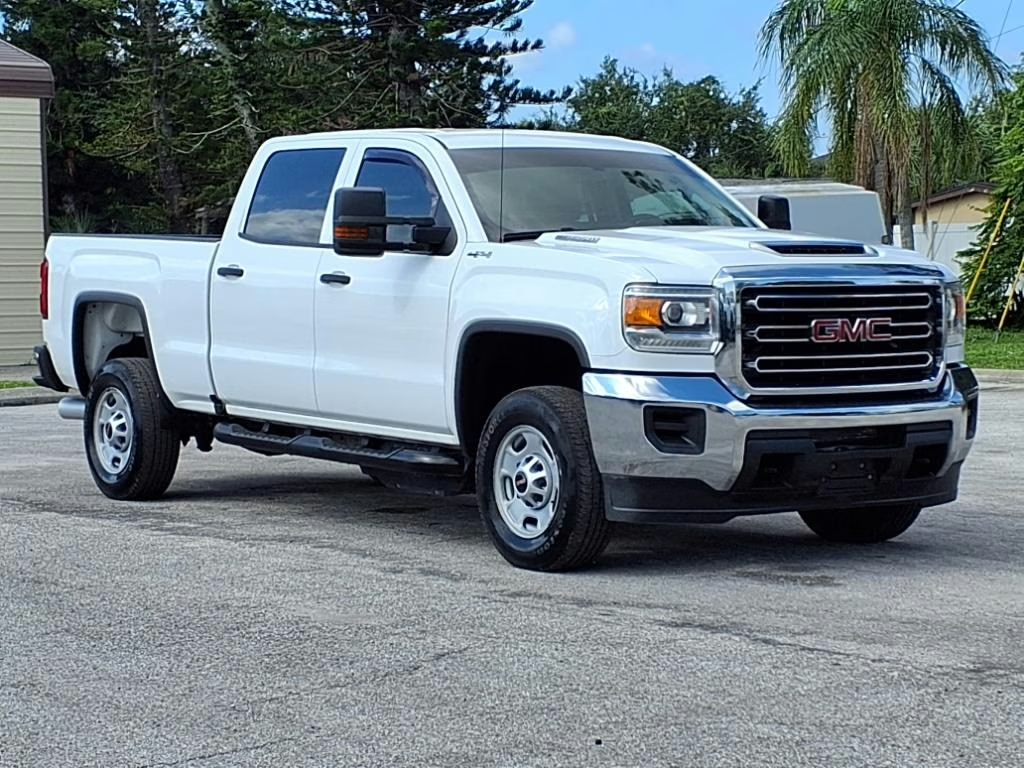
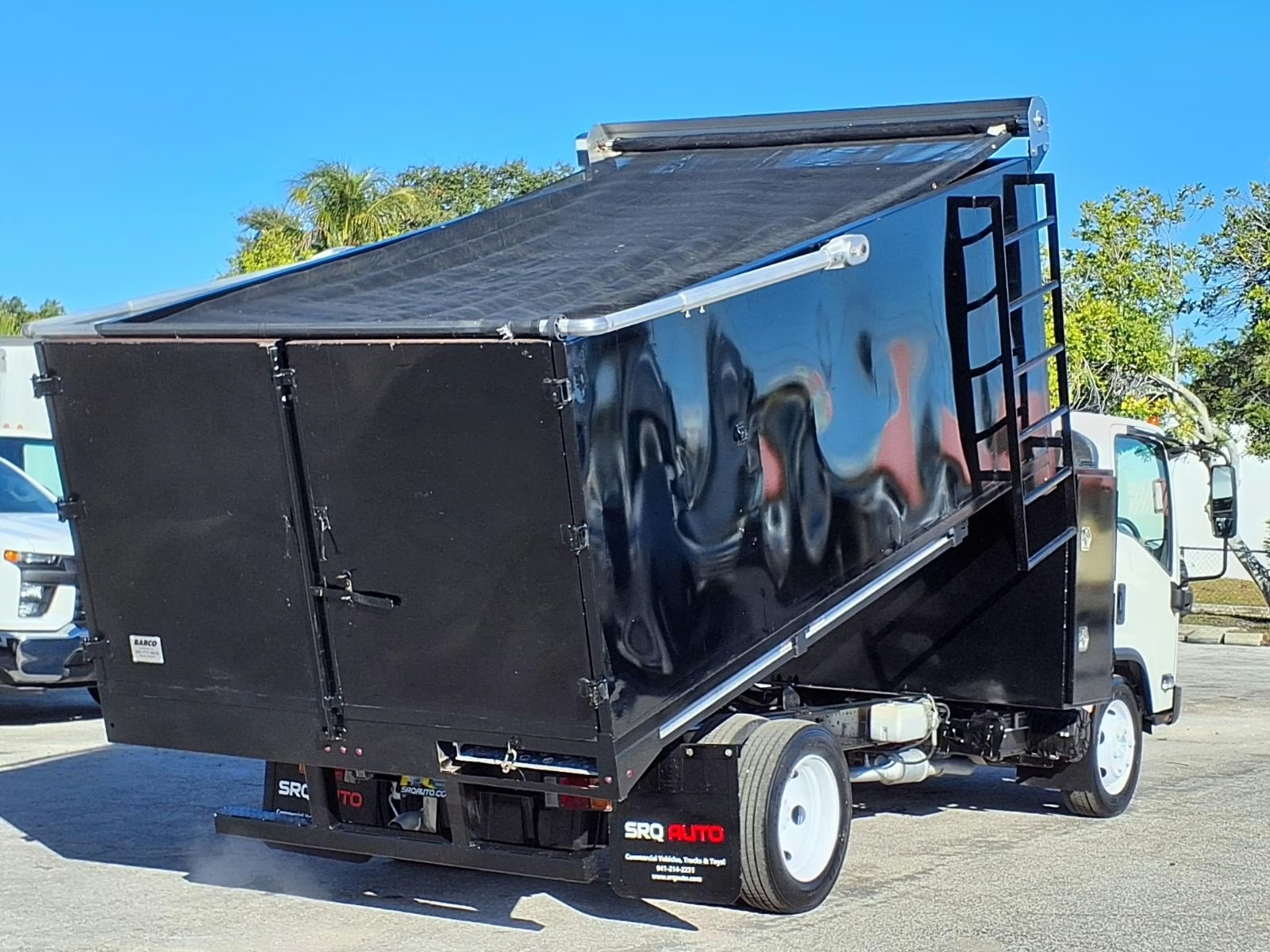
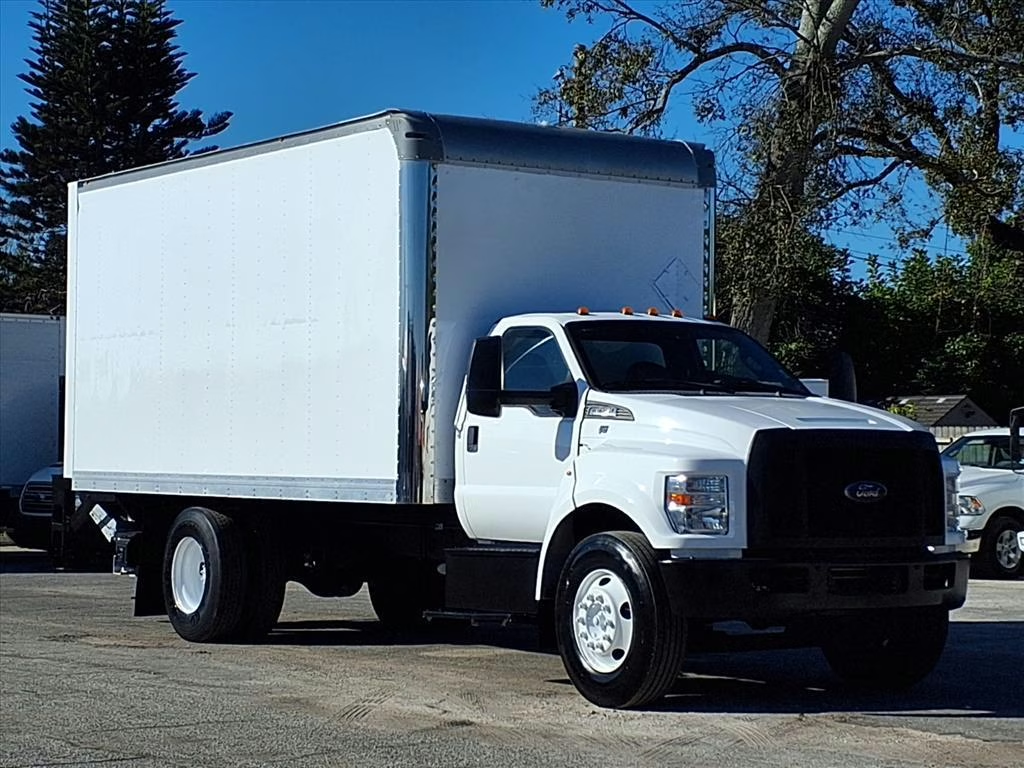
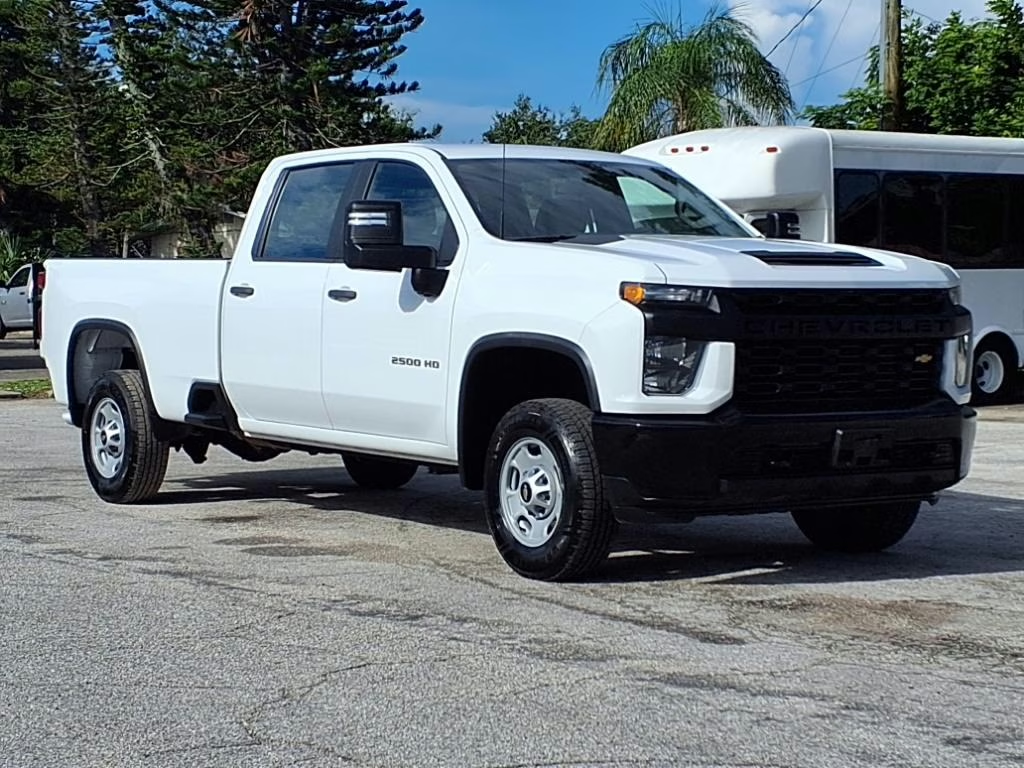
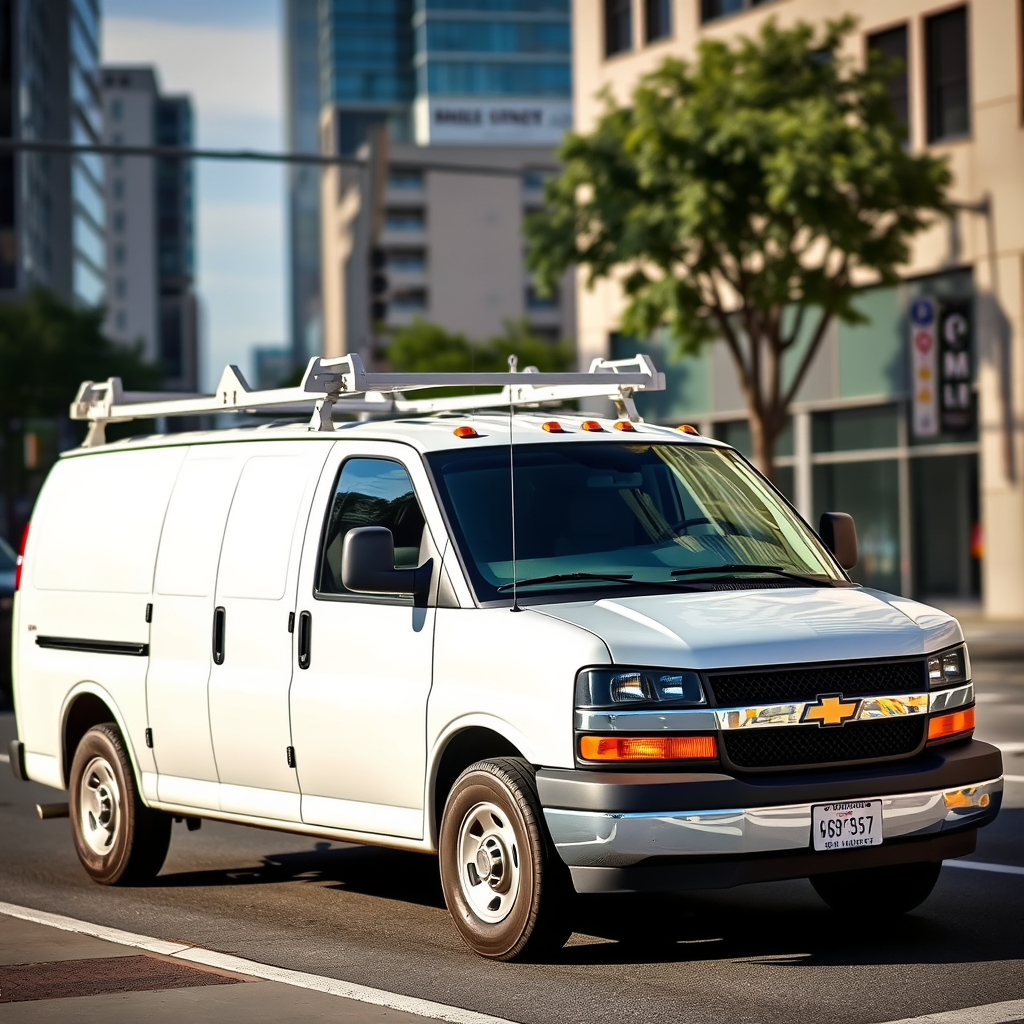
Browse used service trucks and utility trucks at SRQ Auto and contact us about the configurations that fit your fleet. Listings may include Ford, Chevrolet, GMC, or Ram trucks with different service bodies; confirm current availability and the specific equipment on each vehicle.
Ask about Tailored Commercial Financing and available commercial warranty options. Call (941) 214-2231 with your fleet requirements so our team can help you compare the next purchase.
Frequently asked questions
Are used service trucks a good choice for a business fleet?
They can be when the condition, configuration, and overall ownership costs fit the business. Evaluate each truck individually and compare its preparation needs with the work it must support.
Should all trucks in my fleet have the same service body?
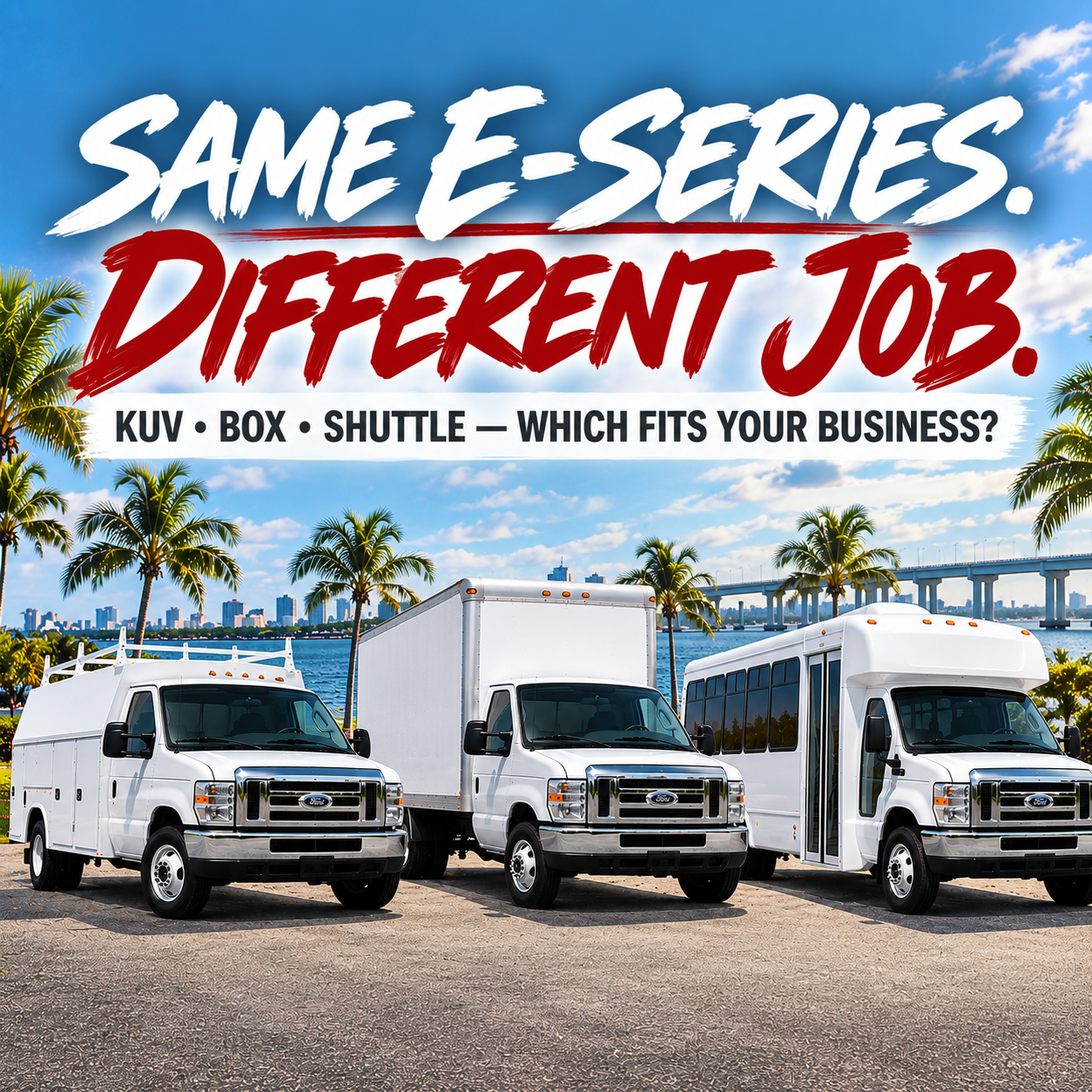
Consistent layouts can help crews find tools and transfer between trucks, but different jobs may need different bodies. Standardize useful features where practical without compromising the needs of each assignment.
What should I compare besides the price of a used utility truck?
Compare mechanical condition, maintenance information, service-body condition, vehicle ratings, equipment, immediate preparation, and ongoing operating costs. Price alone does not establish value.
Can SRQ Auto help with buying multiple service trucks?
Contact SRQ Auto to discuss the number of trucks, configuration requirements, budget, and timing. Available inventory changes, and matching units may not be available together.
Where can I shop used service trucks for sale in Florida?
Browse SRQ Auto's service and utility truck inventory or contact the Bradenton team about current availability. SRQ Auto serves Florida and nationwide buyers with remote documents and delivery options.